Litter train your rabbit fast with a rabbit-safe box and litter, hay placement, gentle redirects, and rewards. Includes cleaning tips, troubleshooting, and s...
Article
•
Designer Mixes
Step-by-Step Litter Train a Rabbit

Shari Shidate
Designer Mixes contributor
Litter training a rabbit is one of the best quality-of-life upgrades you can give both you and your bunny. The good news is that rabbits are naturally tidy and often prefer to use one or two favorite “bathroom corners.” Your job is to set up that corner for success, then reinforce the habit gently and consistently.
As a veterinary assistant, I always like to start with this reminder: if your rabbit suddenly stops using the litter box after doing well, that can be a health clue, not a behavior problem. We will cover what to watch for near the end.
Before you start: what you need
Set yourself up with rabbit-safe supplies. The right materials make training faster and help protect your rabbit’s respiratory health and feet.
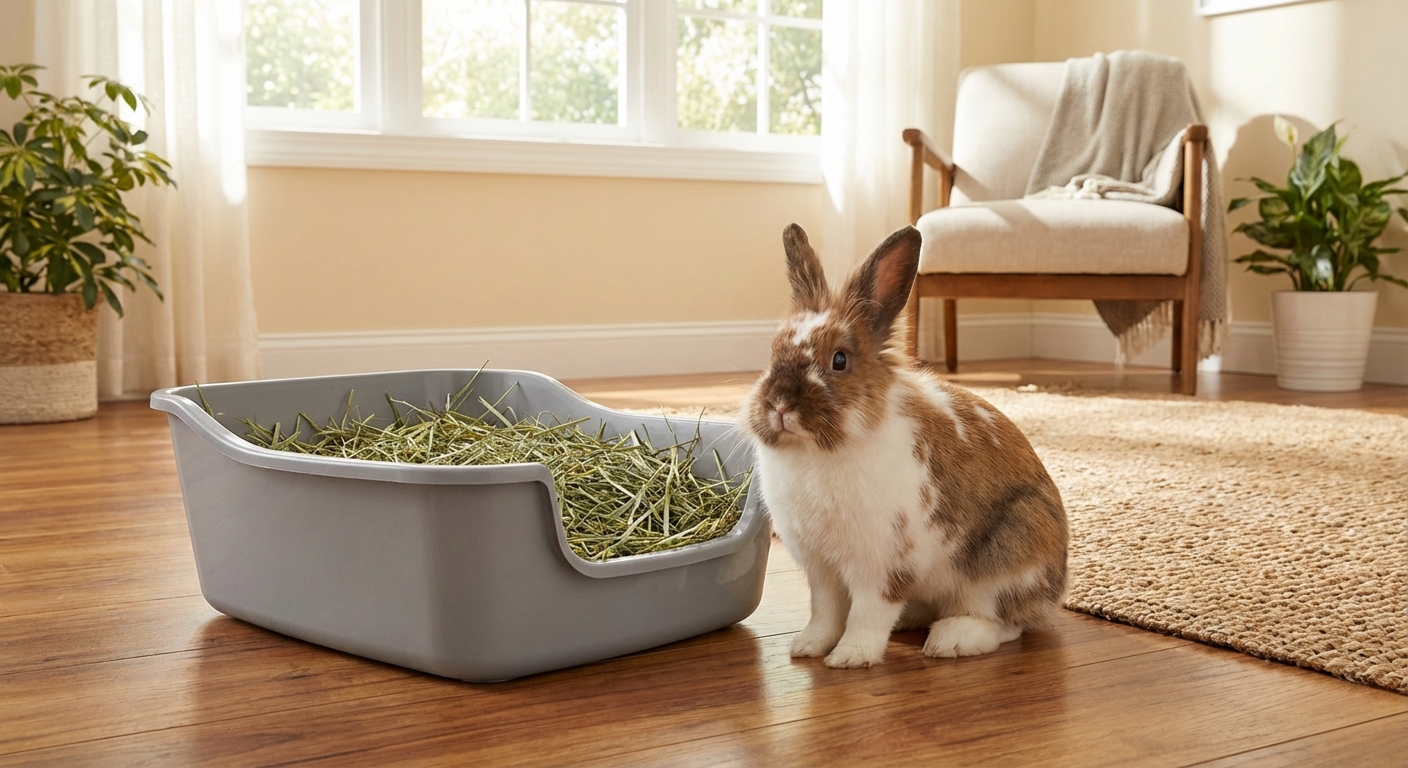
- A litter box with low entry (or a “corner” box). Bigger is usually better so your rabbit can sit comfortably. Many people use a large cat litter box or a plastic storage bin with a cut-down front for large rabbits or rabbits with arthritis.
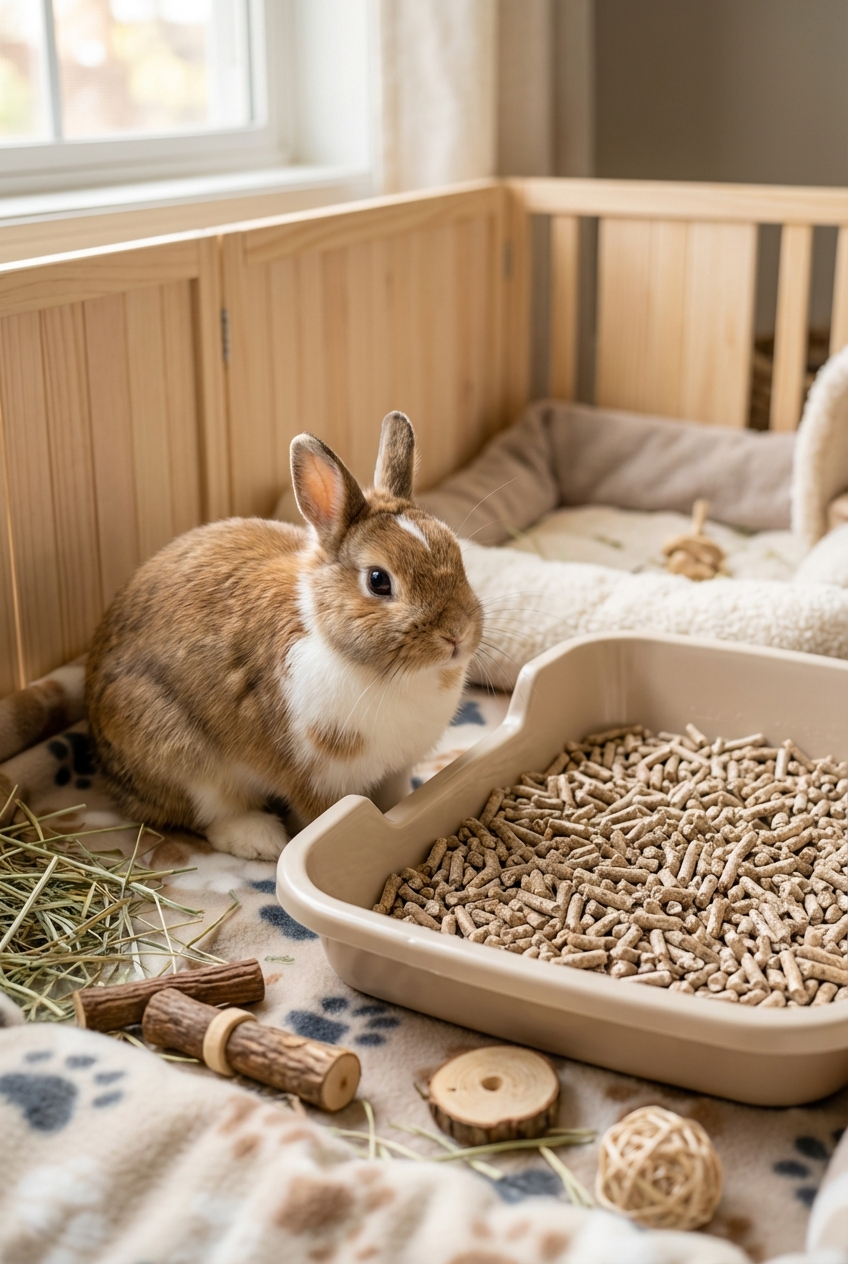
- Rabbit-safe litter: paper-based pellets or compressed paper bedding are common choices. Aspen pellets can work too as long as they are kiln-dried, unscented, and low-dust.
- Hay (fresh, unlimited). Rabbits love to eat and poop at the same time, so hay placement is a training secret.
- A hay rack or a way to keep hay over one side of the box.
- White vinegar and water for cleaning accidents.
- Optional: a washable pee pad under the box for extra protection during training.
Avoid clumping cat litter, clay litters, and anything heavily scented. These can be unsafe if ingested and irritating to breathe. Also avoid pine and cedar shavings, which are typically discouraged for rabbits due to aromatic oils and potential irritation.
Step 1: Choose the right training space
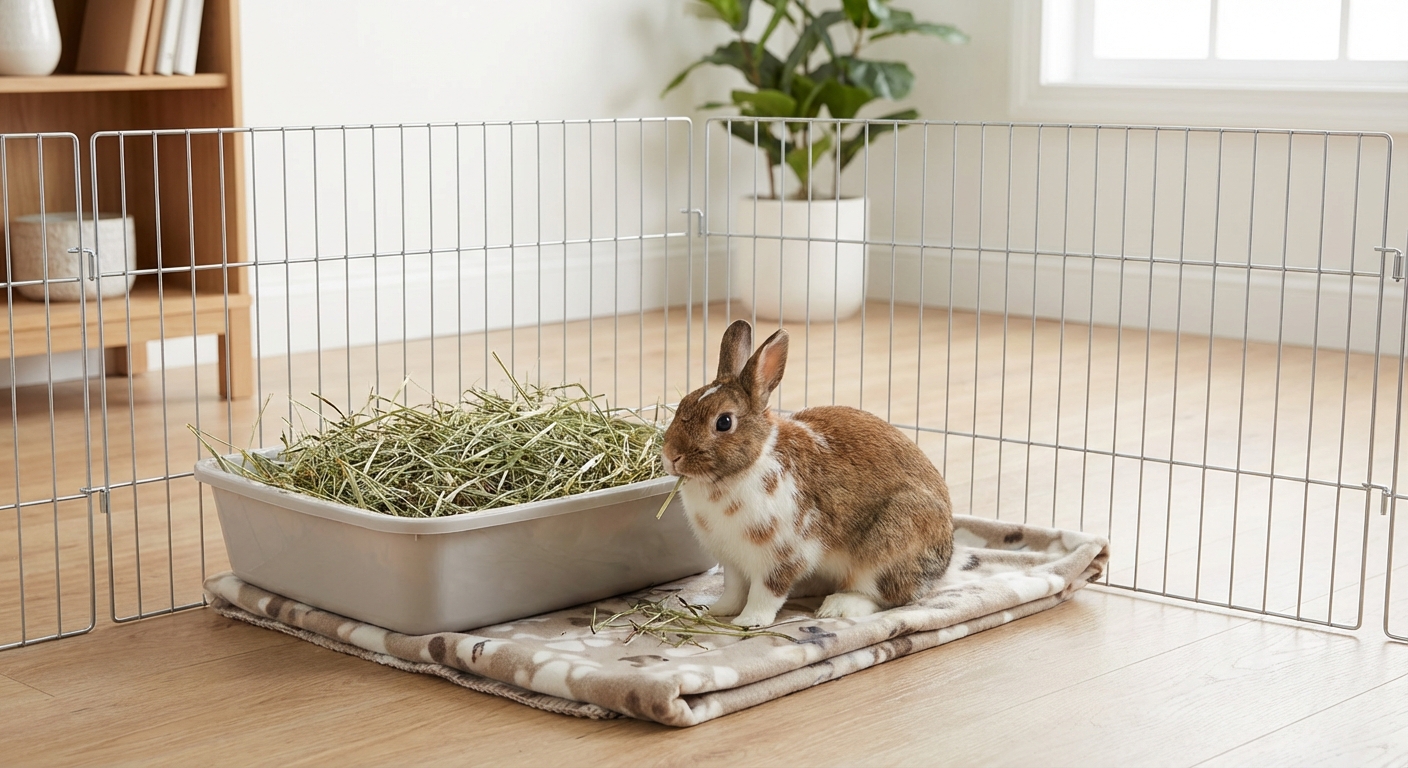
Start in a smaller, easy-to-clean area like an exercise pen, a bunny-proofed bathroom, or a gated corner of a room. Too much roaming space too soon often leads to “new corner” bathroom choices.
Watch where your rabbit naturally pees and poops. Most rabbits pick one or two corners quickly.
Step 2: Set up the litter box the way rabbits like it
Rabbits usually do not want an empty box. They want a “station” that feels right.
- Put 1 to 2 inches of paper litter in the bottom.
- Add hay in or directly above one side of the box.
- Place the box in the corner your rabbit is already choosing.
- Make sure the box is stable and does not slide.
Small setup tip: Many rabbits do best with a simple layer approach: litter (or pellets) on the bottom, then hay piled on one side or in a rack above that side. It keeps feet drier and makes the “bathroom spot” obvious.
Tip: If your rabbit lounges in the litter box, that is not a failure. It often means the box feels safe. You can reduce lounging by giving a separate cozy hideout and keeping hay accessible without needing to sit in the box.
Step 3: “Move the evidence” to teach the target
This step is simple but powerful. Every time you find stray poop pellets, place them in the litter box. If your rabbit pees outside the box, blot it with a paper towel and put the towel in the litter box too.
Rabbits learn by scent. You are basically telling them, “This is the bathroom.”
Step 4: Reinforce the behavior
When you see your rabbit use the litter box, offer calm praise and a tiny treat, like a small piece of leafy green. Keep it low-key so you do not startle them mid-business.
- Do: reward right after using the box.
- Do: keep a consistent routine for feeding and free-roam time.
- Do not: scold, yell, or rub your rabbit’s nose in accidents. It can create fear without improving training.
Step 5: Clean accidents the right way
Use a 50/50 mix of white vinegar and water to clean urine spots. Vinegar helps neutralize odor and dissolve urine residue.
If a particular corner keeps getting picked, place a litter box there temporarily or block the area with a hideout, box, or furniture until the habit resets.
Step 6: Expand space slowly
Once your rabbit is reliably using the box in the smaller area, expand their space in stages.
- Open up one additional area at a time.
- Add a second litter box in the new area if needed.
- If accidents increase, reduce space again for a few days and re-expand more gradually.
Many rabbits do best with multiple boxes in the home, especially in multi-level spaces.
How long does litter training take?
Some rabbits pick it up in a few days. Others need a few weeks of consistent setup and reinforcement. Progress is not always perfectly linear, especially during changes in routine, new environments, or hormonal phases.
If you want a simple benchmark, I typically consider a rabbit “reliably trained” when they are peeing in the box 90 percent (or more) of the time for at least a week in their current space.
Spaying and neutering
If your rabbit is not spayed or neutered, you may see:
- urine spraying
- territorial pooping
- marking more corners
Hormones can make litter habits much harder. Many rabbits improve significantly after spay or neuter, typically as hormones settle over the following weeks. It is also common to see some regression during adolescence in young rabbits, even with a good setup.
Troubleshooting common problems
“My rabbit pees next to the box.”
This usually means the box is too small, too tall to enter comfortably, or not in the right spot. Try a larger box with a lower front and place it exactly where the accident happens. You can also add a pee pad under and slightly around the box during training.
“My rabbit poops everywhere, but pees in the box.”
This is very common. Rabbits drop some pellets while they hop around, even when they are well trained. Focus on consistent urine habits first. As your rabbit settles in and feels secure, the stray pellets often decrease.
“My rabbit digs all the litter out.”
Try heavier paper pellets or a box with higher sides. If you use an insert, choose a rabbit-safe, solid, foot-friendly option (for example, a flat plastic grate designed to keep feet supported, not a wire floor). Wire or narrow grates can contribute to sore hocks. Also provide a separate digging outlet like a cardboard box filled with shredded paper.
“My rabbit keeps sitting in the litter box.”
Offer a more inviting resting spot: a soft mat, a hide house, or a low fleece bed. Keep the litter box clean and dry, and position hay so they can eat without fully climbing into the box if possible.
“My rabbit was trained, then regressed.”
Common triggers include a move, schedule changes, a new bonded partner, or changes in scent in the home. Go back to a smaller space for a few days, refresh the “bathroom station” setup, and re-expand gradually.
Health red flags
If litter habits change suddenly, I recommend contacting a rabbit-savvy veterinarian. Rabbits are masters at hiding discomfort, and bathroom changes can be one of the first signs something is off. This article is not a substitute for veterinary care.
- straining to pee or very small urine spots
- red or blood-tinged urine (rabbit urine can look orange to red from pigments too, but any red urine is worth a check, especially with other symptoms)
- gritty urine or sludge
- wet fur around the rear end
- persistent or new strong urine odor
- reduced appetite, fewer poops, or very small poops
- hunched posture or grinding teeth
Urinary issues, pain (including arthritis), GI slowdown, or stress can all impact litter box use. If your rabbit seems uncomfortable, do not wait it out.
A simple daily routine
- Refresh hay morning and evening.
- Scoop wet litter daily and fully change litter as needed.
- Keep one “main bathroom box” extra appealing with the freshest hay.
- Reward good litter box use for the first few weeks, even after things improve.
Be patient with your rabbit and with yourself. Litter training is not about perfection. It is about building a clean, predictable habit that makes your home calmer and your bunny more comfortable.