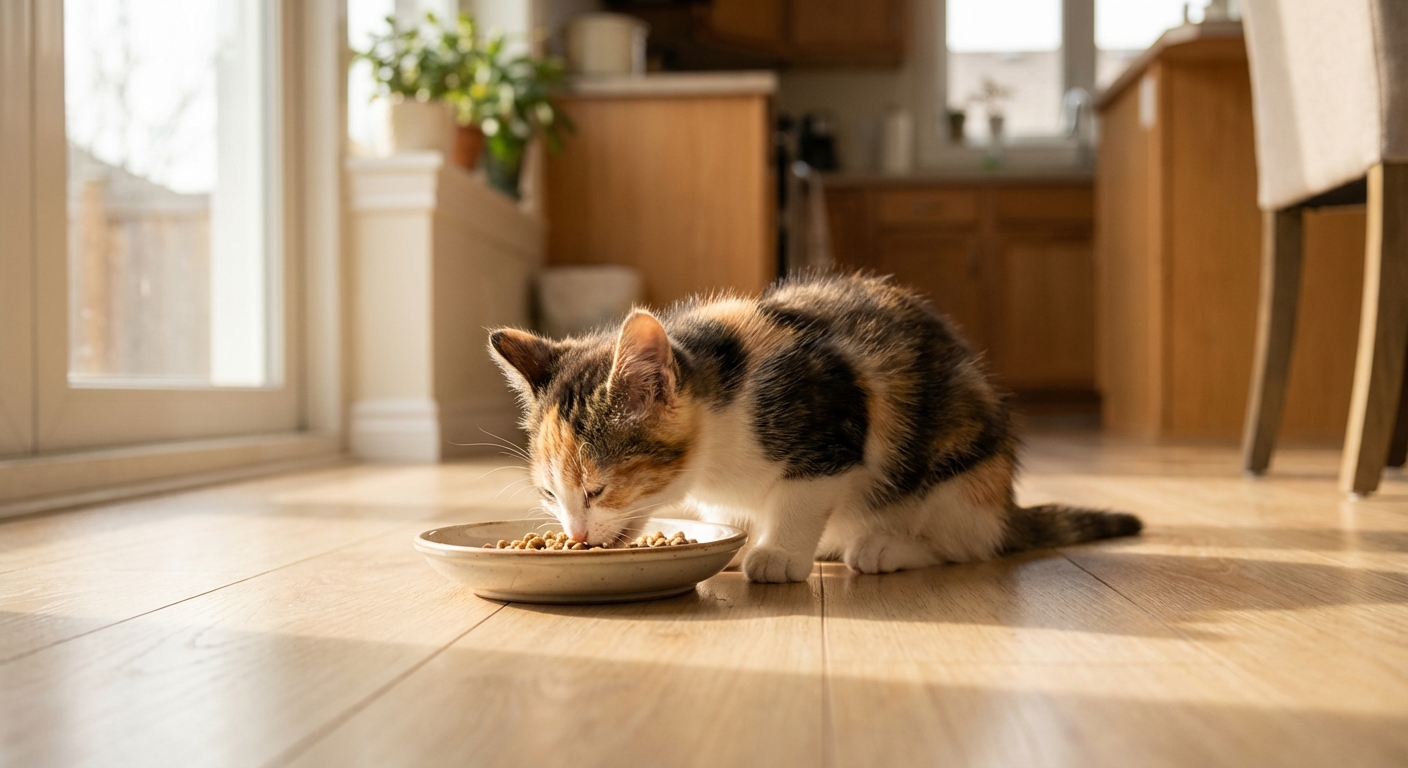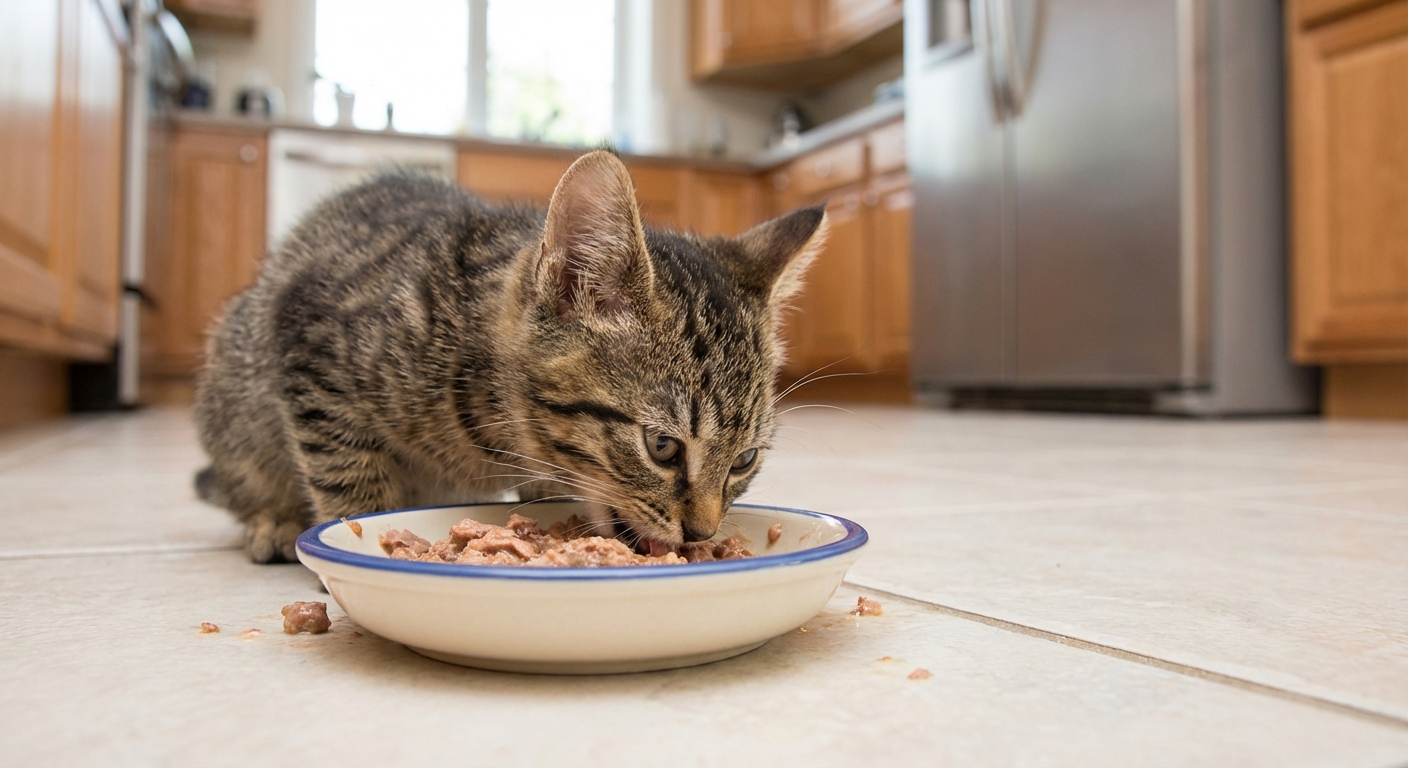
Decode kitten feeding behavior with a vet-approved plan: meal schedules by age, portion checks, wet vs dry strategies, and fixes for crying, guarding, biting...
Article
•
Designer Mixes
Step-by-Step Feeding a Kitten

Shari Shidate
Designer Mixes contributor
Bringing home a kitten is equal parts joy and questions, especially when it comes to food. As a veterinary assistant here in Frisco, Texas, I see the same concerns all the time: How much should they eat? Wet or dry? How often? The good news is that kitten feeding can be simple when you focus on a few evidence-based basics: consistent meals, kitten-specific nutrition, clean water, and steady growth.
Quick note: I’m a veterinary assistant, not a veterinarian. This guide is educational and should not replace individualized medical advice from your vet.
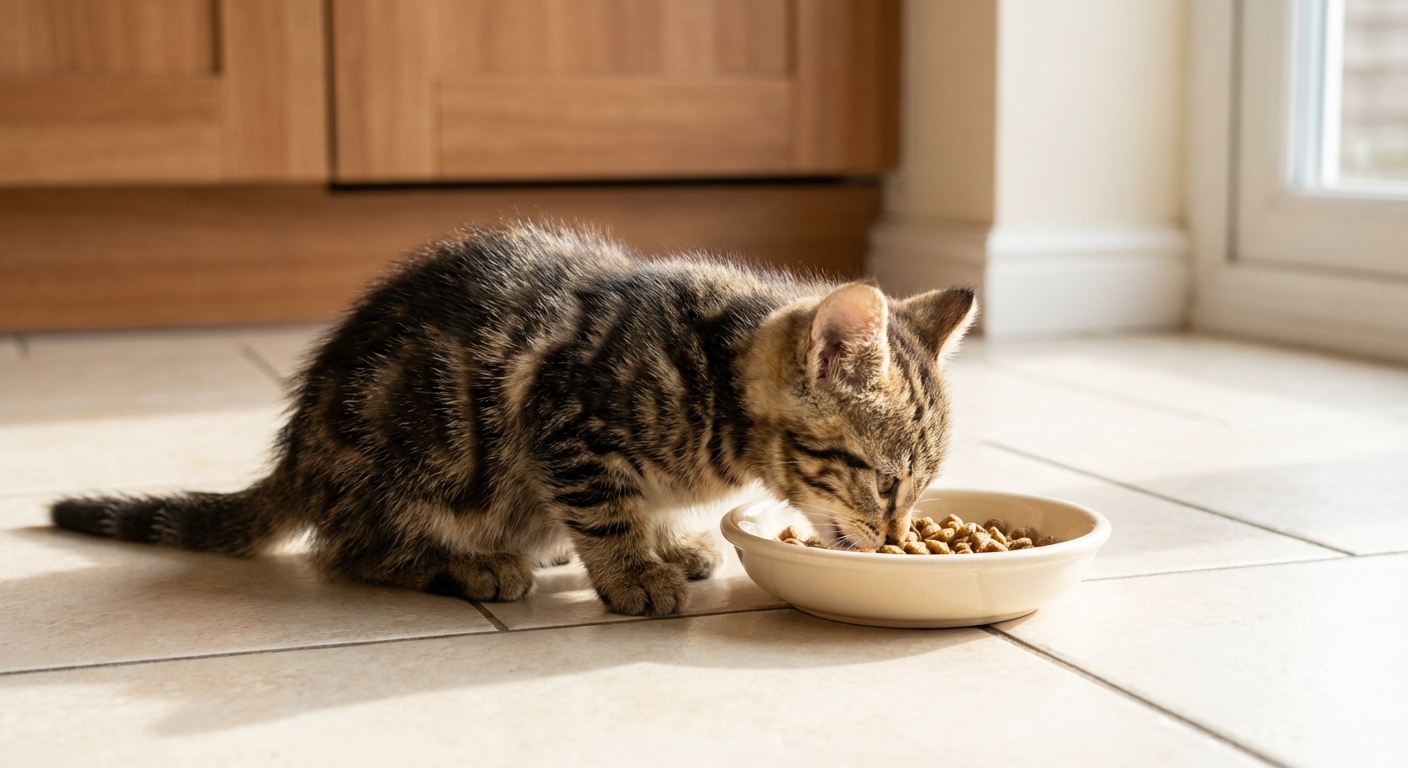
Why kitten nutrition is different
Kittens are growing fast. Compared to adult cats, they need more calories per pound, a higher level of protein, and carefully balanced minerals to support healthy bones, teeth, muscles, vision, and brain development.
Look for foods labeled “complete and balanced” for growth or all life stages. In the U.S., this usually means the food meets AAFCO nutrient profiles for growth. That statement is one of the most helpful quick checks you can do on a label.
Step-by-step: How to feed a kitten
Step 1: Start with a vet check and a baseline weigh-in
If you can, schedule a kitten visit soon after adoption. Your veterinarian can confirm age, body condition, hydration, parasite status, and whether your kitten needs a special diet.
At home: weigh your kitten at least weekly using a kitchen scale or a baby scale. Healthy kittens typically gain weight steadily. If weight gain stalls or your kitten seems lethargic, that is worth a call to your vet.
Simple body condition check: you should be able to feel the ribs with gentle pressure, like feeling the knuckles on the back of your hand. If ribs are hard to find, portions may be too high. If ribs and hips are sharply visible and your kitten seems ravenous all the time, they may need more calories.
Step 2: Choose a kitten-specific diet
For most kittens, a reputable commercial kitten food is the easiest, safest way to ensure proper nutrient balance. When choosing:
- Pick kitten food (or all life stages) from a brand with strong quality control and nutritional expertise.
- Prioritize protein from animal sources (cats are obligate carnivores).
- Check the calorie info (kcal per cup or per can) so you can portion accurately.
Step 3: Wet, dry, or both
Many kittens do well on a combination. Each has benefits:
- Wet food: adds moisture, often more palatable, easier to chew for tiny mouths.
- Dry food: convenient, can be used in puzzle feeders, and can be easier to measure in some households.
My practical approach: offer wet meals for hydration and routine, and use measured dry portions if you want the convenience or enrichment options. (Even if your kitten “grazes,” I still recommend measuring the daily total so you do not accidentally overfeed.)
Bonus tip: offering a mix of textures early (pate, shreds, kibble) can help some kittens stay flexible and less picky later.
Step 4: Set a feeding schedule by age
Kittens thrive on routine. Here is a common schedule many vets recommend:
- Under 4 months: 3 to 4 meals per day
- 4 to 6 months: 3 meals per day
- 6 to 12 months: 2 meals per day
Measured meals make it easier to prevent overeating and to notice appetite changes early.
Step 5: Portion with calories, not guesses
Because foods vary widely in calorie density, the most accurate way to portion is by calories (kcal). Your kitten food label will list kcal per cup or can.
If you are not sure where to start, ask your veterinarian for a calorie target based on your kitten’s current weight, age, and body condition. Then:
- Measure portions with a real measuring cup or kitchen scale.
- Reassess weekly using weight trends and body condition.
- Adjust slowly. Tiny changes make a big difference in small bodies.
Quick example: if your vet sets a goal of 250 kcal/day and your wet food is 90 kcal per can, that is about 2 and 3/4 cans per day total, split into meals. If you also feed dry food, subtract those calories from the daily total.
Step 6: Set up water for success
Hydration matters for every cat, and it is easier to build good habits early.
- Offer fresh water daily in a clean bowl.
- Many cats drink more if water is placed away from food.
- A pet fountain can help some kittens drink more.
Step 7: Transition foods slowly
Sudden diet changes can cause vomiting or diarrhea. If you are switching foods, do it gradually over about 7 to 10 days:
- Days 1 to 3: 25% new, 75% old
- Days 4 to 6: 50% new, 50% old
- Days 7 to 9: 75% new, 25% old
- Day 10+: 100% new
If stool becomes very soft, pause at the current step for a few days and move more slowly.
Step 8: Treats are fine, but keep them small
Treats are wonderful for training and bonding, but they should stay a small part of the diet. A common guideline is keeping treats under about 10% of daily calories.
Great kitten-friendly treat options include:
- Single-ingredient freeze-dried meat treats (in tiny pieces)
- Small portions of their regular food used as “treats”
- Commercial kitten treats used sparingly
Step 9: If your kitten is very young
If your kitten is not fully weaned (often under about 4 to 5 weeks), feeding is different and can become urgent quickly. Very young kittens may need kitten milk replacer, a specific feeding schedule, and help staying warm. If you are not sure of your kitten’s age, or they seem too young to eat on their own, call a veterinarian or local shelter/rescue right away for guidance.
Common feeding questions
How do I know my kitten is eating enough?
Look for steady growth, a playful energy level, a healthy coat, and normal stools. Tracking weekly weight is one of the most reassuring tools you can use at home.
Should I feed milk?
Many cats have trouble digesting lactose after weaning, and cow’s milk can cause digestive upset. If you want a special treat, ask your vet about kitten-safe milk products formulated for cats.
When can I switch to adult cat food?
Most kittens transition to adult food around 12 months. Some large-breed cats may benefit from kitten food longer. Your veterinarian can help you time this based on growth and body condition.
Is grain-free better?
Not automatically. The priority is a nutritionally complete and balanced diet with appropriate protein and calories. Grain-free is not required for most kittens unless a veterinarian recommends it for a specific medical reason.
Can I make homemade kitten food?
Homemade diets for growing animals are tricky because kittens need precise calcium, phosphorus, taurine, and other nutrients in the correct ratios. If you want to go the homemade route, do it with a board-certified veterinary nutritionist so you do not accidentally create a deficiency during a critical growth stage.
Feeding safety
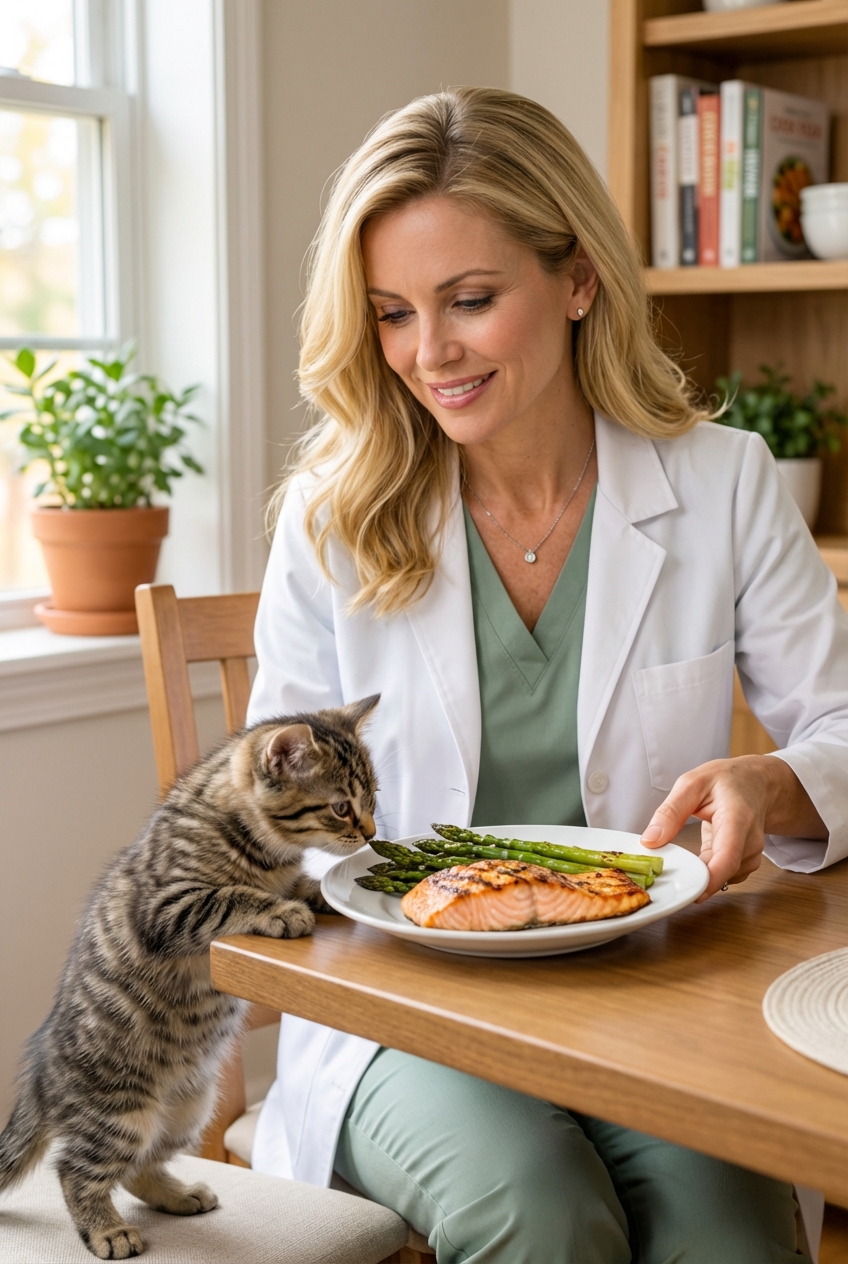
Kittens are curious, and many human foods are unsafe for cats. Skip these:
- Onions, garlic, chives (toxic)
- Chocolate, caffeine, alcohol
- Cooked bones (splinter risk)
- Dog food as a main diet (not nutritionally adequate for cats)
- Grapes and raisins (best avoided; possible toxicity has been reported, even though evidence in cats is limited)
When to call the vet
Please call your veterinarian promptly if you notice:
- Not eating for more than 12 to 24 hours (kittens can decline quickly, and very young or small kittens can deteriorate even faster)
- Repeated vomiting or diarrhea
- Swollen belly, weakness, or dehydration
- Weight loss or failure to gain weight
- Straining to poop or pee
Trust your instincts. If something feels off, it is always okay to ask.
A simple daily routine
If you want a straightforward plan to start:
- Morning: Wet kitten food meal, fresh water refresh
- Midday: Small meal (wet or measured dry), quick play session
- Evening: Wet kitten food meal, gentle grooming and check body condition
- Overnight (optional): A small measured dry portion if your kitten wakes hungry
The best feeding plan is the one you can do consistently, while keeping your kitten growing steadily and feeling great.