A practical guide to caring for hairless cats: skin checks, warming and bedding, wipe-downs, bathing routines, ear/nail/teeth care, sun safety, and when to c...
Article
•
Designer Mixes
Sphynx Cat Care and Health

Shari Shidate
Designer Mixes contributor
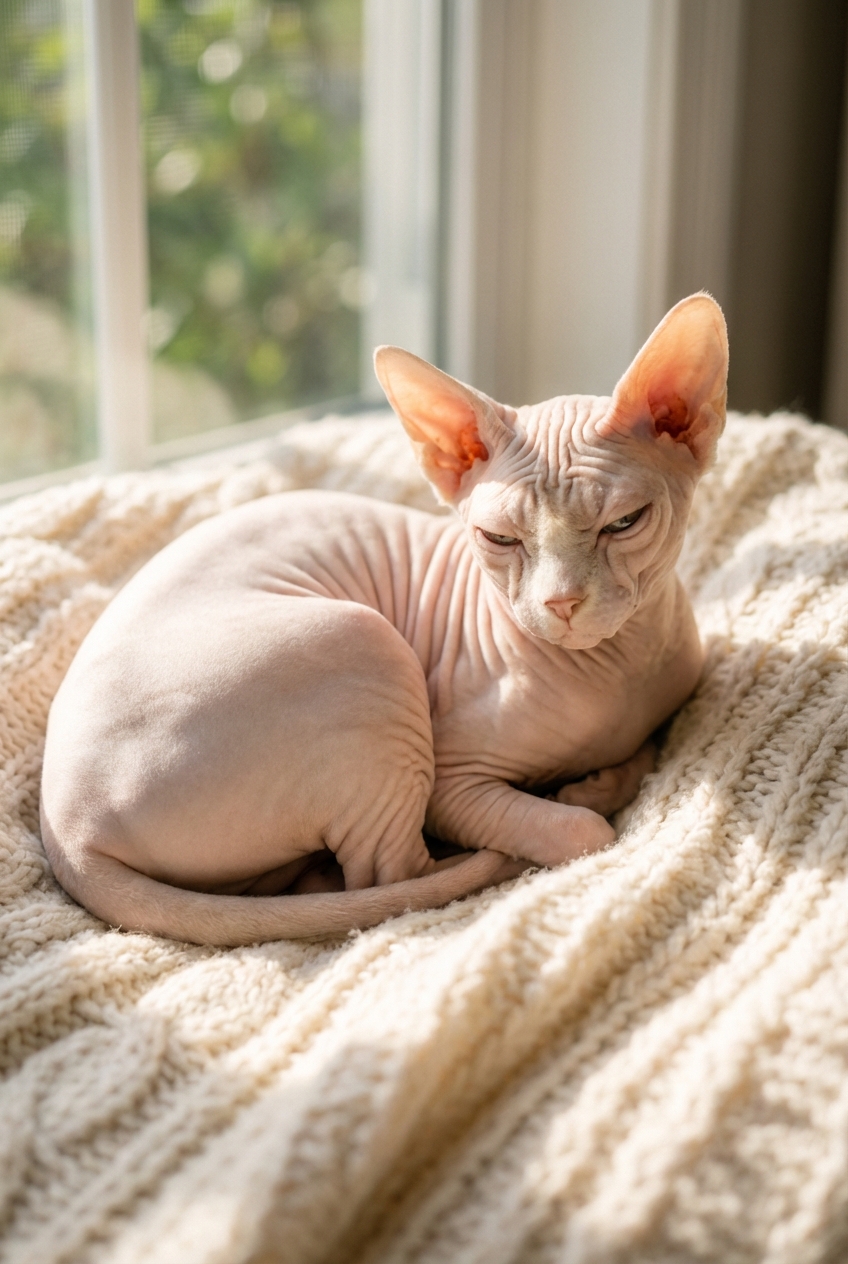
The Sphynx is one of the most recognizable cats in the world, with its “hairless” look, big ears, and soulful eyes. But what surprises many new owners is that Sphynx cats are not low-maintenance. They tend to be affectionate, social, and downright funny, but their skin, ears, nails, and temperature needs require consistent care.
As a veterinary assistant, I always tell families the same thing: if you love routine and hands-on bonding time, the Sphynx can be an amazing match. If you want a cat you can mostly forget about between food refills, this may not be your breed.
One quick myth-buster before we dive in: “hairless” does not mean hypoallergenic. Sphynx cats still produce allergens (like Fel d 1) in saliva and skin oils. Some people do better with them, but plenty do not.
What a Sphynx cat is really like
Temperament and personality
Sphynx cats are typically:
- People-focused and eager to follow you from room to room
- Playful, often well into adulthood
- Confident with visitors when socialized early
- Cuddly, seeking warmth and physical contact
Many owners describe them as “dog-like” because they want to be involved in everything. That social nature is a big plus, but it can also mean they do not love being alone for long hours every day.
Energy level
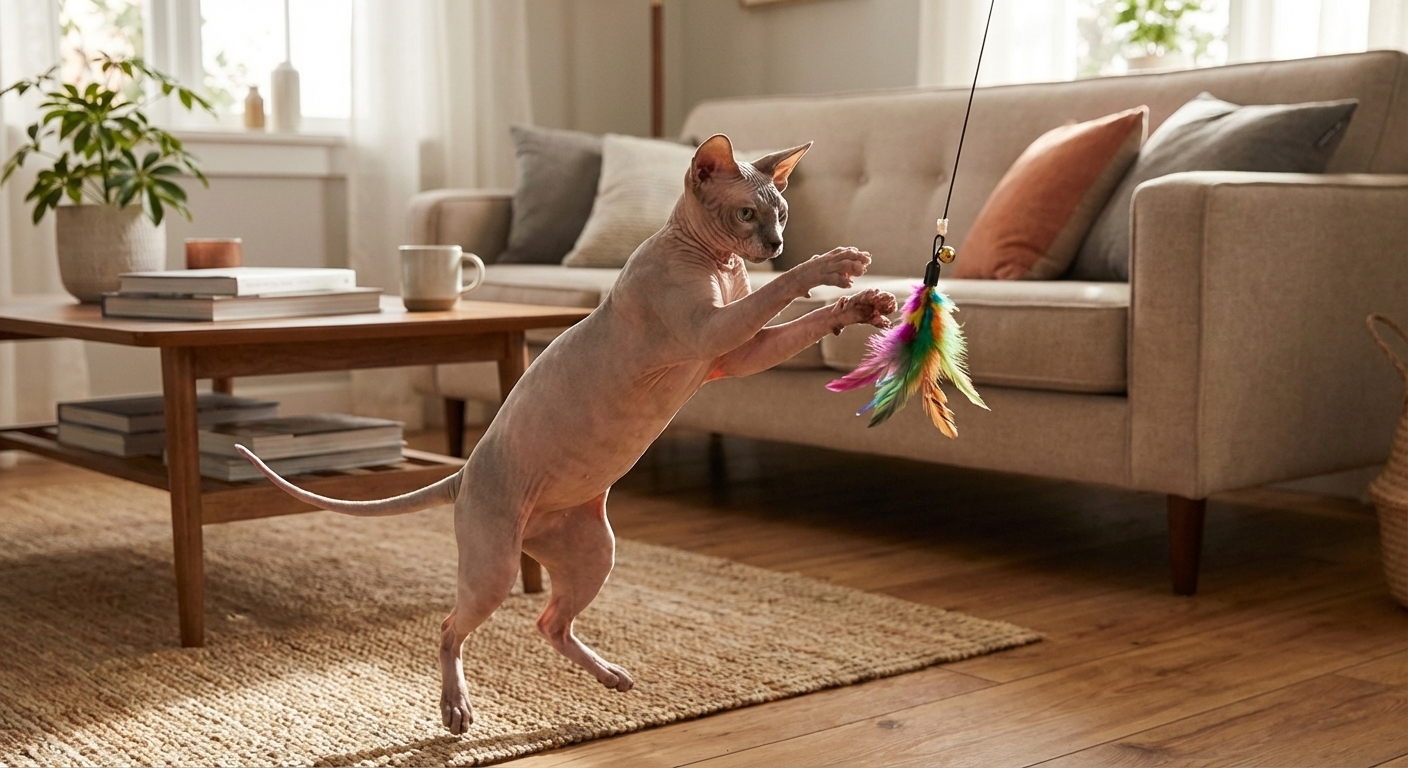
Most Sphynx cats have a moderate-to-high energy level. They do best with daily interactive play, puzzle feeders, climbing options, and at least one cozy warm spot they can claim as their own.
Daily and weekly care needs
Daily life with a Sphynx is all about simple routines. A little consistent upkeep goes a long way for comfort, skin health, and that clean “fresh cat” feel.
Skin care
Sphynx cats are not truly hairless. Many have a fine peach-fuzz coat, but they lack the typical fur that absorbs skin oils. That means oils can build up on the skin and may leave smudges on bedding and furniture.
Many Sphynx cats do well with a bath about once a week, but some need less often and some need more. Over-bathing can dry or irritate the skin, so let your cat’s skin tell you what schedule fits. If your cat looks flaky, feels tight, or seems itchier after baths, ask your veterinarian about adjusting frequency or changing products.
Use a gentle, fragrance-free cat shampoo recommended by your veterinarian. Avoid harsh human soaps, essential oils, and heavily scented products, which can irritate skin.
- Water should be warm, not hot. Sphynx cats lose heat quickly.
- Dry thoroughly and keep them warm after bathing.
- Check skin folds for redness, odor, or moisture trapped in creases.
Ear care
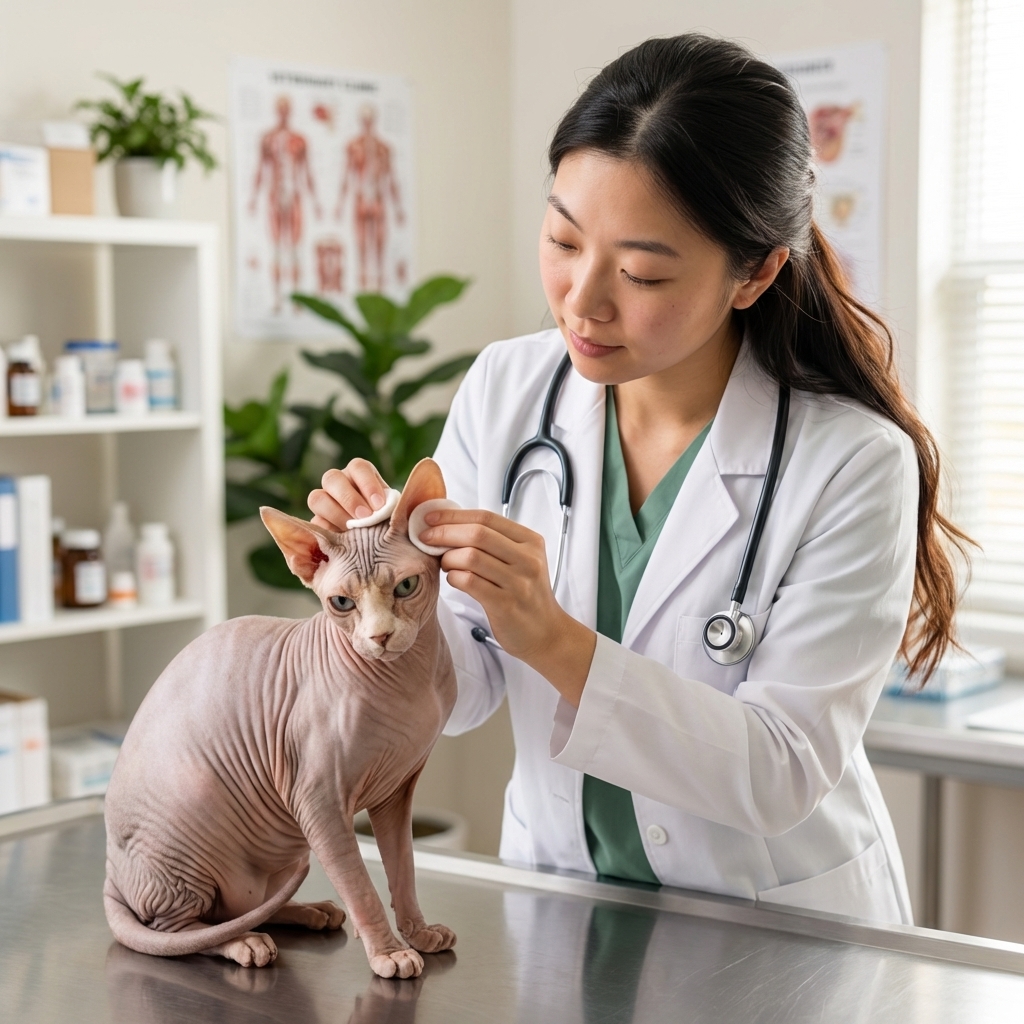
Sphynx cats often have more visible ear wax and debris. Some need ear cleaning weekly, while others can go longer between cleanings.
- Use a veterinarian-approved ear cleaner.
- Clean only what you can see in the outer ear.
- Never use cotton swabs deep in the ear canal.
If you notice a strong odor, heavy dark discharge, head shaking, swelling, or sensitivity, schedule a vet visit to rule out infection or ear mites.
Nails and paws
Because oil can also collect around the nail beds, Sphynx cats often need nail trims plus a gentle wipe of the toes and nail folds. Plan on trimming every 2 to 4 weeks.
Teeth and gums
Dental disease is common in cats of all breeds. The most practical plan is:
- Daily or near-daily brushing with cat toothpaste
- Veterinary dental cleanings when recommended
- Dental treats or water additives only if your vet approves
Temperature, sun, and home setup
Once you have the care routine down, your home setup does a lot of the heavy lifting. Warmth, safe lounging spots, and easy-to-clean fabrics can make Sphynx life smoother for everyone.
Keeping a Sphynx warm
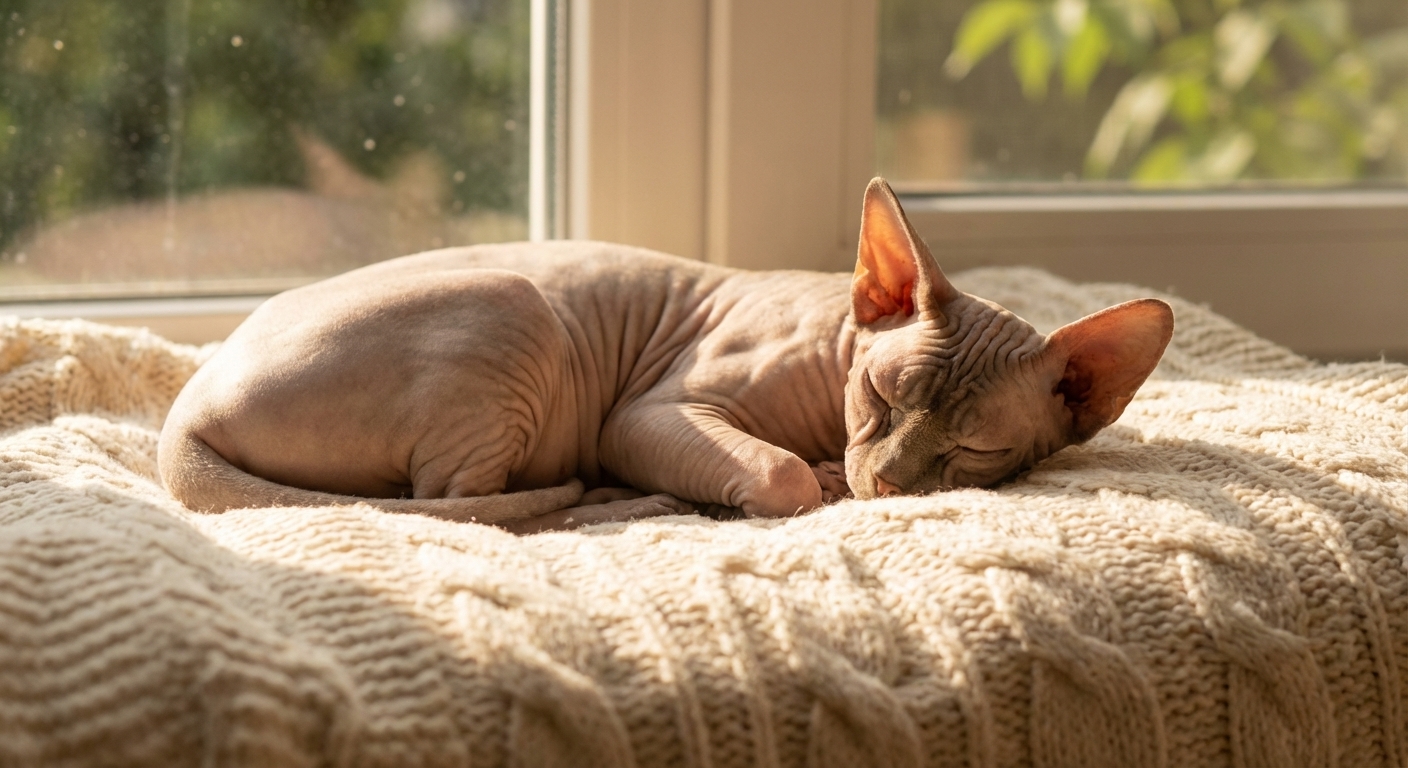
Without a normal coat, Sphynx cats can chill easily. You will usually see them seeking warm laundry, blankets, sun spots, or your lap.
- Provide heated cat beds designed for pets or safe warming pads with temperature control.
- Skip human heating pads. Use pet-rated products with chew-resistant cords when possible, and keep cords out of reach.
- Use soft blankets and draft-free resting areas.
- Consider cat sweaters if your home runs cool, but monitor for rubbing or skin irritation.
Sun exposure
Sphynx cats can sunburn. Window naps are adorable, but be thoughtful with direct sunlight.
- Limit long periods of intense sun exposure.
- Use curtains or UV-filtering window film if your cat spends hours in sunny windows.
- Do not apply human sunscreen unless your veterinarian specifically recommends a pet-safe option.
Bedding and laundry
Because of skin oils, washable bedding is your best friend. As a starting point, plan to wash blankets and bed covers weekly, then adjust based on your cat’s skin and how quickly fabrics pick up oil or odor.
Litter box basics
Sphynx cats are usually no different than other cats in litter box preferences, but the combo of skin oils and damp paws can make tracking more noticeable in some homes.
- Use a large, easy-to-clean box and scoop daily.
- Choose low-dust litter if your cat seems sensitive.
- If you have multiple cats, follow the general rule of one box per cat, plus one extra.
- Consider a litter mat to reduce tracking.
Feeding a Sphynx
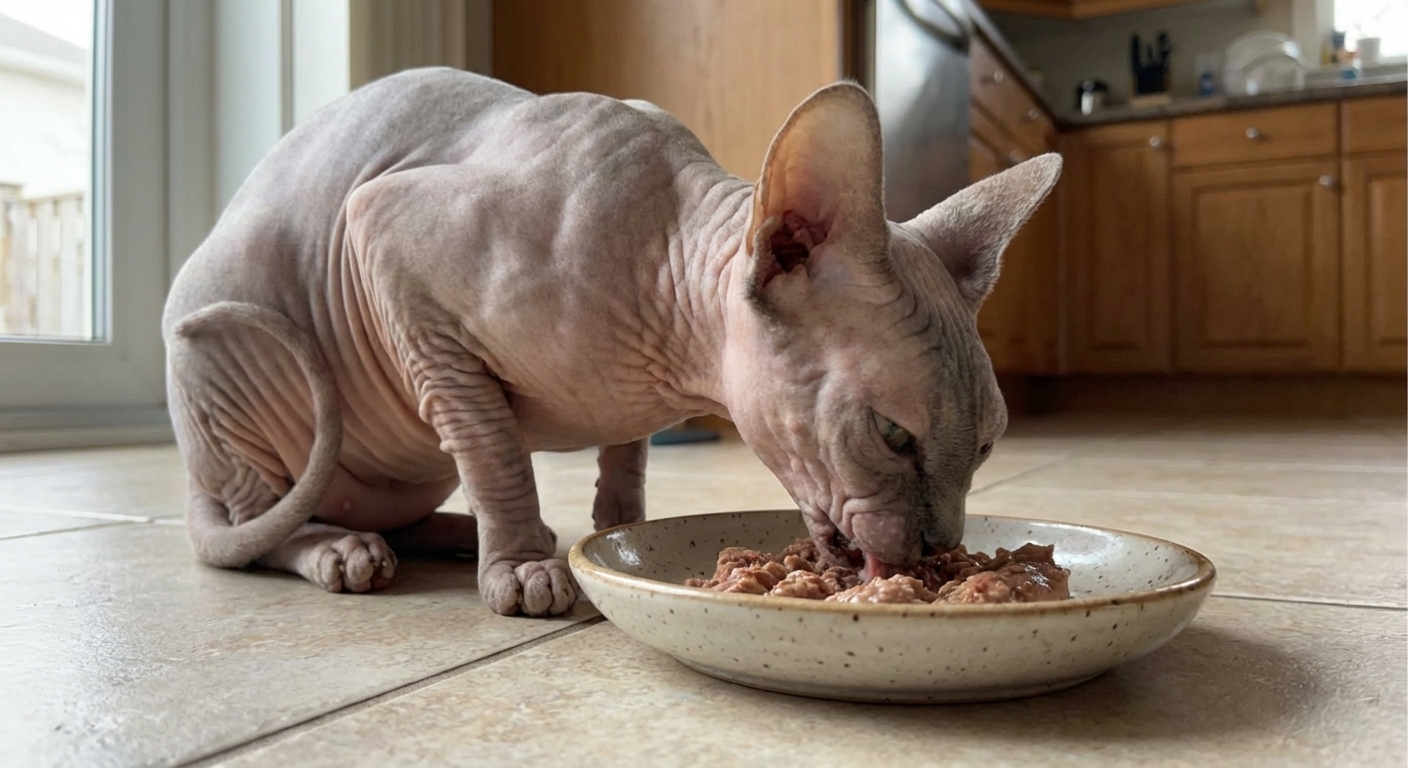
Sphynx cats often seem to have higher calorie needs than you expect for their size. They may burn more energy staying warm, but it varies by the individual cat, age, and activity level.
Practical feeding tips
- Choose a complete and balanced diet that meets AAFCO standards for your cat’s life stage.
- Consider a mix of wet and dry food for hydration support, especially if your cat is not a big water drinker.
- Monitor body condition, not just the number on the scale.
- Use measured portions and adjust based on your vet’s guidance and your cat’s activity.
If your Sphynx is always hungry, it does not automatically mean you should feed unlimited food. Rule out parasites and underlying medical issues, then build a feeding plan that supports healthy muscle and a stable weight.
Common Sphynx health issues
No cat is guaranteed to have health problems, but some conditions occur more often in Sphynx lines. Working with a reputable breeder and keeping up with routine veterinary care makes a big difference.
Hypertrophic cardiomyopathy (HCM)
HCM is a heart condition seen in multiple cat breeds, including Sphynx. It can sometimes be silent until it becomes serious.
What helps:
- Ask breeders about HCM screening and cardiology exams in their breeding cats.
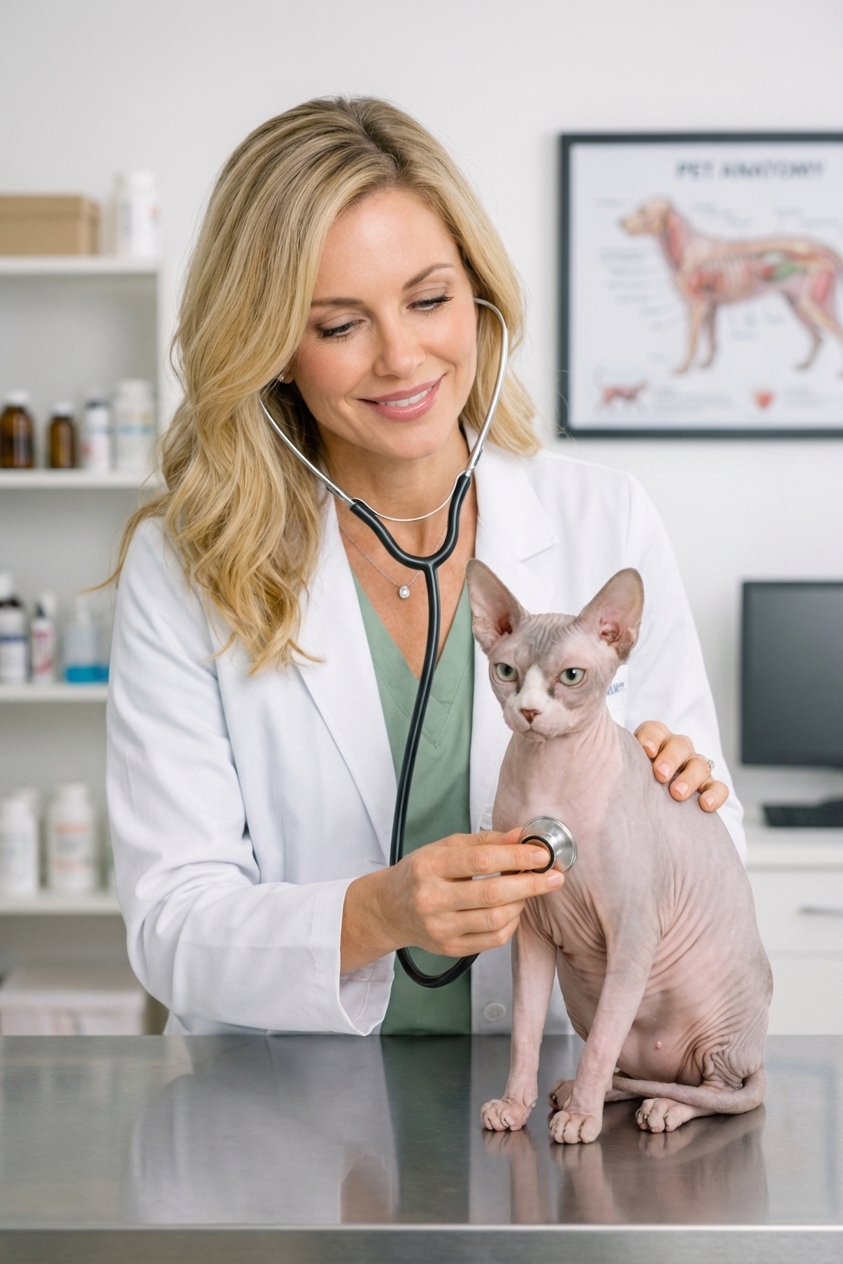
- Schedule regular vet checkups. Your veterinarian may recommend an echocardiogram, especially if there is a family history.
- Watch for warning signs like rapid breathing at rest, lethargy, or fainting.
- Open-mouth breathing is an emergency in cats. Seek emergency veterinary care right away.
Skin problems
Common concerns include:
- Acne and blackheads, especially on the chin
- Yeast or bacterial infections in skin folds
- Contact irritation from detergents, fabrics, or scented products
If your cat’s skin looks red, feels greasy despite bathing, develops bumps, or has a musty odor, it is worth a vet visit. Many skin issues are very treatable once you identify the cause.
Ear infections and wax buildup
Heavy wax can be normal for some Sphynx cats, but pain, smell, swelling, or head shaking are not. These signs can point to infection or mites, and treatment is much easier when caught early.
Dental disease
Gingivitis and periodontal disease can cause pain, bad breath, and decreased appetite. Routine dental care is preventive medicine, and it absolutely affects quality of life.
Digestive sensitivities
Some Sphynx cats have sensitive digestion. If you see chronic soft stool, vomiting, or poor skin quality, talk with your veterinarian about a structured diet trial, parasite testing, and next-step diagnostics.
Choosing a breeder or adoption path
Sphynx cats can be found through reputable breeders and occasionally through breed-specific rescues. Because there are known inherited concerns, doing your homework matters.
Questions to ask a breeder
- What health screening do you perform for HCM and other inherited conditions?
- Can you share veterinary records for the parents and kittens?
- How are kittens socialized, handled, and introduced to normal household sounds?
- What support do you provide after adoption?
Be cautious with sellers who will not answer health questions, rush the sale, or cannot provide medical documentation.
What to expect in the first month
Week 1
- Set up a warm, quiet “home base” room with a litter box, food, water, and a heated bed or cozy blankets.
- Keep visitors minimal while your cat learns the new routine.
- Schedule a new-pet vet appointment if you do not already have one.
Weeks 2 to 4
- Practice gentle handling for ears, nails, and bathing.
- Start tooth brushing slowly, even if it is just a few seconds at first.
- Confirm your long-term diet plan with your veterinarian, especially for kittens that are growing quickly.
- Review your preventive care plan, including vaccines, parasite prevention, and spay or neuter timing.
The best part is that most Sphynx cats truly enjoy the attention once they learn the routine. Care time becomes bonding time.
Quick care checklist
- Bathing: many do well weekly, adjust based on your cat’s skin and avoid over-bathing
- Ears: check weekly, clean as needed
- Nails: trim every 2 to 4 weeks, wipe nail folds as needed
- Warmth: provide cozy bedding and draft-free rest spots, use pet-rated heated beds only
- Sun: prevent sunburn with smart window management
- Litter: scoop daily, add boxes as needed, use a mat to reduce tracking
- Vet care: routine exams, vaccines and parasite prevention, discuss HCM screening
Good Sphynx care is not hard, but it is consistent. If you build a simple routine and stick with it, you will usually have a happy, comfortable cat who wants to be right next to you all the time.