Is your dog constantly licking paws? Learn the most common causes—allergies, yeast, injury, irritants, or anxiety—plus a 2‑minute paw check, safe home ...
Article
•
Designer Mixes
Spaying or Neutering Your Cat

Shari Shidate
Designer Mixes contributor
If you are sharing life with a cat, one of the biggest early health decisions you will make is whether to spay or neuter. As a veterinary assistant here in Frisco, Texas, I have seen how much smoother life can be for both cats and families when this is done at the right time with good aftercare. Let’s walk through what the surgery is, why it is recommended, what to expect, and how to make the recovery as stress-free as possible.

What spaying and neutering mean
Spaying (female)
Spaying is surgery to prevent pregnancy by removing the ovaries, and usually the uterus as well. The medical term you may hear is ovariohysterectomy (ovaries and uterus removed) or sometimes ovariectomy (ovaries removed only). It is performed under general anesthesia.
Neutering (male)
Neutering is surgery to prevent a male cat from reproducing by removing the testicles. The medical term is castration. It is also performed under general anesthesia and is typically quicker and less invasive than a spay.
Why veterinarians recommend it
Spaying and neutering are not just about preventing kittens. They are evidence-based procedures that can reduce certain health risks and make many common behavior issues much easier to manage.
Health benefits for female cats
- Prevents pyometra, a life-threatening uterine infection that can require emergency surgery.
- Significantly lowers mammary (breast) cancer risk when performed before the first heat cycle. Mammary tumors in cats are often malignant.
- Essentially eliminates the risk of cancers of the removed organs (ovaries and usually the uterus). Rarely, a small amount of ovarian tissue can remain (ovarian remnant syndrome), which is one reason follow-up matters if heat-like signs ever appear after a spay.
Health benefits for male cats
- Prevents testicular cancer.
- Can improve hormone-related skin and coat issues in some cats, such as stud tail (supracaudal gland overactivity).
- Decreases fighting and roaming, which can reduce bite wounds, abscesses, and exposure to infectious diseases.
Behavior and quality-of-life benefits
- Less yowling and restlessness related to being in heat (estrus) in females.
- Less spraying and strong urine odor in many males, especially when neutered before the habit becomes established.
- Fewer escape attempts, which means fewer car-related injuries and fewer missing-cat emergencies.
Just as important, spaying and neutering helps reduce pet overpopulation. Shelters and rescues are full every year, including here in Texas, and preventing accidental litters truly saves lives.
When to spay or neuter
Many veterinarians recommend spaying or neutering around 5 to 6 months of age, and many shelters do it earlier. The “best” timing can vary based on your cat’s health, growth, and lifestyle.
- Indoor-only cats still benefit, because hormones can drive behaviors like vocalizing, escaping, and marking.
- Outdoor or indoor-outdoor cats are at higher risk of unplanned pregnancy and injury from roaming, so earlier is often better.
- Adult cats can still be safely spayed or neutered in most cases. If your cat is older, your vet may recommend additional pre-op screening.
Ask your veterinarian what timing makes the most sense for your cat’s age, weight, and medical history.

What to expect on surgery day
Before surgery
Your clinic will give fasting instructions, typically no food after a certain time the night before for many adult cats. Always follow your vet’s guidance, especially for kittens or cats with medical conditions.
Important kitten note: very young kittens (often under about 4 to 5 months) may have a shorter fasting window to reduce the risk of low blood sugar (hypoglycemia). If you have a young kitten, confirm the exact timing with your clinic.
Many clinics recommend or require pre-anesthetic testing. These labs help assess organ function and can identify hidden issues that might change the safest anesthesia plan.
During surgery
Your cat will be placed under general anesthesia, monitored closely (heart rate, breathing, oxygenation, temperature), and given pain control. Pain management is standard of care and should be part of every spay or neuter plan.
After surgery
Most cats go home the same day once they are awake and stable. Your cat may be sleepy or a little wobbly that evening. This is common after anesthesia.
Many clinics also offer add-ons at this visit, such as a microchip, vaccines if your cat is due, or nail trims. If you are interested, ask ahead of time so your veterinarian can plan appropriately.
Recovery and aftercare at home
Good aftercare makes a huge difference. The goal is simple: keep the incision clean, keep your cat calm, and prevent licking. If you ever feel unsure, call your clinic. In my experience, quick questions early can prevent bigger problems later.
Protect the incision
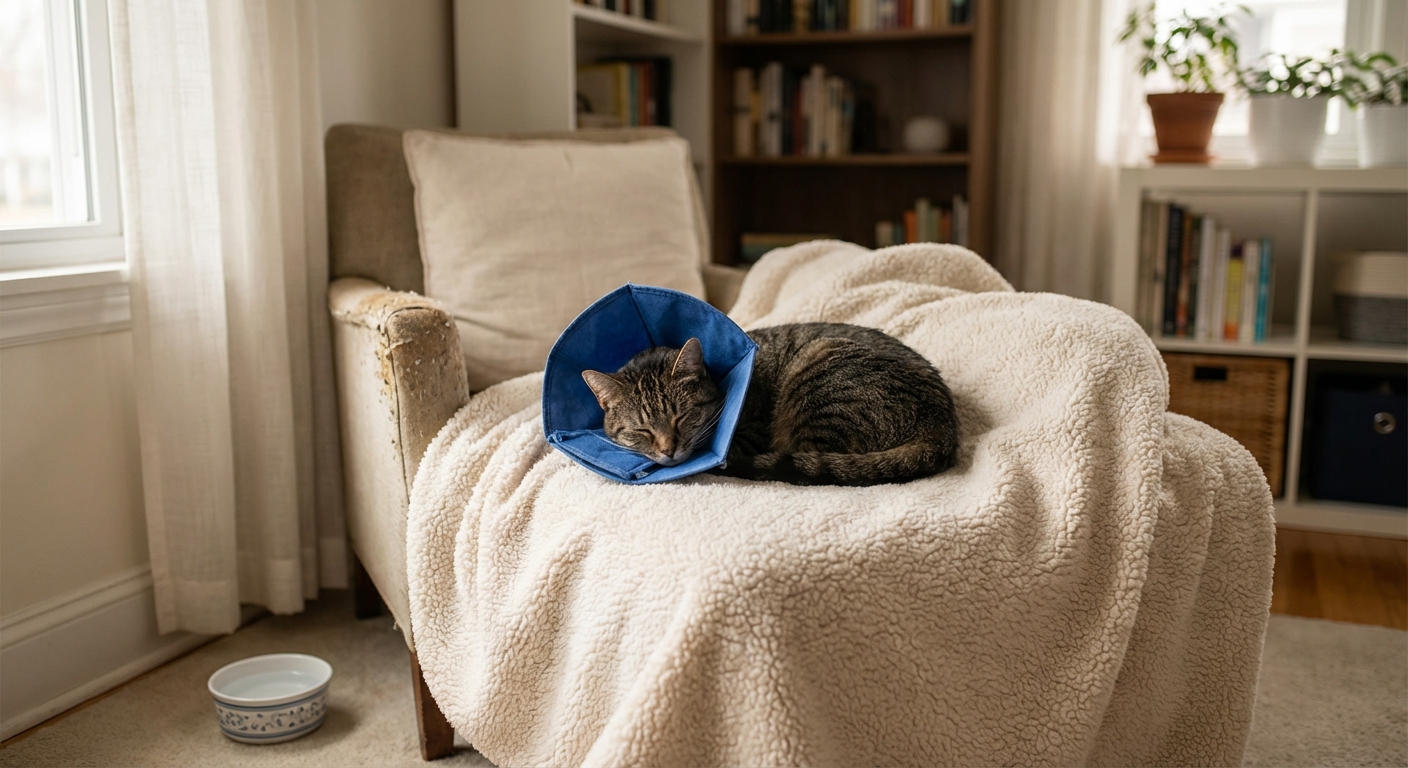
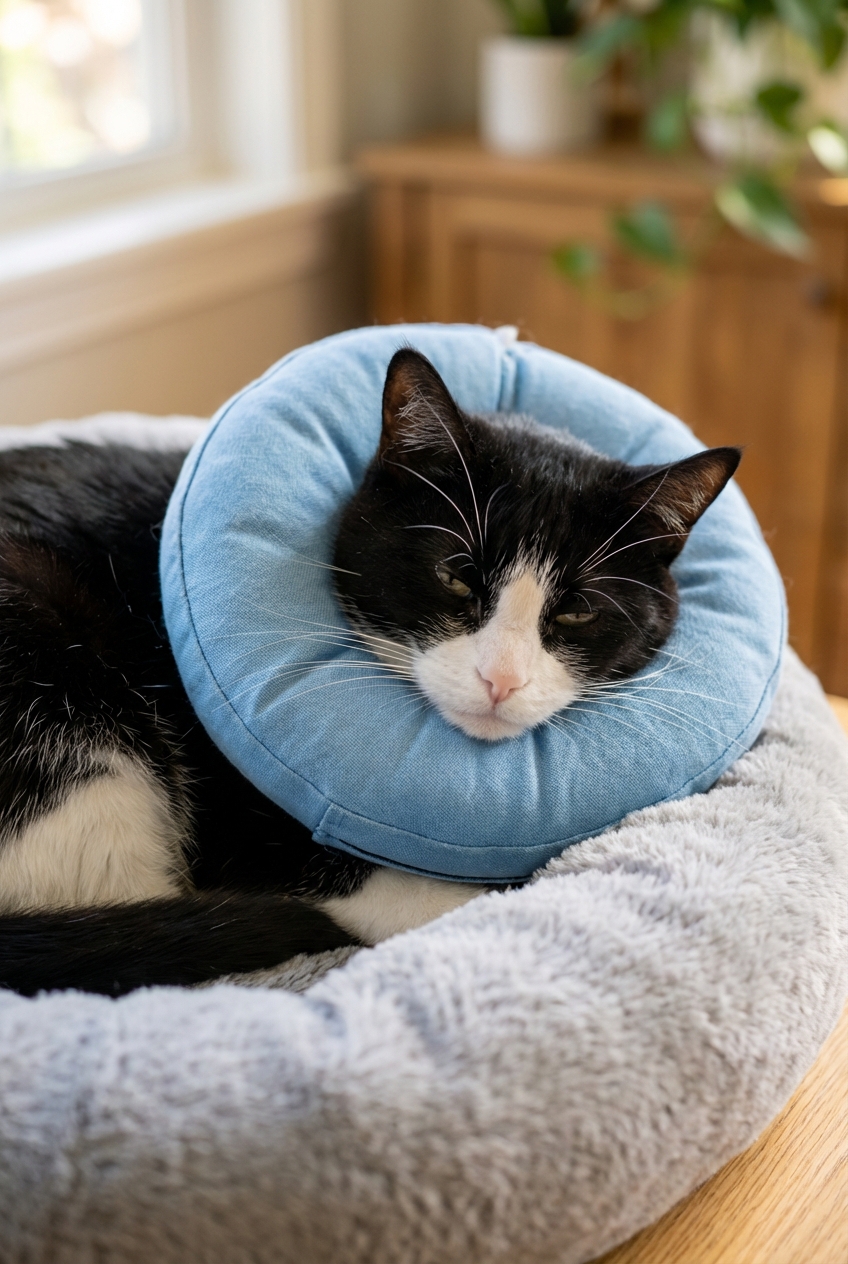
- Use an e-collar or recovery collar if your cat is licking. Licking can introduce bacteria and can open the incision.
- Check the incision daily. Mild redness, a small amount of swelling, and even light bruising can be normal during the first couple of days.
- Know what is not normal: gaping edges, thick discharge, increasing redness, significant heat, or a bad smell.
- Do not bathe your cat and avoid letting the incision get wet until your vet clears it.
Keep activity low
- Limit jumping and zoomies for the time your vet recommends, commonly around 10 to 14 days for a spay and often less for many neuters.
- Consider a small room setup if your cat is very active. A bathroom or bedroom with food, water, and a litter box can work well.
Feeding and litter box tips
- Your cat may have a smaller appetite the first night. Offer a small meal unless your clinic instructs otherwise.
- Make sure fresh water is available.
- Keep the litter box very clean. Some vets recommend low-dust litter during healing.
Pain control and medications
- Give only the medications prescribed by your veterinarian, exactly as directed.
- Never give human pain relievers (like acetaminophen or ibuprofen). These can be dangerous for cats.
What you will see
- Spay incision: usually on the belly, and typically larger than a neuter incision.
- Neuter incision: usually near the scrotal area, and often small. Some clinics do not use external stitches for routine neuters.
Watch for red flags
Call your veterinarian promptly if you notice any of the following:
- Bleeding, discharge, or a bad smell from the incision
- Incision opening or missing sutures/staples
- Significant swelling, heat, or worsening redness
- Not eating for more than 24 hours, repeated vomiting, or severe lethargy
- Difficulty urinating or defecating
Common concerns and straight answers
Will my cat gain weight after being spayed or neutered?
Spaying and neutering can lower calorie needs, so weight gain can happen if food intake stays the same. The fix is very doable: measure meals, avoid free-feeding if weight is creeping up, use play as enrichment, and talk with your vet about an appropriate diet. The surgery can change metabolism, so adjusting calories and activity is often the key.
Is it healthier to let a female have one litter first?
No. There is no medical need for a first litter. Spaying before the first heat cycle is widely recommended because it offers the strongest protection against mammary tumors.
Will neutering stop spraying?
Neutering often reduces or eliminates hormone-driven spraying, especially if done before the behavior becomes routine. If spraying continues, it may be related to stress, changes in the home, or conflict with other cats. Your veterinarian can help you troubleshoot.
Is anesthesia safe?
Modern anesthesia is much safer than it used to be, especially with appropriate pre-op screening and monitoring. No procedure is zero risk, but in healthy cats the risk is generally low. If you are nervous, ask your clinic what monitoring and pain control are included.
Special situations to discuss with your vet
- Pregnant or in-heat cats: spays can still be performed, but timing and cost may differ.
- Brachycephalic (flat-faced) breeds: some cats need extra anesthesia planning.
- Heart murmurs or chronic illness: your vet may recommend additional diagnostics or referral.
- Feral and community cats: trap-neuter-return programs are a proven, humane way to stabilize colony size when consistently applied with strong participation and ongoing resources.
How to choose a clinic
When you are comparing clinics, it is perfectly okay to ask specific questions. You are advocating for your cat.
- What pain medication will my cat receive during and after surgery?
- What kind of monitoring is used under anesthesia?
- Do you recommend pre-anesthetic bloodwork for my cat’s age and health?
- What is your incision closure method and will there be sutures that need removal?
- What should I do if my cat will not tolerate an e-collar?
Bottom line
Spaying or neutering is one of the most meaningful preventive choices you can make for your cat’s long-term health, comfort, and safety. It can lower the risk of serious disease, reduce stress behaviors, and prevent accidental litters. If you are on the fence, schedule a conversation with your veterinarian and ask about the best timing for your cat’s age, body condition, and lifestyle.
Gentle planning plus great aftercare is the recipe for a smooth recovery. Most cats bounce back quickly, and you will be glad you did it.