Practical spay recovery guidance to help your cat heal comfortably: set up a quiet space, protect the incision, make the cone easier, prevent jumping, and kn...
Article
•
Designer Mixes
Spaying a Cat Recovery Time

Shari Shidate
Designer Mixes contributor
Spaying is one of the most common surgeries cats have, and in most healthy cats, recovery is straightforward when you know what to expect and what to watch for. As a veterinary assistant, I like to remind families of two simple truths: your cat will often act normal before she is actually healed, and the first 7 to 10 days are where your home care matters most.
This guide walks you through typical spay recovery time, day-by-day milestones, practical home setup tips, and the red flags that mean it is time to call your veterinarian.
How long does spay recovery take?
Most clinics recommend restricting activity for 10 to 14 days so the skin incision can heal.
One important nuance: even when the skin looks closed, internal healing continues for several weeks. That is why your veterinarian may still advise a gradual return to full activity, especially for high-energy cats.
Recovery has a few layers:
- First 24 hours: anesthesia and pain medication effects are the main issue.
- Days 2 to 3: appetite and energy should begin improving, but activity still needs to be limited.
- Days 4 to 10: incision should look dry and calm, and your job is preventing licking, running, and jumping.
- Days 10 to 14: many cats are cleared for normal routines if the incision is healed and there are no complications.
Important: If your cat is in heat when spayed, is older, is overweight, is pregnant, or had a more involved surgery, recovery can be a little more uncomfortable and sometimes a bit slower. Your veterinarian’s discharge instructions always win.
Incision location note: Most spays use a small incision on the belly (midline), but some clinics use a flank (side) approach. Either can be normal, so follow your clinic’s specific instructions.
What the incision should look like
Many pet parents worry they will not recognize “normal.” Here are general expectations for an uncomplicated spay incision:
- Normal: a thin, closed line; mild swelling; mild bruising; skin edges touching (apposed); a small amount of redness right along the incision line; a tiny bit of dried blood at first.
- Not normal: gaping skin; thick swelling or a firm lump that grows; heat; pus-like discharge; foul odor; bleeding that continues or actively drips; skin that looks very angry with redness spreading outward.
A small, soft fluid pocket under the incision can be a seroma. It is not always an infection, but it does warrant a call to your veterinary team, especially if it is enlarging.
Some cats also have a small shaved patch on the front leg from an IV catheter. That is expected. Skin glue can also look like a shiny or slightly crusty line and is often normal.
Quick monitoring tip: Check the incision 1 to 2 times daily in good lighting. You are looking for a stable, calm appearance, not perfection.
Spay recovery timeline
Day 0 (surgery day)
- Sleepy and wobbly is common. Cats may seem disoriented or extra clingy, or they may hide.
- Offer a small meal. Many clinics recommend a small portion that evening. Some cats skip dinner and eat normally the next morning.
- Keep her warm and quiet. A calm room helps her fully wake up safely.
Days 1 to 3
- Energy should improve. Some cats bounce back fast, but you still must restrict movement.
- Mild tenderness is expected. Follow the pain medication plan exactly, and never give human pain meds unless your vet prescribed them.
- Incision should stay clean and dry. No bathing, no ointments, no peroxide.
Days 4 to 7
- Most cats act normal. This is the tricky part because they may try to sprint, leap, and wrestle.
- Continue cone or recovery suit. Even one good licking session can irritate or open the incision.
- Watch for swelling. A small amount can be normal, but it should not worsen.
Days 8 to 14
- Incision should look calm. Redness should decrease, and skin edges should be closed and sealed.
- Recheck if your clinic recommends it. If there are external stitches, this is often when they are removed.
- Gradual return to normal activity. Wait for your veterinarian’s clearance before letting your cat resume unrestricted activity.
Your at-home setup
The goal is simple: reduce jumping, prevent licking, keep the incision dry, and make rest easy.
Quick rule for most cats: plan on 10 to 14 days of “quiet living” unless your veterinarian tells you otherwise.
Create a recovery room
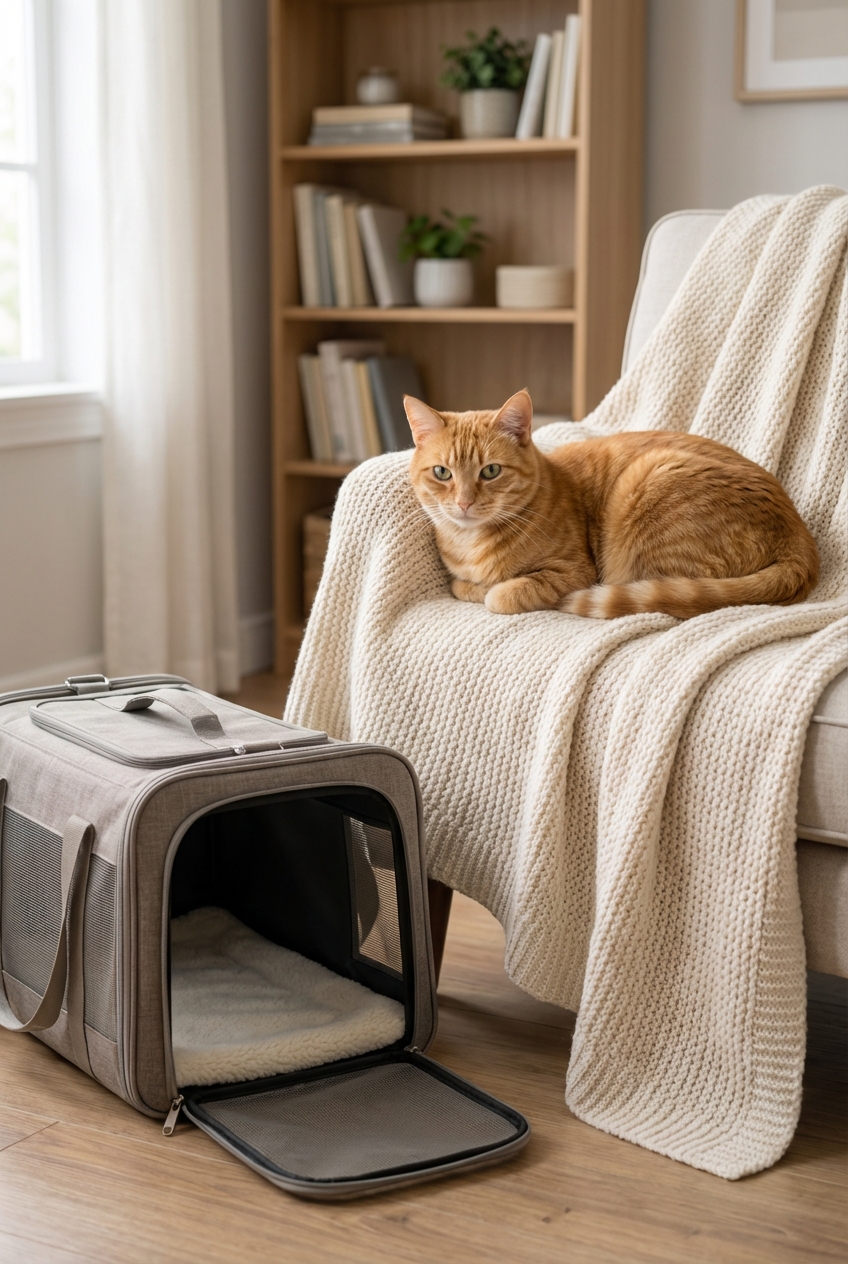
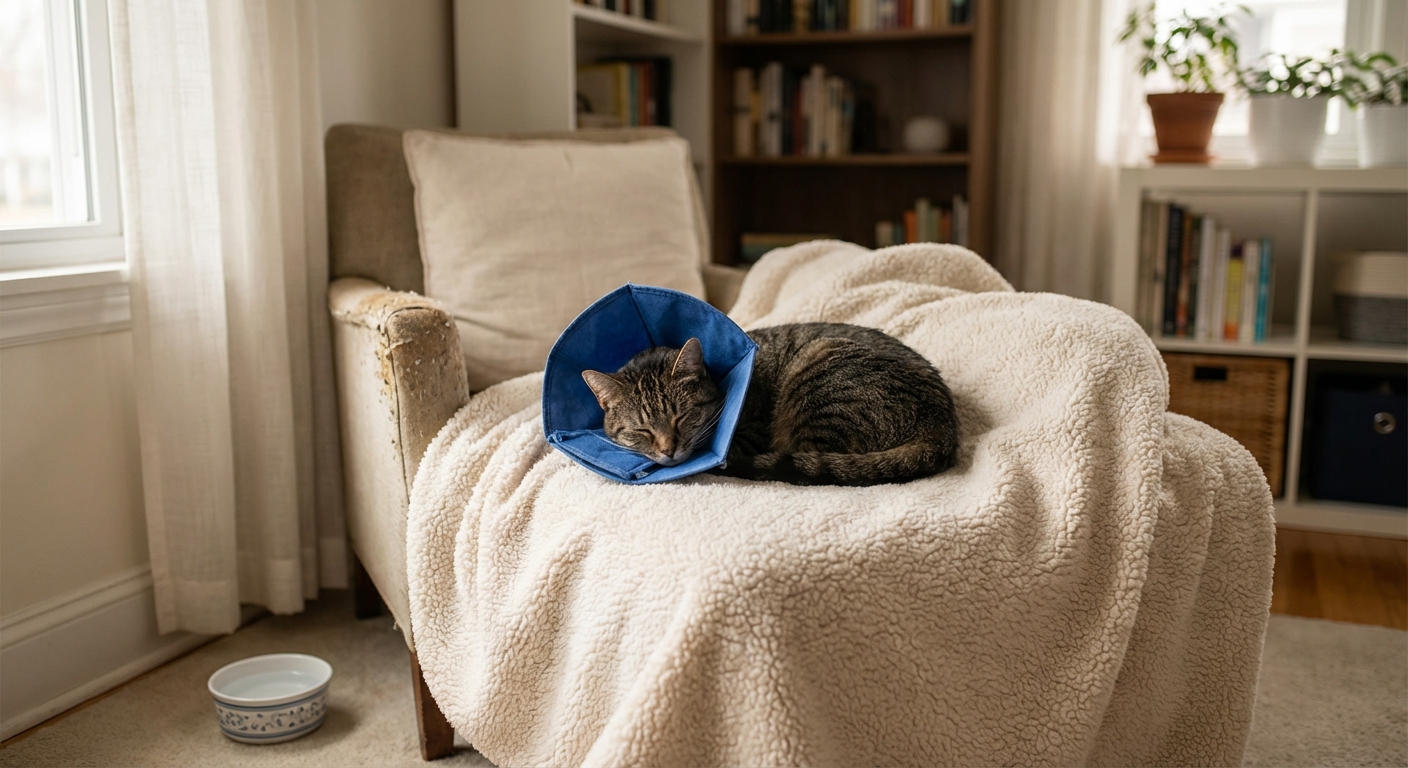
- Choose a small, quiet space like a bathroom, large crate, or guest room.
- Use soft bedding that is easy to wash.
- Provide a low-sided litter box so she does not have to climb in.
- Keep food and water nearby so she does not feel the need to roam.
What “restricted activity” means
- No running, zoomies, or rough play.
- Minimize jumping on furniture, cat trees, and window perches.
- Avoid stairs when possible. If needed, carry her up and down for the first several days.
- Separate from other pets if they encourage play or wrestling.
- Skip laser pointers and high-energy toys until cleared.
Keep the incision dry
- No baths or grooming wipes over the belly or incision area.
- If litter sticks to fur, use a damp cloth away from the incision and keep the surgical site dry.
Cone or recovery suit
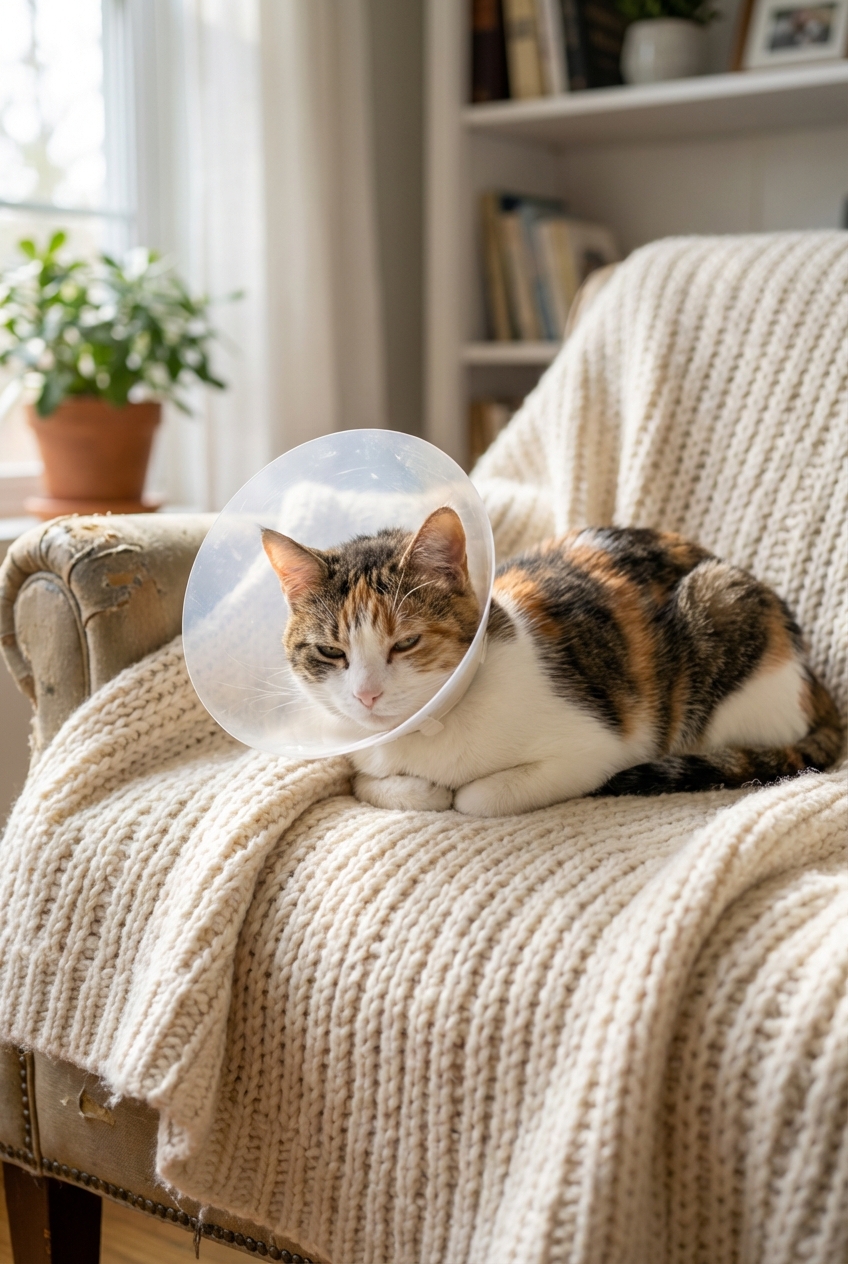
In many cases, yes, she really needs one. Licking is one of the top reasons spay incisions get inflamed or infected. Cats can do a surprising amount of damage quickly.
- E-collar (cone): Often the most reliable option for determined lickers.
- Soft collar: More comfortable for some cats, but not always effective.
- Recovery suit: Can work well, especially for calm cats, but must stay clean and dry. Check the incision daily.
How long to keep it on: In general, keep the cone, collar, or suit on until your recheck or for the full 10 to 14 days, unless your veterinarian says you can stop sooner.
If your cat is trying hard to remove her collar or seems panicked, call your veterinary team. There are usually alternatives, and we want her safe and comfortable.
Food, litter, and pain control
Appetite
It is common for appetite to be slightly reduced the first night. By the next day, many cats are eating normally.
Call your vet if your cat will not eat for 24 hours, if she will not eat at all the day after surgery, or if poor appetite comes with vomiting, diarrhea, or worsening lethargy. For kittens and cats with medical conditions, call sooner.
Litter box
Your cat should urinate within about 24 hours after surgery, although many cats will go sooner. Quiet, small urinations can be easy to miss if you have multiple cats, so it helps to keep her separate during the first day.
Straining to urinate, crying in the box, frequent trips with little output, or any sign of distress is urgent. Contact your vet right away.
Stool can be delayed a bit, especially if she ate less or received certain medications. Let your vet know if she is straining, very uncomfortable, or has not had a bowel movement for more than a couple of days.
Pain medication
Use only medications prescribed for your cat, exactly as directed. Do not use human medications like ibuprofen, acetaminophen, or naproxen, as they can be toxic to cats.
When to call the vet
If something feels “off,” you are never bothering your clinic by checking in. Call your veterinarian right away if you notice:
- Bleeding that does not stop quickly, active dripping, or blood soaking the bedding
- Incision opening or visible tissue
- Thick discharge, pus, bad odor, or increasing redness
- Large swelling at the incision site or a lump that grows (possible seroma)
- Repeated vomiting, extreme lethargy, or collapse
- Not eating for 24 hours, not eating at all the day after surgery, or not drinking
- Not urinating within 24 hours
- Straining to urinate or signs of pain in the litter box (urgent)
- Persistent crying, hiding, aggression, or signs of significant pain despite medication
- Difficulty breathing, pale gums, or weakness (emergency)
Trust your instincts. Most spay recoveries go smoothly, but early support makes a huge difference when something is not healing as expected.
FAQs
Can my cat jump after being spayed?
Try to prevent jumping for 10 to 14 days. Jumping increases tension on the incision and can cause swelling, fluid buildup, or opening of the incision. If she is determined, a small recovery room and removing “launch points” helps more than constant correction.
Is it normal for my cat to be sleepy after spay surgery?
Yes, especially during the first 12 to 24 hours. If your cat is hard to wake, cannot stand, or seems to be getting worse instead of better, call your vet.
Can I clean the incision?
Usually, no. Most incisions should be left alone. Avoid ointments, alcohol, hydrogen peroxide, and bandages unless your veterinarian specifically instructs you otherwise.
How do I know if my cat has internal stitches?
Many spays use internal dissolvable sutures, with either skin glue or small external sutures. Your discharge paperwork should clarify this. When in doubt, call the clinic and ask.
Final reminder
Spaying is a powerful step toward a healthier life and helps prevent unwanted litters. If you keep your cat calm, prevent licking, and follow your veterinarian’s instructions, most cats are back to their normal routines within about two weeks, even though deeper healing continues a while longer.
If you want, take one photo of the incision each day in good lighting. It can help you notice subtle changes and gives your veterinary team a clearer picture if you need to call.