
Spay Incision Healing Stages: What’s Normal vs Infected

As a veterinary assistant, I can tell you one thing with confidence: most post-spay incisions look a little scary before they look “normal.” A small amount of redness, mild swelling, and even bruising can be totally expected, especially in the first few days. The goal of this guide is to walk you through what a typical spay incision can look like day by day, plus the specific warning signs that can point to infection or the incision opening.
Important note: This is general education, not a substitute for veterinary care. Every clinic has slightly different closure styles (stitches under the skin, skin sutures, staples, or surgical glue). Healing timelines are similar, but the “look” can vary. If your dog is acting unwell, don’t wait for the incision to look bad before calling your vet.
Quick cheat sheet: normal vs infection
Usually normal
- Pink or light red edges along the incision line for the first few days
- Mild swelling that feels like a small ridge under the skin
- Bruising (purple, blue, or yellow) around the incision, especially days 2 to 7
- A very small, brief amount of clear or slightly blood-tinged seepage in the first 24 hours (if it continues, reappears, or makes the area wet, call your clinic)
- Dry scabbing along the line as it seals
More concerning
- Thick discharge (yellow, green, gray, or white), especially if it keeps coming
- Strong, foul, or worsening odor from the incision (a mild “skin” smell can be normal)
- Heat, rapidly spreading redness, or swelling that is increasing instead of improving
- Incision gaping open or you can see tissue underneath
- Bleeding that drips or soaks the area
- A new lump that is soft, growing, or fluid-filled
- Your dog seems sick (lethargic, not eating, vomiting, feverish, trembling)
Day-by-day healing stages
Below are “photo-style” descriptions of what many owners see. Use them as a reference, but trust your instincts. If something looks wrong or your dog’s behavior changes, it is always okay to call your clinic.
Day 0 (surgery day)
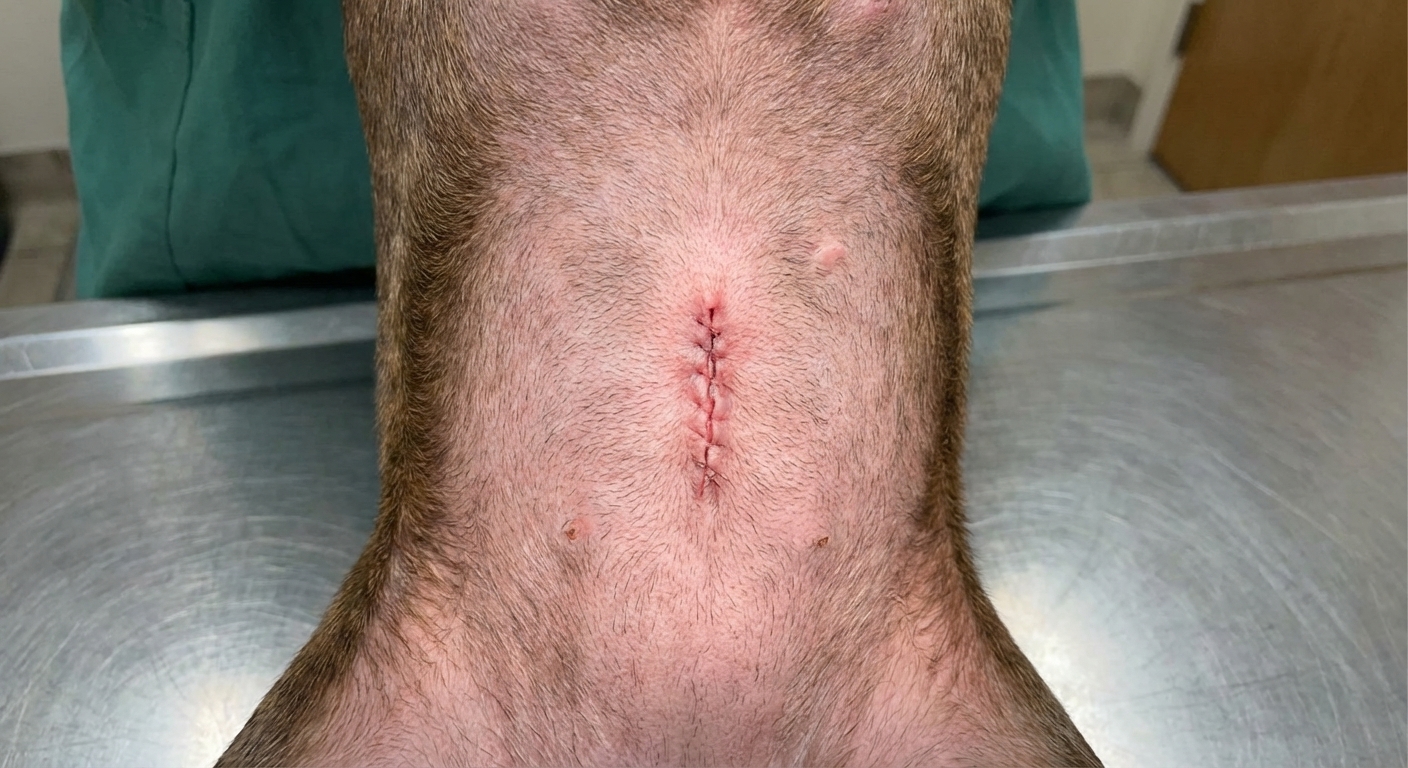
What’s normal: The incision is fresh and may look slightly puffy. The skin around it can be pink or red. You might see a tiny spot of dried blood or a thin line of surgical glue. Many dogs have a shaved belly, and the skin can look irritated from prep scrub.
Also normal today: Mild grogginess from anesthesia and a lighter appetite. Some dogs skip dinner the first night. That by itself does not mean infection.
Photo description: A thin, straight line on the midline belly, edges gently touching, with mild redness in a narrow halo and a small amount of dried blood at one end.
Watch for: Active bleeding, blood pooling under your dog, or repeated licking or chewing despite intervention.
Days 1 to 2
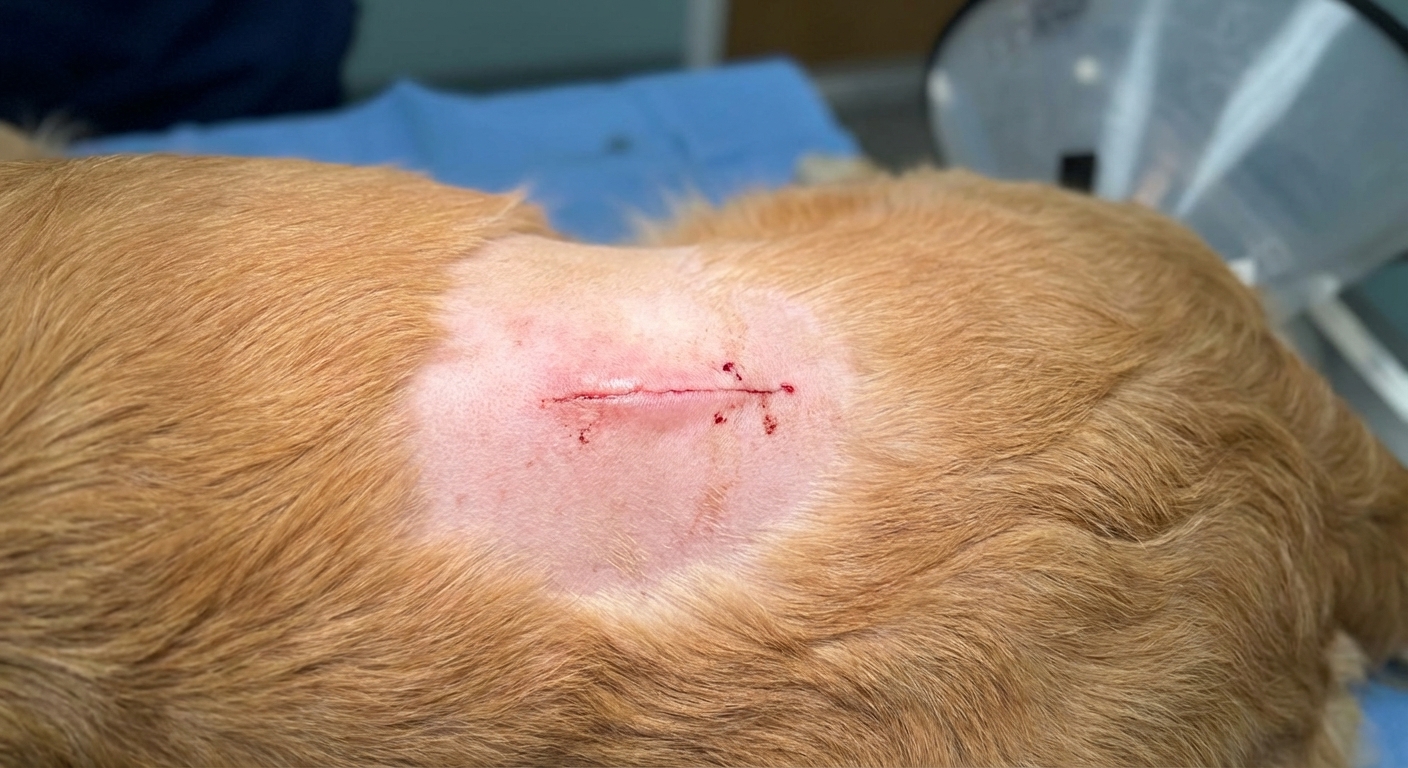
What’s normal: Redness can look a bit brighter on day 1. Mild swelling is common. Some dogs develop bruising that starts purple or bluish and spreads slightly around the incision. The incision should still be closed and dry or mostly dry.
Behavior note: Some sleepiness is still common on day 1, and a smaller appetite can happen. What you do not want is a dog that is getting more dull, refusing all food and water, or seems painful despite prescribed meds.
Photo description: The incision line looks clean but more “angry” in color than day 0, with a raised ridge and faint purple bruising nearby.
Watch for: Any thick discharge, a wet incision that keeps re-wetting, a strong smell, or swelling that suddenly balloons.
Days 3 to 4
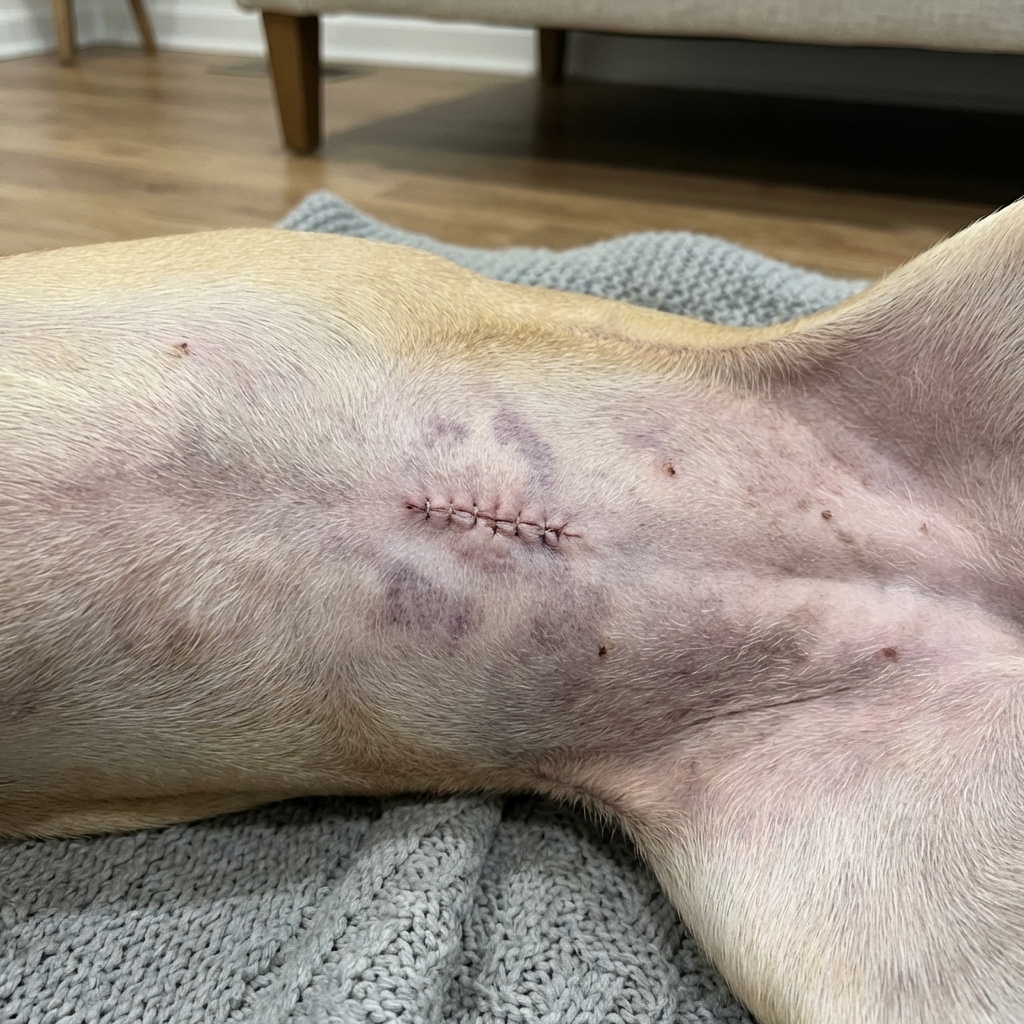
What’s normal: Redness should start to look less intense, although some dogs still look fairly pink at the edges. Bruising often becomes more noticeable around now. The incision may look dry, with a thin scab line forming.
Photo description: A closed incision with a narrow scab and yellowing bruises that look like they are “changing color” as they heal.
Watch for: Redness that is spreading outward in a widening circle, especially if the skin feels hot. Also watch for a new “pocket” of fluid that looks like a soft bubble under the incision.
Days 5 to 7
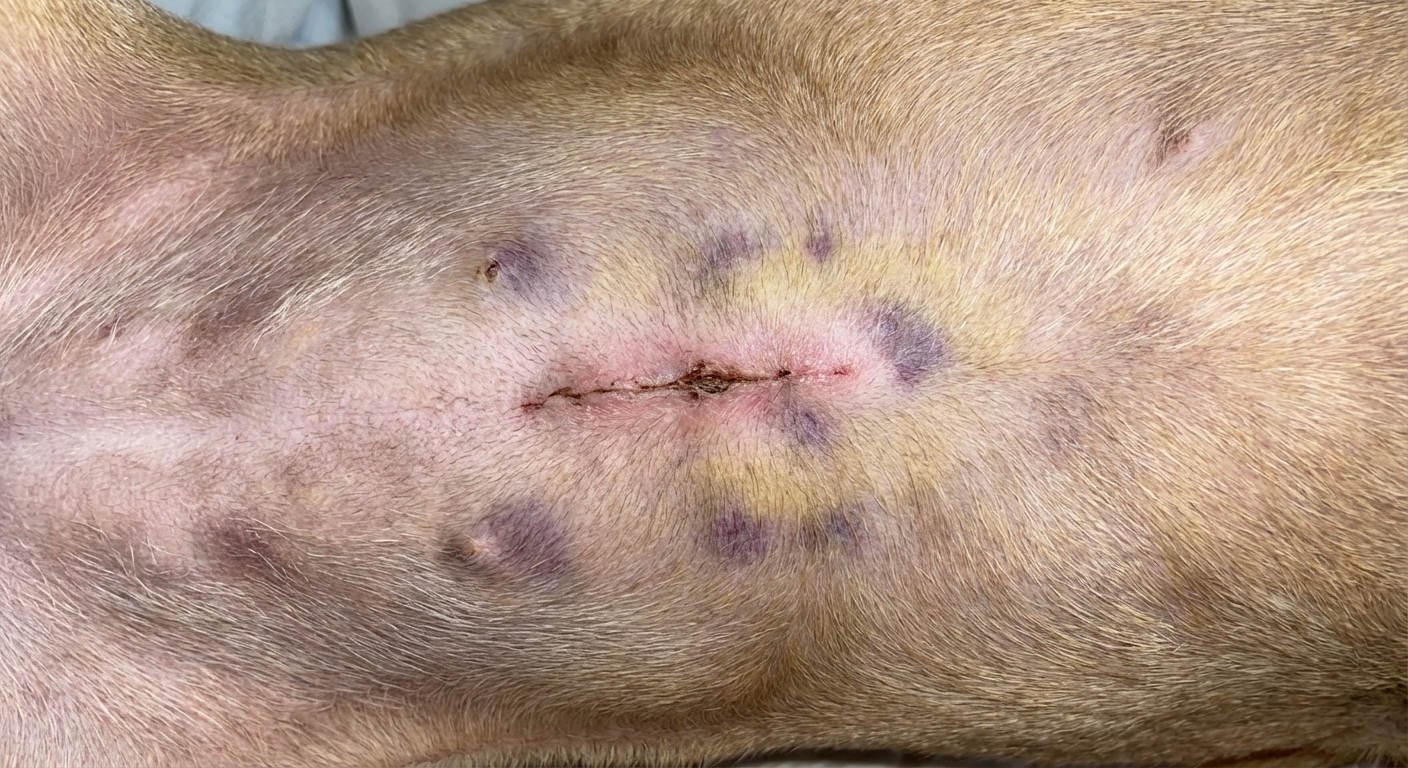
What’s normal: Many incisions look significantly better by the end of the first week. The skin edges should be sealed. Bruising may linger but should fade. Mild firmness under the incision can be normal scar tissue forming.
Photo description: A neat, closed line that is light pink or pale, with a small scab and fading yellow bruises. The area looks drier and calmer.
Watch for: A scab that turns wet, pus-like discharge, or a sudden increase in swelling after it was improving. That pattern is a common “call the vet” moment.
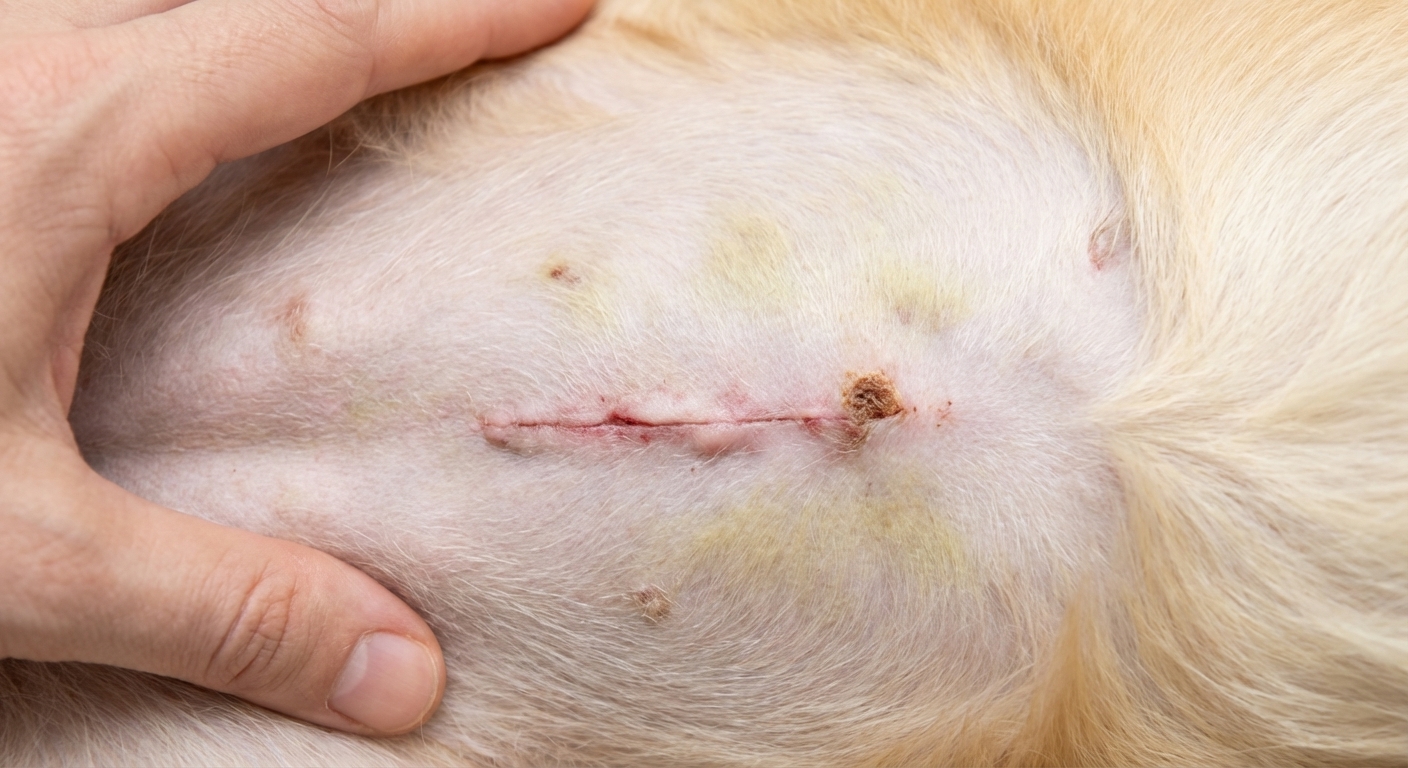
Days 8 to 10
What’s normal: The incision line often looks flatter. A small amount of scab may flake off. If your dog has external sutures or staples, this is often around the time your clinic schedules a recheck or removal, depending on their protocol.
Photo description: A thin, pale pink line, mostly hairless around it, with tiny scab remnants at the ends.
Watch for: Any gap in the incision line, even if your dog seems fine. Small openings can worsen quickly if licking starts.
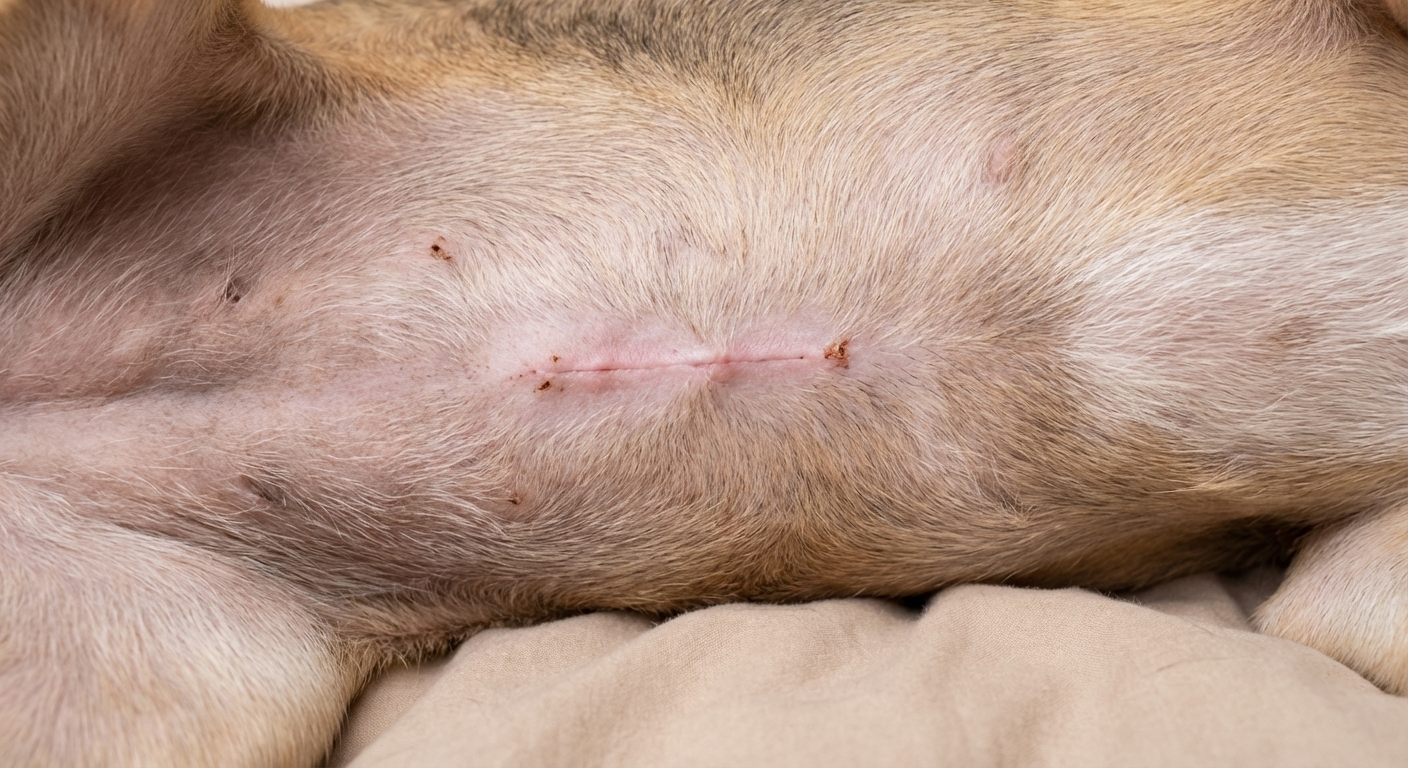
Days 11 to 14
What’s normal: Many dogs have a well-sealed incision by two weeks, but some take longer (especially very active dogs, larger dogs, or dogs with certain medical or skin conditions). The line may still be slightly pink or darker than surrounding skin. Hair regrowth starts to soften the look of the shaved area.
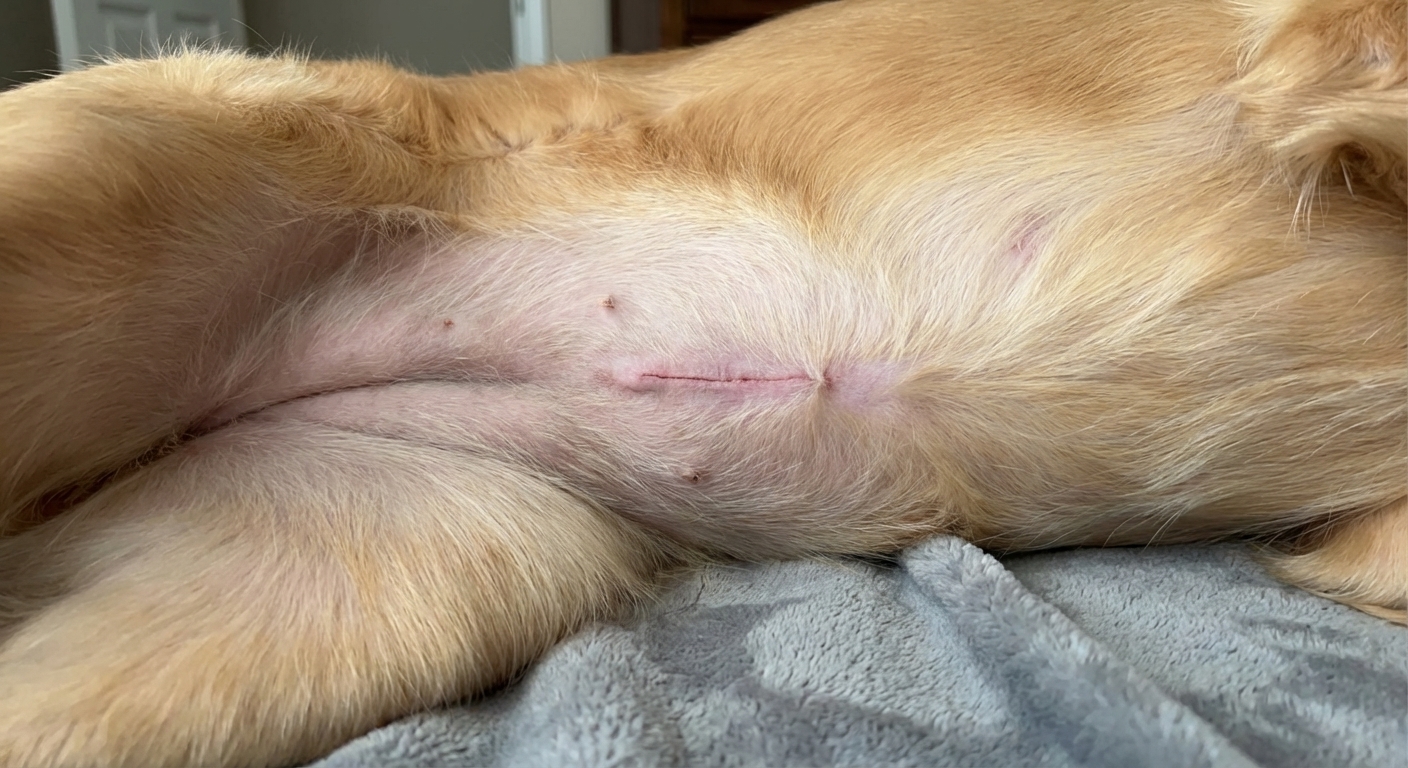
Photo description: A thin healed seam with no swelling, no discharge, and normal skin temperature.
Watch for: Persistent redness, recurring discharge, or a lump that continues to enlarge. Those are not typical “two-week” findings.
What infection often looks like
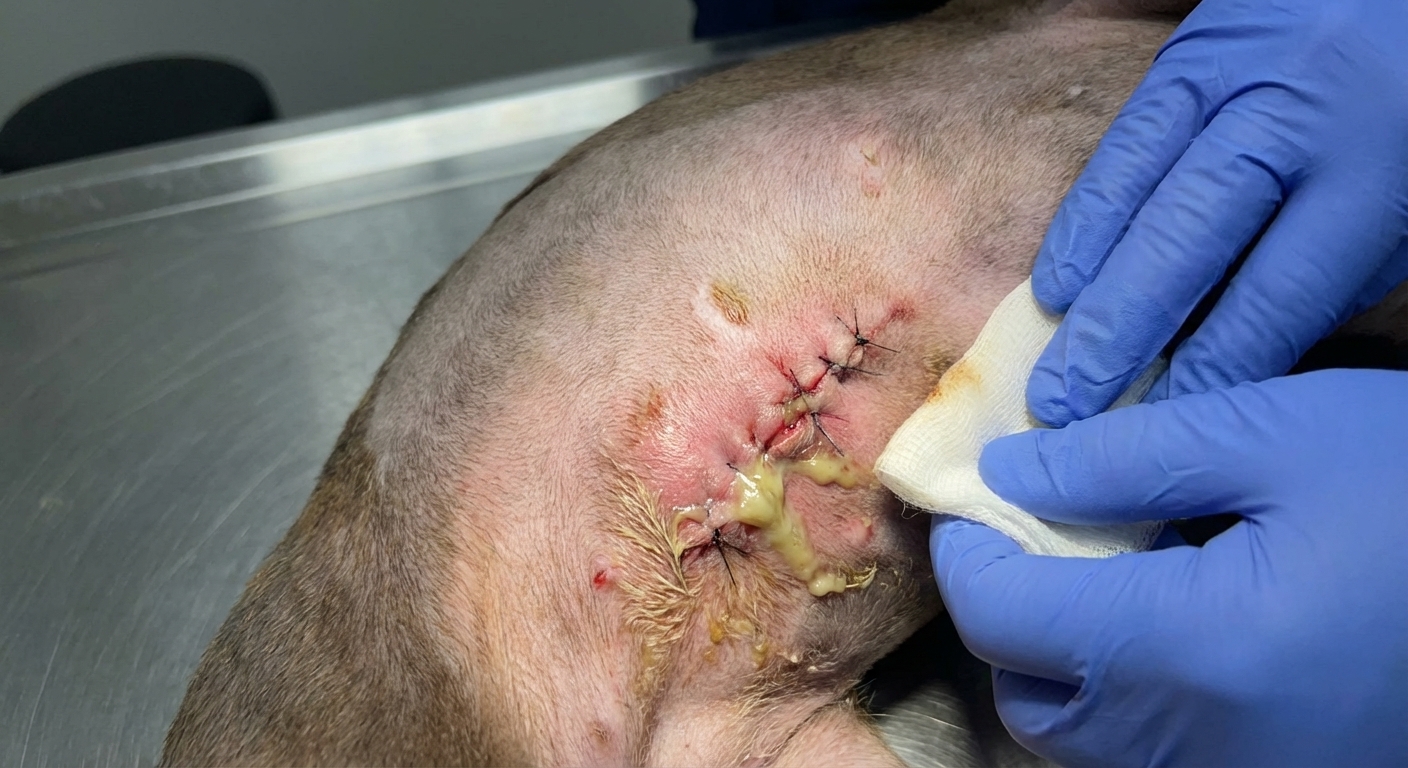
Owners often describe infection as “it looked fine, then it suddenly looked worse.” That is a helpful clue. Here are common infection patterns, described like you might see them in a real-life photo.
- Pus or thick discharge: creamy yellow, greenish, or gray fluid that collects at the incision or makes the fur wet and sticky
- Widening redness: redness that extends farther from the incision each day instead of shrinking
- Swelling with heat: the skin feels warmer than the surrounding belly and looks puffy or tight
- Strong odor: a foul, rotten, or unusual sickly-sweet smell, especially if it is getting stronger
- Opening or gaping: the incision edges separate or you can see pink tissue beneath
Seroma vs infection
A seroma is a pocket of clear fluid that can form under the skin after surgery, especially if a dog is too active. It can look like a soft, squishy bulge near or under the incision, and it can make owners think “infection” even when it is not.
Seroma clues (often not infected)
- Soft swelling that feels like fluid under the skin
- Usually minimal redness
- Incision line stays closed and dry
- Your dog often feels normal otherwise
Infection clues
- Heat, worsening redness, pain
- Discharge, odor
- Dog seems unwell or increasingly uncomfortable
Best advice: Call your vet if you see a new lump. Many seromas are managed with strict rest and incision protection, but some need hands-on guidance. Also, seromas can occasionally become infected, so trends matter.
When to contact the vet now
Call your vet right away or seek urgent care if you see any of the following:
- The incision is opening or you see tissue underneath
- Bleeding that drips, pools, or soaks a bandage
- Green, yellow, or foul-smelling discharge
- Rapidly increasing swelling or the belly looks suddenly enlarged
- Your dog is lethargic, won’t eat, vomits, collapses, or seems painful despite prescribed meds (note: mild sleepiness or a skipped meal can be normal on Day 0 and Day 1)
- You suspect your dog got to the incision (licking, chewing, or removed a staple or suture)
Home checks and home care
- Check twice daily in good light. Take a quick photo each time. It is easier to notice “worse” when you can compare.
- Look first, touch last. If you do touch, use clean hands and be gentle.
- Sniff test: a mild “skin” smell is fine. A strong, foul, or worsening odor is not.
- Keep it dry. No bathing and no swimming until your vet clears it.
- Strict activity restriction matters. Leash walks for potty only, no running, jumping, rough play, or stairs if you can avoid them for 10 to 14 days (or your clinic’s timeline). Too much activity is a common trigger for swelling and seromas.
- Protect the incision. Use the cone or an approved alternative. Most true incision disasters start with licking when no one is watching.
If you are unsure, send your clinic a clear photo and a short description of your dog’s energy, appetite, and potty habits. Those details matter.
Meds and pain control safety
Give only the medications your veterinarian prescribed, exactly as directed. Do not give human pain relievers (like ibuprofen, naproxen, or acetaminophen) unless your veterinarian specifically tells you to, because they can be dangerous for dogs.
What not to put on the incision
This is one of the biggest accidental mistakes I see. Unless your veterinarian specifically instructs you, avoid:
- Hydrogen peroxide
- Rubbing alcohol
- Ointments, creams, or essential oils
- Powders or “wound sprays” meant for people
These products can irritate tissue, delay healing, or encourage licking. If your vet wants the incision cleaned, they will tell you exactly what to use and how often.
Spay incision FAQs
Why don’t I see stitches?
Many spays are closed with stitches under the skin (plus glue or a tiny surface seal). That means you may not see any sutures at all. “No visible stitches” does not mean it is open.
Is swelling normal after a spay?
Mild swelling is common for several days. Swelling that is rapidly increasing, hot, painful, or paired with discharge is not.
Is bruising normal?
Yes. Bruising can look dramatic and still be normal, especially between days 2 and 7. It should gradually fade and change from purple to yellow to normal skin tone.
My dog has a small hard lump under the incision. Should I worry?
A small firm ridge can be normal healing tissue. A soft, squishy, growing lump can be a seroma. Either way, it is smart to call your vet if a new lump appears.
How long should my dog wear the e-collar?
Most dogs need incision protection for 10 to 14 days, or until your veterinarian confirms the incision is fully sealed. If your dog cannot tolerate a cone, ask your clinic about alternatives like an inflatable collar or a surgical recovery suit (a onesie). Some dogs do great in a suit, but only if it prevents licking and stays clean and dry.
If you only remember one thing: a normal incision generally gets calmer each day. Infection or incision trouble often looks like a sudden setback, more wetness, more swelling, more redness, and a dog who feels worse.