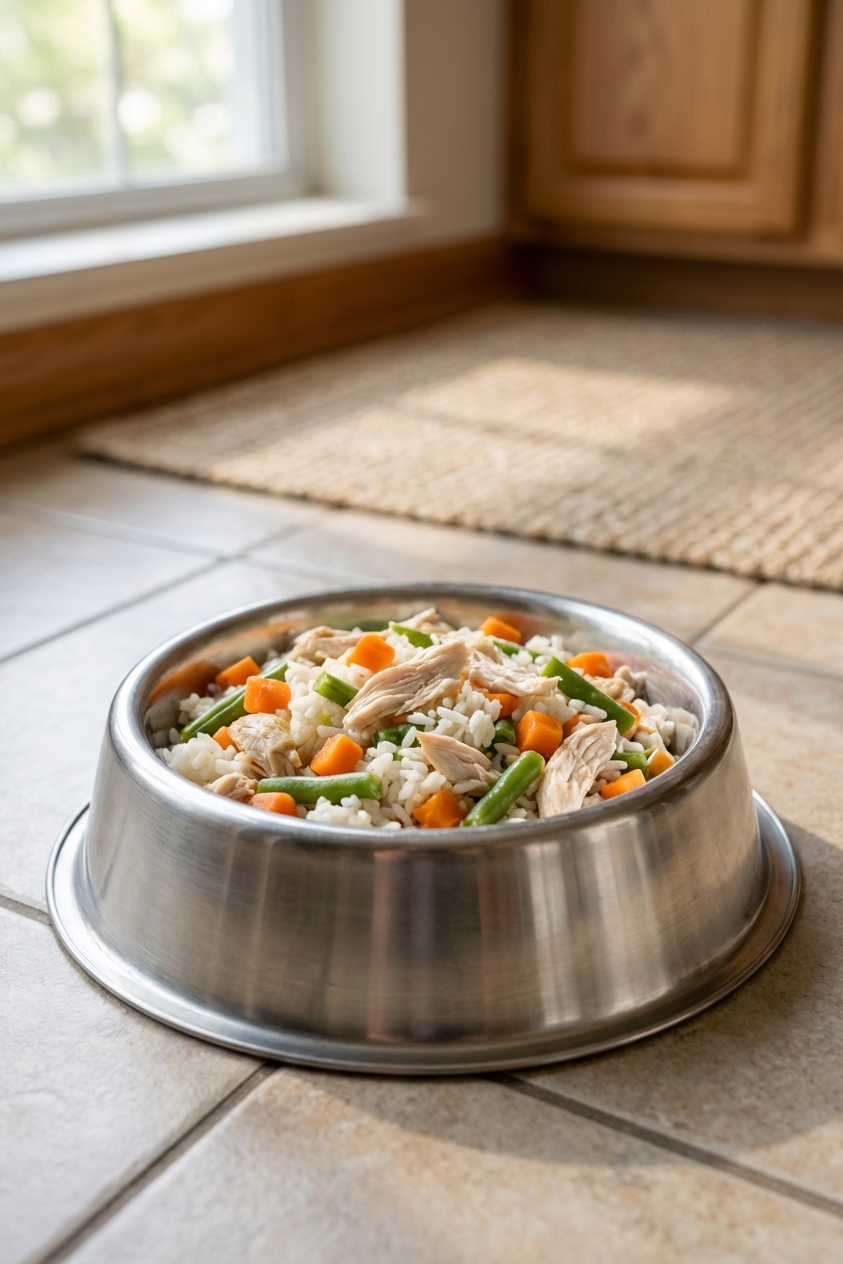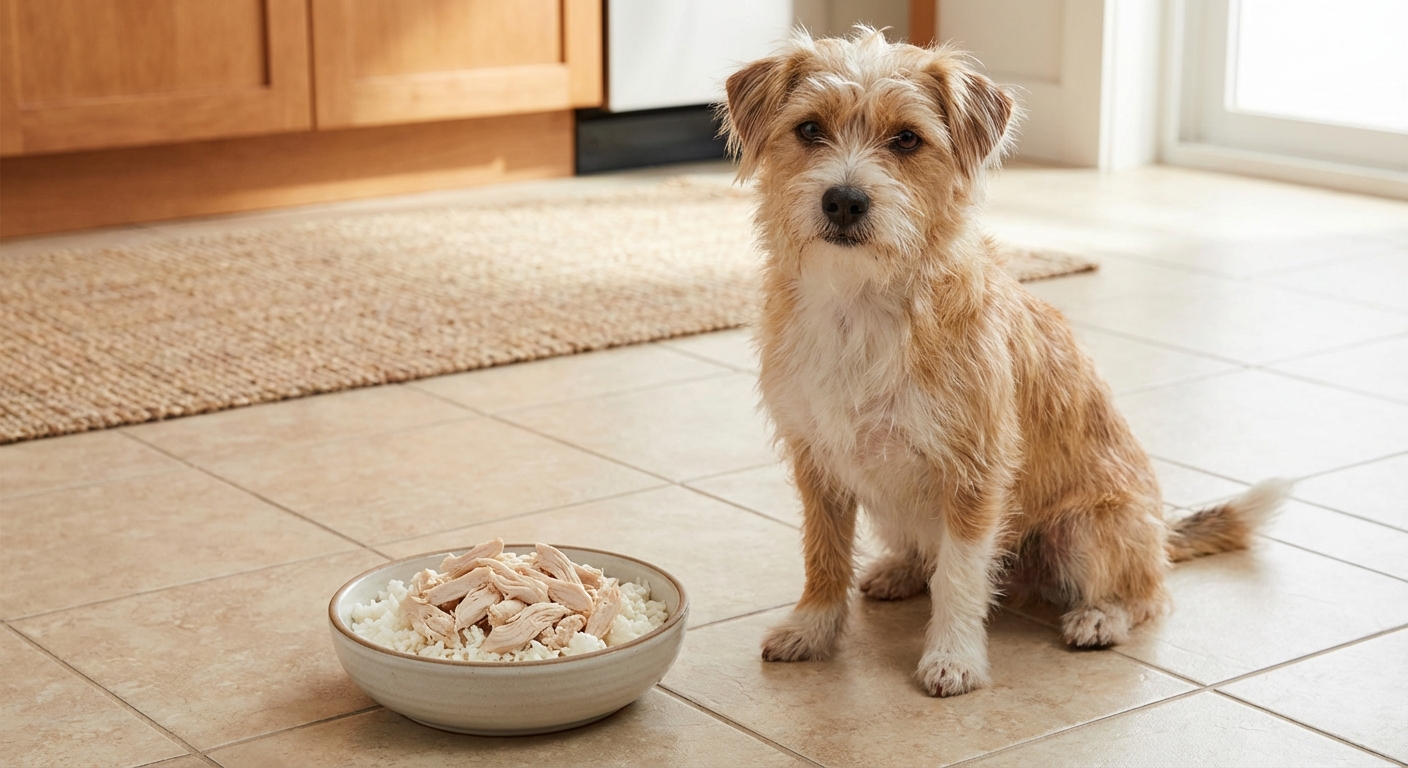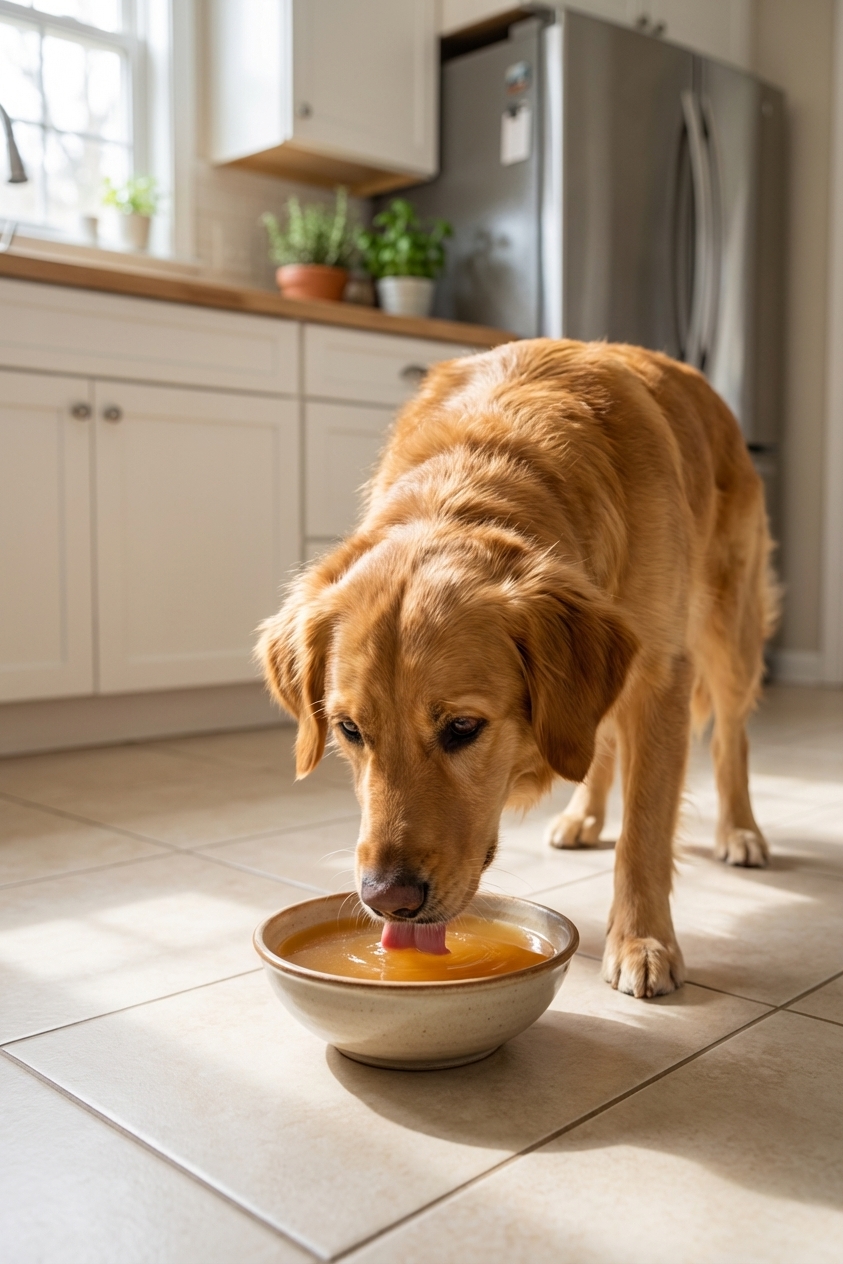
Bone broth can support hydration, appetite, and comfort for picky, senior, or recovering dogs. Get a plain, dog-safe recipe, serving amounts, storage tips, a...
Article
•
Designer Mixes
Spay Dog Recovery Time

Shari Shidate
Designer Mixes contributor
As a veterinary assistant here in Frisco, Texas, I can tell you this with confidence: most dogs recover very smoothly after a spay when you know what “normal” can look like and you protect the incision. A spay is a routine surgery, but it is still abdominal surgery, which means rest and good home care truly matter.
This guide walks you through recovery time by day, what to expect, what to watch for, and how to help your dog heal comfortably.
How long does spay recovery take?
Typical recovery timeline:
- First 24 hours: sleepiness, mild wobbliness, and a lower appetite are common.
- Days 2 to 3: energy often improves, but your dog is not healed yet, and this is when many dogs try to run or jump too soon.
- Days 7 to 10: the incision is usually sealing well; many clinics schedule rechecks or suture removal around this time if needed.
- Days 10 to 14: most dogs can return to normal activity after veterinary approval.
- Several weeks (often 4 to 6): internal healing can take longer than the skin looks, especially in very active dogs. Follow your surgeon’s guidance.
Bottom line: plan on 10 to 14 days of restricted activity for most healthy dogs, even if your dog “acts fine” on day 3.
Quick note on technique: “Spay” can mean an ovariohysterectomy (ovaries and uterus) or an ovariectomy (ovaries only), depending on your clinic and surgeon. Home-care instructions are very similar for both.
What “normal” can look like after a spay
Normal signs in the first 1 to 3 days
- Sleepiness and wanting to rest more than usual
- Mild nausea from anesthesia (lip licking, less interest in food)
- A small amount of clear or slightly blood-tinged moisture near the incision can be seen the first day
- Mild swelling at the incision
- Occasional shivering the first night (anesthesia and temperature shifts can do this)
Important: Many clinics prefer you call about any discharge. If you see moisture that continues past the first day, increases, turns thick, has color (yellow, green, gray), or smells bad, call your clinic.
Normal incision appearance
A healthy spay incision is typically closed, dry, and slightly pink at the edges. A little bruising can be normal, especially in light-coated dogs, and bruising can look dramatic or even spread downward over a couple days due to gravity.
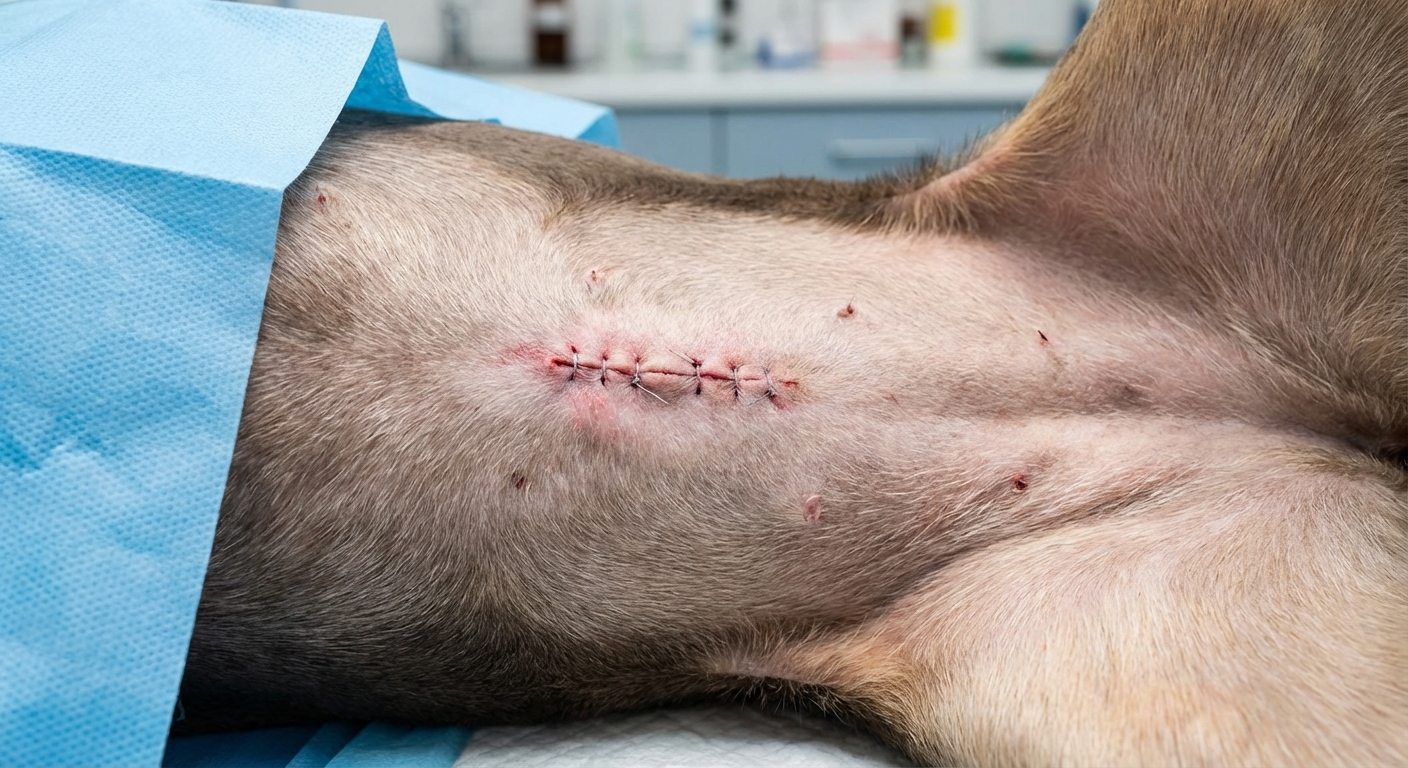
Spay recovery timeline
Day 0 (surgery day)
- Activity: leash walks only for potty breaks.
- Food: offer a small meal once fully awake. If your clinic gave specific instructions, follow those first.
- Behavior: expect grogginess. Some dogs vocalize or seem restless as anesthesia wears off.
Days 1 to 3
- Energy: improving is normal, but continue strict rest.
- Pain control: give only vet-prescribed medications. Do not use human pain relievers unless your veterinarian specifically tells you to.
- Incision checks: look twice daily for swelling, discharge, redness spreading, heat, or gaps.
Days 4 to 7
- Common owner trap: “She feels great!” This is the phase where dogs try to jump on and off furniture, wrestle, or zoom in the yard. This is also when incisions can open if activity is too high.
- Walks: short, calm leash walks are usually fine if your vet agrees. Avoid stairs when possible, and block jumping on beds and couches.
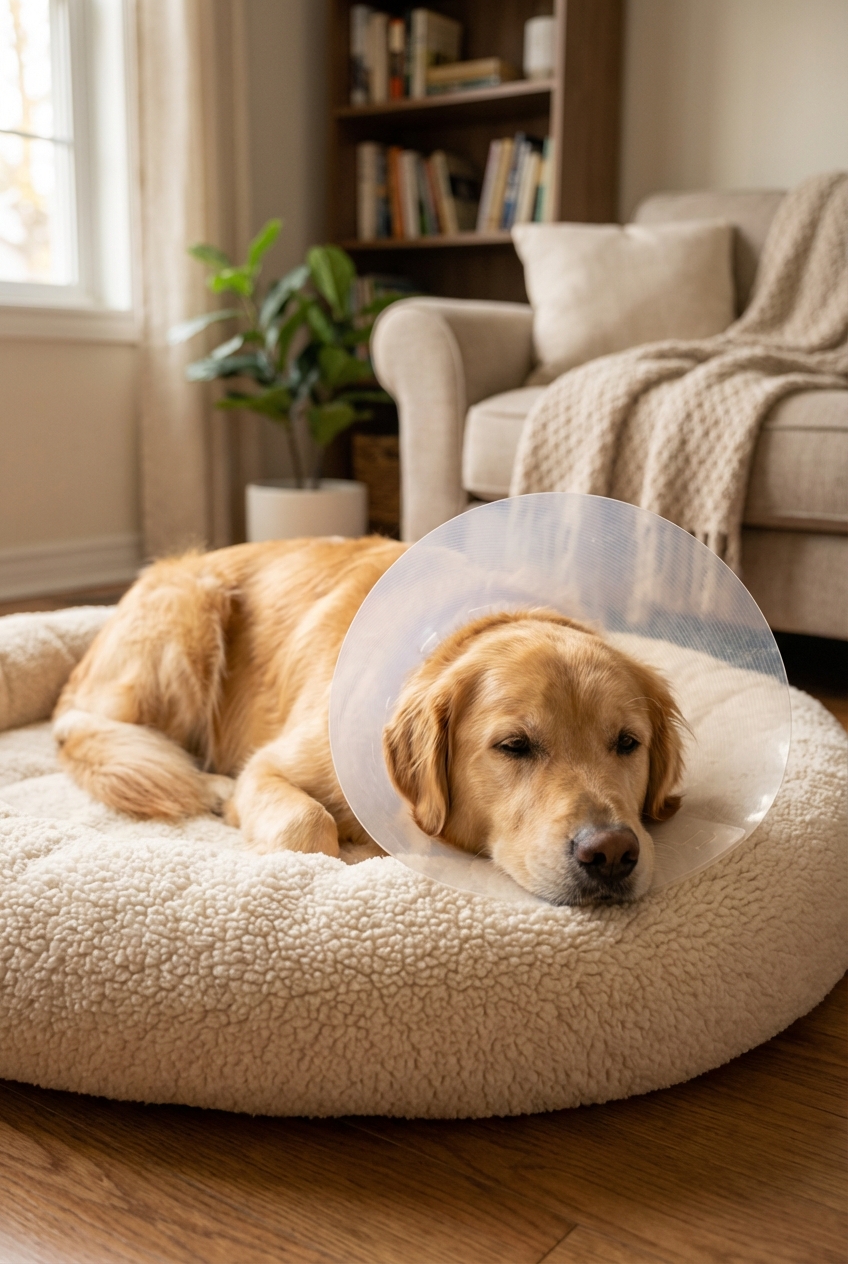
- Keep the cone on: licking is one of the fastest ways to cause infection or incision breakdown.
Days 8 to 14
- Incision: should look dry, closed, and less pink.
- Follow-up: if your dog has external sutures or staples, removal is often scheduled around 10 to 14 days.
- Return to activity: increase gradually only after your vet clears your dog.
Must-do recovery rules
1) No licking, chewing, or scratching
If your dog can reach the incision, assume she will lick it. Use:
- E-collar (cone): most reliable
- Inflatable collar: works for some dogs, not all
- Recovery suit: helpful for calm dogs, but still monitor
Keep the cone on 24/7 until your vet says it is safe to stop.
2) Restrict activity for 10 to 14 days
- No running, jumping, wrestling, or rough play
- No off-leash yard time unless it is a tiny, controlled potty area
- No baths, swimming, or soaking the incision until cleared
3) Keep the incision clean and dry
Do not apply peroxide, alcohol, ointments, or sprays unless your veterinarian instructed you to. If the area gets dirty, call your clinic for the safest way to clean it.
Also avoid: bandages (unless directed), letting other pets lick the incision, and rough handling of your dog’s abdomen.
Heat and ice: only use warm compresses or ice packs if your veterinary team specifically recommends it and tells you how.
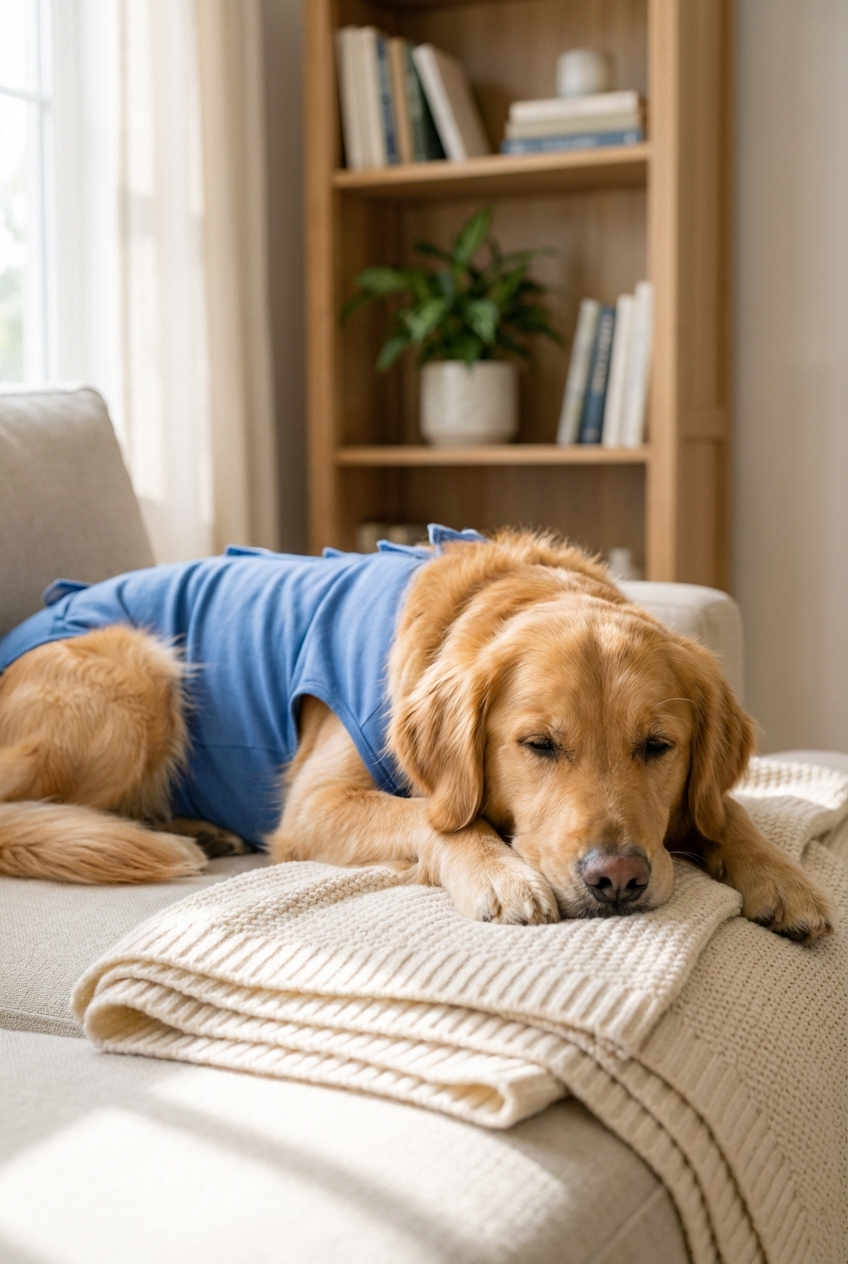
Incision closures: what you might see
Not all spays look the same on the outside. Your dog may have:
- Buried (internal) sutures: no visible stitches on the skin, but sutures are still there under the surface.
- Skin glue: a smooth, sealed line, sometimes with a shiny or slightly crusty look as it heals.
- External sutures or staples: visible stitches or staples that usually need removal at a recheck.
If you are not sure what closure your dog has, call and ask. It helps you know what is normal for that technique.
Pain, swelling, and medications
Pain control
Most dogs go home with a veterinary NSAID and sometimes a sedative to keep activity low. Give exactly as prescribed and finish the course unless your clinic advises otherwise.
Swelling: what is too much?
A small amount of swelling is common. A firm or fluid-like pocket under the skin can be a seroma, which can happen after surgery, especially if activity is high. Some seromas resolve with rest, but you should still call your vet to report it, especially if it is growing, warm, painful, or your dog seems off.
Do not give human meds
Do not give any human medications (including ibuprofen, naproxen, aspirin, or acetaminophen) unless your veterinarian specifically instructs you to. Some can be dangerous even at “small” doses.
Feeding and bathroom habits
Appetite
It is common for dogs to eat less the first day. If your dog refuses food for more than 24 hours, is vomiting repeatedly, or seems significantly lethargic, call your vet.
Pooping and constipation
Some dogs have a delayed bowel movement for a day or two due to anesthesia, pain meds, and lower activity. Ensure fresh water, offer normal meals, and keep walks calm and routine. If your dog strains, cries, or goes more than 48 to 72 hours without a bowel movement, contact your clinic.
Urinating
Most dogs will urinate within about 24 hours of coming home. Call your clinic sooner if your dog is straining, crying out, repeatedly trying to pee with little or no urine produced, or you have not seen urine by the next day.
Sleep and behavior changes
Many dogs sleep more for a few days. Some act clingy, others want space. A little restlessness is common, but extreme anxiety, continuous pacing, or inability to settle can mean pain or medication side effects. Your vet can adjust the plan.
When to call the vet
Use this list as your “better safe than sorry” checklist:
- Bleeding from the incision or blood soaking through
- Incision opening, missing stitches, or visible tissue
- Thick discharge (yellow, green, gray) or bad odor
- Redness that spreads or skin that feels hot to the touch
- Significant swelling that grows quickly or looks tense
- Repeated vomiting, severe diarrhea, or refusal to eat beyond 24 hours
- Fever (temperature over 103°F / 39.4°C) or suspected fever with marked lethargy
- Collapse, pale gums, trouble breathing (emergency)
- Sudden weakness or a swollen, painful-looking abdomen (emergency)
If you are ever unsure, snap a clear photo of the incision in good lighting and call your veterinary clinic. Many owners also find it helpful to take one photo daily in the same lighting to track subtle changes.
How to keep an energetic dog calm
This is one of the biggest challenges, especially with young, sporty mixes.
Calm set-up at home
- Create a quiet recovery space (crate, pen, or small room)
- Use non-slip rugs to prevent sliding
- Block stairs and furniture access if possible
Low-activity enrichment
- Frozen food toys (vet-approved and safe for your dog)
- Snuffle mats for slow sniffing
- Short training sessions: “touch,” “place,” “find it” with gentle treats
- Chews approved by your vet (choose low-risk options for your dog’s chewing style)
If your dog is truly unable to rest, ask your veterinarian about temporary calming medication. It can protect the incision and help your dog feel better.
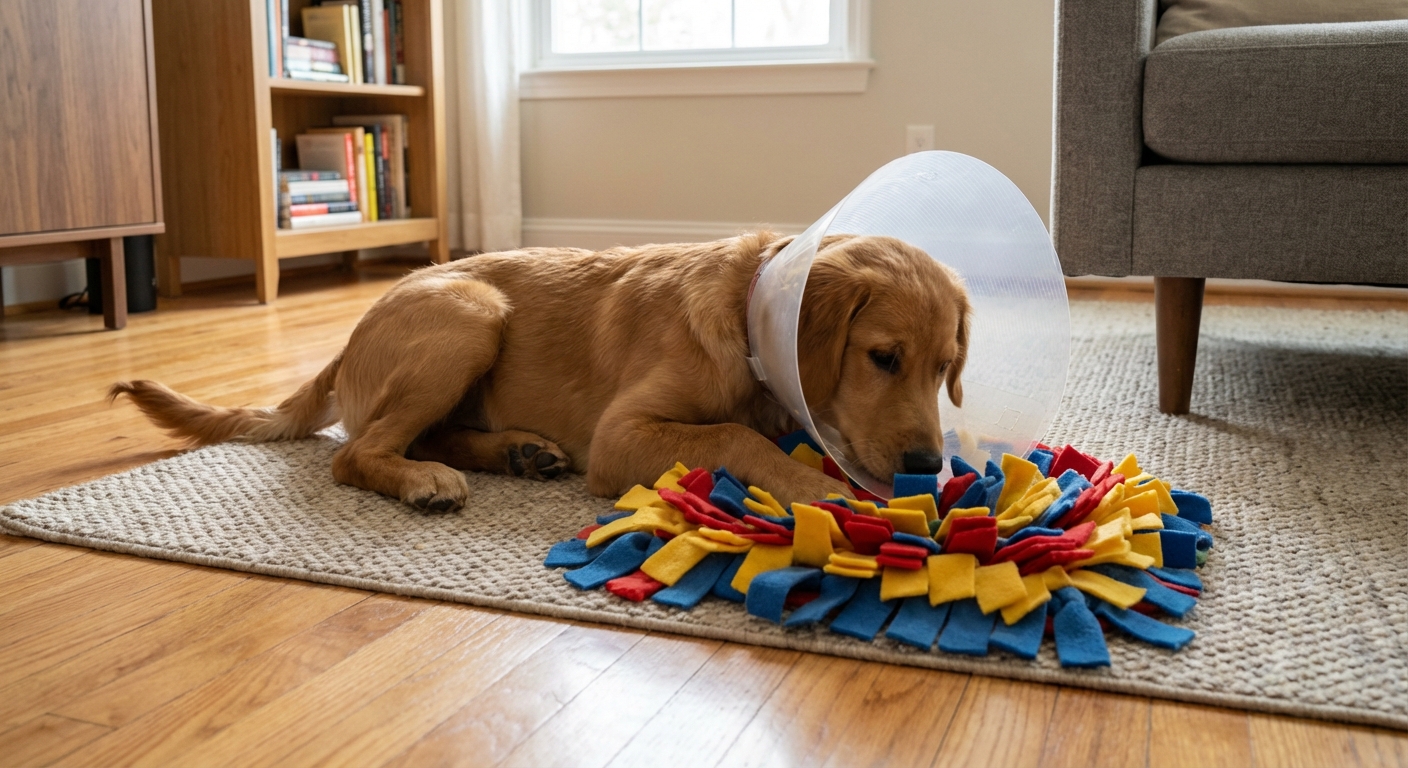
Differences by dog and surgery type
Puppies and young dogs
Younger dogs often bounce back fast, which is great, but it also makes them more likely to overdo activity. The recovery rules still apply.
Large dogs
Large breeds can place more tension on the incision when standing, sitting, or trying to jump. Extra support with controlled leash walks and strict rest helps prevent swelling and incision strain.
Laparoscopic vs traditional
Laparoscopic procedures typically use smaller incisions and may have less post-op discomfort. Even so, internal healing still takes time, and activity restriction is still important. Follow your surgeon’s instructions.
FAQ
How long should my dog wear a cone?
Usually 10 to 14 days, or until your veterinarian confirms the incision is healed. If your dog licks the moment the cone comes off, put it back on and call your clinic.
Can my dog go for walks?
Yes, but keep walks short, on-leash, and calm. Avoid dog parks, running, and pulling on the leash during the restricted period.
When can my dog bathe or swim?
Typically not until after the incision is fully healed and your vet clears it, often after the 10 to 14 day window.
Is a lump under the incision normal?
A small, firm ridge can be normal healing. A soft, fluid-like swelling can be a seroma. It is common, but you should report it to your vet, especially if it is growing or your dog seems uncomfortable.
A gentle final reminder
You do not have to do this perfectly, you just have to be consistent. Keep your dog calm, keep the incision protected from licking, and stick to the recovery plan even if your dog feels ready to party on day three. A quiet two weeks now can prevent complications and help your dog heal beautifully.
If you have questions about your dog’s specific recovery, your veterinary team is your best resource. They know the details of the surgery, the incision type, and what medications were used.