Get ready for your new kitten with a vet assistant’s practical guide: safe room setup, kitten-proofing to prevent emergencies, must-have supplies, feeding ...
Article
•
Designer Mixes
Socializing Kittens

Shari Shidate
Designer Mixes contributor
The first weeks of a kitten’s life shape how they feel about people, other pets, and the everyday sounds of a home. Socialization is not about forcing “bravery.” It is about building calm, positive associations, one tiny step at a time.
As a veterinary assistant here in Frisco, Texas, I see it all the time: kittens who were gently handled and introduced to normal life early tend to do better at the vet, adapt faster after adoption, and are less likely to develop fear-based behaviors later. The good news is you can start slowly and still make a huge difference.
What socialization means
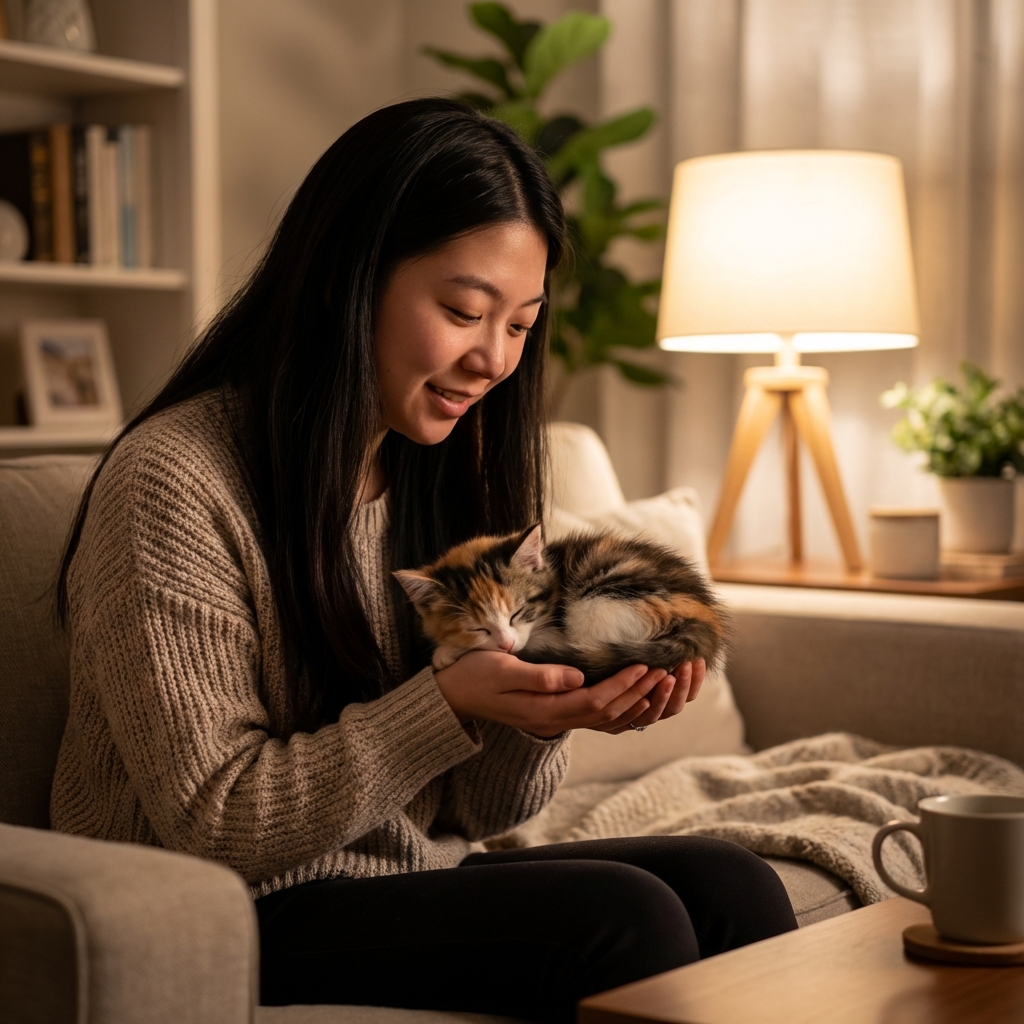
Socializing a kitten means helping them learn that common experiences are safe. That includes people, handling, carriers, nail trims, household noises, and other animals. It is a process of exposure paired with good outcomes like food, play, warmth, and choice.
Key idea: consent-based confidence
We want kittens to feel they can approach, retreat, and approach again. When we remove the “trapped” feeling, confidence grows faster and fear responses (including scratching and biting) are less likely.
- Go at the kitten’s pace. One calm second is a win.
- Pair new things with rewards. Tiny treats, wet food, lick treats, or a favorite toy.
- Stop while it’s still going well. Short sessions beat long stressful ones.
The socialization window
Kittens have a prime socialization period that is strongest from about 2 to 9 weeks, with learning still very flexible through roughly 12 to 14 weeks. (Sources vary a bit on the exact cutoff, but the big takeaway is the same: early, gentle exposure matters.) After that, it is absolutely still possible to build confidence, but it often takes more repetition and patience.
If you have a kitten older than 14 weeks who is shy or semi-feral, don’t panic. The approach stays the same. We simply slow down and increase predictability.
If your kitten is very young
If your kitten is under about 8 weeks, the best place for social learning is usually with their mom and littermates when possible. Early handling can still be helpful, but keep it extra gentle, prioritize sleep and feeding, and avoid unnecessary exposure to other animals or public spaces. If you are caring for an orphaned kitten, your veterinarian or a rescue group can help you create a safe plan for handling, feeding, and early confidence-building.
Set up a home base
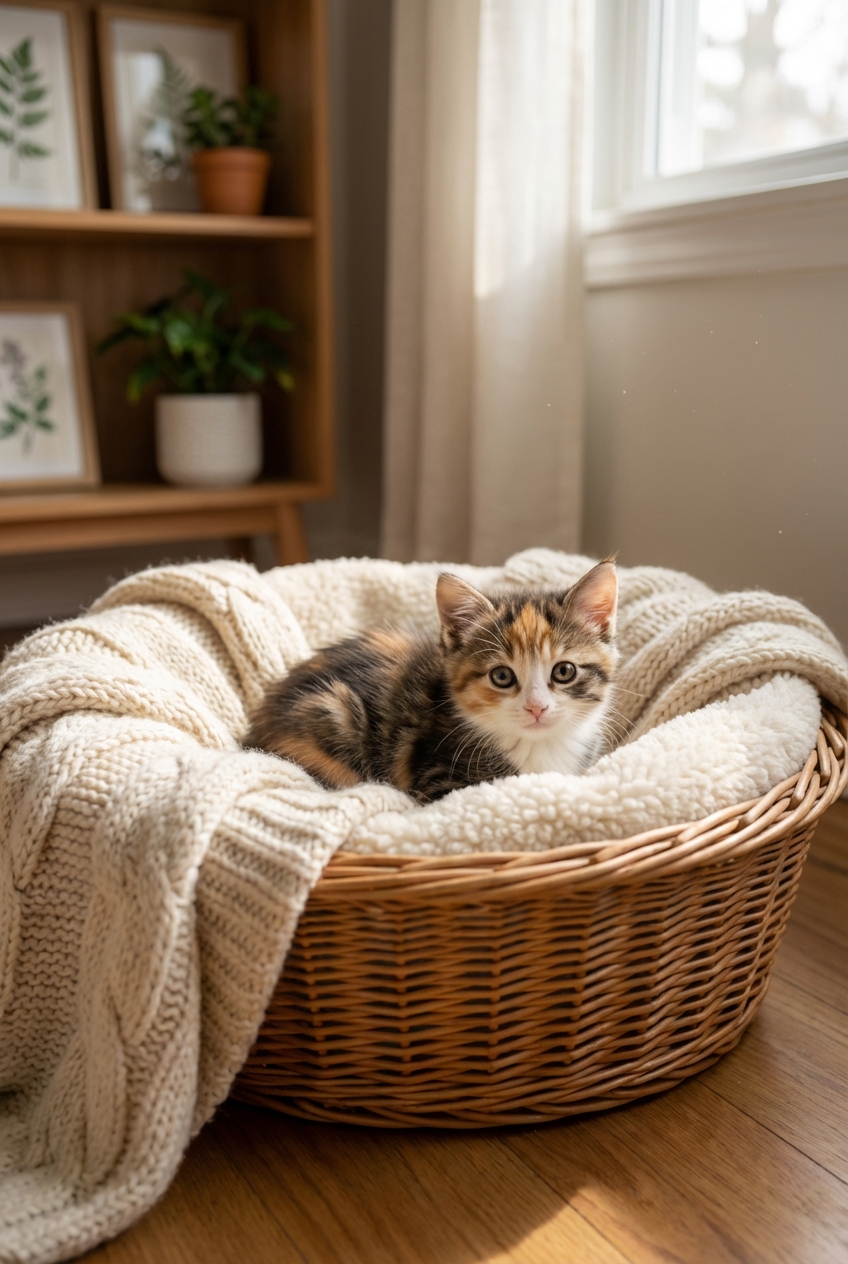
A kitten learns faster when they feel secure. Create a small starter space such as a bathroom, bedroom, or large playpen with everything they need.
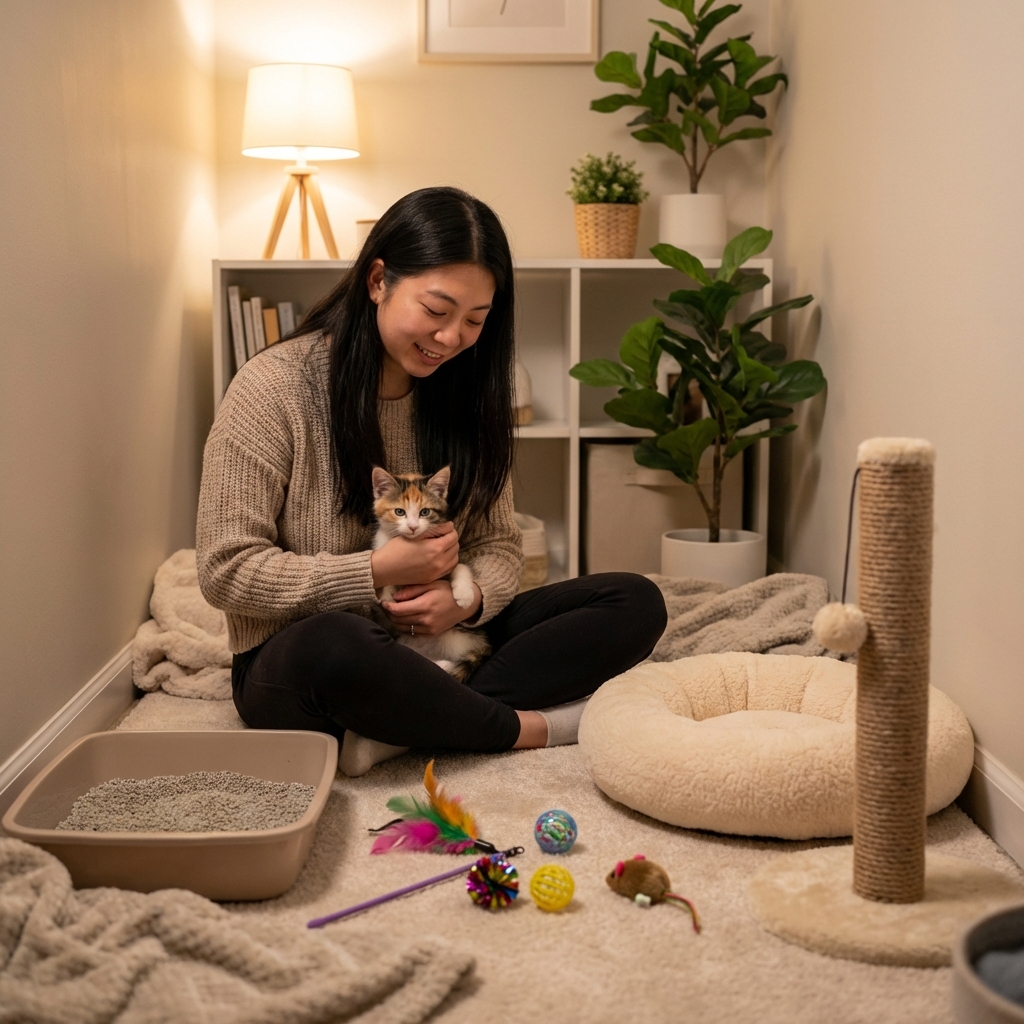
- Litter box (low-sided for tiny kittens)
- Food and water placed away from the litter box
- Hiding options (covered bed, box on its side). Avoid hard-to-reach hiding spots under heavy furniture.
- Vertical space (small cat tree or sturdy box) to help them feel safe
- Scratchers (horizontal and vertical)
- Soft routine: meals, play, and rest around the same times each day
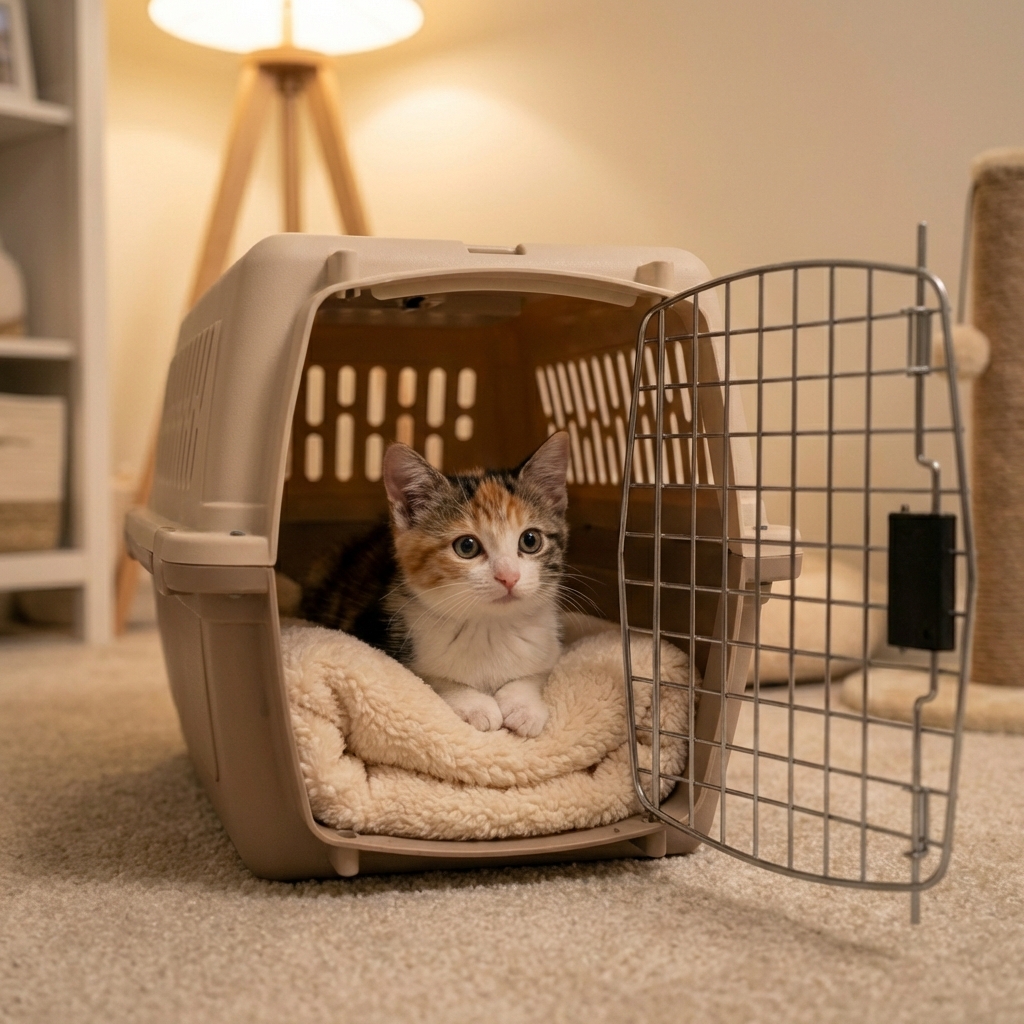
Pro tip: keep the carrier open in the room with a blanket inside so it becomes a normal nap spot, not a “going to the vet” surprise.
Step-by-step plan
1) Start with presence
For shy kittens, begin by simply being in the room. Sit on the floor, talk softly, and let the kitten observe you. Read a book aloud or sit quietly (phone on silent).
- Place a small plate of wet food several feet away from you.
- Over several meals, slowly move the plate closer.
- Let the kitten approach you rather than reaching for them.
2) Use play as a bridge
Play is one of the safest ways to build confidence because it creates distance and choice. Wand toys are perfect.
- Start with the toy moving away from the kitten, then let them chase.
- End sessions with a small food reward to complete the hunt sequence.
- Keep it short: 3 to 8 minutes is plenty for many kittens.
3) Handling in micro-doses
Handling should be brief, predictable, and rewarded.
- Touch-test: one finger stroke on the cheek, then treat.
- Two-second hold: lift slightly, set down, treat.
- Expand slowly: paws, ears, tail. For belly touches, go carefully. Many cats dislike belly handling, so do not force it.
If the kitten stiffens, holds their breath, swats, or tries to flee, that is your cue to reduce intensity and go back a step.
4) Vet-life skills
This kind of early cooperative handling can make future care easier and often reduces stress later at vet visits and during home care.
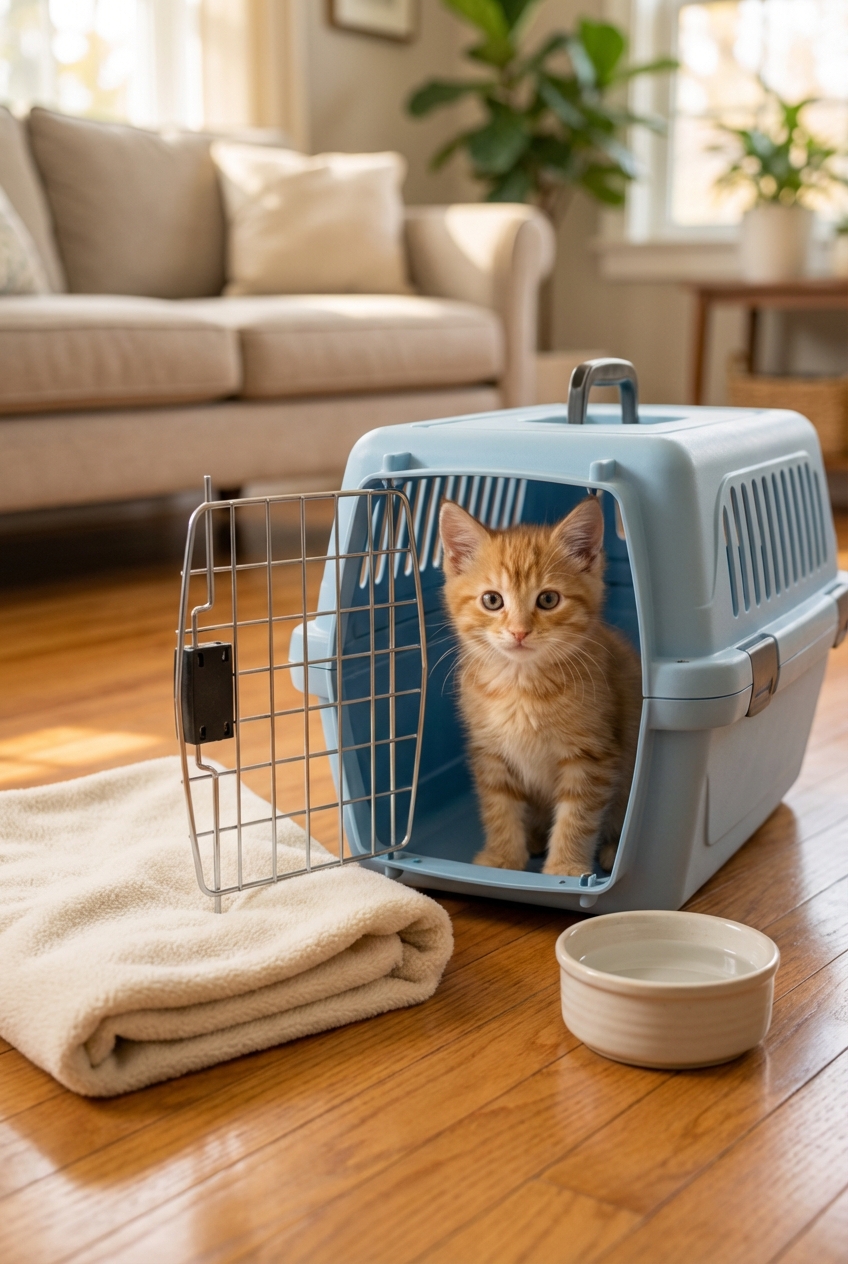
- Carrier practice: treats inside, short door-closes, then open and reward.
- Scale practice: place kitten on a towel on a stable surface for 1 second, reward, then off. Keep one hand supporting the kitten and never leave them unattended.
- Mouth and ear touch: brief touch plus a lick treat.
- Nail trim practice: press paw pad gently, reward. Clip one nail only, reward, done.
People socialization
Kittens generalize slowly. A kitten who loves you may still be afraid of your neighbor with boots or your cousin with a loud laugh. Aim for gentle variety.
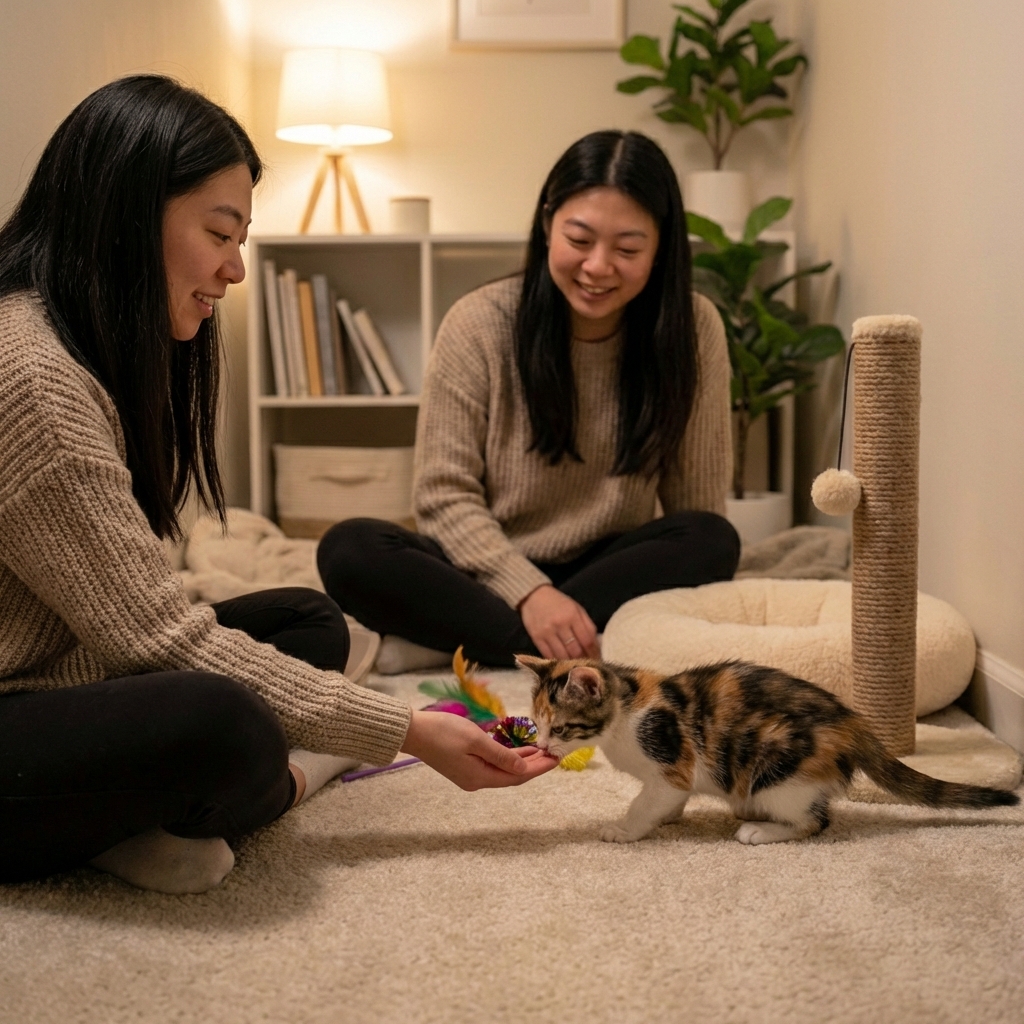
- Different ages (adults, supervised calm kids)
- Different appearances (hats, glasses, hoodies)
- Different voices and movement styles
- Different handling styles, but always kind and slow
Safety note: kids should sit on the floor, offer a treat, and let the kitten come to them. No chasing, no grabbing, no “showing the kitten” to others.
Sounds and environments
Many fear issues are sound-based: vacuums, blenders, doorbells, and even the car. The goal is controlled, low-volume exposure paired with positives, always kept below the kitten’s stress threshold.
- Start quiet: play household sounds at low volume for 30 to 60 seconds while the kitten eats.
- Increase slowly: over days, not minutes.
- Real-life practice: run the vacuum in another room while the kitten has a special treat.
Watch body language. If the kitten freezes, hides, or stops eating, lower intensity. Avoid any “cry-it-out” approach. If they are distressed, stop and make it easier next time.
Introducing other pets
Kitten and resident cat
Go slower than you think. Most problems come from rushing.
- Phase 1: separate rooms, swap bedding for scent exchange
- Phase 2: feed on opposite sides of a closed door
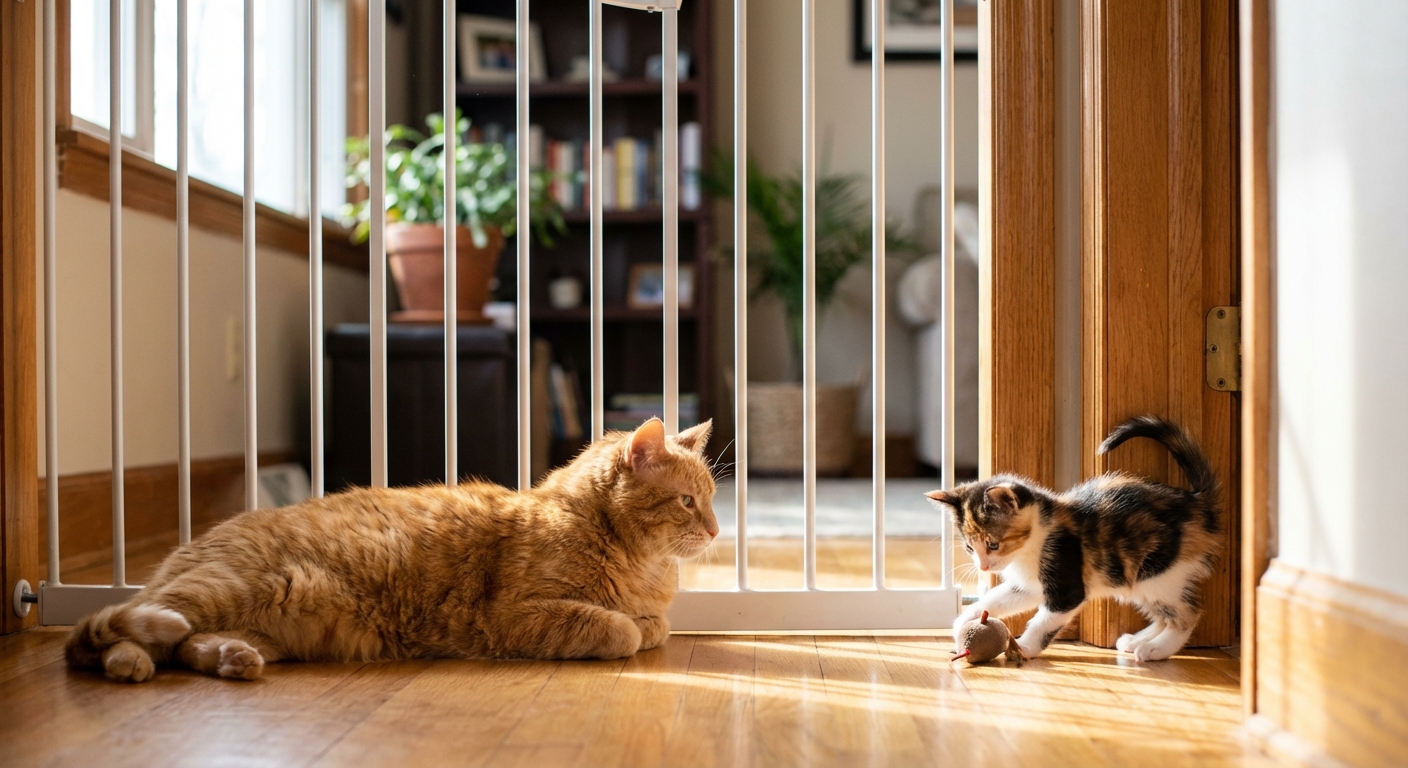
- Phase 3: brief visual access through a baby gate or cracked door
- Phase 4: short supervised visits, end on a calm note
Kitten and dog
Choose safety and calm every time.
- Dog on leash, reward dog for calm behavior
- Kitten has vertical escape routes and a clear retreat
- Keep first sessions under 1 to 2 minutes
- Stop if the dog fixates, lunges, whines intensely, or ignores cues
If you are unsure about your dog’s prey drive or impulse control, involve a qualified trainer and keep the kitten physically protected during early sessions.
Body language
Signs you’re on track
- Relaxed posture, normal breathing
- Curiosity, sniffing, slow blinking
- Eating treats during exposure
- Play resumes quickly after a new event
Signs to slow down
- Freezing, wide eyes, ears pinned back
- Crouching low, tail tucked, trembling
- Hissing, swatting, growling
- Refusing food that they normally love
- Hiding and not re-emerging
When in doubt, make it easier: more distance, less time, softer sounds, fewer people.
Common mistakes
- Flooding: too much, too fast. Fix: go back to the last easy step and rebuild.
- Forcing cuddles: holding a struggling kitten teaches that hands are scary. Fix: use treats and very short handling.
- Free-roaming too early: overwhelmed kittens hide and stop learning. Fix: return to a smaller home base and expand slowly.
- Unplanned dog introductions: one frightening chase can set you back weeks. Fix: leash, gates, supervision, calm rewards.
Mouthy play and scratch safety
Some kittens get bitey when they are excited or overstimulated. This is common and manageable.
- Do not use hands as toys. Use wand toys, kicker toys, and tossed toys instead.
- Redirect, then reward. If teeth touch skin, pause and offer an appropriate toy. Reward calm play.
- Keep sessions short. Many “attacks” are really tired or overstimulated kittens who need a break.
- Teach gentle handling. If the kitten starts to mouth during petting, stop petting, give them space, and try again later with a shorter session.
Health and safety first
Socialization should never compromise health. Kittens are vulnerable to contagious diseases, especially before completing vaccines.
- Vet visit early: discuss vaccines, deworming, flea prevention, and testing.
- Higher-risk places: avoid pet stores, unknown-cat homes, and high-traffic outdoor areas until your veterinarian says it’s safe.
- Safe exposure options: trusted friends, your own home, controlled car rides in a secure carrier.
Evidence-based note: early, positive experiences matter, but so does disease prevention. Ask your veterinarian for a socialization plan that fits your kitten’s vaccine schedule and local risk. Many clinics also follow cooperative care and feline-friendly handling principles supported by organizations like the AAFP and ISFM.
Weekly checklist
Rotate these in short sessions, 5 to 10 minutes at a time:
- Meet 1 to 2 new people
- Carrier treat session
- Touch ears, paws, and mouth briefly, then reward
- Play session plus food reward
- One new sound at low volume during a meal
- Short car sit: kitten in carrier, engine off at first, then on, then a short drive
- Calm grooming practice: soft brush stroke, reward
The bottom line is consistency. A little bit every day builds a kitten who feels safe in the world.
When to get help
Please reach out to your veterinarian or a qualified cat behavior professional if you notice:
- Persistent hiding and refusing food
- Aggressive fear responses that escalate
- Signs of illness (sneezing, eye discharge, diarrhea, lethargy)
- Extreme sensitivity to touch
Early support is kind support. Most kittens respond beautifully when we adjust the plan to their comfort level.