
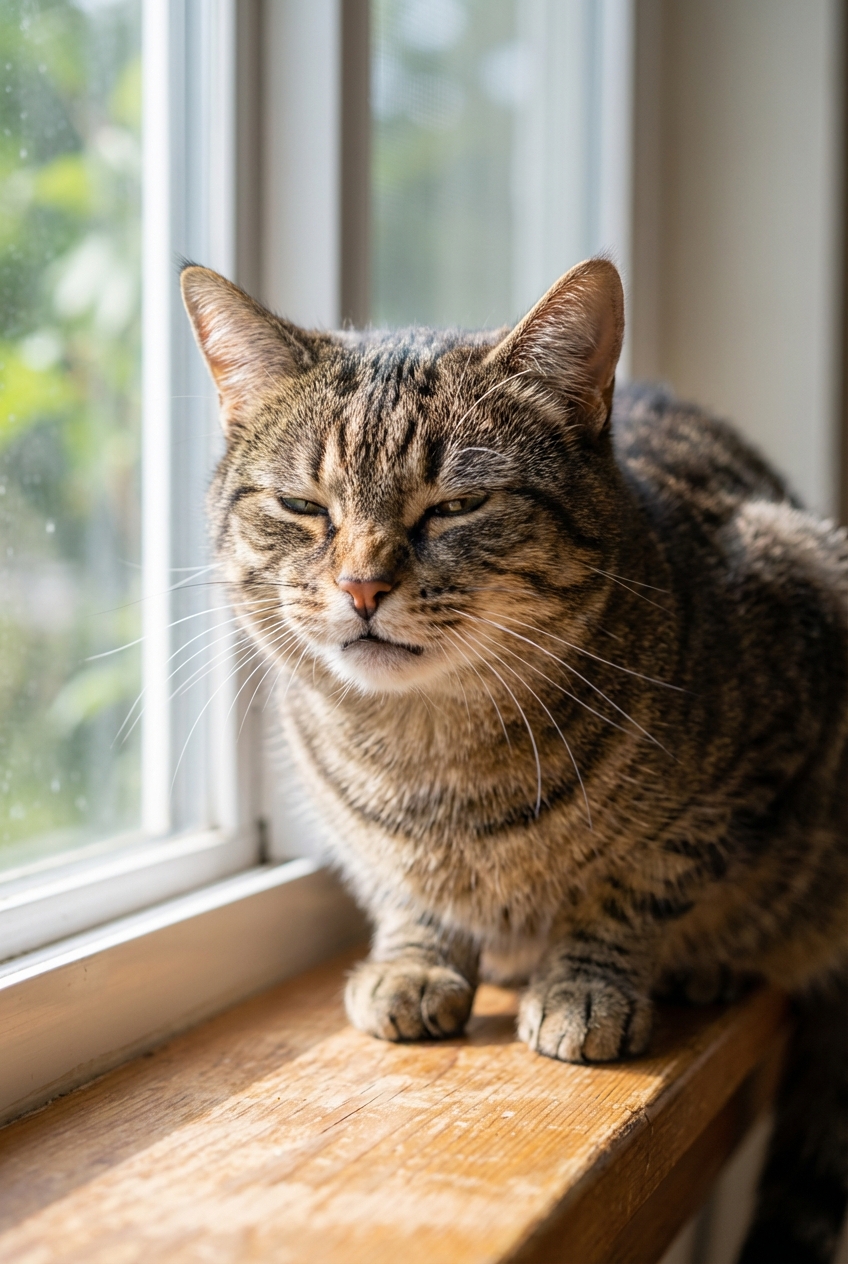
A vet assistant explains common reasons cats sneeze—URIs, irritants, dental disease, allergies, foreign objects—and how to triage symptoms, try safe home...
Article
•
Designer Mixes
Sneezing Cat Home Remedies and Behavior Guide

Shari Shidate
Designer Mixes contributor
If your cat is sneezing, it is easy to jump straight to worry. In my experience working in a veterinary clinic here in Frisco, Texas, I can tell you this: sneezing is often mild and temporary, but the pattern (how frequent, how long, and what other symptoms show up) matters. Some sneezing is a sign your cat needs a vet visit sooner rather than later.
This guide will help you understand what sneezing usually means, what you can safely do at home, what behaviors to watch, and when it is time to call your veterinarian.
Why cats sneeze
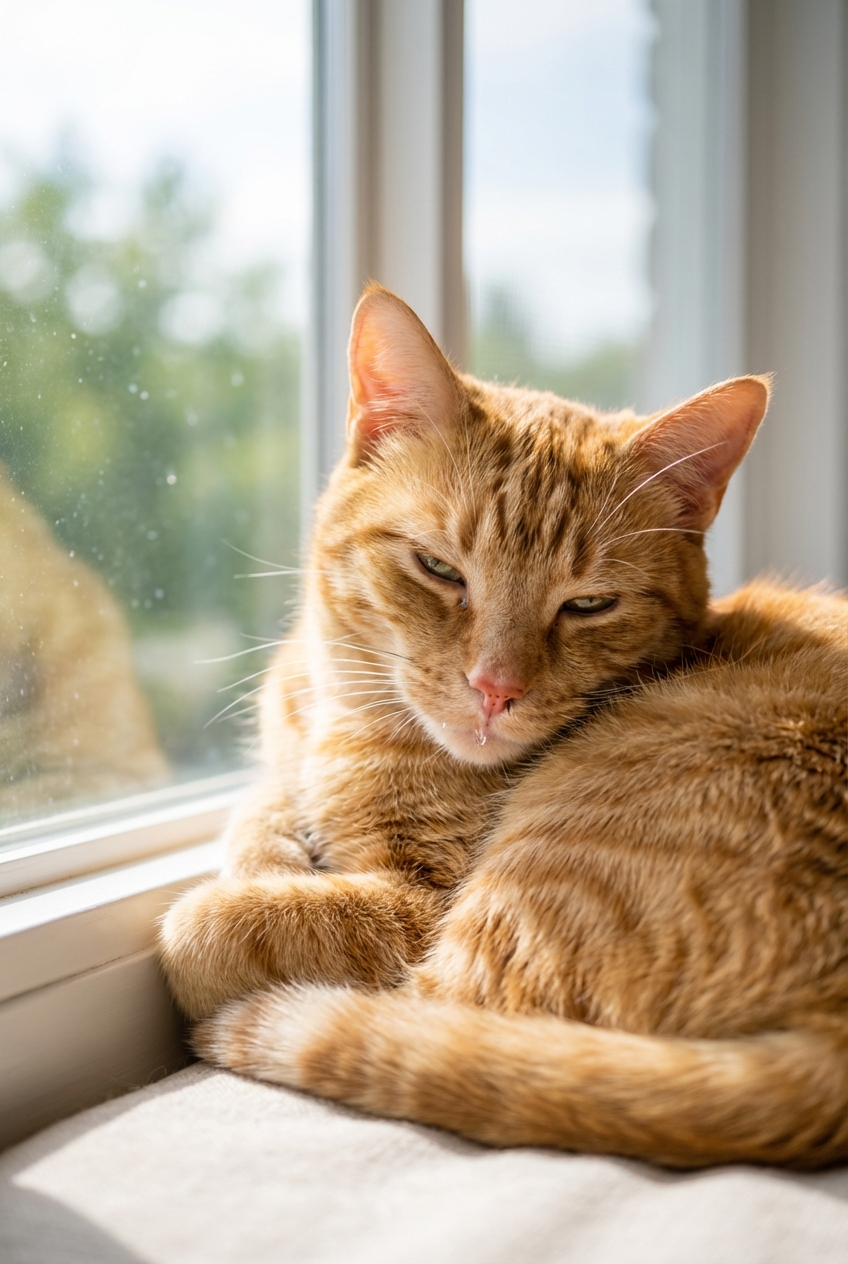
Sneezing is a protective reflex. Your cat is trying to clear irritants, mucus, or inflammation from the nasal passages. The most common causes I see include:
- Upper respiratory infections, often viral (like feline herpesvirus or calicivirus). These are common, especially in shelter, rescue, or multi-cat homes.
- Irritants like dust (including litter dust), smoke, fragrance plug-ins, candles, essential oil diffusers, cleaning sprays, and new carpet or paint odors.
- Allergies (less common than in people, but possible). Quick caveat: many “allergy-like” cases in cats are actually irritation or another airway issue, so persistent symptoms still deserve a checkup.
- Dental disease, especially tooth root infections or an opening between the mouth and nose (an oronasal fistula). These problems can sometimes show up as sneezing or nasal discharge, particularly in older cats.
- Nasal foreign material (a blade of grass, plant debris) that triggers sudden repeated sneezing.
- Nasal polyps or other growths, which can cause chronic snorting, sneezing, or noisy breathing.
Quick note on look-alikes: sneezing is usually a sharp “choo” through the nose. Coughing can sound deeper and may point to lower airway disease (like asthma). Either way, repeated coughing or any breathing struggle is a reason to call your vet.
Quick check
Often mild
- 1 to 3 sneezes at a time, then normal behavior
- Eating and drinking normally
- Clear, watery nasal discharge (or none)
- Bright eyes, normal energy
More concerning
- Green, yellow, or thick discharge
- Eye discharge, squinting, red eyes, or crusting around the eyes
- Coughing (often a separate red flag), wheezing, or open-mouth breathing
- Not eating or acting tired and “off”
- Repeated sneezing fits multiple times daily that persist beyond a couple of days
- Blood from the nose, even a small amount
If your cat falls into the second list, skip to “When to call the vet.”
One-sided symptoms matter: sneezing or discharge mostly from one nostril, especially if it is ongoing, can point to a foreign body, dental root issue, fungal disease, or a mass. That is a good reason to schedule a vet visit.
Safe home care
Home care should focus on comfort and hydration. You are not trying to cure a serious infection at home. You are supporting your cat while the immune system works, and you are watching closely for changes.
1) Add humidity safely
Moist air can loosen congestion and make breathing more comfortable.
- Bathroom steam session: Run a hot shower with the bathroom door closed for 10 to 15 minutes. Sit with your cat in the room (do not put your cat in the shower). Keep your cat on the floor or in a carrier, monitor for stress, and leave the room if your cat seems anxious, starts panting, or feels too warm.
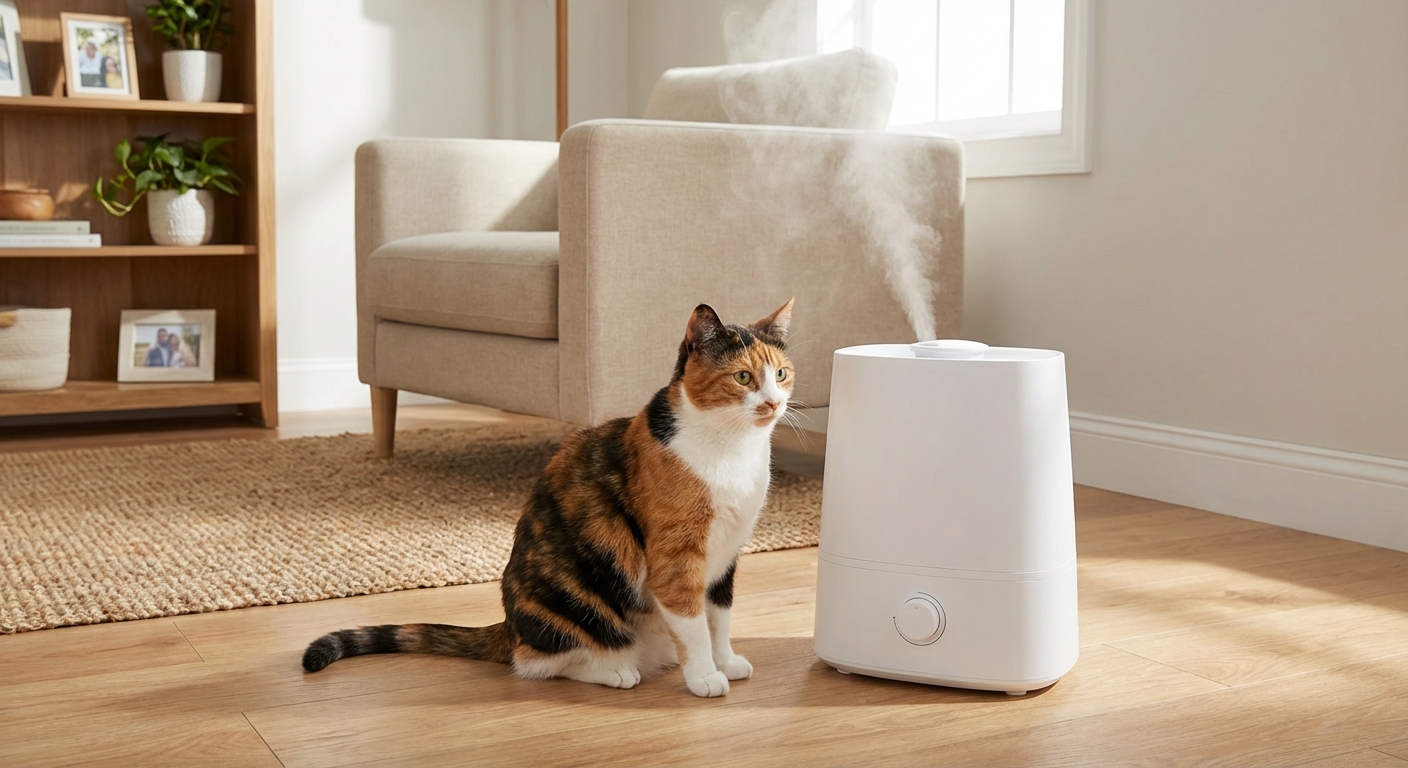
- Humidifier: A cool-mist humidifier near your cat’s resting area can help. Clean it regularly to prevent mold.
2) Gentle nose and eye cleanup
If discharge is present, wipe it away so your cat can smell and eat.
- Use a warm, damp cotton pad or soft cloth.
- Wipe from the inner corner outward for eyes.
- Use a fresh pad for each eye to avoid spreading infection.
Avoid: hydrogen peroxide, alcohol, and human eye drops unless your veterinarian specifically instructed you.
3) Encourage eating
Cats rely heavily on smell. When the nose is stuffed, appetite often drops. Also, cats who stop eating can get sick quickly (including risk of fatty liver disease), so appetite matters.
- Warm wet food slightly (just lukewarm) to boost aroma.
- Offer strong-smelling options like vet-approved recovery diets or plain canned food your cat already tolerates.
- Keep meals small and frequent.
4) Support hydration
- Offer fresh water in multiple spots.
- Consider a pet fountain if your cat likes running water.
- Add a little extra water to wet food if your cat accepts it.
Important: Never give human cold medicines, decongestants, or pain relievers. Many are toxic to cats, and some can be fatal even in small doses.
Behavior clues
When cats do not feel well, they often change behavior before symptoms look dramatic. Here are sneezing-related behaviors to watch.
Eating behavior
- Approaches food, sniffs, then walks away: often congestion, nausea, or mouth pain.
- Drops kibble or chews on one side: consider dental pain, oral inflammation, or a sore throat.
Breathing and posture
- Sleeping more and hiding is common with viral colds.
- Neck extended or “head up” posture can signal breathing difficulty.
- Mouth breathing in a cat is a red flag. Cats should breathe through the nose most of the time.
Grooming changes
- Less grooming: common when a cat feels ill or congested.
- Pawing at the face: can indicate nasal irritation, tooth pain, or something stuck.
Litter box clues
- Smaller urine clumps can mean reduced hydration.
- Diarrhea plus sneezing can occasionally happen with viral infections, stress, or a second issue (especially in kittens). If you see this combo, call your vet sooner.
Home triggers to remove
If your cat’s sneezing started suddenly, your environment may be the culprit. Try removing triggers for 7 to 10 days and see if symptoms improve.
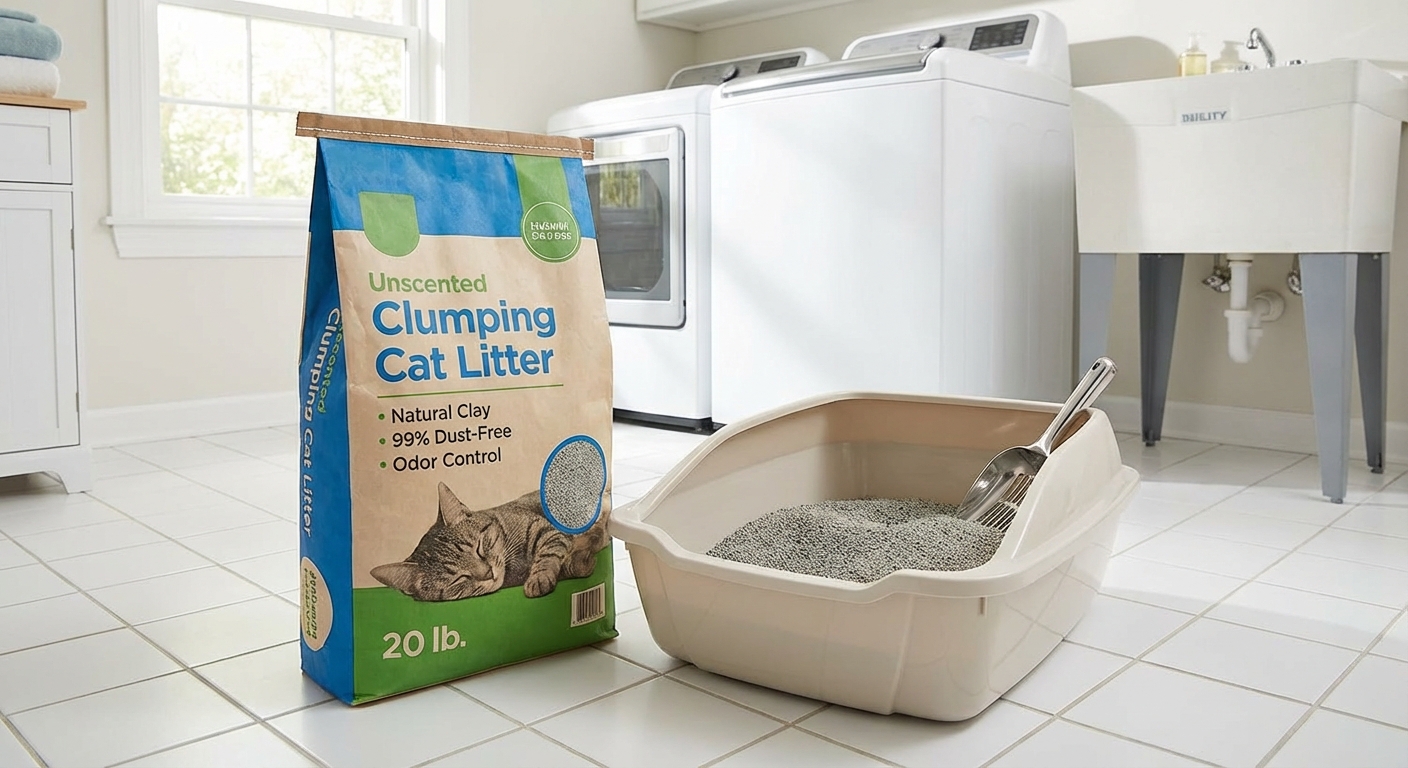
- Switch to an unscented, low-dust litter.
- Avoid vacuuming right next to your cat’s resting area. If you vacuum, consider a HEPA filter vacuum and keep the cat in another room until dust settles.
- Stop using plug-in air fresheners, incense, and scented candles.
- Avoid essential oils, especially diffused oils. Many are irritating and some are toxic to cats.
- Use fragrance-free cleaners and rinse well.
- Do not smoke indoors, including vaping.
Extra risk factors: sneezing is more likely after exposure to other cats (new cat in the home, boarding, grooming, shelter exposure). If your cat is behind on vaccines, mention that to your veterinarian.
When to call the vet
Call your veterinarian if any of the following are true:
- Sneezing persists beyond a couple of days without improvement, or it is worsening at any time.
- Your cat has thick, colored discharge or a bad odor from the nose or mouth.
- Your cat is not eating for about 24 hours (or closer to 12 hours for kittens, seniors, or cats with other medical conditions), or appetite is clearly dropping.
- You see labored breathing, open-mouth breathing, or rapid breathing at rest.
- There is blood from the nose.
- Your cat seems painful, lethargic, or dehydrated.
- Your cat is a kitten, senior, or immunocompromised adult.
- Symptoms are mostly one-sided (one nostril) or the problem is chronic or recurring.
Emergency care now
- Persistent open-mouth breathing
- Severe breathing distress, struggling to inhale, or belly heaving
- Blue, gray, or very pale gums
- Collapse or extreme weakness
Your vet may recommend supportive medications, appetite support, antibiotics for secondary bacterial infections, or testing for chronic issues. Chronic sneezing sometimes requires dental evaluation or imaging.
At the appointment
Knowing what might happen can calm nerves for both you and your cat.
- History questions: How long has sneezing been happening? Any new litter or cleaning products? Exposure to other cats? Vaccine status?
- Physical exam: Listening to lungs, checking eyes, mouth, and hydration.
- Possible tests: nasal or eye swabs, bloodwork, dental exam, X-rays. For chronic or one-sided cases, your vet may sometimes recommend CT and or rhinoscopy.
- Home plan: Your vet may prescribe medications and recommend humidity, nutrition support, and isolation from other cats if contagious disease is suspected.
Do and don’t
Do
- Keep your cat warm, comfortable, and hydrated.
- Use humidity and gentle cleaning of discharge.
- Track symptoms daily: appetite, energy, discharge color, and frequency of sneezing.
- Separate from other cats if you suspect a contagious URI.
Don’t
- Do not give human meds (including “natural” cold remedies).
- Do not use essential oil diffusers around cats.
- Do not force-feed unless your veterinarian instructs you.
- Do not delay care if breathing becomes difficult or your cat stops eating.
If you want a simple action step today: increase humidity, remove fragrance triggers, and watch appetite closely. Those three things catch many mild cases early and help you recognize when it is time to get medical support.

