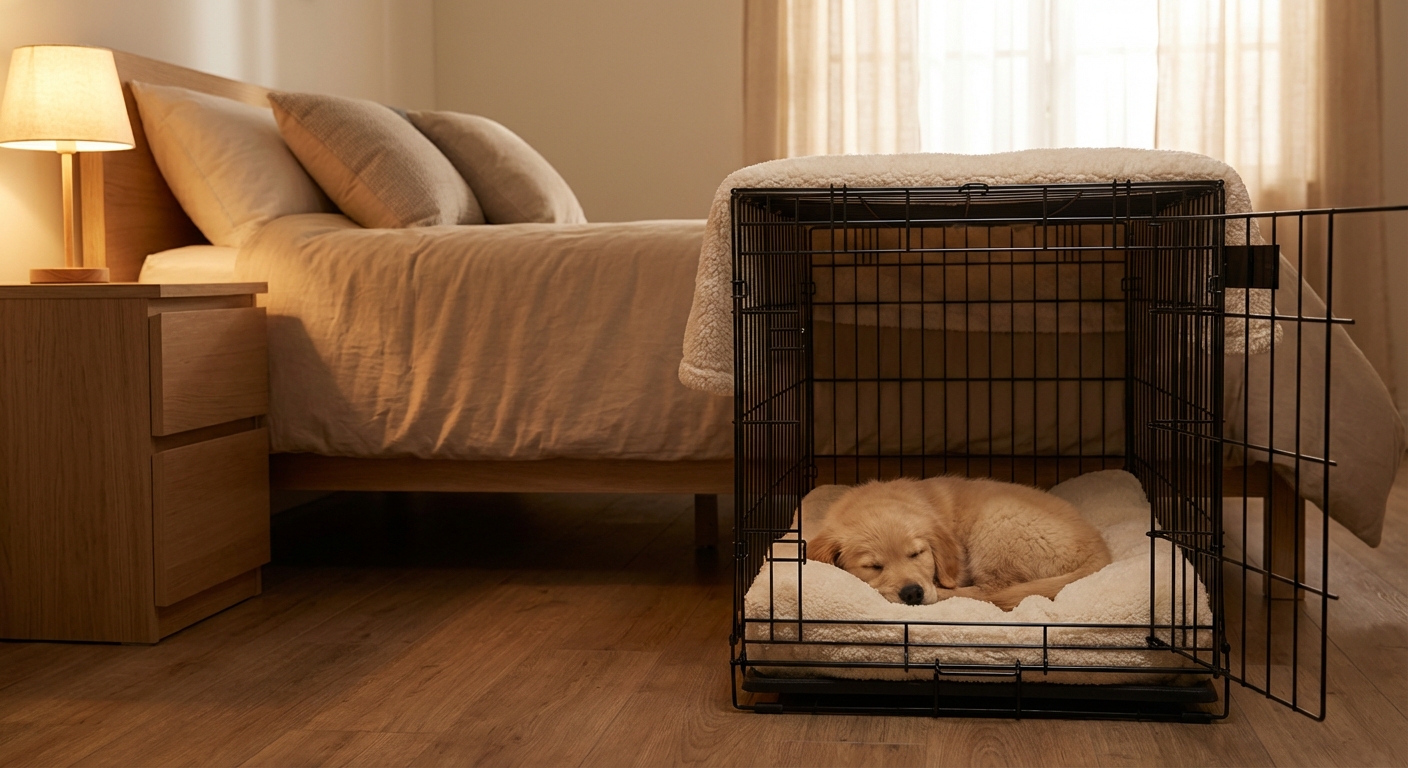
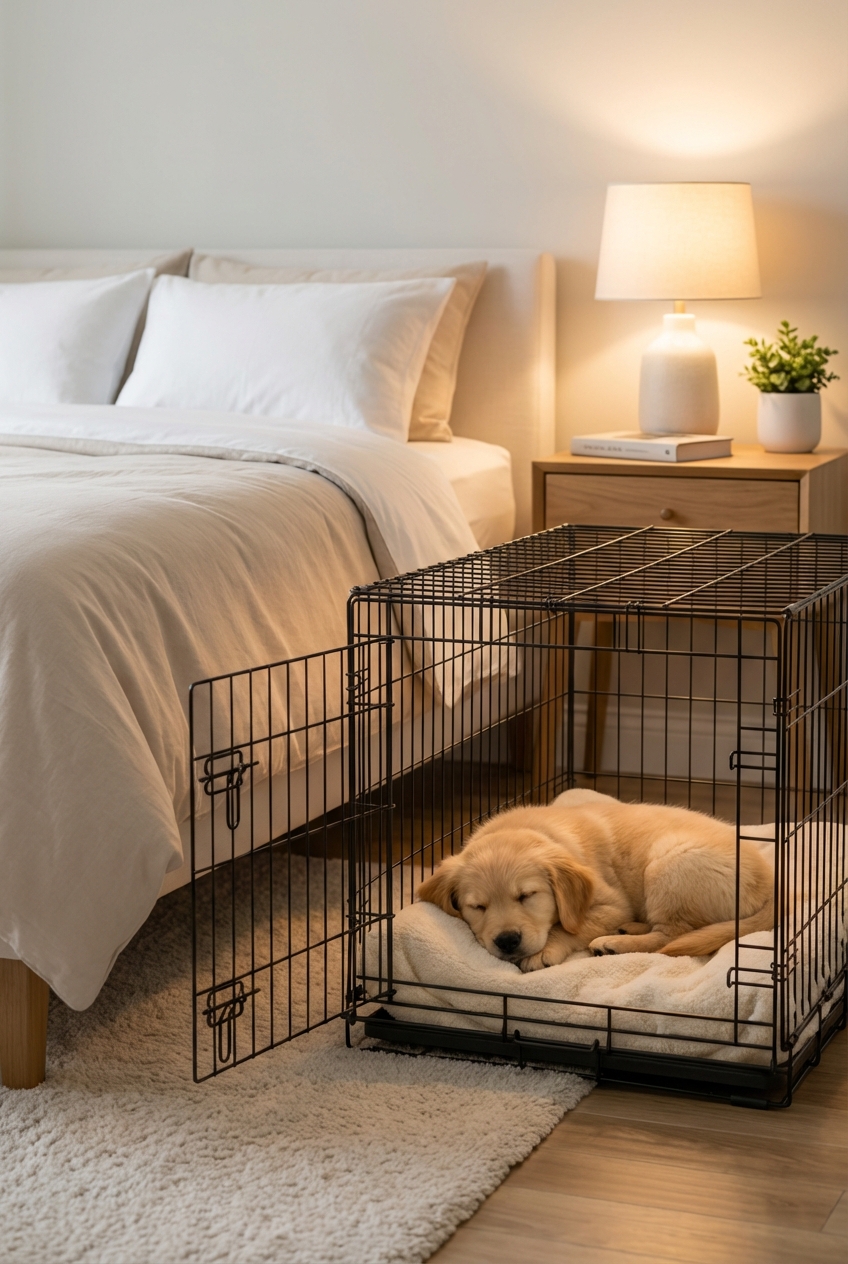
A step-by-step puppy crate training guide: choosing the right crate, building positive associations, first-week routines, nighttime potty breaks, and solutio...
Article
•
Designer Mixes
Smart Crate Training: Puppy Crying Explained

Shari Shidate
Designer Mixes contributor
In my experience as a veterinary assistant, I can tell you that puppy crying during crate training is one of the most common reasons families give up too soon. The good news is that crying is normal, and it is also something you can shape and reduce with a plan that is kind, consistent, and based on reward-focused training. Your puppy is not trying to “win.” They are communicating discomfort, confusion, or a need, and you get to teach them that the crate predicts safety and rest.
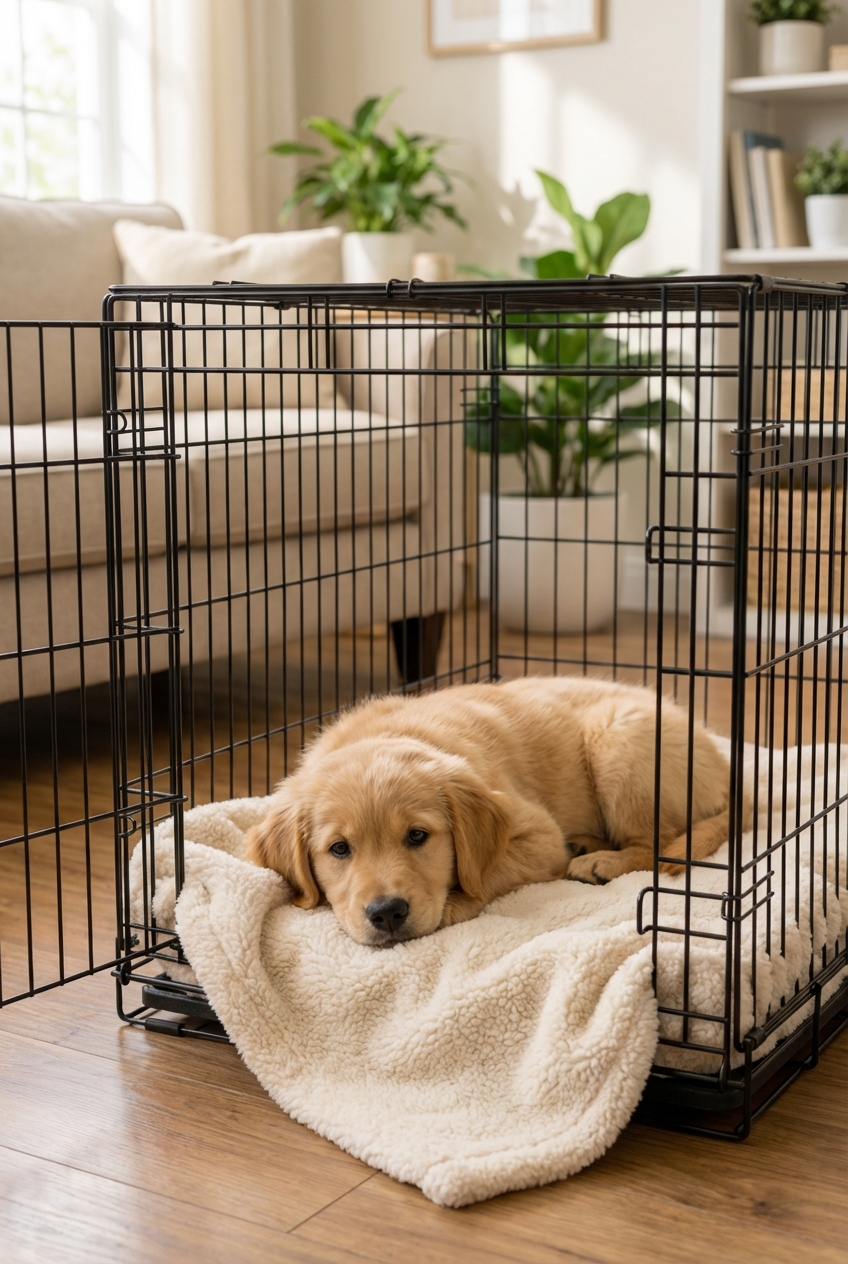
Why puppies cry in the crate
Puppies cry for a few main reasons, and the solution depends on which one you are dealing with. The goal is not to stop all noise instantly. The goal is to build comfort and calm, so the crying naturally fades over time.
1) Normal separation distress
Young puppies are wired to stay close to their family. In the first weeks, being alone can feel unsafe, especially at night. This is not “bad behavior.” It is biology.
2) The crate is too much, too fast
If the first crate experience is “door closed, lights out, everyone gone,” many pups panic. Crate training works best when you start with tiny wins and gradually increase difficulty.
3) A real need: potty, thirst, discomfort
Puppies have small bladders and limited ability to self-settle if they are uncomfortable. A puppy who truly needs to potty may cry in a different way: more urgent, escalating, and persistent.
4) Over-tired and over-stimulated
Many puppies melt down when they are exhausted. They look like they need more play, but what they really need is a nap and a little help settling down.
What smart crate training looks like
Smart crate training is not tougher rules. It is smarter setup. We reduce triggers that cause panic, and we reinforce the behaviors we want: stepping in, relaxing, and staying calm as the door closes.
Choose the right setup
- Right size: big enough to stand up, turn around, and lie down comfortably. Too large can make accidents more likely for some puppies, while too small is uncomfortable. A crate with a divider can help you adjust the space as your puppy grows.
- Comfort: a safe mat or blanket. For heavy chewers, start with a durable pad or towel you can replace.
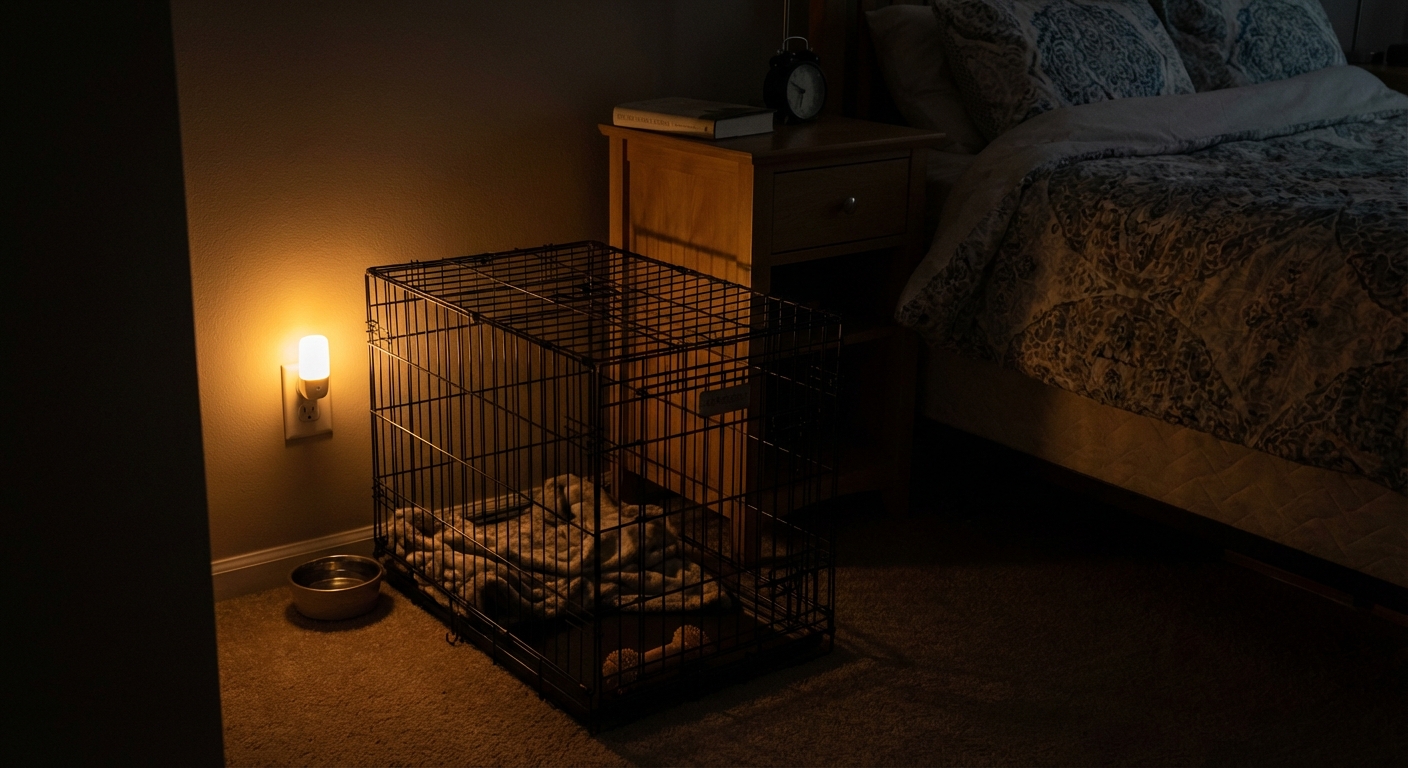
- Location: start where your puppy can see you during the day. At night, keep the crate near your bed at first.
- Cover: some pups settle better with a light cover over part of the crate. Ensure good airflow and monitor chewing.
Make the crate a good thing
Your puppy should learn one simple message: “When I go in there, good things happen.” Try these calm, repeatable routines:
- Feed meals in the crate with the door open for a few days.
- Toss a treat in, let your puppy go in and come right back out. Repeat 5 to 10 times.
- Give a long-lasting chew or stuffed food toy only when your puppy is in the crate.
Chew safety note: Choose items that are the right size for your puppy, remove anything that starts shredding, and avoid leaving a new chew unattended until you know how your puppy handles it.
Close the door in tiny steps
Once your puppy is happily entering the crate:
- Close the door for 1 second, treat, open.
- Close for 5 seconds, treat, open.
- Close for 15 seconds while you sit next to the crate, then open.
- Gradually add time and a little distance. One step at a time.
If crying starts, it means the step was too hard. Go back to the last successful step and build again.
Crying at night
Night crying is the hardest part for most families. Your puppy is tired, the house is quiet, and they feel alone. Here is a kind plan that still teaches independence.
Before bed
- Potty trip right before crating.
- Calm wind-down for 20 to 30 minutes. Think gentle chewing, light cuddles, or a sniffy walk, not wild wrestling.
- White noise can help some puppies settle.
- Comfort item like a safe soft toy. If your puppy shreds fabric, skip this for now.
If your puppy cries
Use this simple decision tree:
- First: pause briefly. Some pups fuss for under a minute or two and then settle. Watch the pattern over a few nights.
- If crying escalates: take your puppy out for a quick potty break. Keep it boring: leash on, potty, quiet praise, straight back to the crate.
- After potty: if crying continues, sit near the crate for a few minutes. You can rest your fingers near or through the bars if that helps, but keep interaction calm.
- If it keeps escalating: make a note and plan to go back to an easier step the next day (shorter duration, more distance changes, more treats for calm).
What to avoid: letting your puppy out to play, cuddle on the couch, or roam the house. That teaches “crying makes the fun happen.”
Should you ignore crying?
Sometimes a brief “wait and see” works if the puppy is safe, has pottied, and is only mildly fussing. But long, intense crying can make the crate feel stressful for many puppies, which can slow progress.
In practice, the most effective approach is:
- Prevent big distress with gradual training and good timing.
- Respond to real needs like potty or discomfort.
- Reinforce calm by opening the crate when the puppy is quiet, even if that quiet is just a 2-second pause.
How long is too long?
Every puppy is a little different, and crates are not meant to be all-day babysitters. As a general rule, younger puppies need more frequent breaks and more naps. If you are seeing repeated accidents, frantic crying, or a puppy who cannot settle, treat that as a sign to shorten crate time and adjust your routine.
- Overnight: many young puppies still need 1 or more potty trips. Expect this to improve with age and consistency.
- Daytime: plan for frequent potty breaks, play, and naps. If you need longer coverage, consider a puppy-proofed pen plus a potty plan instead of extending crate time too far.
If you want a precise schedule, your veterinarian can help based on age, size, and health.
Daytime crate routine
Puppies do better when crate time is predictable and paired with rest. Here is a gentle rhythm many families use:
- Potty
- Play and train (short sessions, 5 to 10 minutes at a time)
- Potty
- Crate nap with a chew or stuffed toy
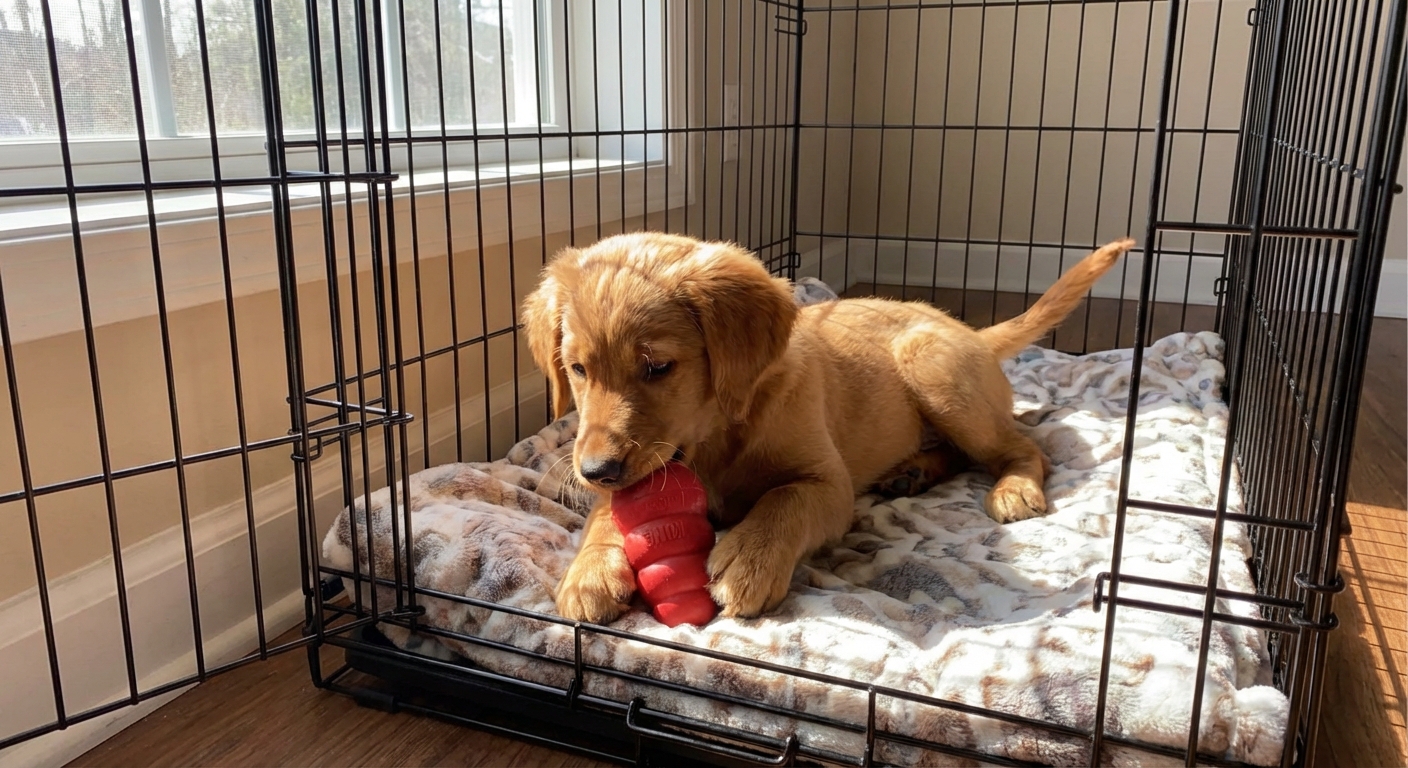
Most puppies need multiple naps a day. An over-tired puppy often cries more, not less.
Practice short departures
One common reason crate training stalls is that the crate only predicts isolation. Build alone-time skills in tiny, boring reps:
- Crate your puppy with a chew.
- Step out of sight for 10 to 30 seconds.
- Return before your puppy ramps up into distress, then calmly go about your day.
- Repeat and slowly increase time.
This helps your puppy learn that people leaving is normal and temporary.
Common mistakes
- Using the crate only for alone time: Fix it by adding happy crate moments while you are home.
- Crating too long: Puppies need frequent potty breaks. Shorten duration and build slowly.
- Letting the puppy out while actively screaming: Wait for a brief quiet pause, then open. If the puppy truly needs to potty, move quickly but keep the trip boring.
- Big exciting greetings: Keep arrivals and departures calm so the crate does not become an emotional rollercoaster.
- Not enough enrichment: Add sniffing walks, gentle training, food puzzles, and appropriate chewing.
When to get extra help
Most crate crying improves with time and training. But sometimes a puppy is experiencing more than normal adjustment distress. Consider getting help from your veterinarian, a qualified trainer, or a veterinary behaviorist if you see:
- Intense panic that does not improve over days
- Drooling, heavy panting, or trembling when crated
- Escape attempts, biting bars, or self-injury
- Chewing that seems frantic rather than normal exploration
Getting support early can prevent a small problem from becoming a bigger one.
When crying might be medical
If crate crying is paired with any of the signs below, check in with your veterinarian. Pain and GI upset can make a puppy feel unable to settle.
- Diarrhea, vomiting, or straining to poop
- Coughing, trouble breathing, or excessive drooling
- Limping, yelping when picked up, or reluctance to lie down
- Sudden change in appetite, energy, or behavior
Trust your gut. If something feels off, it is always okay to ask your vet. Comfort is a key part of training success.
The bottom line
Puppy crying in the crate is common and usually temporary. With gradual steps, a cozy setup, and consistent routines, most puppies learn that the crate is a safe place to rest. Start small, celebrate calm, and remember that confidence is built one quiet moment at a time.