Batch-cook homemade dog food in a slow cooker with minimal prep. Get a simple base recipe, safe ingredient list, portioning and storage tips, and guidance on...
Article
•
Designer Mixes
Slow Cooker Homemade Dog Food Vet Style

Shari Shidate
Designer Mixes contributor
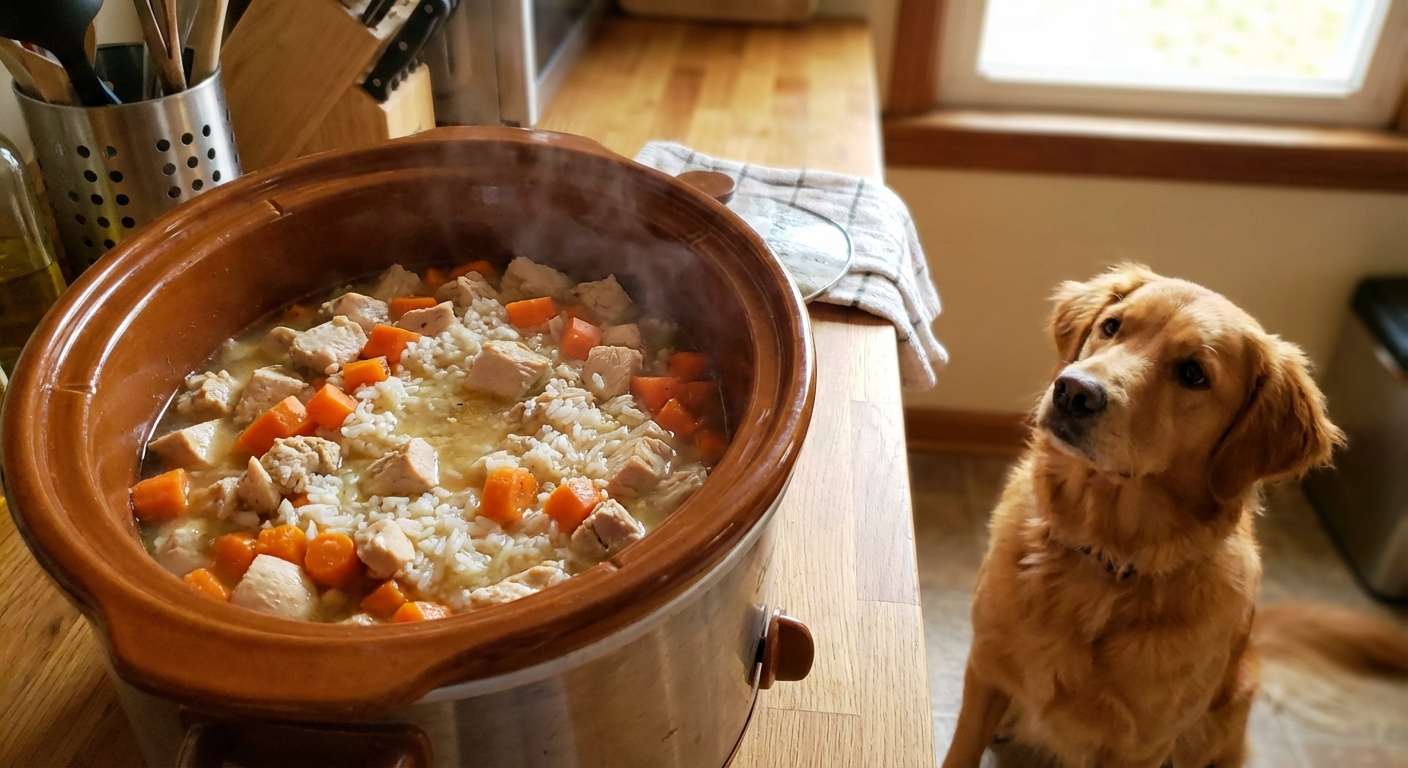
As a veterinary assistant here in Frisco, Texas, I love anything that makes healthy routines easier for busy families. A slow cooker is one of my favorite tools for homemade dog food because it is hands-off, uses low, steady heat to help keep food moist, and makes batch cooking simple.
That said, my most “vet-style” reminder is this: homemade food is wonderful, but it must be balanced over time, not just tasty. Dogs need the right mix of protein, fat, minerals (especially calcium), and essential fatty acids. Below is a safe, practical way to use your slow cooker, plus the checklist I wish every pet parent had before they start.
Before you start checklist
- Ask your vet first if your dog is a puppy, senior, pregnant or nursing, or has any medical condition.
- Plan how you will balance it before you cook: use a veterinary-formulated homemade diet supplement (easiest), or work with your vet or a board-certified veterinary nutritionist.
- Choose safe ingredients and read labels closely (broth and seasonings are common pitfalls).
- Skip risky extras like garlic and organ meat unless you have a vetted recipe and clear amounts.
- Transition slowly over 10 to 14 days and monitor stool, appetite, and energy.
Educational note: I am sharing general, safety-first information, not prescribing an individualized diet. For a complete and balanced homemade plan, your veterinarian can also refer you to a board-certified veterinary nutritionist (ACVN).
Why slow cooker meals can help
Slow cooking can be a great option because it:
- May help digestibility for some dogs by softening proteins and vegetables.
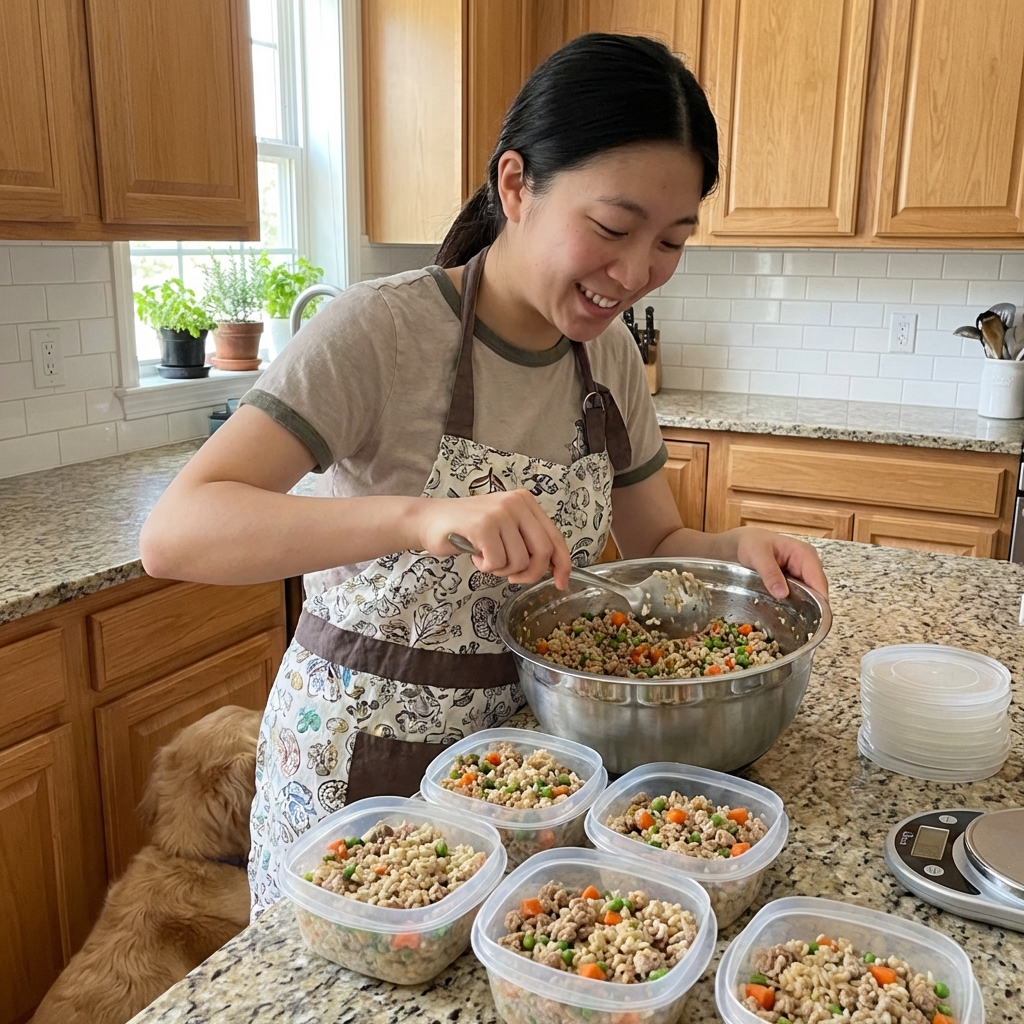
- Makes batch cooking easy so you can portion and freeze.
- Helps picky eaters because the aroma and moisture can be very appealing.
- Supports hydration when you build meals with water-rich ingredients.
Homemade meals can also be helpful for dogs who struggle with appetite, need weight management support (with vet guidance), or do better when you control ingredients closely.
Vet-style safety first
Talk to your veterinarian if your dog has medical needs
If your dog has kidney disease, pancreatitis, diabetes, food allergies, bladder stones, heart disease, or is a growing puppy, do not wing it. Those cases often require specific nutrient targets. Your vet can also refer you to a board-certified veterinary nutritionist.
Foods to keep out of the slow cooker
- Onion, scallions, chives, leek
- Grapes and raisins
- Xylitol (also labeled as Birch Sugar)
- Macadamia nuts
- Alcohol, coffee, tea
- Cooked bones (they can splinter)
A note on garlic
Garlic is not necessary in dog food, and many veterinarians recommend avoiding it because higher doses can contribute to oxidative damage to red blood cells. Since sensitivity varies and it is easy to overdo, my conservative advice is to skip garlic and use safer flavor boosters like a little parsley or ginger if your dog tolerates them.
Broth labels can hide problem ingredients
If you use broth, choose low-sodium and avoid bouillon. Also read labels carefully because onion and garlic are often hidden under vague terms like spices or natural flavors.
The balanced bowl basics
For most healthy adult dogs, a practical starting structure looks like this:
- Protein: the foundation of the meal
- Vegetables: lightly cooked, chopped, or mashed for easier digestion
- Carbs (optional): helpful for many dogs, especially active dogs; some weight loss plans use fewer carbs
- Fat and omega-3s: for skin, coat, and inflammation support
- Calcium source: essential when you feed boneless meat
That last bullet is the most overlooked. If you feed boneless meats without a calcium source, the diet can become unbalanced over time.
Also, a quick reality check: variety can be nice, but it does not automatically make a diet complete and balanced. If your dog has a sensitive stomach or you are trying to identify an intolerance, less variety can actually make troubleshooting easier.
Slow cooker base recipe
This is a dependable starter batch that works for many healthy adult dogs. It is not a prescription diet, and it is not automatically complete and balanced unless you add the balancing step below. This is intended for adult maintenance only, not puppies or pregnant or nursing dogs.
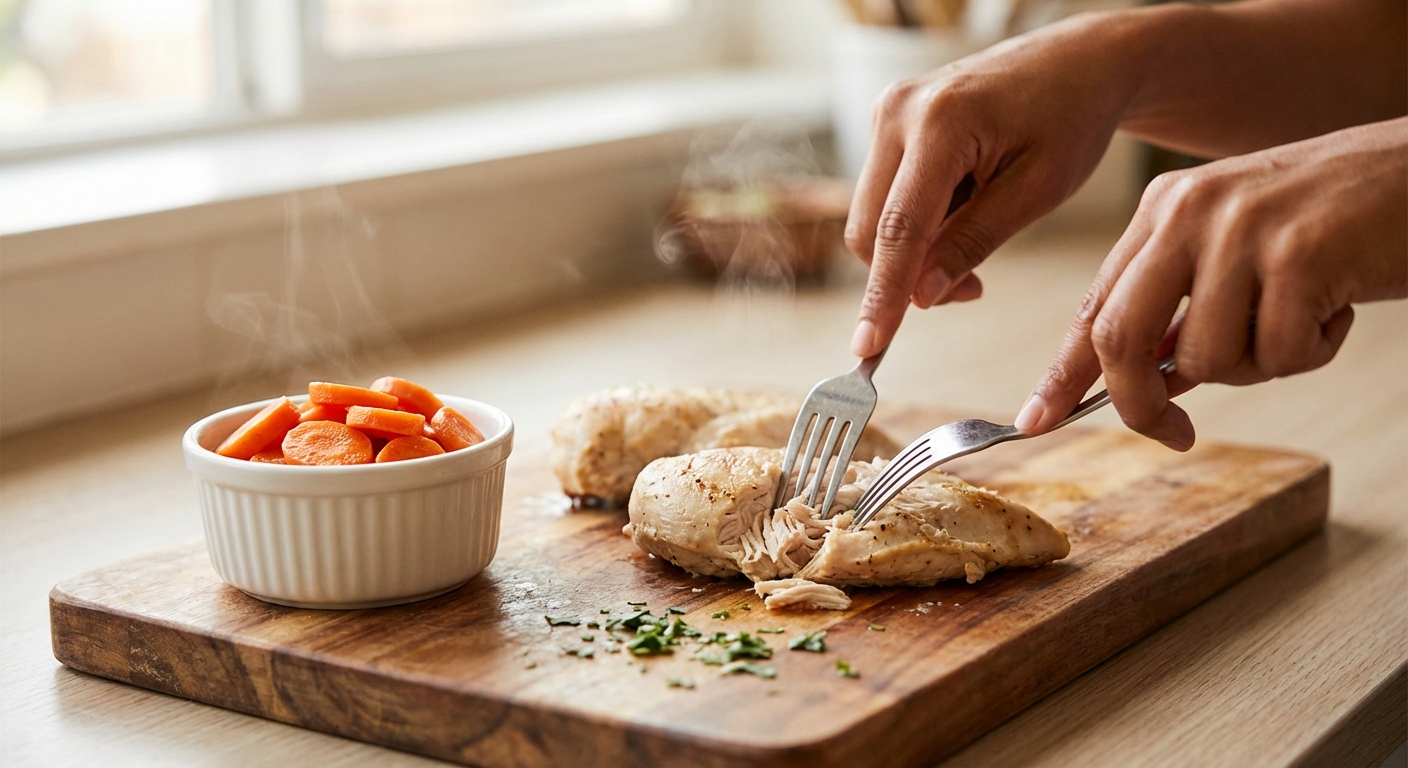
Ingredients
- Protein: 2 to 3 pounds boneless chicken thighs or turkey (trim excess skin if your dog is sensitive to fat)
- Vegetables: 2 cups chopped carrots and 2 cups chopped green beans (or zucchini)
- Carb (optional): 2 to 3 cups cooked brown rice (or 2 to 3 cups cooked oats). If you prefer measuring dry, cook it separately and measure the cooked amount for consistency.
- Liquid: enough water to cover ingredients plus 1 cup low-sodium broth with no onion or garlic (watch for “spices” and “natural flavors”)
Instructions
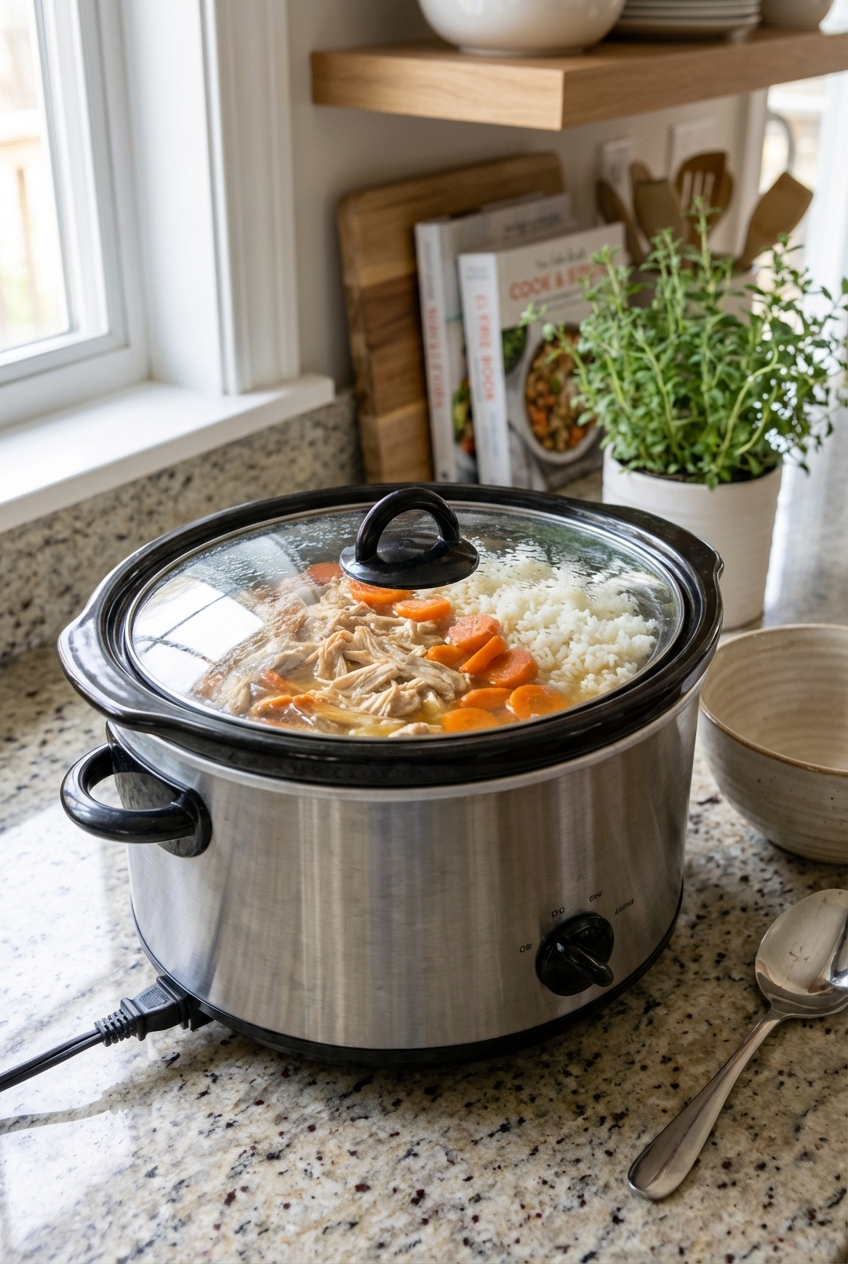
- Add ingredients to the slow cooker. If you are using already cooked rice or oats, you can stir it in during the last 30 to 60 minutes just to warm through and keep texture nicer.
- Cook on low for 6 to 8 hours (or high for 3 to 4 hours) until meat is fully cooked and shreds easily.
- Shred the meat and stir everything together.
- Cool completely before portioning.
Finish it vet-style (how to balance it)
After cooking and once the food is cool or barely warm:
- Use a veterinary-formulated balancing supplement designed for homemade diets and follow the label directions for the amount of cooked food you made. This is the simplest, safest way to cover calcium and trace minerals without doing advanced math at home.
- If you are not using a balancing supplement, do not guess on calcium. Ask your veterinarian for a specific calcium plan, or use a recipe formulated by a board-certified veterinary nutritionist.
- Omega-3s (fish oil) only with vet approval: the dose depends on EPA and DHA content, not just “mg of fish oil.” Fish oil can cause GI upset, can be too rich for some pancreatitis-prone dogs, and may interact with certain medications (including some blood thinners). If your vet approves, introduce it slowly.
- Optional gut support: a small amount of plain kefir or a probiotic recommended by your vet.
Quick note on organ meat
Organ meat sounds healthy, but it is easy to overdo. Liver in particular is very nutrient dense, and too much can create vitamin imbalances over time. If you want to include organs, do it only with a vetted, complete recipe that specifies exact amounts.
Portioning, storage, and food safety
Portion sizes
Calorie needs vary a lot by age, breed, activity level, and whether your dog is trying to lose or gain weight. A safe approach is to:
- Start with your dog’s current daily calorie target (your vet can help).
- Weigh your dog weekly for the first month.
- Adjust portions by 10 percent at a time based on weight and stool quality.
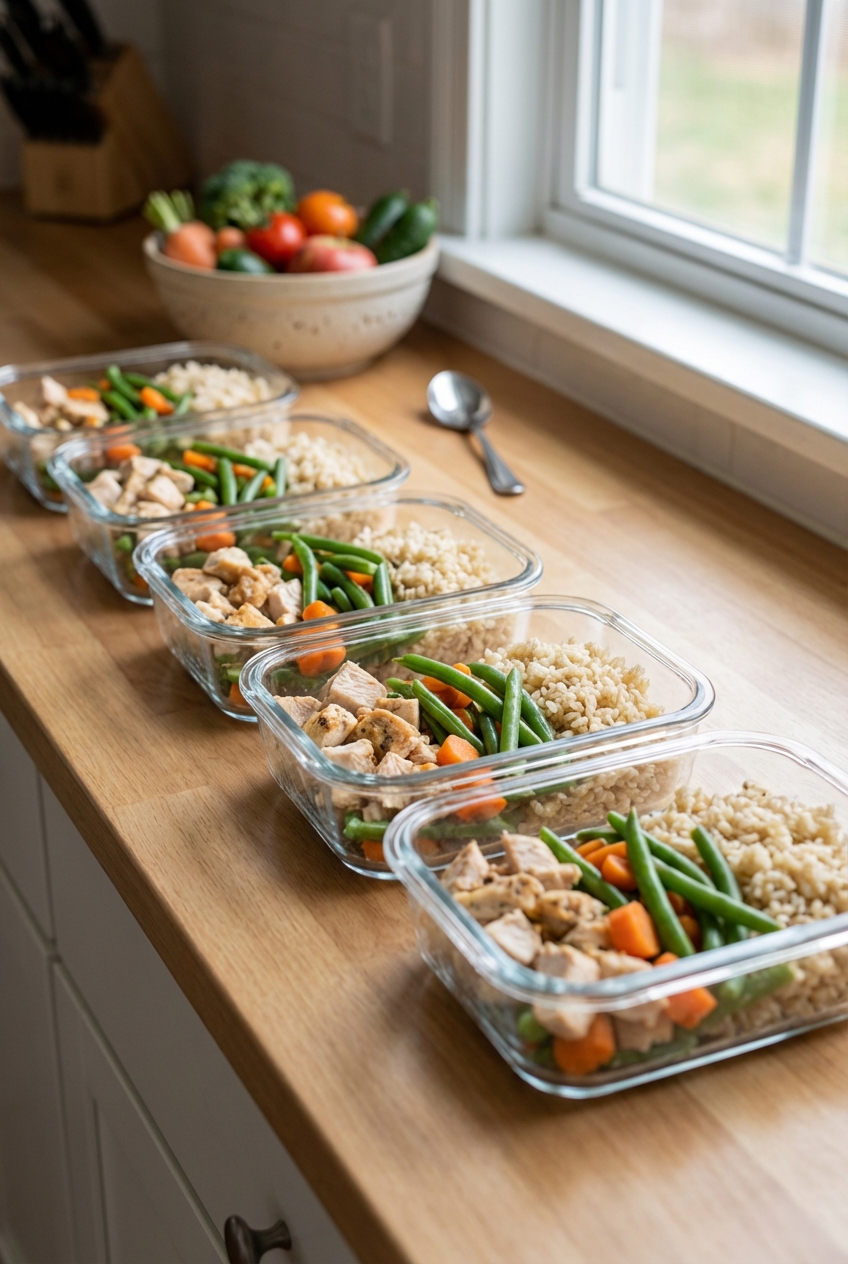
Storing your batch
- Fridge: store in airtight containers for 3 to 4 days.
- Freezer: portion and freeze for up to 2 to 3 months for best quality. (Many foods can be frozen longer safely, but texture and taste decline over time.)
- Thawing: thaw in the fridge, not on the counter.
Clean handling matters
Wash hands, cutting boards, and utensils as if you were cooking for your family, because you are. Dogs can get foodborne illness too, and some bacteria can spread to people in the household.
Easy variations
Keep changes simple: swap one ingredient at a time and watch stool quality and itching.
Protein swaps
- Turkey
- Lean ground beef
- Pork loin (lean)
- Sardines in water (small amounts mixed in)
Veggie swaps
- Spinach (cooked, small amounts)
- Broccoli (cooked, moderate amounts)
- Pumpkin (plain, not pie filling)
- Cauliflower (cooked)
Carb swaps
- Quinoa
- Oats
- Sweet potato (cook separately or add diced early)
- Barley
Transition slowly
Even healthy food can cause loose stool if you switch too fast. A gentle transition is:
- Days 1 to 3: 25% new, 75% current
- Days 4 to 6: 50% new, 50% current
- Days 7 to 9: 75% new, 25% current
- Days 10 to 14: 100% new
If your dog has vomiting, diarrhea lasting more than 24 hours, blood in stool, significant lethargy, or refuses food, stop the transition and call your veterinarian.
Quick troubleshooting
Loose stool
- Slow down the transition.
- Reduce fat (choose leaner meat, skim fat after chilling).
- Use gentler carbs like rice.
- Add a small amount of plain pumpkin.
It is too dry
- Add warm water or broth at serving time (make sure it is onion and garlic free).
- Use more moisture-rich veggies like zucchini.
Weight gain
- Measure portions, do not eyeball.
- Trim skin and visible fat.
- Ask your vet for a calorie target and recheck weight in 2 to 3 weeks.
It seems perfect but your dog is itchy
- Consider a protein sensitivity and trial a single novel protein with your vet’s guidance.
- Double-check broth and add-ins for hidden ingredients (spices, natural flavors).
The takeaway
Slow cooker homemade dog food can be one of the easiest ways to give your dog fresh meals. The real vet-style secret is not the appliance. It is consistency, careful transitions, and making sure the recipe is complete and balanced, especially calcium and essential nutrients.
If you want, tell me your dog’s age, weight, breed mix, and any health concerns, and I can suggest a slow-cooker ingredient combo that is more tailored while still keeping it simple.