Hands-off slow cooker dog food for busy owners: 3 easy recipes (chicken/rice, turkey/sweet potato, beef/pumpkin) plus calcium guidance, safe ingredients, por...
Article
•
Designer Mixes
Slow Cooker Homemade Dog Food Time Saving Guide

Shari Shidate
Designer Mixes contributor
If you have ever looked at homemade dog food and thought, “I love this idea, but I do not have time,” I hear you. As a veterinary assistant here in Frisco, Texas, I meet a lot of caring dog parents who want to feed better but feel stuck between busy schedules and the confusing pet food aisle.
A slow cooker is an easy bridge. It lets you use simple, recognizable ingredients, cook in bulk, and portion meals for the week with very little hands-on time. The goal is not perfection. The goal is consistency, variety, and a plan you can actually stick with.
Quick scope note: This article is general education, not a complete diet formulation for your individual dog. If you plan to feed homemade as the main diet long-term, ask your veterinarian (or a board-certified veterinary nutritionist) to help you balance it.
Why slow cooker meals work
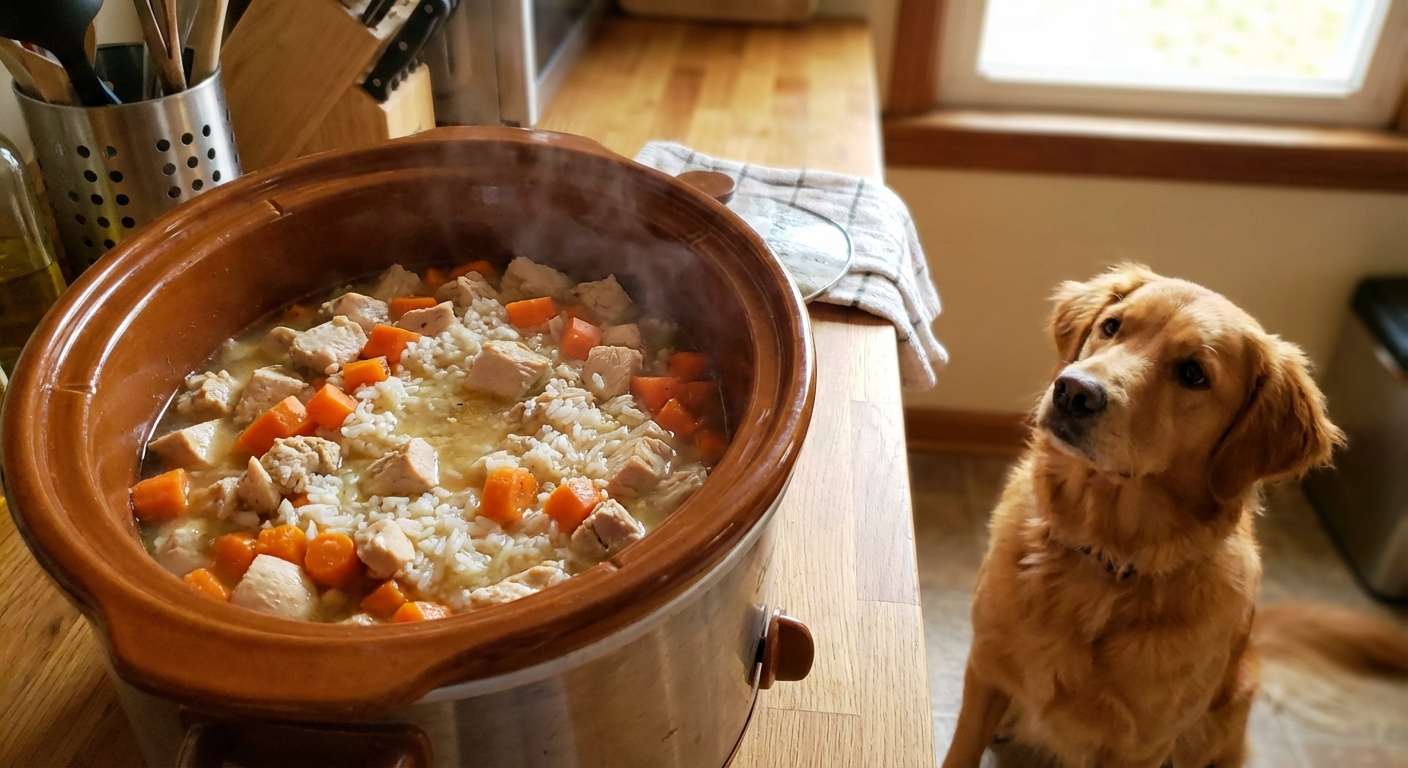
Slow cooker dog food is popular for a reason. It is time-efficient, batch cooking reduces daily decision fatigue, and cooked, soft textures may be easier for some dogs to handle. Keep in mind that stool quality often depends more on fat level, fiber, and your dog’s individual intolerances than on the cooking method alone.
- Hands-off cooking: You prep once, then the slow cooker does the work.
- Batch portions: Refrigerate for a few days and freeze the rest.
- Ingredient control: You choose the protein, carbs, and veggies instead of relying on vague labels.
- Great for gradual changes: A 25% to 50% homemade mix can be a manageable transition strategy, especially for busy households.
Important note: Homemade does not automatically mean “balanced.” Long-term, calcium, essential fatty acids, and multiple vitamins and minerals often need deliberate planning.
Safety and nutrition basics
Cooked vs raw
Slow cooker recipes are cooked recipes. Cooking lowers pathogen risk compared to raw feeding, which is one reason many families prefer this route.
Ingredients to avoid
Avoid these in slow cooker batches:
- Onions, leeks, chives
- Grapes and raisins
- Macadamia nuts
- Xylitol or birch sugar (often in “sugar-free” products)
- Cooked bones (they can splinter)
What about garlic?
Garlic is controversial. Some holistic protocols use very small amounts, but sensitivity varies and slow cooker batches are made in bulk. I recommend discussing garlic with your vet before adding it. This is especially important if your dog has anemia, is on certain medications, or has an underlying illness.
Seasonings and broth
Skip spice blends and added salt. If you use broth, choose unsalted, onion-free, and garlic-free broth. Many store-bought broths include onion or “natural flavors,” so check labels carefully.
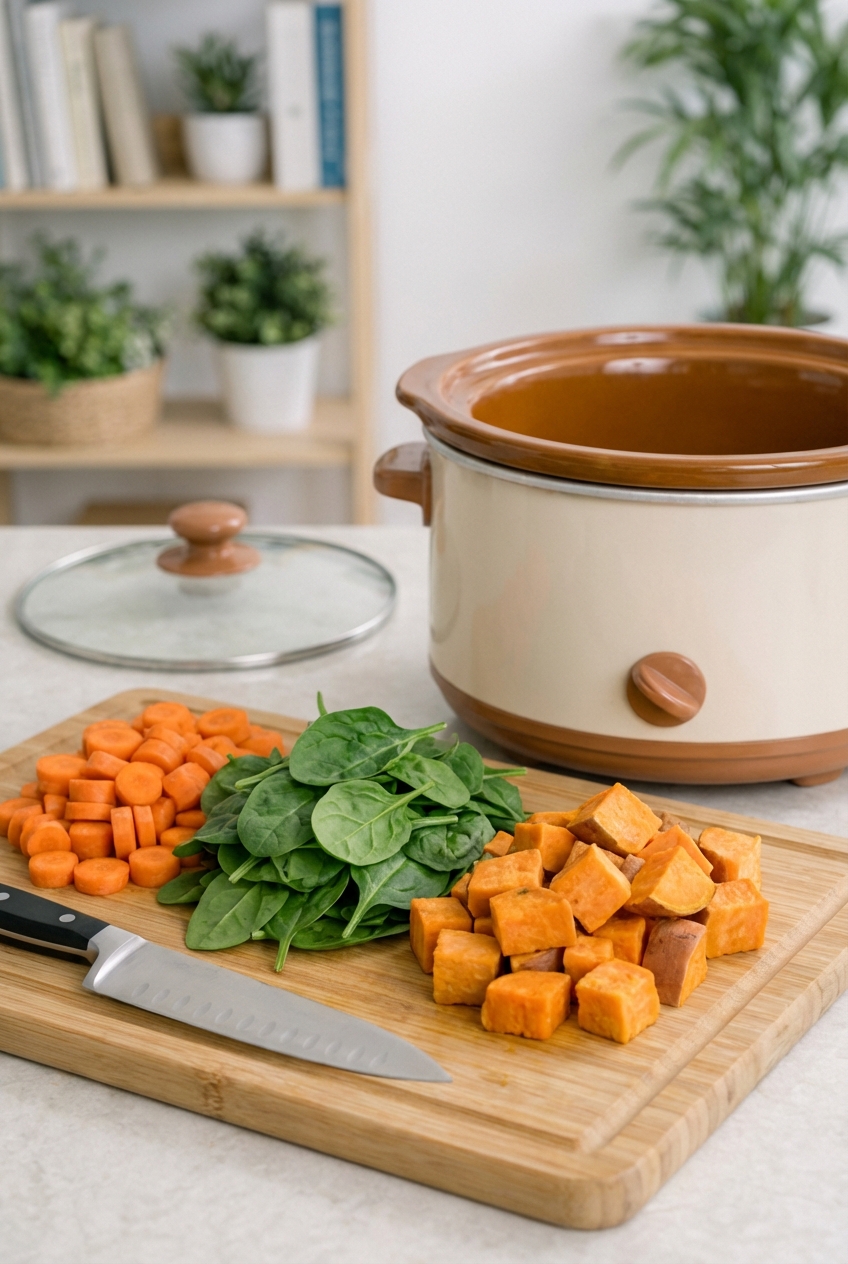
Your slow cooker system
Step 1: Pick one protein
Choose something simple: chicken thighs, turkey, lean ground beef, or pork. Fish is often better cooked separately and added later to avoid strong odors and texture changes.
Step 2: Add dog-friendly vegetables
Dogs typically do best with vegetables that are cooked and soft. Great options include carrots, green beans, zucchini, pumpkin, sweet potato, and leafy greens like spinach or kale in moderation.
Step 3: Add a carb if it fits your dog
Many dogs do well with a moderate amount of carbs for steady energy, especially active dogs. Options include brown rice, oats, barley, quinoa, or cooked potato or sweet potato.
Step 4: Plan for calcium and omega-3s
Two nutrients that often get missed in homemade diets are calcium and omega-3 fatty acids.
- Calcium: Muscle meat is high in phosphorus, so calcium needs intentional planning. This is a place to be precise, not casual. A common target for adult dogs is a calcium-to-phosphorus ratio around 1:1 to 2:1 (many balanced diets land near 1.2:1), and calcium is often calculated as mg of calcium per 1,000 kcal. Your vet can tell you the right target for your dog and help you calculate a safe dose if you use eggshell powder or a veterinary supplement.
- Omega-3s: Fish oil or small amounts of sardines can help support skin, coat, joints, and inflammation balance. Ask your vet for a dose based on your dog’s weight and a product with clear EPA and DHA amounts. Avoid using cod liver oil as your “fish oil” substitute unless your vet recommends it, because vitamins A and D can add up quickly.
Tip: Do not add supplements while the cooker is running unless your vet says it is fine. Some nutrients are heat-sensitive. It is usually best to stir them in after cooling.
Simple base recipe
This is a beginner-friendly “base” you can rotate. It is meant to be a foundation, not a perfectly complete long-term formula on its own.
Ingredients
- 2 to 3 pounds boneless skinless chicken thighs or ground turkey
- 2 cups chopped carrots and green beans (or zucchini)
- 2 cups cooked brown rice or oats (about 2/3 cup dry rice yields roughly 2 cups cooked, but measure cooked to keep portions consistent)
- 1 to 2 cups water or unsalted, onion-free, garlic-free broth (enough to keep it moist)
- Optional: 1 cup pumpkin puree (plain)
Directions
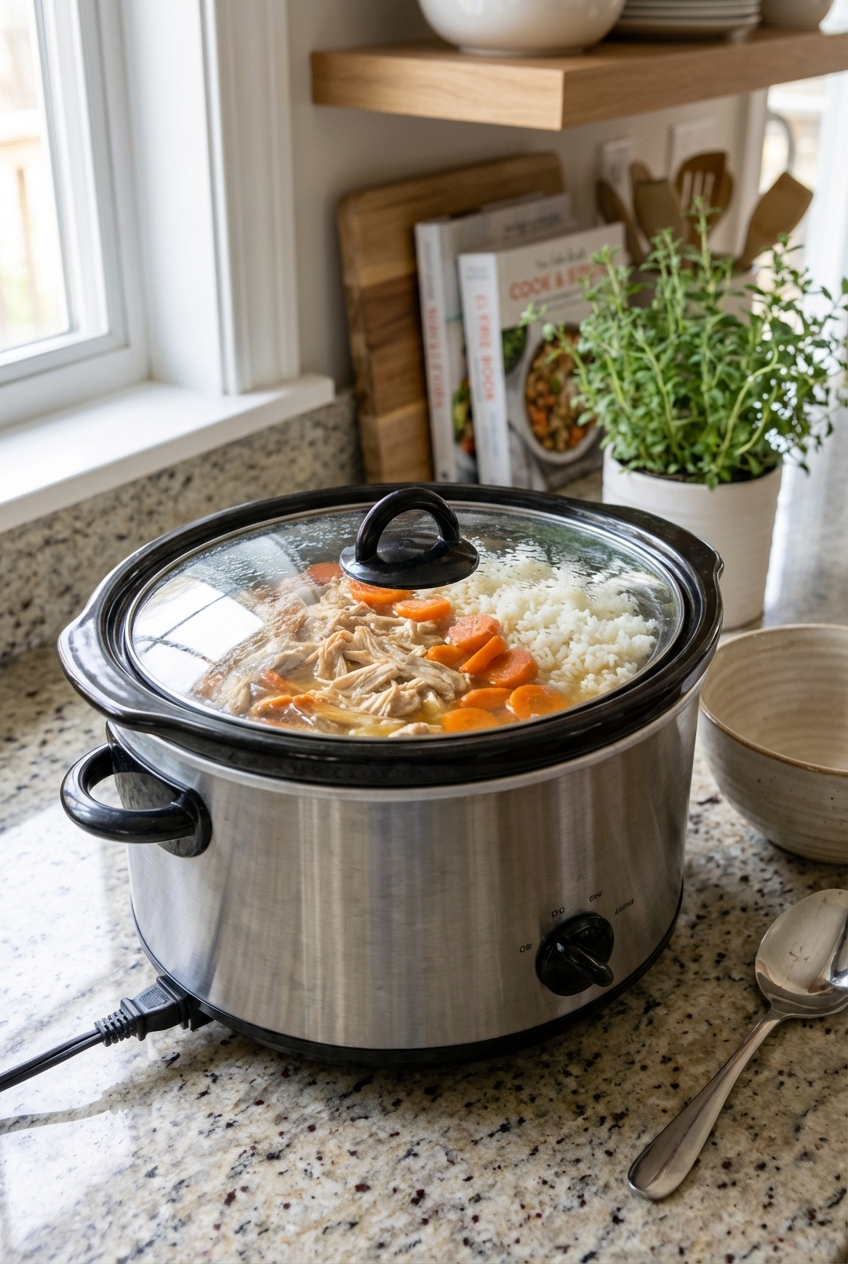
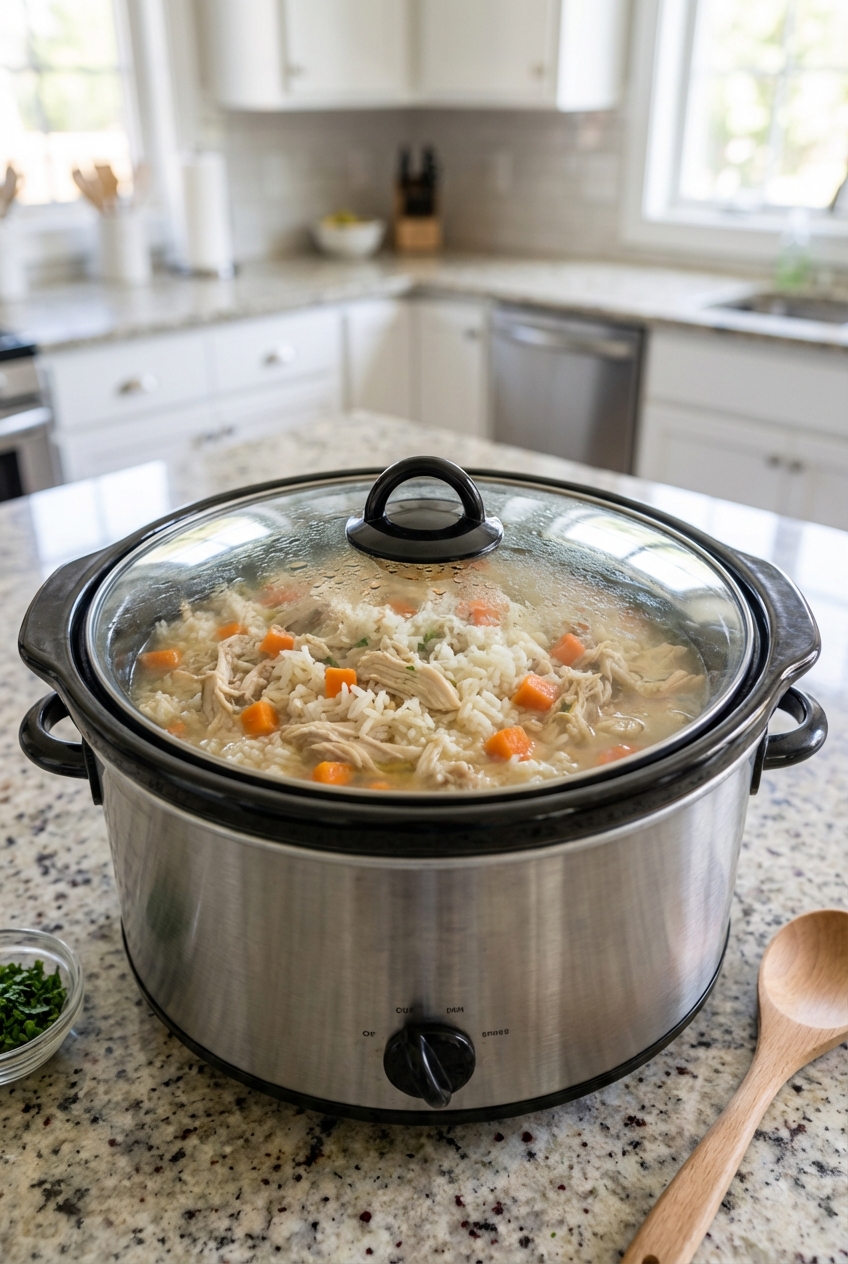
- Place protein and chopped vegetables into the slow cooker.
- Add water or broth.
- Cook on low for 6 to 8 hours or high for 3 to 4 hours, until meat is fully cooked and vegetables are soft.
- Shred meat if needed, then stir thoroughly.
- Cool quickly, then mix in cooked grains if you are using them.
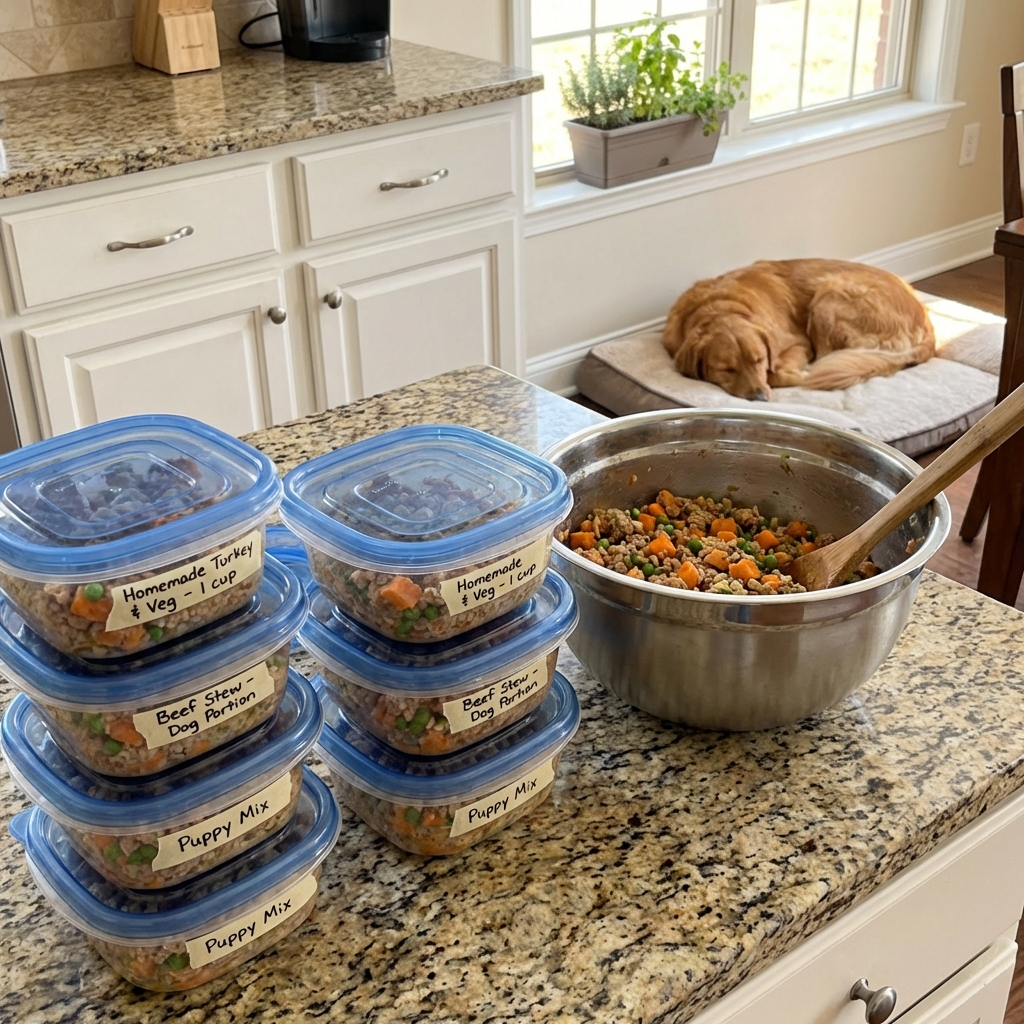
Portioning: Divide into meal-sized containers. Refrigerate up to 3 to 4 days, and freeze extra portions for up to 2 to 3 months for best quality. Longer freezing is usually safe, but texture and flavor can decline over time.
Balance it before long-term feeding
If this is more than an occasional topper, do not “eyeball” supplements. A balanced homemade diet often needs more than calcium and omega-3s, including (depending on the recipe) vitamin D, vitamin E, iodine, zinc, copper, manganese, choline, and more. The safest next step is to bring this base recipe to your veterinarian or a board-certified veterinary nutritionist so they can:
- Estimate calories per portion
- Calculate a calcium plan (and verify Ca:P balance)
- Recommend a complete supplement or specific nutrient additions
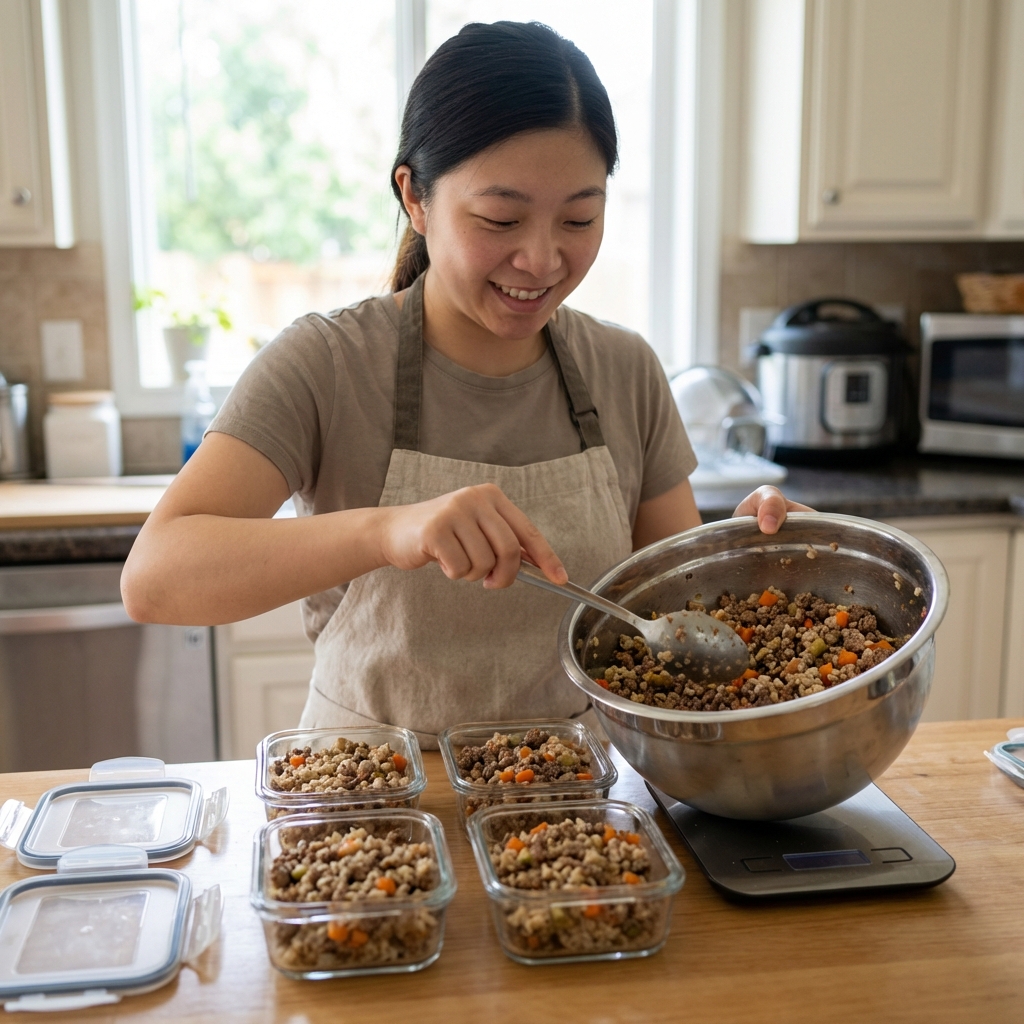
Weekly batch schedule
My “2 hours total” approach
- Day 1 (shopping, 20 minutes): Buy 1 protein, 2 vegetables, 1 carb, and any supplements your vet recommends.
- Day 2 (prep, 15 to 25 minutes): Chop veggies, load slow cooker, turn it on.
- Day 2 (portioning, 20 to 30 minutes): Cool, portion, refrigerate and freeze.
- Daily (1 minute): Thaw tomorrow’s meals in the fridge.
Shortcut: Use frozen vegetables like green beans or chopped carrots. You still get nutrition and you cut prep time way down.
How much to feed
Feeding amounts depend on your dog’s ideal weight, activity level, age, and whether you are doing 25%, 50%, or 100% homemade. Because homemade recipes vary in calories, the most reliable “dashboard” is your dog’s body condition, stool quality, and weight trend.
Simple ways to set a starting point
- Use your current food as a baseline: Note how many calories per day your dog currently eats (from the bag or can label) and aim for a similar daily calorie total when you swap in homemade.
- Ask your vet for a daily calorie target: This is especially helpful for weight loss, weight gain, or medical conditions.
Use these checkpoints
- Weight: Weigh weekly at first.
- Body condition: You should feel ribs under a light fat layer, not see them sharply and not have to press hard.
- Stool: Very soft stool can mean the transition is too fast or the recipe is too rich. Very dry stool can mean not enough moisture or fiber.
If your dog has pancreatitis history, kidney disease, allergies, diabetes, or heart concerns, please get a veterinarian-approved recipe or a consult with a board-certified veterinary nutritionist.
Who should get extra guidance
Puppies, pregnant or lactating dogs, and dogs with chronic health conditions need more precise nutrition. Please do not use a general base recipe as a primary diet for these dogs without professional formulation.
Transition slowly
Even healthy food can cause digestive upset if you move too fast. A gentle transition is usually best:
- Days 1 to 3: 25% homemade, 75% current food
- Days 4 to 6: 50% homemade, 50% current food
- Days 7 to 9: 75% homemade, 25% current food
- Days 10 to 14: 100% homemade (if that is your goal)
Go slower if your dog has a sensitive stomach. There is no prize for rushing. Consistency wins.
Storage and serving
Cooling safely
Cool food promptly before refrigerating. You can spread it in a shallow pan to cool faster, then portion.
Freezer strategy
- Freeze in meal-sized portions so you only thaw what you need.
- Label containers with the date and protein source.
- Rotate proteins across batches to improve nutrient variety.
Serving temperature
Many dogs prefer meals slightly warm. If you warm food, make sure it is not hot, and stir well to avoid uneven heating.
Common mistakes
- Too much fat: Rich recipes can trigger loose stool and can be risky for pancreatitis-prone dogs. Choose lean proteins, trim visible fat, and drain excess fat after cooking.
- Skipping calcium or guessing doses: Long-term, calcium-to-phosphorus imbalance is a real concern. Measure and calculate with veterinary guidance.
- Same recipe every week: Rotate proteins and vegetables to broaden nutrient exposure.
- Over-relying on peas and legumes: Variety is fine, but avoid building every batch around pea-heavy mixes. There is a possible association under investigation between certain diets high in legumes and diet-associated heart disease in some dogs. If you have concerns, ask your vet what is most appropriate for your dog.
Easy add-ins
These are easy “finishers” you can stir into cooled food in the bowl:
- Plain kefir or yogurt (small amounts) for probiotics if tolerated
- Blueberries for antioxidants
- Sardines in water (small amounts) for omega-3s
- Chopped cooked spinach for added micronutrients
Start with tiny amounts and watch stool. Every dog is unique.
When to call your vet
Contact your vet if you notice vomiting, diarrhea lasting more than 24 to 48 hours, refusal to eat, abdominal pain, sudden weight loss, itchiness that worsens, or any sign of a chronic condition flaring up. Homemade feeding is absolutely doable, but it should always support your dog’s health, not complicate it.
Homemade can be simple. Choose one slow cooker day per week, rotate ingredients, and adjust based on your dog’s body condition, energy, and stool. For long-term feeding, get the recipe balanced and calculate supplements rather than guessing.