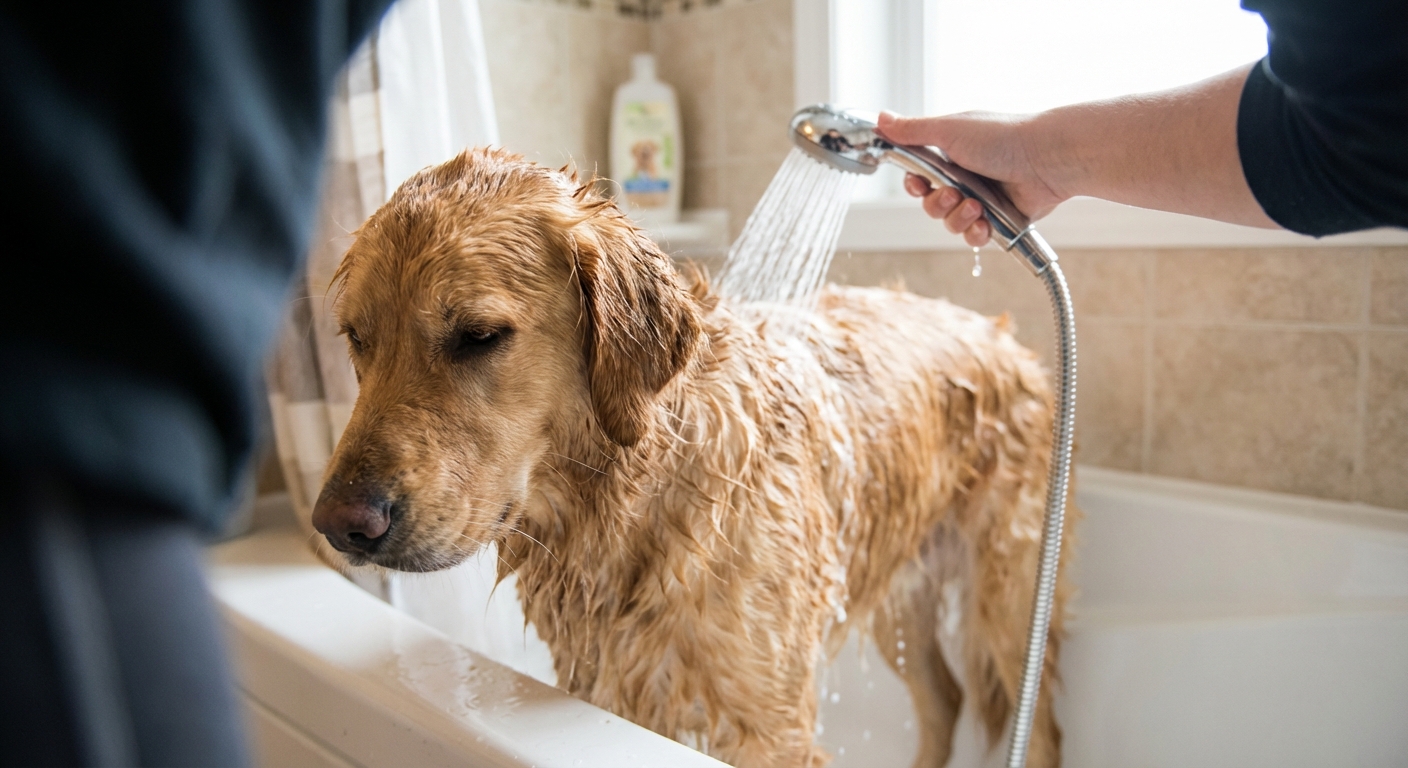
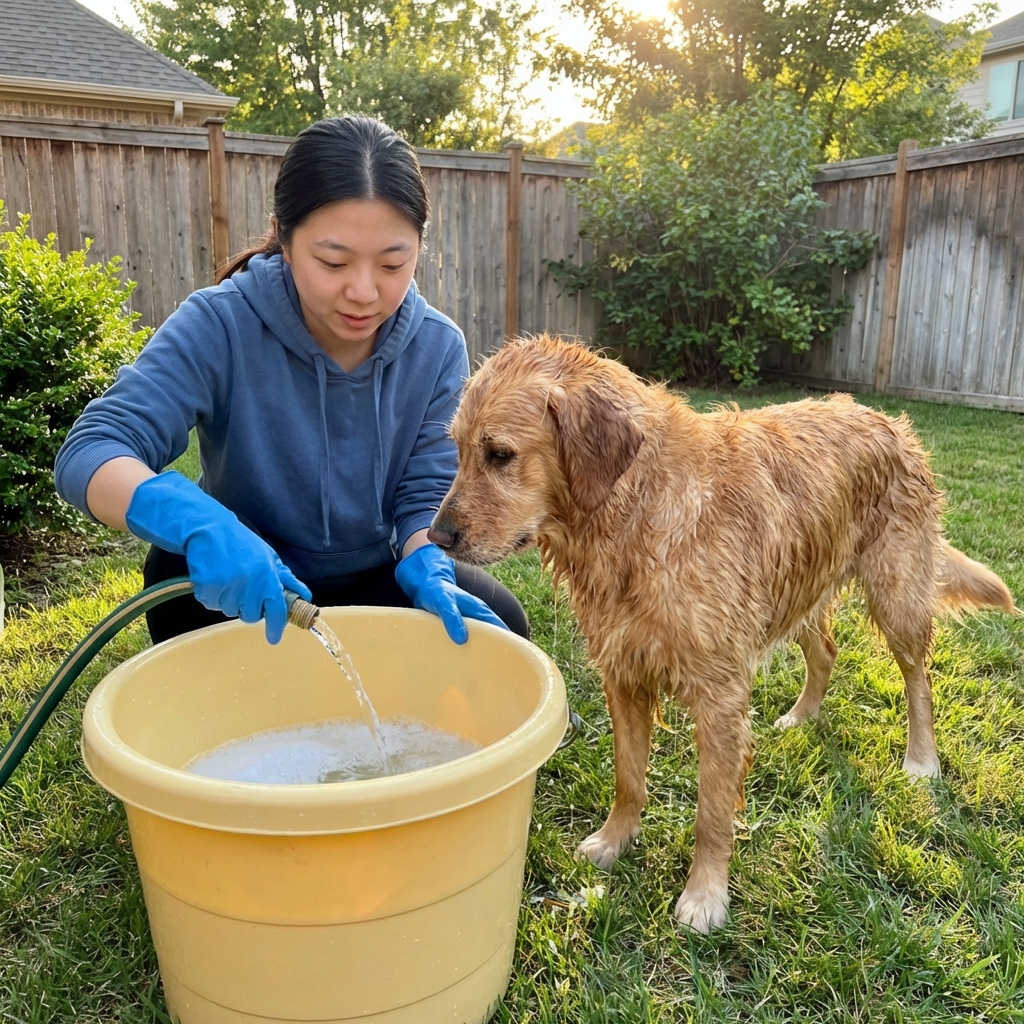
Step-by-step help for a dog sprayed by a skunk in the face: protect and flush the eyes, avoid common mistakes, use a safe DIY de-skunk mix, and know when to ...
Article
•
Designer Mixes
Skunk Sprayed Your Dog in the Face? Do This Now

Shari Shidate
Designer Mixes contributor
If your dog just got sprayed in the face by a skunk, I know that panicky feeling. The smell is intense, your dog is miserable, and your first instinct is usually to rush to the bathtub. Before you do, take a breath. The first few minutes matter because skunk spray is oily and can spread fast, especially around the eyes, nose, and mouth.
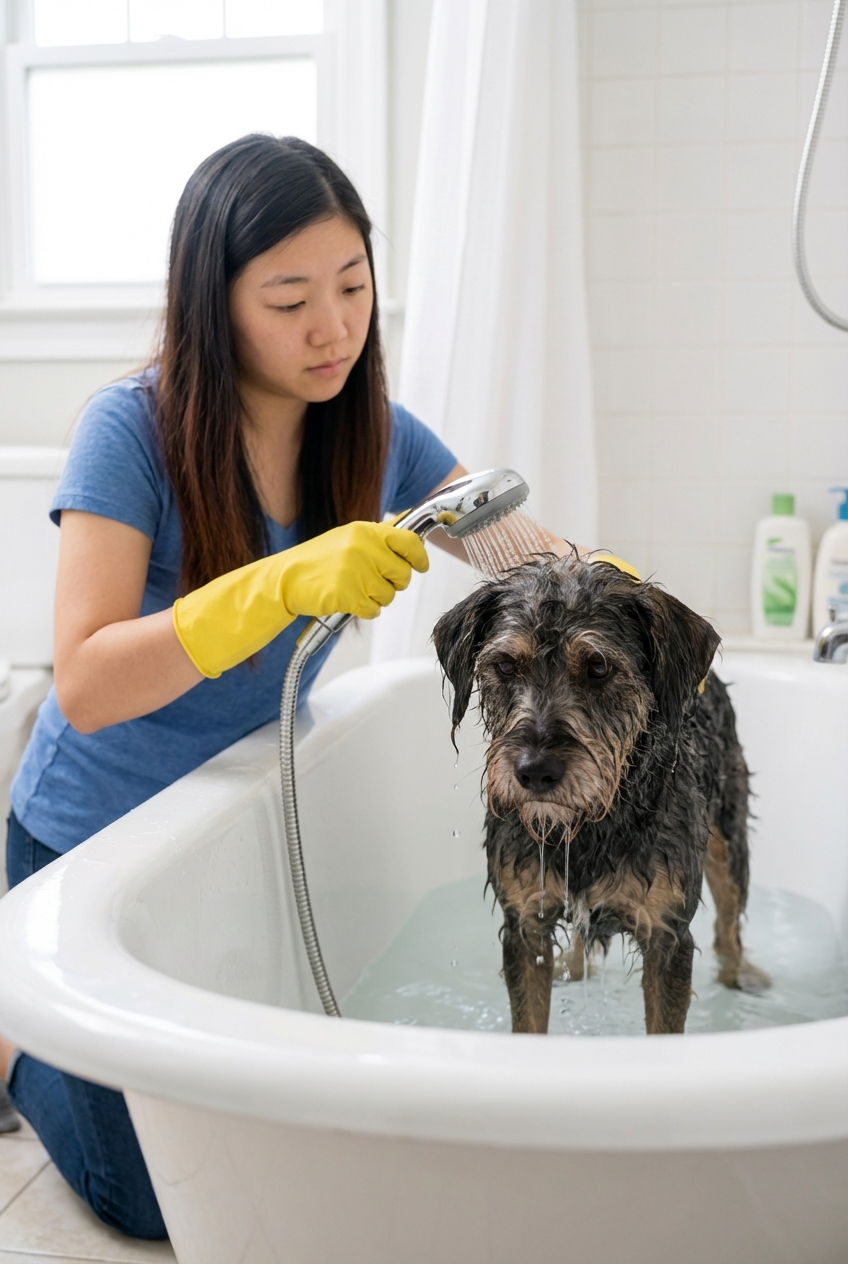
As a veterinary assistant, my goal is to help you handle this safely at home and recognize when it is time to get veterinary care. This guide is not a substitute for veterinary advice, especially if the eyes or breathing are involved.
First 5 minutes: quick, safe steps
1) Protect yourself and contain the mess
- Put on gloves and old clothes. Skunk oils cling to skin.
- Keep your dog outside or in a contained, easy-to-clean area if possible.
- Prevent face rubbing. Dogs will try to wipe their muzzle on carpet, grass, or your couch. Use a leash, towel wrap, or an e-collar if you have one.
2) Avoid these common “quick fixes”
- Tomato juice: it does not chemically neutralize the odor and can make cleanup harder.
- Vinegar or lemon near the eyes: too irritating.
- Essential oils: risky if inhaled or licked and can worsen irritation.
- Regular dog shampoo as your first step: it is often less effective on skunk oil and can spread it around before you neutralize it.
3) Check for red flags right away
Skunk spray in the face is mostly a “stinky” problem, but it can become a medical problem. Seek veterinary care urgently if you notice:
- Squinting, pawing at the eyes, holding an eye shut
- Marked redness, swelling, or discharge from the eyes
- Gagging, vomiting repeatedly, drooling excessively
- Coughing, wheezing, labored breathing
- Lethargy, weakness, pale gums (rare but important)
If you have no supplies yet
If you do not have peroxide, baking soda, or dish soap right now, do this first:
- Keep your dog outside if safe to do so.
- Blot the face and neck with paper towels or an old towel. Do not rub.
- Rinse the face with lukewarm water (avoid getting water up the nose).
- Flush the eyes if you think the spray hit them (see below).
- Then get supplies or call your veterinarian or an emergency clinic if eyes or breathing are a concern.
Eye exposure: what to do first
If the spray hit the eyes, your best first step is gentle flushing. Skunk spray can irritate the cornea, and the sooner you dilute it, the better.
- Use sterile saline eyewash if you have it. A pet eye rinse is great.
- If you do not, use room-temperature to lukewarm clean water.
- Flush gently for 5 to 10 minutes if your dog will tolerate it. Use a steady trickle, not high pressure.
- Let the water run from the inner corner outward.
- Do not use hydrogen peroxide in or near the eyes.
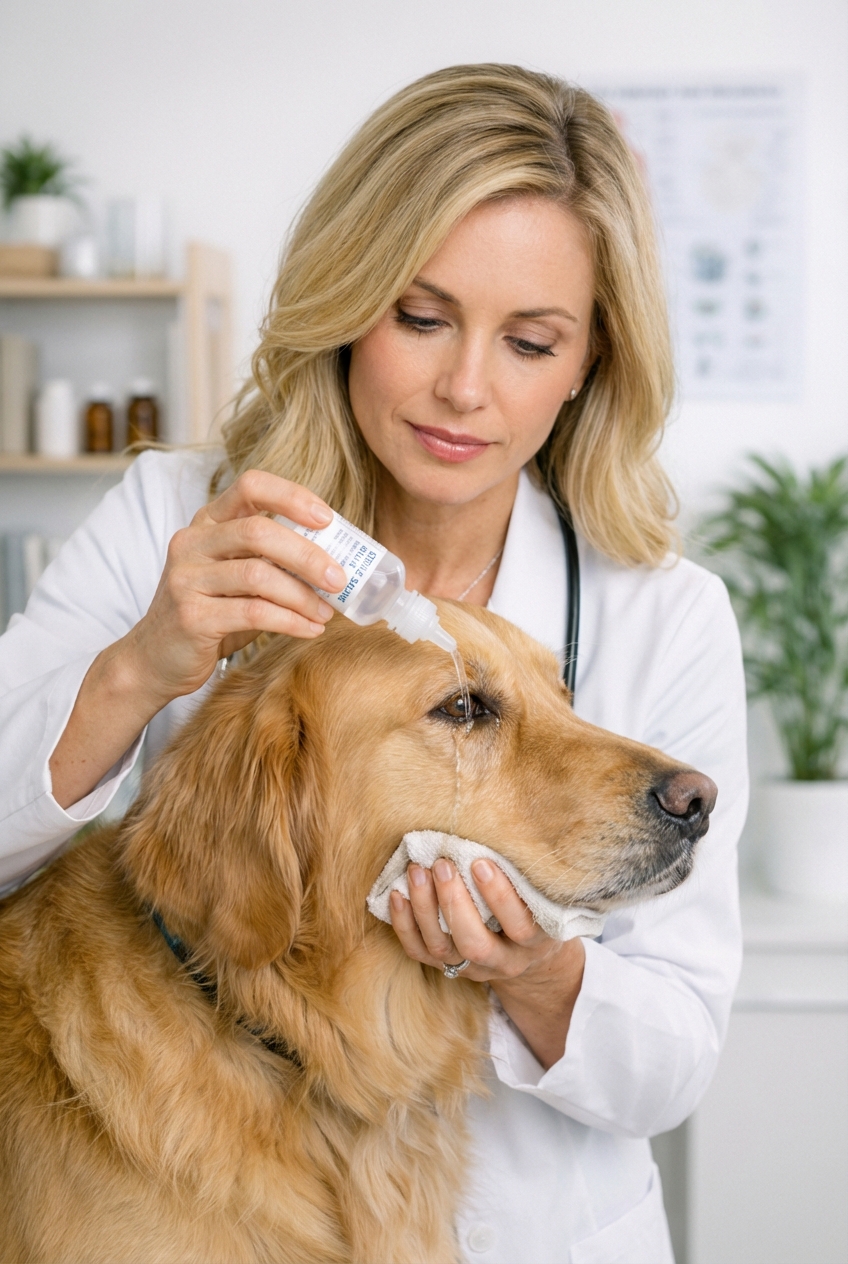
If your dog keeps squinting after you flush, or the eye looks cloudy, painful, or swollen, call your veterinarian. Corneal injuries can worsen quickly, and prompt treatment helps prevent ulcers.
The best evidence-based deodorizing mix
Skunk odor comes from sulfur-based compounds (thiols). The most widely recommended at-home approach is the hydrogen peroxide, baking soda, and dish soap mixture because it helps break down and lift the oily compounds. This recipe is commonly attributed to Paul Krebaum and is also shared in similar form by humane organizations and veterinary sources.
Skunk odor solution
- 1 quart (4 cups) of 3% hydrogen peroxide
- 1/4 cup baking soda
- 1 to 2 teaspoons liquid dish soap (a grease-cutting one)
Important safety notes
- Mix fresh and use immediately. Do not store in a closed container because it can build pressure.
- Keep it out of eyes, nose, mouth, and genitals. This is for fur and skin, not mucous membranes.
- Use caution on dark coats. Peroxide can lighten some fur.
- Stop if skin irritation worsens. Some dogs get dry or red from repeated degreasing.
- For cats, contact your vet first. Bathing can be risky and very stressful, and product choice and technique matter.
How to apply for a face spray
- Blot first with paper towels or an old towel to remove oily residue. Do not rub.
- Apply carefully with a sponge or washcloth, avoiding the eyes and lips.
- Work it into the fur around the cheeks, forehead, neck, and ears (not inside the ear canal).
- Let sit 3 to 5 minutes. Do not let your dog lick it. Use a leash and keep their head up.
- Rinse thoroughly with lukewarm water.
- Then shampoo with a gentle dog shampoo and rinse again.
If the odor is still strong, you can repeat once. Most dogs need 1 to 2 rounds. More is not always better because repeated peroxide exposure can dry the skin.
Airway note: During bathing, keep water and suds out of the nose and mouth. Go extra slow with flat-faced dogs (like bulldogs, pugs, and Boston terriers), who can struggle more with water exposure and stress.
What if your dog got sprayed in the mouth?
Dogs often snap at skunks, so mouth exposure is common. Skunk spray tastes awful and can cause drooling, lip smacking, gagging, and sometimes vomiting.
- Offer water and allow your dog to drink.
- Wipe the lips and muzzle with a damp cloth.
- Avoid harsh rinses in the mouth. Do not pour peroxide mixtures into the mouth.
- Watch for ongoing vomiting or signs of breathing trouble. If symptoms are significant or persist, call your vet.
Ears: be cautious
Skunk spray can hit the outer ear and irritate the skin.
- Clean only the outer ear flap with a damp cloth or your usual dog-safe ear wipe.
- Do not put the peroxide mixture into the ear canal.
- Call your vet if you see head shaking, ear pain, a strong yeasty odor, swelling, or discharge in the next few days.
After the bath: why your dog still smells
Even after a great wash, many dogs smell a little “skunky” for days. That is usually because tiny amounts of oil remain in the coat, and the odor can re-activate when the fur is damp.
Helpful next steps
- Dry your dog completely. Damp fur brings odor back.
- Wash bedding, collars, harnesses, and leashes. These hold onto oils.
- If odor lingers indoors, increase ventilation, wash fabrics, and consider changing HVAC filters as an optional extra step.
- Consider a pet-safe deodorizing shampoo on a later day if the skin is not irritated.
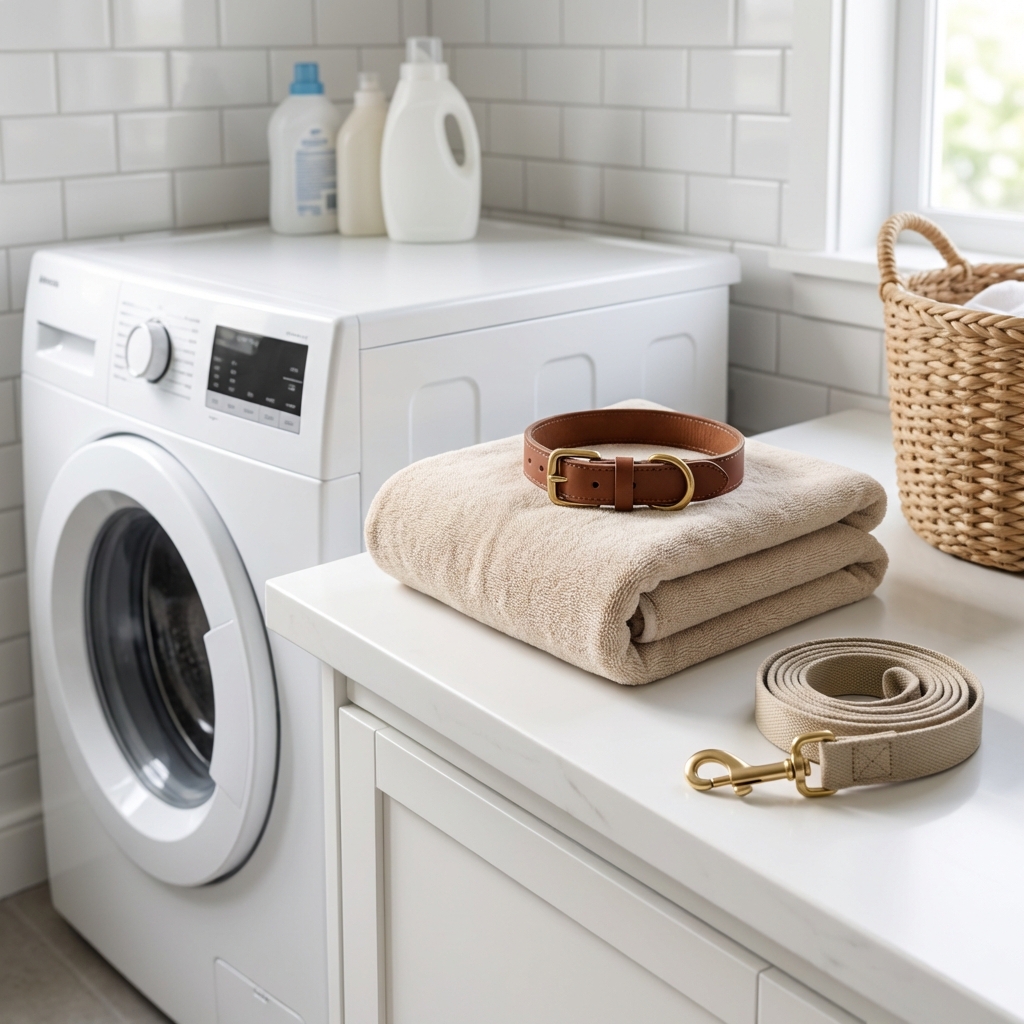
If your dog’s skin becomes red, flaky, or itchy after multiple washes, switch to a gentle oatmeal-based dog shampoo and call your veterinarian if irritation persists. Dry skin is common after repeated degreasing.
When to call the vet
Please call your veterinarian if any of these show up within the next 24 hours:
- Eye pain: squinting, pawing, excessive tearing, or a cloudy eye
- Breathing issues: coughing, wheezing, noisy breathing
- Persistent vomiting or inability to keep water down
- Extreme lethargy or weakness
- Very pale gums or collapse (emergency)
Rarely, dogs can develop red blood cell damage (hemolysis) after heavy exposure, especially if they ingested skunk spray, and it may be more concerning in small dogs. This is uncommon, but it is a good reason to call promptly if you see unusual weakness, pale gums, dark urine, or ongoing vomiting.
Prevention tips that work
Skunk encounters are common in neighborhoods, especially at dawn and dusk. Prevention is not perfect, but it can be practical.
- Leash walk at night, especially for small dogs or dogs with strong prey drive.
- Use a bright flashlight before letting your dog into the yard.
- Secure trash and outdoor pet food. These attract skunks.
- Block access under decks and sheds where skunks like to den.
- Practice a strong “leave it” and reward heavily.