Your dog got skunked? Follow calm first steps, use the proven peroxide + baking soda + dish soap mix safely, protect eyes and ears, deodorize your home, and ...
Article
•
Designer Mixes
Skunk Spray on Dogs: Secrets Revealed

Shari Shidate
Designer Mixes contributor
If your dog just got skunked, you are in the right place. I know that smell can feel like it has a personality of its own. The good news is that skunk odor is fixable, and the fastest results come from understanding one simple key idea: skunk spray is made of oily sulfur compounds that cling to hair and skin, and they need the right chemistry to neutralize them.
Below, I’ll walk you through what actually works, what makes the smell worse, and how to keep your pup comfortable and safe from skin irritation while you de-skunk them.
Why skunk smell sticks
Skunk spray contains thiols and other sulfur-based compounds. They are:
- Oily: they stick to fur and skin and resist plain water.
- Volatile: the odor can “bloom” again when the coat gets wet, even days later.
- Potent: tiny amounts smell intense.
That is why quick rinses, scented shampoos, and heavy perfume sprays usually fail. They may cover the odor for a bit, but they do not neutralize the source.
First steps
1) Keep your dog outside if you can
It is not always practical, but every minute indoors spreads oily odor onto carpets, upholstery, and your own clothes.
2) Protect yourself and set up
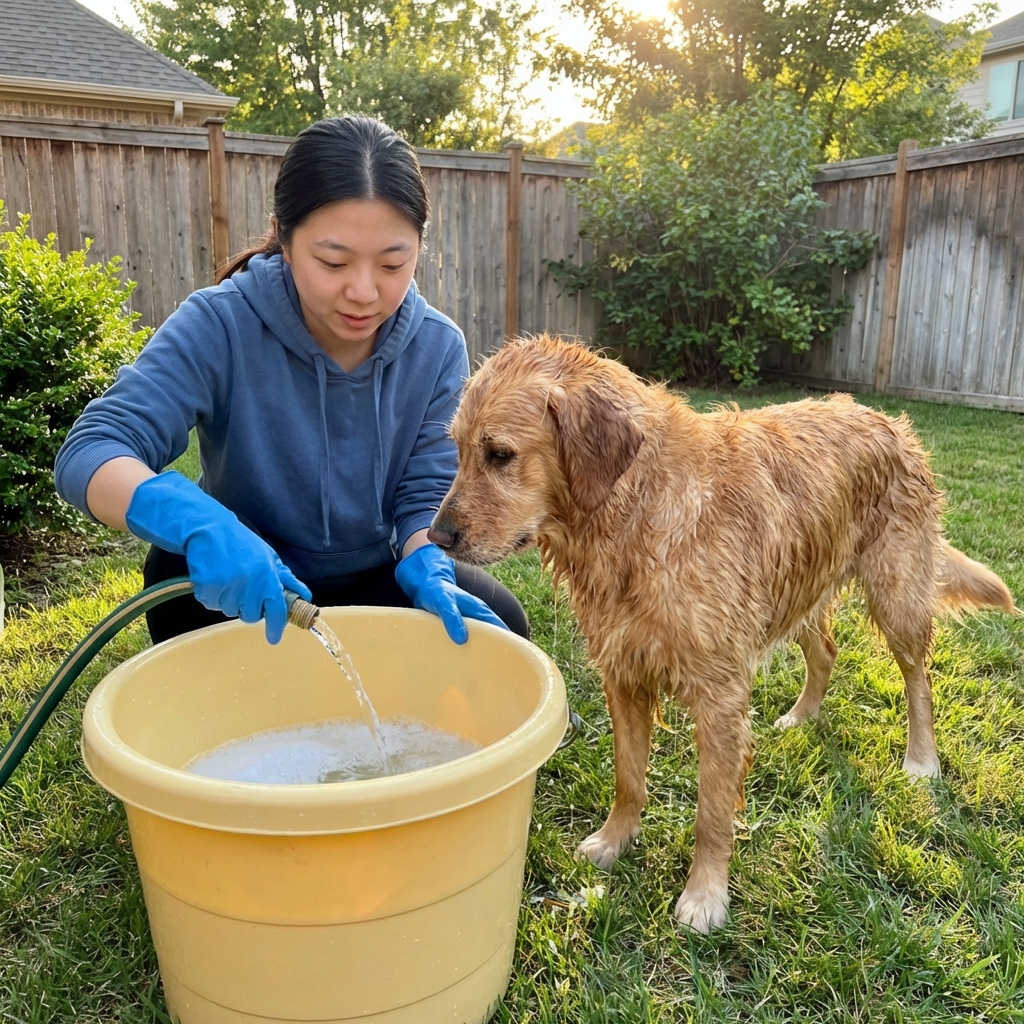
- Put on gloves and old clothes.
- Use a leash to keep your dog from rubbing on furniture.
- If you must bring them inside, confine them to an easy-to-clean area like a laundry room.
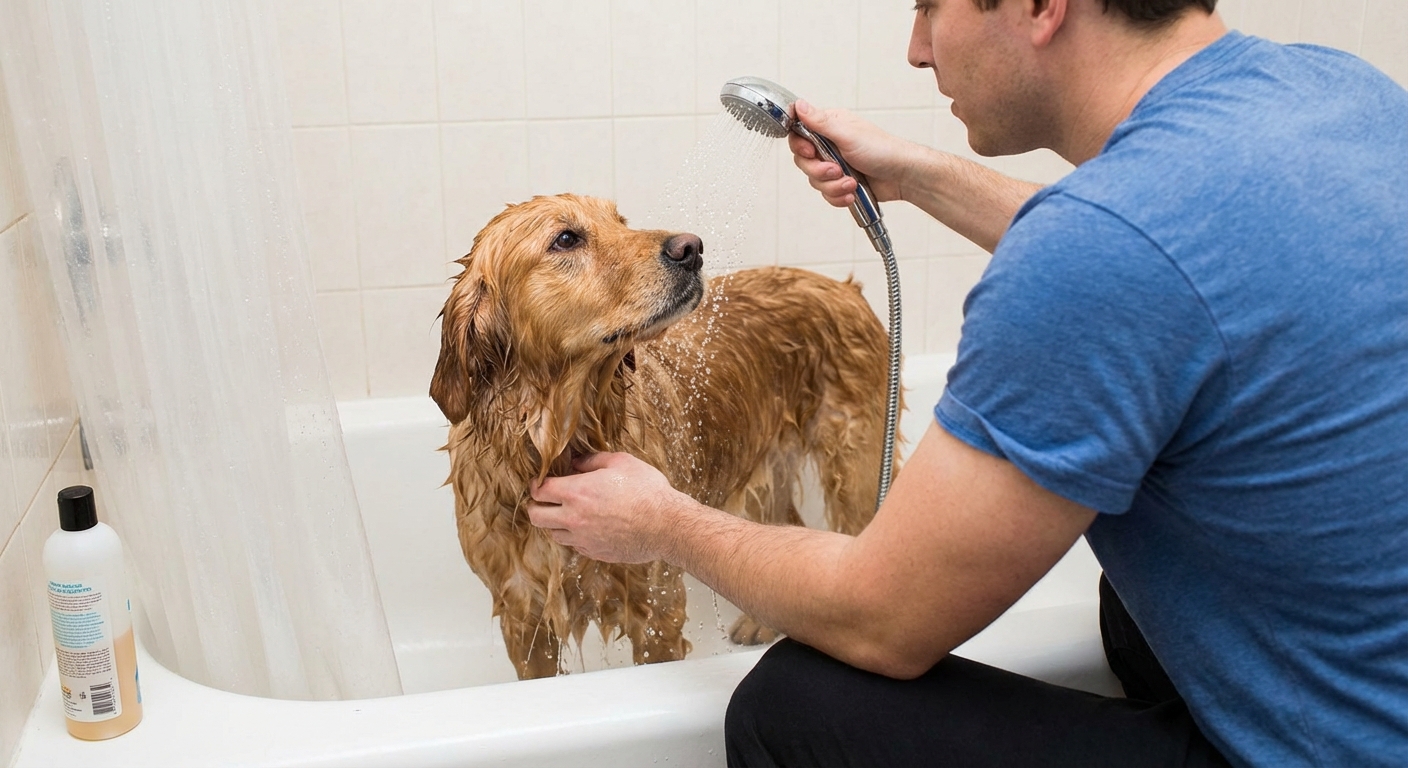
- Ventilate (open windows, run a fan) and cover nearby surfaces with old towels if you are bathing indoors.
3) Check the eyes and mouth
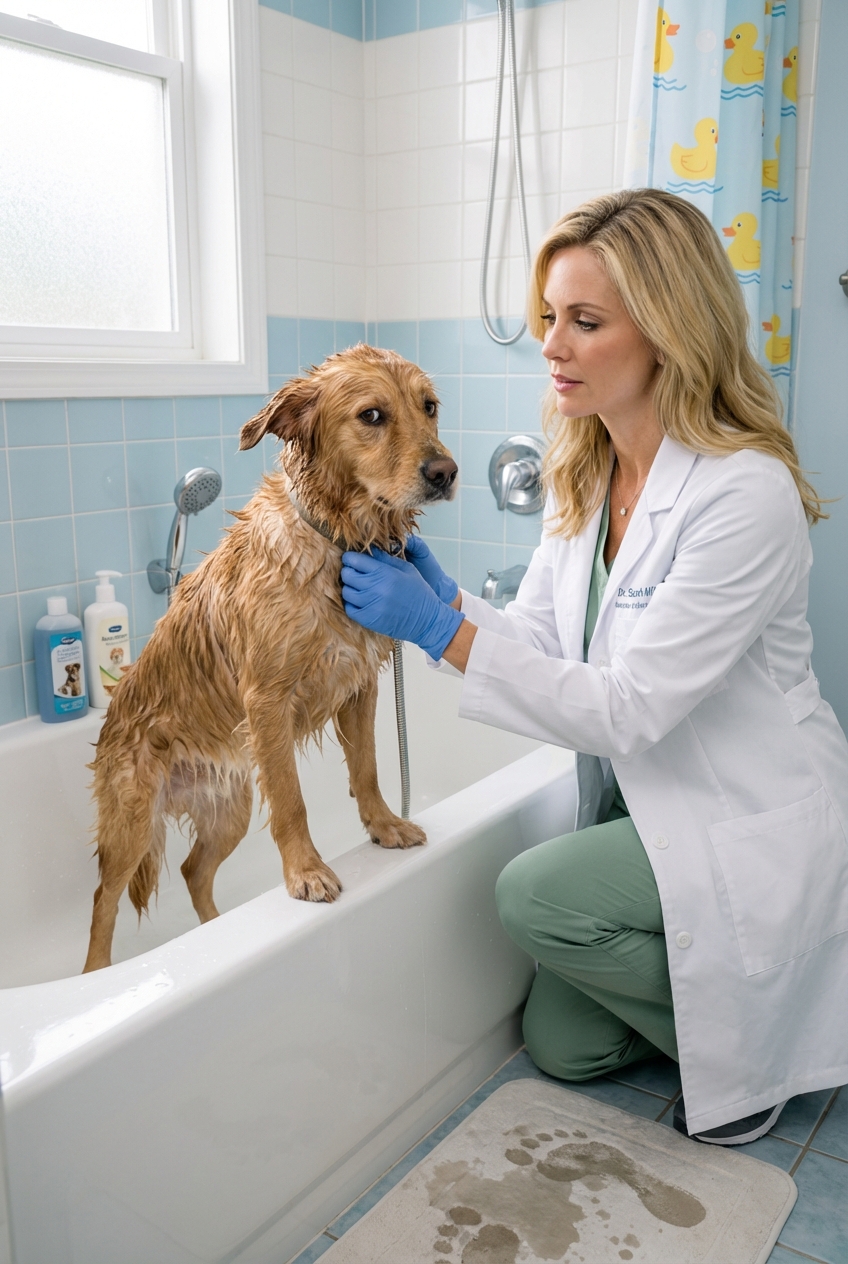
Skunk spray can be very irritating. If your dog is squinting, pawing at the face, drooling, or seems unusually distressed, rinse the face gently with lukewarm water. If you have sterile saline/eye rinse, use that for the eyes. If symptoms continue, call your veterinarian for guidance. Eye exposure can sometimes require prescription eye medication.
Best home mix
Here is the best-kept truth about skunk odor: tomato juice is not the winner. The most reliable at-home option is a peroxide and baking soda solution often called the Krebaum formula, which works by chemically changing the odor compounds. Many veterinary sources reference this approach, but if your dog has very sensitive skin, broken skin, or you have a very young puppy, a quick vet call is a smart move before you start.
Skunk-neutralizing mix
- 1 quart (4 cups) of 3% hydrogen peroxide
- 1/4 cup baking soda
- 1 to 2 teaspoons liquid dish soap (plain, grease-cutting type)
How to use it
- Dry coat usually works best. Many people get the fastest results applying this to dry fur so the solution can directly contact the oily spray. The goal is thorough saturation and contact, so if your dog is already wet, do your best and focus on working it in well.
- Work in sections. Massage it into the coat like you mean it, especially around the neck, chest, legs, and tail.
- Keep it away from eyes, nose, mouth, and inside ears. Do not apply this mixture to the face. Use a damp cloth (water or saline near the eyes) and wipe carefully instead.
- Let it sit a few minutes (about 3 to 5). Longer contact increases the risk of irritation and coat lightening, especially on darker coats. If you see redness or your dog seems uncomfortable, rinse promptly.
- Rinse thoroughly.
- Follow with dog shampoo and rinse again. This helps remove residue and improves coat feel.
Safety notes
- Do not store the mixed solution. It can build pressure and burst a container.
- Do not use higher-strength peroxide. Stick with standard 3%.
- Coat color note: peroxide can lighten fur. It is often most noticeable on dark coats. If you are worried, do a small spot test first.
- Use caution on puppies and sensitive skin dogs. If your dog has a history of skin reactions or is being treated for a skin condition, check with your vet.
- Do not use this on cats. This article is for dogs. If a cat gets skunked, call your veterinarian for cat-safe guidance.
What not to do
- Do not use tomato juice. It mainly masks odor temporarily and is messy.
- Do not rely on perfume sprays. Skunk plus fragrance is not the glow-up anyone wants.
- Do not bathe repeatedly back-to-back with harsh shampoos. Overbathing strips oils and can trigger itchy, inflamed skin.
- Do not use essential oils on your dog. Many are irritating or toxic if licked, and skunked dogs lick themselves.
- Do not forget the collar and harness. These hold odor like a sponge.
If the smell comes back
This is very common, especially after rain or a swim. If you did the neutralizing wash once and odor resurfaces, it usually means one of these:
- Skunk oils were deep in a dense undercoat and did not get fully saturated.
- The face and muzzle still hold odor (dogs love to take the direct hit).
- Odor is actually on gear and bedding, not the dog.
What to do
- Repeat the peroxide mixture one more time after 24 hours if skin looks calm, then shampoo and condition.
- Wash bedding with regular detergent plus 1/2 cup baking soda. If fabrics are delicate, test a small area first. You may need a second wash cycle. Enzyme-based laundry detergents can also help.
- Replace or deep-clean collars. Many nylon collars never fully recover.
When to call the vet
Most skunk encounters are mainly a smell emergency, but sometimes there is more going on. Contact your veterinarian if you notice:
- Eye redness, squinting, swelling, or discharge that persists after rinsing
- Repeated vomiting or extreme drooling (can happen if they lick spray off the coat)
- Weakness, tremors, or collapse
- Persistent coughing or breathing difficulty (rare, but important)
- Skin that becomes very red, painful, or develops hives after cleaning
Severe signs can be uncommon from odor exposure alone and may point to other issues like ingestion, an allergic reaction, or an unrelated illness. When in doubt, treat it as urgent and get help.
If your dog was sprayed close-range in the face, I recommend a quick vet check if they seem uncomfortable. It is always easier to treat irritated eyes early.
Rabies note
If your dog had direct contact with the skunk (bite or scratch), or your dog’s rabies vaccination is not current, call your veterinarian and follow local animal control guidance. Rabies rules vary by location, and it is better to handle this promptly.
Other options
If you do not have peroxide and baking soda on hand, you can use a commercial skunk shampoo (often labeled as enzymatic or deodorizing). These can work well, especially for repeat washes or sensitive skin dogs. Follow the label directions and avoid the eyes.
Prevention tips
Skunks are most active at dusk and dawn, and many encounters happen in backyards. A few realistic habits can lower your odds:
- Leash walks at night instead of letting dogs roam the yard unsupervised.
- Motion lights near fences, sheds, and garbage areas.
- Secure trash and do not leave pet food outdoors.
- Check hiding spots like under decks or crawl spaces, especially in cooler months.
Quick checklist
If you are skimming because your dog is currently stinking up the whole zip code, here is your quick plan:
- Keep your dog outside and put on gloves.
- Ventilate and protect surfaces if bathing indoors.
- Rinse eyes with sterile saline if available, and wipe the face gently.
- Apply peroxide, baking soda, and dish soap solution to a dry coat when possible for about 3 to 5 minutes (do not use on the face).
- Rinse thoroughly, then wash with dog shampoo.
- Wash or replace collar, harness, bedding.
- Call your vet if eyes stay irritated, your dog seems ill, or there was a bite or scratch.
You have got this. With the right chemistry and a little patience, most dogs go from “skunked” to cuddly again in a day or two.