Skunked dog? Skip tomato juice. Use the proven peroxide-baking soda-dish soap mix, protect eyes, avoid common mistakes, clean gear and home odor, and know wh...
Article
•
Designer Mixes
Skunk Smell on Dogs: What to Do

Shari Shidate
Designer Mixes contributor
Few things stop a pet parent in their tracks like that unmistakable skunk smell. The good news is you can usually get your dog comfortable and smelling normal again at home, as long as you move quickly, protect their eyes and skin, and avoid a few common mistakes.
As a veterinary assistant, I always tell families: your first job is to keep everyone safe and calm. Skunk spray is an oily mix of sulfur-containing compounds that clings to fur and can irritate eyes, nose, and mouth. With the right steps, you can break down that oil and remove it instead of just masking it.
First steps: safety and triage
Before you grab shampoo or start hosing your dog off, take 60 seconds to assess the situation.
Do not bring your dog through the house
If possible, keep them outside or in a garage, laundry room, or bathroom that is easy to clean. Skunk oils transfer to carpet, couches, and bedding very easily.
Check the face, eyes, and mouth
- Eyes: If your dog is squinting, pawing at their face, or has red watery eyes, flush gently with sterile saline eyewash if you have it. If you do not, use lukewarm water and avoid high pressure. If irritation continues after flushing, a veterinary exam is often warranted (many clinics will stain the eye to check for corneal injury).
- Mouth: Drooling, gagging, or lip licking can happen if they got spray in the mouth. Offer water to drink, but do not force it.
- Breathing: Mild sneezing is common. If you see labored breathing, wheezing, repeated vomiting, collapse, or extreme lethargy, contact an emergency vet right away.
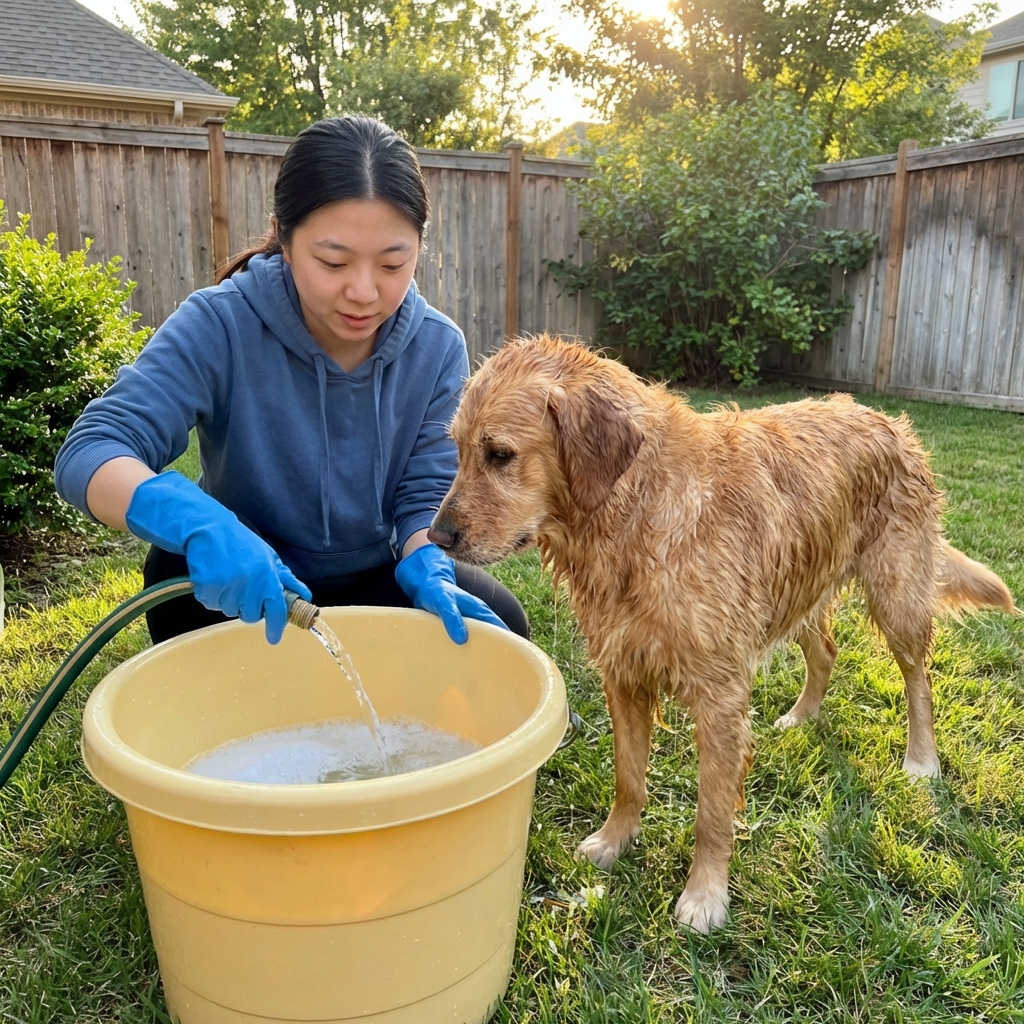
Put on old clothes and gloves
Skunk oils cling to skin and nails. Disposable gloves help a lot. Tie long hair back, and plan to wash clothing separately later.
What not to do
- Do not use tomato juice. It does not neutralize skunk oils. It often just adds a second odor and a messy clean-up.
- Do not bathe with water first. Wetting the coat first can spread the oils and make the odor harder to remove, especially in thick double coats and doodle curls.
- Do not use bleach or harsh household cleaners. They can burn skin and are dangerous around eyes and mucous membranes.
- Do not use essential oils on your dog. Many are irritating or toxic if licked, and they do not reliably neutralize skunk spray.
The best home mix
The most widely recommended at-home approach (often shared by veterinarians, groomers, and shelters) is a simple mixture that oxidizes the odor-causing compounds (thiols). In plain language: it changes the smell molecules so they are far less stinky.
Skunk odor mix
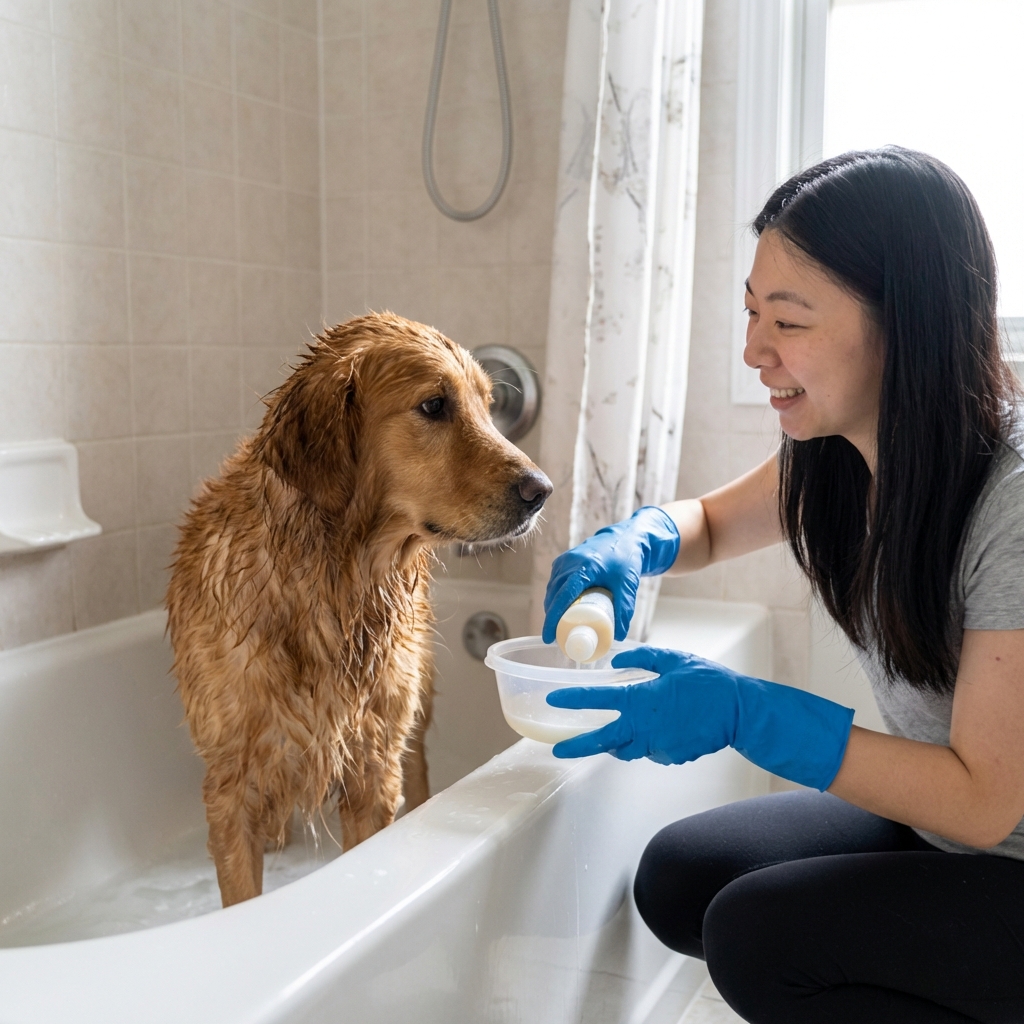
Mix fresh right before using:
- 1 quart (4 cups) of 3% hydrogen peroxide
- 1/4 cup baking soda (sodium bicarbonate)
- 1 to 2 teaspoons liquid dish soap (a grease-cutting one works best)
Important: Do not store this mixture in a closed container. It can build pressure.
Also note: Hydrogen peroxide can dry skin and may lighten or bleach fur, especially on dark-coated dogs. Avoid using this mix on open wounds, and stop if you notice significant redness or discomfort.
How to use it
- Work in a ventilated area. Outdoors is ideal.
- Protect eyes and mouth. Use a damp washcloth around the eyes. Avoid pouring over the face.
- Apply to a dry coat. Work the mixture into the fur, down to the skin, especially around the neck, chest, shoulders, and legs where spray often hits.
- Let it sit for 5 minutes. Do not let it dry on the coat.
- Rinse thoroughly. Lukewarm water is best.
- Follow with a gentle pet shampoo. This helps remove leftover oils and dish soap residue.
- Repeat if needed. Some dogs need a second round, especially long-coated dogs.
Face and muzzle
For the face, skip the full-strength soak. Instead:
- Dip a washcloth in a very diluted version of the mixture and wipe carefully, avoiding eyes, nose, and lips.
- Rinse the face with a clean damp cloth afterward.
- If your dog was sprayed in the eyes and is still squinting or red after flushing, a vet visit is a smart next step.
Long coats and mats
If your dog has a long coat, a dense undercoat, or any matting, odor can get trapped close to the skin. If you cannot work the solution all the way through the coat, or if mats are tight, a professional groomer (or your vet) may recommend clipping for comfort and better odor removal.
Puppies, seniors, sensitive skin
Hydrogen peroxide can be drying, and some dogs have more delicate skin barriers.
- Puppies and seniors: Keep contact time short and rinse very well. Keep them warm while drying.
- Dogs with allergies or dermatitis: After de-skunking, consider bathing with a veterinarian-recommended soothing shampoo (often oatmeal-based or medicated, depending on the dog).
- Cats: Call your veterinarian for the safest plan. The peroxide mix can irritate skin, may lighten fur, and the bigger issue is that cats groom intensely and can ingest residue.
When to call the vet
Most skunk encounters are miserable but manageable. Still, there are times a veterinary exam is the safest next step.
Call urgently if you notice
- Spray directly in the eyes with ongoing squinting, redness, swelling, or discharge
- Repeated vomiting, severe drooling, or inability to keep water down
- Labored breathing, wheezing, or persistent coughing
- Extreme lethargy or weakness
- Signs of a bite or puncture wound (skunks can carry rabies in many areas)
Rabies and bite risk
If your dog had close contact with a skunk, especially if there was a bite or you are not sure, contact your veterinarian right away. Rabies exposure rules vary by location and vaccination status, so follow your vet and local public health guidance. Keep your dog away from other pets until you get instructions, and make sure rabies vaccination is current.
Why the smell comes back
A very common frustration is: “They seemed fine, and then the smell returned.” That is usually because skunk oils can remain in the coat and reactivate when damp.
- Humidity, rain, or a wet dog coat can re-release odor.
- Thick coats can trap oils close to the skin, especially behind ears, under collars, and on the chest.
- Residual oil on collars, bedding, and blankets can transfer back onto the fur.
If the odor returns, repeat a shortened wash focusing on the hot spots (neck, chest, shoulders, legs), and wash collars, leashes, and bedding again.
Clean your home and gear
Collars, leashes, harnesses
- Soak washable items in warm water with dish soap.
- Rinse and air-dry outside if possible.
- If an item is heavily saturated and porous, replacement can honestly be the easiest option.
Bedding and blankets
- Wash separately from other laundry.
- Use regular detergent plus 1/2 cup baking soda.
- Air-dry outside if you can. Fresh air and sunlight can help reduce lingering odors, even if it is not a perfect fix.
Car upholstery
Blot, do not rub. Use an enzyme-based pet odor cleaner designed for upholstery, then ventilate with windows open. If the smell is severe, a professional detail can save you a lot of time.
Other options
If you would rather use a ready-made product, commercial skunk shampoos can work well. Look for products specifically labeled for skunk odor removal, and follow directions carefully. If your dog has sensitive skin, ask your vet or groomer what they like for your dog’s coat type.
Prevent the next incident
Skunks are most active at dawn, dusk, and night. A few small changes can prevent a repeat performance.
- Leash walks after dark. Even dogs with great recall can get sprayed in seconds.
- Scan the yard with a flashlight. Skunk eyeshine is easier to spot before your dog finds them.
- Remove attractants. Secure trash, do not leave pet food outside, and clean up fallen fruit.
- Block access. Close gaps under decks and sheds where skunks may den.
- Keep rabies vaccines current. This is non-negotiable protection in many regions.
Quick checklist
Skunk smell action plan: Keep your dog outside, do not wet them first, mix the peroxide plus baking soda plus dish soap solution fresh, apply for 5 minutes, rinse well, shampoo, wash gear and bedding, and call your vet if eye issues, breathing trouble, vomiting, or bite concerns show up.