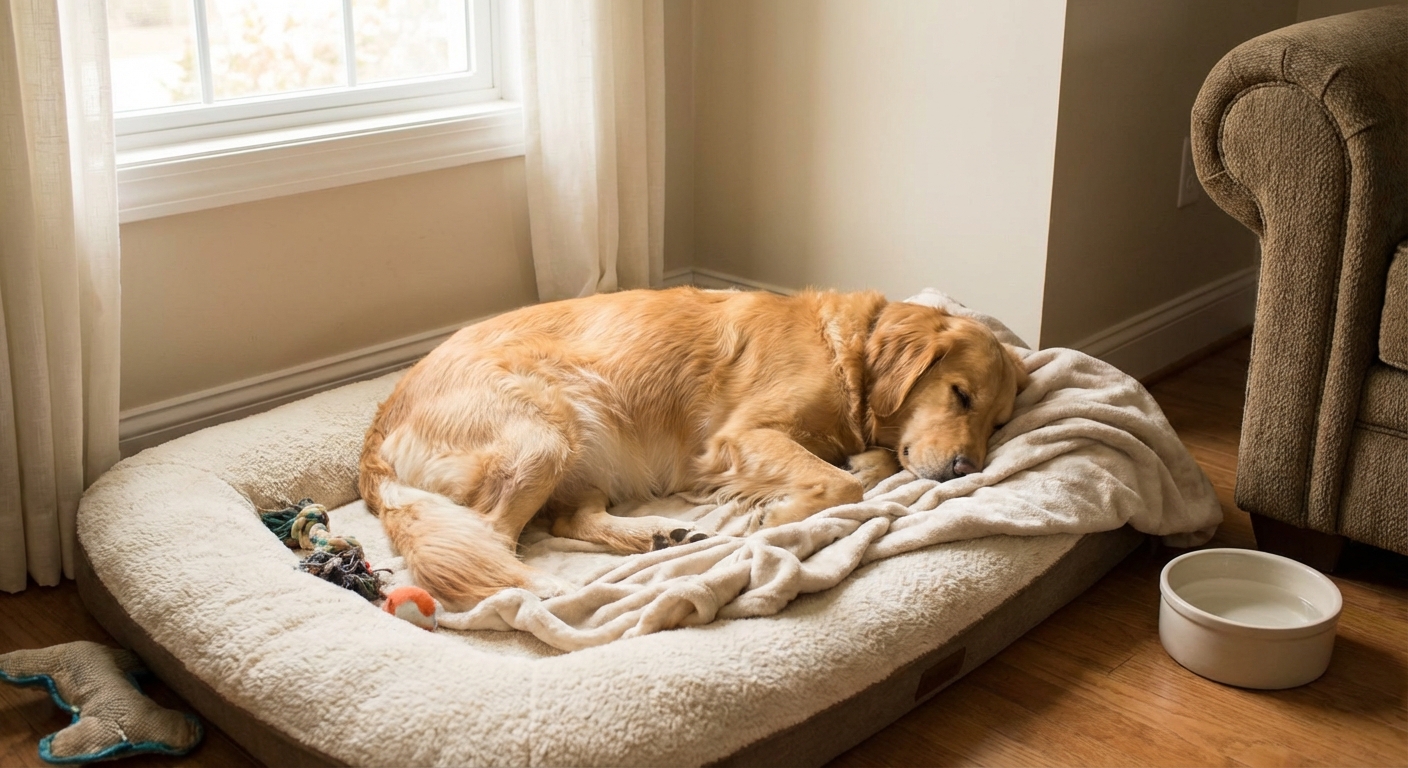
Track your dog’s pregnancy week by week with vet-informed milestones, common symptoms, confirmation tests, feeding guidance, whelping setup, labor signs, a...
Article
•
Designer Mixes
Signs Your Dog Might Be Pregnant

Shari Shidate
Designer Mixes contributor
If you suspect your dog might be pregnant, you are not alone. In my day-to-day work as a veterinary assistant here in Frisco, Texas, I meet families who notice a few subtle changes and immediately have a million questions. The good news is that canine pregnancy follows a fairly predictable timeline, and there are safe, practical ways to support your pup while you confirm what is really going on.
Let’s walk through the most common signs of dog pregnancy, what to do next, and when it is time to call your veterinarian.
Quick note: This article is for general education and is not a substitute for veterinary care. If you are worried about your dog, call your vet.

How pregnancy timing works
A dog’s pregnancy (gestation) averages about 63 days from ovulation, usually within a few days of that. However, dating a pregnancy by the breeding (mating) date can be less precise because sperm can live in the reproductive tract and ovulation may not happen on the day of mating. That is why timelines can look “off” even when everything is normal.
Also, many early signs look like other conditions such as a false pregnancy (pseudopregnancy), gastrointestinal upset, or normal hormonal changes after heat. That is why veterinary confirmation matters.
Early signs (weeks 1 to 3)
In the first few weeks, many dogs look completely normal. If you do notice changes, they tend to be mild.
- Behavior shifts: Some dogs get extra cuddly, while others become more reserved.
- Lower energy: Your dog may nap more or seem less interested in long play sessions.
- Appetite changes: A few pregnant dogs eat a little less at first, then appetite increases later.
- Mild nausea: Occasionally you will see lip licking, drooling, or a day or two of picky eating, similar to morning sickness.
At-home tip: If kids are helping care for the dog, ask them to keep the routine calm and consistent. Big changes in noise, rough play, or sudden new treats can make mild nausea worse.
Mid signs (weeks 3 to 5)
This is when many families start to feel more confident that “something is up.”
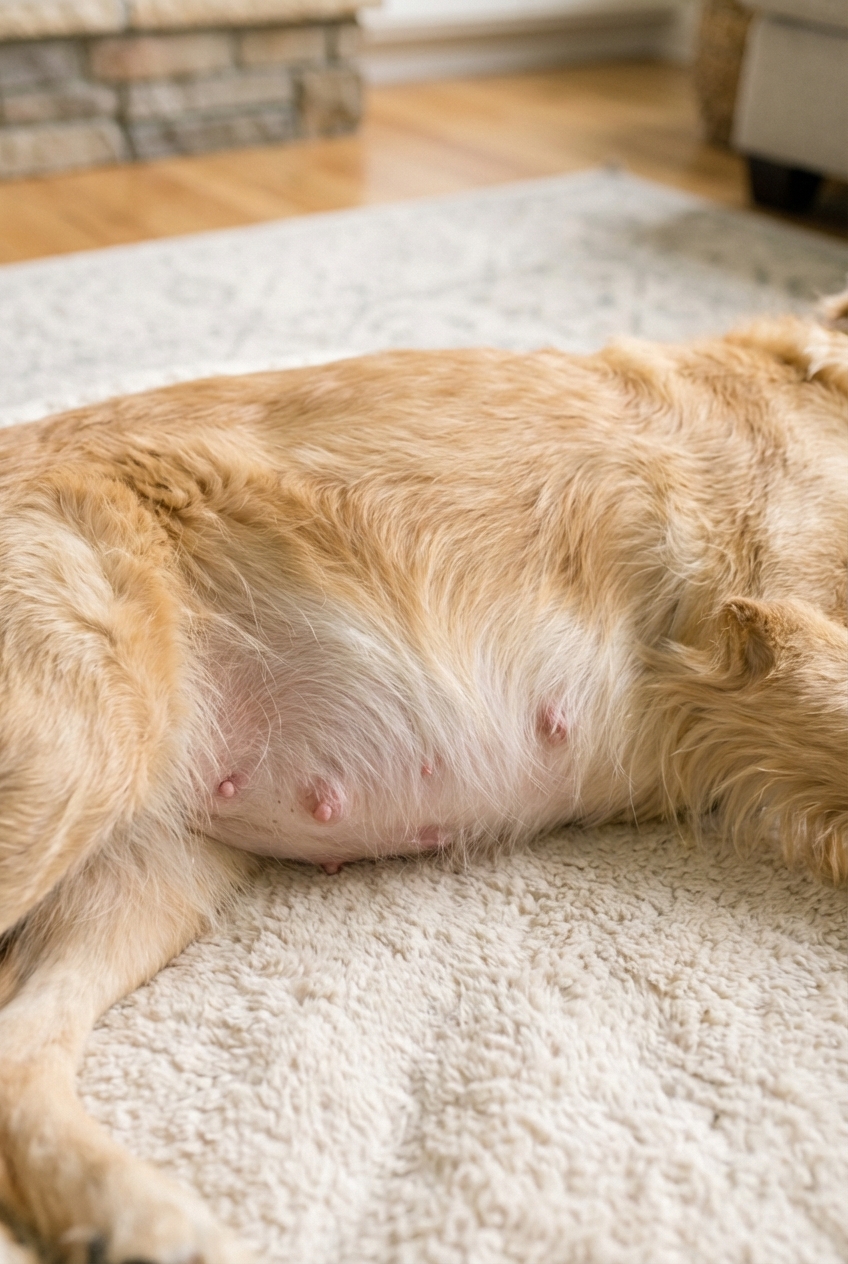
- Nipple and mammary changes: Nipples may look larger, more pink, and more prominent. You may also see the fur thinning slightly around the mammary area.
- Gradual weight gain: Weight gain should be steady, not sudden. A rapid belly increase can also indicate parasites, fluid, or other medical issues.
- Abdominal enlargement: The belly may start to round out, especially in smaller dogs or first-time moms.
- Increased appetite: Many pregnant dogs begin eating more as fetal growth accelerates.
Late signs (weeks 6 to 9)
In the final stretch, signs are usually more obvious.
- Nesting: Your dog may dig at bedding, seek quiet spaces, or rearrange blankets.
- More rest, less patience: Many moms prefer calm and can become irritated with overly enthusiastic pets or kids.
- Milk production: Some dogs produce milk before whelping, while others do not until after puppies arrive.
- Visible puppy movement: In thinner dogs, you may see or feel movement near the end of pregnancy. Do not press on the belly to “check.”
- More frequent urination: The growing uterus can reduce bladder capacity.
Safety note for families: Teach children to give mom space, especially if she is nesting. Even sweet dogs can become protective when they feel vulnerable.
False vs real pregnancy
False pregnancy can happen after a heat cycle and can mimic real pregnancy surprisingly well. Dogs may have enlarged mammary glands, produce milk, nest, and even “mother” toys.
Because the signs overlap, the most reliable way to tell is through veterinary testing.
How vets confirm pregnancy
Here are the most common options your veterinarian may use:
- Ultrasound: Often useful around day 21 to 28 (many clinics say “about day 25”) to confirm pregnancy and assess fetal viability.
- Relaxin blood test: Often accurate around day 25 to 30+. Timing matters. If done too early, it can be negative even when a dog is pregnant.
- X-rays: Fetal skeletons mineralize after about day 45, but counting puppies is often more accurate closer to term (many vets aim for roughly day 55+ when possible).
If you think your dog could be pregnant, call your vet and ask what timing they prefer based on the suspected breeding window and your dog’s size and health.
What to do at home
1) Keep routines steady
Stick to the normal walking schedule, normal bedtime, and gentle play. Pregnancy is not the time for sudden changes in exercise intensity or environment.
2) Skip new meds and supplements
Do not start new medications, dewormers, flea and tick products, or herbal supplements unless your veterinarian says they are safe in pregnancy. Also avoid giving human medications.
Important nutrition note: Do not add calcium supplements unless your vet specifically prescribes them. In some dogs, unnecessary calcium can increase the risk of problems around nursing.
3) Prioritize quality food, not extra calories yet
Most dogs do not need significantly more food until later in pregnancy. Overfeeding early can lead to unnecessary weight gain, which can make delivery harder.
If pregnancy is confirmed, your vet may recommend transitioning to a growth or puppy-formulated diet in the later weeks, especially for large litters or smaller breeds. Try not to change foods repeatedly. One good plan, then stick with it.
4) Prepare a calm whelping space
You can prepare a quiet area early without forcing your dog to use it. A low-traffic room with a washable bed or whelping box, fresh water, and dim lighting can make a big difference.
Simple prep items that help: a few clean towels, a digital thermometer, a small kitchen scale (especially for tiny breeds), and your vet and nearest emergency clinic phone numbers posted where everyone can find them.

What not to do
- Do not press or squeeze the abdomen to try to feel puppies.
- Do not push strenuous exercise or lots of jumping, especially later in pregnancy.
- Do not change foods too early or add supplements “just in case.”
- Do not skip veterinary guidance on parasite control. Your vet may recommend specific deworming timing and products that are safer in pregnancy.
- Do not give vaccines during pregnancy unless your veterinarian specifically advises it for your dog’s situation.
Call the vet right away
Please seek veterinary care right away if you notice any of the following, whether pregnancy is confirmed or not:
- Any vaginal bleeding or foul-smelling discharge (call even if it seems small)
- Green or black discharge before the first puppy
- Severe vomiting, refusing food for more than 24 hours, or signs of dehydration
- Sudden or extreme lethargy
- Fever or obvious pain
- Swollen belly that appears quickly
- Active labor concerns: strong abdominal contractions for 20 to 30 minutes with no puppy produced, more than 2 hours between puppies, or your dog seems stuck, distressed, or exhausted
- Past due timing: if you know your dog’s ovulation timing and she seems overdue, call your vet for guidance
If your dog could be pregnant and you are worried, you are never “overreacting.” A quick call can prevent a scary situation from becoming an emergency.
Pregnancy timeline
- Weeks 1 to 3: Subtle behavior or appetite changes
- Weeks 3 to 5: Nipple changes, steady weight gain, belly begins to round
- Weeks 6 to 9: Nesting, more rest, possible milk production, possible fetal movement
My gentle rule: observe first, confirm with your vet, then plan. It keeps your dog safer and keeps your family calmer too.
Preventing accidental pregnancy
If this pregnancy was not planned, you are not the only one. The most reliable prevention is spaying (your vet can help you choose the safest timing). If your dog is intact, strict supervision during heat, secure fencing, and avoiding off-leash time are key since determined dogs can surprise even careful families.
Bottom line
The most common signs of dog pregnancy include nipple changes, appetite shifts, steady weight gain, nesting behavior, and increased need for rest. Because false pregnancy and other medical conditions can look similar, veterinary confirmation is the safest next step.
With a calm home routine, smart nutrition, and a little preparation, you can help your dog feel secure as you figure out what is happening and what she needs next.