Track your dog’s pregnancy week by week with vet-informed milestones, common symptoms, confirmation tests, feeding guidance, whelping setup, labor signs, a...
Article
•
Designer Mixes
Signs Your Dog Is Pregnant

Shari Shidate
Designer Mixes contributor
As a veterinary assistant here in Frisco, Texas, I hear this question all the time: “Is my dog pregnant, or am I just imagining things?” The truth is, early dog pregnancy can be subtle. Some dogs show clear changes, while others barely act different until weeks later.
Let’s walk through the most telling signs that a dog may be pregnant, what’s normal, what’s not, and when it’s time to call your veterinarian for confirmation and support.
Quick note: This is general education, not a diagnosis. If you are unsure or something feels “off,” your vet is the safest next step.

How dog pregnancy works
Dogs are pregnant for about 63 days on average when counted from ovulation. Because ovulation timing can vary, the timeline looks different if you count from the breeding date. Many references cite roughly 57 to 72 days from breeding, depending on when breeding happened relative to ovulation.
Most veterinarians think of pregnancy in three broad phases:
- Weeks 1 to 3: early pregnancy, often few outward signs
- Weeks 4 to 6: noticeable body and appetite changes
- Weeks 7 to 9: belly growth, nesting behavior, milk development, and prep for whelping
Early signs (weeks 1 to 3)
In the earliest stage, the body is doing a lot internally. Externally, signs can be mild or easy to confuse with stress, a diet change, or a false pregnancy.
1) Small behavior changes
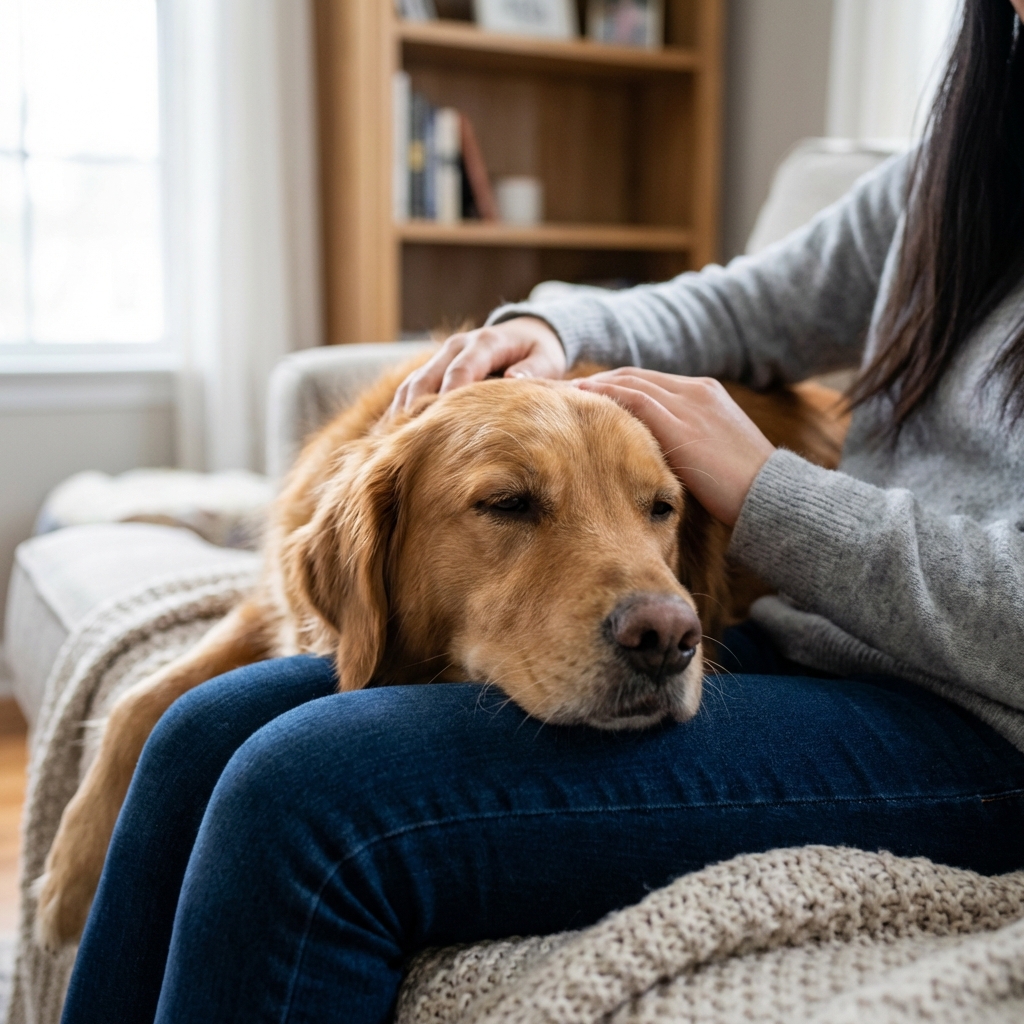
Some dogs become extra cuddly and clingy. Others get a little more withdrawn and prefer quiet rest. Either can be normal, especially if she was recently bred.
2) Mild fatigue
You may notice your dog taking longer naps or being less interested in long play sessions. Hormonal shifts can make them a bit more tired.
3) Subtle appetite changes
A small appetite dip can happen early on, similar to “morning sickness” in humans. Some dogs do the opposite and seem hungrier sooner.
4) Light vaginal discharge (not smelly)
A small amount of clear or slightly cloudy discharge may be seen after breeding in some dogs, and it can be normal. That said, discharge is variable, and it is always worth monitoring closely.
Call your vet promptly if discharge is persistent, increasing, bloody, green, yellow, pus-like, or foul-smelling.
Important note: Many dogs show no early signs at all. The absence of symptoms does not rule pregnancy out.
More obvious signs (weeks 4 to 6)
This is when many owners start feeling more confident something is going on. These signs are more common and easier to spot.
5) Nipple and mammary changes
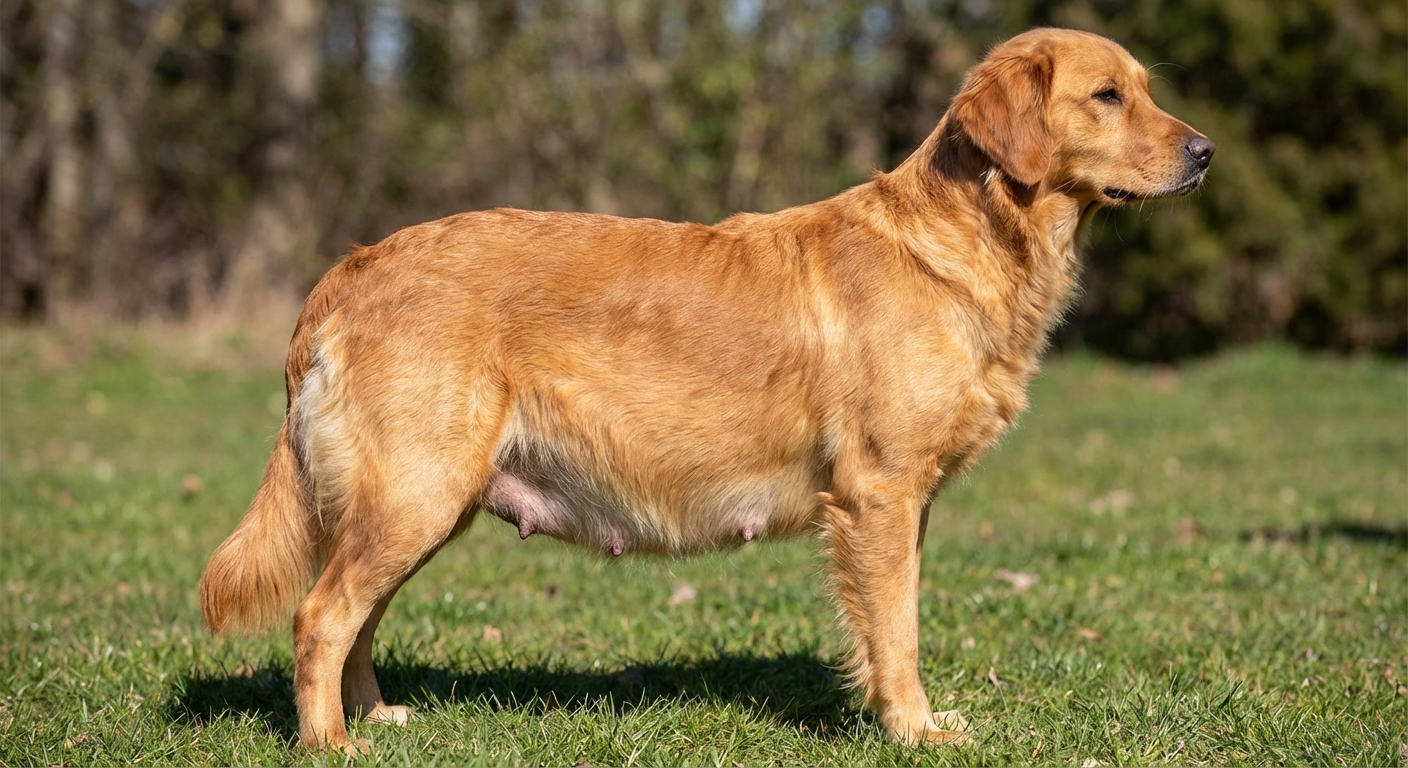
Nipples may look larger, slightly raised, and darker (often called “pinking up”). Mammary tissue can feel fuller, especially by week 5 or 6.
6) Weight gain and a thicker waist
You may notice her rib area looks the same but her midsection starts to widen. A healthy pregnancy involves gradual weight gain, but rapid or extreme gain should be evaluated.
7) Increased appetite
Many pregnant dogs become noticeably hungrier by this stage. Appetite changes can be normal, but vomiting, refusal to eat, or lethargy should be discussed with your vet.
8) Enlarged abdomen
Belly growth is often visible from the side, especially in smaller dogs or those with larger litters. In larger breeds or fluffier coats, it can be harder to see until later.
Keep in mind: abdominal enlargement and weight gain are not always pregnancy. Conditions like pyometra (uterine infection), tumors, or fluid buildup can look similar, especially if she has not been bred.
9) “She feels different” when you pick her up
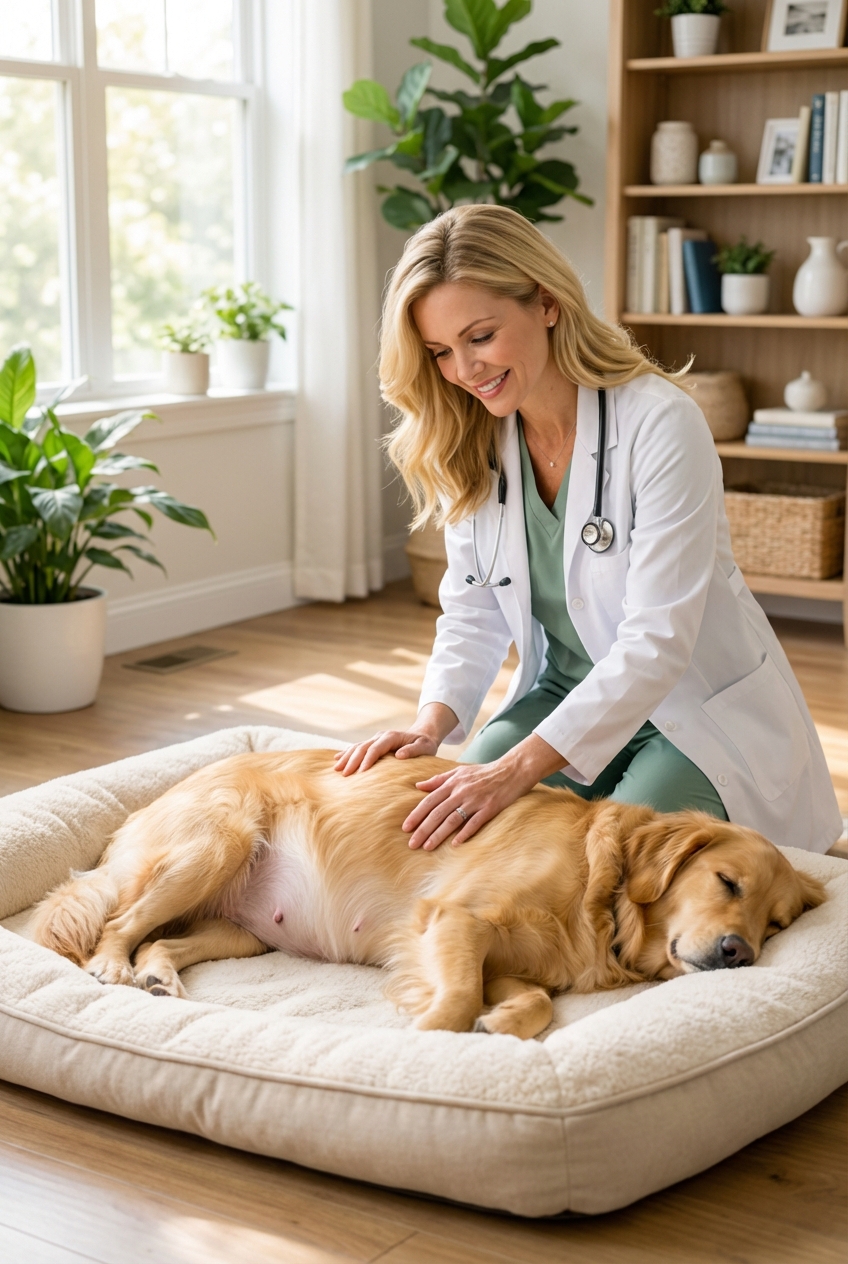
Some owners say their dog’s belly feels firmer or heavier. Avoid pressing on the abdomen. Palpation should be done by a trained veterinary professional because too much pressure can cause harm.
Late pregnancy signs (weeks 7 to 9)
In the final weeks, you’re usually seeing clear physical and behavioral cues. Preparation matters most during this stage, so you are not scrambling when labor starts.
10) Nesting behavior
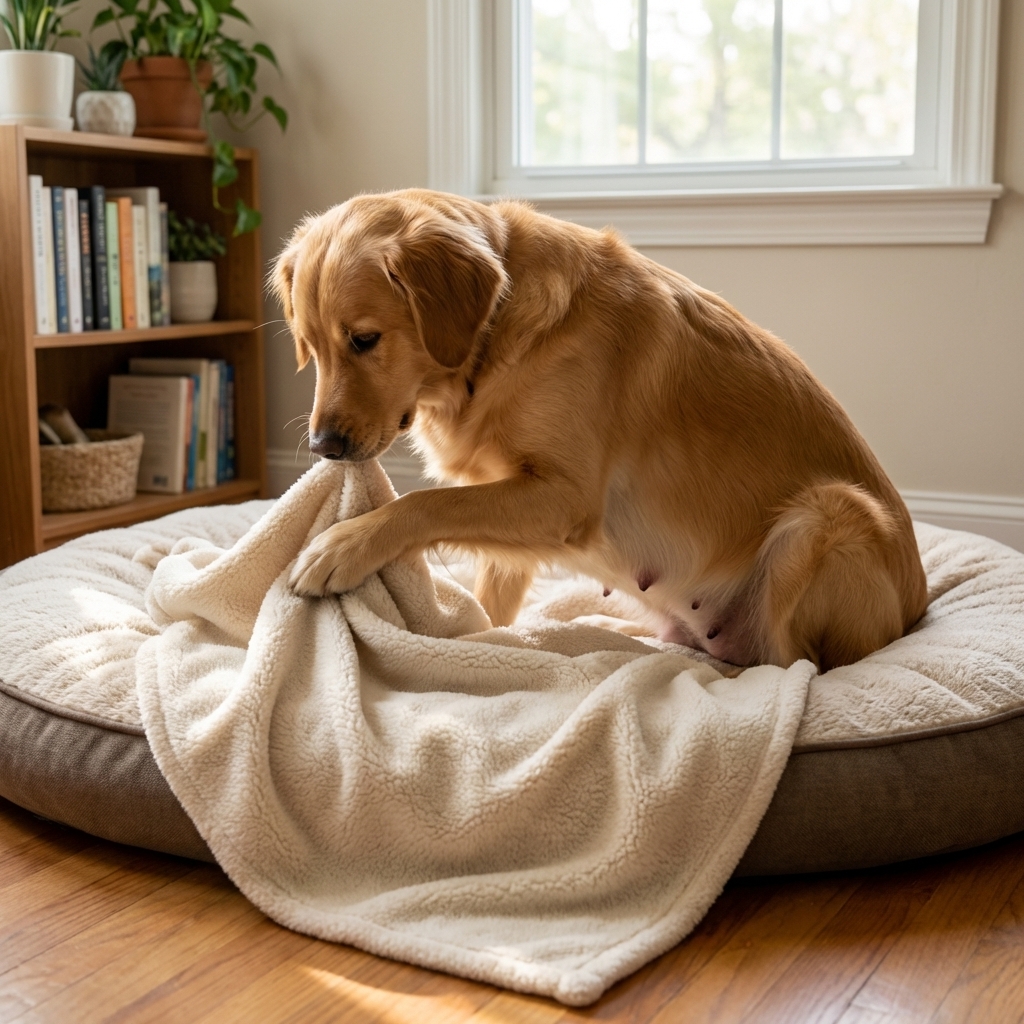
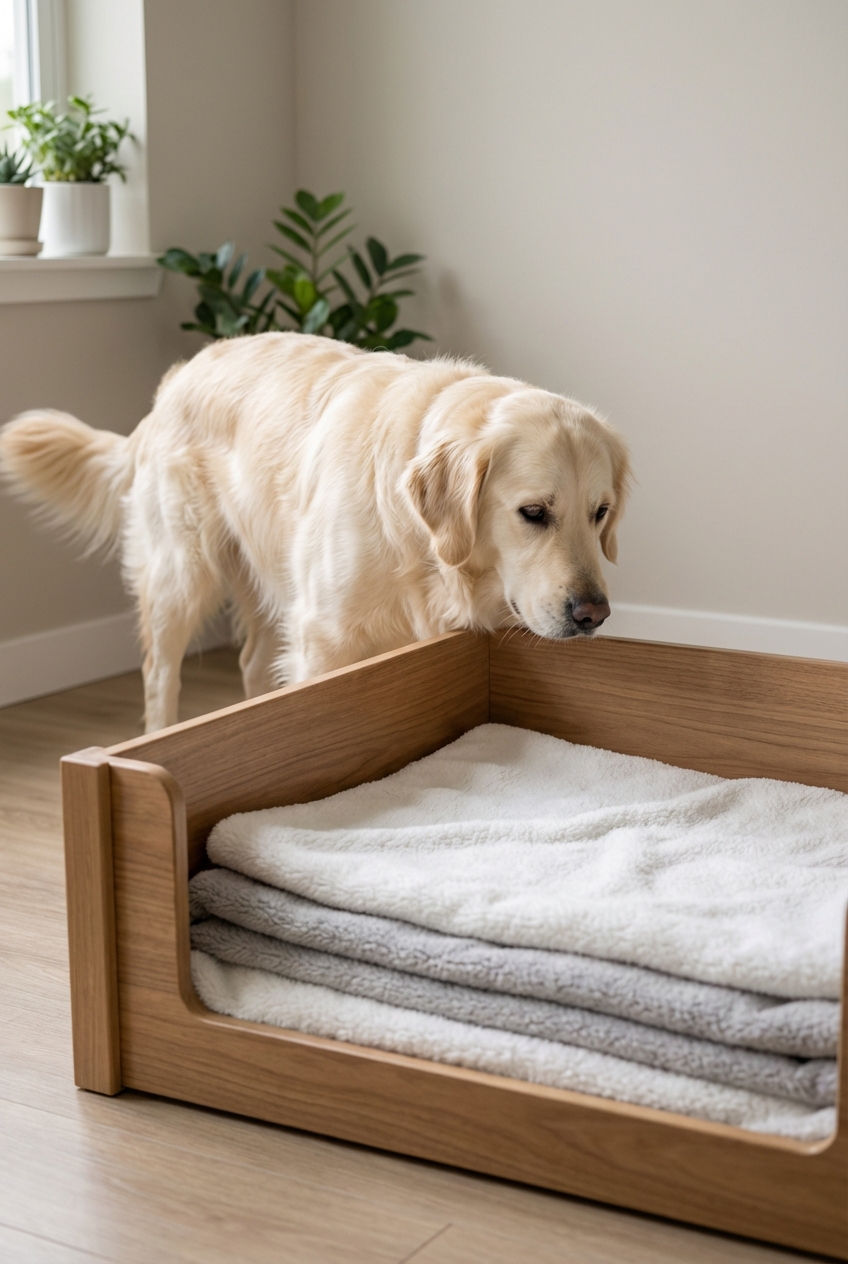
Many pregnant dogs start “nesting” by seeking a quiet spot, pawing at bedding, or rearranging blankets. This is a normal instinct as whelping approaches.
11) Milk production or leaking
Milk may appear in the last week or two, though some dogs do not produce much milk until after whelping starts. If you see bloody discharge from nipples or significant swelling and pain, call your vet.
12) Restlessness and panting near labor
In the final 24 hours before labor, many dogs become restless, pant, pace, shiver, or seem unable to get comfortable. These can be normal pre-labor signs.
13) Drop in appetite right before labor
Some dogs stop eating the day before labor begins. If she refuses food for more than a day, seems weak, or you are worried, check in with your veterinarian.
14) Puppies may be seen or felt moving
Late in pregnancy, you might see gentle movement in the abdomen while she is resting. Do not poke or press to “find” puppies.
15) Temperature drop (sometimes)
Many owners look for a rectal temperature drop as labor approaches. A drop can happen, but it is not perfect or consistent in every dog. If your vet has you tracking temperature, make sure you follow their instructions on timing and what number should trigger a call.

Pregnant or false pregnancy?
False pregnancy (pseudopregnancy) is surprisingly common. After a heat cycle, hormonal changes can cause a dog to show pregnancy-like signs even when she is not pregnant.
Common false pregnancy clues include:
- Mammary enlargement and even milk production
- Nesting and mothering toys
- Behavior changes after a heat cycle without confirmed breeding
Because signs overlap, the most reliable path is veterinary confirmation rather than guessing at home.
How vets confirm pregnancy
If you suspect pregnancy, here are the common confirmation options and typical timing:
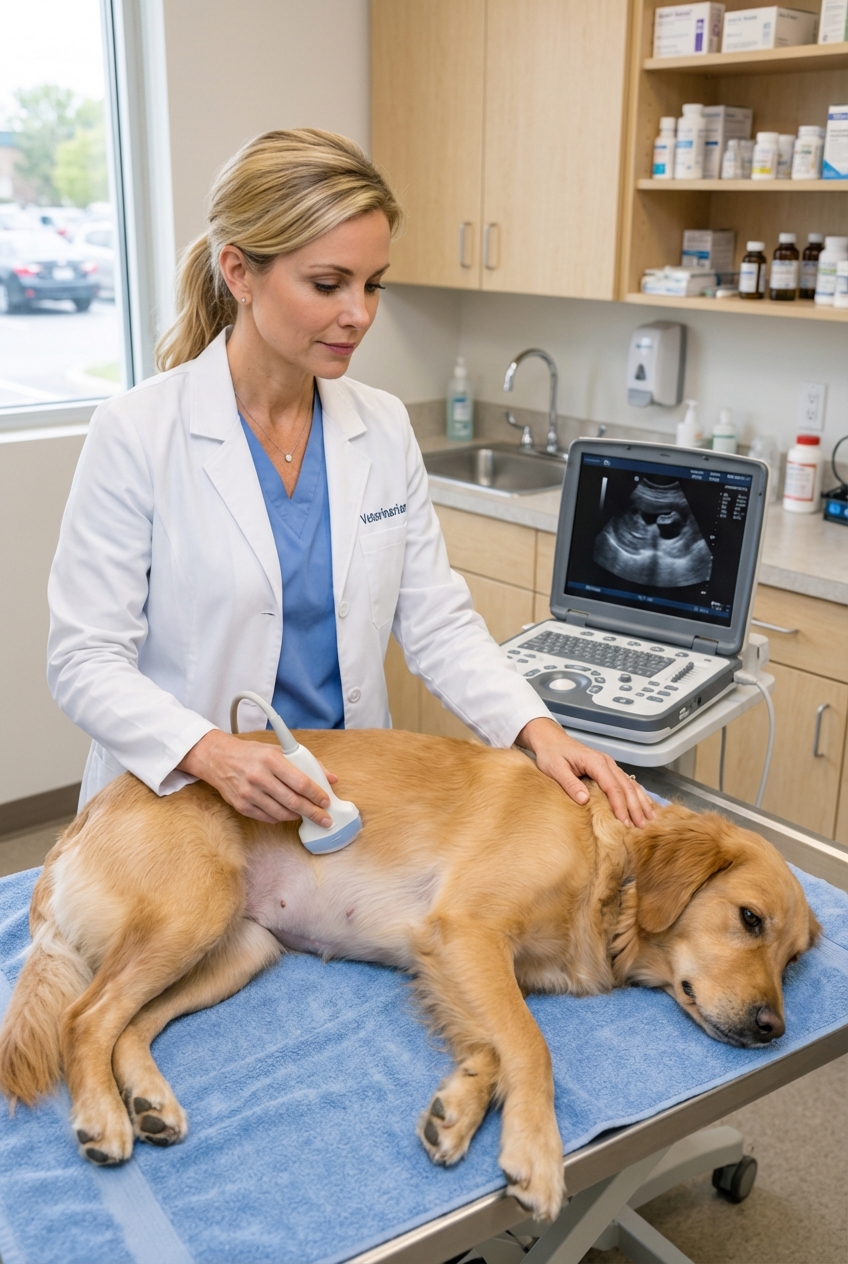
- Ultrasound: may detect pregnancy as early as about day 21 to 25 in some cases, but it is often most useful around day 25 to 35 after breeding for confirmation and a better look at viability
- Relaxin blood test: may be positive around day 25+, depending on timing
- X-rays: used for puppy counting once fetal skeletons mineralize, often around day 45+, with day 55+ typically giving the clearest counts
Counting puppies matters more than many people realize. Knowing how many to expect helps you and your vet recognize if labor stops too early or if a puppy may be retained.
When to schedule the first visit
If breeding is possible, I generally recommend calling your vet early to discuss timing, then planning a confirmation visit around day 25 to 35. That appointment is also a great time to ask about safe parasite prevention, deworming, vaccine timing, and what to do if she gets sick during pregnancy.
When signs are not normal
Please contact a veterinarian promptly if you notice any of the following:
- Green or foul-smelling discharge before a puppy is delivered
- Heavy bleeding at any time
- Vomiting that won’t stop, refusal to eat for more than 24 hours, or marked weakness
- Fever, collapse, or extreme lethargy
- Signs of pain when touched, or a hard painful abdomen
- Strong contractions for about 20 to 30 minutes with no puppy delivered
- No progress between puppies (for example, straining on and off for a couple of hours without a puppy, or a long gap that worries you)
Complications like infection, dystocia (difficulty delivering), and eclampsia (low calcium) can become serious quickly. Eclampsia is most common after delivery during peak lactation, but your vet may still want you to know the warning signs. Getting guidance early is one of the kindest things you can do for mom and pups.
Supportive care at home
Once pregnancy is confirmed, your goal is steady nutrition, calm routines, and a safe plan for whelping.
Nutrition
- Ask your veterinarian when to transition to a growth or puppy-formulated diet, commonly around the last third of pregnancy.
- Avoid adding supplements (especially calcium) unless your vet recommends it. Improper supplementation can increase risk for problems during labor.
- Offer smaller, more frequent meals later in pregnancy because a growing uterus reduces stomach space.
Parasites and prevention
- Ask your vet what parasite prevention is appropriate during pregnancy. Protocols vary by product and your dog’s health history.
- Deworming schedules for pregnant dogs are very specific, so this is another one that should be tailored by your veterinarian.
Exercise and comfort
- Keep gentle daily activity like short walks, unless your vet advises rest.
- Provide soft bedding and a quiet place away from household traffic.
Prepare a whelping space
Set up a whelping box in a warm, draft-free area about 1 to 2 weeks before the due window. Let her explore it early so it feels safe and familiar.
Quick timeline
- Weeks 1 to 3: subtle fatigue, small appetite shifts, mild behavior changes
- Weeks 4 to 6: nipple changes, belly growth begins, weight gain, increased appetite
- Weeks 7 to 9: nesting, milk development, puppy movement, pre-labor restlessness
Bottom line
If your dog has been bred or could have had access to an intact male, trust your instincts and get confirmation early. A quick veterinary visit can prevent a lot of stress later and helps you plan for the healthiest pregnancy possible.
If you want, I can help you build a simple “pregnancy prep checklist” for your dog’s breed and size, including what to buy, what to watch, and when to schedule each vet visit.