Recognize parvo in puppies fast: early symptoms, emergency red flags, when to suspect it, what to do immediately, how vets test and treat, plus home care, cl...
Article
•
Designer Mixes
Signs Your Dog Has Parvo

Shari Shidate
Designer Mixes contributor
Parvo is one of those words that can make any dog parent’s stomach drop, and for good reason. Canine parvovirus is highly contagious, can become life-threatening quickly, and often hits puppies the hardest. The reassuring part is that when owners recognize the early signs and get help fast, many dogs can recover with prompt veterinary care.
As a veterinary assistant, I’ve seen how much difference an early visit can make. This article will walk you through family-friendly, easy-to-spot signs of parvo and the facts every owner should know. This is not a diagnosis, so if you are worried, call your veterinarian.
What parvo is
Canine parvovirus is a virus that primarily attacks rapidly dividing cells, especially in the intestinal lining and sometimes the bone marrow. That damage can lead to severe vomiting, diarrhea, dehydration, and a weakened immune system.
Parvo spreads through microscopic amounts of infected stool. It can also hitch a ride on shoes, paws, leashes, toys, kennel surfaces, and even grass. One reason parvo is so difficult to eliminate is that the virus can persist in the environment for a long time if not properly disinfected.
Higher-risk dogs
- Puppies (often around 6 weeks to about 6 months)
- Unvaccinated or under-vaccinated dogs (dogs of any age can be affected)
- Recently adopted puppies with unknown vaccine history
- Dogs exposed to high-traffic dog areas (parks, pet stores, apartments, shelters)
Signs of parvo
Parvo can look like “just a stomach bug” at first. The difference is the speed and severity. If you notice these signs, take them seriously, especially in a puppy.
1) Sudden vomiting
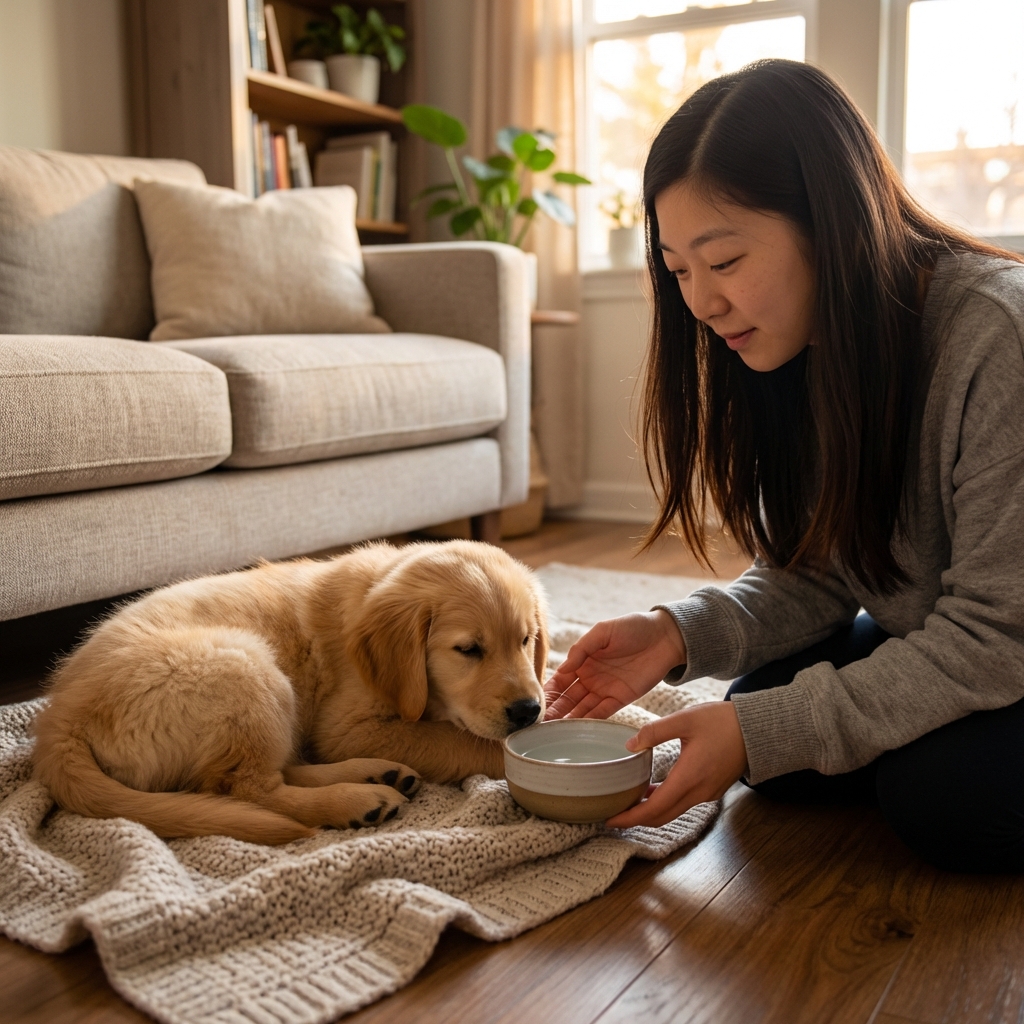
Vomiting may start quickly and repeat frequently. Many dogs cannot keep water down. This is one of the fastest ways parvo causes dangerous dehydration.
2) Diarrhea that worsens
Diarrhea often starts watery and can become frequent, foul-smelling, and sometimes bloody. Blood in stool is not always present at the beginning, so do not wait for that to appear.
3) Extreme tiredness
Dogs with parvo often seem unusually quiet, weak, or withdrawn. You might notice they stop greeting you at the door, do not want to play, or struggle to get comfortable.
4) Loss of appetite
A puppy who suddenly refuses food, especially alongside vomiting or diarrhea, needs prompt evaluation. Young puppies can crash quickly without nutrition and fluids.
5) Signs of dehydration
Kids can help you notice these simple clues:
- Dry or sticky gums
- Sunken-looking eyes
- Less interest in drinking
- Less pee than normal
A quick at-home check is the “skin tent” test, but it is not perfect. Gently lift the skin over the shoulder blades and let go. If it snaps back slowly, dehydration may be present. This test can be less reliable in very young puppies and in overweight dogs. When in doubt, call your vet.
6) Fever or low temperature
Some dogs get a fever. Others, especially when very sick, can have a dangerously low body temperature. Most families do not take rectal temperatures at home, and that is okay. The takeaway is that parvo can affect body temperature both ways, so behavior changes matter.
How fast it moves
Parvo can worsen rapidly, sometimes within hours, not just days. Puppies have less reserve and can become dangerously dehydrated very quickly. A dog that seems “a little off” in the morning can be in crisis by evening.
Incubation
After exposure, signs often appear in about 3 to 7 days, but timing varies. During this time, a dog may look normal while the virus is building up.
What to do now
If you think your dog might have parvo, the safest move is to treat it like an emergency and call your veterinarian or the nearest emergency clinic right away.
Steps to take
- Call ahead before you arrive. Clinics often take special precautions to protect other pets.
- Keep your dog isolated from other dogs and from shared yard areas if possible.
- Do not give human medications. Many are unsafe for dogs, and some can worsen dehydration or cause bleeding issues.
- Limit contact with stool and vomit. Use gloves if you can, wash hands thoroughly, and clean surfaces correctly.
Can you treat parvo at home?
True parvo is not a “watch and wait” illness. Home care alone is risky because the biggest threats are dehydration, electrolyte imbalance, low blood sugar (especially in small puppies), and secondary infections. Veterinary treatment often includes fluids (sometimes IV), anti-nausea medication, gut support, and close monitoring. Some dogs also need pain control, glucose support, and antibiotics to help prevent or treat secondary infections when the immune system is weakened.
Prognosis depends on how early treatment starts and how sick the dog is. Many dogs can recover with timely veterinary care, but the risk is much higher without treatment.
Testing
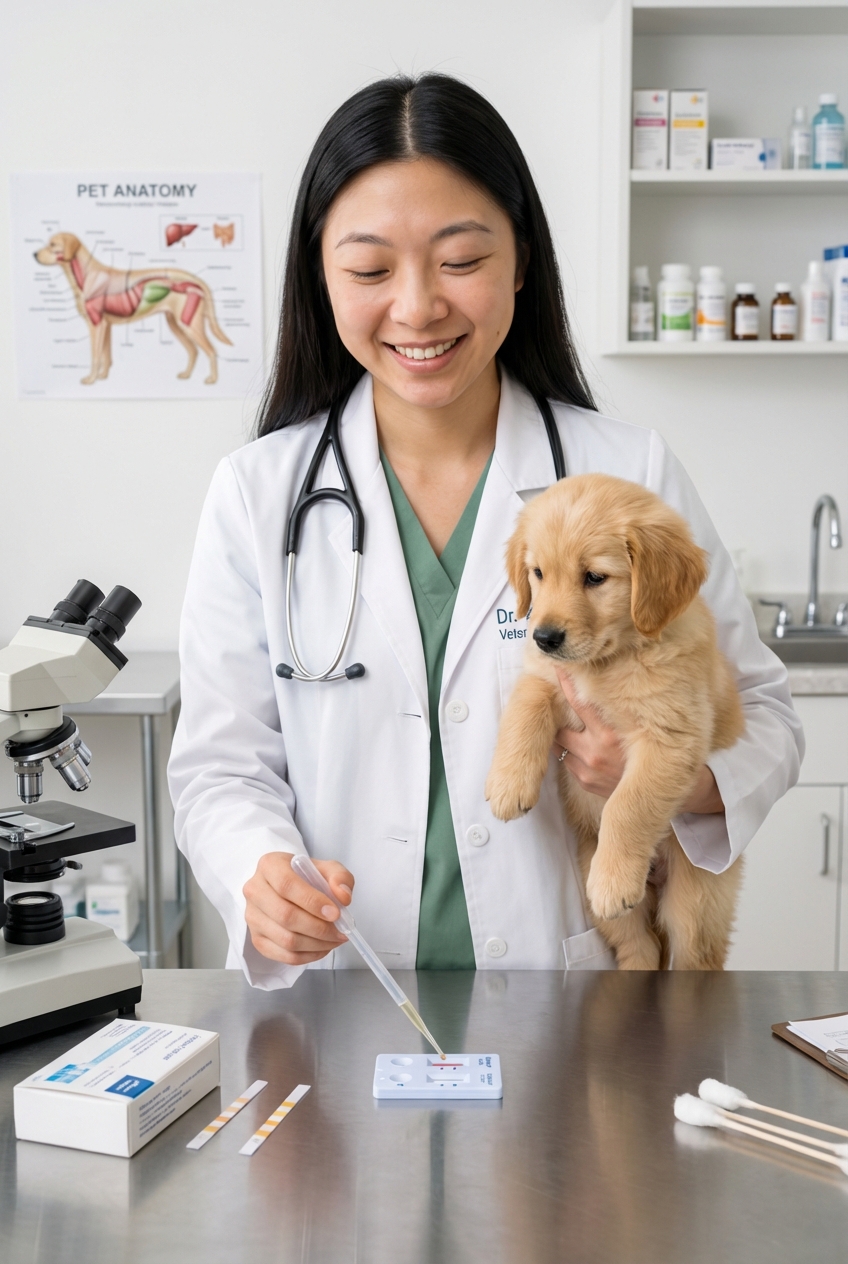
Most clinics use a quick in-house stool test (often called a SNAP test). Your vet will also consider:
- Age and vaccine history
- Symptoms and how rapidly they started
- Hydration status and overall stability
- Bloodwork findings (parvo can lower white blood cell counts)
Testing is very helpful, but it is not perfect. False negatives can happen early in illness or if stool is very dilute. False positives can also occur shortly after a parvo vaccination, depending on the vaccine and timing. Even with a negative test, your veterinarian may recommend retesting or treating based on strong suspicion.
Why it spreads
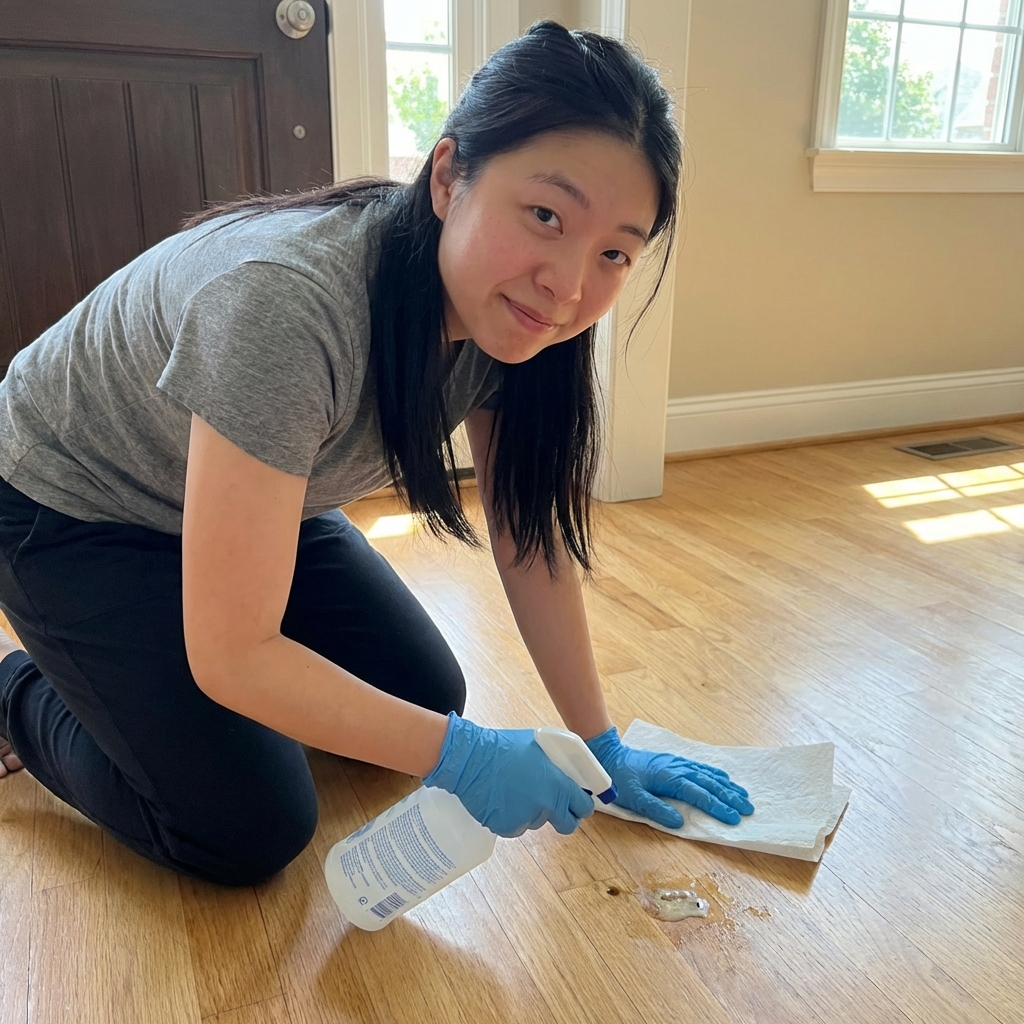
Parvo is hardy. Normal household cleaners often do not kill it.
Cleaning basics
- Pick up stool carefully and dispose of it in sealed bags.
- Laundry: If bedding, towels, or soft items are heavily soiled, the safest option may be to discard them. If you are laundering, use bleach when the fabric allows and follow product directions for proper dilution. Hot water alone is not a reliable way to kill parvovirus in a typical home washer.
- Hard surfaces: Use a disinfectant proven effective against parvovirus. Many clinics recommend a bleach solution for hard, non-porous surfaces. A commonly used starting point is about 1 part bleach to 30 parts water, with adequate contact time, but always follow the product label and your veterinarian’s guidance for safe use around pets and kids.
- Remember: dirt and organic material reduce disinfectant effectiveness. Clean first, then disinfect.
If you have a yard, know that outdoor decontamination is challenging, especially in soil and on porous surfaces. Talk with your veterinarian about safest next steps, and ask what timeline they recommend before bringing another unvaccinated puppy into that space.
Prevention
Vaccines matter most
Parvo vaccines are highly effective, but puppies need a series of shots and timely boosters because maternal antibodies can interfere early on. Your veterinarian will set the schedule based on your puppy’s age and risk level.
Avoid risky exposure
This is tough, especially when you want to socialize a puppy. Ask your vet about safer socialization options, like controlled playdates with fully vaccinated dogs or puppy classes with strict sanitation and vaccine requirements.
Newly adopted puppies
If you adopt a puppy and you are unsure about vaccine status, act like they are vulnerable until proven otherwise. Schedule a vet visit right away and be extra careful about exposure.
Isolation and contagious time
Dogs with parvo can shed virus in their stool and spread it to other dogs. Your veterinarian will tell you how long to isolate your dog based on their case and recovery, and when it is safer to return to shared spaces. If you have other dogs at home, ask your clinic for a clear plan for separation, cleanup, and when it is safe to reintroduce contact.
When it is an emergency
Contact an emergency clinic immediately if your dog has vomiting or diarrhea plus any of these:
- Blood in stool
- Repeated vomiting or inability to keep water down
- Weakness, collapse, or severe lethargy
- Very pale gums or signs of dehydration
- A puppy that is not eating and seems “not right”
Trust your instincts. If your dog’s symptoms feel intense or are escalating, it is always appropriate to call your vet and ask if you should come in.
Quick recap
- Parvo often starts with vomiting, diarrhea, and sudden fatigue.
- Puppies and unvaccinated dogs are at highest risk, but any dog can be affected.
- Parvo can worsen fast. Early treatment saves lives.
- Call your vet before arriving so they can protect other patients.
- Vaccines and smart exposure prevention are your best long-term tools.
If you have a new puppy in the house, you are already doing something wonderful by learning the signs. Being prepared is one of the most loving things you can do.