A compassionate guide to deciding when it’s time to euthanize your cat. Learn key signs of decline, a quality-of-life checklist, questions for your vet, an...
Article
•
Designer Mixes
Signs Your Cat Is Declining Quality of Life

Shari Shidate
Designer Mixes contributor
As a veterinary assistant, I can tell you this is one of the hardest questions cat parents face: Is my cat still feeling like themselves, or are they suffering? Cats are masters at hiding discomfort, so quality of life can decline quietly. The goal is not to “give up.” The goal is to notice changes early, get support from your veterinarian, and make loving decisions based on what your cat is truly experiencing day to day.
Below are commonly accepted, vet-supported signs to watch for, plus a gentle way to track patterns so you are not relying on a single bad day.
What quality of life means
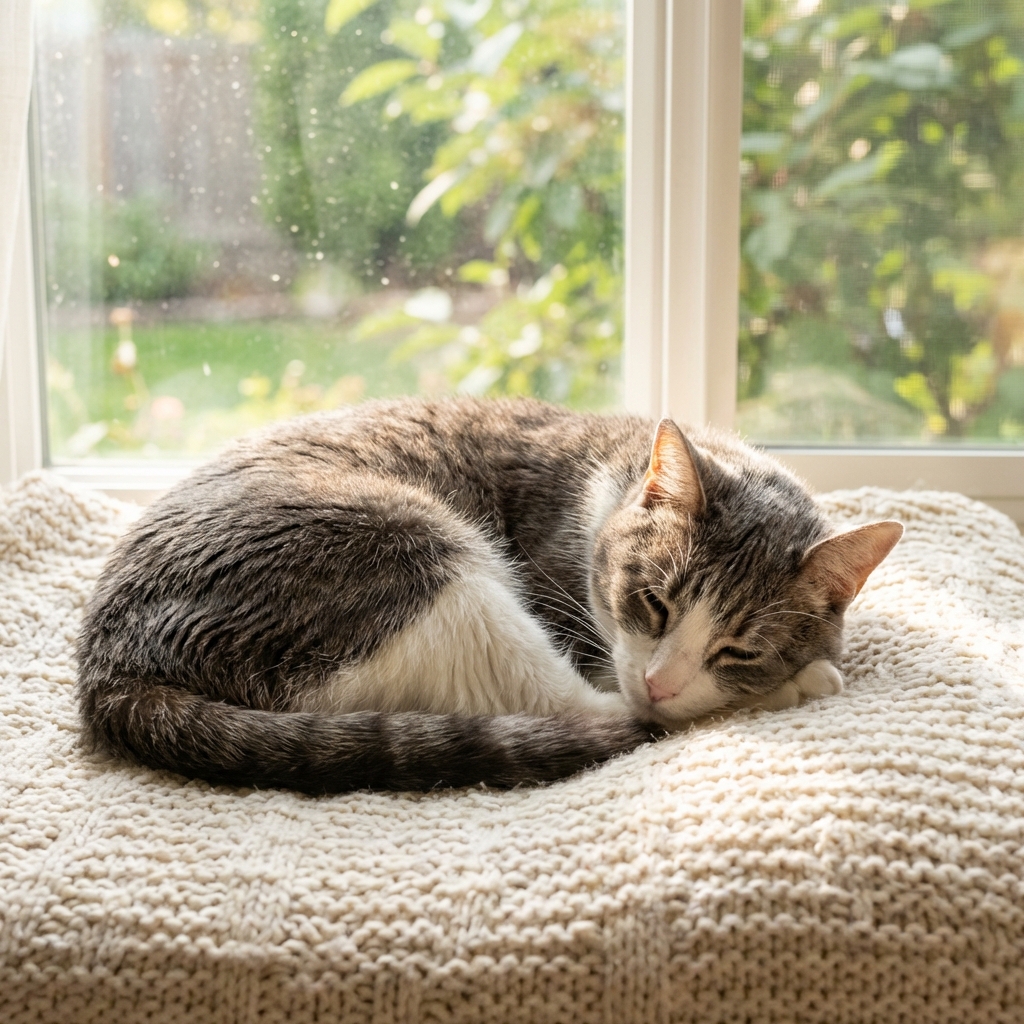
Quality of life is about comfort, function, and joy. For most cats, that looks like:
- Breathing comfortably and resting peacefully
- Eating and drinking enough to maintain strength
- Using the litter box without distress
- Moving around to reach favorite spots
- Grooming, interacting, and showing interest in daily routines
When several of those areas start slipping and do not rebound with treatment, it can be a sign your cat is declining.
Key signs of decline
It helps to think in categories. A single symptom can have many causes, but clusters of changes matter. And while patterns can point you in the right direction, only a veterinarian can diagnose what is going on.
1) Appetite changes and weight loss
A declining cat often eats less, stops asking for food, or acts interested but cannot finish. In older cats, weight loss can be associated with issues like kidney disease, hyperthyroidism, diabetes, dental pain, gastrointestinal disease, or cancer.
- Noticeable weight loss, hip bones or spine becoming more prominent
- Eating only treats, licking gravy, or walking away quickly
- Nausea signs like drooling, lip smacking, or gagging
Action: Weigh your cat weekly if you can (a baby scale can help). Take monthly photos and ask your vet about body condition scoring if you are unsure. Contact your vet if your cat has not eaten within 24 hours, and sooner for seniors, kittens, or cats with conditions like diabetes, kidney disease, or a history of rapid weight loss.
2) Breathing changes or coughing
Breathing changes in cats are often urgent. Cats in respiratory distress may sit with elbows out, breathe with an open mouth, or seem unable to get comfortable.
- Rapid breathing at rest
- Open-mouth breathing (not after vigorous play)
- Pronounced belly effort with each breath
- Blue or pale gums
Action: Treat labored breathing, open-mouth breathing, or collapse as an emergency. Do not wait it out.
3) Mobility loss and hiding
Arthritis is extremely common in adult and senior cats, and pain often shows up as behavior change rather than limping. A cat who cannot move comfortably often withdraws.
- Not jumping up to beds, couches, or windowsills
- Stiffness, hesitant walking, or slipping on floors
- Hiding more, staying in one room, or camping near the litter box
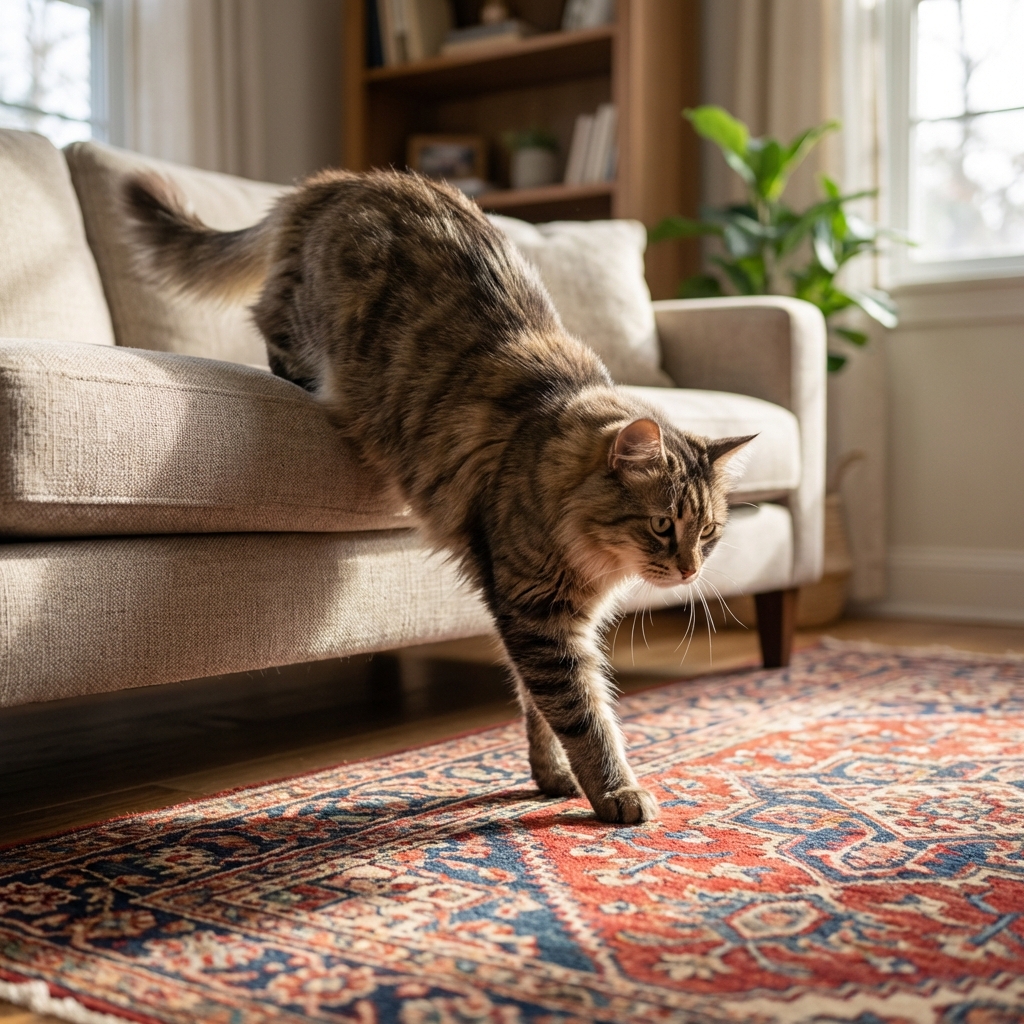
Action: Ask your vet about pain control options and environmental support like ramps, low-entry litter boxes, and soft bedding.
4) Litter box changes
When quality of life declines, the litter box is often one of the first places you see it. Pain, weakness, constipation, cognitive changes, urinary disease, and kidney disease can all play a role.
- Accidents just outside the box
- Straining, crying, or frequent trips with little output
- Diarrhea, severe constipation, or stool stuck to fur
- Very large urine clumps or a noticeable increase in clump number (may suggest increased urination)
Action: Male cats that strain and cannot pass urine need immediate emergency care. If you can, track clump size and frequency and mention any changes to your vet.
5) Drinking and urination changes
Subtle changes in thirst and urination can be an early clue that something is off, especially in senior cats.
- Drinking more than usual or hovering at the water bowl
- Urinating much more or much less than normal
- New nighttime urination, accidents, or waking you to access the box
Action: Add an extra water bowl and consider measuring water intake for a few days if you suspect a change. Tell your vet what you are seeing, especially if it comes with weight loss or appetite changes.
6) Poor grooming and coat changes
Cats typically keep themselves very clean. A dull, greasy, matted coat can signal pain, nausea, dental disease, or overall decline in strength.
- Greasy or clumped fur, dandruff, matting
- Urine or fecal staining around the hind end
- Overgrooming one area (can signal pain or itch)
Action: Ask your vet whether grooming decline may be from arthritis, oral pain, nausea, or another underlying issue. Gentle brushing can help, but it does not replace medical care.
7) Signs of chronic pain
Cat pain can look subtle. Some cats become quiet and withdrawn. Others become cranky or stop wanting to be touched.
- Grimacing, squinting, flattened ears, tense posture
- Growling or swatting when picked up or petted
- Restlessness, trouble settling, or sleeping in unusual positions
- Reduced play and less interest in favorite activities
Action: Never give human pain medications. Many are toxic to cats. Your veterinarian can help you build a pain plan that is safe.
8) Confusion, vocalizing, or sleep changes
Some senior cats develop cognitive dysfunction, similar in concept to dementia. It can also overlap with medical causes like hyperthyroidism, high blood pressure, vision loss, or pain.
- Yowling at night, seeming lost in familiar rooms
- Staring at walls, getting stuck in corners
- Sleep-wake cycle changes
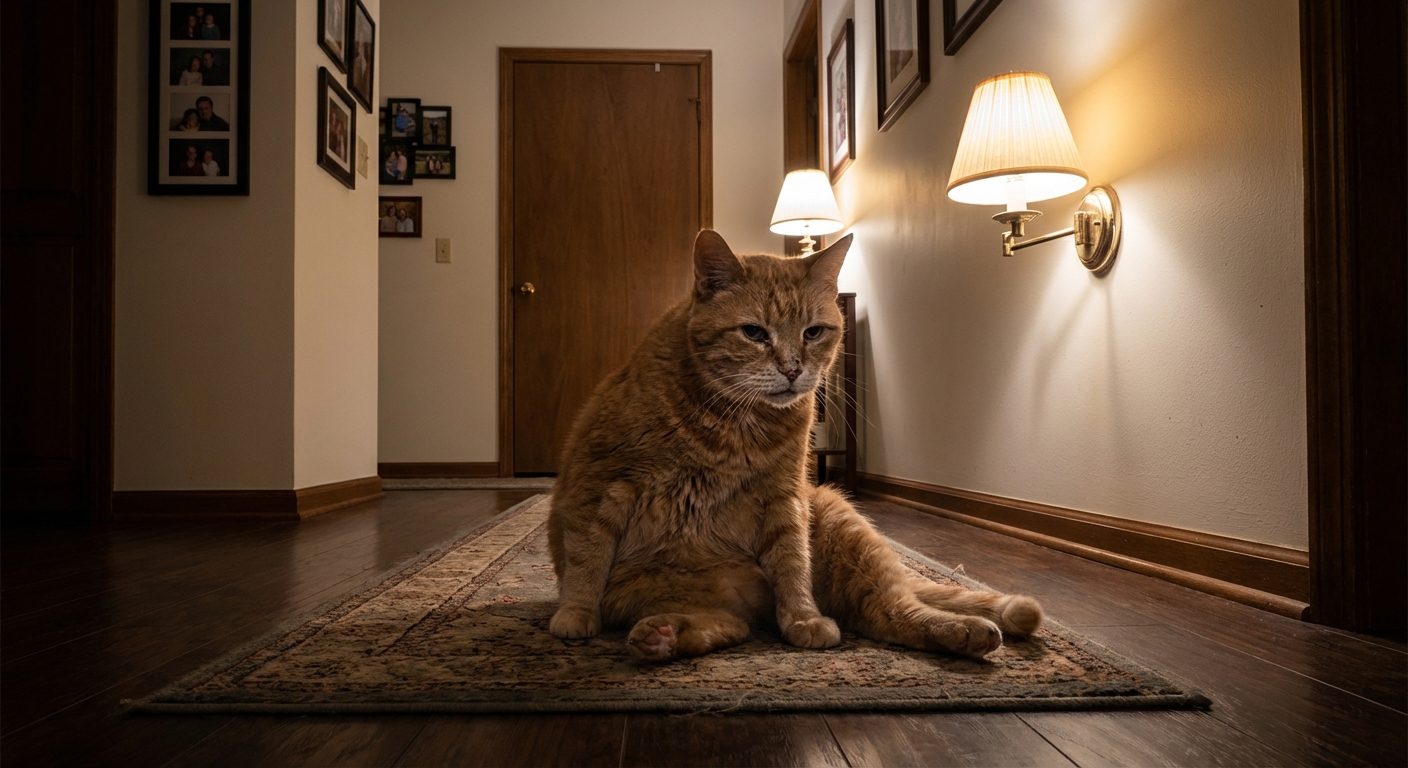
Action: A vet exam is important because some causes are treatable and can significantly improve comfort.
9) Vomiting, diarrhea, or dehydration
Occasional hairballs happen, but repeated vomiting or diarrhea can lead to dehydration and weakness quickly, especially in older cats.
- Vomiting more than once in a week, or any vomiting with lethargy, weight loss, or pain
- Diarrhea that lasts more than 24 to 48 hours, or any diarrhea with blood or weakness
- Not keeping water down
Dehydration can be tricky to assess at home. Signs like dry gums, sunken eyes, and reduced skin elasticity can help, but they are not perfect, especially in older cats. Use them alongside changes in appetite, urination, energy, and overall behavior.
Action: Contact your veterinarian promptly if vomiting or diarrhea is recurring, if your cat seems weak, or if you suspect dehydration. Dehydration can worsen kidney disease and overall well-being.
10) Withdrawal and loss of spark
This is the one families often describe as “They just are not my cat anymore.” A decline in social behavior can be a major quality-of-life clue, especially when it is persistent.
- Stops greeting you, hiding when you come home
- No longer seeks petting or lap time
- Looks checked out, less responsive to normal routines
Action: Track this change. If it lines up with appetite loss, weight loss, or litter box changes, it often points to a deeper medical problem or unmanaged pain.
Simple at-home check
You do not need a complicated system to start. Here is a practical way to reduce second-guessing. (If you want a more formal framework, ask your vet about quality-of-life scales like the HHHHHMM scale used in hospice and palliative care.)
- Pick 6 daily categories: appetite, hydration, comfort, mobility, litter box, and interaction
- Score each 0 to 2: 0 = poor, 1 = mixed, 2 = good
- Write one note: “hid under bed,” “ate half,” “purred during brushing,” “strained in box”
Quick examples to make scoring easier:
- Appetite: 0 = refuses food all day, 1 = eats less than half, 2 = eats most of normal meals
- Hydration: 0 = will not drink and seems weak, 1 = drinks some but less than usual, 2 = drinking normally
- Comfort: 0 = seems painful or cannot settle, 1 = up and down or restless, 2 = relaxed and resting comfortably
- Mobility: 0 = struggles to reach food or box, 1 = moving but slower or avoiding jumps, 2 = moving around as usual
- Litter box: 0 = straining, crying, or no output, 1 = mild accidents or constipation, 2 = normal use
- Interaction: 0 = withdrawn and avoids contact, 1 = interacts briefly then retreats, 2 = seeks normal attention
If the total score trends downward over 1 to 2 weeks, or your cat has more 0 days than 2 days, it is a strong sign you need a veterinary check-in and possibly a comfort-focused plan.
When to call right away
Some symptoms are urgent because cats can decline fast.
- Open-mouth breathing, labored breathing, or collapse
- Straining to urinate, crying in the litter box, or no urine produced
- Not eating within 24 hours, sooner for seniors, kittens, or cats with medical conditions
- Sudden paralysis or inability to use back legs
- Seizures, severe disorientation, or repeated vomiting with weakness
- Uncontrolled pain, nonstop hiding, or vocalizing that signals distress
Trust your instincts. If you feel your cat is suffering, that feeling deserves immediate attention.
Comfort at home
If your veterinarian is treating a chronic condition, small home changes can make a big difference in comfort.
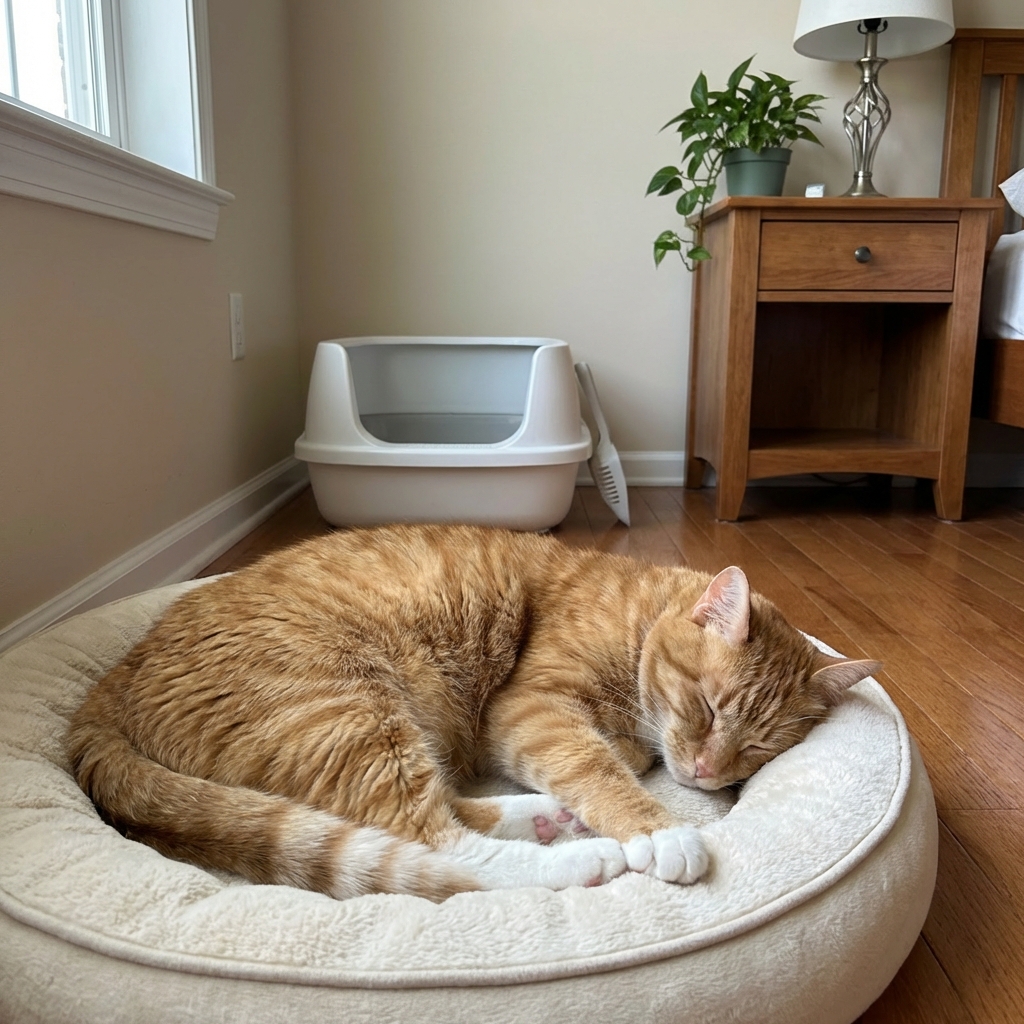
- Make essentials easy: add a low-entry litter box, extra water bowls, and food in multiple quiet spots
- Improve traction: runners or yoga mats can help wobbly legs feel secure
- Warmth and softness: heated pet pads made for animals, plush bedding, and draft-free rest areas
- Reduce stress: keep routines consistent and provide a calm space away from noise
- Ask about comfort care: pain control, anti-nausea meds, appetite support, hydration plans, and mobility help
Hospice and palliative care
If you hear terms like palliative care or hospice, here is the simple difference:
- Palliative care: comfort-focused treatment alongside (or instead of) curative treatment, with the goal of reducing pain, nausea, anxiety, and distress
- Hospice: comfort care when a condition is not expected to improve, focusing on quality of life and a peaceful, supported end-of-life period
If treatments are no longer helping and your cat is having more uncomfortable days than peaceful ones, it may be time to talk about hospice care or euthanasia. This is not a failure. In veterinary medicine, we view a peaceful passing as a gift when suffering cannot be relieved.
If you are nearing that decision, ask your vet:
- What signs show pain or distress in my cat specifically?
- What improvements should we realistically expect with treatment?
- What would an at-home comfort plan look like for the next 1 to 2 weeks?
- How do I know when it is time?
- What are my options for in-home versus clinic euthanasia, and what should I expect during the visit?
You know your cat’s normal. Pair that knowledge with veterinary guidance, and you will be making the most compassionate choice you can.
Quick takeaway
Quality of life decline is usually not one dramatic event. It is a pattern: less eating, less moving, less grooming, more hiding, more discomfort. Track changes, call your veterinarian early, and focus on comfort and dignity. Your cat is counting on you to notice what they cannot say out loud.
Sources and references
- American Association of Feline Practitioners (AAFP): senior cat care and feline pain resources
- AAHA (American Animal Hospital Association): pain management and end-of-life care guidance
- HHHHHMM Quality of Life Scale (used in veterinary hospice and palliative care)