Stop fleas fast with a simple 3-part plan: use cat-safe medication, clean your home to break the life cycle, and prevent re-infestation for months. Avoid uns...
Article
•
Designer Mixes
Signs Your Cat Has Fleas

Shari Shidate
Designer Mixes contributor
As a veterinary assistant here in Frisco, Texas, I can tell you fleas are one of the most common reasons cat parents call in a panic. The tricky part is that cats are excellent groomers, so you might not see a single bug even when fleas are the real problem.
Let’s walk through the must-know signs your cat may have fleas, what those signs really mean, and what to do next so your cat can get comfortable again quickly.
Quick note: This article cannot diagnose your cat. If your cat has severe itching, open sores, or seems unwell, it is best to have your veterinarian examine them.
Common signs of fleas
Some symptoms are so classic that fleas jump to the top of my list right away.
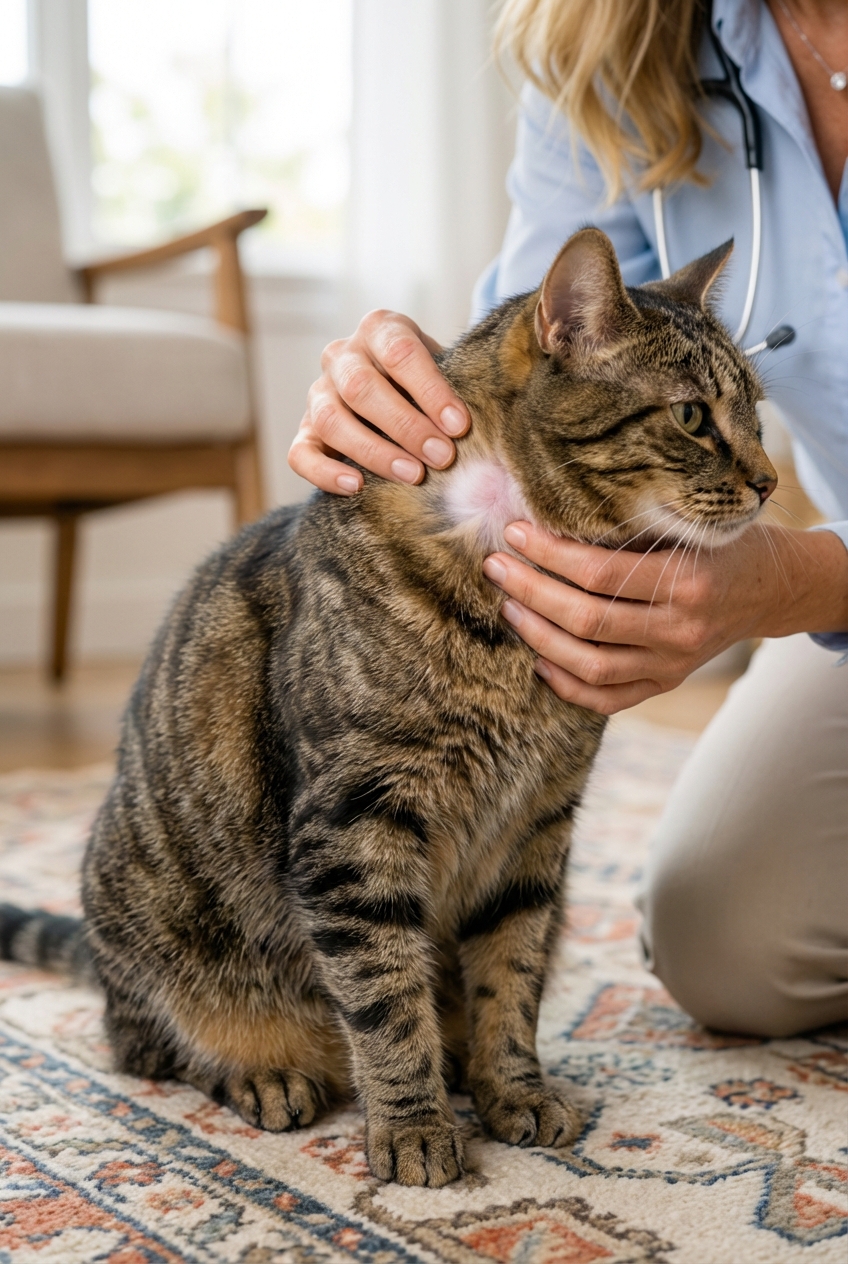
1) Persistent scratching, especially around the neck and tail
Fleas often concentrate around the back end and the base of the tail, but many cats also itch around the neck and shoulders. If you notice repeated scratching sessions that interrupt play, eating, or sleep, fleas are a strong possibility.
2) Over-grooming or sudden “barbering” (chewing hair off)
Cats may lick or chew areas until the fur looks thinned, patchy, or buzzed. This is especially common along the belly, inner thighs, and lower back. Sometimes the skin looks normal at first, but the grooming is the clue.
3) Tiny scabs or bumps (often on the lower back)
Many flea-allergic cats develop small crusty scabs you can feel before you can see them. If you run your fingers over the back and it feels like tiny grains or bumps, that can be a hallmark of flea allergy dermatitis.
4) “Pepper” in the coat (flea dirt)
Flea dirt is flea feces. It looks like black specks, often near the tail base or along the back. A quick at-home test: place the specks on a damp white paper towel. If they smear reddish-brown, that is digested blood and strongly suggests fleas.
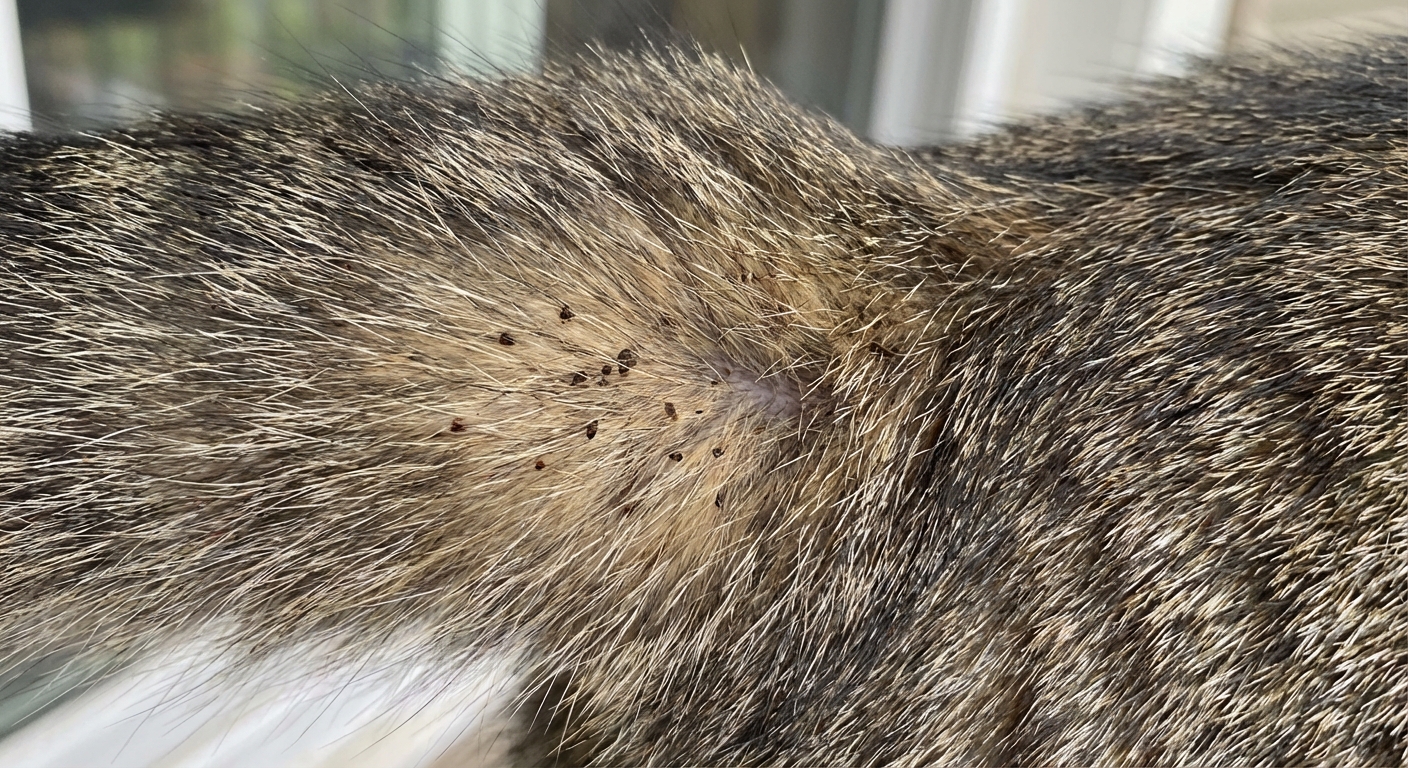
5) Visible fleas (and clues in the home)
Adult fleas are small, fast, and great at hiding, but you can sometimes spot them moving through the coat. Flea eggs are less commonly identified on the cat because they fall off quickly, but you may notice tiny white grains in bedding or areas where your pet rests. If you see fleas, treat it as a real infestation, not a one-off.
Subtle signs people miss
Not every cat reacts dramatically. These quieter signs can still point to fleas, especially if they appear suddenly.
- Restlessness or irritability: Some cats act touchy because their skin feels prickly and uncomfortable.
- Head shaking or ear scratching: Fleas can irritate the head and neck region, and itching can look like ear trouble.
- Small red dots on the belly or inner thighs: Flea bites can show up in thinner-haired areas.
- Hairballs increasing: More grooming can mean more swallowed hair.
- Skin infections: Repeated licking and scratching can open the door for bacterial or yeast issues.
Why some cats react so strongly
One of the biggest misconceptions is “I only saw one flea, so it can’t be that bad.” For many cats, especially those with flea allergy dermatitis, a single flea bite can trigger days of intense itching. This is an allergic reaction to proteins in flea saliva, not a sign your cat is being dramatic.
If your cat is itchy but you cannot find fleas, do not rule them out. Cats can groom away evidence, and flea allergy can flare from very small exposure.
How to check your cat at home
If your cat will tolerate it, a simple check can be very helpful before you call your vet.
Step-by-step flea check
- Pick a calm time when your cat is relaxed.
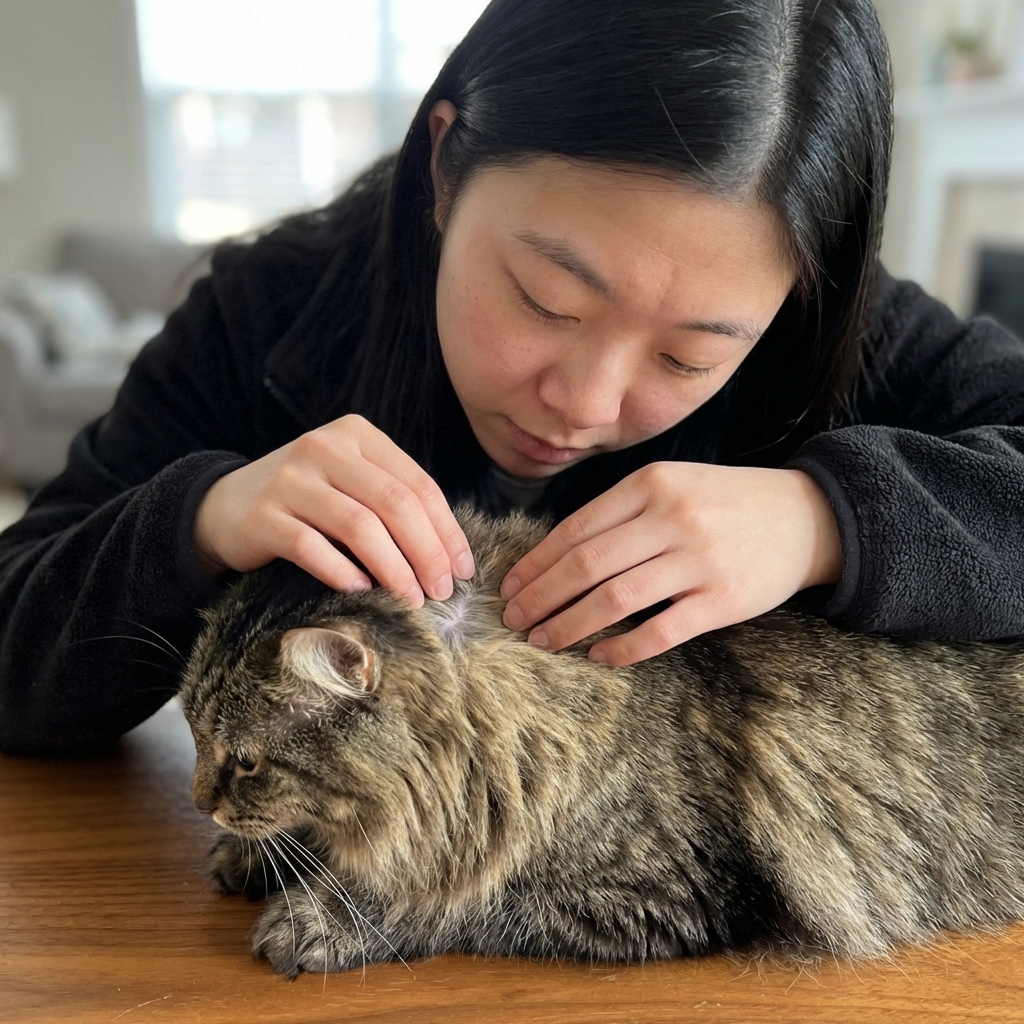
- Part the fur at the base of the tail, along the lower back, and around the neck.
- Look for flea dirt first. It is often easier to spot than fleas themselves.
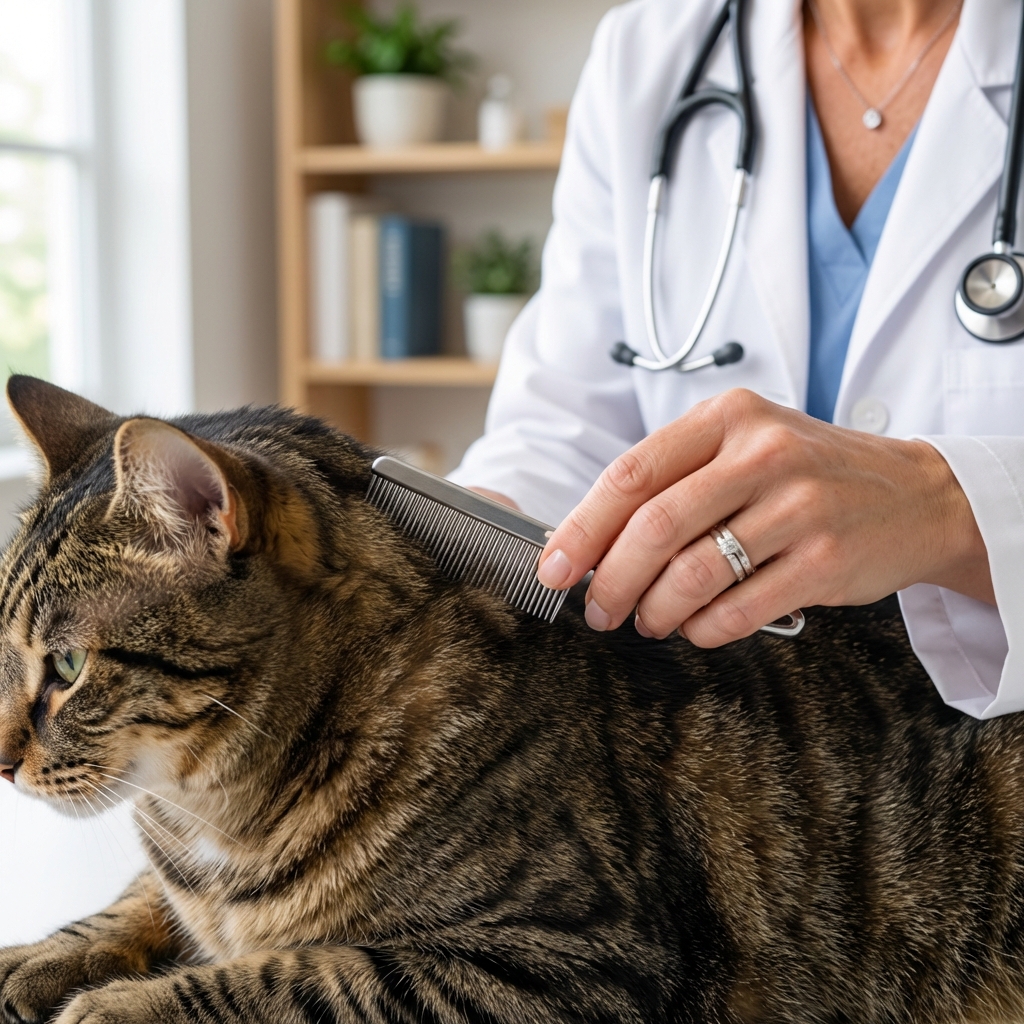
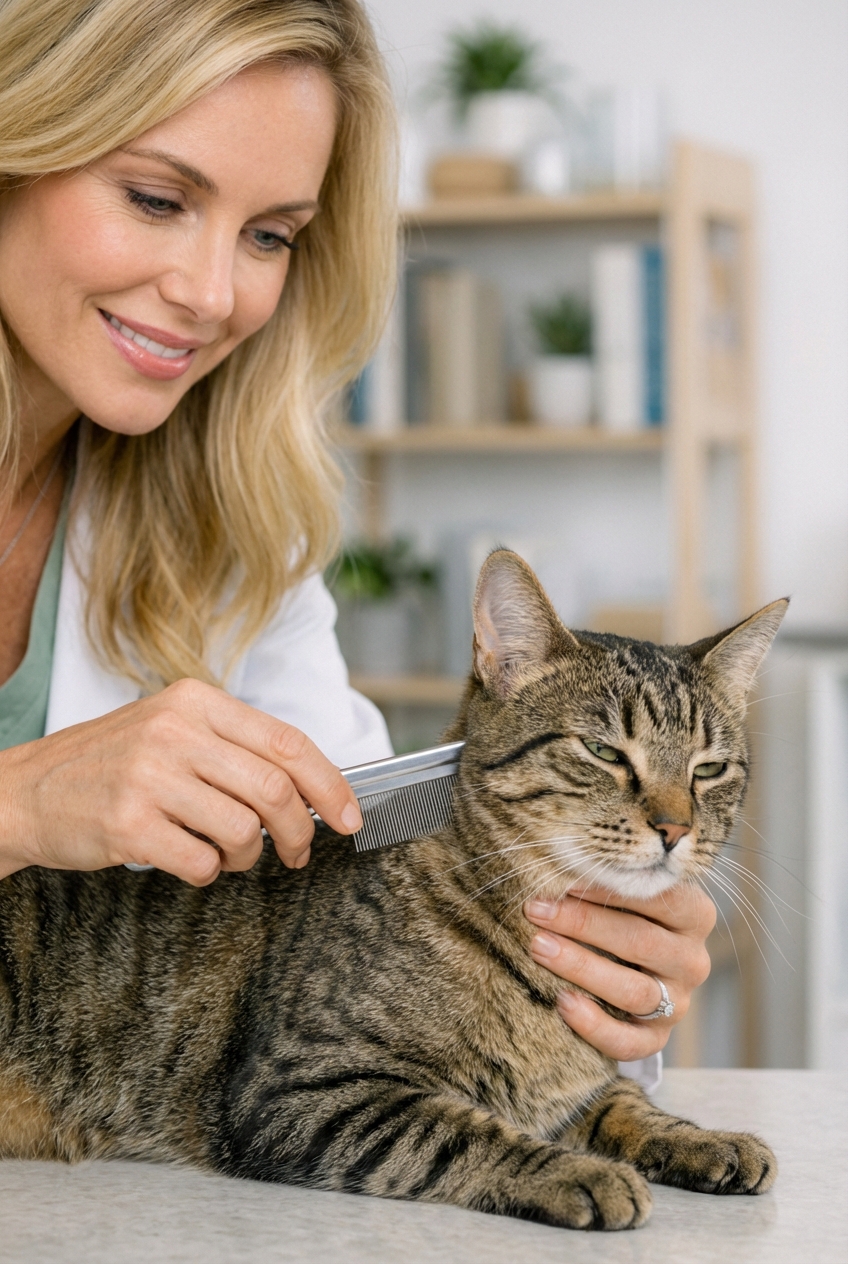
- Use a flea comb if you have one, especially around the tail base and lower back.
- Do the damp paper towel test with any black specks you find.

Safety note: If your cat gets stressed, stop and try again later. Stress can escalate quickly in cats, and we want this to stay gentle.
Fleas vs. other look-alikes
Itching and hair loss are not exclusive to fleas. Here are a few common look-alikes:
- Environmental allergies: Seasonal flares and itchy skin, and some cats may have other signs too.
- Food sensitivity: Can cause itching, ear issues, and GI upset, but it is usually more chronic.
- Mites (ear mites or skin mites): Often intense itching, ear debris, or crusting.
- Ringworm: Can cause circular hair loss and scaly patches, and it can spread to people.
- Stress grooming: Over-grooming can be behavioral, especially during changes at home.
This is why a vet visit can be so valuable. The treatment for fleas is very different from the treatment for ringworm or mites.
When fleas are urgent
Most flea cases are uncomfortable but manageable. Still, there are times you should seek veterinary care quickly:
- Kittens with suspected fleas. They can become anemic faster than adult cats.
- Pale gums, weakness, or lethargy, which can suggest anemia. Contact your veterinarian or an emergency clinic right away.
- Open sores, oozing skin, or a strong odor, which can point to infection.
- Tapeworm segments that look like tiny rice grains near the rear end or in bedding. Cats can get tapeworms from swallowing fleas.
What to do if you suspect fleas
The most effective plan is a two-part approach: treat the cat and treat the environment.
1) Choose a cat-safe flea product
Use a veterinarian-recommended flea preventive labeled for cats, and follow the directions carefully. Many of the most effective options are prescription, and the best choice depends on your cat’s age, weight, and health history. Kittens need extra-careful product selection, so call your vet if you are unsure.
Avoid using dog products on cats, even in small amounts. Some dog flea medications can be toxic to cats.
Also use caution with: over-the-counter flea shampoos, sprays, and essential oils. Some products and “natural” remedies can irritate skin or be unsafe for cats. When in doubt, ask your veterinarian before applying anything.
2) Clean the environment strategically
- Wash bedding (your cat’s and yours) in hot water and dry on high heat.
- Vacuum carpets, rugs, and furniture, especially where your cat sleeps. Empty the vacuum promptly.
- Repeat weekly for several weeks. It often takes 6 to 12 weeks of consistent treatment and cleaning to fully break the flea life cycle, depending on the infestation and the products used.
3) Treat all pets in the home
If you have a dog and a cat, both usually need consistent flea control, even if only one is showing symptoms.
My best practical tip: Put flea prevention on your calendar. In North Texas, fleas can be a year-round issue, and prevention is much easier than eliminating fleas once they are established in the home.
Quick FAQs
Can indoor cats get fleas?
Yes. Fleas often come in on other pets, or from wildlife around entry areas. Once fleas get into a home, they can spread through carpets, bedding, and furniture.
Why do I not see fleas on my cat?
Cats groom constantly, so they may remove fleas and flea dirt before you notice. Also, fleas are fast and tend to hide in dense fur.
Do fleas live on humans?
Fleas can bite people, but they prefer furry hosts and typically do not live long-term on humans.