Track your dog’s pregnancy week by week with vet-informed milestones, common symptoms, confirmation tests, feeding guidance, whelping setup, labor signs, a...
Article
•
Designer Mixes
Signs of Pregnancy in Dogs

Shari Shidate
Designer Mixes contributor
When a dog might be pregnant, it can feel equal parts exciting and nerve-wracking. I get it. As a veterinary assistant, I have talked with many families who notice a few small changes and wonder, “Is she pregnant or is something else going on?”
The tricky part is that early pregnancy signs can look a lot like a heat cycle, stress, or even a mild stomach bug. Below are practical, evidence-based signs to watch for, what they usually mean, and the safest next steps.

First, the timeline matters
A dog’s pregnancy averages about 63 days from ovulation. Because ovulation timing can vary, it is often described as roughly 57 to 65 days from breeding. Signs also show up in phases, so it helps to anchor what you are seeing to when breeding may have happened.
- Weeks 1 to 3: Often no obvious signs.
- Weeks 3 to 5: Subtle changes may start, and diagnostic tests become more useful.
- Weeks 5 to 7: Body changes are usually more noticeable.
- Weeks 7 to 9: Nesting, bigger belly, and pre-labor changes.
If you are not sure when breeding occurred, a veterinarian can help estimate timing and choose the best confirmation method.
Practical signs at home
1) Appetite changes
Some dogs eat less for a short window in early pregnancy due to mild nausea. Timing varies, but it is often noticed around weeks 3 to 4. Later, appetite often increases as puppies grow.
- What it can look like: Picking at food, skipping breakfast, sudden “picky eater” behavior.
- What to do: Keep meals consistent, offer smaller portions more frequently, and ensure fresh water is always available.
2) Tiredness and lower energy
Growing puppies take energy. Your dog may nap more or seem less interested in long play sessions.
- What to do: Keep gentle exercise, but do not push endurance activities. Think calm walks instead of intense fetch.
3) Nipple and mammary gland changes
One of the more reliable early signs is nipple enlargement and a slightly pinker color. Later, mammary glands can become fuller as her body prepares for nursing.
- What to do: Avoid squeezing nipples to “check for milk.” Let your vet assess if you are unsure.
4) Weight gain and a changing waistline
By about week 5, many dogs start to look broader through the abdomen, especially with larger litters. Some carry small litters and show very little, while others look pregnant early.
- Tip: Take weekly photos from the side and above, in the same spot and lighting. Subtle changes become easier to see.
5) Mild behavior changes
Some pregnant dogs become extra cuddly. Others get more sensitive and want quiet time.
- What to do: Respect her space. Reduce chaos, especially around kids and other pets.
6) Vaginal discharge changes
A small amount of clear to whitish, mucoid discharge can be normal during pregnancy. However, heavy discharge, a foul smell, pus-like discharge, or bleeding is not normal.
Also note that green or black discharge can be normal during active labor if a puppy follows soon, since it may be associated with placental separation. Green discharge before active labor, or green discharge with no puppy soon after, should be treated as a concern.
- Call your vet if: discharge is thick, bad-smelling, green early, large in volume, or accompanied by fever or lethargy.
How to confirm pregnancy
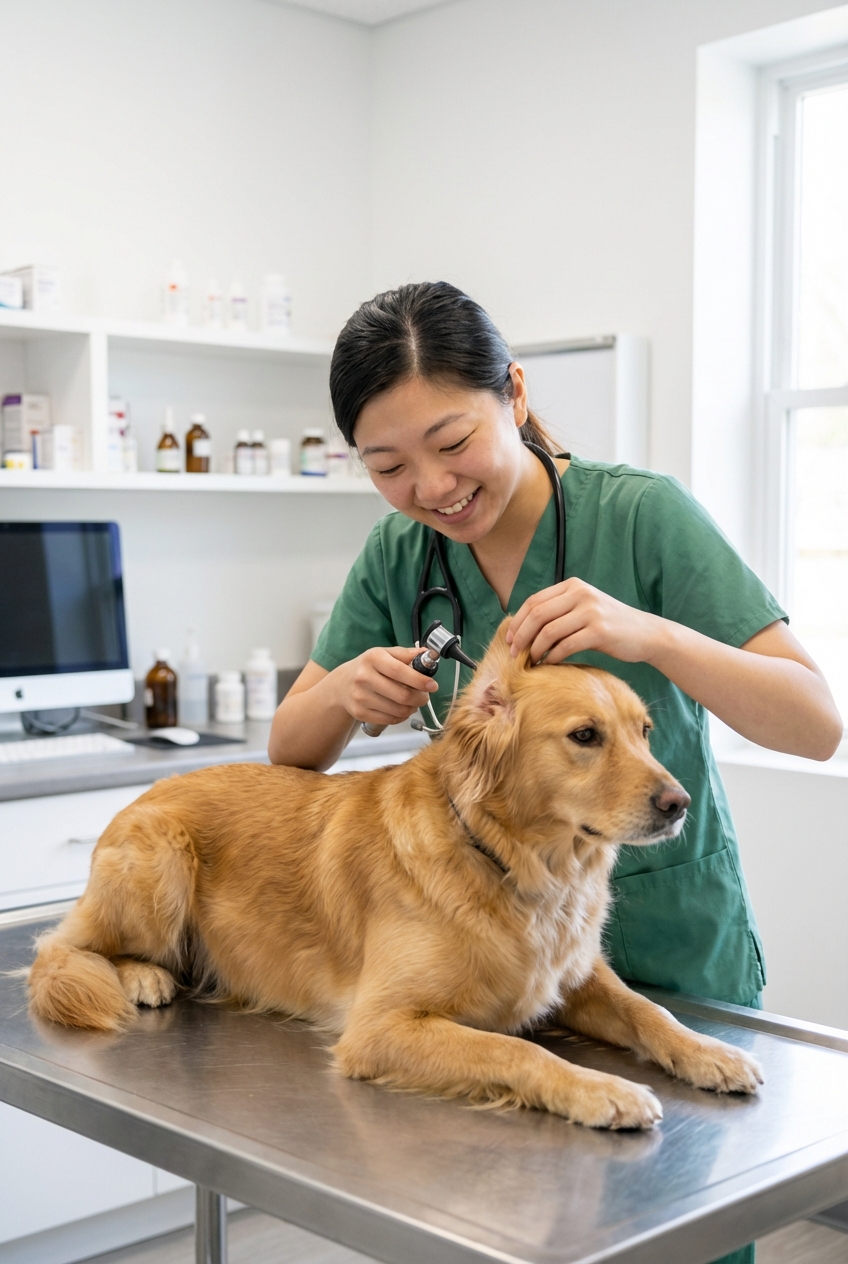
Home observation is helpful, but it cannot confirm pregnancy. Here are the common veterinary options and their typical timing.
Relaxin blood test
- When: Typically reliable around day 28 after breeding (often quoted as day 25 to 30).
- Pros: Simple blood draw.
- Limitations: False negatives can happen if done too early. It does not tell you litter size. Rarely, false positives can occur with a recent pregnancy loss.
Ultrasound
- When: Often done around day 25 to 35.
- Pros: Confirms pregnancy earlier and checks viability.
- Limitations: Counting puppies is not as accurate as X-ray later.
X-ray (radiographs)
- When: Best around day 55 and later when fetal skeletons are mineralized.
- Pros: Most accurate way to estimate litter size.
- Why it matters: Knowing puppy count helps you recognize if labor is finished or if a puppy may be retained, which can be an emergency.
Common look-alikes
False pregnancy
Dogs can show pregnancy-like signs after a heat cycle due to normal hormone shifts. This can include nesting, swollen mammary glands, and even milk production.
- What to do: Schedule a vet visit to confirm what is going on. Do not encourage nursing behaviors, and avoid letting her lick or “mother” toys excessively. Your vet may recommend strategies to reduce stimulation.
Pyometra
This is one of the biggest reasons we take “maybe pregnant” seriously. Pyometra is life-threatening and more common in unspayed females.
- Red flags: lethargy, increased thirst, vomiting, fever, poor appetite, swollen belly, and discharge (may or may not be present).
- Action: If you suspect pyometra, this is urgent. Seek veterinary care immediately.
Weight gain
It is easy to confuse normal weight gain with pregnancy, especially in fluffy mixes or dogs with a barrel chest.
- Tip: A vet can check body condition score and guide safe feeding while you rule pregnancy in or out.
What to do next
1) Book a veterinary appointment early
If breeding may have happened, do not wait until she “looks pregnant.” Early care helps you:
- Confirm pregnancy versus a medical problem
- Estimate due date
- Discuss parasite prevention and deworming options that are safe during pregnancy (this should be vet-directed)
- Plan nutrition and whelping support
If the pregnancy was not planned, ask your veterinarian about options as soon as possible. Some choices, including spay-abort, can be time-sensitive.
2) Keep routine steady
Dogs do best with predictability. Keep walks, feeding times, and bedtime consistent. Limit rough play and avoid introducing unfamiliar dogs or stressful environments.
3) Feed for pregnancy
Do not rush into doubling food right away. In early pregnancy, calorie needs often do not change much. Later, needs increase.
- General approach: Ask your veterinarian when to transition to a growth or puppy-formulated diet and how much to feed.
- Late pregnancy tip: Many dogs do better with multiple smaller meals as the abdomen fills and stomach capacity decreases.
- Avoid: Calcium supplementation unless your vet specifically prescribes it. Too much calcium can increase the risk of eclampsia (hypocalcemia) after whelping.
4) Medications and vaccines
Do not start new medications, supplements, or vaccines without veterinary guidance. Many products are safe, but pregnancy is not the time to guess.
5) Prepare a safe whelping area
Create a quiet, warm, draft-free spot where she can rest now and eventually deliver.
- Use a washable bedding setup
- Keep it away from heavy foot traffic
- Introduce the area early so she feels secure
6) Have a few basics ready
- Clean towels and disposable gloves
- A digital thermometer (if your vet recommends temperature tracking)
- A small scale for puppies
- Your veterinarian’s number and the nearest emergency clinic address

When to call the vet
Whether she is pregnant or not, these signs should be treated as urgent:
- Weakness, collapse, pale gums
- Heavy bleeding
- Green discharge before active labor
- Foul-smelling discharge
- Fever, vomiting, or severe lethargy
- Active, hard straining for 20 to 30 minutes with no puppy produced
- More than 2 hours between puppies when you know more remain, or sooner if she seems distressed or continues to strain
If something feels “off,” trust that instinct and call your veterinarian or an emergency clinic.
FAQ
Can I feel puppies by touching her belly?
It is not recommended. Palpation is a skill and can be uncomfortable or risky if done incorrectly. Leave this to a veterinarian.
How soon will milk come in?
Some dogs produce small amounts close to delivery, but milk timing varies. Milk production alone is not a reliable pregnancy confirmation because false pregnancy can also cause it.
Should I spay if I did not plan this pregnancy?
That is a conversation to have with your veterinarian as soon as possible. Options depend on timing, your dog’s health, and your goals. There is no one-size-fits-all answer, and your vet can walk you through risks and benefits.
The bottom line
Early dog pregnancy signs are often subtle, and many conditions can look similar. The most practical and safest plan is to combine your at-home observations with veterinary confirmation. With the right support, you can protect mom’s health, prepare for delivery, and reduce emergencies.
Contact your veterinarian to create a customized care plan for your dog based on her age, breed, health history, and the best estimate of breeding dates.