Spot the most urgent poisoning symptoms in dogs, learn common household toxins (meds, xylitol, chocolate, rodent bait), and follow clear steps on what to do ...
Article
•
Designer Mixes
Signs of Poisoning in Dogs

Shari Shidate
Designer Mixes contributor
When a dog gets into something toxic, minutes matter. As a veterinary assistant here in Frisco, Texas, I have seen how quickly a normal afternoon can turn into an emergency after a curious pup grabs a dropped pill, chews a houseplant, or sneaks food off the counter.
This quick guide will help you spot common signs of poisoning, know what to do right away, and understand what information your veterinarian will need. If you suspect poisoning, do not wait for symptoms to “prove it”. Call your veterinarian, an emergency clinic, or a pet poison hotline immediately.
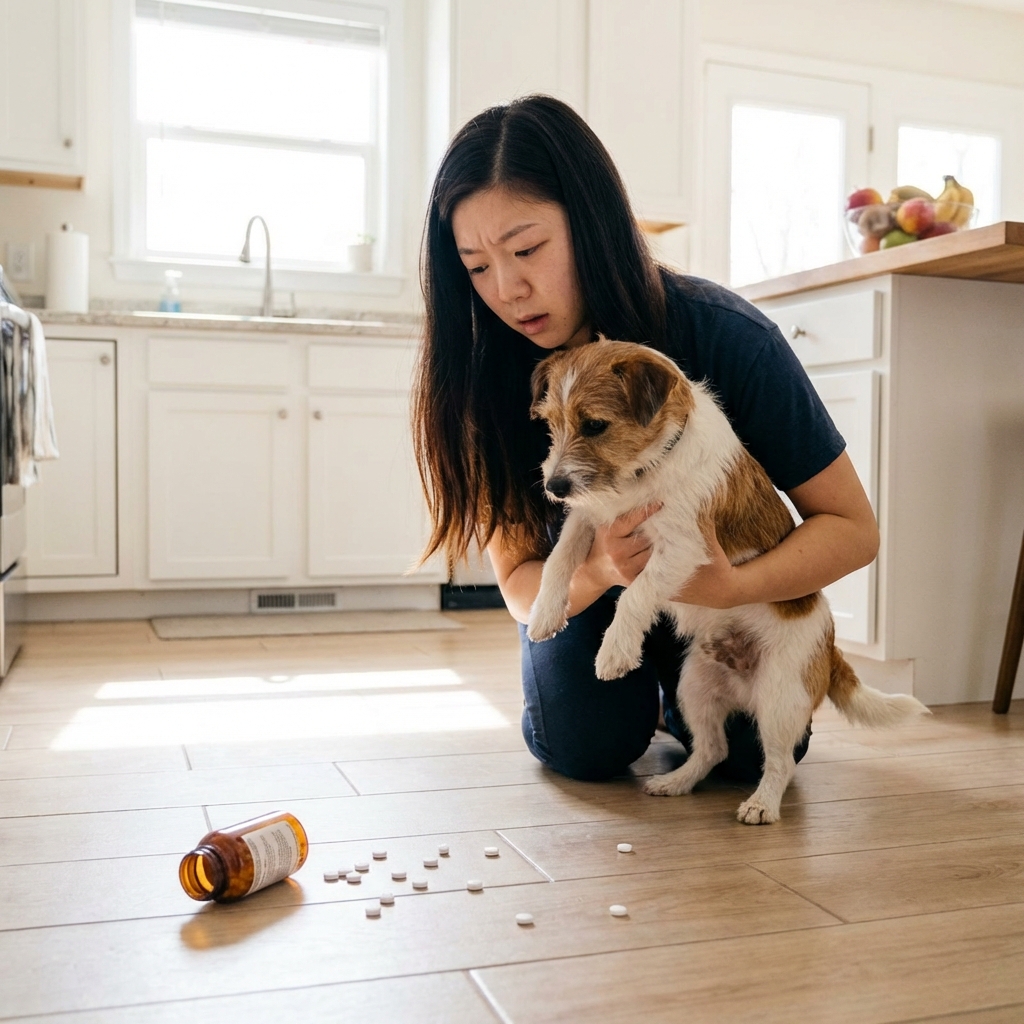
Fast action checklist
If you think your dog may have swallowed, licked, inhaled, or absorbed a toxin:
- Remove access to the suspected poison and move your dog to a safe area.
- Check your dog for vomiting, drooling, tremors, trouble breathing, weakness, or collapse.
- Call immediately: your vet, a 24/7 emergency hospital, or a pet poison hotline.
- Do not induce vomiting unless a veterinarian or poison professional tells you to. Some substances cause more damage coming back up.
- Save evidence: packaging, plant pieces, chewed containers, and any vomit (only if safe and practical).
- Bring the label or take clear photos of ingredients and concentration.
Do NOT do these things: do not wait for symptoms, do not give milk, oil, salt, or food “to soak it up,” do not give human medications, and do not give hydrogen peroxide, ipecac, or activated charcoal unless your veterinarian or a poison professional specifically instructs you.
Emergency now: uncontrolled seizures, collapse, blue or very pale gums, severe trouble breathing, or repeated vomiting with weakness are reasons to go to an ER immediately. If possible, have someone call ahead while you head there.
Common signs of poisoning
Poisoning does not look the same for every toxin. Some cause stomach upset first. Others affect the brain, heart, blood, liver, or kidneys. You might see one symptom or several.
Stomach and digestive signs
- Vomiting or dry heaving
- Diarrhea (sometimes bloody or very dark)
- Drooling, foaming, lip-smacking
- Loss of appetite
- Abdominal pain, restlessness, “praying” posture
Neurologic signs
- Tremors, twitching, or shaking
- Seizures
- Wobbliness, stumbling, weakness
- Disorientation, staring, acting “drunk”
- Extreme agitation or unusual sleepiness
Breathing and heart signs
- Rapid breathing, panting at rest or in cool conditions
- Coughing, gagging, wheezing
- Abnormal heart rate (very fast or very slow)
- Pale gums, blue-tinged gums, or very bright red gums
Bleeding or clotting issues
- Unexplained bruising
- Nosebleeds
- Bleeding gums
- Blood in urine or stool
- Weakness after minor activity
Skin, eyes, and mouth clues
- Burns or redness around the mouth
- Pawing at the face, mouth irritation
- Red, painful eyes or squinting after exposure
- Hives or facial swelling (can occur with toxins or allergic reactions)
Urination and thirst changes
- Drinking much more or much less than normal
- Urinating more frequently, straining, or accidents
- Little to no urine output (this is especially urgent)
Some toxins cause delayed symptoms. For example, certain rodenticides, grapes and raisins, and some human medications can cause serious internal damage before you notice anything obvious. That is why calling right away is so important.

Common household poisons
Knowing the usual suspects helps you act faster. These are frequent sources of poisoning cases in dogs:
- Human medications (pain relievers like ibuprofen and naproxen, antidepressants, ADHD meds, sleep aids, blood pressure meds)
- Chocolate, xylitol, alcohol, caffeine
- Grapes and raisins (can cause kidney injury in some dogs)
- Rodenticides (rat and mouse bait)
- Insecticides and snail or slug bait
- Houseplants (many cause GI upset; some can be severe depending on species)
- Cleaning products (bleach, concentrated detergents, drain openers)
- Essential oils (some oils are riskier than others, especially if ingested or heavily applied. Examples include tea tree, wintergreen, eucalyptus, pennyroyal, clove, and cinnamon)
- Antifreeze (some formulas can be attractive to pets and are highly dangerous. Treat any antifreeze exposure as an emergency)
If you are not sure whether something is toxic, treat it like it is until a professional tells you otherwise.
What to do while you call
When you contact your veterinarian or a poison hotline, they will make decisions based on the details you provide. Gather what you can quickly:
- What your dog got into (product name, ingredient list, concentration)
- How much might be missing
- Time of exposure (best estimate)
- Your dog’s weight, age, and medical conditions
- Current symptoms (and when they started)
- Whether your dog is on any medications
If the exposure was on the skin or in the eyes: prevent licking and gently flush with lukewarm running water or saline while you call for instructions. Many clinics recommend 10 to 15 minutes of rinsing, but get guidance as soon as you can, especially for caustic cleaners or strong chemicals.
Important: Avoid home remedies like milk, oil, salt, food, or hydrogen peroxide unless your veterinarian specifically instructs you. Inducing vomiting can be dangerous with caustic cleaners, petroleum products, sharp objects, or if your dog is drowsy, seizuring, or struggling to swallow. Activated charcoal is not appropriate for every toxin and should not be given at home unless directed.

When it is an ER trip
Go to emergency care immediately if you see any of the following, even if you are not 100% sure what the exposure was:
- Seizures or uncontrolled tremors
- Collapse, inability to stand, or extreme weakness
- Difficulty breathing, noisy breathing, or choking
- Blue, gray, or very pale gums
- Repeated vomiting, vomiting blood, or severe diarrhea
- Known ingestion of antifreeze, rodenticide, or a large amount of medication
- Signs of severe pain, swollen belly, or continuous distress
Calling ahead lets the team prepare and can save precious time. If you are alone, start driving and call when you can safely do so, or call once you arrive.
How vets treat poisoning
Treatment depends on the toxin, the amount, and how quickly your dog gets help. Common steps may include:
- Decontamination (induced vomiting or activated charcoal when appropriate)
- IV fluids to support kidneys and circulation
- Antidotes for certain toxins (when available)
- Medications to control nausea, tremors, seizures, pain, or stomach ulceration
- Bloodwork and monitoring to track organ function
- Hospitalization for observation and supportive care
Many dogs recover beautifully with prompt care. The most heartbreaking cases are the ones where symptoms were watched at home for “a little longer.”
Prevention tips
- Store medications in closed cabinets, not purses or nightstand bowls.
- Use a lidded trash can or keep trash behind a closed door.
- Check your yard for mushrooms, dropped fruit, and bait risks.
- Read labels for xylitol (also called birch sugar) in gum, mints, peanut butter, and baked goods.
- Keep chemicals up high and never leave open buckets or cleaning solutions unattended.
- Know your plants before bringing them home.
- Train “leave it” and practice it daily with safe items.
If you want one simple habit that pays off: keep your dog’s current weight written down somewhere. Accurate weight helps poison professionals calculate risk and treatment recommendations faster.
Quick reminder
If you suspect poisoning, call a veterinary professional right away. It is always safer to call early and be told it is low risk than to wait until symptoms become severe.
You know your dog best. If something feels off, trust that instinct and reach out for help.