A dog bowel blockage can turn serious fast. Learn early symptoms, red flags, home do’s and don’ts, how vets diagnose obstructions, treatment options, rec...
Article
•
Designer Mixes
Signs of Bowel Obstruction in Dogs

Shari Shidate
Designer Mixes contributor
As a veterinary assistant here in Frisco, Texas, I have seen how quickly a bowel obstruction can turn from “maybe my dog ate something weird” into a true emergency. The hard part is that the early signs can look like an upset stomach. The good part is that if you know what to watch for, you can act fast and often prevent serious complications.
While I am writing from my experience in North Texas, the warning signs and next steps below apply anywhere. This article is for general education and is not a substitute for a veterinarian’s diagnosis or treatment.
What a bowel obstruction is
Most “bowel obstructions” in dogs refer to an intestinal obstruction, meaning something blocks the normal movement of food, fluid, and gas through the intestines. A blockage can also happen at the stomach outlet (gastric outflow obstruction), which is related and can look similar to pet owners.
The “something” might be a swallowed object, a clump of material, severe inflammation, a mass, or even a twisting of the intestines.
When the intestines cannot move things along, pressure builds. Blood flow can be reduced. Tissue can become damaged. In severe cases, the intestine can perforate, which can cause life-threatening infection in the abdomen.
Timeline note: some obstructions worsen over hours to a day. Waiting to “see if it passes” can cost valuable time, especially if vomiting and pain are getting worse.
Partial vs complete blockage
Not every blockage is all-or-nothing. A partial obstruction can let small amounts of fluid or stool pass, so symptoms may wax and wane. A complete obstruction typically causes more persistent vomiting, rapidly worsening illness, and faster dehydration. Both can be serious, and partial obstructions can become complete.
Common causes
Many obstructions start with a normal dog behavior: chewing. Dogs explore the world with their mouths, and some dogs are fast, determined swallowers.
- Foreign objects: socks, underwear, tennis balls, corn cobs, squeakers, rocks, hair ties, pieces of toys, kids’ toys, diapers, tampons
- Bones and rawhide-like chews: may splinter, swell, or break into pieces that can create a blockage. Risk varies by the product and how your dog chews.
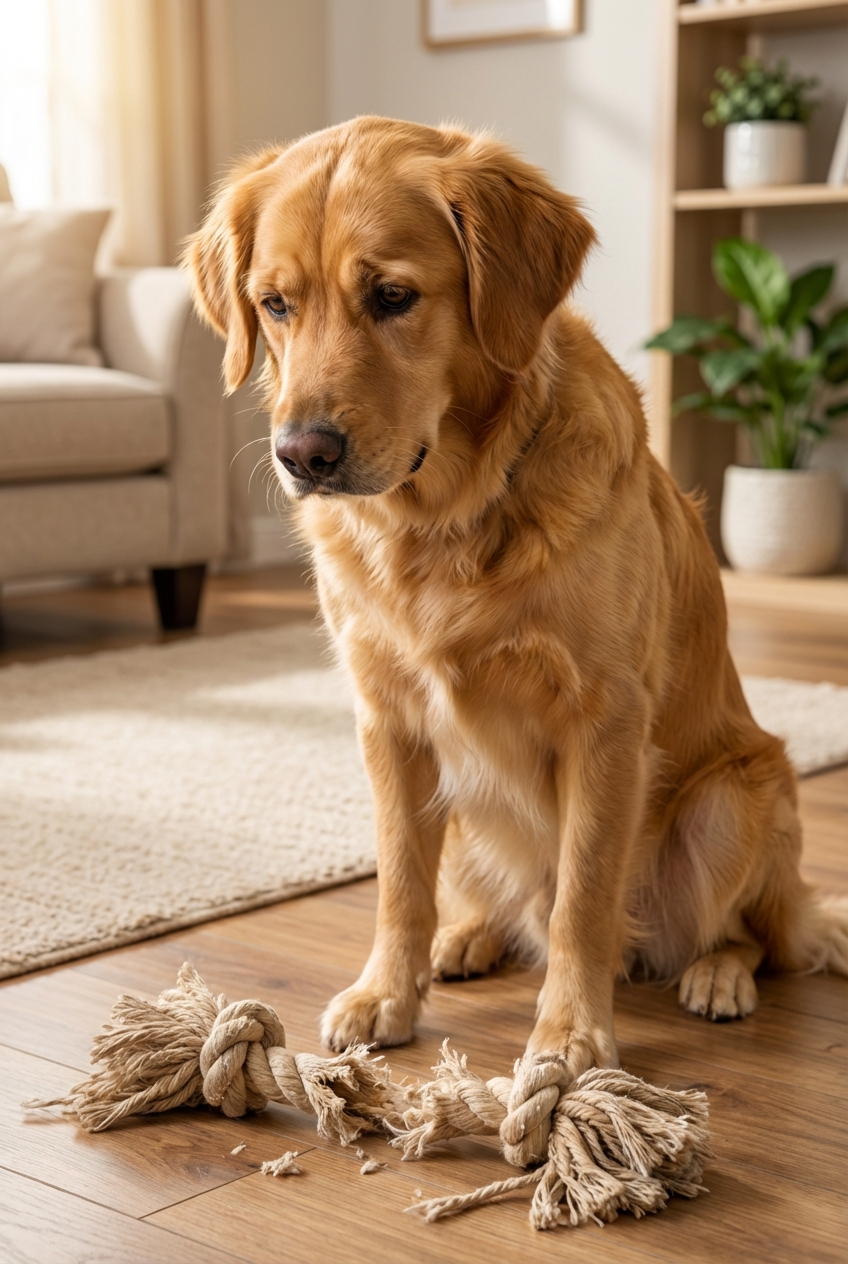
- String-like items: yarn, ribbon, dental floss, rope toys, tinsel (these can cause a dangerous “linear foreign body”)
- Food bolting: large pieces of food or treats swallowed without chewing (for example, fruit pits like peach pits)
- Intestinal parasites: heavy worm burdens can obstruct, especially in puppies
- Masses: tumors or polyps, more common in older pets
- Intussusception: when one segment of intestine telescopes into another
Signs to watch for
Think of these as “please take me seriously” signals. Any single sign can occur with other stomach issues, but a bowel obstruction is especially likely when symptoms are persistent, worsening, or paired with pain and repeated vomiting.
1) Vomiting that keeps happening
Occasional vomiting can happen for many reasons. With an obstruction, vomiting often repeats, and your dog may not be able to keep water down. The vomit may be food, foamy fluid, bile, or in severe cases may have a foul odor.
2) Loss of appetite or refusing treats
A dog who normally loves food but suddenly turns away from meals, chews slowly, or spits food out deserves a closer look.
3) Straining to poop or producing very little stool
Some dogs squat and strain but only pass small amounts of stool, mucus, or nothing at all. Others may still pass some stool early on if the blockage is partial. Do not assume “they pooped, so they’re fine.”
4) Diarrhea or frequent urges to go
Partial obstructions can irritate the intestine and cause diarrhea or repeated urgent trips outside. Yes, some dogs have diarrhea and still have a blockage.
5) Belly pain or a tight, distended abdomen
Dogs can show abdominal pain in subtle ways: they may hunch, tuck their belly, “pray” with their front end down, or cry out when picked up. Some will guard their belly or avoid touch.
6) Lethargy and weakness
When your dog feels awful, they may withdraw, rest more, or seem “not themselves.” This can worsen quickly if dehydration sets in.
7) Excessive drooling, lip licking, or gagging
Nausea can look like drooling, licking lips repeatedly, swallowing hard, or gagging without producing vomit.
8) Restlessness and pacing
Some dogs cannot get comfortable because of cramping, pressure, or pain.
If your dog is vomiting repeatedly, acting painful, or cannot keep water down, treat it as urgent. Waiting to “see if it passes” can be risky.
Emergency red flags
Please seek emergency veterinary care now if you notice any of the following:
- Multiple vomiting episodes over a few hours, especially if your dog cannot keep water down
- Vomiting plus a swollen or painful abdomen
- Collapsed, very weak, pale gums, or trouble breathing
- Known or suspected ingestion of a toy, sock, bone, corn cob, string, or any item that is now missing
- Unproductive retching or dry heaving, especially with a distended abdomen (this can also be a sign of bloat or GDV, which is an immediate life-threatening emergency)
- Blood in vomit or stool
- Puppies or small dogs with fast dehydration
What not to do at home
When you suspect an obstruction, well-meaning home fixes can make things worse.
- Do not induce vomiting unless your veterinarian tells you to. Some objects can cause choking or injury on the way back up.
- Do not give laxatives, mineral oil, or “constipation meds” without veterinary guidance. If there is a blockage, pushing the gut harder can increase pain and risk.
- Do not feed bread, bulky meals, or “fiber to push it through” unless a veterinarian directs you. More volume can increase pressure behind the obstruction.
- Do not pull string from the mouth or rectum. A string-like foreign body can be anchored inside and pulling can cut through intestinal tissue.
- Do not give human medications (including Pepto-Bismol, ibuprofen, naproxen, or other human stomach or pain medicines) unless your veterinarian specifically instructs you to. Some can be dangerous for dogs and may mask symptoms.
- Do not wait multiple days if symptoms are ongoing or worsening. Time matters with obstructions.
How vets diagnose a blockage
At the clinic, we typically start with a full history and physical exam, including gentle abdominal palpation. Then we choose the safest next diagnostic step based on your dog’s condition.
- X-rays (radiographs): can show abnormal gas patterns, some foreign materials, and signs of obstruction
- Ultrasound: very helpful for soft objects and for evaluating intestinal movement, blood flow, and signs that may be concerning for tissue compromise
- Bloodwork and electrolytes: helps assess dehydration, infection risk, and organ function
- Contrast studies: sometimes used to see whether material is moving through
- Endoscopy: may allow removal of objects in the stomach and occasionally the very proximal small intestine without surgery in select cases
Treatment options
Treatment depends on what is stuck, where it is, and how stable your dog is.
Supportive care
If imaging suggests there is no complete blockage and your dog is stable, your veterinarian may recommend monitoring with fluids, anti-nausea medication, pain control, and repeat imaging.
Endoscopic removal
If the object is in the stomach and accessible, endoscopy can sometimes remove it without an abdominal incision. This is not always possible, but when it is, recovery can be faster.
Surgery
If the object is lodged in the intestines, if there is a linear foreign body, or if tissue damage is suspected, surgery is often the safest option. The surgeon may remove the object through an incision in the intestine. If a portion of intestine is damaged, they may need to remove that section and reconnect the healthy ends.
Recovery
Most dogs need a period of rest, a bland or prescription diet, and careful monitoring for vomiting, appetite changes, stool quality, and incision health. Your veterinary team will give a detailed plan for feeding, medications, and follow-up.
Prevention
You cannot watch your dog every second, but you can stack the odds in your favor.
- Pick the right chew: choose size-appropriate chews and retire them once they get small enough to swallow
- Supervise toy time: especially with squeakers, rope toys, plush stuffing, and kids’ toys
- Use a laundry barrier: many obstructions start with socks and underwear
- Trash control: use a lidded bin and keep compost out of reach
- Slow down fast eaters: use a slow feeder bowl or food puzzle for dogs who inhale meals
- Teach “drop it” and “leave it”: these two cues prevent many emergencies
- Consider a basket muzzle on high-risk walks for dogs who vacuum up rocks, mulch, or food
When to call your vet
If you are debating whether it is “serious enough,” it is worth calling. A quick phone consult can help you decide if you should monitor at home, schedule an urgent visit, or go straight to emergency.
If you can, share:
- When symptoms started and how they are changing
- How many times your dog vomited and what it looked like
- Whether your dog is drinking and keeping water down
- Last normal bowel movement and any straining
- Any known chewing or missing objects from the home
Your instincts matter. You know your dog’s normal behavior best, and acting early is one of the kindest things you can do.