Indoor cats thrive with choice and stimulation. Learn a simple daily plan with play sessions, vertical space, food enrichment, scratching setup, litter box t...
Article
•
Designer Mixes
Signs of a Happy Indoor Cat

Shari Shidate
Designer Mixes contributor
Indoor cats can live wonderfully rich lives, but it is not always obvious when they are truly thriving versus simply quiet. As a veterinary assistant, I like to remind families that happiness shows up in small, repeatable behavior patterns: a relaxed body, normal routines, and a cat who feels safe enough to be playful, curious, and affectionate on their own terms.
Below are the most reliable signs of a happy indoor cat, plus subtle stress signals many owners miss, a quick happy-versus-stress comparison, and an easy daily checklist to help you stay grounded in what “normal” looks like for your cat.
Happy versus stressed at a glance
- Slow blink versus hard stare with wide pupils
- Loose, lounging body versus crouched, tense posture
- Tail up with a soft tip versus tail thumping, whipping, or tucked
- Normal grooming versus overgrooming or sudden neglect of coat
- Curiosity and play bursts versus withdrawal, hiding, or hypervigilance
- Predictable appetite versus changes in appetite or food avoidance
If you are unsure, a good rule is to look for change over time. Cats are routine creatures. When routine shifts, it is information.
Clear signs your cat feels safe
1) Slow blinking and soft eyes
The slow blink is one of the sweetest signs of feline comfort, and it is also supported by behavioral research. A cat who looks at you with relaxed eyelids and gives a slow blink is essentially communicating, “I feel safe with you.” Many cats will slow blink back if you do it first.
- Look for: half-closed eyes, slow blink, relaxed face muscles
- Try it: look at your cat briefly, soften your gaze, slowly close and open your eyes
2) Kneading with relaxed paws
Kneading is a comfort behavior that often comes from kittenhood. While not every happy cat kneads, many do it when they are calm, cozy, and content.
- Look for: kneading on a blanket or your lap with a loose body and steady breathing
- Note: some cats purr and knead, some knead quietly. Both can be normal.
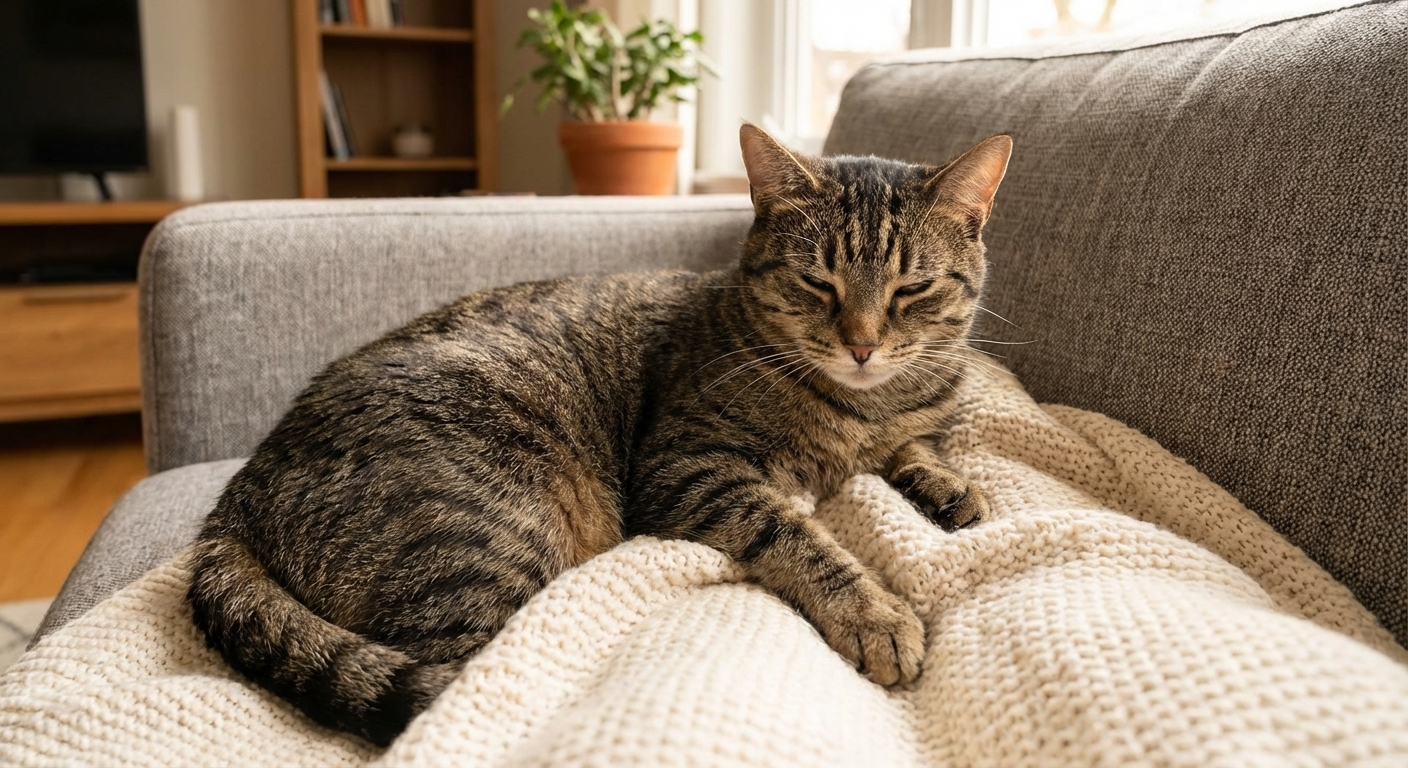
3) Relaxed posture and a loose tail
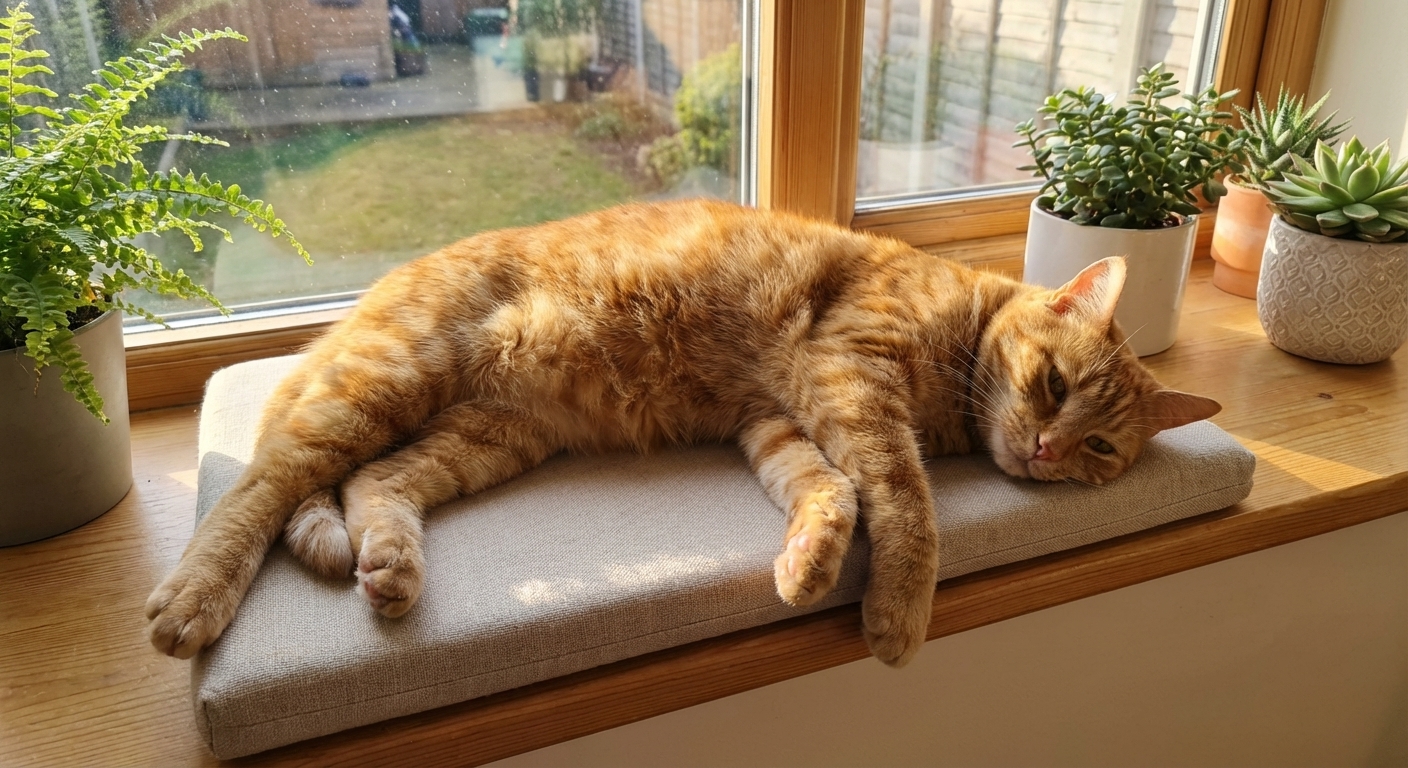
A happy cat often looks physically at ease. Think: loose shoulders, normal breathing, and a tail that rests calmly rather than whipping.
- Signs include: resting on their side, paws tucked, or lounging sprawled out
- Signs include: tail held upright with a gentle hook at the tip during greetings
- Also common: showing their belly as a sign of trust (not always an invitation to pet)
4) Healthy appetite and typical drinking
A content cat typically eats with steady interest and maintains a normal routine around food and water. Appetite and thirst are also two of the earliest places we see stress or illness show up, so they are worth paying attention to.
- Look for: consistent appetite and a predictable feeding routine
- Watch: sudden changes in appetite or thirst. Increased drinking can be a sign of medical issues like kidney disease or diabetes, especially if it persists.
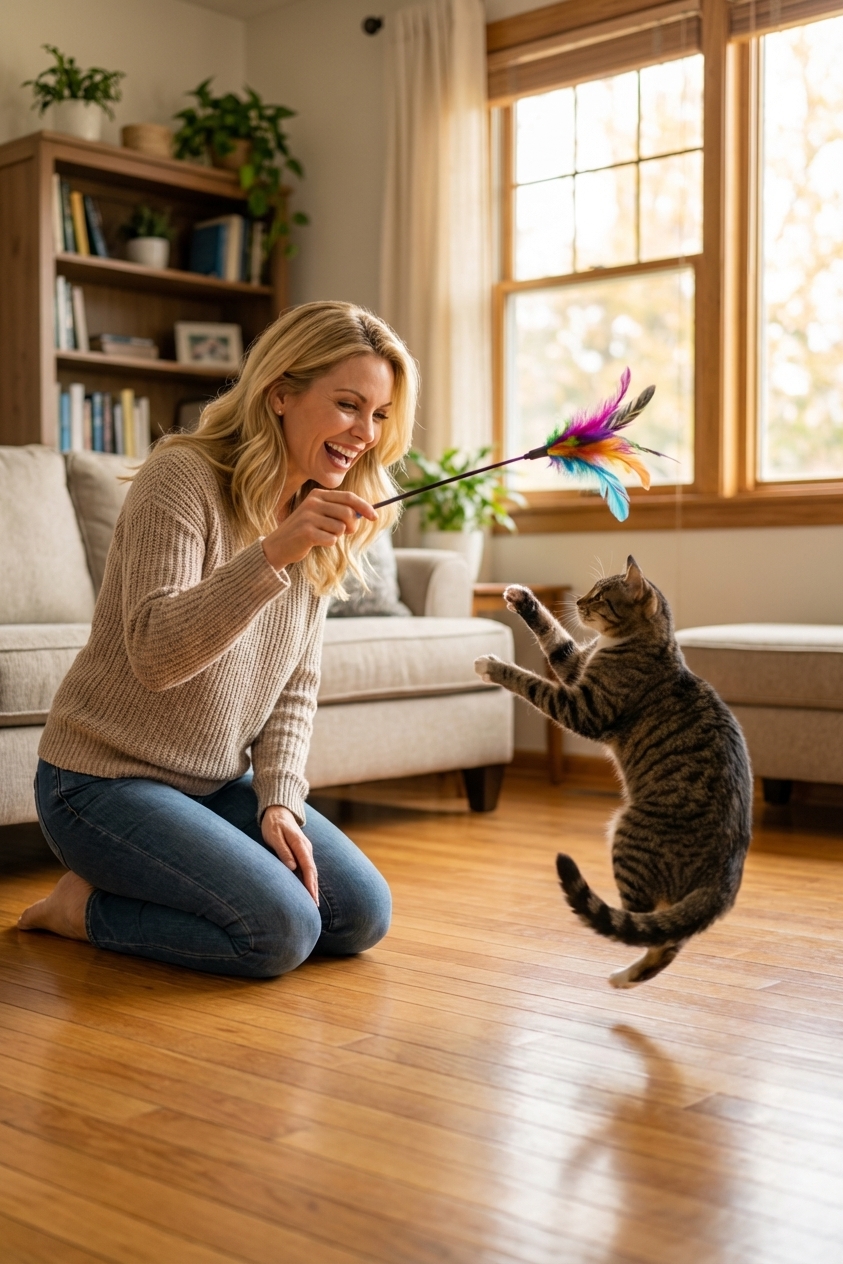
5) Play bursts and curiosity
Most cats play in short bursts. A happy indoor cat usually has at least some daily “spark,” even if it is only a few minutes of stalking a toy, chasing a treat, or sprinting down the hallway.
- Look for: curiosity, pouncing, chasing, or “hunting” toys
- Bonus sign: they recover quickly and settle back into rest afterward
6) Social grooming and head bumps
Cats show affection with scent and gentle contact. If your cat rubs their cheeks on you, head bumps you, or grooms you (or a feline housemate), those are strong social signals.
- Look for: head bunting, cheek rubbing, and calm social grooming
- Multi-cat clue: bonded cats may sleep near each other and groom without tension
7) Confident use of the home
A happy indoor cat uses their space like it belongs to them. That means they explore, perch, scratch appropriate surfaces, and move between rooms without acting on edge.
- Look for: using cat trees, window perches, and scratching posts regularly
- Look for: resting in multiple safe spots, not only hiding places
A quick note about purring
Purring often does mean a cat is content, especially when you see other relaxed body language (soft eyes, loose posture, comfortable breathing). But purring can also show up when a cat is anxious, overstimulated, or in pain. If the purr is paired with hiding, tension, reduced appetite, or behavior changes, I treat it as a clue to look closer, not a guarantee of happiness.
Subtle stress signals people miss
Stress in cats is often quiet. Some cats become clingy, some become withdrawn, and many simply look “fine” while their behavior shifts in small ways. Here are common clues that a cat may be uncomfortable, bored, or anxious.
Body language changes
- Low, tucked posture or crouching with tense muscles
- Tail flicking or thumping when not playing
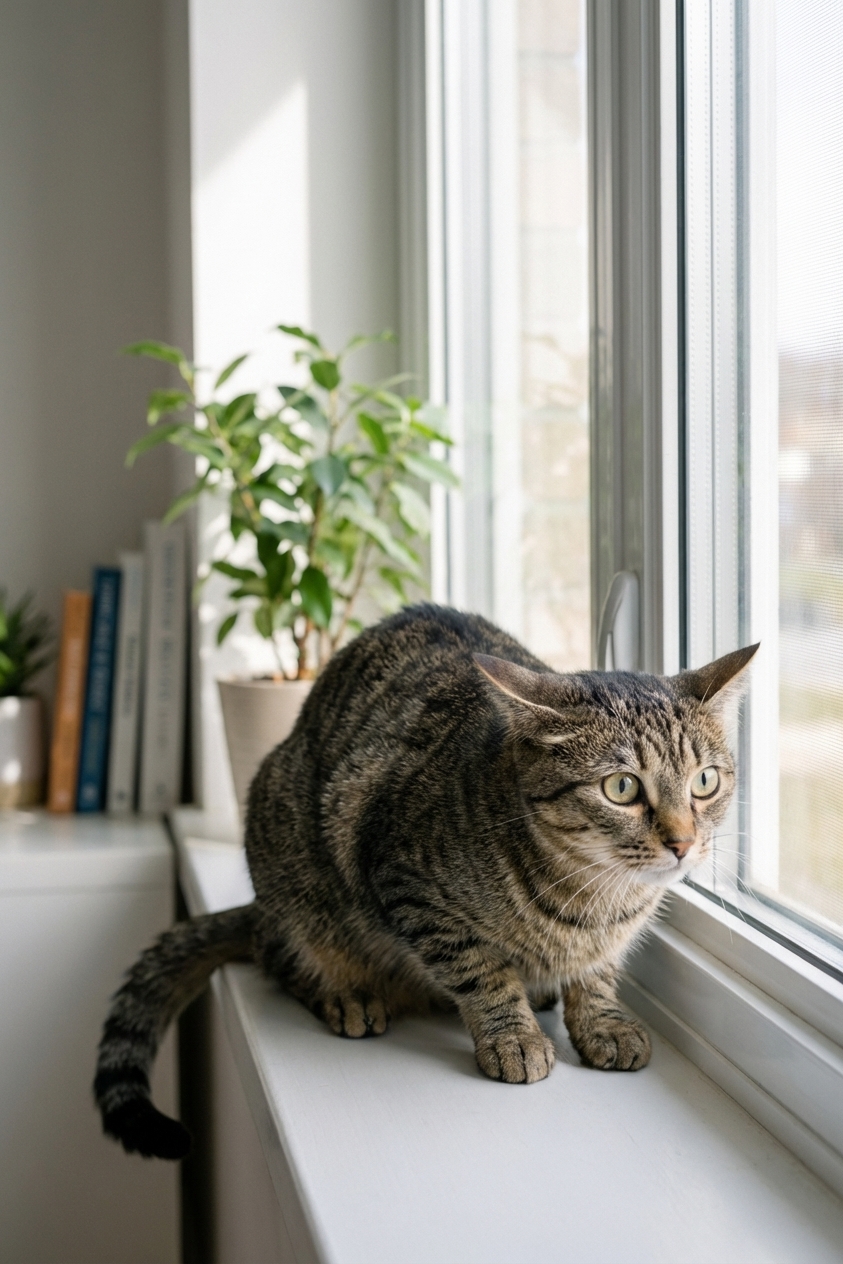
- Wide pupils and a fixed stare, especially in a calm room
- Ears turned sideways or back more often than usual
Behavior and routine changes
- Hiding more or choosing hard-to-reach spots
- Less play and less curiosity, especially in a normally playful cat
- Overgrooming (thinning hair, belly or legs licked frequently)
- New irritability or swatting when they previously tolerated touch
- Nighttime vocalizing that is new or escalating
Litter box changes are not “just behavioral”
If a cat suddenly urinates outside the box, strains, goes more frequently, or cries in the box, treat it as a medical concern first. Stress can absolutely contribute, but pain and urinary disease must be ruled out promptly. Urinary issues can become urgent quickly, especially in male cats. Call your veterinarian promptly.
Simple ways to support happiness
Most indoor cats do best with a predictable routine, a few good places to climb, and daily interactive play. You do not need an elaborate setup. Small upgrades, done consistently, are what I see make the biggest difference.
- Vertical space: a sturdy cat tree, wall shelves, or a window perch for safe “up high” time
- Scratch options: at least one vertical and one horizontal scratcher in favorite rooms
- Hunt-style play: 5 to 10 minutes with a wand toy, then a small meal or treat to complete the sequence
- Food enrichment: puzzle feeders, treat balls, or a simple “scatter feed” in a safe area
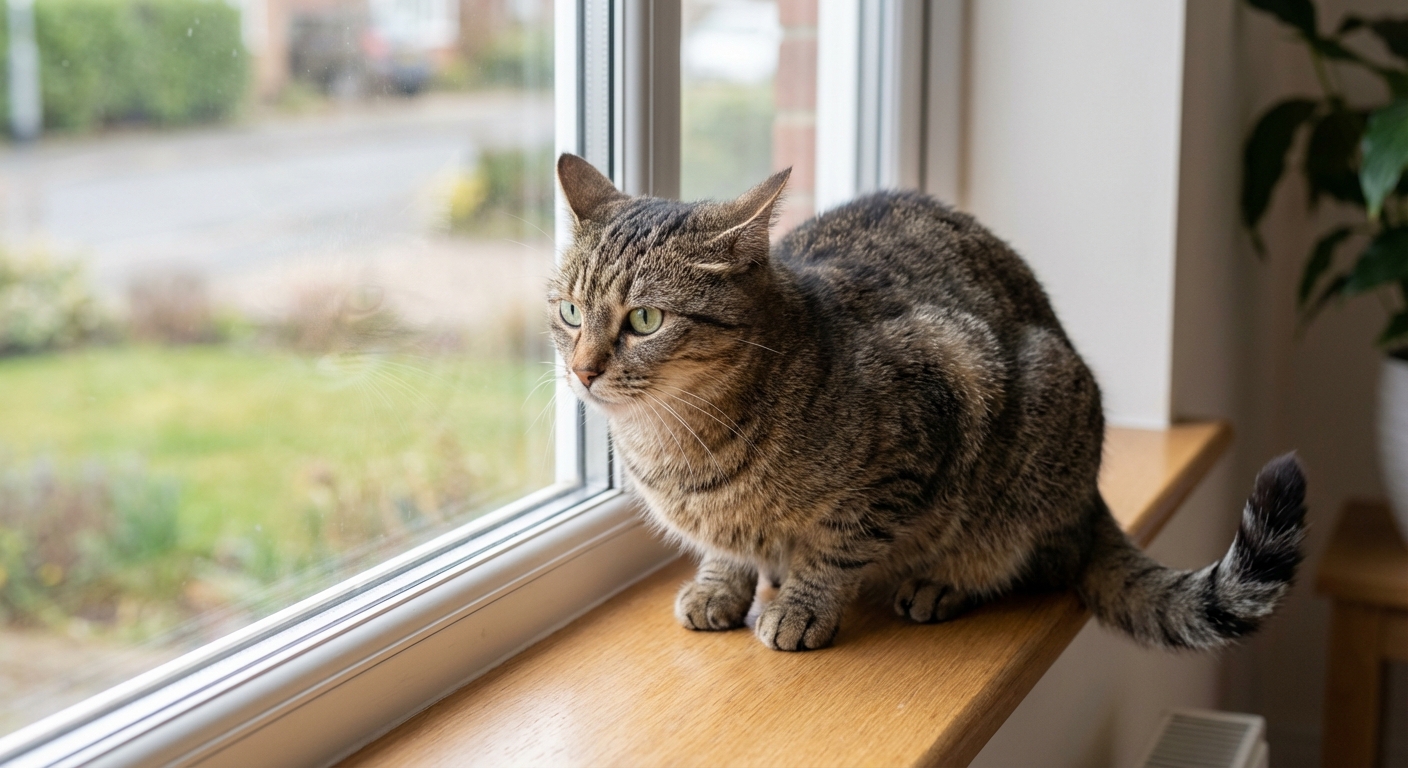
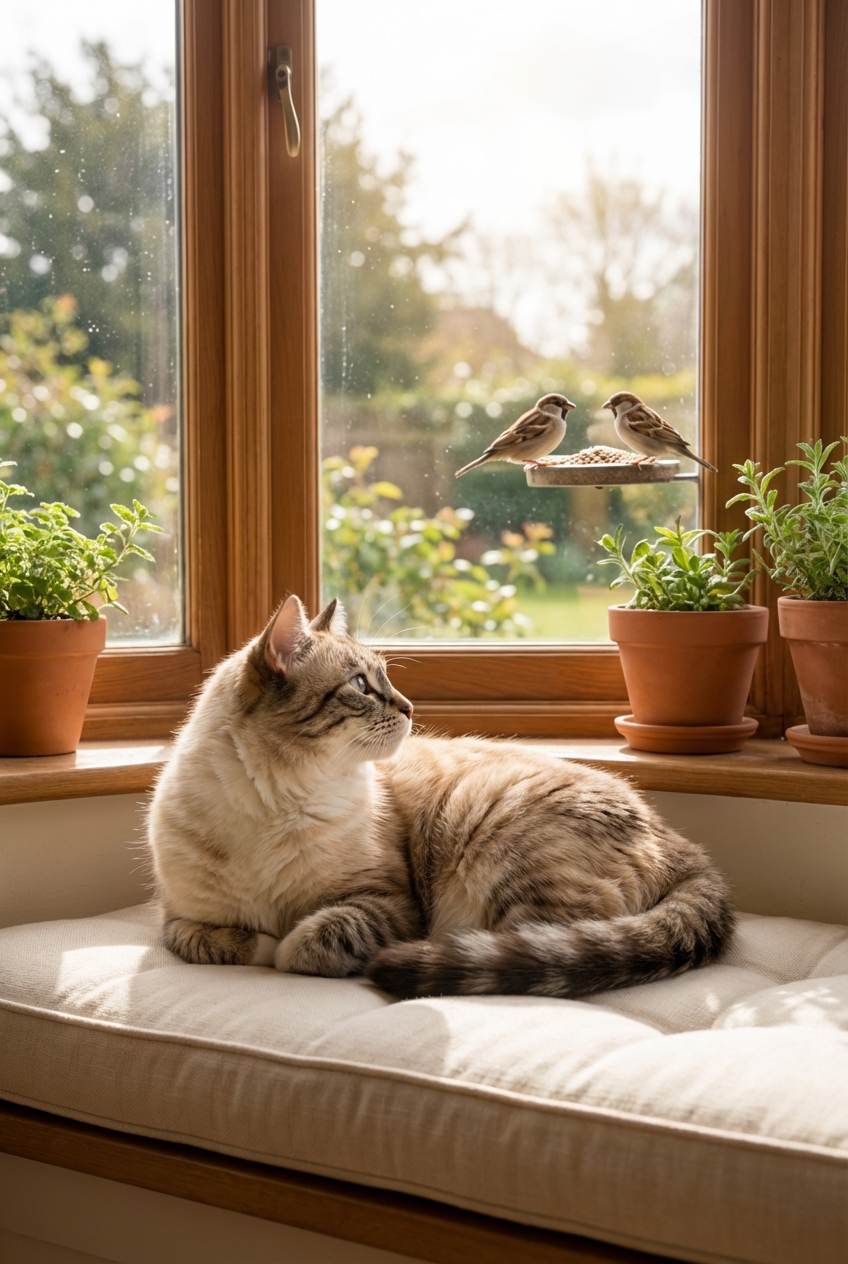
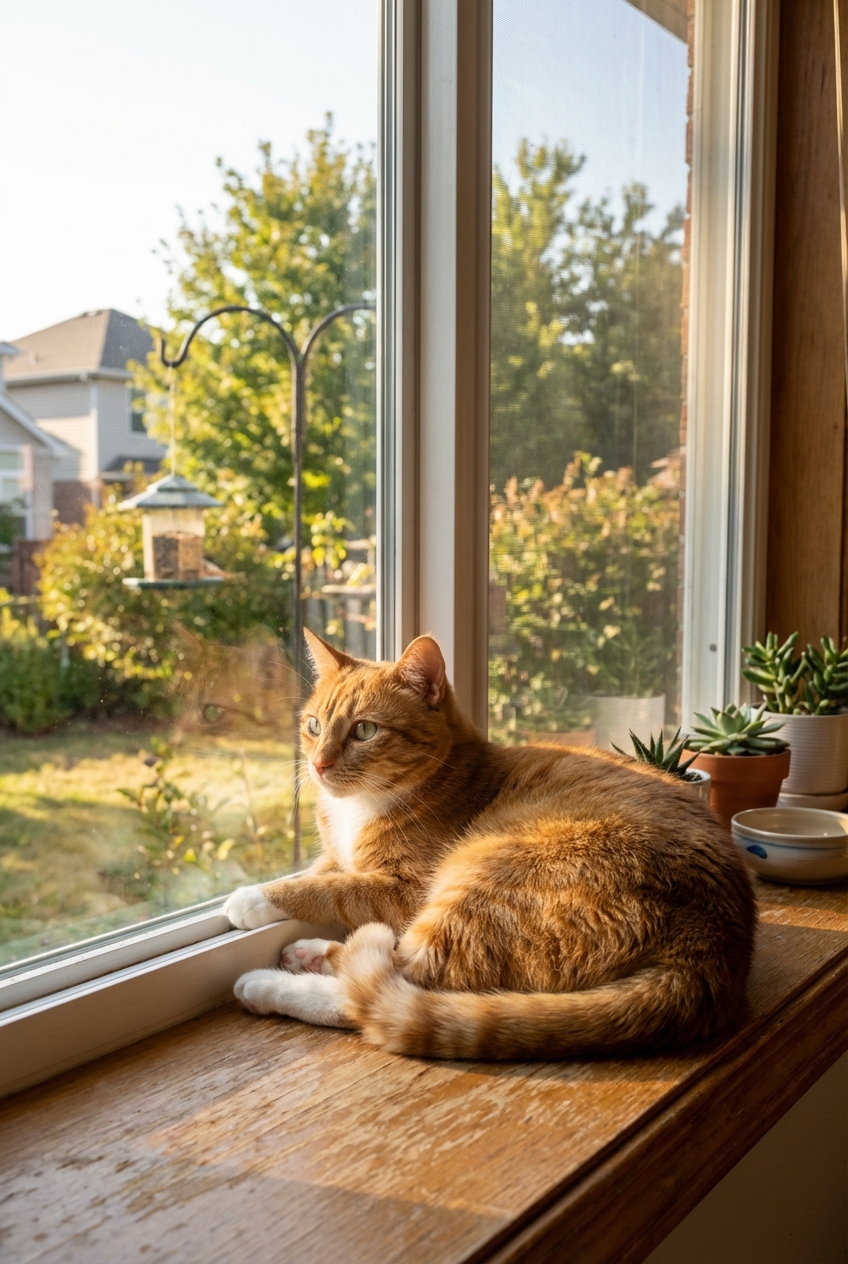
- Calm observation: a window view, bird feeder outside (if safe), or a cozy perch for people-watching
Multi-cat homes: reduce competition
A lot of indoor stress is about resources. If you have more than one cat, spread things out so no one has to “run a gauntlet” to eat, drink, rest, or use the litter box.
- Litter boxes: aim for 1 per cat, plus 1 extra, in separate locations
- Food and water: multiple stations, ideally in different rooms
- Resting spots: more beds and perches than cats, with at least one quiet option
Daily wellness checklist
Use this quick check once a day. You are not looking for perfection, you are looking for “normal for my cat.” If you notice changes for more than 24 to 48 hours, it is worth a call to your veterinary team.
- Appetite: ate normally (yes or no)
- Water intake: seems typical (yes or no)
- Litter box: normal pee and poop, no straining, no accidents (yes or no)
- Coat: clean, no new mats or thinning spots (yes or no)
- Body language: relaxed most of the day (yes or no)
- Social behavior: at least one positive interaction (slow blink, rub, hanging out nearby) (yes or no)
- Activity: at least a few minutes of play, exploring, or climbing (yes or no)
- Comfort: resting in usual safe spots, not hiding unusually (yes or no)
Tip: If you have multiple cats, do this checklist per cat. Small changes are much easier to notice when you separate what is normal for each individual.
When to call your vet
Happiness and health are tightly connected. Please contact your veterinarian if you notice any of the following:
- Not eating for 24 hours (or a noticeable drop in appetite)
- Go sooner for kittens, seniors, cats with diabetes, or any cat who seems unwell. Cats can get sick quickly, and prolonged poor appetite can increase the risk of hepatic lipidosis.
- Straining to urinate, frequent small urinations, or crying in the litter box
- Hiding and not coming out for normal routines
- Sudden aggression, confusion, or disorientation
- Vomiting repeatedly, diarrhea lasting more than a day, or visible blood
- Rapid weight loss or gain
A truly happy indoor cat is not “perfectly behaved.” They are simply comfortable enough to be themselves: curious, restful, playful, and connected to you in small, meaningful ways.