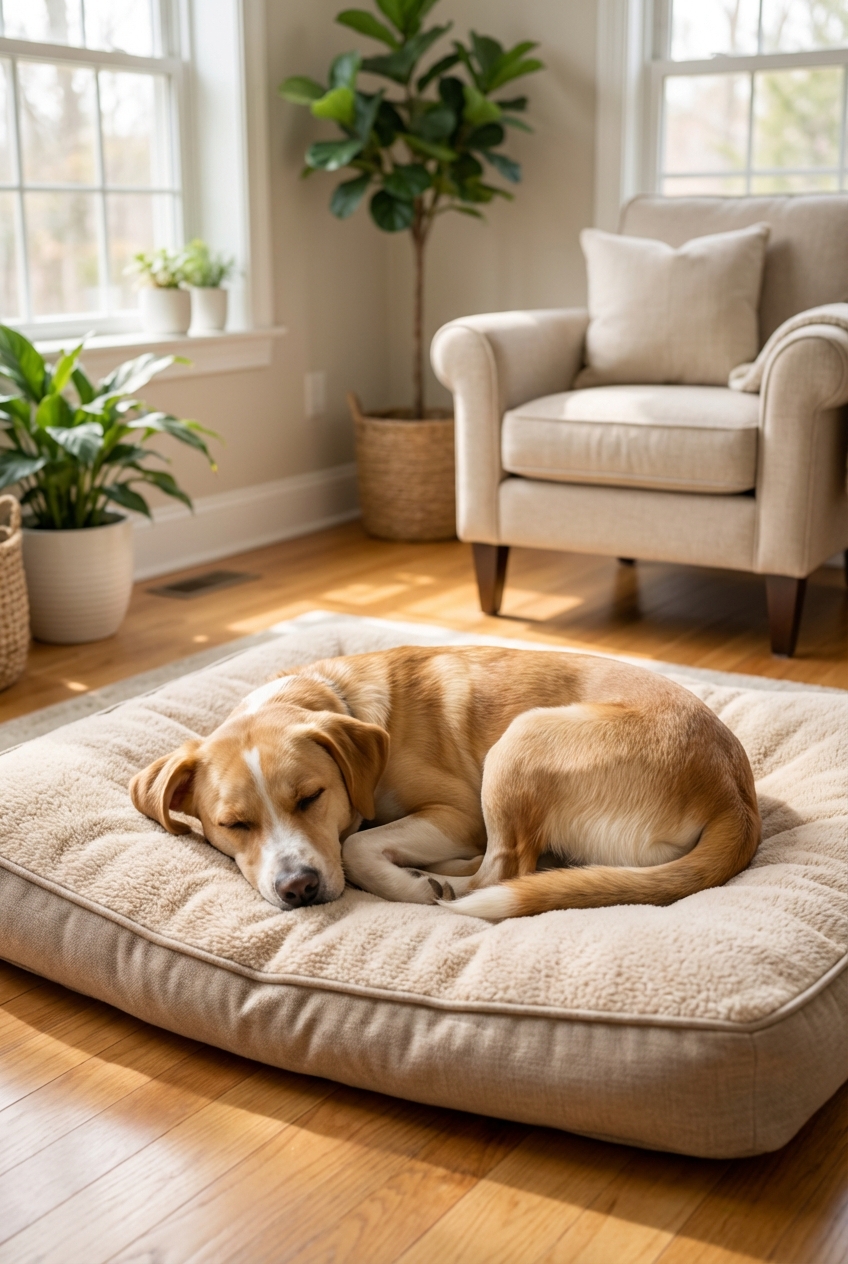
Know what to expect during your dog’s first heat: typical age and timing, the 4 stages, bleeding and behavior changes, how to prevent pregnancy, and red fl...
Article
•
Designer Mixes
Signs a Female Dog Is in Heat

Shari Shidate
Designer Mixes contributor
If you have a young female dog or a newly adopted adult, the first heat cycle can feel confusing and even a little stressful. The good news is that the signs are usually predictable once you know what to look for. As a veterinary assistant here in Frisco, Texas, I like to remind families that a dog in heat is not “being bad.” She is going through a normal reproductive cycle, and with a plan, you can keep her safe, comfortable, and out of trouble.
What “in heat” means
Most people use “in heat” to describe the whole time a female is showing heat signs, which usually includes proestrus and estrus. Clinically, estrus is the fertile, breeding-receptive stage, but from an at-home safety standpoint, it is best to treat the entire cycle as a pregnancy-risk period.
Most dogs have their first heat between 6 and 18 months (smaller dogs often earlier, larger dogs often later). Many adult dogs cycle about every 6 months, but it can vary widely. Some dogs cycle more often, and some breeds (like Basenjis) may cycle closer to once yearly. Cycles can be especially irregular in the first 1 to 2 years.
Important: Dogs can become pregnant even if bleeding looks light, stops suddenly, or you never notice it at all. Behavior and swelling often matter more than the amount of discharge.
Timeline: heat cycle stages
Stage lengths vary a lot by dog. The ranges below are typical, not a rule.
Proestrus (often ~3 to 17 days)
This is the “warming up” stage. Most owners notice physical changes here first, especially swelling and bleeding. Most females are not receptive to mating yet, even though male dogs may be very interested.
Estrus (often ~3 to 21 days)
This is the fertile window. Many dogs become receptive to males during this stage. Discharge often becomes lighter in color (more pink, watery, or straw-colored), but that is not a guarantee of timing.
Diestrus (about 2 months)
Hormones shift back toward baseline whether or not your dog is pregnant. Some dogs show signs of false pregnancy during this phase.
Anestrus (several months)
This is the resting phase between cycles.
Signs your female dog is in heat
1) Vulvar swelling
One of the earliest and most reliable signs is a swollen vulva. It may look puffy, larger than normal, and more prominent. For fluffy-coated dogs, you may notice it more when she sits or when you bathe her.
2) Vaginal bleeding or discharge
Discharge often starts as bright red blood in proestrus and may become lighter pink or straw-colored as she approaches estrus. Some dogs are very clean and lick frequently, so you might see only faint spotting on bedding.
- What you might notice at home: tiny drops on the floor, spots on blankets, or a pinkish tint on the longer hair under the tail (sometimes called “tail feathers”).
- Normal range: from barely noticeable to moderate spotting.
3) Increased licking and grooming
Frequent licking of the vulva is common. It is partly hygiene and partly hormone-driven behavior. If licking becomes obsessive or the skin looks irritated, that is worth addressing with your vet.
4) Changes in urination
Many dogs urinate more often during heat. This is not always a urinary tract infection. In heat, females may “mark” small amounts to spread scent cues that attract males.
5) Behavior changes
Heat can bring noticeable personality shifts. Some dogs become extra clingy and affectionate, others seem restless or moody.
- More attention-seeking, following you room to room
- Restlessness, pacing, trouble settling at night
- Decreased appetite in some dogs, increased appetite in others
- More vocalizing or irritability
6) Tail flagging
During estrus, many females will move their tail to the side when their rear end is approached. This is called flagging and it often lines up with increased receptivity to breeding.
7) Attraction of male dogs
You may notice male dogs showing up in your yard, whining outside, or suddenly being very interested on walks. Some males will attempt to mount even before she is fully fertile, which is why supervision is so important from day one.
How long does heat last?
Many heat cycles last 2 to 4 weeks from first signs to resolution, but there is a wide normal range.
Biologically, fertility is usually centered around estrus and ovulation, often around the second week after signs begin, but timing can vary a lot. For safety, most clinics advise a simple rule: treat her as potentially fertile for at least 3 weeks from the first day you notice bleeding or other heat signs, and sometimes longer. If you are trying to prevent pregnancy, it is better to be overly cautious than to guess wrong.
At-home solutions
Use two layers of safety
A determined male dog can jump fences, chew through barriers, and squeeze through doors. During heat, aim for at least two protections at all times.
- Indoors: keep doors secured, use baby gates plus closed doors if needed
- Outdoors: leash walks only, even in a fenced yard
- Supervision: do not leave her outside alone during heat
Heat panties (right expectations)
Heat panties help manage spotting and protect furniture, but they do not prevent pregnancy. Think of them as hygiene, not contraception. Change liners often and keep the area clean and dry.
Keep exercise calm and controlled
Many dogs feel a little “off” during heat. Choose calm leash walks, indoor enrichment, and gentle play. Avoid dog parks, daycare, group training classes, and any off-leash spaces.
- Food puzzles and snuffle mats
- Short training sessions (sit, touch, leash manners)
- Frozen lick mats for soothing enrichment
Multi-dog home tips (especially with male dogs)
If you have an intact male at home, make a separation plan before the cycle starts. Do not count on “good dogs” to make good decisions during heat.
- Separate with two barriers (for example: a closed door plus a baby gate)
- Rotate supervised time out, and do potty breaks separately
- Watch door-dashing. Use leashes when moving dogs through entryways
- Do not allow mounting “just to get it out of his system.” It can escalate quickly
Daycare, boarding, and grooming
Many facilities will not accept dogs in heat, and those that do may require special handling. If you have an appointment scheduled, call ahead and let them know before you arrive.
Reduce household stress
Provide a quiet resting area and keep routine consistent. If she is restless at night, a later potty break and a calming bedtime routine can help.
Clean-up tips
- Wash bedding frequently in fragrance-free detergent
- Use an enzymatic cleaner for any spots
- Trim long hair around the vulva area if your groomer or vet team recommends it
Silent and split heats
Not every heat cycle looks “textbook.” Two patterns that can confuse owners are:
- Silent heat: your dog cycles but has very subtle outward signs (little to no bleeding). You may mostly notice swollen vulva, behavior changes, or male dogs suddenly paying attention.
- Split heat: signs start, stop, then restart weeks later. This is more common in young dogs as their hormones mature.
If you suspect either pattern, your veterinarian can help confirm what is going on and guide you on safety and timing.
When it might not be heat
Bleeding, licking, and frequent urination can also point to other problems. If you are not sure, it is worth calling your vet, especially for newly adopted dogs with an unknown history.
- UTI: frequent urination plus straining, accidents, or pain
- Vaginitis: discharge and licking, sometimes in younger dogs
- Trauma: sudden bleeding after an injury
- Spay-related questions: a dog who was supposedly spayed should not have true heat cycles. In rare cases, ovarian tissue can remain (often called ovarian remnant syndrome) and cause heat-like signs
When to call your veterinarian
Most heat cycles are normal, but there are situations where you should get guidance right away. Trust your instincts if something seems off.
- Foul-smelling discharge, pus-like discharge, or discharge that looks very abnormal
- Lethargy, fever, vomiting, loss of appetite, or acting very unwell
- Excessive drinking and urination combined with illness signs
- Very heavy bleeding or bleeding that seems extreme for your dog
- Heat signs that do not resolve or cycles that seem unusually frequent
One of the most important emergencies to know about in unspayed females is pyometra, a uterine infection that most commonly occurs in the weeks after a heat (during diestrus). It can be life-threatening and needs urgent care.
Spaying
Spaying prevents pregnancy and eliminates heat cycles. It also reduces the risk of serious reproductive diseases, including pyometra. The best timing depends on your dog’s breed, size, and health history, so it is a great conversation to have with your veterinarian.
If your dog is currently in heat: many clinics prefer to wait until the cycle is over to reduce surgical bleeding risk, but your vet can advise based on your dog’s situation.
Quick checklist
- Swollen vulva
- Spotting or discharge, even if light
- More licking than usual
- Frequent urination or marking
- Restlessness or clinginess
- Tail flagging
- Male dogs unusually interested
If you notice two or more of these signs together, assume she is in heat and start pregnancy-prevention steps immediately.
Bottom line
A heat cycle is normal, but it demands a little extra management. If you focus on safety (leash-only, no unsupervised yard time, double barriers at home), comfort (clean bedding, gentle activity, enrichment), and timing (treat her as potentially fertile for at least 3 weeks from the first day signs begin), you will get through it smoothly. And if anything feels unusual, your veterinarian can help you rule out problems and keep your girl healthy.