Sheepadoodles and Goldendoodles are both lovable, people-focused “doodle” mixes, but they can feel very different to live with day to day. In my experience as a veterinary assistant in Frisco, Texas, most families are surprised by two things: how much grooming these coats truly require and how much the “non-shedding” reputation depends on genetics, coat type, and maintenance.
Below is a practical, experience-informed and research-backed comparison focusing on the real-life factors that matter: shedding, grooming workload, size, energy, separation anxiety tendencies, and how each may fit with kids or first-time owners.
Quick snapshot
- Grooming workload: Both are high-maintenance coats. Sheepadoodles often mat easily due to coat density.
- Shedding reality: Neither is guaranteed hypoallergenic or non-shedding. Lower-shedding is possible, but never promised.
- Energy needs: Both need daily exercise and mental work. Goldendoodles often have “go-go-go” social energy; Sheepadoodles can be energetic but sometimes more steady once mature.
- Size range: Sheepadoodles are commonly medium to large; Goldendoodles range from mini to standard.
- Separation anxiety risk: Both can struggle if left alone too much. Goldendoodles, in particular, can be very people-dependent.
- Family fit: Both can be wonderful with kids when well-socialized. The best choice often comes down to coat-care tolerance and your daily routine.
Shedding and allergies
It is completely understandable to want a low-shedding dog, especially if allergies are part of your household. But with mixes, coat outcomes are variable. A Sheepadoodle (Old English Sheepdog × Poodle) and a Goldendoodle (Golden Retriever × Poodle) can each inherit a wide range of coat textures and shedding levels, even within the same litter.
What to know
- All dogs produce allergens. Reactions are usually triggered by proteins in dander, saliva, and urine, not just hair on the couch.
- Coat type matters more than the label. Curlier Poodle-like coats often shed less, but they can trap loose hair in the coat, which increases matting risk.
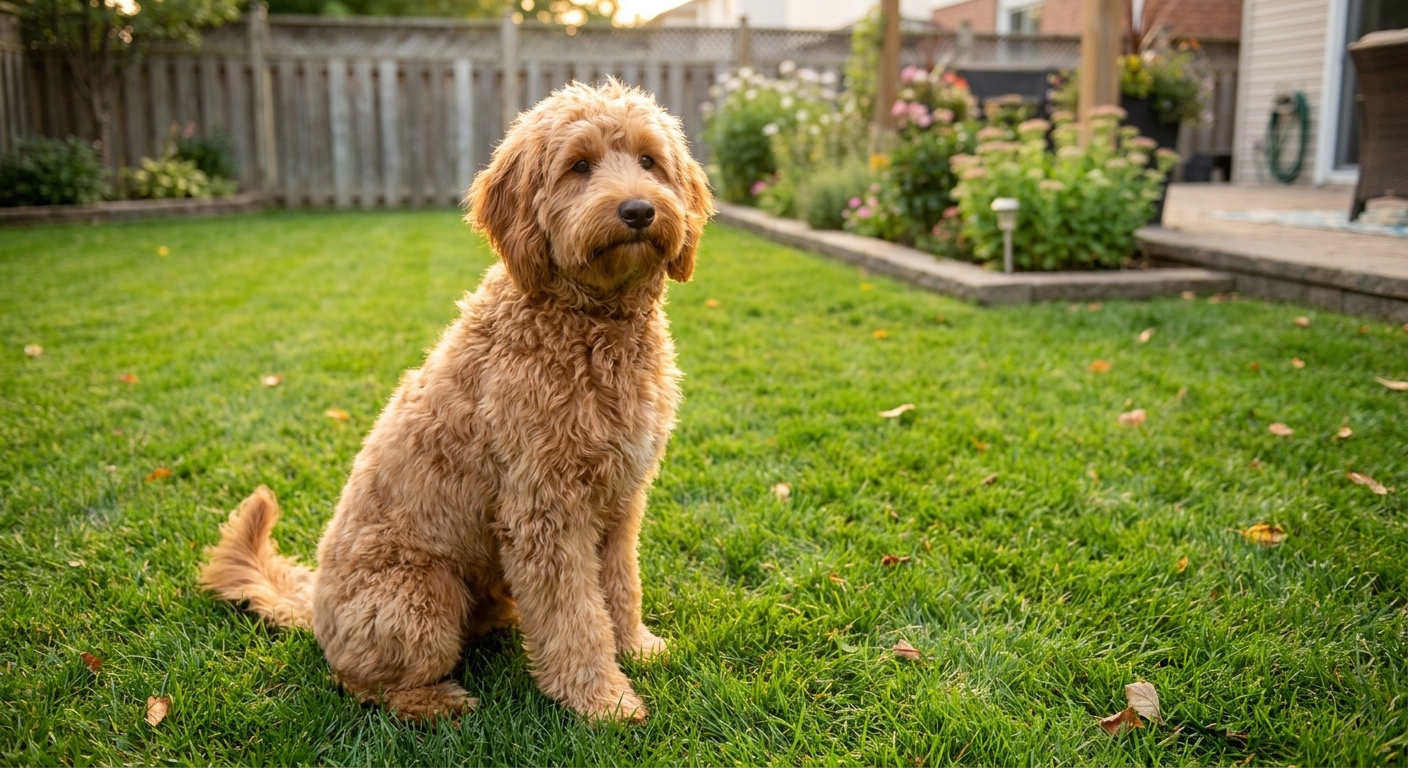
- Goldendoodle coats can surprise you. Because the Golden Retriever is a heavier shedder, some Goldendoodles shed more than families expect, especially if the coat is wavy or straighter rather than curly.
- Sheepadoodles are not automatically low-shed. Some are low-shedding, but many have a dense, plush coat that holds onto hair and tangles.
Bottom line for allergy households
- Spend time with the specific dog you are considering (ideally multiple visits).
- Consider an adult dog with a known coat and history if allergies are significant.
- Talk with your allergist and your veterinarian about realistic expectations. There are no guarantees with mixes.

Grooming workload
This is where many households feel the biggest gap between “dream dog” and “real life.” Both mixes can be wonderful companions, but coat care is a real commitment.
Sheepadoodle grooming
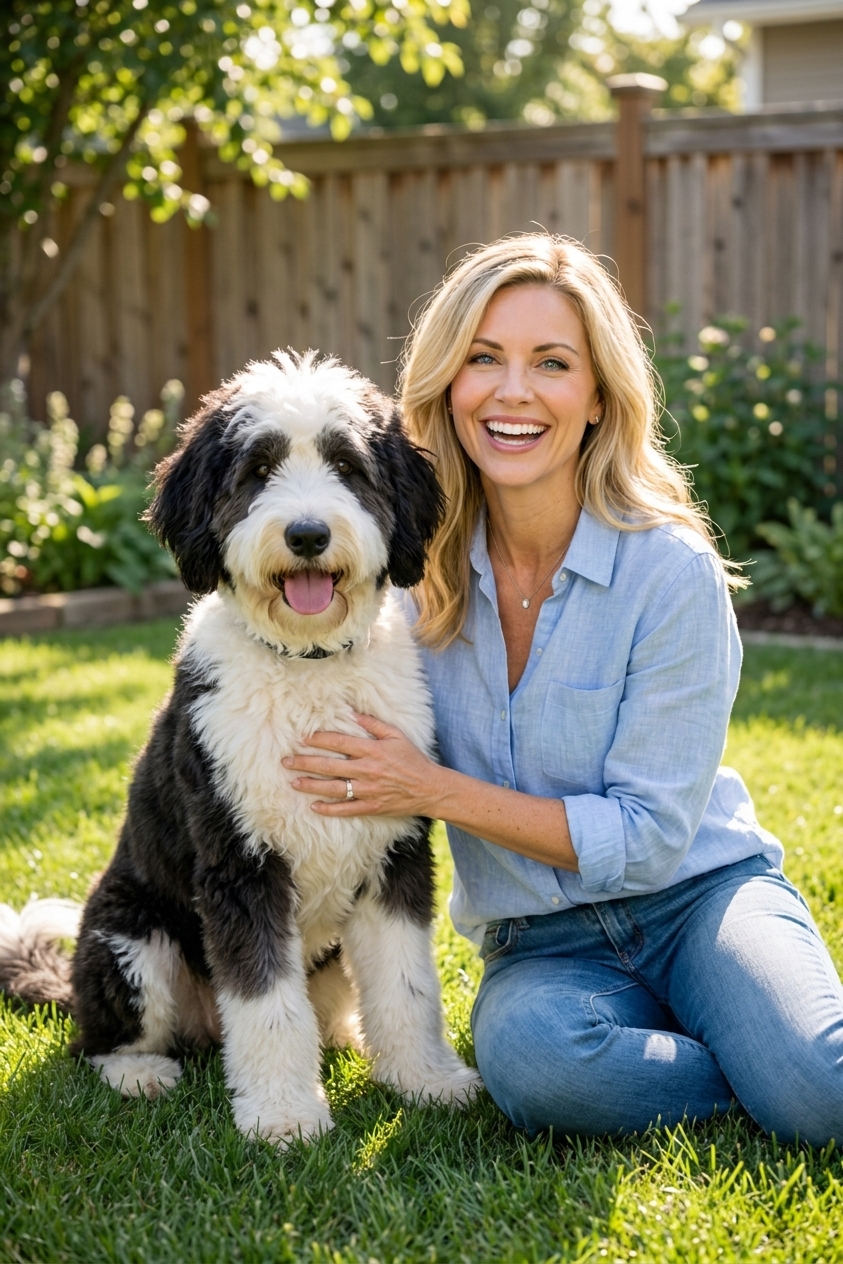
Sheepadoodles often have thick, high-volume coats. That density can be gorgeous, but it can also mat quickly, especially behind the ears, under the collar, in the armpits, and around the hindquarters.
- Brushing: Often needed most days, especially if you keep the coat longer.
- Professional grooming: Typically every 6 to 8 weeks for a full groom, sometimes more often if matting starts.
- Matting risk: High. Mats can tighten near the skin and become painful, trap moisture, and contribute to skin irritation.
Goldendoodle grooming
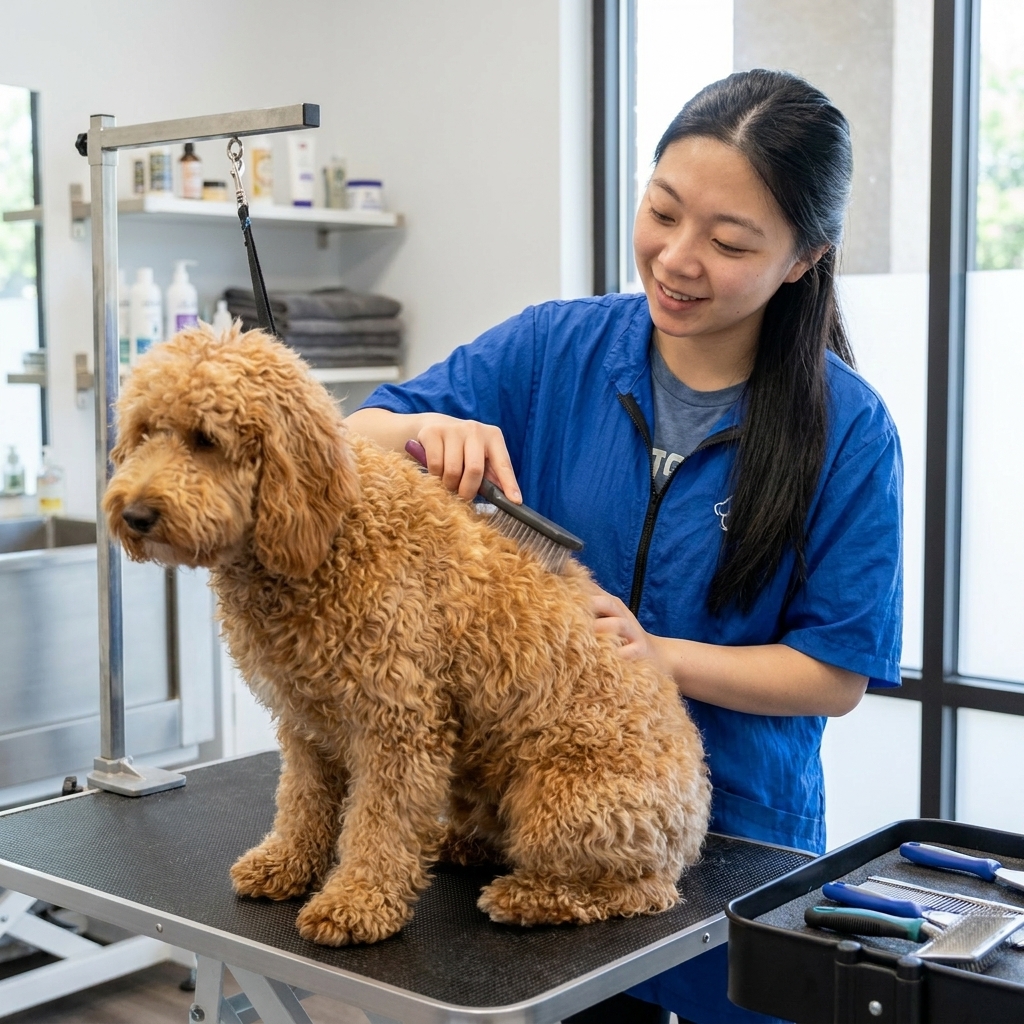
Goldendoodles also need regular brushing and professional grooming. Curly coats can mat, and wavy coats can tangle deceptively fast.
- Brushing: Commonly 3 to 5 times per week, and daily if long or very curly.
- Professional grooming: Commonly every 6 to 8 weeks.
- Ear care: Some doodles have more hair in and around the ear canal plus floppy ears, which can increase the risk of ear issues if moisture and debris get trapped. Regular vet-approved cleaning helps. Ask your vet before doing anything more aggressive than cleaning.
Practical grooming tips
- Plan your budget. Professional grooming is ongoing. Ask local groomers for current price ranges for your dog’s expected adult size.
- Ask for a puppy cut if you are busy. A shorter, functional trim can reduce matting and make brushing realistic.
- Learn line brushing. Many owners brush the top layer only. Line brushing gets down to the skin where mats begin.
- Start handling early. Gentle daily practice with paws, ears, face, and brushing helps prevent grooming fear later.
Size
Both mixes can vary widely because size depends on the Poodle parent’s size, the other breed parent, and the genetics of the individual puppy. If size is a major deciding factor for you, it helps to talk in categories rather than one wide range.
Goldendoodle sizes
- Mini: Often about 15 to 35 lb
- Medium: Often about 35 to 50 lb
- Standard: Often about 50 to 90 lb
Note: Those are common ranges, not guarantees. “Medium” is also used inconsistently across breeders.
Sheepadoodle sizes
- Most common: Medium to large dogs.
- Typical adult weight: Often 40 to 85+ lb, with “mini” pairings possible depending on the Poodle parent.
- Home impact: Bigger body plus thick coat often means more space, more grooming time, and more food costs.
Tip: Ask for the parents’ weights, past litter outcomes, and the breeder’s best estimate. Even then, remember it is an estimate, not a guarantee.
Energy and exercise
Both Sheepadoodles and Goldendoodles are intelligent, social dogs. That combination is wonderful when you have a routine, and challenging when you do not. Exercise needs also shift with age and health (puppies, seniors, and dogs with orthopedic issues are different).
Goldendoodle energy
Goldendoodles often lean into the Golden Retriever’s enthusiasm and the Poodle’s intelligence. Many are playful, social, and ready for the next activity.
- Daily exercise: Many do well with about 60 to 90 minutes total, split into walks, play, training, and enrichment.
- Mental work: Food puzzles, scent games, and short training sessions can make a huge difference.
Sheepadoodle energy
Sheepadoodles can be energetic, especially as puppies and adolescents. Some mature into a steadier rhythm, but they still need consistent daily outlets.
- Daily exercise: Many do well with about 45 to 75 minutes plus training or enrichment (more for young dogs, less for seniors).
- Brain needs: Herding ancestry can show up as body-blocking, “checking” family members, or trying to direct movement. Channel that into training and structured games.
When needs are not met
In clinic, we often see the fallout as nuisance barking, destructive chewing, pacing, jumping, leash pulling, and in some dogs, anxiety behaviors. The fix is rarely “more discipline.” It is usually more structure: predictable exercise, mental enrichment, and rest.

Separation anxiety
Both mixes can be deeply attached to their people. That is part of the charm and also the risk. Separation-related behaviors can include barking, whining, scratching doors, drooling, house soiling, and destructive chewing when left alone.
Goldendoodles
Goldendoodles are often described as “velcro” dogs. Many thrive in homes where someone is around for a good part of the day or where there is a plan for dog daycare, a trusted dog walker, or structured enrichment during alone time.
Sheepadoodles
Sheepadoodles can also become very attached. Some do fine with independence training, but others struggle, especially if the dog is rarely alone until suddenly it must be.
Prevention tips
- Practice short absences early. Start with seconds to minutes, then build slowly.
- Reward calm independence. Teach “place” on a mat and reinforce relaxing away from you.
- Use enrichment strategically. Stuffed Kongs, lick mats, and scatter feeding can turn alone time into something predictable and positive.
- Ask for help early. If panic behaviors show up, talk to your veterinarian. Early support can prevent a small problem from becoming a long-term struggle.
Kids and first-time owners
Both mixes can be wonderful family dogs, but success comes from matching the dog’s needs with your household’s lifestyle and your willingness to train and groom consistently.
With kids
- Goldendoodles: Often very friendly and socially motivated. Many do well with respectful children and consistent training.
- Sheepadoodles: Often affectionate and goofy, but herding tendencies can show up as nipping at heels or trying to control fast-moving kids. Early training and redirection are key.
No matter which you choose, supervise all interactions between dogs and young children, teach kids to avoid hugging tightly or grabbing fur, and give the dog a quiet “kid-free” resting spot.
For first-time owners
Either can work for a first-time owner, but I encourage you to be honest about two things: your grooming tolerance and your daily routine.
- If you want more predictable size categories: Goldendoodles tend to offer more established mini and standard lines.
- If you can commit to heavy coat care: A Sheepadoodle can be an amazing companion, but the coat is not forgiving if brushing is inconsistent.
- If you are gone long hours: Either mix may struggle. Consider an older dog with a known temperament, or build support into your week.
Health and screening
Because these are mixes, health outcomes vary by line. In practice, I see families do best when they plan for prevention, choose reputable sources, and get ahead of chronic issues early.
Concerns that can show up
- Orthopedic issues: Hip dysplasia and elbow dysplasia risk exist in many medium to large dogs.
- Skin and allergy issues: Environmental allergies and itchy skin are common reasons doodles come into the clinic.
- Ear infections: Floppy ears plus hair and moisture can create the perfect setup for recurrent ear problems in some dogs.
- GI sensitivity: Some individuals have sensitive stomachs or recurring soft stool, especially during diet changes.
What to ask for
- Health testing on parents appropriate for breed risks (your vet can help you interpret what is meaningful).
- Clear medical history for the parents and for any older puppies or adults.
- A return policy and support plan if the placement is not a good fit.
Training basics
These dogs are smart and social, which is a great combo for positive reinforcement training. It also means they can pick up bad habits quickly if the adolescent phase is unstructured.
- Keep sessions short. Five minutes of training a few times a day beats one long session.
- Plan for adolescence. Around 6 to 18 months, many doodles get bigger, bouncier, and more distractible.
- Herding nip management (Sheepadoodles): Redirect to a toy, reinforce calm behavior, and teach impulse control cues like “leave it” and “place.” Avoid rough play that encourages grabbing at clothing.
Which one should you choose?
Here is a simple way to decide based on the most common real-life pain points.
Choose a Sheepadoodle if
- You love the look and feel of a thick, fluffy coat and you are ready for frequent brushing.
- You want a medium-to-large companion and can manage a larger dog’s space and costs.
- You enjoy training and can handle potential herding-style behaviors with kids and visitors.
Choose a Goldendoodle if
- You want more options for smaller sizes.
- You want a very social, eager-to-please dog and you plan to meet daily exercise and enrichment needs.
- You are prepared for grooming, and you accept that some individuals shed more than expected.
If you remember only one thing: doodles are not low effort dogs. They are often high-touch companions with high coat care. When families plan for that up front, these mixes can be absolute joys.
Questions to ask
- What is the adult coat type of the parents, and what coats have you seen in past litters?
- Can you describe the puppy’s current coat texture and shedding so far?
- How are you socializing puppies to grooming tools, nail trims, and handling?
- What is the typical adult size range from this pairing, based on your past litters?
- What health testing have the parents had, and can I see documentation?
- Have dogs from your lines shown chronic ear issues, skin allergies, orthopedic issues, or anxiety?
- What support do you provide if the dog is not a good fit?
References
- American Kennel Club (AKC) for general breed traits and care basics
- VCA Animal Hospitals for client-friendly veterinary guidance on allergies, ear care, and behavior
- American Animal Hospital Association (AAHA) for preventive care standards