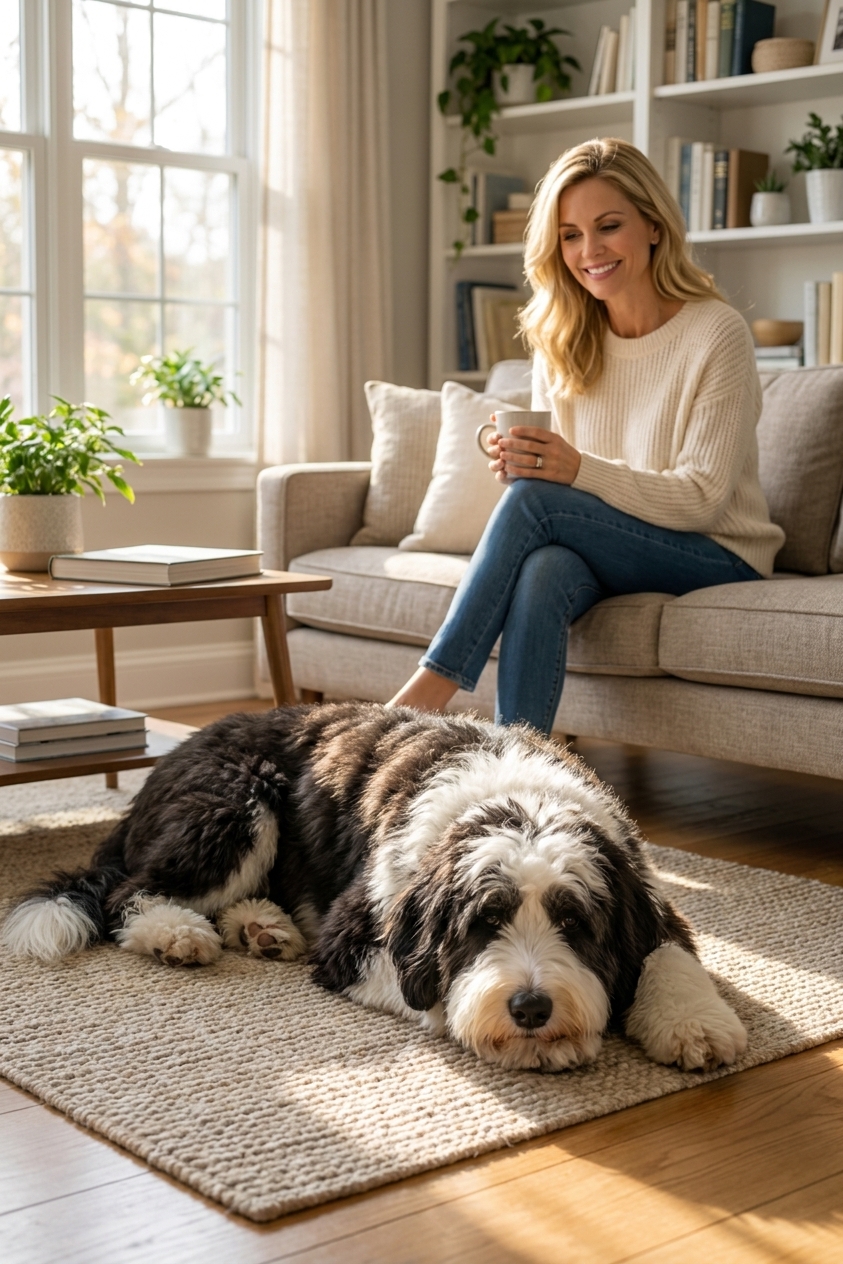
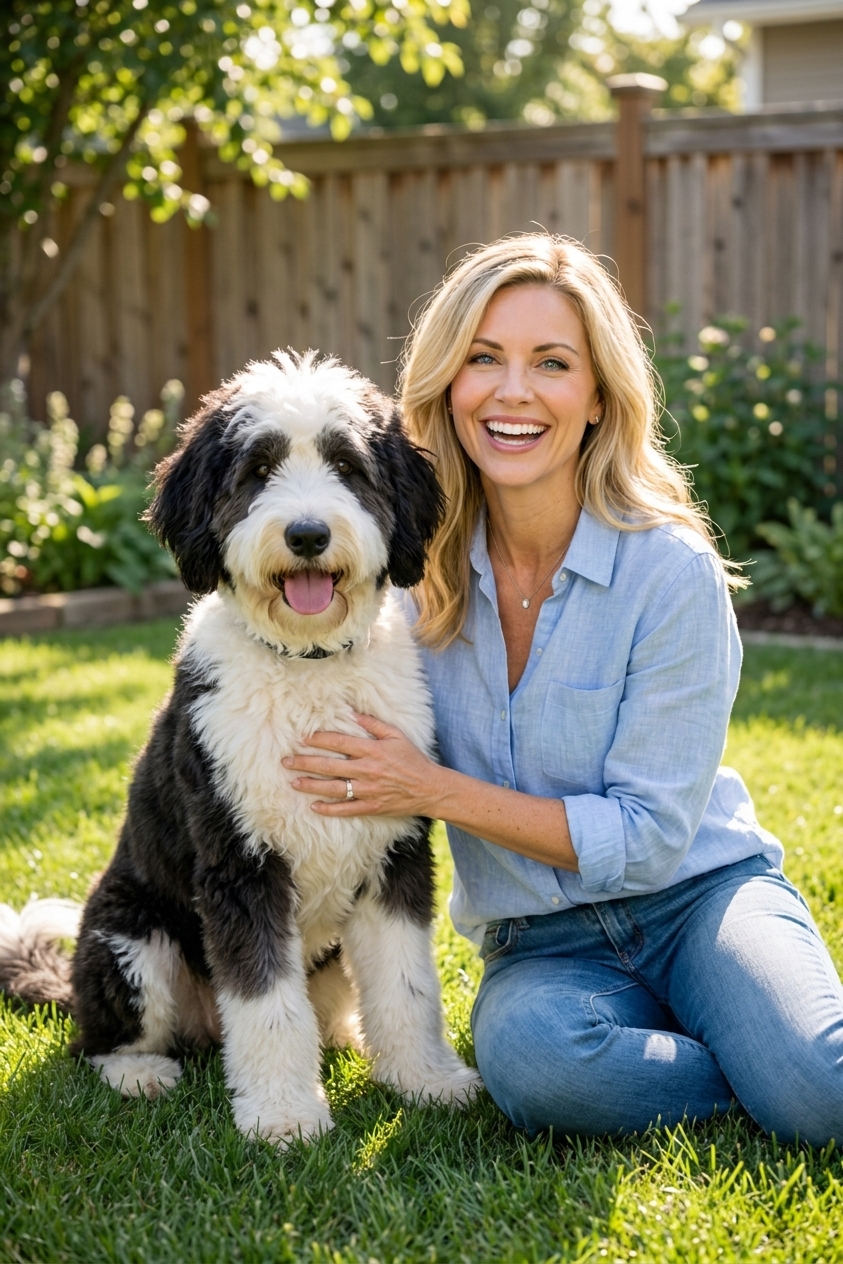
If you have been researching doodles, you have probably noticed that Sheepadoodles and Bernedoodles are two of the most advertised mixes out there. They are both often described as friendly, family-ready, low shedding, and “easy.” In real life, they can be wonderful dogs, but they are not the same, and neither is automatically low maintenance.
As a veterinary assistant in Frisco, Texas, I see the whole picture: the cute puppy stage, the adolescent chaos, the grooming reality, and the medical and behavioral issues that show up when expectations do not match the dog. Let’s walk through the differences that matter most: adult size variance, temperament, shedding and coat care, exercise needs, and training.
Quick snapshot
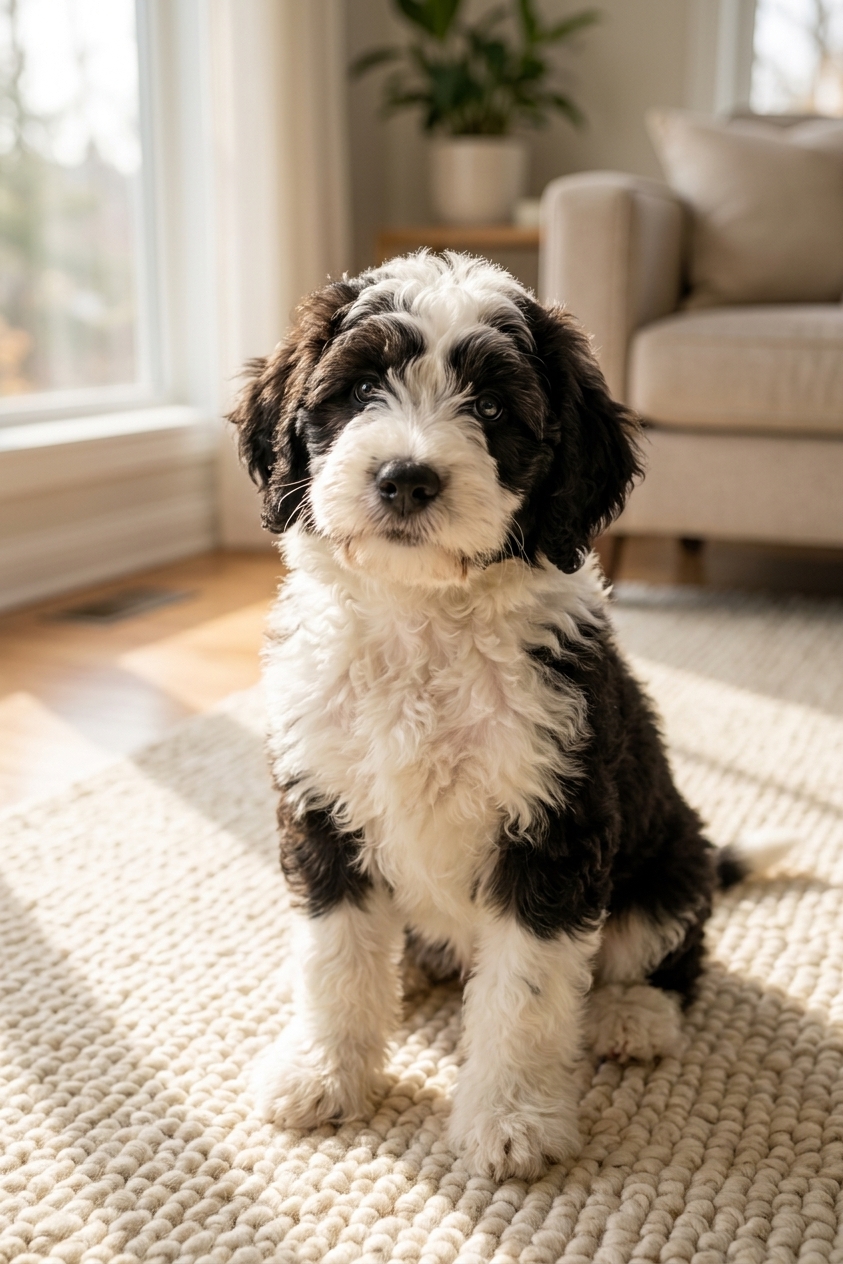
- Sheepadoodle (Old English Sheepdog x Poodle): Typically higher energy, can be more mouthy and bouncy as adolescents, and may show herding-style behaviors like nudging, circling, or chasing movement.
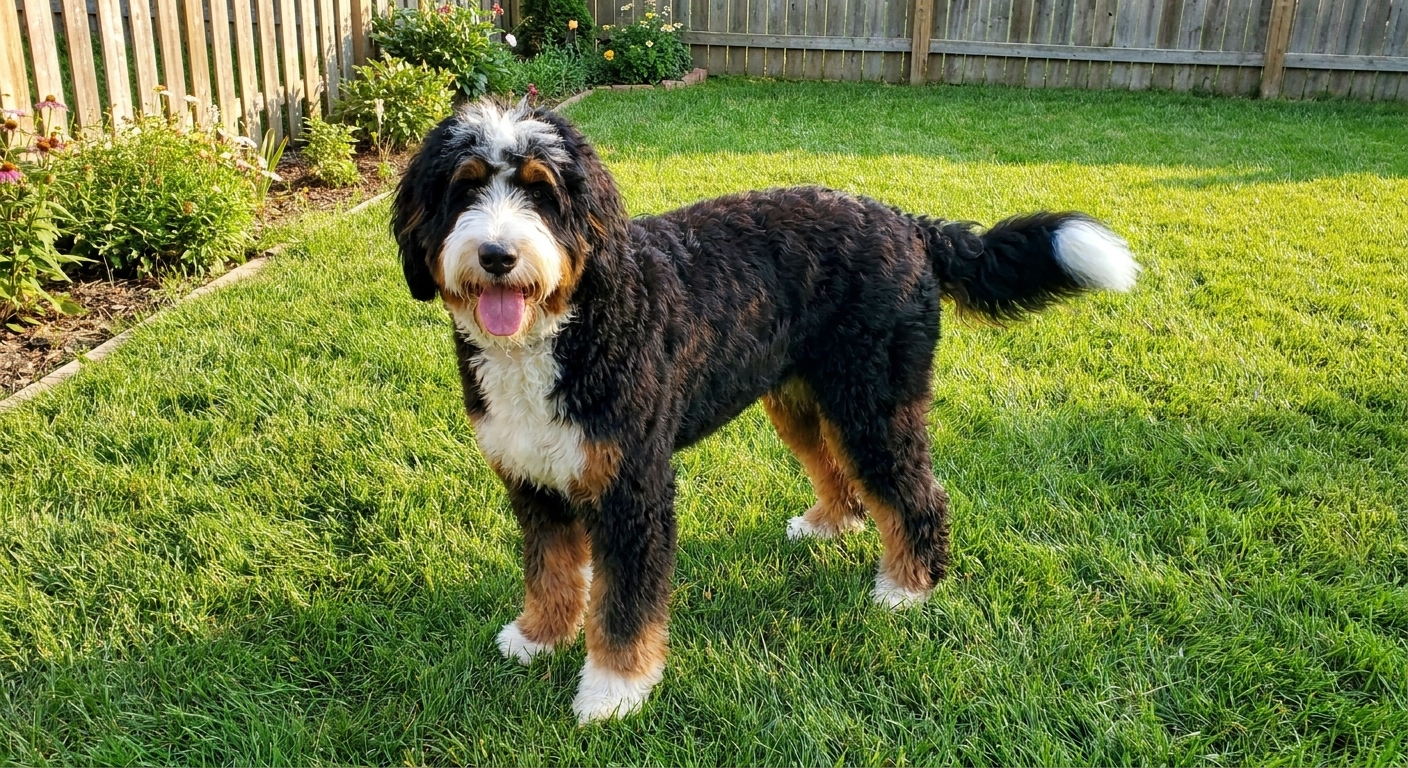
- Bernedoodle (Bernese Mountain Dog x Poodle): Frequently a bit more easygoing in vibe, but still a large, athletic dog with significant grooming needs and a long adolescent phase.
- Both: Coat type is unpredictable, shedding is not guaranteed to be low, and early training plus routine grooming are non-negotiable.
Adult size variance
Size is one of the biggest surprises for first-time doodle owners. With mixes, you are working with genetics, not a blueprint. Breeders can estimate adult size, but there is always a real range. Even within the same litter, siblings can mature very differently.
Sheepadoodle size range
Old English Sheepdogs are large, sturdy dogs. Standard Poodles are also tall and athletic. Many Sheepadoodles land in the large dog category, even when marketed as “medium.” The ranges below reflect what is commonly reported by breeders and owners, not a guarantee.
- Standard Sheepadoodle: often around 60 to 85+ lbs, with some outside that range
- Mini Sheepadoodle: heavily dependent on the Poodle parent size, frequently around 30 to 55 lbs, with exceptions
Bernedoodle size range
Bernese Mountain Dogs are giant-breed sized, while Poodles can range from toy to standard. That means Bernedoodles can vary widely, especially when “mini” lines are involved. The ranges below are typical reports, not a promise.
- Standard Bernedoodle: often around 60 to 90+ lbs, sometimes larger
- Mini Bernedoodle: frequently around 25 to 50 lbs, with a wide spread depending on parent size
My practical tip: Ask to see the actual weights and heights of the parents and, if possible, a few adult dogs produced by the same pairing. Labels like “mini” are not standardized.
Temperament
Temperament is where these two mixes can feel very different in daily life. You are blending two breeds with strong instincts, then adding individual personality on top of that.
Sheepadoodle temperament tendencies
Old English Sheepdogs were developed for droving and herding livestock. Many Sheepadoodles inherit that busy brain and “move the group” attitude.
- Typically people-focused and silly
- Can be more intense during adolescence, with jumping, mouthing, and grabby play
- Herding behaviors may show up: circling, nudging, chasing running children, or nipping at heels
- Needs a job: training games, scent work, structured walks, or agility basics
Bernedoodle temperament tendencies
Bernese Mountain Dogs are known for a sweet, gentle, “let’s hang out” style. Many Bernedoodles lean that direction, though the Poodle side can add alertness and spunk.
- Often affectionate, sometimes leaning cuddly
- May be sensitive to harsh corrections or chaotic environments
- Can be wary with strangers if under-socialized, especially during fear periods
- Still a big dog that can knock people over without meaning to
What this means for families: If you have young kids who love to run and squeal, a Sheepadoodle may require more proactive management and training to prevent herding and chasing. A Bernedoodle can be a lovely family dog too, but do not assume it will be naturally calm without exercise, structure, and socialization.
Shedding and coat types
This is one of the most important reality checks. With any Poodle mix, you can get a range of coats. Even within the same litter, puppies can mature into different textures and shedding levels.
Common coat types
- Wavy fleece: the “teddy bear” look, moderate mat risk
- Curly wool: may be lower shedding for some dogs, but higher mat risk and requires consistent grooming
- Straighter coat: may shed more; sometimes easier to brush, but still mats in friction areas
Sheepadoodle shedding
Old English Sheepdogs have a heavy coat. When Sheepadoodles inherit more of that side, shedding can be more noticeable than expected, especially seasonally. They can also have thick coats that trap moisture and debris.
Bernedoodle shedding
Bernese Mountain Dogs are heavy shedders. If your Bernedoodle inherits more of the Bernese-style undercoat, shedding can be significant. If the coat goes curlier, shedding may decrease, but grooming demands usually rise.
Bottom line: Choose a doodle only if you are okay with the possibility of some shedding and you are committed to brushing plus professional grooming.
Coat care and grooming costs
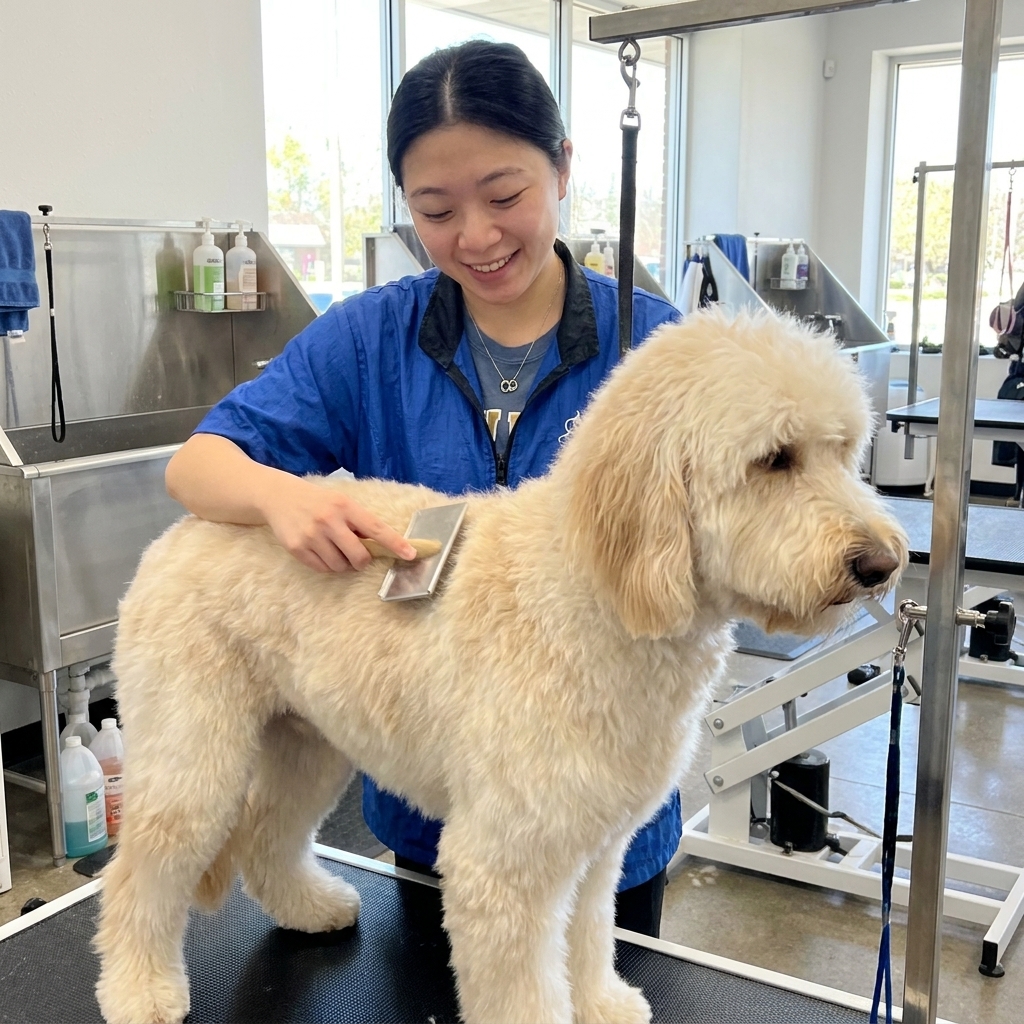
Grooming is not just cosmetic. In my clinic experience, matted doodles are a common issue, and mats can cause skin infections, hide parasites, and make dogs painful to handle.
At-home care to plan for
- Brushing: many coats need thorough brushing several times a week, and some need daily brushing
- Combing: a metal comb helps you confirm you are brushing all the way to the skin
- Ear care: some doodles grow more hair in and around the ear canal, and ear infections are common in many floppy-eared dogs. Risk is multifactorial (allergies, anatomy, moisture, swimming, and grooming). Ear plucking is controversial and should be guided by your veterinarian and groomer for your individual dog.
- Paw and sanitary trims: helps reduce slipping, matting, and urine staining
Professional grooming cadence
Most Sheepadoodles and Bernedoodles do best with professional grooming every 6 to 8 weeks. If you want a longer coat, the schedule and at-home work usually increase.
Cost reality: Grooming costs vary by region and coat condition. Large doodles are among the most expensive routine grooms because they take time, equipment, and skill. If a coat is matted, there can be extra fees, or the dog may need a short shave down for humane reasons.
Practical tip: Before you bring your puppy home, call 2 to 3 groomers and ask: “Do you take large doodles, what is your price range, and how far out are you booking?” Some areas have long wait lists.
Exercise and enrichment
Both mixes can be solid family companions, but they are not decorative dogs. Boredom is one of the biggest drivers of doodle misbehavior.
Sheepadoodle activity needs
- Commonly higher energy, especially ages 6 to 24 months
- Thrives on training and problem-solving games
- May need structured outlets to reduce herding, jumping, and mouthiness
Bernedoodle activity needs
- Moderate to moderately high, depending on the individual and size
- Often enjoys long walks and family time
- Still needs enrichment to prevent barking, counter-surfing (stealing food off counters), and leash pulling
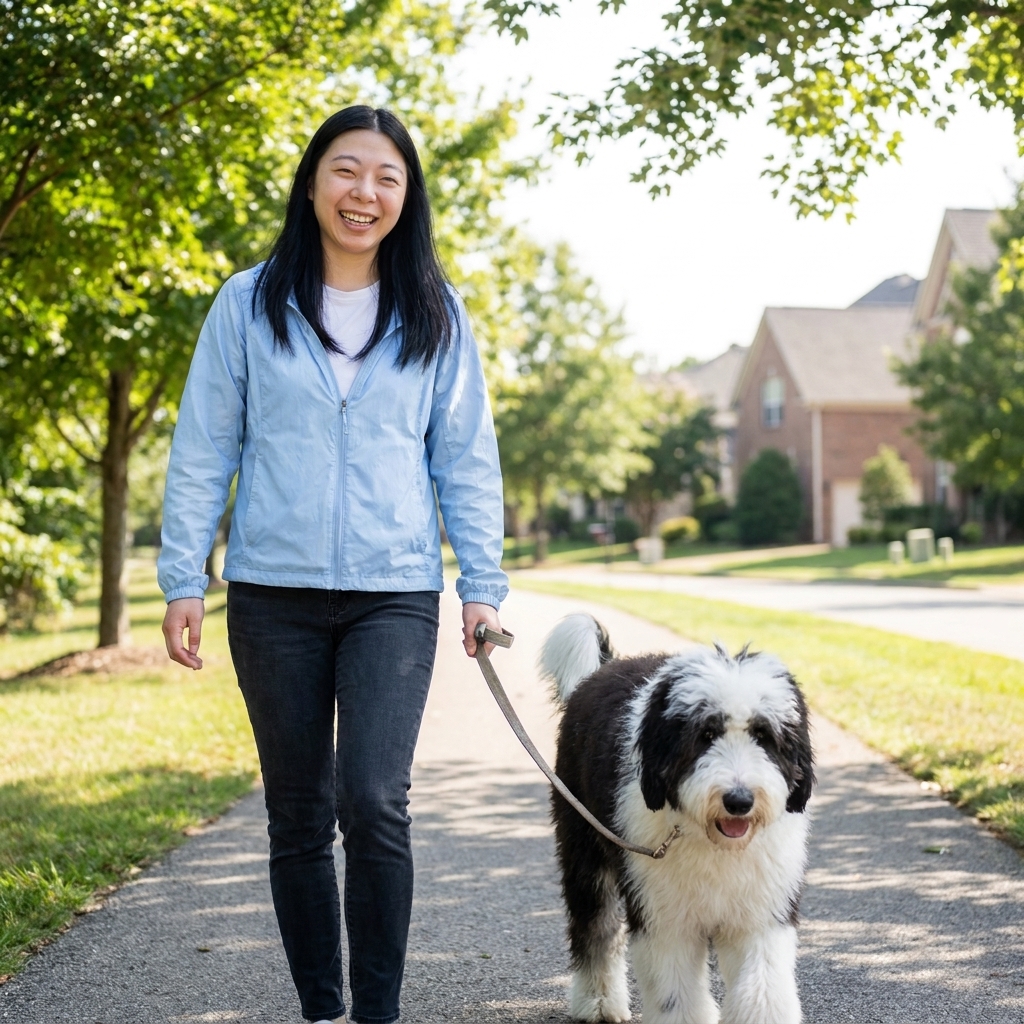
Evidence-based note: Appropriate exercise is still important. The goal is smart, age-appropriate movement. Young large-breed dogs should build fitness gradually. Avoid repetitive high-impact exercise like forced long runs or lots of jumping while growth plates are still developing. Self-paced play and controlled walks are different than forced mileage. Talk with your veterinarian about safe exercise for your puppy’s age and body condition.
Training reality
Poodles are highly trainable, and both Old English Sheepdogs and Bernese Mountain Dogs are intelligent in their own ways. That combo can produce a dog that learns fast, including learning habits you did not intend.
Common challenges
- Jumping because they are social and excited
- Mouthing and grabby play during adolescence
- Leash pulling as they grow heavier than expected
- Separation distress in dogs that become very people-attached
What tends to differ
- Sheepadoodles frequently need targeted work on herding behaviors, impulse control, and appropriate play with kids.
- Bernedoodles frequently need careful socialization to prevent shyness, plus consistent reinforcement to avoid stubborn “I’m done” moments.
What works best
Use reward-based training, keep sessions short, and start early. For large doodles, I strongly recommend a structured puppy class and then a basic manners course after that. The goal is not perfection. It is building communication and skills before your puppy is 70 pounds.
Plan for training like you plan for grooming: as a routine cost of owning a doodle, not as an optional upgrade.
Coat genetics and generations
You may hear terms like F1 (first-generation cross) and F1b (often a doodle bred back to a Poodle). In general, some breeders aim for more predictable coat traits by using certain pairings, and F1b dogs may have higher odds of curl and lower shedding traits. Still, there is no guaranteed “hypoallergenic” doodle, and individual outcomes vary. The most reliable plan is to assume you will be doing regular grooming and to choose based on lifestyle, not marketing.
Health topics to discuss
Mixed-breed does not automatically mean healthy. These dogs can inherit conditions common to their parent breeds, and health risk is influenced by genetics, body condition, and preventive care.
Sheepadoodle health topics
- Hip and elbow dysplasia
- Eye issues (ask about ophthalmology screenings)
- Skin and ear infections related to allergies, moisture, and coat density
- Bloat risk in larger, deep-chested dogs (talk to your veterinarian about prevention)
Bernedoodle health topics
- Hip and elbow dysplasia
- Cruciate ligament injuries (large dogs, active dogs, and overweight dogs are at higher risk)
- Eye and cardiac screening discussions depending on the lines
- Skin and ear issues similar to other doodles
- Cancer risk and longevity: Bernese Mountain Dogs have a known cancer risk and shorter average lifespan. A Bernedoodle may still inherit elevated cancer risk, so ask about family history, ages, and causes of death in the line.
Poodle-side health topics worth mentioning
- Addison’s disease (endocrine)
- Sebaceous adenitis and other skin conditions
- Inherited eye disorders (varies by line)
Actionable breeder questions:
- What health testing was done on both parents (hips, elbows, eyes, cardiac where appropriate)?
- Can you share results from an orthopedic registry (such as OFA) or veterinarian documentation?
- What is the longevity in your lines? How old are related dogs, and what did they pass from?
- How do you socialize puppies between 3 and 12 weeks?
- What is your grooming and training plan for puppies before they go home?
Breeder or rescue
However you acquire your dog, prioritize transparency and support. For breeders, look for documented health testing, clear contracts, and a return policy that prevents dogs from being rehomed casually. Ask where puppies are raised, what early handling and socialization they do, and whether they match puppies to homes. If you are open to adoption, doodle mixes do show up in rescues and shelters, and an adult dog can be a better fit if you want a clearer view of size, coat, and temperament.
Which is better for first-time owners?
Neither is “easy,” but one may fit your home better.
Sheepadoodle may fit if
- You want a dog that is often goofy, energetic, and eager for activities
- You enjoy training and will commit to impulse control work
- You have time for structured exercise and enrichment most days
Bernedoodle may fit if
- You prefer a dog that often leans calmer and more companion-oriented
- You can invest in socialization to build confidence
- You want an active dog, but not necessarily the busiest one in the neighborhood
Either is a good choice only if
- You can afford and schedule ongoing grooming
- You will do early training and continue through adolescence
- You have a plan for daily enrichment, not just weekend walks
If you are choosing between these two and feel stuck, try this simple thought experiment: would you rather manage more energy and possible herding behavior (more common in Sheepadoodles), or would you rather prioritize confidence-building and gentle handling (a frequent theme with Bernedoodles)? Your lifestyle answer usually points you in the right direction.
Takeaway
Sheepadoodles and Bernedoodles can both be loving, bright, family-friendly dogs. The biggest differences are usually energy and herding tendencies (often stronger in Sheepadoodles) and a gentler, more laid-back vibe many people experience with Bernedoodles. The biggest similarity is the one most ads skip: coat care, training, and adolescence are real work.
If you go in with clear expectations and a good support system that includes your veterinarian, groomer, and a positive-reinforcement trainer, either mix can be an amazing companion.