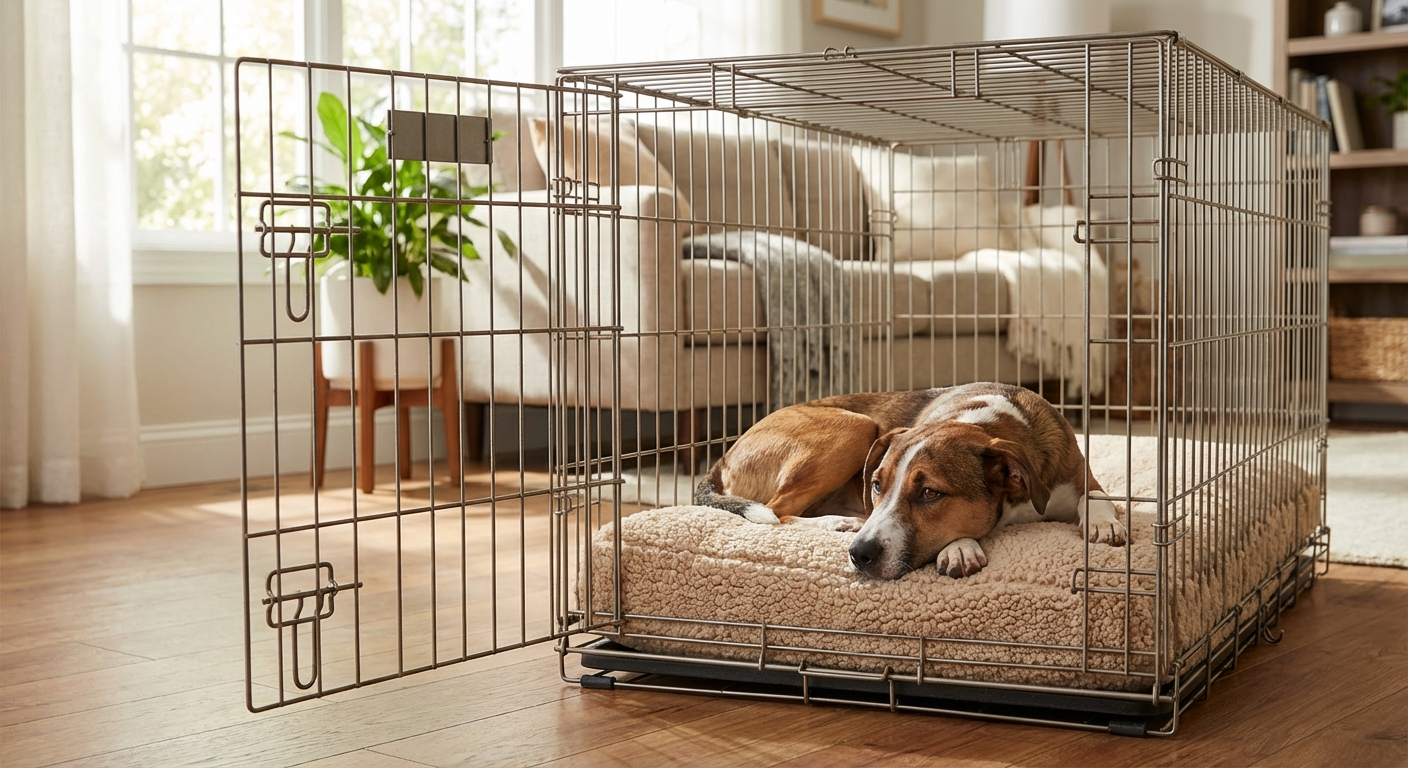
A step-by-step puppy crate training guide: choosing the right crate, building positive associations, first-week routines, nighttime potty breaks, and solutio...
Article
•
Designer Mixes
Sheepadoodle

Shari Shidate
Designer Mixes contributor
What Is a Sheepadoodle?
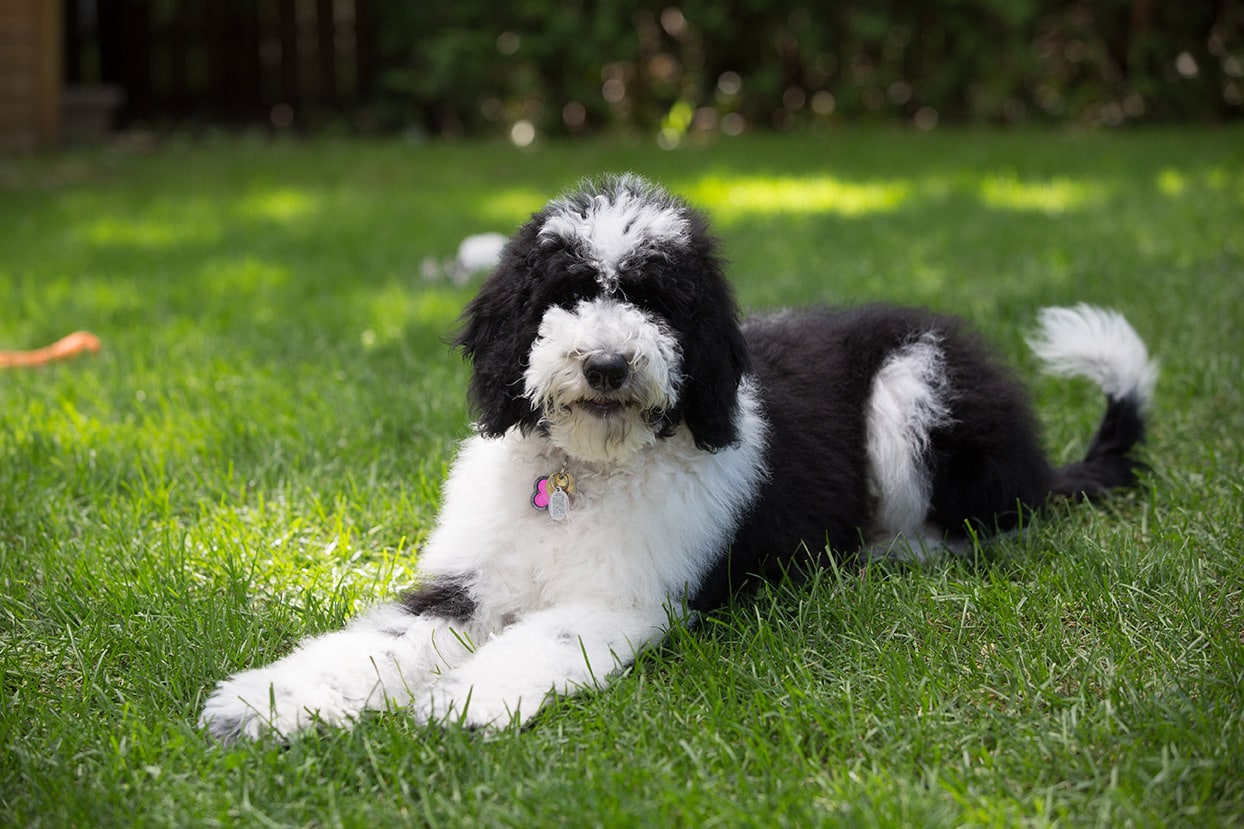
A Sheepadoodle is a popular “designer mix” created by crossing an Old English Sheepdog with a Poodle, most often a Standard Poodle. The goal is usually a family dog with the Sheepdog’s affectionate, clownish charm and the Poodle’s trainability and low-shedding reputation. In real life, though, Sheepadoodles can vary quite a bit in size, coat type, and even energy level depending on genetics and early training.
Because they are a mixed breed, there is no single “standard” Sheepadoodle. If you are considering one, the best approach is to look at the individual dog in front of you, ask detailed questions about the parents, and plan for the needs of a large, social, intelligent companion.
Temperament: What They’re Like to Live With
Most Sheepadoodles are known for being people-oriented and playful. Many bond strongly with their family and prefer being near you rather than alone for long stretches. That can be a wonderful trait for a companion dog, but it also means they may be prone to separation-related stress if left without training and structure.
Common personality traits
- Affectionate and social: Often enjoy greeting visitors and being part of the household activity.
- Smart and trainable: They typically learn quickly, especially with positive reinforcement.
- Goofy and energetic: Many retain a puppy-like enthusiasm well into adulthood.
- Sensitive: Harsh training methods can backfire. Calm consistency works best.
Temperament is shaped by genetics and early life experiences. Prioritize breeders and rescues who emphasize early socialization and stable, confident puppies.
Size, Coat, and Color: What to Expect
Sheepadoodles are usually medium-to-large dogs, though sizes can vary depending on whether a Standard, Miniature, or smaller Poodle was used. Most families encounter Standard Sheepadoodles, which can be substantial in both height and strength.
Typical size range
- Standard Sheepadoodle: Often 50 to 80+ pounds, sometimes more
- Mini Sheepadoodle: Varies widely, often 25 to 50 pounds
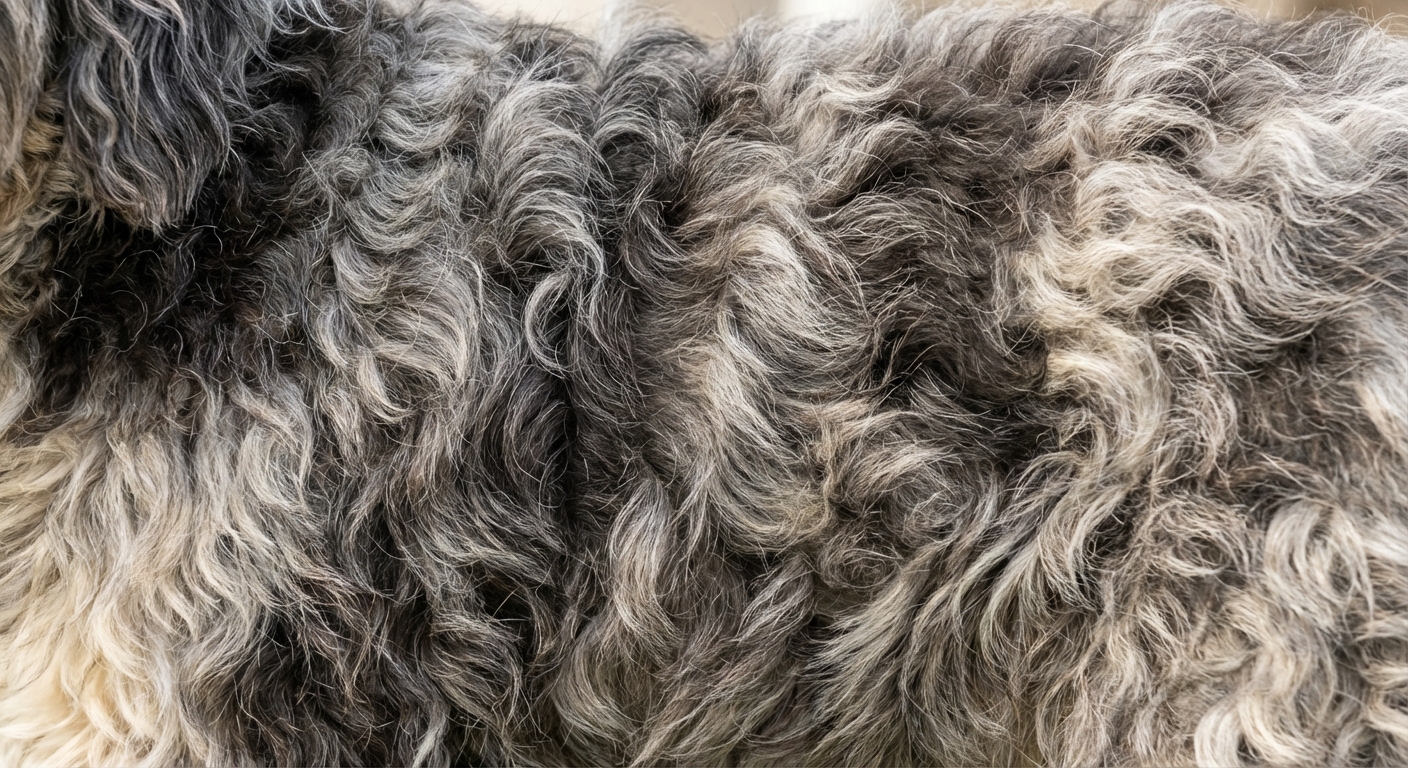
Coat type can be wavy, curly, or somewhere in between. While many people seek Sheepadoodles for a “hypoallergenic” or low-shedding coat, it is important to know that no dog is truly hypoallergenic. Dander and saliva proteins, not just hair, contribute to allergies. Some Sheepadoodles shed minimally, while others shed more than expected.
Color can vary too. Many Sheepadoodles are black and white, but you may also see gray and white, all black, or more subtle patterning depending on the parents. Some will lighten as they grow, thanks to a graying gene common in Old English Sheepdogs, so a puppy born with bold black-and-white markings may fade into a softer gray-and-white coat over time.
Grooming Needs: The Real Commitment
If there is one area where Sheepadoodles surprise new owners, it is grooming. Their coats can mat easily, especially behind the ears, under the collar, in the armpits, and around the hindquarters. Mats can pull painfully on the skin and create hidden irritation.
Practical grooming plan
- Brush thoroughly: Most Sheepadoodles need brushing several times per week, and some do best with daily brushing.
- Professional grooming: Plan on a full groom every 6 to 8 weeks, depending on coat length and lifestyle.
- Ask for a “pet trim”: Shorter, functional cuts often reduce matting and stress for both dog and owner.
- Ear care: Floppy ears can trap moisture. Your vet can show you safe cleaning habits.
- Nail trims: Every few weeks is typical, especially for dogs that do not wear nails down naturally.
From a wellness perspective, grooming is not just cosmetic. It is skin health, comfort, and early detection. Brushing sessions are a great time to notice lumps, ticks, hot spots, or changes in appetite and energy that show up as subtle behavior shifts.
Exercise and Enrichment: Keeping a Smart Dog Balanced
Sheepadoodles often thrive with a blend of physical exercise and mental stimulation. A bored, under-exercised Sheepadoodle may invent their own entertainment, like chewing furniture, counter surfing, or barking excessively.
Healthy daily outlets
- Walks plus play: Aim for at least one solid walk and active playtime each day, adjusting to age and health.
- Training games: Short sessions of sit, stay, recall, and leash manners provide mental exercise.
- Puzzle feeders: Great for slowing fast eaters and keeping minds engaged.
- Safe social time: Many do well with dog friends, but controlled introductions matter.
Puppies should not be over-exercised with long runs or repetitive jumping. Growth plates are still developing. Ask your veterinarian about age-appropriate activity, especially for larger dogs.
Training Tips: What Works Best
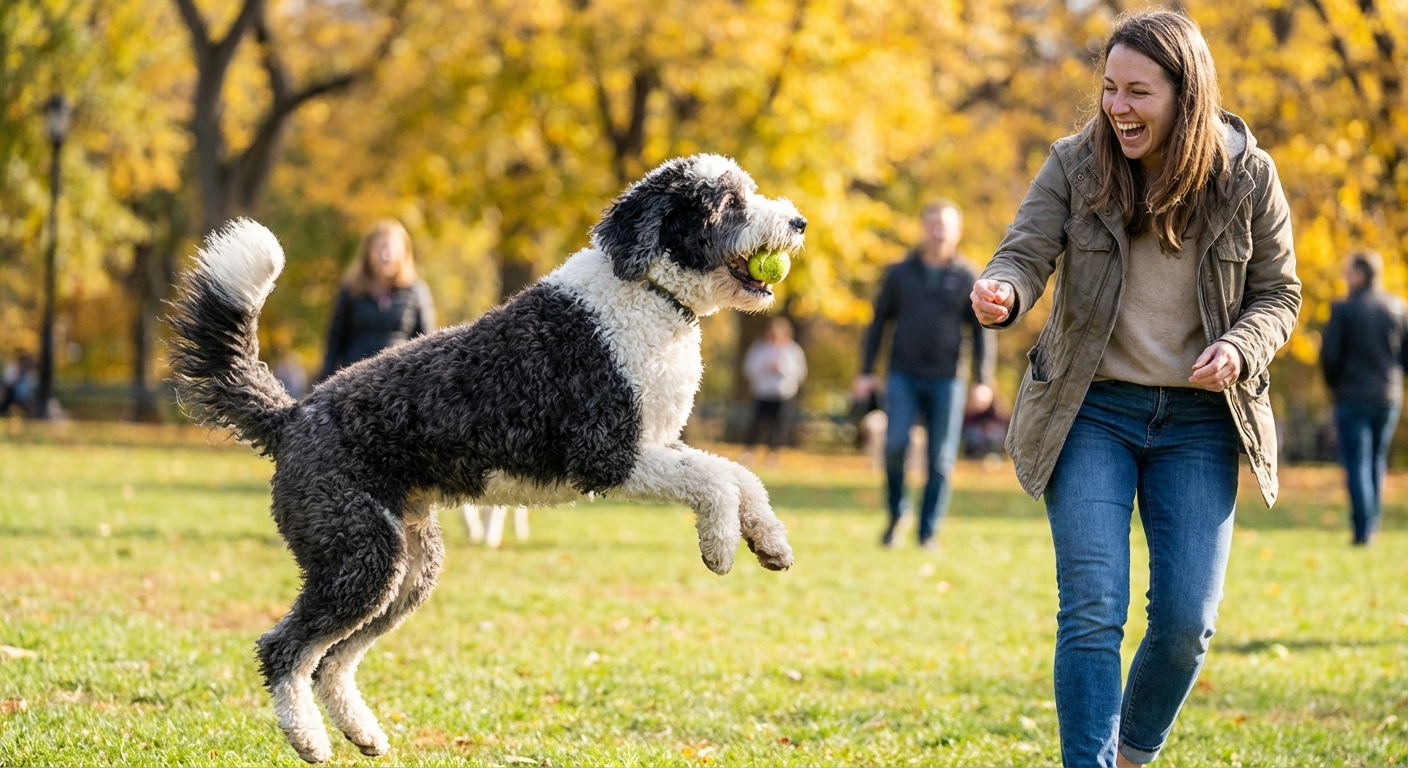
Most Sheepadoodles respond beautifully to positive reinforcement, meaning you reward the behavior you want and prevent rehearsal of the behavior you do not. Consistency matters more than intensity. I often remind families that training is a lifestyle, not a one-week project.
Focus areas that pay off
- Leash skills: Many Sheepadoodles are strong. Teach loose-leash walking early.
- Greeting manners: Their enthusiasm can lead to jumping. Reward four paws on the floor.
- Recall: Practice in low-distraction environments before progressing.
- Alone-time training: Prevent separation issues by teaching calm independence gradually.
- Grooming cooperation: Make brushing and handling a positive daily habit.
If you want a dog who is gentle with kids, visitors, and other pets, prioritize early socialization and ongoing exposure to normal life experiences in a safe, structured way.
Health Considerations to Know
Mixed breeds can still inherit health issues from either parent line. A responsible breeder should be transparent about health testing and family history. If you are adopting, a veterinarian can help you plan screening and preventive care based on your dog’s size and age.
Potential health concerns
- Hip and elbow dysplasia: Common in larger breeds and can affect mobility.
- Bloat (GDV): A serious risk in deep-chested dogs. Ask your vet about prevention strategies.
- Eye conditions: Some lines can be predisposed to inherited eye problems.
- Allergies and skin sensitivities: Can show up as itching, ear infections, or paw licking.
- Endocrine issues: Like hypothyroidism in some family lines.
Preventive care is where families can make a big difference. Keep your Sheepadoodle at a lean body condition, provide regular dental care, stay current on parasite prevention, and schedule routine wellness visits. Small, consistent habits compound into remarkable results over time.
Nutrition: Feeding for a Healthy, Active Life
Nutrition is one of the most practical ways to support your Sheepadoodle’s long-term health. Choose a complete and balanced diet appropriate for your dog’s life stage, and consider the dog in front of you: activity level, appetite, stool quality, skin, and coat condition all matter.
Simple, evidence-based feeding guidance
- Choose quality and consistency: Look for foods that meet AAFCO standards for the right life stage.
- Measure portions: Free-feeding can quietly lead to weight gain, especially after adolescence.
- Use treats strategically: Keep treats to about 10 percent or less of daily calories when possible.
- Support joint health: For larger Sheepadoodles, discuss joint-supportive nutrition with your vet.
- Watch for sensitivities: Chronic itching, loose stool, or recurrent ear issues may warrant a vet-guided food trial.
Fresh water and predictable meal routines help many dogs feel calmer and more regulated, especially in busy households.
Is a Sheepadoodle Right for You?
Sheepadoodles can be wonderful family companions for the right home, but they do best with people who enjoy a hands-on relationship. Think of them as a high-connection, high-maintenance coat, high-intelligence dog. When those needs are met, many are deeply affectionate and joyful to live with.
A Sheepadoodle may be a great fit if you want
- A social, people-focused dog who likes being included
- A trainable companion for walks, games, and learning
- A dog you can commit to regular grooming and brushing
Consider another breed or mix if you need
- A very low-maintenance coat with minimal grooming
- A dog who is comfortable alone for long workdays without support
- A consistently low-energy dog
If you are deciding between breeders, rescues, or shelters, ask to meet the dog when possible, review health records, and get clarity on grooming expectations. The best match is the one that fits your daily life, not just your dream photo.
Bringing One Home: A Practical First-Week Checklist
The first week is about safety, routine, and trust. Keep things simple and predictable while your Sheepadoodle settles in.
- Schedule a vet visit: Especially important for new puppies and rescues.
- Set up a grooming routine: Brief daily brushing practice, even if the coat is short.
- Create a calm sleep space: Crate training can help if done gently and gradually.
- Start training right away: Name recognition, potty routine, and leash skills.
- Plan enrichment: Chews, puzzle toys, and short training games to prevent boredom.
With structure and patience, most Sheepadoodles settle into family life beautifully. You do not need perfection, just consistency and a willingness to learn together.