Vet-informed guide to a short-term bland diet for dogs: chicken and rice 1:2 ratio, daily cup ranges by weight, how many meals to split into, and red flags t...
Article
•
Designer Mixes
Settle a Dog’s Upset Stomach Quick

Shari Shidate
Designer Mixes contributor
When your dog’s stomach is upset, it can feel urgent and honestly a little scary. As a veterinary assistant in Frisco, Texas, I have seen plenty of tummy troubles walk through the clinic doors. The good news is that many mild cases can be soothed at home with a calm plan, careful hydration, and a simple diet.
This guide focuses on safe, evidence-based steps you can take quickly, plus clear signs that mean you should call your veterinarian right away.
First: Is this an emergency?
Before you try home care, do a quick safety check. Upset stomach symptoms like vomiting, diarrhea, drooling, lip-licking, and decreased appetite can be mild, but they can also signal something more serious like pancreatitis, an obstruction, toxin exposure, or bloat.
Go to an emergency vet now if you notice:
- Repeated or ongoing vomiting (especially multiple times in a few hours)
- Cannot keep water down or vomits even small sips
- Blood in vomit or stool (red or black, tarry stool)
- Very frequent diarrhea, or diarrhea with weakness, collapse, or dehydration concerns
- Swollen or painful belly, retching without producing vomit, or pacing and cannot get comfortable (concern for bloat)
- Signs of pain (crying, guarding the belly, hunched posture, trembling, reluctance to move)
- Signs of dehydration: tacky or dry gums, reduced urination, extreme lethargy, prolonged skin tent
- Pale gums or collapse
- Known toxin exposure (grapes/raisins, xylitol, chocolate, medications, rodent bait, certain plants)
- Possible foreign body (chewed toys, socks, bones, corn cobs), especially with repeated vomiting
- Suspected heatstroke (heavy panting, weakness, drooling, vomiting, bright red or pale gums)
- Puppies, senior dogs, pregnant dogs, or dogs with chronic disease (kidney disease, diabetes, Addison’s, etc.)
Call your vet within 24 hours if:
- Diarrhea lasts more than 24 to 48 hours
- Vomiting continues beyond one or two episodes
- Your dog refuses water, will not eat for a full day, or seems unusually tired
If you are unsure, it is always okay to call your vet. A quick phone triage can prevent a small problem from becoming a big one.
Quick steps to settle an upset stomach at home
1) Pause food briefly (only for the right dogs)
For a healthy adult dog who vomited once or twice but is otherwise bright and alert, a short pause from food can help calm the stomach. In many cases, a short pause (often 6 to 12 hours) is enough.
- Do not fast very small dogs, puppies, seniors, or dogs with diabetes without veterinary guidance.
- Stop home care and call your vet if vomiting returns, worsens, or your dog cannot keep water down.
- Always prioritize hydration.
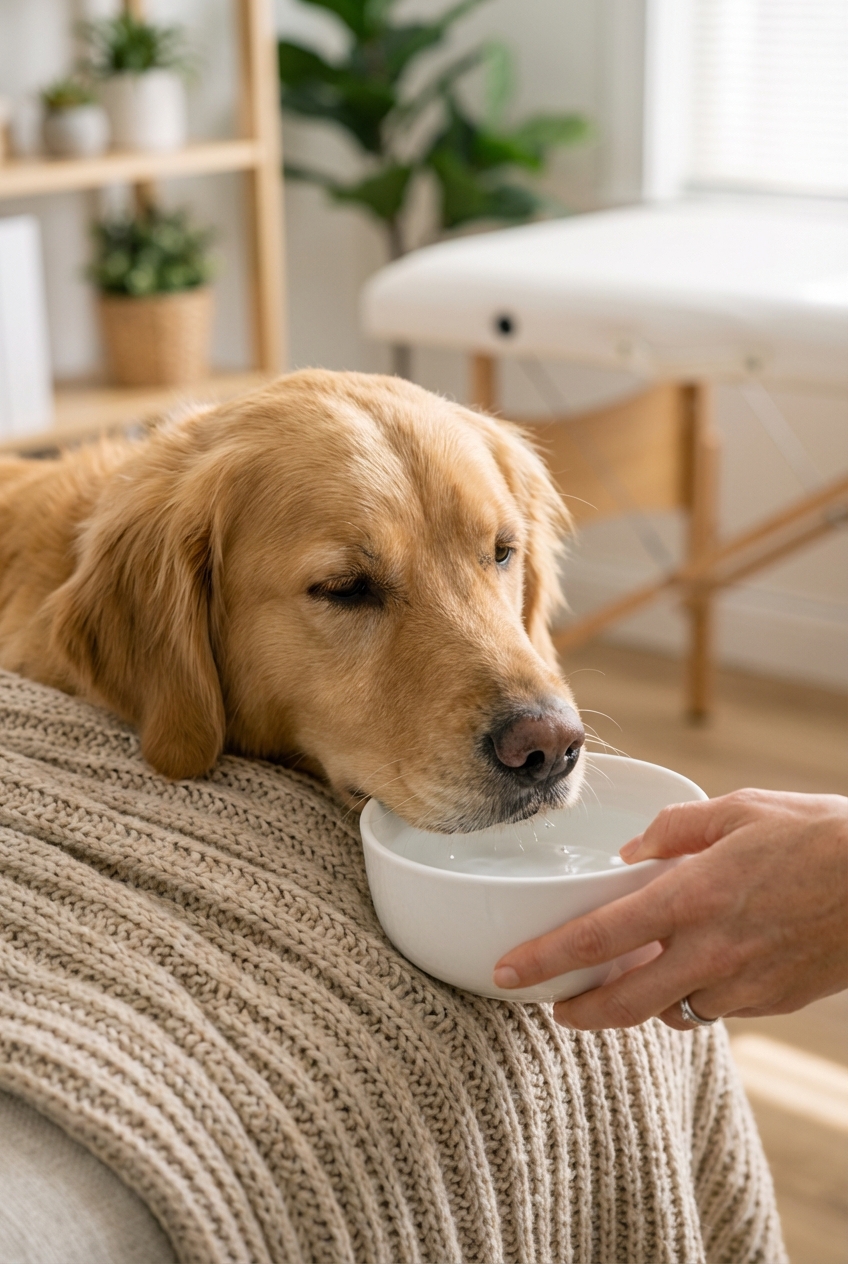
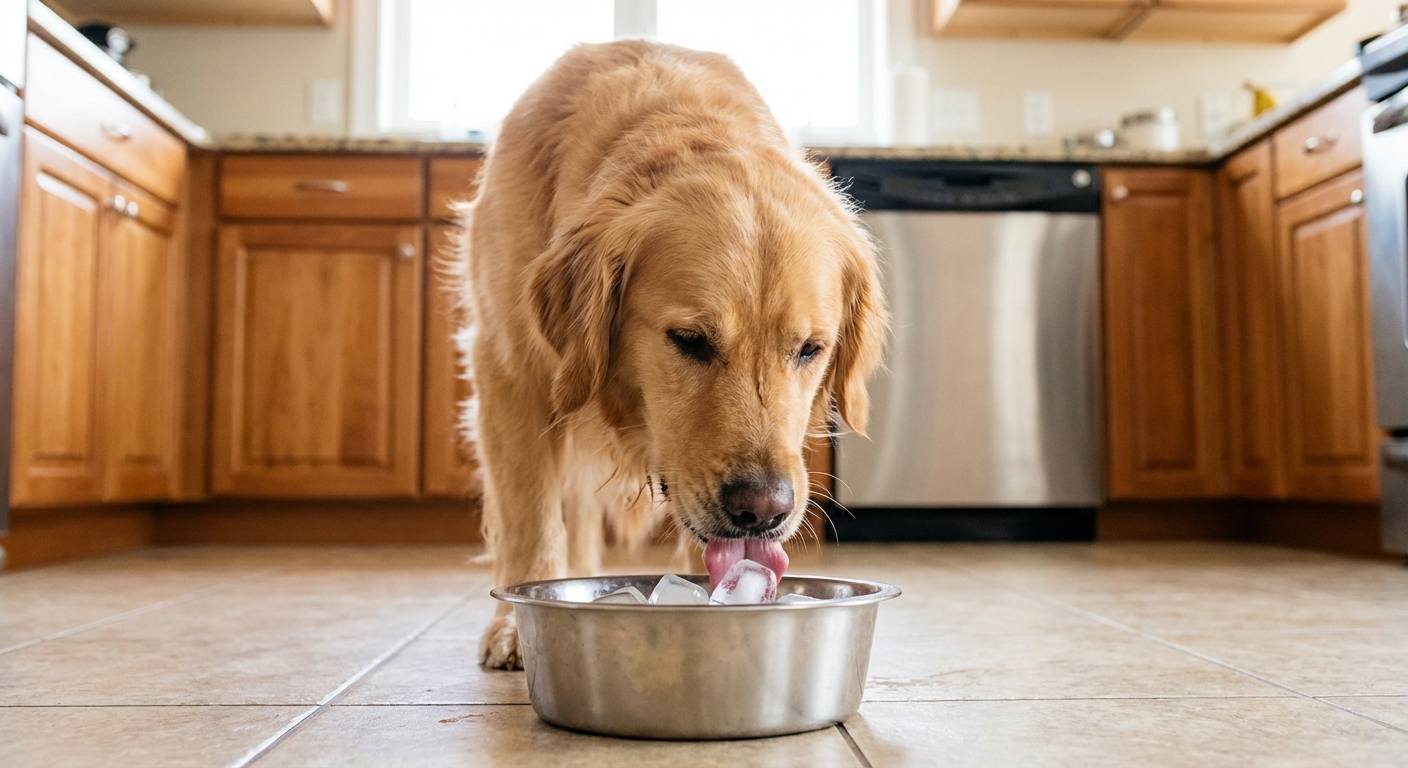
2) Offer small, frequent amounts of water
Dehydration is one of the fastest ways an upset stomach becomes dangerous. If your dog keeps water down, that is a great sign.
- Offer small sips every 10 to 15 minutes.
- If your dog gulps and vomits, remove the bowl and re-offer smaller amounts.
- You can try ice chips or a few teaspoons of water at a time for dogs who drink too fast.
- Quick home check: gums should feel slick, not tacky. You should also see normal urination. If you are seeing very little urine, call your vet.
3) Start a bland diet (simple, low-fat, easy to digest)
Once vomiting has stopped for several hours and your dog can hold down water, introduce a bland meal. The goal is gentle digestion and low fat.
Classic bland meal options:
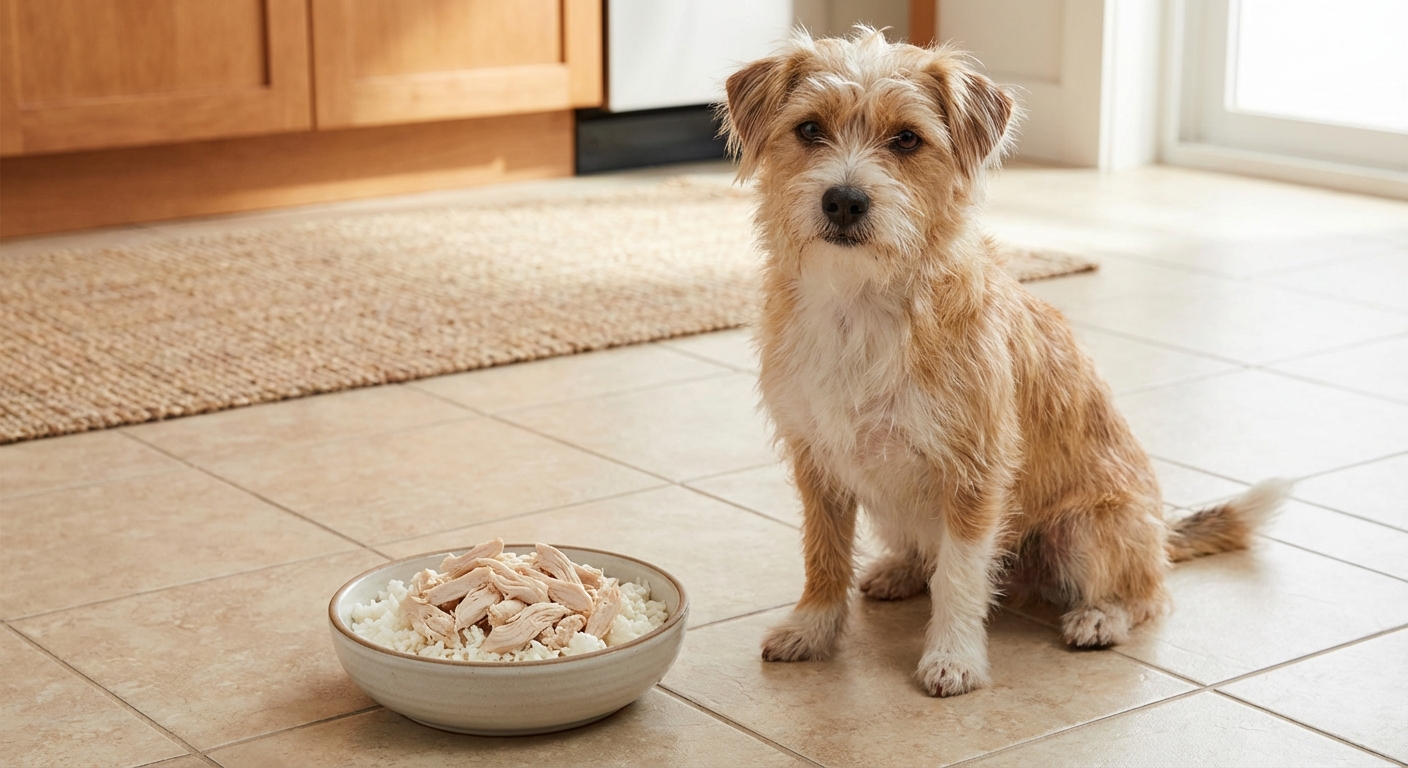
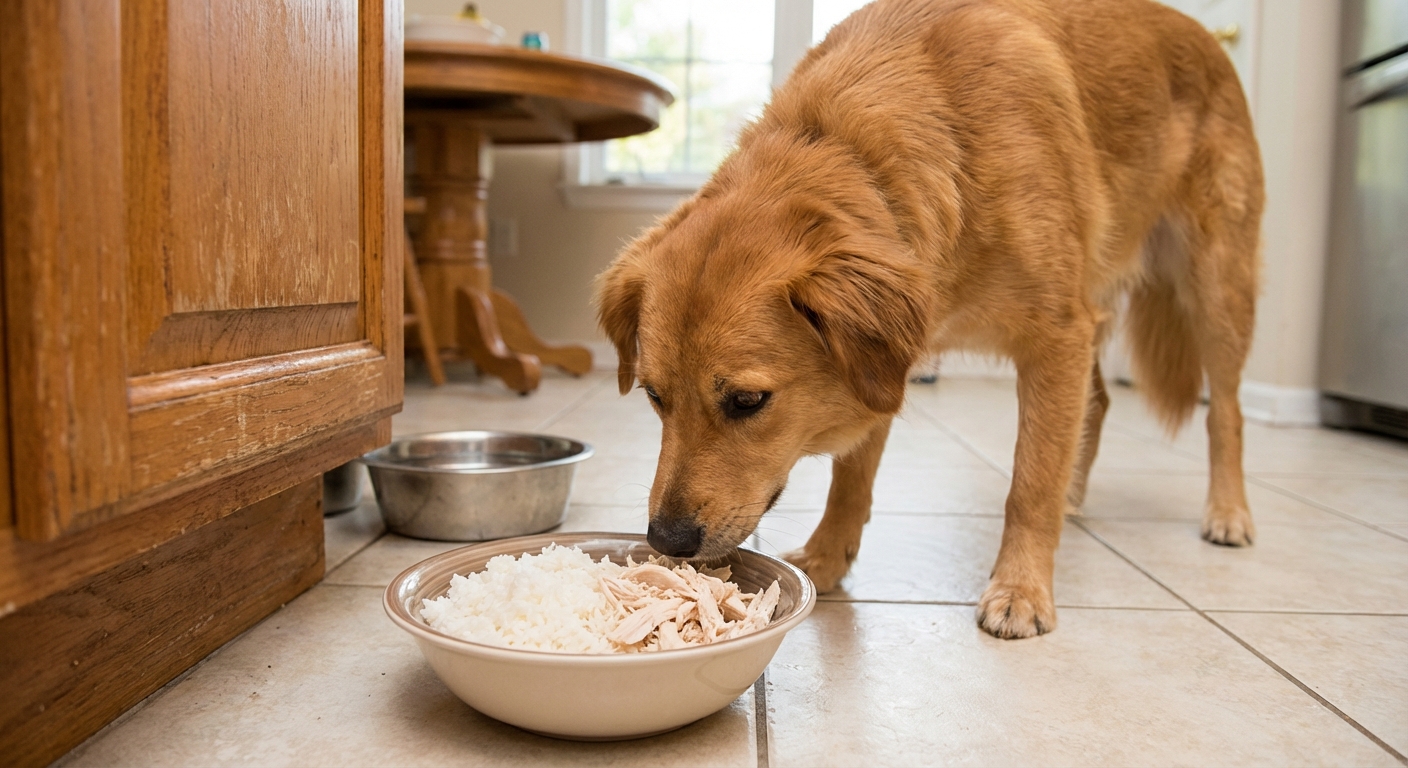
- Boiled skinless chicken breast (or turkey) + plain white rice
- Lean ground turkey (well cooked, drained) + white rice
- Optional: plain canned pumpkin (100% pumpkin, not pie filling) added in small amounts. If stools worsen, skip it.
Portion and schedule: Feed small meals (about 1 to 2 tablespoons per 10 pounds of body weight to start) every 4 to 6 hours. Think of this as a test portion. If your dog does well, gradually increase the amount over the next 24 to 48 hours. If you have a large dog or a dog with other health needs, your veterinarian can help you set a better short-term target.
Important: Chicken and rice is not complete nutrition long-term. It is a short-term reset, not a forever diet.
4) Keep fat low, even if your dog acts hungry
High-fat foods can worsen nausea and may trigger pancreatitis in sensitive dogs. Avoid bacon, sausage, greasy meats, cheese-heavy meals, and rich treats during recovery.
5) Add a vet-approved probiotic if you have one
Some veterinary probiotics (especially products studied in dogs) can shorten the duration of acute diarrhea and support gut recovery. If you already have a trusted brand from your vet, this is a great time to use it.
- Choose a dog-specific probiotic product.
- Follow label directions or your veterinarian’s instructions.
6) Rest and reduce excitement
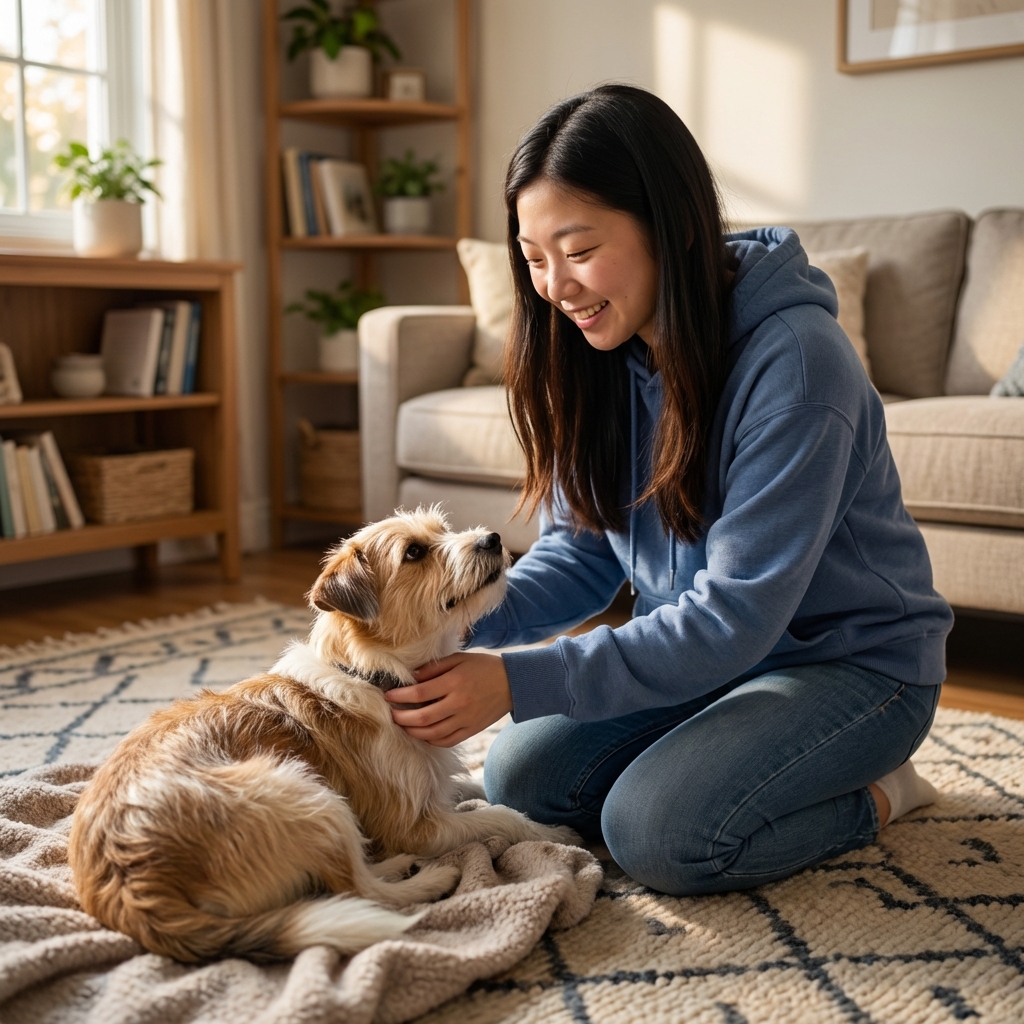
Stress and overactivity can aggravate stomach upset. Keep things calm, skip intense exercise for a day, and take your dog out for short potty breaks only.
7) Track what you are seeing
If you end up calling your vet, details help. Make a quick note of:
- How many times your dog vomited or had diarrhea
- Whether there is blood or lots of mucus
- Any possible food, trash, toy, or medication exposure
- Whether your dog is drinking and urinating normally
What not to do
- Do not give Pepto-Bismol, Imodium, aspirin, or other human medications unless your veterinarian specifically tells you to. Some can be dangerous in certain conditions or breeds (for example, MDR1 gene mutation dogs and loperamide), and dosing mistakes happen easily.
- Do not give bones to “firm up stool.” Bones can splinter, cause constipation, or create obstructions.
- Do not switch foods repeatedly in the same day. Frequent changes can make diarrhea worse.
- Do not withhold water. If your dog is vomiting water, offer smaller amounts more often and call your vet for guidance.
Quick symptom guide
If your dog vomited once and acts normal
- Offer small amounts of water
- For healthy adult dogs only, consider a short food pause (often 6 to 12 hours)
- Start a bland diet in small portions once water stays down
If your dog has diarrhea but no vomiting
- Hydration first
- Small bland meals
- Consider a dog probiotic
- Call your vet if diarrhea lasts beyond 24 to 48 hours, or sooner if your dog seems unwell
If your dog is gagging, retching, bloated, in pain, or cannot keep water down
- Emergency: go in immediately
How long does it take to settle?
Mild stomach upset from eating something new, stress, or a minor bug often improves within 24 to 48 hours with supportive care. If symptoms are not clearly improving in that window, that is your cue to call your vet. Persistent GI signs can mean parasites, pancreatitis, dietary intolerance, infection, or something stuck in the GI tract.
If diarrhea is lingering, recurring, or has blood or mucus, ask your clinic if you should bring a fresh stool sample for testing.
Transition back to regular food
Once stools are improving and vomiting has stopped, transition slowly over 2 to 3 days:
- Day 1: 75% bland diet, 25% regular food
- Day 2: 50% bland diet, 50% regular food
- Day 3: 25% bland diet, 75% regular food
- Day 4: Back to normal if all is well
If symptoms return during the transition, step back to the previous ratio and contact your veterinarian.
Simple bland diet recipe
Ingredients:
- Skinless chicken breast (boiled, shredded)
- Plain white rice (cooked)
- Optional: 1 to 2 teaspoons of plain canned pumpkin per 10 pounds body weight (skip if stools worsen)
Directions: Boil chicken until fully cooked. Cook rice separately. Mix 2 parts rice to 1 part chicken (by volume). Serve small portions. Refrigerate leftovers up to 3 days.
Tip: Keep it boring. The stomach heals best with simple, predictable foods.
Prevention tips
- Prevent scavenging by using a leash in tempting areas and securing trash cans.
- Go slow with new treats and rich chews.
- Keep routine vet care current, including parasite prevention and fecal checks. Parasites can still happen even with prevention.
- Use a gradual food transition over 7 to 10 days when changing diets.
Your dog’s gut is closely tied to their overall health, energy, and even behavior. A little prevention goes a long way.
When in doubt, trust your instincts. If your dog looks off, is getting worse, or you simply feel worried, your veterinarian is your best next step.