Step-by-step home care for mild dog diarrhea and vomiting: short food break, small sips of water, bland diet, pumpkin, probiotics, dehydration checks, and ur...
Article
•
Designer Mixes
Settle a Dog’s Upset Stomach

Shari Shidate
Designer Mixes contributor
When your dog’s stomach is upset, it can feel urgent and honestly a little scary. As a veterinary assistant here in Frisco, Texas, I have seen everything from simple “ate something weird” tummy trouble to true emergencies that need immediate care. The goal of this guide is to help you calm an upset stomach quickly and safely, using evidence-based steps you can do at home while knowing exactly when to call your veterinarian.
Important note: This article supports, but never replaces, veterinary advice. If your dog seems painful, weak, bloated, or is vomiting repeatedly, skip home care and contact a vet right away.
First: Is this an emergency?
Before you change food or offer anything, do a quick safety check. Upset stomach symptoms can look similar whether the cause is mild or serious, so watching the whole dog matters more than any single sign.
Go to a vet now if you notice any of these
- Repeated vomiting, or vomiting that will not stop
- Repeated unproductive retching (trying to vomit but nothing comes up)
- Swollen or tight belly, restlessness, or obvious abdominal pain (possible GDV, also called bloat)
- Blood in vomit or stool, or black tar-like stool
- Severe lethargy, collapse, pale gums, or difficulty breathing
- Suspected toxin exposure (chocolate, xylitol, grapes or raisins, medications, marijuana, rodent poison, etc.)
- Foreign body risk (chewed toy pieces, socks, bones, corn cobs, string)
- Persistent diarrhea with weakness, or diarrhea plus vomiting together
- Puppies, seniors, pregnant dogs, or dogs with chronic disease (kidney, diabetes, Addison’s) showing GI signs
- Cannot keep water down, or you are seeing signs of dehydration
If you are unsure, call your veterinarian or an emergency hospital and describe what you are seeing. If toxin exposure is possible in the U.S., you can also contact ASPCA Animal Poison Control (fee may apply).
Quick home steps for mild upset stomach
If your dog is bright, responsive, and only mildly nauseated, or has one or two episodes of vomiting or a single bout of loose stool, these steps often help settle things quickly.
1) Pause food briefly (sometimes)
For many healthy adult dogs who vomit, a short “stomach rest” can reduce nausea. In practice, many vets recommend holding food for about 6 to 12 hours after vomiting, if your vet agrees, then restarting with small bland meals.
- Do not fast puppies or toy breeds without veterinary guidance because their blood sugar can drop faster.
- If your dog has diarrhea only (no vomiting) and is acting normal, fasting is often not necessary. Focus on hydration and a bland, low-fat diet instead.
- Stop home fasting and call your vet if vomiting continues, your dog cannot keep water down, or your dog becomes weak or painful.
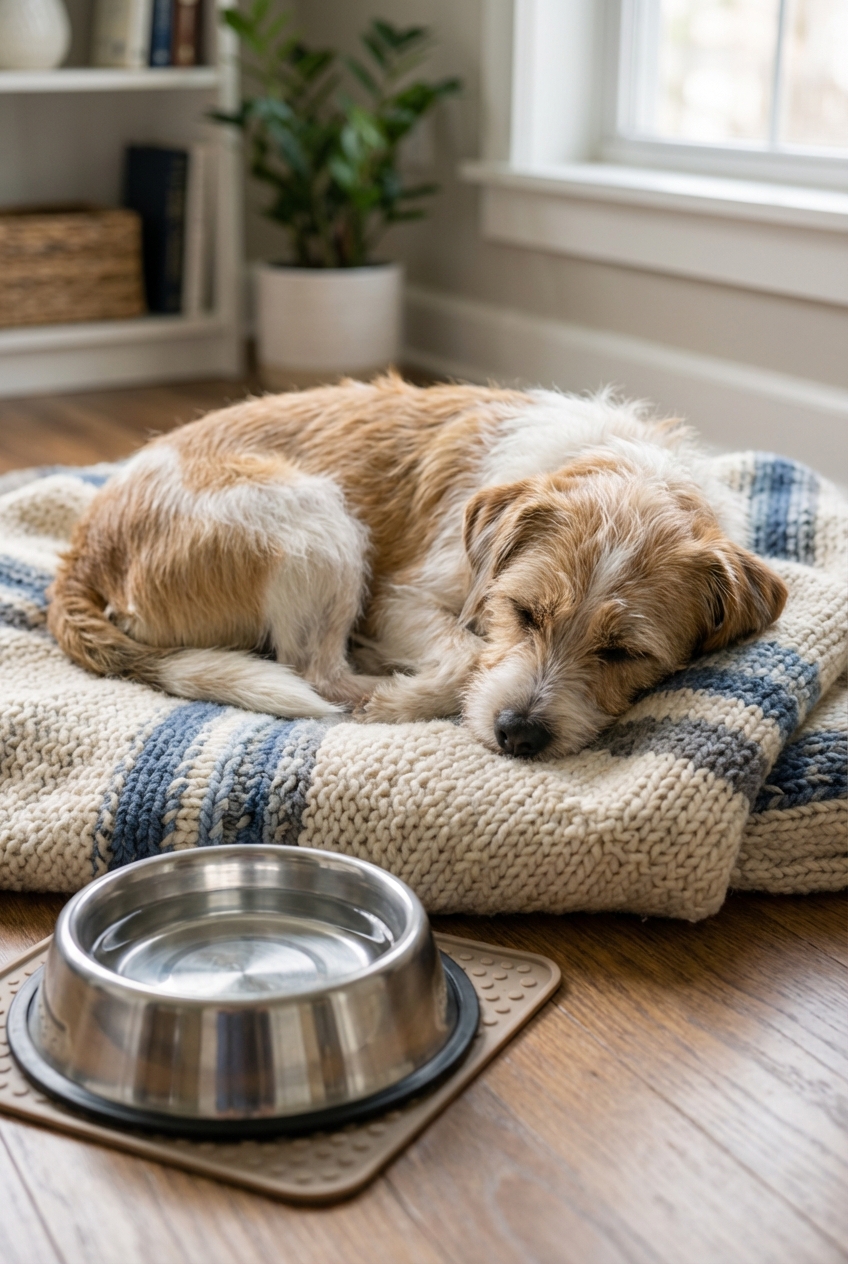
2) Keep water available (in small amounts)
Keep fresh water available, but if your dog gulps and vomits, offer smaller amounts more frequently. Some dogs keep down ice chips better than a full bowl of water. If your vet approves, an unflavored electrolyte solution made for pets can be helpful. Avoid sugary sports drinks.
3) Do a quick dehydration screen
Home checks are only screening tools, but they can help you decide how urgently to call.
- Gums: Lift the lip and look at the gums. They should be moist and pink, not sticky, pale, or tacky.
- Capillary refill time (CRT): Press a finger gently on the gum until it blanches, then release. Color should return quickly (often within about 1 to 2 seconds). Slower refill is a concern.
- Skin tent (less reliable in seniors): Gently lift the skin over the shoulders and release. It should snap back quickly. If it stays “tented,” dehydration is possible.
- Urination: If your dog is not peeing normally, or has no urination for 12 to 24 hours, call your vet.
4) Start a bland diet in small portions
Once vomiting has stopped for about 6 to 8 hours and your dog can keep water down, bland food is often the fastest way to soothe an irritated GI tract. Think “easy to digest, low fat, simple.”
- Option A: Boiled skinless chicken breast and white rice
- Option B: Lean ground turkey (well drained) and white rice
- Option C: Scrambled egg made with no butter or oil, plus rice
How much to feed: Start small, usually around 10 to 25% of your dog’s normal meal size, then repeat every 4 to 6 hours. If your dog keeps it down, gradually increase portions over 24 to 48 hours.
If vomiting returns after re-feeding: Stop food, offer small sips of water only, and call your veterinarian for advice.
5) Use fiber carefully if diarrhea is the main issue
Fiber can help “normalize” stool for some dogs. A classic option is plain canned pumpkin (not pumpkin pie filling). That said, evidence is mixed and not every dog does better with added fiber.
If you try pumpkin, use a small amount (often a teaspoon to a tablespoon depending on size) and stop if diarrhea worsens, gas increases, or your dog seems more uncomfortable. Your veterinarian can recommend the best dose for your dog, or suggest a different plan if pumpkin is not a good fit.
6) Consider a canine probiotic
Some veterinary probiotics and specific strains have been shown to shorten the course of acute diarrhea and support a healthier gut microbiome. Choose a product made for dogs with clear strain labeling and storage instructions. If your dog is immunocompromised or seriously ill, ask your vet first.
7) Keep activity calm and stress low
Stress can worsen GI upset in dogs. Keep walks short, skip intense play, and offer a quiet resting space. Gentle routine helps a lot.
What not to do
When you are worried, it is tempting to try whatever you have in the medicine cabinet. Some common remedies can backfire or even be dangerous.
- Do not give Pepto-Bismol, Imodium, or human antacids unless your veterinarian specifically instructs you. Some can hide important symptoms (like bleeding), interact with other medications, or be unsafe in certain illnesses. Imodium (loperamide) can be risky for dogs with the MDR1 gene mutation (seen in some Collies, Australian Shepherds, Shelties, and related breeds).
- Avoid fatty foods like bacon, sausage, cheese-heavy meals, and greasy leftovers. High fat is a pancreatitis trigger for many dogs.
- Skip bones, rawhide, and hard chews during recovery. They can worsen irritation or create obstruction risk.
- Avoid milk for most dogs. Many are lactose intolerant and can get worse diarrhea.
- Do not fast puppies or very small dogs without veterinary guidance.
A simple 48-hour reset plan
If symptoms are mild and your dog stays bright and hydrated, this step-by-step plan is a practical way to settle the stomach and get back to normal food safely.
Hours 0 to 6
- If your dog vomited: consider holding food (healthy adult dogs only), offer frequent small sips of water
- Keep your dog resting and calm
- Monitor: vomiting frequency, stool, energy level, gum color, belly comfort, urination
Hours 6 to 24
- If vomiting has stopped for about 6 to 8 hours and water stays down, offer a small bland meal (about 10 to 25% of normal)
- Continue water in small frequent amounts
- Optional: start a canine probiotic if your vet is comfortable with it
Hours 24 to 48
- Gradually increase bland meal portions if tolerated
- Diarrhea often begins improving in frequency and urgency
- If there is no improvement, or symptoms return, call your vet
After 48 hours
- Transition back to normal diet slowly over 2 to 3 days by mixing increasing amounts of regular food with bland food
Call your vet sooner if vomiting returns, diarrhea becomes watery and frequent, your dog refuses water, your dog cannot keep water down, your dog has no urine output for 12 to 24 hours, or your dog seems painful.
Common causes of upset stomach
Knowing likely causes can help you prevent the next episode.
- Dietary indiscretion: trash, table scraps, new treats, rich foods
- Sudden diet change: switching foods too quickly
- Parasites: especially in puppies or newly adopted dogs
- Infections: viral or bacterial GI illness
- Stress: travel, boarding, new pets, routine changes
- Food sensitivities: recurring soft stool, gas, itching plus GI signs
- Pancreatitis: vomiting, pain, often after fatty foods
- Obstruction: vomiting, poor appetite, discomfort, sometimes minimal stool
When to schedule a vet visit
Home care is appropriate only for mild, short-lived symptoms. If any of the following apply, it is time to bring your dog in.
- Vomiting lasts more than 24 hours, or occurs multiple times in a day
- Diarrhea lasts more than 48 hours
- Your dog is not interested in food for a full day
- Signs of dehydration (tacky gums, weakness, sunken eyes, slow CRT)
- Recurring episodes every few weeks or months
- Weight loss, poor coat, or chronic gas and soft stool
- Diarrhea with blood or mucus, or exposure risks like dog parks, boarding, or a new rescue dog (ask about a fecal test)
Your vet may recommend a fecal test, parasite treatment, bloodwork, X-rays, ultrasound, or a prescription GI diet depending on the history and exam.
Prevention tips
Most upset stomach episodes are preventable with a few habit changes.
- Transition foods slowly: mix old and new over 7 to 10 days
- Limit rich treats: keep treats to less than 10% of daily calories
- Use a trash-proof routine: secure lids, baby gates, and supervision
- Regular parasite prevention: use vet-recommended preventives and fecal checks
- Consider a “sensitive stomach” plan: for dogs with recurring GI upset, ask your vet about diet trials and probiotics
If you want to move toward more fresh foods, go slow and keep the meals balanced. Even adding a small amount of gentle whole foods can support gut health, but sudden changes are a top trigger for diarrhea.
Quick FAQ
How long does an upset stomach usually last?
Mild dietary upset often improves within 24 to 48 hours with bland food and hydration. If it is not improving in that window, involve your veterinarian.
Is chicken and rice always the best choice?
It is a common, easy bland option, but it is not perfect for every dog. Some dogs do better with turkey, egg, or a prescription GI diet, especially if they have allergies or chronic GI disease.
Can I give my dog human medication for nausea or diarrhea?
Please do not without veterinary direction. Dosing is not one-size-fits-all, and certain drugs can cause serious harm in specific conditions or breeds.
Trust your instincts. If your dog looks “off,” seems painful, or symptoms are escalating, it is always appropriate to call your veterinarian. A quick phone call can save hours of worry and may prevent a true emergency.