A step-by-step, family-friendly plan to reduce separation anxiety in dogs using safety management, trigger desensitization, tiny absences, enrichment, and ve...
Article
•
Designer Mixes
Separation Anxiety in Dogs: Vet-Guided Answers

Shari Shidate
Designer Mixes contributor
Few things break your heart like hearing your dog panic the moment you reach for your keys. Separation anxiety is real. It is common in veterinary behavior caseloads, and it is often improvable with the right plan and support. As a veterinary assistant here in Frisco, Texas, I have seen dogs go from full-blown distress to calmer, more confident alone time with a step-by-step approach.
This article shares vet-guided, behavior-science based answers, practical training steps, and clear red flags so you can help your dog feel safer when you are gone.
What it looks like
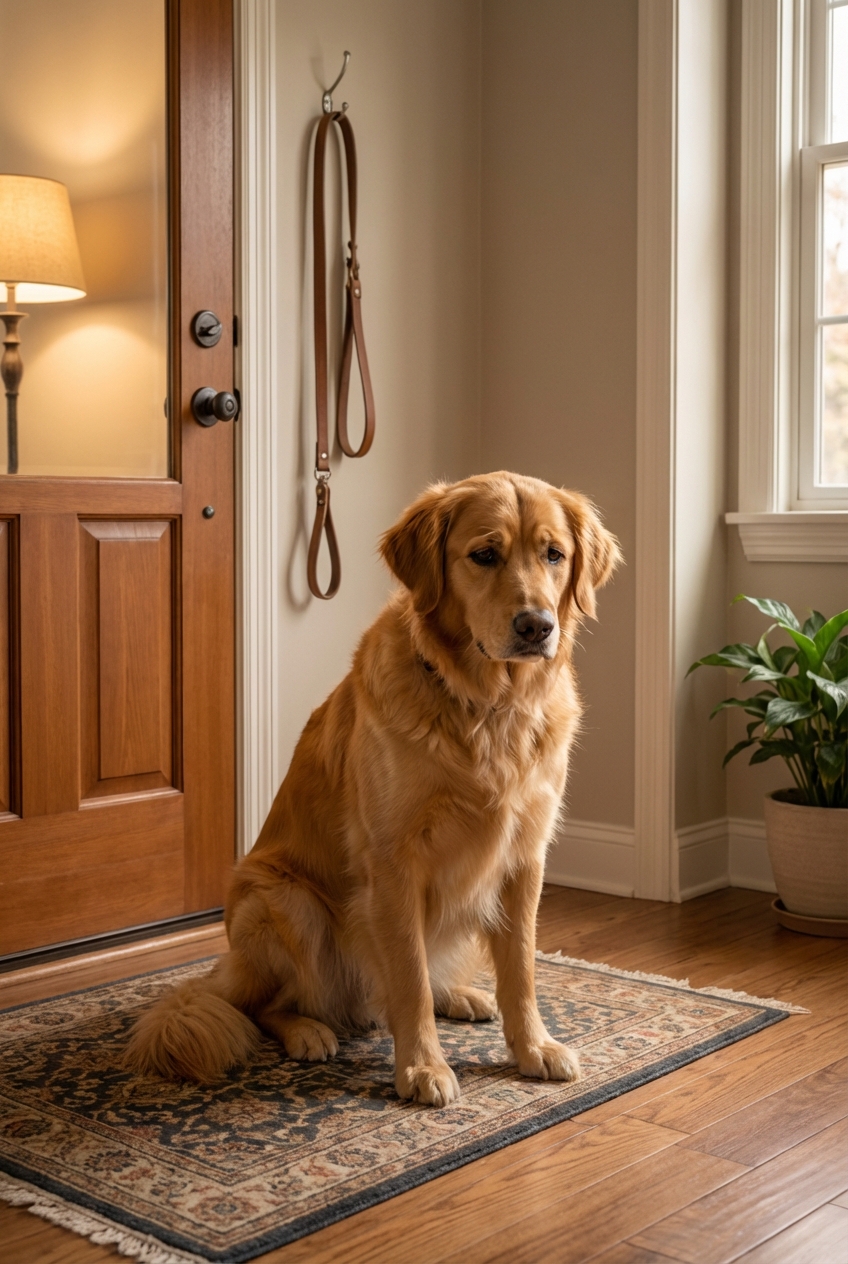
Separation anxiety is more than “my dog is bored.” It is a panic response to being alone or separated from a specific person. The behaviors often happen soon after you leave and improve quickly when you return, but some dogs escalate later or vary day to day.
Common signs
- Vocalizing: barking, whining, or howling after departure
- Destructive behavior: scratching doors, chewing window sills, tearing blinds
- House soiling: accidents despite being fully house-trained
- Escape attempts: bent crates, damaged doors, broken nails, scraped noses
- Drooling, pacing, panting: stress signs that can look like “restlessness”
- Shadowing: following you room to room, unable to settle when you move
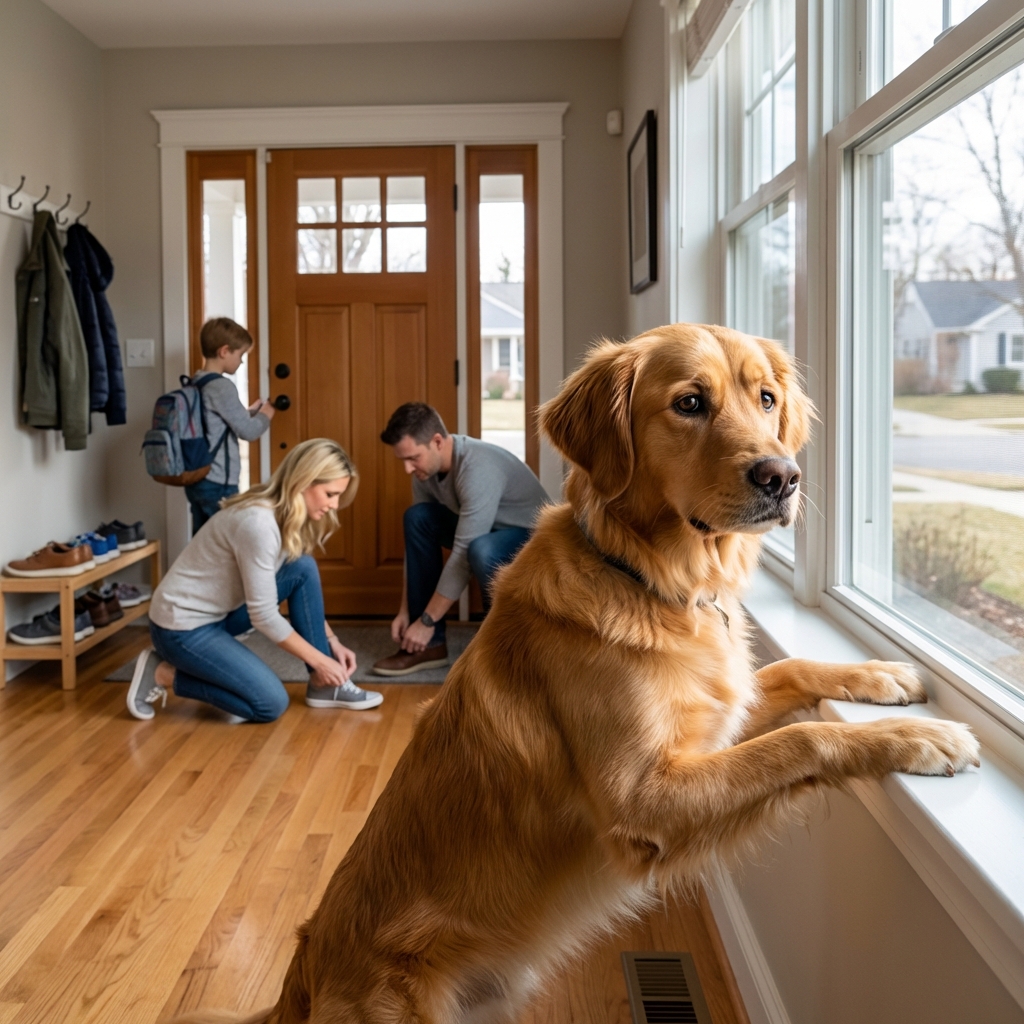
- Pre-departure panic: trembling or clinging when you put on shoes or pick up a bag
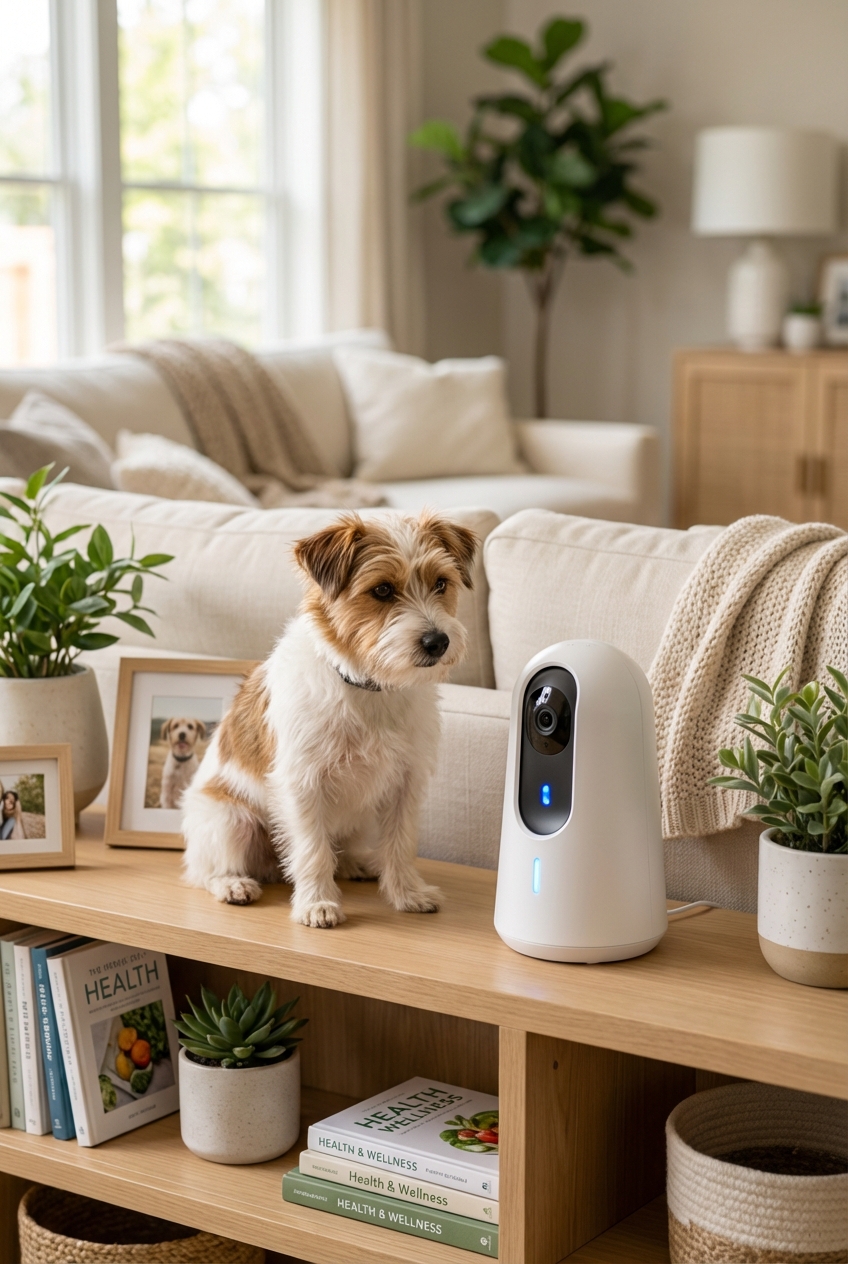
Helpful tip: A camera is one of the best tools you can use. Many dogs look “fine” to us because distress commonly shows up in the first 5 to 30 minutes, but some dogs ramp up later. Video gives you the truth.
Anxiety vs. boredom
These issues can look similar, but the solution changes depending on the cause. Your veterinarian or behavior professional will usually look at timing (when it happens), intensity, what triggers it, and what the camera shows. They will also consider medical rule-outs.
- Boredom or under-exercise: mischief tends to be more random, and the dog can still relax alone after needs are met.
- Adolescent behavior: chewing and boundary testing can happen even when people are home.
- Incomplete house-training: accidents happen at various times, not specifically during absences.
- Noise sensitivity: panic may happen around thunderstorms, fireworks, or neighborhood sounds, even if you are home.
Separation anxiety, isolation distress, and separation-related behaviors: Some dogs are upset only when a specific person leaves. Others struggle with being alone no matter who leaves. Many articles group these under “separation anxiety” because the day-to-day plan is similar, but the details matter when you build your training steps.
If you’re unsure, bring a short video to your veterinarian or a qualified behavior professional. Diagnosis is not about labels. It’s about picking the right plan and keeping your dog safe.
Why it happens
Separation anxiety often comes from a mix of temperament, life history, and learned patterns. It can show up after a big change, but it can also appear “out of the blue” as a dog matures.
Common triggers
- Change in schedule (new job, return to office, school starting)
- Moving homes or remodeling
- Loss of a person or another pet
- Rescue history, rehoming, or multiple transitions
- Underlying medical discomfort that increases stress
The most important thing to remember is this: your dog is not giving you a hard time. Your dog is having a hard time.
Rule out medical issues
Before you assume “behavior,” check for medical contributors. Pain, GI upset, urinary issues, cognitive changes in seniors, and even some endocrine conditions can make a dog more anxious or more likely to eliminate indoors.
Vet check is especially important if: the behavior is new, your dog is older, accidents started suddenly, or you notice changes in drinking, appetite, mobility, or sleep.
What actually helps
Separation anxiety is best treated with a combination of management, behavior modification, and in some cases, medication. The goal isn’t to “tire them out” until they crash. The goal is to teach your dog that alone time is safe.
Quick note on exercise: Daily walks and play can help lower baseline stress and improve sleep, but exercise alone rarely fixes separation anxiety. Training and management are still the core.
1) Safety and management
- Prevent panic rehearsals: Repeated full panic episodes can reinforce the panic response and make it harder to change. If possible, avoid leaving your dog alone for longer than they can handle while training is in progress.
- Use support options: pet sitter, trusted neighbor, dog daycare (if your dog enjoys it), or bringing your dog with you when appropriate.
- Choose a safe confinement setup: Some dogs do best in a room or behind a baby gate, not a crate. If your dog is injuring themselves in a crate, stop and ask your vet or trainer for a safer plan.
Safety note: Severe destruction and escape attempts are not just “messy.” They can lead to broken teeth, torn nails, lacerations, or swallowing unsafe objects. In these cases, management and veterinary support should come first while you work on training.
2) Find your dog’s threshold
Before you increase alone time, you need to know your dog’s current “calm limit.” Use your camera and do a few test departures. Your goal is to find the longest time your dog can stay relaxed, with a soft body and no frantic searching, barking, or pacing.
- Start with very short absences.
- If you see distress, you went too far. Make the next one easier.
- Write down the calm duration so your plan is based on data, not guesses.
3) Gradual departure training
This is called systematic desensitization and it is one of the most evidence-based approaches.
- Start with seconds, not minutes.
- Return before your dog shows distress.
- Repeat short sessions daily.
- Increase time in small increments, and vary the duration so it’s not predictable.
Realistic timeline: Some dogs improve in weeks, many need a few months. That’s normal.
4) Teach calm and independence
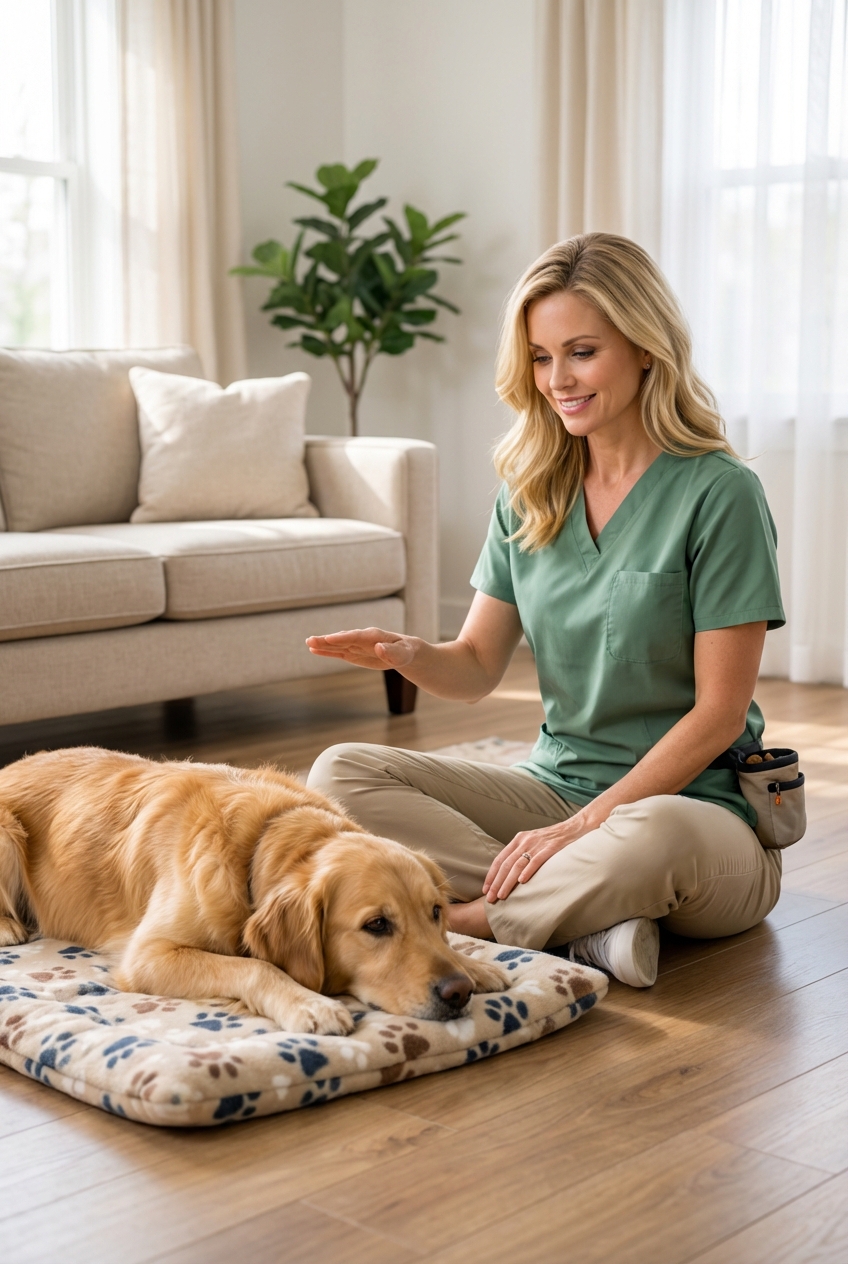
- Practice mat training (relax on a bed while you move around the house).
- Reward calm behavior you like, especially when your dog chooses to rest.
- Use baby steps: close a bathroom door briefly, step outside to check the mail, walk to the garage and back.
5) Reduce departure cues
Many dogs panic before you ever leave. Keys, shoes, perfume, the laptop bag, all become triggers. These cues can stack up into a predictable pattern that tells your dog you’re about to disappear.
- Pick up keys and sit on the couch.
- Put on shoes and make coffee.
- Grab your bag and fold laundry.
We’re teaching your dog: “Those cues don’t always predict being alone.”
6) Enrichment that supports calm
Food puzzles can help, but only if your dog is still able to eat when you leave. A dog that’s too anxious to eat is telling you they are over threshold.
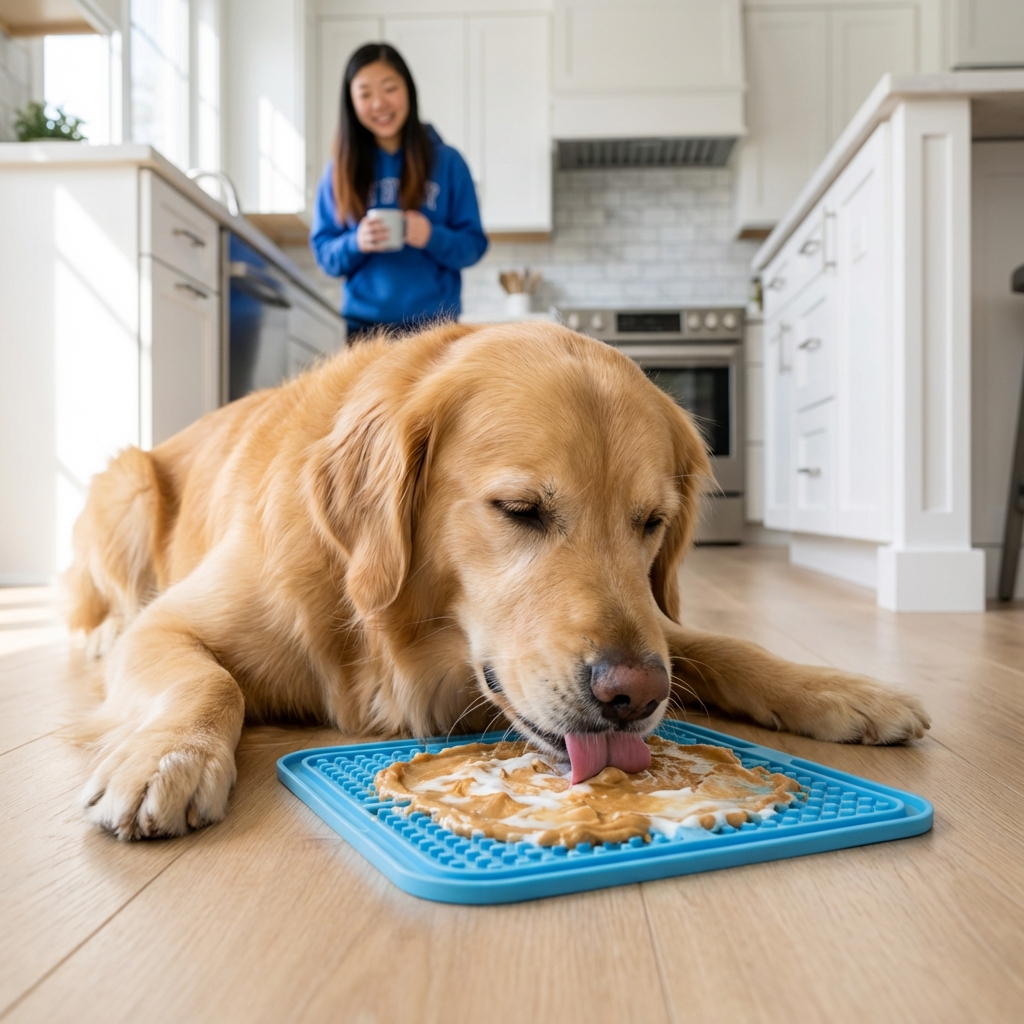
- Try a frozen lick mat with dog-safe food.
- Use a stuffed Kong and reserve it for practice departures.
- Offer sniffing games before you leave (scatter kibble in a towel or around one room).
Greetings at home
You may have heard advice to ignore your dog for 10 minutes when you return. In real life, that can be confusing and stressful for some dogs.
A more dog-friendly, vet-guided approach is:
- Come in calmly.
- Take your dog out for a potty break if needed.
- Reward the behaviors you want, like four paws on the floor and a soft body.
Big, intense greetings can accidentally turn departures and arrivals into emotionally “huge events.” Calm is the goal.
Crate or no crate
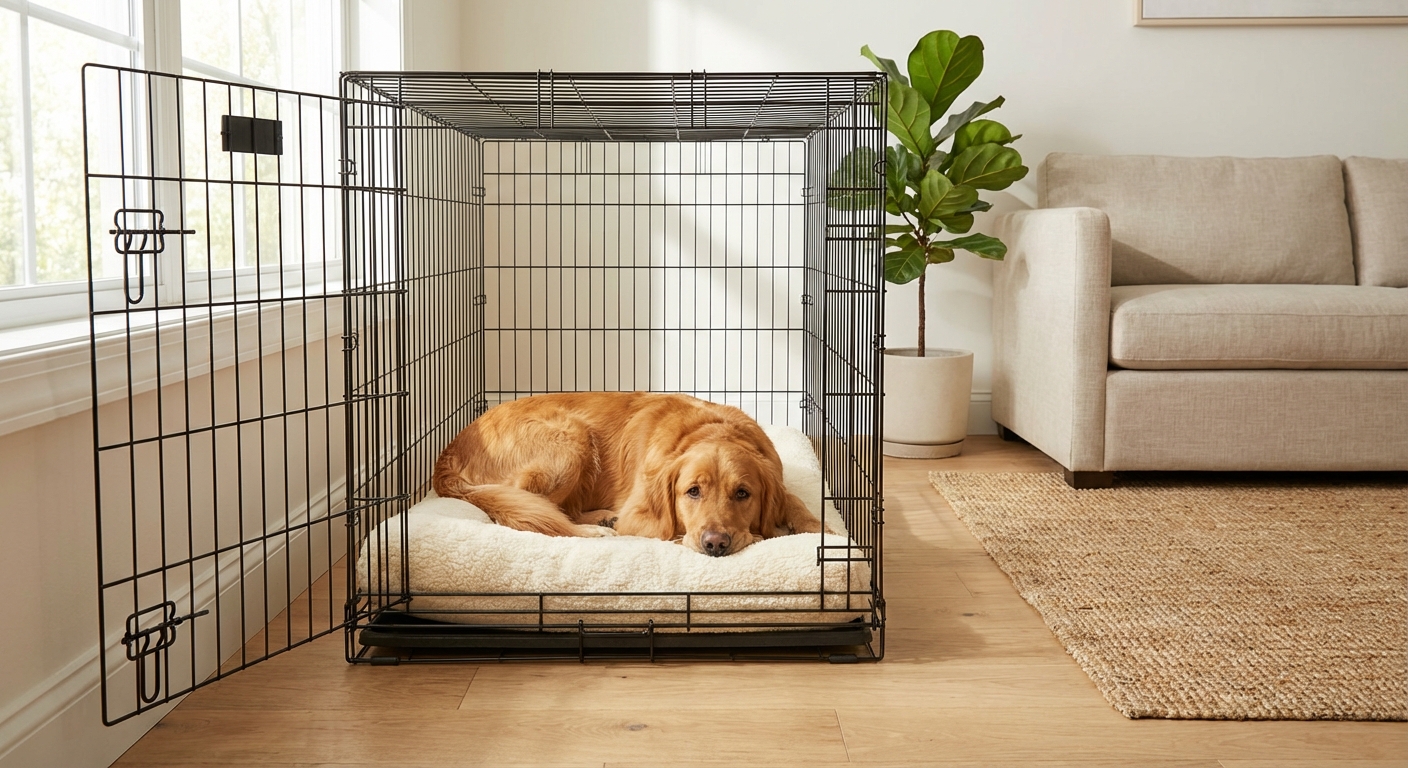
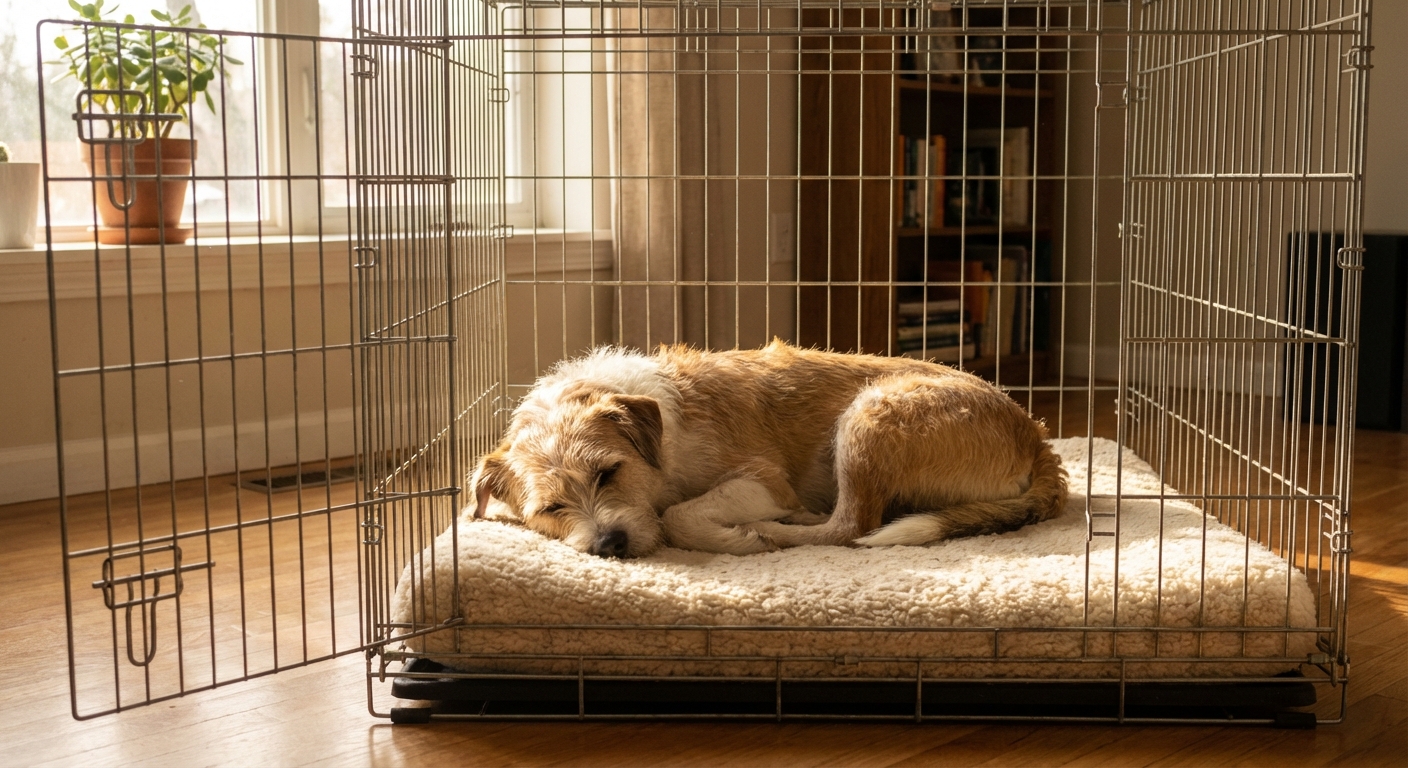
Crates can be wonderful when a dog is truly crate-trained and feels safe inside. But for a dog with separation anxiety, a crate can either help or make things worse.
Crate may help if your dog
- chooses to rest in the crate with the door open
- can be confined without drooling, biting bars, or panicking
- has a long history of calm crate time
Crate may hurt if your dog
- tries to escape and risks injury
- refuses food and shows escalating distress
- has a history of confinement fear
If you’re on the fence, use your camera and your vet’s guidance. Safety comes first.
Calming supplements
Some dogs benefit from veterinarian-recommended calming aids, especially when paired with training. Results vary, and quality matters. Talk to your veterinarian before starting supplements, particularly if your dog takes other medications.
Common options your vet may discuss include:
- pheromone products (diffusers or collars)
- L-theanine or alpha-casozepine based supplements
- veterinary calming diets
Think of these as support tools, not a guaranteed fix and not a standalone cure.
When medication helps
For moderate to severe separation anxiety, medication can be a humane part of treatment. It can lower panic enough for your dog to actually learn during training.
Only a veterinarian can diagnose and prescribe anxiety medication for your dog. When used, behavior medications are typically paired with a behavior modification plan. Your veterinarian may also prescribe a short-acting medication for departures while a daily medication builds effect.
Important: Never use human anxiety medications without veterinary direction. Doses and drug choices aren’t interchangeable, and safety comes first.
What not to do
- Do not punish: yelling, shock collars, or “rub their nose in it” increases fear and often worsens separation issues.
- Do not flood: leaving for a long period in hopes your dog “gets used to it” can intensify panic.
- Do not assume stubbornness: panic isn’t defiance.
Next 7 days
If you’re feeling overwhelmed, start small. Consistency beats perfection.
- Day 1: Schedule a vet check if this is new or worsening. Set up a camera.
- Day 2: Identify triggers (keys, shoes, bag) and practice them without leaving.
- Day 3: Find your dog’s current calm threshold with a few very short test departures. Then do 5 to 10 mini departures of 5 to 20 seconds each, returning before distress.
- Day 4: Add mat training for 3 minutes while you move around.
- Day 5: Repeat mini departures, vary durations, add a frozen lick mat if your dog will eat.
- Day 6: Increase one departure slightly, but only if your dog stayed calm.
- Day 7: Review camera footage and adjust. If you see panic, scale back.
Progress isn’t always a straight line. If your dog has a bad day, it doesn’t mean you failed. It means the plan needs a smaller step.
Get professional help
You don’t need to do this alone. Reach out if:
- your dog is injuring themselves trying to escape
- you can’t leave for even 30 to 60 seconds without distress
- your dog stops eating when you prepare to leave
- there is aggression during departure cues or confinement
Look for a board-certified veterinary behaviorist (DACVB) or a qualified force-free trainer with separation anxiety experience. Helpful credentials to look for include CSAT, IAABC, or KPA-CTP. Avoid anyone who recommends punishment, shock collars, or “letting them cry it out” for separation anxiety.
Bottom line
Separation anxiety is a health and welfare issue, not a “bad dog” issue. With a vet-guided plan, careful training, and sometimes medication support, most dogs can make meaningful progress and learn to feel safer when alone.
If you take one thing from me today, let it be this: go slow, prevent panic rehearsals, and celebrate small wins. Those small wins add up to real freedom for you and peace for your dog.