A step-by-step, family-friendly plan to reduce separation anxiety in dogs using safety management, trigger desensitization, tiny absences, enrichment, and ve...
Article
•
Designer Mixes
Separation Anxiety in Dogs: Stop the Whining

Shari Shidate
Designer Mixes contributor
Few things tug at your heart like hearing your dog cry, bark, or whine the moment you reach for your keys. Separation anxiety is real; it is common; and it is treatable. The goal is not to “toughen your dog up.” It is to teach your dog, through gentle training and smart routines, that being alone is safe and temporary.
As a veterinary assistant in Frisco, Texas, I have seen a lot of loving families blame themselves for this issue. Please do not. With consistency and the right plan, most dogs improve significantly.
Is it separation anxiety?
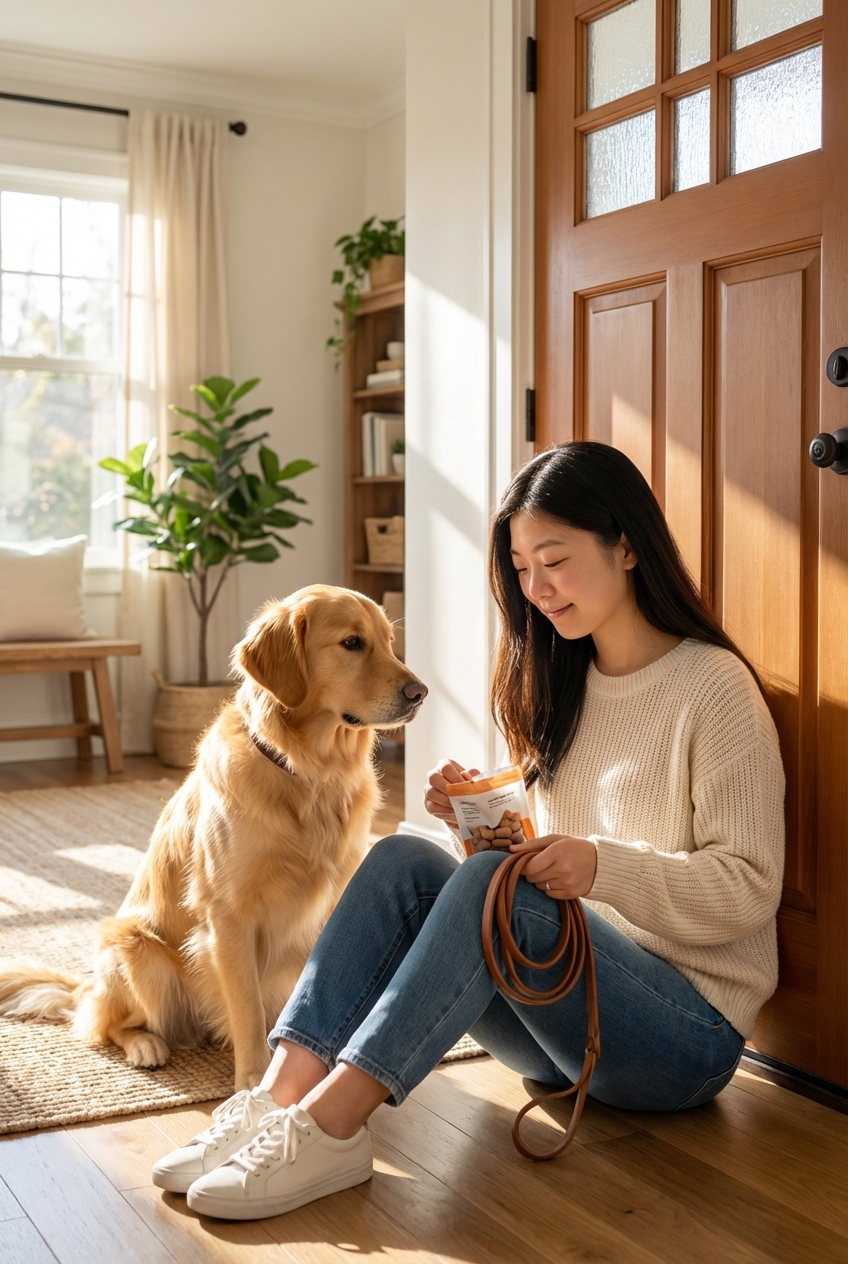
Whining when you leave can come from several causes. True separation anxiety is a panic response to being alone, not a dog “being stubborn” or “acting out.” Before you start a training plan, it helps to know what you are dealing with.
Common signs
- Whining, barking, or howling soon after you leave
- Pacing, drooling, panting, or trembling
- Scratching at doors or windows, trying to escape
- Destructive chewing that happens only when alone
- Accidents in the house despite being house-trained
- Shadowing you from room to room when you are home
Related patterns
- Normal protest: A brief whine for a minute or two, then settling
- Boredom or under-exercise: Chewing and mischief that can happen even when you are home
- Noise sensitivity: Reacting to thunder, fireworks, or construction
- Medical issues: Urinary tract infections, GI upset, pain, cognitive changes in seniors
- Isolation distress: Distress when left alone, but the dog may do fine if any person is present
- Person-specific distress: The dog is calm for one family member, but panics when a particular person leaves
If you can, set up a simple camera or use an old phone to record when you leave. The first 30 to 60 minutes is a great starting point, but if you suspect your dog escalates later, record longer or check in periodically. That footage is incredibly helpful for you and your veterinarian or trainer.
Why whining happens
Whining is communication. In separation anxiety, it is often your dog’s way of saying, “I am scared and I do not know what to do.” In that moment, many dogs are not in learning mode, they are in survival mode. That is why punishment (yelling, citronella collars, shock, spray bottles) can make the problem worse. It may stop the sound briefly, but it does not resolve the panic.
A widely recommended, evidence-based approach is to change your dog’s emotional response to being alone. This is typically done through gradual, structured practice that stays under your dog’s panic threshold.
Set up for success
1) Meet basic needs
Training works better when your dog’s body is calm.
- Exercise: Aim for an age-appropriate walk, sniff time, or play session before alone time.
- Potty: Give a bathroom break right before you practice departures.
- Food and hydration: A hungry dog may be more restless, but do not rely on food alone if your dog is panicking.
2) Pick a calm home base
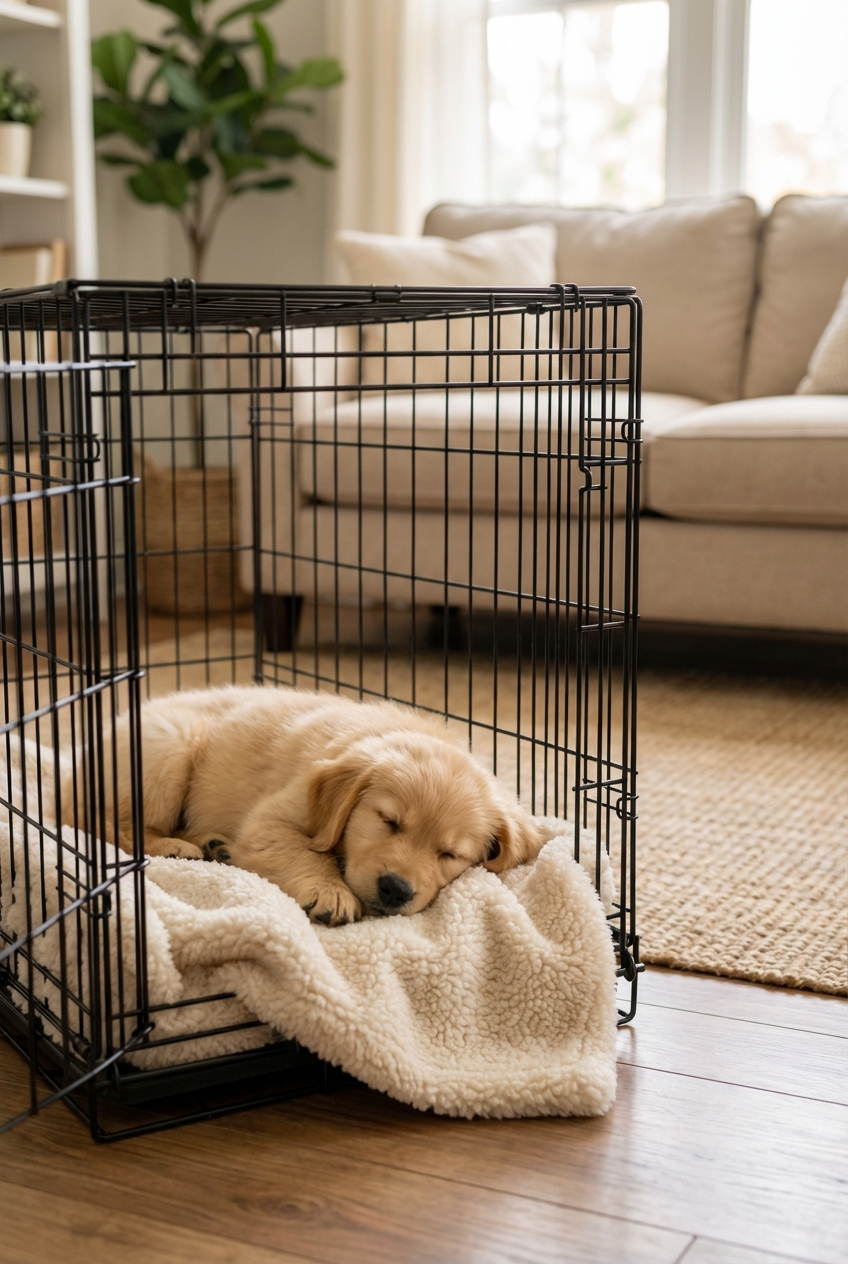
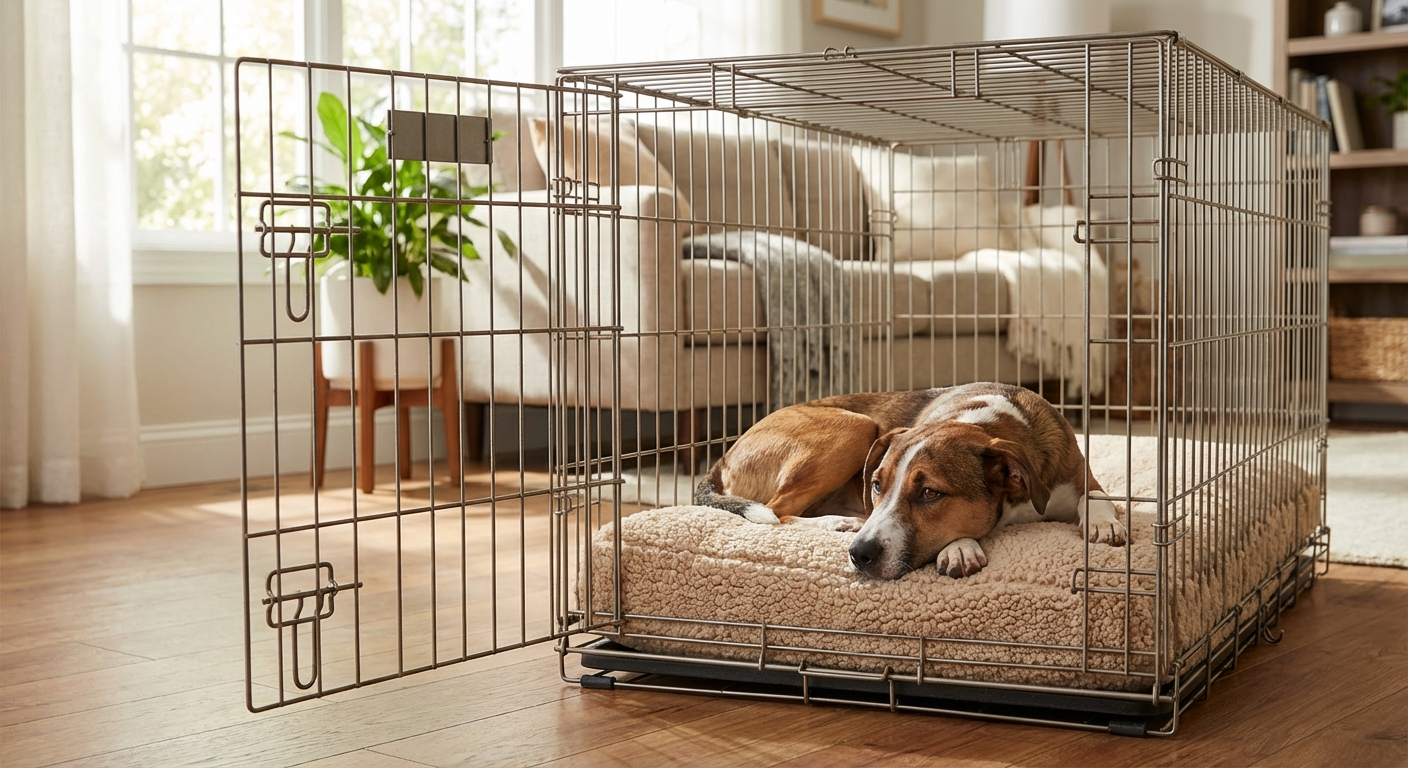
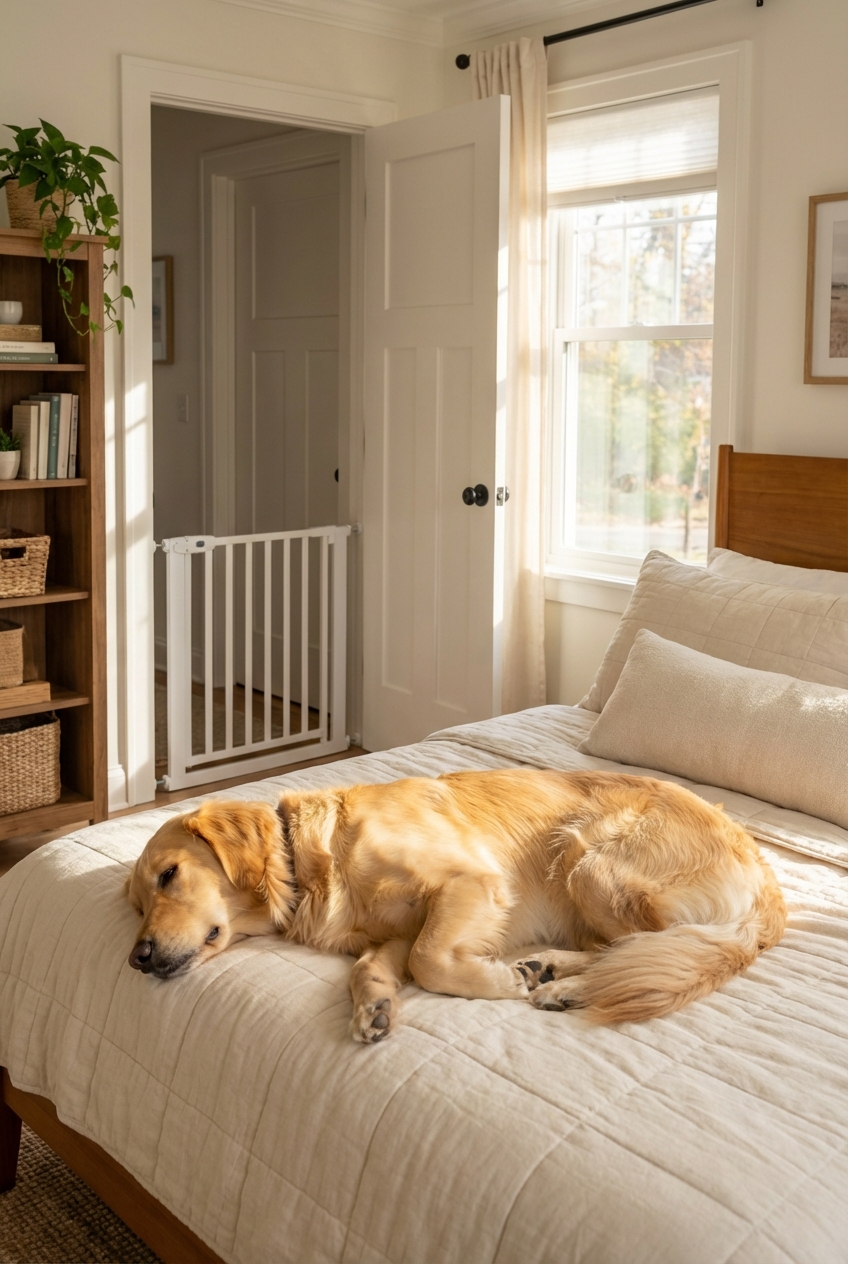
This might be a crate, an exercise pen, a gated room, or a dog-proofed bedroom. The “best” setup depends on the dog. Some dogs relax in a crate. Others feel trapped and escalate.
Crate safety note: If your dog is biting bars, throwing themselves at the door, breaking nails, or panicking hard in a crate, stop crating for now and talk with your vet or a qualified trainer. Confinement should increase safety and calm, not risk injury.
3) Neutralize departure cues
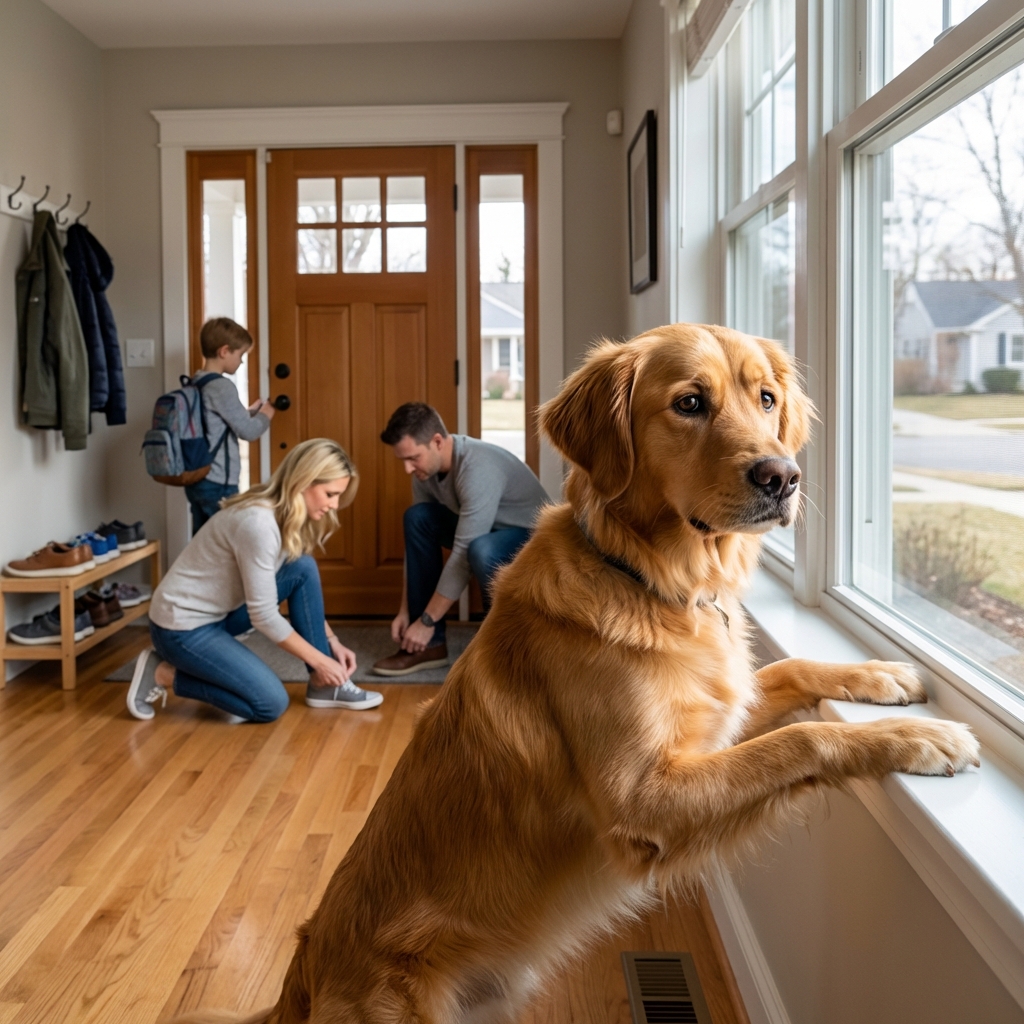
Many dogs start to stress out before you even leave because they have learned your routine: shoes on, keys jingling, purse grabbed. We can retrain those cues.
- Pick up keys and set them down, then sit on the couch.
- Put shoes on, walk to the kitchen, and make tea.
- Grab your bag, then fold laundry for two minutes.
These simple “decoy routines” help your dog learn that departure cues do not always predict being alone.
Graduated alone-time practice
This is one of the most commonly recommended approaches for separation anxiety: very short absences that stay below your dog’s panic threshold, then slowly building up duration.
Step by step
- Pick a starting point your dog can handle. For some dogs, it is 1 second with you stepping outside. For others, it is 30 seconds. The camera tells the truth.
- Leave calmly. No big goodbyes. Keep it neutral.
- Return before the whining escalates. You are not “rewarding” anxiety. You are preventing rehearsal of panic.
- If your dog is already panicking, reset. Re-enter quietly, avoid a big greeting, and make the next repetition easier and shorter.
- Pause, then repeat. Do several short repetitions, like training reps.
- Increase duration in tiny increments. Add seconds, not minutes, until your dog is consistently calm.
Under threshold
- Soft body, can lie down
- Sniffing, exploring, or chewing calmly
- Maybe a brief look toward the door, then settling
Over threshold
- Whining that builds, frantic barking
- Pacing, scanning, panting, drooling
- Scratching doors, trying to escape
If you see over-threshold behavior, your next practice should be easier and shorter.
Teach calm skills
Dogs with separation anxiety often struggle to self-settle, especially when they are alone. The good news is that relaxation is a skill you can teach.
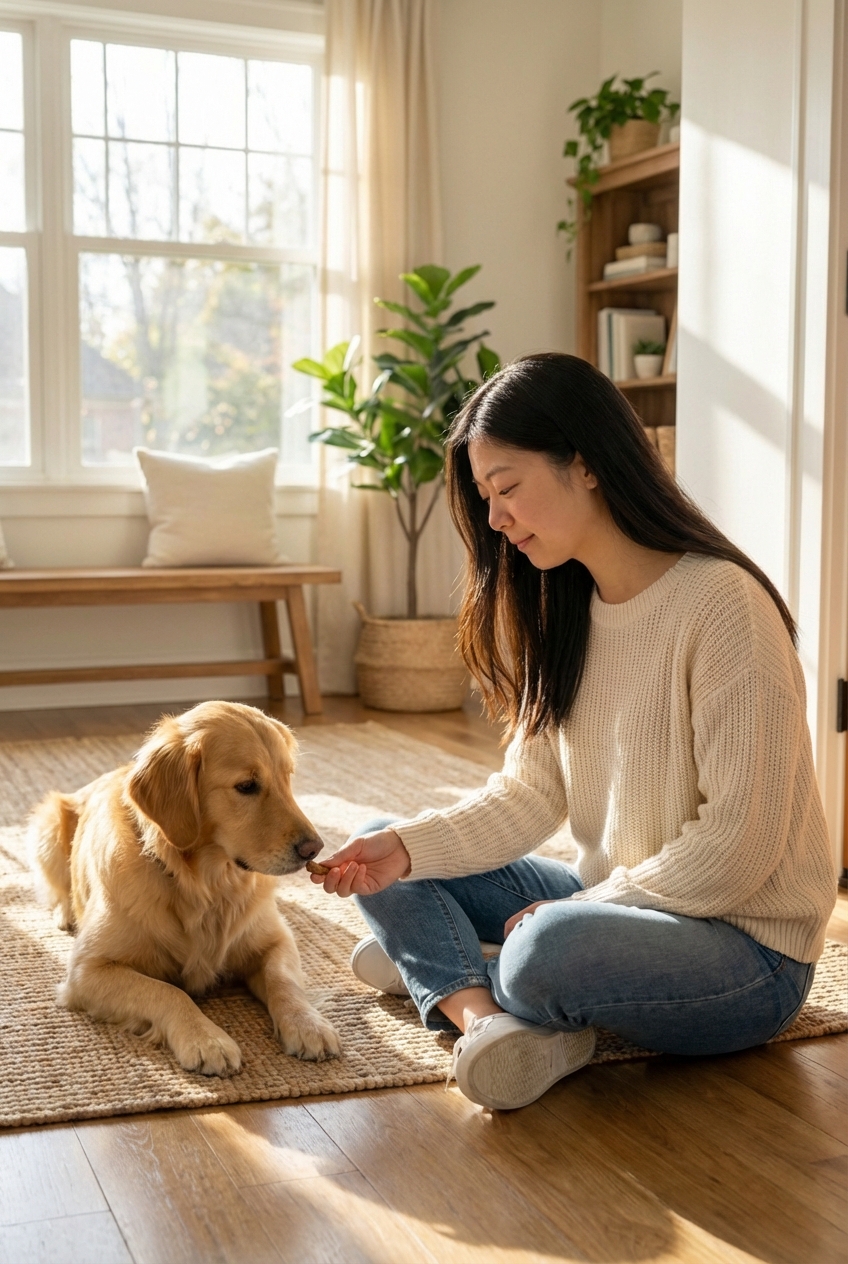
Go to mat
- Place a comfortable mat or dog bed nearby.
- Drop a treat on the mat when your dog steps on it.
- When your dog starts choosing the mat, add a cue like “mat” or “bed.”
- Reward for lying down, then for staying down a little longer.
Once this is solid, use the mat during your short absence practices. Your dog is not just “waiting,” they are practicing calm.
Calm enrichment
Food puzzles can help, but for true separation anxiety, some dogs will not eat when stressed. That is information. If your dog refuses a high-value chew only when alone, anxiety is likely driving the behavior.
- Try a stuffed frozen food toy, a lick mat, or a safe long-lasting chew.
- Offer it during calm times first, not only when you leave, so it does not become a departure cue.
- Remove anything that could be chewed and swallowed, especially for dogs who destroy items when anxious.
What not to do
- Do not punish whining. It can increase fear and make the anxiety worse.
- Do not do huge, emotional goodbyes. It raises the emotional temperature.
- Do not rush the timeline. Longer absences too soon can set training back.
- Do not rely on “another dog” to fix it. Some dogs do better with company, but separation anxiety can persist even with a second pet.
Management while training
Training takes time, and your dog still needs care in the meantime. Management is not “giving in.” It prevents panic rehearsals, which matters a lot for progress.
- Use a trusted pet sitter, neighbor, or daycare for longer workdays if needed.
- Consider dog-walking help at peak times.
- Practice alone-time training when you are not rushed.
Repeated panic episodes can reinforce the anxious response. Preventing those episodes is part of the treatment plan.
Signs of progress
When you are in the middle of this, it can be hard to notice improvements. A few simple markers can help you track real change:
- Longer time to settle: Your dog relaxes sooner after you leave, or shows less pacing.
- Calmer pre-departure behavior: Keys and shoes cause less concern.
- More normal behavior when alone: Your dog can lie down, chew, or sniff instead of scanning the door.
- Eating returns: Your dog will take a lick mat or chew during alone-time sessions.
- Less vocalizing: Whining is shorter, quieter, or absent.
How often to practice
Short, successful sessions beat long, stressful ones. Many dogs do well with a few focused sessions a day, while others can handle more frequent micro-absences.
- Keep sessions short.
- End on a win.
- Stop if you see your dog starting to struggle and make the next session easier.
When to get help
If your dog is hurting themselves trying to escape, destroying doors or crates, or showing severe distress, bring in help sooner rather than later.
Get support if you see
- Self-injury (broken nails, bloody nose, worn teeth)
- Non-stop vocalizing, heavy drooling, vomiting, or diarrhea when alone
- Sudden behavior change, especially in senior dogs
Talk with your veterinarian to rule out medical contributors and discuss whether medication could help. For some dogs, medication is not a last resort. It can be a humane tool that lowers panic enough for the brain to learn. Pair it with training, ideally guided by a qualified trainer who uses positive reinforcement and has separation anxiety experience.
Choosing a trainer
- Look for separation-anxiety specific education and an up-to-date, reward-based approach.
- Helpful credentials include CSAT, IAABC, and KPA (among others).
- Avoid anyone who recommends punishment, intimidation, or aversive collars for separation anxiety.
7-day starter plan
Here is a gentle, doable way to begin. Adjust the pace based on what your camera shows.
Days 1 to 2
- Record alone-time behavior (and longer if needed).
- Choose the calmest confinement setup (crate, pen, room, or free-roam).
- Practice departure cues with no leaving (keys, shoes, bag).
Days 3 to 5
- Practice short departures daily.
- Start with seconds, return before panic starts.
- Use the mat cue and reward calm behavior.
Days 6 to 7
- Increase duration by small amounts.
- Mix easier reps with slightly harder reps.
- If whining returns, shorten the next one and rebuild.
Progress is rarely a straight line. If you have a setback, it does not mean you failed. It means you found your dog’s current limit, and now you can train just under it.
Final note
Separation anxiety can feel overwhelming, especially when you are juggling work, family, and everyday life. But you are not stuck with the whining forever. With small, consistent practice, your dog can learn a new pattern: alone time is safe, predictable, and temporary.
If you want one guiding principle to remember, it is this: calm is a skill, and skills can be taught.