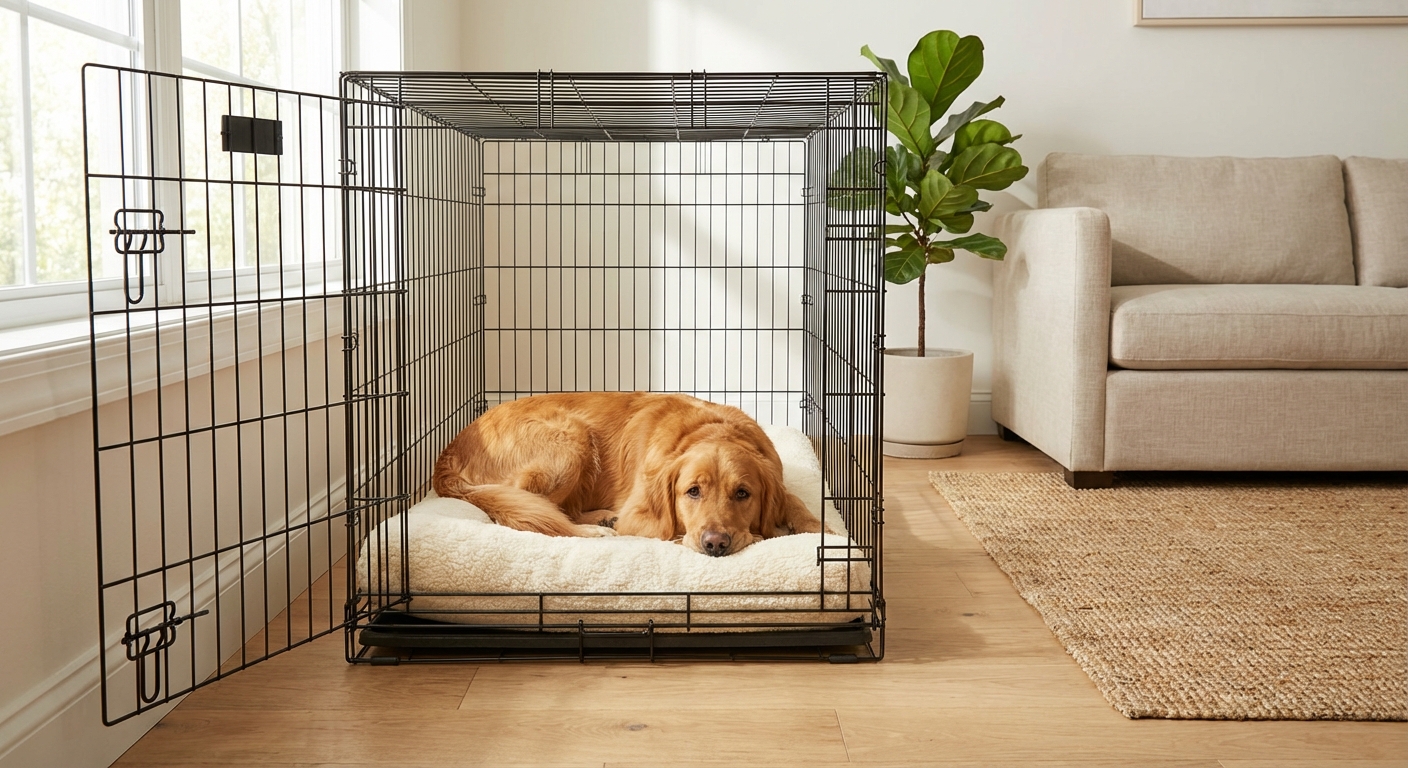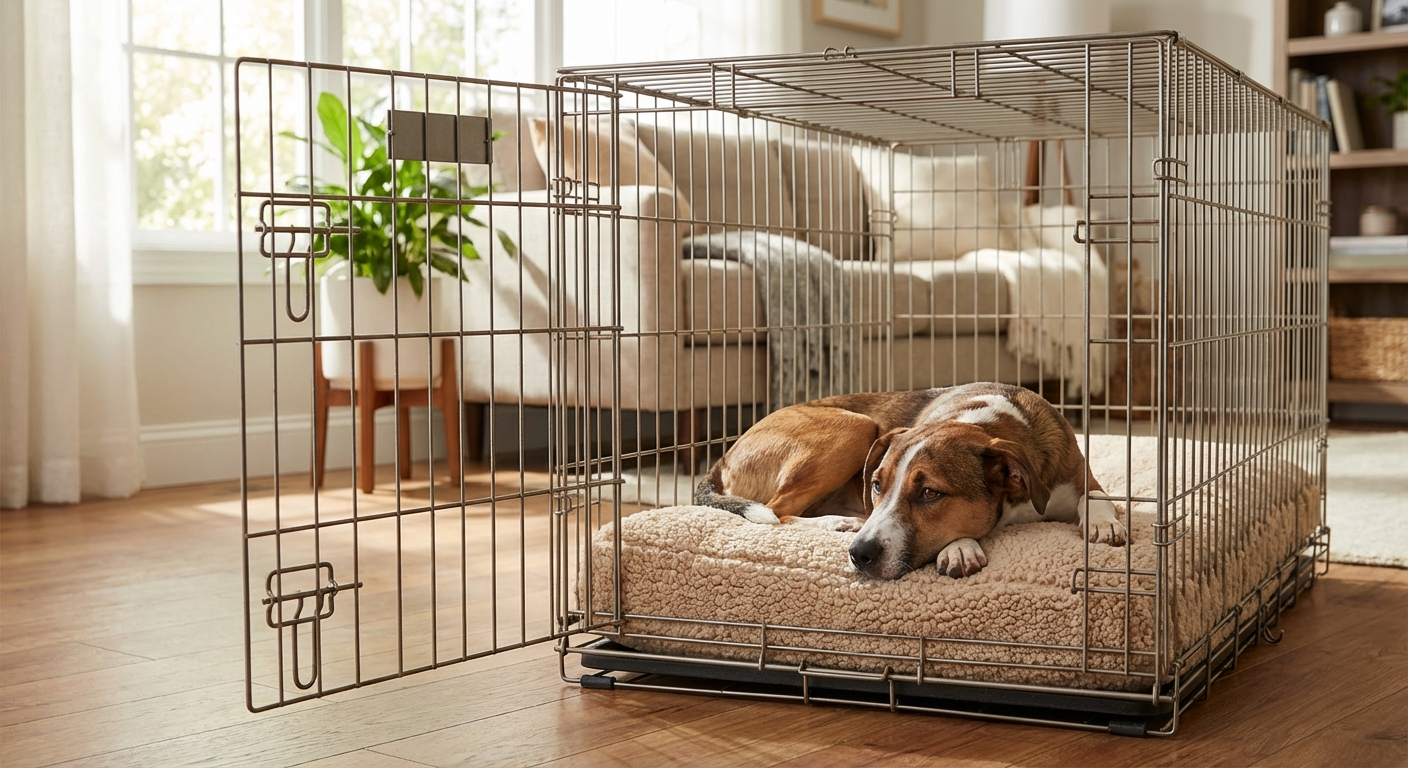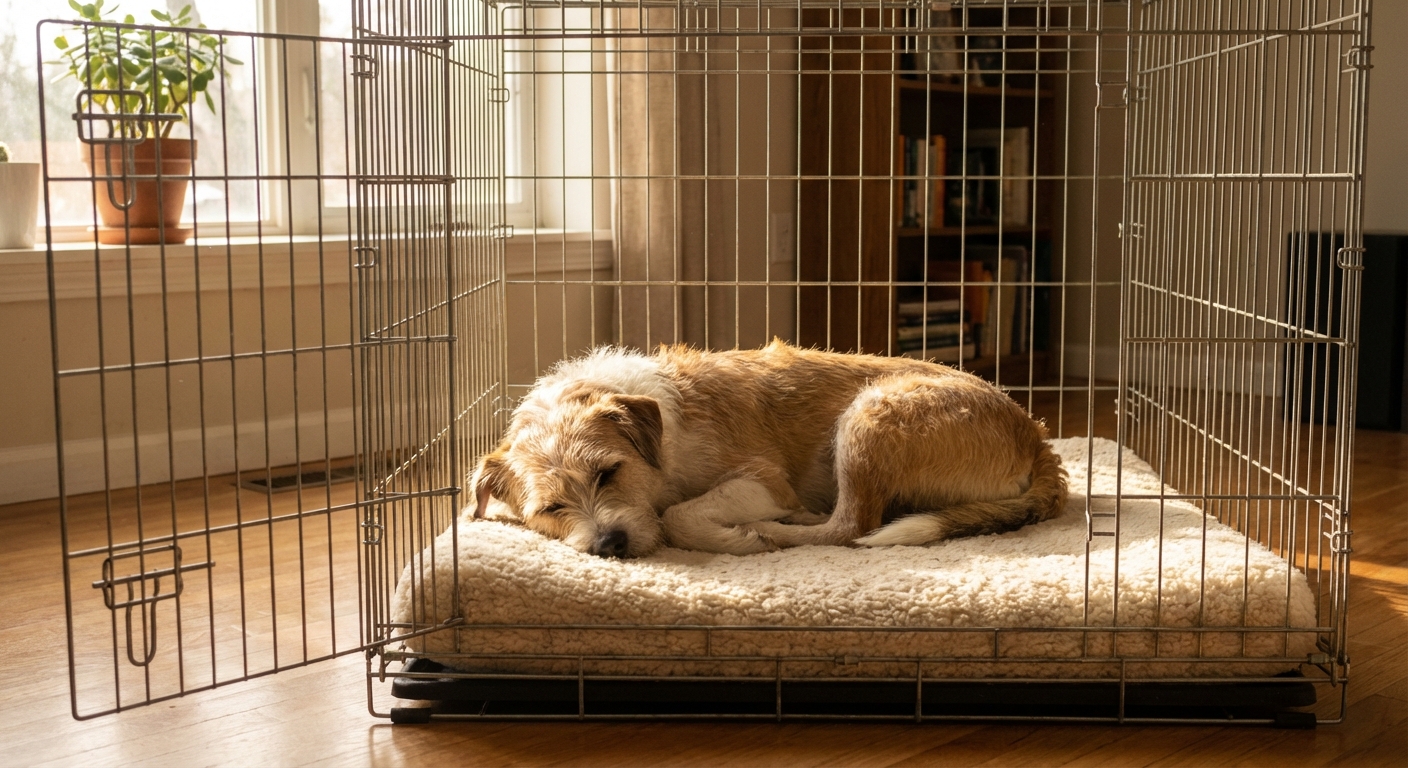
Teach your dog to feel safe in the crate with simple games that build calm independence—treasure hunts, in-and-out choice, door = treats, Kong licking, and...
Article
•
Designer Mixes
Separation Anxiety in Dogs

Shari Shidate
Designer Mixes contributor
Separation anxiety is a very common reason families feel stressed about leaving the house. The good news is that most dogs can improve a lot with the right plan. As a veterinary assistant in Frisco, Texas, I have seen that the best results come from a mix of safety, training, and meeting a dog’s daily needs, not from punishment or quick fixes.
This guide walks you through family-friendly steps that protect your dog’s wellbeing and keep your home peaceful. Start small, stay consistent, and remember that progress is usually measured in minutes before it becomes hours.
What it looks like
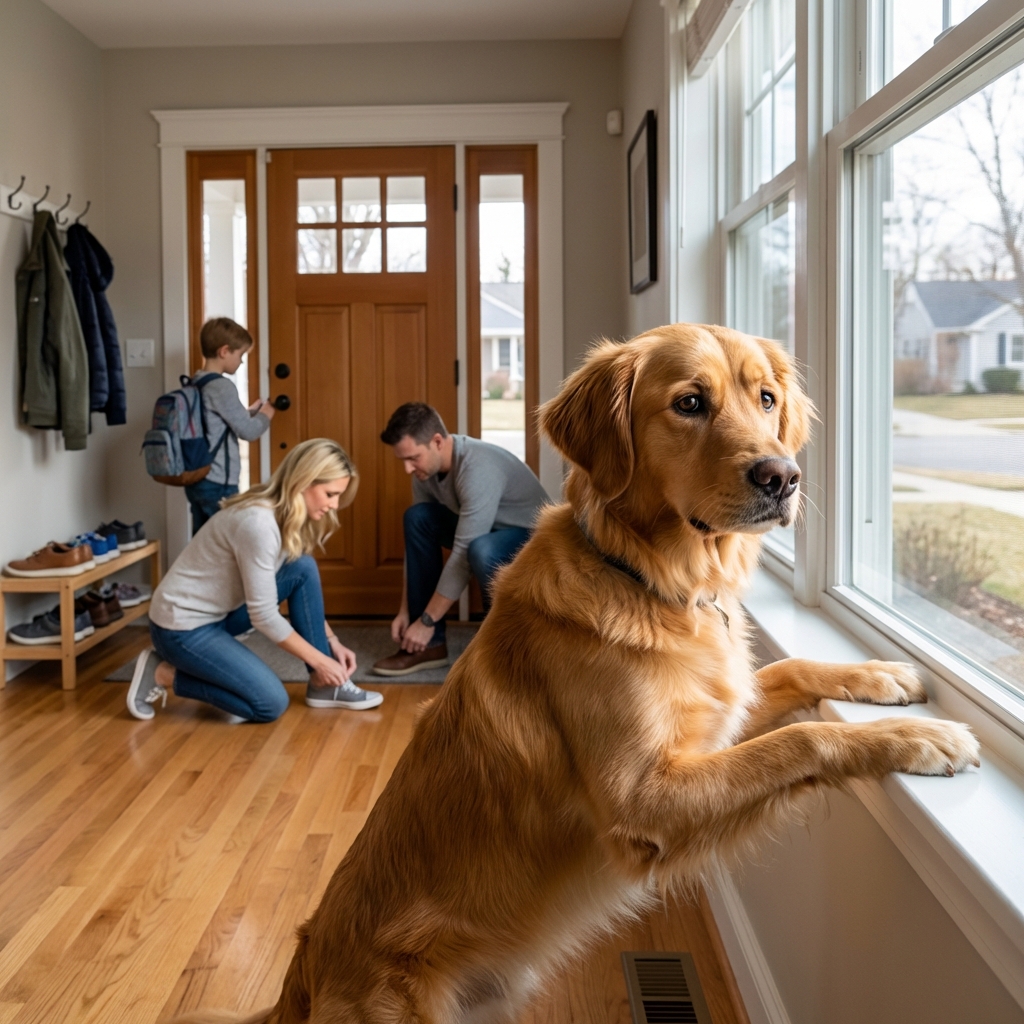
Many dogs dislike being alone, but separation anxiety is more than boredom. It is a panic response. Signs can start as soon as pre-departure cues begin (keys, shoes, the garage door), and often continue within minutes after you leave.
Common signs
- Vocalizing: barking, howling, whining soon after departure
- Destructive behavior focused on exits: scratching doors, chewing window trim
- House soiling despite being housetrained
- Drooling, panting, pacing, trembling
- Escape attempts that can cause broken teeth, nails, or cuts
- Hyper-attachment: shadows you constantly, panics when you move room to room
Separation anxiety or something else?
It is easy to label any “home alone” problem as separation anxiety, but a few other patterns are common:
- Boredom or under-stimulation: a dog chews or gets into trouble, but can still eat, rest, and settle once you are gone
- Isolation distress: some dogs are fine if any person is home, but panic when completely alone
- Barrier frustration or outside triggers: dogs may bark or scratch because they see people, dogs, or delivery trucks through windows
- Noise fears: storms, fireworks, or construction sounds can look like separation problems if they happen while you are away
If your dog is suddenly struggling after doing fine for months or years, schedule a veterinary visit. Pain, digestive issues, cognitive changes, or hearing loss can contribute to anxiety behaviors.
Why it happens
Separation anxiety is usually driven by fear and anticipation, not spite. Dogs are social animals, and some are simply more sensitive than others.
- Change in routine (new job schedule, kids back at school, travel)
- New home or family changes (move, divorce, new baby)
- History of instability (re-homing, shelter background)
- Genetics and temperament (some dogs are more prone to anxiety)
- Under-enrichment (not enough exercise, sniffing, training, rest)
Safety and management first
Before training begins, we want to prevent “panic practice.” That means avoiding situations where your dog goes into full distress, because repeated panic can strengthen the fear response and can make future absences harder. Management buys you time while you train.
Make alone time safer
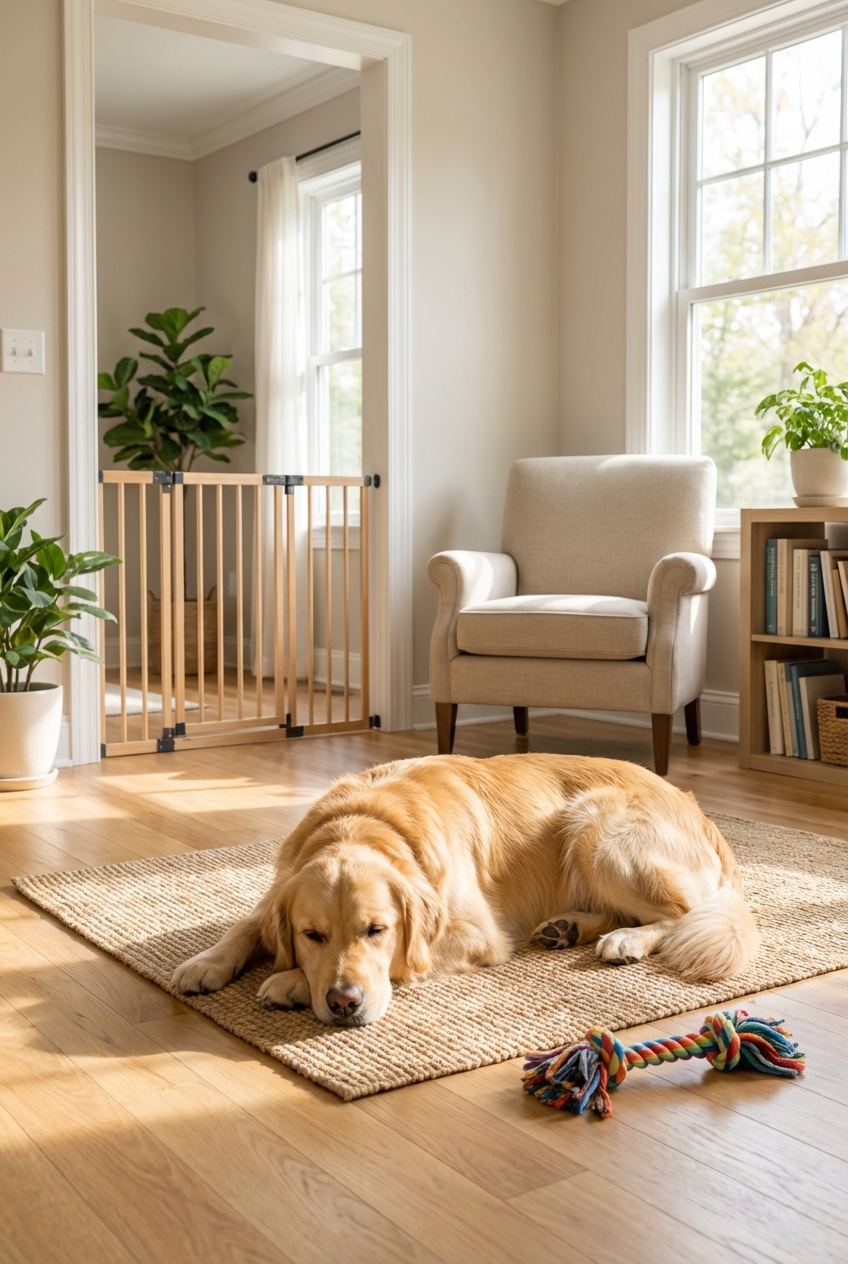
- Choose a confinement option carefully. Some dogs do best in a larger puppy-proofed room or gated area rather than a crate. If your dog panics in a crate, do not force it.
- Remove hazards. Pick up strings, kids’ toys, choking hazards, and secure trash cans and cords.
- Block window access if your dog gets worked up by outdoor triggers.
- Provide water and a cool, comfortable resting spot.
Avoid long absences during training
When possible, do not leave longer than your dog’s current safe duration. If your dog can handle 2 minutes calmly, a 45-minute errand can undo confidence quickly. This is why temporary help matters so much in the early stages.
Use temporary help if you can
- Dog walker, pet sitter, neighbor check-in, or doggy day care a few days a week
- Work-from-home swaps with a friend or family member during the first training weeks
- Short errands instead of long absences while you build tolerance
If absences are unavoidable
Most families cannot pause life completely. If you must be gone longer than your dog can currently tolerate, aim for the safest option available: a trusted sitter, a familiar family member, day care (if your dog enjoys it), or a plan from your veterinarian. For severe cases, your vet may recommend short-term support so your dog is not repeatedly pushed into panic while training is underway.
Family rules
Consistency is the secret sauce. When one person follows the plan and another person accidentally rehearses the “panic routine,” progress slows.
Simple agreements
- No scolding for anxiety behaviors. Punishment increases fear and can worsen the problem.
- Keep departures low-key. For some dogs, minimizing big goodbyes helps. If your dog seems more worked up by attention right before you leave, keep it simple and calm.
- One routine, but stay flexible. A predictable routine can help families stay consistent. Just watch your dog. If a phrase like “Back soon” starts to act like a trigger and increases anxiety, drop the cue and keep leaving quietly.
- Kids help in safe ways. Let children fill a food puzzle, sprinkle kibble in a snuffle mat, or practice a sit-stay, but adults handle departures and training steps.
Desensitization steps
The goal is to teach your dog that alone time is safe. You do this by practicing absences that keep your dog under threshold. Under threshold means your dog is ideally relaxed, or at most mildly concerned, but not panicking.
1) Break departure triggers
Many dogs start spiraling when they see keys, shoes, a purse, or the garage door opening. Practice these cues without leaving.
- Pick up keys, then sit on the couch.
- Put on shoes, then make a sandwich.
- Open and close the door, then toss a treat and walk away from the door.
2) Start tiny
Begin with seconds, not minutes, if needed.
- Step outside, close the door, count to 3, return calmly.
- Repeat until your dog stays relaxed.
- Gradually increase: 5 seconds, 10 seconds, 20 seconds, 45 seconds, 1 minute.
Move up only when your dog is consistently calm at the current duration. If your dog barks, pants heavily, drools, freezes, or scratches at exits, you went too fast. Drop back to a shorter time and rebuild.
3) Vary the schedule
Dogs notice patterns. Once you can do a few minutes, vary the routine so your dog learns that departures are normal, not ominous.
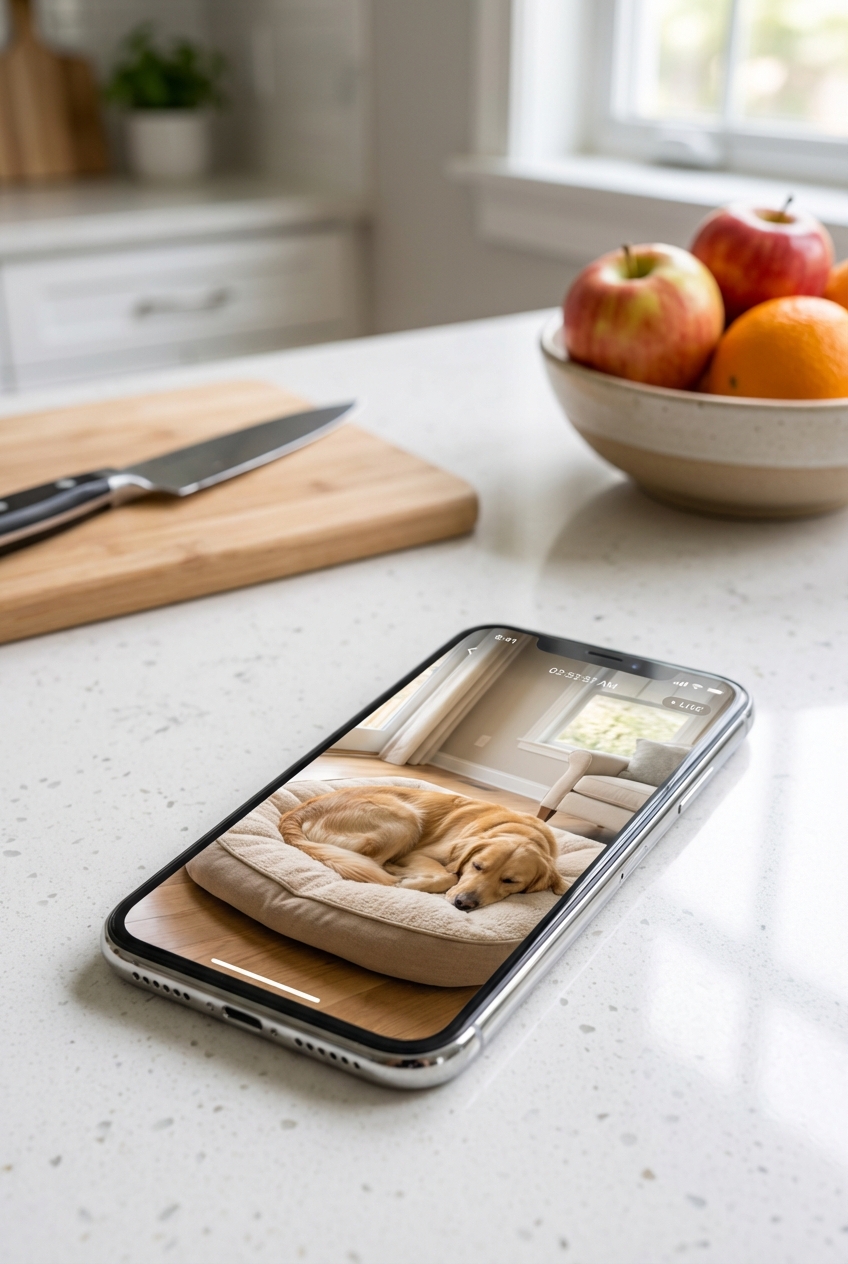
4) Use a camera
A simple pet cam helps you see the moment stress begins. That helps you set training times that prevent panic.
Safety note
If your dog is injuring themselves, breaking teeth, or attempting to escape through windows or crates, do not continue departure training on your own. Focus on management and get professional help right away.
Enrichment that helps
Enrichment works best when it lowers stress and gives the brain a job. For many dogs, licking and sniffing are calming.
Great options
- Stuffed Kong or similar toy using wet dog food, mashed sweet potato, or plain yogurt (skip if your dog is sensitive to dairy), then frozen
- Lick mat with a thin smear of peanut butter that does not contain xylitol (also called birch sugar)
- Snuffle mat with measured kibble from your dog’s daily calories
- Scatter feeding in a safe room for sniffing and foraging
Important: If your dog will not eat when you leave, that is a clue they are already over their stress threshold. Focus on shorter absences and calmer setups first.
Routine and exercise
A tired dog is not always a calm dog, but meeting daily needs makes anxiety training easier. Think “fulfilled” more than “exhausted.”
Daily basics
- Sniff walk (20 to 40 minutes) where your dog can explore slowly
- Short training session (5 to 10 minutes) using treats or kibble: sit, down, place, touch
- Chewing time (vet-approved chews that are safe for your dog’s teeth)
- Predictable rest in a quiet spot, especially in busy households
If your dog becomes more frantic after intense exercise, try gentler activities like sniffing games and decompression walks.
Independence skills
These are simple exercises that teach your dog that being near you is nice, but being slightly apart is also safe.
Place game
- Teach your dog to relax on a bed or mat with treats.
- Reward calm body language: hip rolled, head down, soft eyes.
- Gradually add distance: one step away, then two steps, then briefly out of sight.
Baby gate practice
Use a gate while you are home so separation is not always tied to you leaving the house.
Calm transitions
If your dog revs up every time someone stands up, practice calm transitions: stand, sit back down, reward calm, repeat. Families with kids often see big improvements from this alone.
Medication support
Medication is not a failure. For dogs in true panic, it can be the bridge that allows learning to happen. Training is still essential, but the right support may reduce intensity so your dog can stay under threshold.
It is also okay to need a plan that combines training, management, and medical support. The goal is progress you can sustain, not perfection overnight.
Talk to your vet if:
- Your dog injures themselves trying to escape
- Your dog cannot settle even for seconds alone
- House soiling and destruction are severe
- You are facing eviction or serious neighbor complaints
Your veterinarian may recommend behavior medication, calming nutraceuticals, or referral to a board-certified veterinary behaviorist. Avoid giving human anti-anxiety medications unless prescribed specifically for your dog.
What not to do
- Do not punish. It increases fear and can worsen anxiety.
- Do not “cry it out.” Flooding often backfires and can escalate panic.
- Do not rush crate training for a dog who panics in confinement.
- Be careful with bark collars. They may reduce noise but not panic, and distress can increase.
What progress looks like
Every dog is different, but here is a realistic way to think about it.
- Week 1: management, safer setup, very short absences, identify triggers
- Weeks 2 to 4: gradual increases, more calm independence practice, camera tracking
- Month 2 and beyond: longer departures, fewer trigger reactions, improved recovery time
Measure wins like this: “My dog recovered in 30 seconds instead of 10 minutes,” and “We made it to 5 calm minutes.” Those are real steps forward.
Checklist before you go
- Potty break
- Comfortable temperature and water
- Safe confinement choice for your dog
- One calming enrichment item (portion-controlled)
- White noise or soft music if it helps
- Camera on, if available
- Departure kept calm and brief
Extra support
If you feel stuck, you are not alone. Separation anxiety can be one of the toughest challenges because it touches daily life. A certified positive reinforcement trainer who has specific separation anxiety experience can be a game-changer. Look for humane methods, clear progress tracking, and a plan that prevents panic practice.