Vet-assistant tips to ease dog allergy itch safely at home: rinses, oatmeal baths, omega-3s, cool compresses, and lick prevention—plus remedies to avoid an...
Article
•
Designer Mixes
Seasonal Allergies in Dogs

Shari Shidate
Designer Mixes contributor
If your dog seems perfectly fine all winter, then suddenly starts licking paws nonstop in spring or gets a red, bumpy belly after rolling in the grass, seasonal allergies may be the culprit. As a veterinary assistant, I see this pattern all the time, especially in active dogs who spend a lot of time outdoors.
Environmental allergies are common, and the good news is many dogs get real relief with a few consistent home strategies and the right veterinary plan.
Quick note: This article is for education and support. It isn't a substitute for a veterinary exam, since parasites and skin infections can look a lot like allergies.

Seasonal vs. food allergies
Both types of allergies can cause itching, so it's easy to confuse them. But they often behave differently.
Environmental (seasonal) allergies
- Triggers: Pollens (trees, grasses, weeds), mold spores, and direct contact with grass or plants. Some dogs also react to indoor allergens like dust and dust mites, which tend to be more year-round than seasonal.
- How it shows up: Many dogs show allergies through their skin more than sneezing like people. Think paws, belly, armpits, face, and ears. Some dogs also get watery eyes or occasional sneezing.
- Timing: Often worse in specific seasons, but it can become year-round if indoor allergens (like dust mites) are involved or your dog develops multiple sensitivities.
Food allergies
- Triggers: Usually a protein source (like chicken, beef, dairy, or egg), though other ingredients can be involved.
- How it shows up: Itching can look similar, but food allergies are more likely to be non-seasonal (itching all year).
- Another clue: Some dogs also have gastrointestinal signs like loose stool, vomiting, or frequent bowel movements.
Important: Dogs can have both food and environmental allergies at the same time. That's one reason chronic itching can be so frustrating.
Also helpful to know: A true food allergy diagnosis usually requires a vet-guided elimination diet trial (often 8 to 12 weeks). Blood, saliva, and hair tests marketed for food allergies aren't considered reliable for diagnosis.
Common symptoms
Most dogs with environmental allergies look itchy, irritated, or uncomfortable in their own skin. Symptoms can be mild at first and then snowball as the season ramps up.
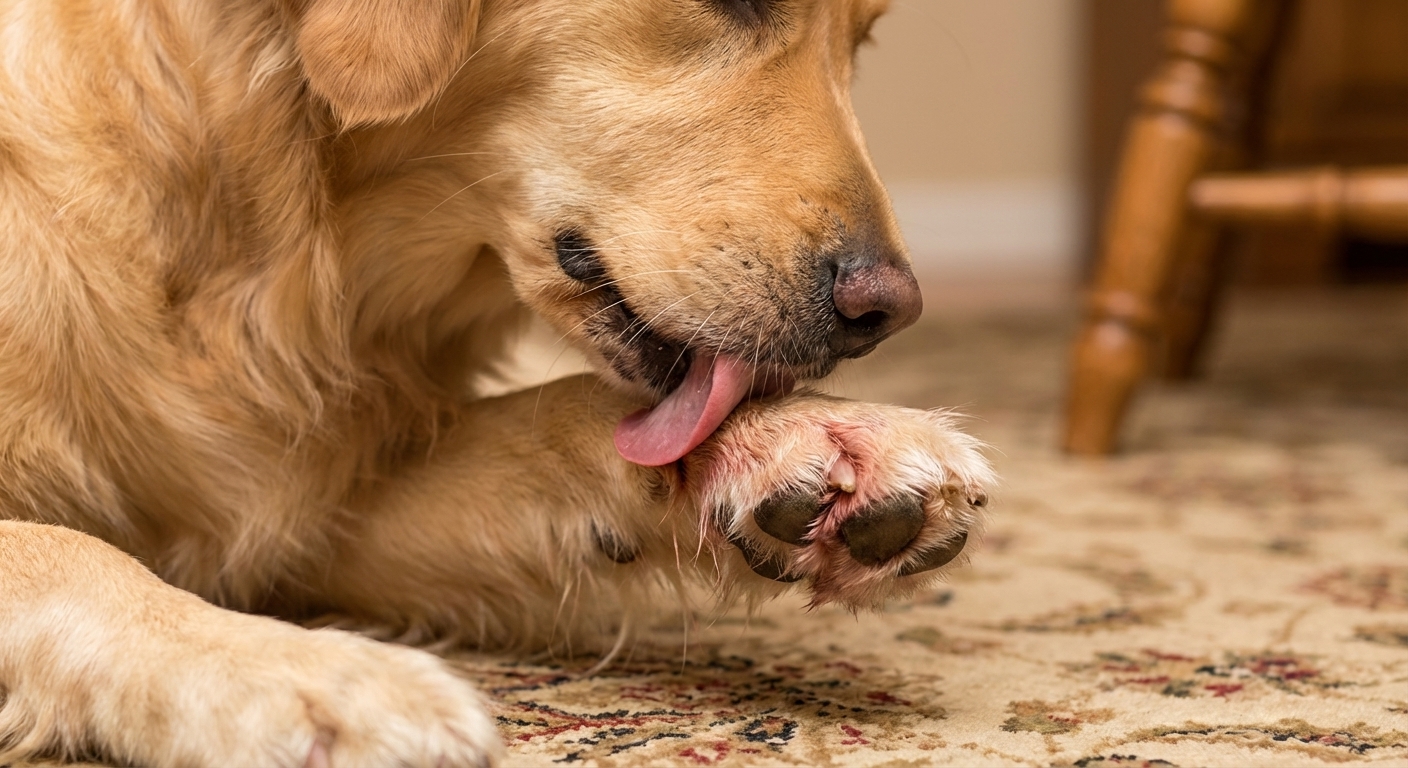
- Paw chewing or licking (often with rusty-colored saliva staining on light fur)
- Red belly or groin rash, especially after being outside
- Itchy armpits and inner thighs
- Face rubbing on carpet or furniture
- Watery eyes or mild redness around the eyes
- Ear itching, head shaking, or recurring ear infections
- Hot spots (moist, inflamed patches from intense licking or chewing)
- Secondary skin infections (odor, pimples, scabs, greasy coat)
When allergies flare
Timing varies by region, but these patterns are common in many areas.
- Spring: Tree pollen (often starts early), then grass pollen ramps up
- Summer: Grass pollen can continue, plus higher humidity can worsen skin and ear yeast in some dogs
- Fall: Weed pollen (ragweed is a big one), plus leaf mold
- Winter: Outdoor pollen tends to drop, but indoor triggers like dust mites can still cause itch in some dogs
If your dog flares at the same time every year, that repeat pattern is a strong clue you're dealing with environmental allergies.
Top triggers
Dogs take in allergens differently than humans. They inhale some, but they also pick them up on their skin and coat. That's why paws and bellies are so often affected.
- Pollen: Carried by wind, sticks to fur and skin, and can irritate the paws, belly, and face.
- Grass: For many dogs it's grass pollen, direct contact with grass, or both, especially after running or rolling.
- Mold: Can be seasonal outdoors (wet leaves, soil) and can also be indoors (damp areas, poor ventilation).

How to spot triggers
You don't need to guess blindly. A little tracking can go a long way.
Try an itch diary for 2 to 3 weeks
- Rate itch: 0 to 10 each day (licking, scratching, face rubbing)
- Note exposure: Park visits, tall grass, rainy days, leaf piles, fresh-cut lawns
- Track body areas: Paws, belly, ears, face, tail base
- Log what helped: Bath, paw rinse, meds, staying indoors
Common patterns I see
- Paws worse after walks: Often grass contact or pollen on the feet
- Belly rash after yard time: Often contact with grass or weeds
- Itch worse after rain: Mold and humidity can be a factor, and some dogs are more prone to yeast flare-ups in damp weather
- Ear flare-ups with skin itch: A classic allergy pattern
If you're feeding a consistent diet and symptoms still come and go with the seasons, environmental allergies jump higher on the list.
One more thing I always mention in clinic: flea allergy dermatitis can mimic seasonal itching, and a single bite can trigger a big reaction in sensitive dogs. Staying consistent with vet-recommended flea and tick prevention matters, even if you rarely see fleas.
Home relief that helps
Home care works best when it's consistent. Think of it like brushing teeth. You get the best results from simple steps done regularly.
1) Wipe paws and belly after outdoor time
- Use a damp washcloth, unscented baby wipe, or pet-specific wipe.
- Focus on between toes, paw pads, and the belly and groin area.
- This reduces allergen load before your dog licks it off.
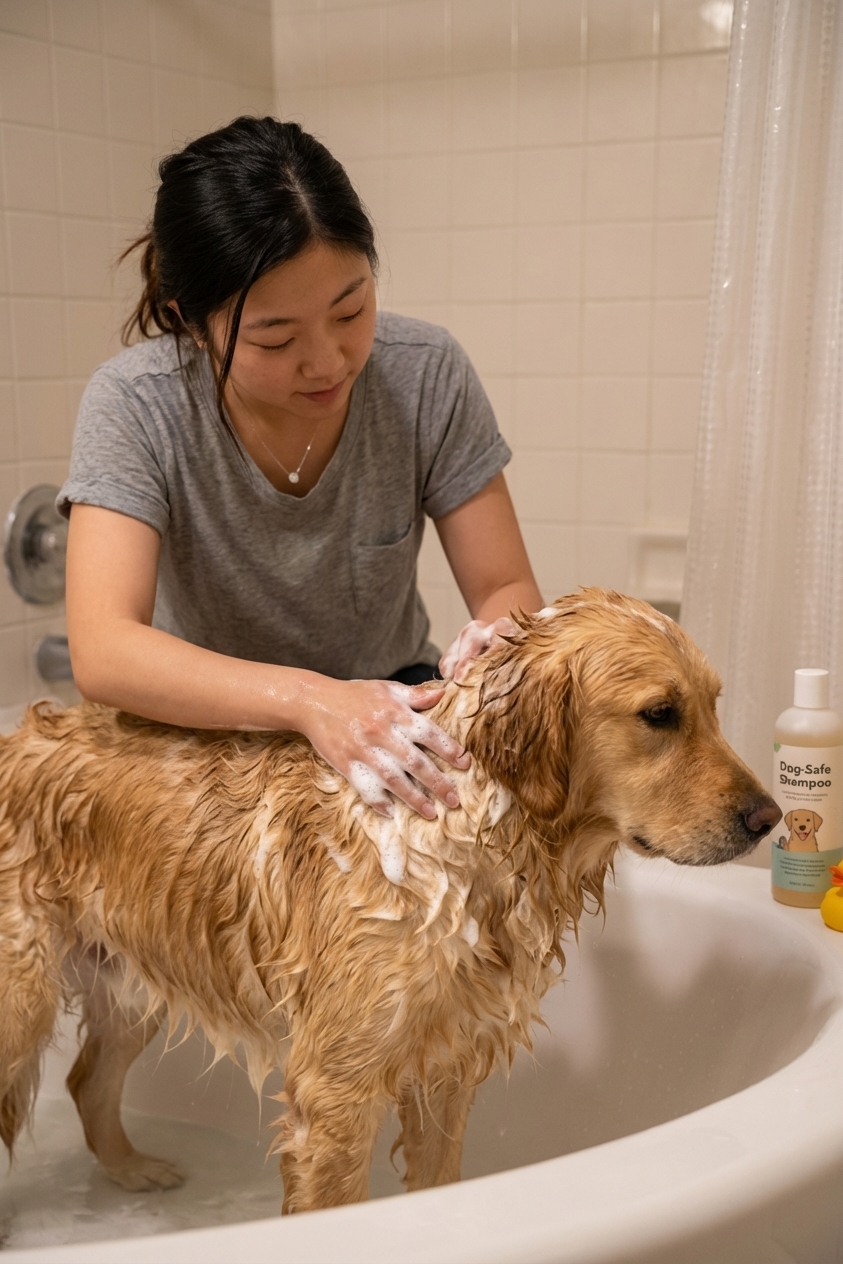
2) Rinse or bathe during high-pollen weeks
- A quick rinse can help if your dog comes in coated in pollen.
- For itchy skin, bathing 1 to 2 times weekly during peak season is common with a gentle, dog-safe shampoo.
- If your dog's skin gets drier, flakier, or more irritated after baths, ask your vet about adjusting frequency or switching products.
- Ask your vet about medicated shampoos if there's odor, greasiness, or recurring infections.
3) Reduce indoor allergens
- Wash bedding weekly in hot water (if the fabric allows).
- Vacuum frequently, especially rugs and upholstery.
- Consider a HEPA air purifier in the room where your dog sleeps.
- Keep windows closed on very high pollen days.
4) Protect the skin barrier
- Dry paws well after baths or wet walks. Damp feet can feed yeast.
- Don't use human creams unless your vet OKs them. Many aren't safe if licked.
5) Antihistamines: sometimes helpful
Some dogs do get relief from antihistamines, especially with mild symptoms, but results are mixed. The right choice and dose depend on your dog's weight, health history, and other medications.
- Don't give an antihistamine without veterinary guidance on the product and dosing.
- Avoid combination cold medicines and multi-symptom products. They can contain ingredients that are dangerous for dogs.
- If your dog is very itchy, has ear infections, or is breaking the skin, antihistamines alone often aren't enough.
6) Vet options for itch control
If home care isn't cutting it, your veterinarian may recommend prescription options that target the itch cycle more effectively than antihistamines. The goal is to stop scratching before it turns into infections and hot spots.
- Prescription anti-itch medications (like oclacitinib)
- Allergy biologic injections (like lokivetmab)
- Short courses of steroids in select cases, when appropriate
- Treatment for infections (antibiotics or antifungals) if bacteria or yeast are involved
- Allergen-specific immunotherapy (allergy shots or drops) for longer-term control
When to see a vet
Please don't wait until your dog is miserable. Once inflammation and infection set in, it becomes harder and more expensive to control.
Make an appointment if you notice
- Chewing or licking that's daily, obsessive, or causing hair loss
- Red, moist skin, scabs, or any hot spot
- Ear odor, discharge, head shaking, or repeated ear infections
- Watery eyes plus skin itch that lasts more than 1 to 2 weeks
- Itching that keeps your dog awake or changes appetite, mood, or activity
Allergy testing
Allergy testing is often considered when:
- Symptoms are moderate to severe or come back every year
- Your dog needs frequent medications to stay comfortable
- You're interested in long-term solutions like allergen-specific immunotherapy
Testing for environmental allergies isn't the same as a food elimination diet. Your vet or a veterinary dermatologist can explain the best path based on your dog's history and exam.
Red flags
Seasonal allergies are common, but they aren't the only reason dogs itch. Contact your vet promptly if you see any of the following.
- Fleas or flea dirt (even one bite can trigger a big reaction in sensitive dogs)
- Sudden intense itch with scabs or hair loss (could be mites, infection, or another skin issue)
- Hives, facial swelling, or trouble breathing (urgent emergency)
- Open wounds or spreading redness
Action plan for this week
If you suspect seasonal allergies, here's a practical starting point that's safe for most healthy dogs while you schedule veterinary guidance.
- After every outdoor break: wipe paws and belly
- Twice weekly: bathe or rinse during peak pollen weeks (adjust if skin gets dry)
- Daily: check ears and paws for redness or odor
- Ongoing: keep your dog on veterinarian-recommended parasite prevention
- Track symptoms: start an itch diary and bring it to your appointment
Bottom line: seasonal allergies are treatable, and you don't have to watch your dog suffer through every spring and fall. With smart trigger control at home and a vet-guided plan, most dogs can get back to what they do best: enjoying the outdoors comfortably.