A compassionate, practical guide to deciding when it’s time: how to assess pain, appetite, mobility, and joy using the HHHHHMM scale, plus crisis signs and...
Article
•
Designer Mixes
Saying Goodbye: Planning a Peaceful Home Euthanasia

Shari Shidate
Designer Mixes contributor
Saying goodbye to a beloved dog is one of the hardest decisions we ever make. As a veterinary assistant, I have seen how much comfort a peaceful, planned goodbye can bring, both for pets and for the people who love them. Home euthanasia is not “giving up.” For many families, it is a gentle, medically guided way to prevent suffering and let a pet pass in a familiar place.
This page will walk you through what home euthanasia typically looks like, how to plan, what questions to ask, and how to care for yourself afterward. It is general guidance and not a substitute for veterinary advice for your individual dog.

When is it time?
This decision is rarely about one bad day. More often, it is about a pattern: more discomfort, fewer good moments, and a quality of life that is shrinking. Your veterinarian can help you evaluate what is treatable, what is manageable, and what is likely to worsen. If a new symptom appears suddenly (like vomiting, not eating, or weakness), it is always worth calling your vet, because some problems are temporary or treatable.
Common signs a pet may be suffering
- Pain that breaks through medication, such as persistent panting, trembling, restlessness, or a “tight” abdomen
- Difficulty breathing, frequent coughing, or struggling to get comfortable
- Not eating or drinking for a prolonged period, or repeated vomiting
- Incontinence that causes distress, skin sores, or repeated cleanup that upsets your pet
- Mobility changes, such as falling, refusing to stand, or slipping even with support
- Confusion or anxiety, including pacing, getting stuck, or not recognizing familiar people
- Loss of joy in the things that used to matter: greeting you, treats, walks, toys, sunshine
A helpful way to think about it is this: Are we treating the pet, or are we treating the disease? There is also a middle path that can be very meaningful: hospice or comfort care, focused on symptom relief and good days at home. Your vet can help you decide what is realistic, and what is kind.
Many families tell me they wish they had chosen “a week too early” rather than “a day too late.” Planning ahead can prevent an emergency goodbye that feels rushed or frightening.
What it is like
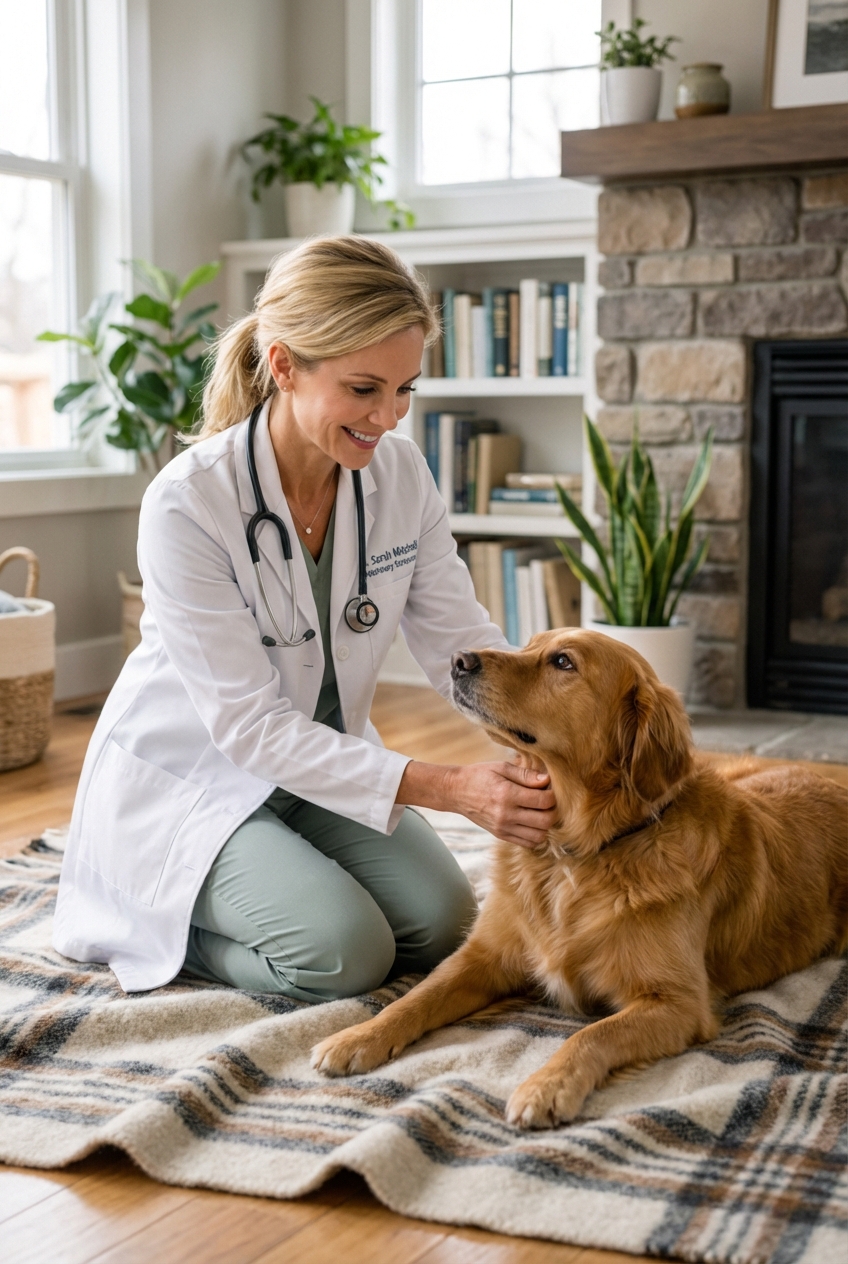
While every veterinarian has their own protocol, most home euthanasia visits follow a similar, calm flow. Your vet will explain each step and confirm your wishes along the way. Protocols can vary based on your dog’s condition, size, anxiety level, and what is safest medically.
Typical steps
- Arrival and settling in. The veterinarian will choose a quiet space and help your pet get comfortable. Many pets rest on a favorite bed or blanket.
- Sedation and relaxation medication. Many home euthanasia providers give a sedative first (sometimes paired with pain control). This helps reduce anxiety and allows your pet to drift into a very sleepy, relaxed state. In some cases, the vet may place an IV catheter before or after sedation, depending on what your dog needs.
- Final medication. Once your pet is deeply asleep, the veterinarian administers the euthanasia solution (often an anesthetic medication). It causes rapid unconsciousness, then breathing stops, and the heart stops. Your veterinarian will listen and confirm when your pet has passed.
- Time for goodbyes. Families are typically given as much time as they need afterward.
Many people worry about distress in the final moments. In the vast majority of cases, with appropriate sedation, pets pass peacefully. Your vet may also prepare you for normal reflexes that can happen during or after passing, like a final breath (sometimes called an agonal breath), small muscle twitches, bladder or bowel release, or occasional sounds that can happen as the body relaxes. These are not signs of pain, but they can be surprising if you are not expecting them.
It can also help to know what sedation may look like. Some dogs get wobbly, drooly, or want to change positions. Some take longer to relax, and a second dose is sometimes needed. None of this means you are doing anything wrong. It is just your dog’s body responding.
How to plan
Planning does not make the loss easier, but it can make the experience calmer and more meaningful. Think of it like creating a safe container for a very tender moment.
Choose the location
- Quiet and familiar: a living room corner, a sunny spot, the bedroom, or anywhere your dog naturally relaxes
- Easy to access: especially for large dogs or pets with mobility issues
- Comfortable for you: you should be able to sit close, talk softly, and hold them if you want
Gather comfort items
- Your dog’s favorite bed or blanket
- A towel or washable pad under them if incontinence is a concern
- Dim lighting, soft music, or white noise if it helps everyone relax
- Tissues, water, and a phone charger for you
Consider who is present
There is no “right” guest list. Some people want close family, others prefer a small, quiet circle. If someone is likely to be highly distressed in a way that could upset your pet, it is okay to invite them to say goodbye earlier.
Children
Kids can do beautifully with honest, gentle language. You might say, “The vet is going to help her die peacefully, because her body is not working anymore and she cannot get better.” Avoid phrases like “put to sleep” if your child already fears bedtime or medical care.
Give them choices: Do they want to be in the room, or say goodbye beforehand? Do they want to draw a picture, bring a toy, or place a flower by the bed?
Other pets
If your pets are calm around each other, allowing them to be nearby can be helpful. Some clinicians and behaviorists feel it may reduce searching behavior afterward, but every home is different and the evidence is mixed. Ask your veterinarian what they recommend. Sometimes it is best to keep other pets in another room until the end, then let them briefly sniff and investigate.
Questions to ask
A good home euthanasia veterinarian will welcome your questions. You deserve to know exactly what will happen and what options you have.
- Do you give a sedative first? How is it administered?
- Do you place an IV catheter, or inject directly? What do you prefer and why?
- About how long will the whole visit take?
- What might I see that is normal, but could surprise me (like reflex breaths or muscle twitches)?
- If my dog does not relax with the first sedative, what happens next?
- Should my dog take their usual pain medications the day of? Are there any meds I should skip?
- Can my dog have a favorite treat that day? Are there foods you prefer we avoid?
- How do you handle my dog’s body afterward? Do you transport, and will you need our help moving a large dog?
- What aftercare options do you offer: private cremation, communal cremation, or transportation assistance?
- Do you provide a clay paw print, fur clipping, or other keepsakes?
- Are there any local administrative steps we should know about (for example, rabies records or local rules)?
- What is the total cost, including aftercare?

Aftercare options
After your dog passes, you will have decisions to make about aftercare. Some families decide this weeks ahead of time, others decide in the moment. Either is okay.
Common options
- Private cremation: Your pet is cremated individually, and ashes are returned.
- Communal cremation: Pets are cremated together, and ashes are not returned.
- Home burial: Allowed in some areas, restricted in others. Consider local regulations, property rules, depth requirements, water table, and distance from wells or waterways. Also consider safety for wildlife and other pets.
If you choose cremation, ask about timelines and how ashes are returned. If you are considering burial, your veterinarian can help you think through safety and legality.
For home visits, many veterinarians can transport your dog after you are ready, often using a stretcher or a gentle carry system for large dogs. If you would like to help, you can ask what is safe and appropriate. It is also okay to say you cannot.
A meaningful goodbye
You do not need a perfect “last day.” You just need a loving one. Simple moments often mean the most.
- Sit outside together if your dog loves fresh air
- Offer a “yes day” treat if your veterinarian approves, like a small piece of burger or peanut butter (avoid xylitol and cooked bones)
- Take photos of the little things: paws, nose, the way they curl up
- Say the words you want them to hear: gratitude, love, permission to rest
If your dog is still interested, small favorite foods can be a comfort. If they are nauseated or refusing food, do not force it. Presence matters more than snacks.
Grief: what is normal
Grief can look like sadness, guilt, relief, numbness, anger, or all of it at once. Relief is especially common when a pet has been declining for a while. Feeling relieved does not mean you loved them less. It usually means you have been carrying worry for a long time.
Gentle ways to cope
- Keep routines for yourself for the first few days, like meals and sleep, even if they are simple
- Talk about your pet with someone safe who will not minimize your loss
- Create a ritual: light a candle, write a letter, plant something, donate to a rescue
- Consider support: pet loss hotlines, grief counselors, or support groups can be incredibly validating
If your grief feels unmanageable, or you are struggling to function day to day, it is appropriate to seek professional help. Losing a pet is a real loss.
If you want a place to start, ask your veterinarian for local pet loss resources. In the US, you can also look for support through university programs such as the Cornell University Pet Loss Support Hotline, or the ASPCA Pet Loss resources.
If you are unsure
If you are on the fence, ask your veterinarian about a quality-of-life assessment and what to watch for. You can also create a simple plan with “red lines,” meaning specific signs that tell you your dog is no longer comfortable, such as not being able to get up to drink water, frequent breathing distress, or pain that is not controlled.
One thing I want you to hear clearly: choosing a peaceful goodbye is a medically and ethically accepted way to prevent suffering. It can be an act of protection, not abandonment.