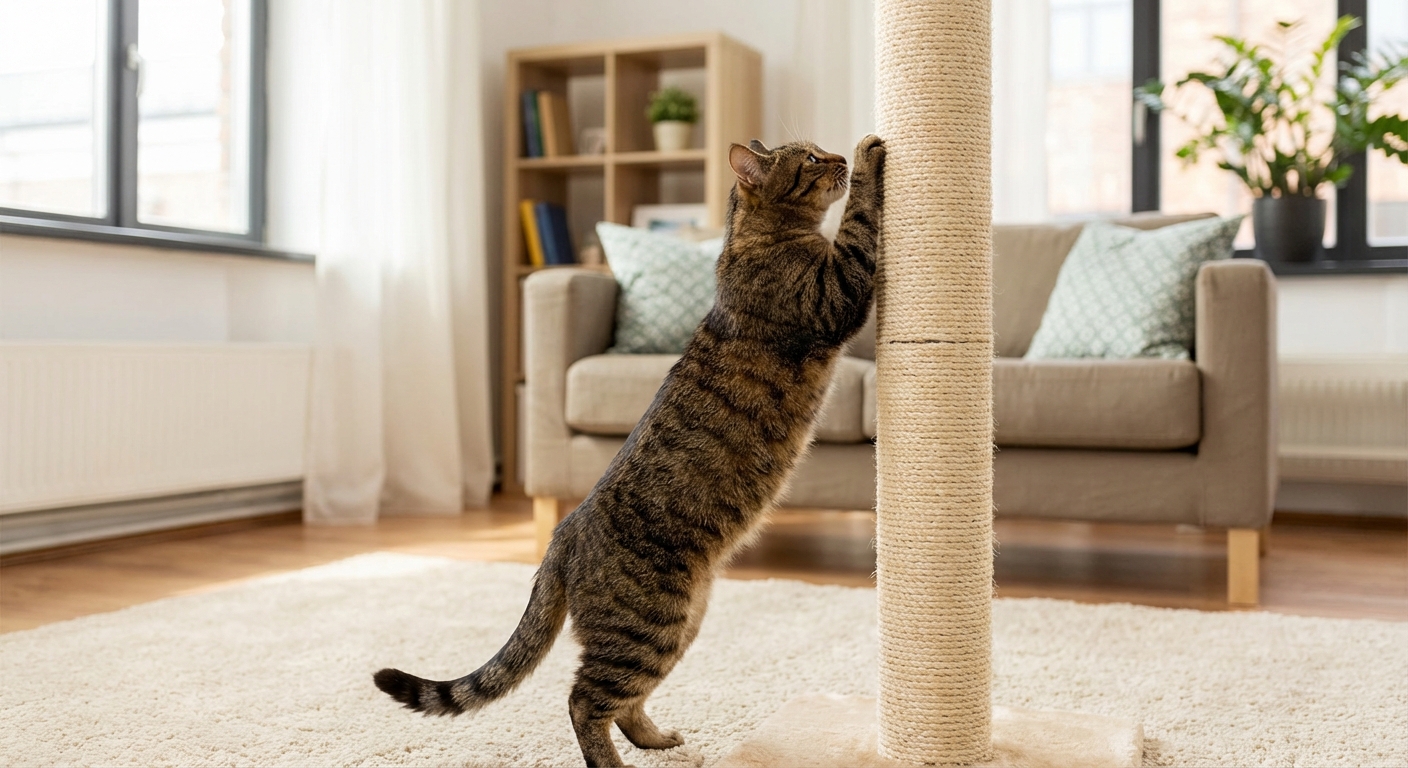
Cats scratch to stretch, maintain claws, mark territory, and relieve stress. Use this vet-assistant plan to redirect scratching with the right post, placemen...
Article
•
Designer Mixes
Save Your Sofa: Train Cats Not to Scratch Furniture

Shari Shidate
Designer Mixes contributor
Scratching is not “bad behavior.” It is a normal, healthy cat need. Cats scratch to remove old nail sheaths, stretch their shoulders and spine, mark territory with scent glands in their paws, and leave a visible message that says, “This is mine.” The goal is not to stop scratching. The goal is to move scratching to the right place so your cat can be a cat and your sofa can survive.
Why cats choose your furniture
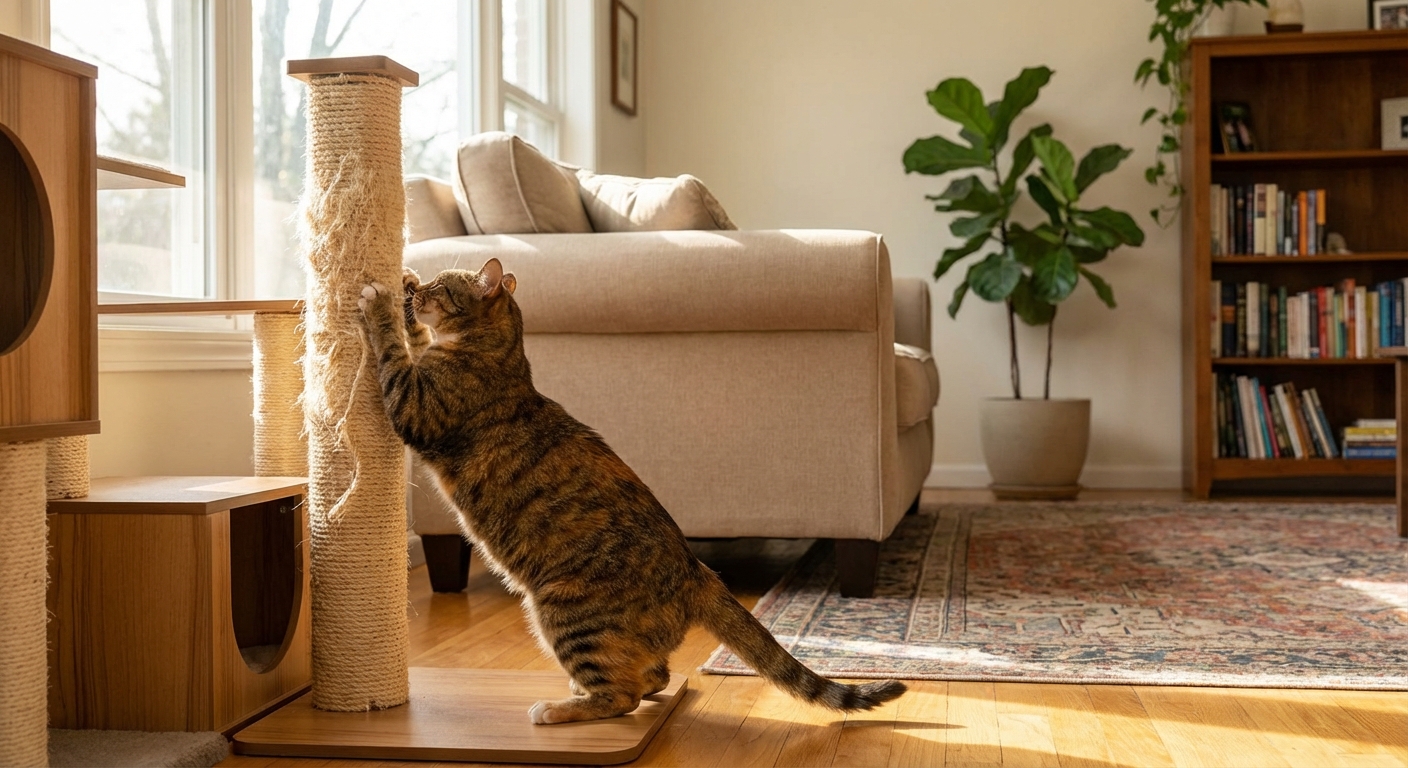
When a cat ignores a scratching post and goes straight for the couch, it usually makes perfect sense from their point of view. Furniture often checks all the “best scratch spot” boxes:
- Stability: A heavy sofa does not wobble.
- Texture: Upholstery and wood can feel amazing to claw.
- Location: Cats like scratching where people spend time, especially entrances and favorite hangouts.
- Height: Many cats prefer a tall vertical stretch.
Once you meet those needs with better options, many cats switch quickly, especially when you make the right choice easy and rewarding.
Start with the right scratch setup
Pick a scratcher your cat will actually use
Most cats prefer either a tall vertical post, a long horizontal pad, or both. Some cats are strongly “horizontal only,” especially if they love rugs. If you are not sure, offer both styles for two weeks and let your cat vote.
- Vertical: At least 30 to 36 inches tall so your cat can fully stretch. Sisal rope or sisal fabric is a common favorite.
- Horizontal: A sturdy cardboard lounger or flat scratch pad for cats who like rugs and carpet.
- Angle option: Some cats love a slanted scratch ramp.
Texture matters too. If sisal gets ignored, try cardboard, wood, or a tightly woven fabric scratcher. If you use carpet-like scratchers, place them away from your actual rugs to reduce confusion for cats who generalize “carpet = scratch.”
Stability is non-negotiable
If the post tips, some cats may avoid it afterward. Choose a heavy base, or anchor the post so it does not wobble.
Placement matters more than you think
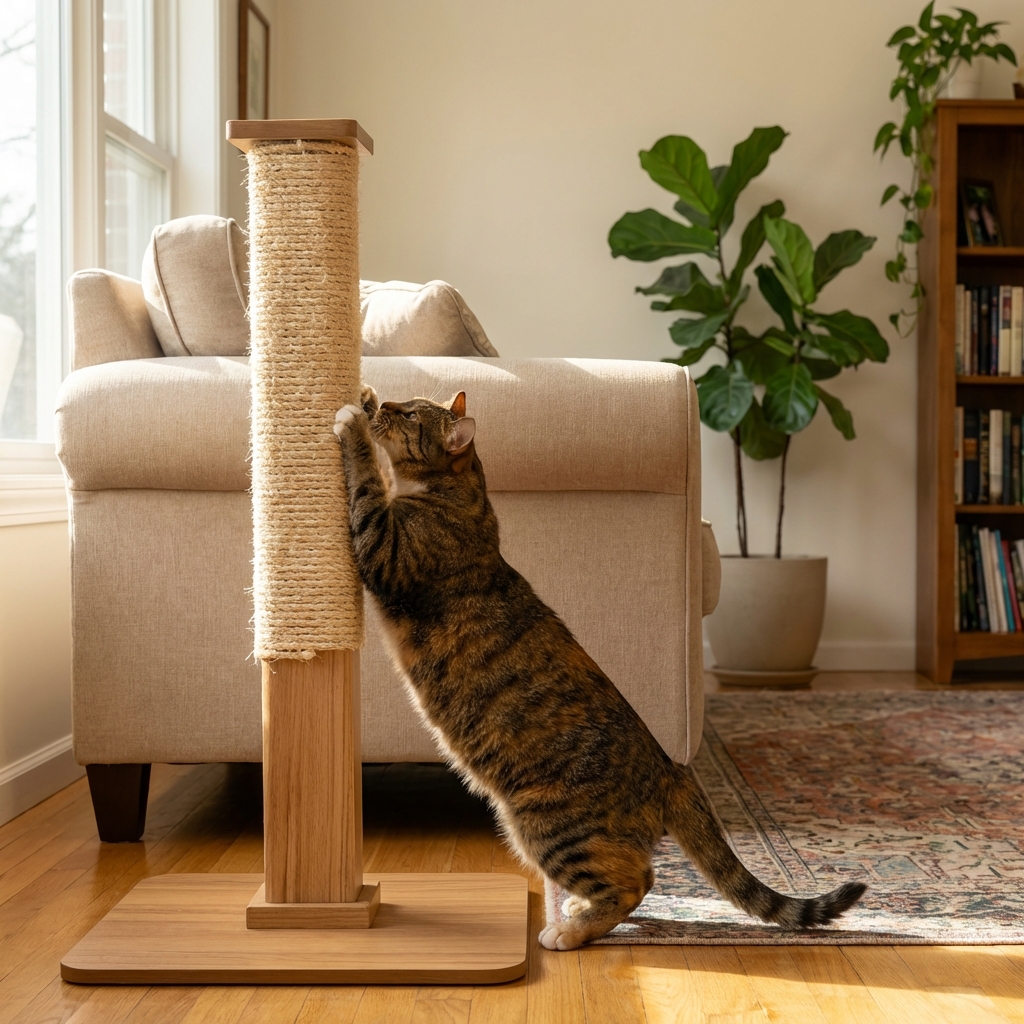
Put scratchers where your cat already scratches, at least at first. This is not “rewarding bad behavior.” It is smart training. Great starter placements include:
- Right next to the couch arm your cat targets
- Near the main room entry
- Close to the cat’s favorite nap spot, since many cats scratch after waking
Make furniture boring and scratchers great
Protect the couch during training
Think of this as management, not punishment. You are buying yourself time while your cat builds a new habit.
- Temporary barriers: A throw blanket tucked tightly, a fitted cover, or a plastic couch guard on the problem corner.
- Double-sided tape: Many cats dislike the sticky feel. Place it on the scratch zone only and remove once the habit shifts.
- Texture swap: Some cats avoid slick surfaces. A smooth cover can reduce the “good scratch” feel.
Quick safety note: If your cat chews plastic or tape, skip those options and use a tight cover or a rigid couch guard instead. Make sure nothing can trap toes or catch claws.
Avoid punishment like yelling or spraying water. It can increase stress, damage trust, and it does not teach your cat what to do instead. Many cats simply learn to scratch when you are not around.
Use attractants that actually help
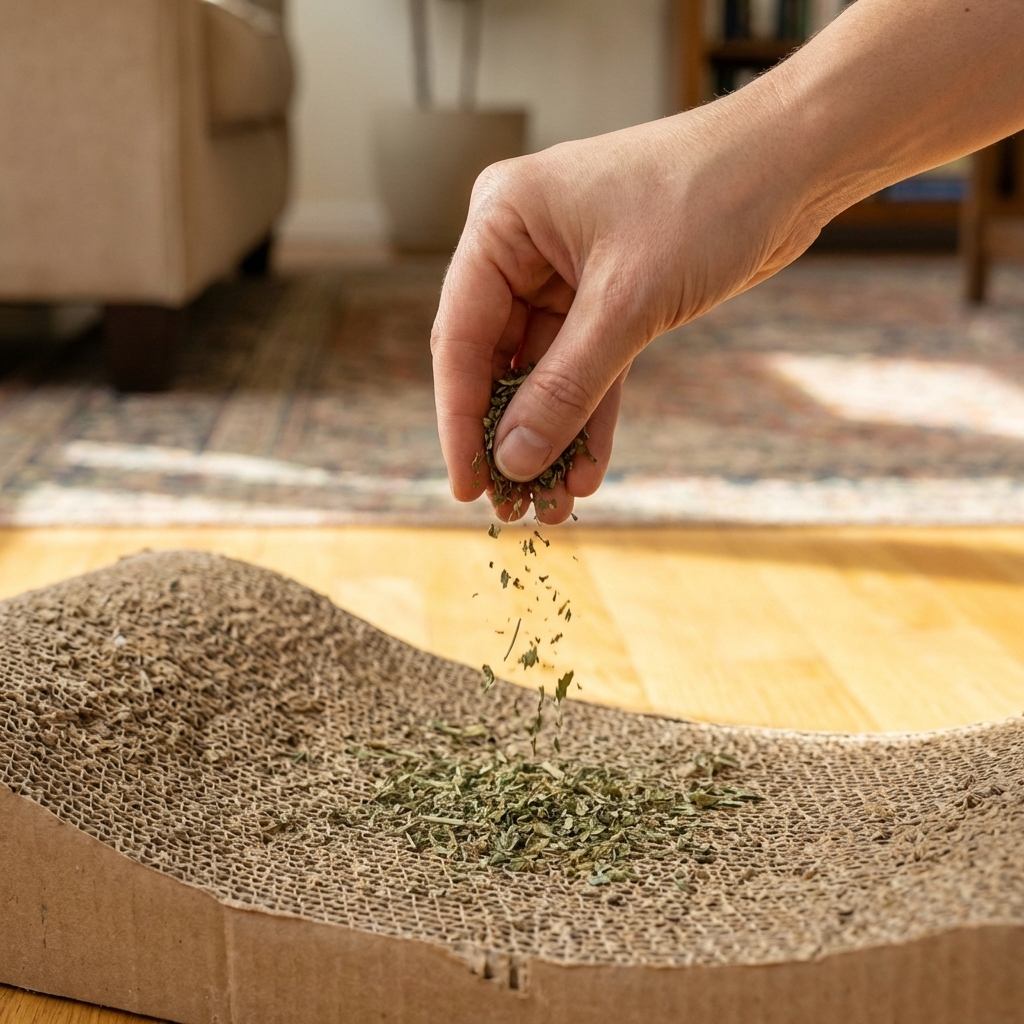
Many adult cats respond to catnip, but not all do, and kittens often do not respond until they are older. If your cat enjoys it, sprinkle a pinch on the scratcher or use a catnip spray. For cats who do not respond to catnip, try silvervine products.
- Refresh catnip regularly, since the scent fades.
- Do not overload it. A small amount is enough.
Reward the behavior you want
Cats repeat what works for them. The best training “currency” is simply what your cat finds rewarding: treats, play, praise, or a quick brushing session.
- When your cat scratches the scratcher, calmly say a cue like “Good scratch” and offer a tiny treat.
- Keep rewards immediate, within 1 to 2 seconds, so your cat connects the dots.
- In the beginning, reward every correct scratch. Later, switch to intermittent rewards.
Optional support for stress scratching
If scratching seems tied to stress (new pet, outdoor cats at the window, schedule changes), a feline facial pheromone diffuser or spray may help some cats settle while you train the new habit. It is not a magic fix, but it can make your other steps work better.
Teach a simple scratch routine
Step-by-step (5 minutes a day)
- Set the stage: Place the scratcher right beside the problem furniture area.
- Invite: Use a wand toy to guide your cat toward the scratcher. Let the toy skim over the top to encourage paws up.
- Mark and reward: The moment claws hit the scratcher, reward.
- Repeat: Do 3 to 5 short repetitions, then stop. Short sessions prevent frustration.
If you catch your cat scratching the couch
Stay calm. Quietly interrupt by clapping once or making a soft sound, then immediately guide them to the scratcher and reward when they use it. The message is: “That spot is boring, this spot is fantastic.”
If your cat backslides, do not take it personally. Go back to “post right next to the couch + protect the corner + reward every good scratch” for a few days. That reset solves most setbacks.
What not to do
- Do not drag your cat to the post or force their paws on it. You want the scratcher to feel safe, not scary.
- Do not “play wrestle” with hands near the couch corner you are trying to protect.
- Do not hide scratchers in a laundry room and hope for the best. Put them where life happens.
Nail care and scratch support
Trim nails to reduce damage
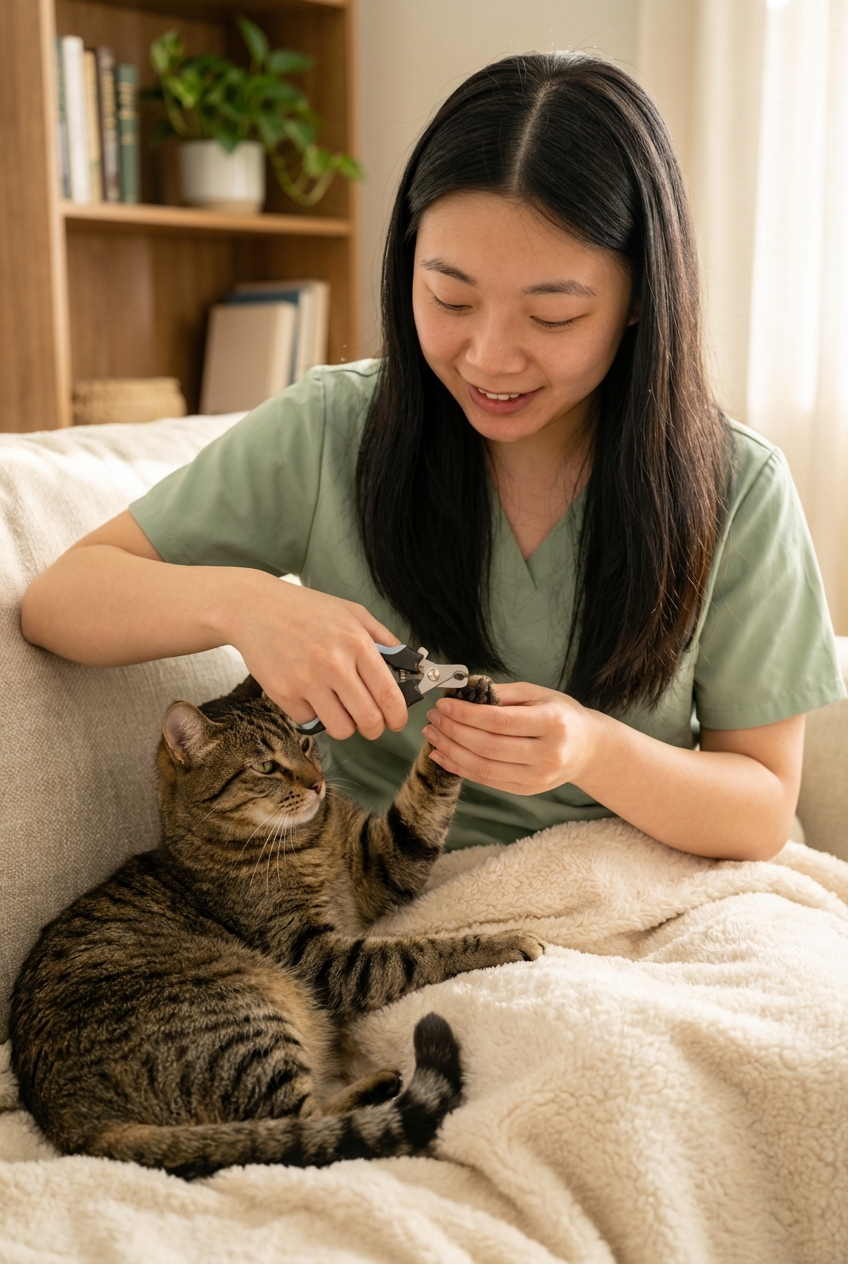
Regular nail trims make accidental snagging and fabric damage much less likely. Many cats do well with a trim every 2 to 4 weeks.
- Use sharp cat nail clippers.
- Trim just the sharp tip, avoiding the pink quick.
- Pair trimming with treats so your cat builds a positive association.
If you are nervous, ask your veterinarian or groomer to demonstrate a safe trim.
Consider soft nail caps for short-term help
Soft nail caps can be helpful during training or for high-damage scratchers, especially in multi-cat homes. They are not a substitute for scratchers, but they can protect furniture while habits change. Ask your veterinarian if they are appropriate for your cat.
A note on declawing
Declawing is not a behavior fix and is associated with pain and long-term welfare risks for many cats. In many places it is restricted or banned. If you feel like you are out of options, a veterinarian and a qualified cat behavior professional can help you build a plan that protects your home without harming your cat.
Common mistakes
- The post is too short or wobbly: Cats want a full-body stretch and a stable surface.
- The scratcher is hidden: If it is tucked in a corner, many cats will ignore it.
- No reward history: If scratching the couch gets attention and scratching the post gets nothing, the couch wins.
- Only one option: Many cats need multiple scratch zones, especially in larger homes.
- Stress or boredom: Under-stimulated cats often scratch more. Daily play helps.
When scratching ramps up suddenly
If your cat suddenly starts scratching much more than usual, or seems anxious, there may be a stressor involved such as a new pet, outdoor cats visible in windows, a move, schedule changes, or pain. In those cases, it is smart to:
- Add more scratchers and resting spots, especially near windows and entrances.
- Increase daily play, even two 5-minute sessions can help.
- Schedule a veterinary visit if you notice overgrooming, hiding, aggression, or changes in appetite or litter box habits.
Healthy scratching is normal. Sudden behavior changes are a clue. When in doubt, a vet check is always a kind next step.
A realistic timeline
Many cats improve within 1 to 2 weeks when you combine three things: the right scratcher, great placement, and consistent rewards. Some cats take several weeks, especially if the habit is long-standing or stress is involved. Protect the furniture during the learning phase, then gradually remove tape or covers once your cat reliably chooses the scratchers.
Your action plan for today: Place a tall, sturdy sisal post directly beside the scratched couch corner, add catnip or silvervine if your cat enjoys it, and reward the first three times your cat uses it. Small, consistent steps create the new habit.