A practical Bengal kitten care guide from baby to adult: home setup, feeding schedule, hydration, litter box basics, enrichment, grooming, socialization, and...
Article
•
Designer Mixes
Savannah Cat: Personality, Size, Legality, and Care

Shari Shidate
Designer Mixes contributor
Savannah cats stop people in their tracks. They are tall, athletic, and often dog-like in the way they bond, play, and demand interaction. They are also not a “typical” cat in terms of energy level, enrichment needs, and, in some places, legal restrictions.
Below, I will walk you through Savannah generations (F1 to F5), expected size, common wild-type traits, daily care and enrichment, diet basics, health considerations (including typical lifespan), grooming and shedding, and the big one: how to navigate Savannah cat legality in the United States. My goal is to help you decide if a Savannah truly fits your home and lifestyle.
What is a Savannah cat?
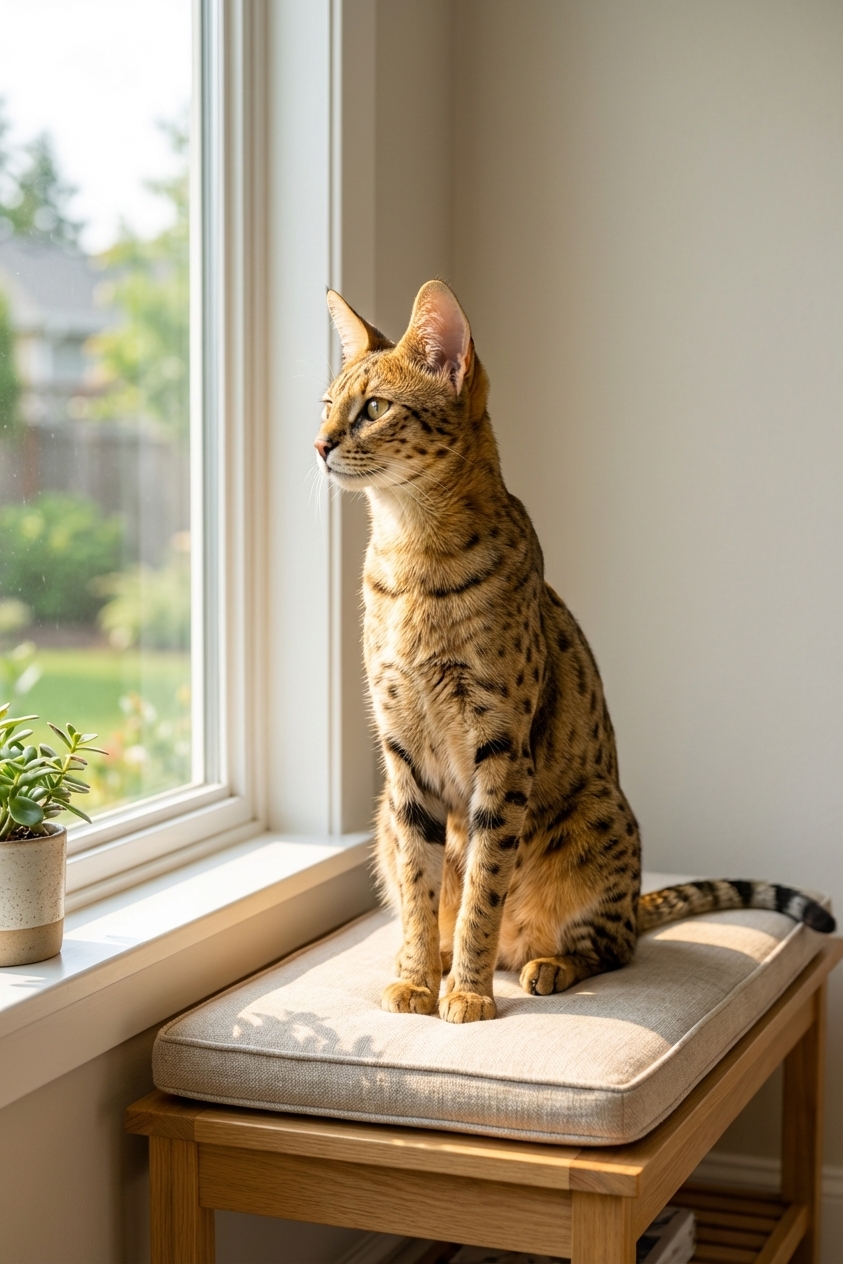
A Savannah is a hybrid cat breed developed from crossing a domestic cat with an African serval (a medium-sized wild cat). Most Savannahs today are many generations removed from the serval, but the “wild look” and some high-drive behaviors can remain, especially in early generations.
They are recognized by The International Cat Association (TICA), and you will often see them described by generation, like F1, F2, and so on. That generation matters for size, temperament, and legal status.
Lifespan: Many Savannah cats live roughly 12 to 20 years with good preventive care, good nutrition, and a safe indoor lifestyle.
Savannah generations (F1 to F5)
The “F” stands for filial, meaning how many generations your cat is from the serval ancestor.
- F1: The first filial generation. Typically one serval parent and one domestic parent. Usually the highest serval percentage, often the most intense in drive and athleticism, and often the most restricted legally.
- F2: The serval is a grandparent. Still often large, active, and strongly “wild type.”
- F3: The serval is a great-grandparent. Many households find this generation more manageable, though still high-energy.
- F4: Further removed. Usually closer to domestic-cat predictability, but still athletic and interactive.
- F5 and later: Often considered more domesticated in behavior and typically easier to integrate into average homes, though enrichment needs remain higher than many breeds.
Why this matters: Early generations (F1 to F3 in particular) are more likely to have intense exercise needs, higher prey drive, and stricter housing and ownership rules.
Personality
If you want a cat who is present, engaged, and involved in everything you do, a Savannah may feel like a perfect match. If you want a quiet, low-maintenance lap cat, this is usually not the breed.
Common traits
- Highly social: Many form strong bonds with their people and follow them from room to room.
- Confident and curious: Expect “inspector mode” with cabinets, sinks, showers, and anything that opens or moves.
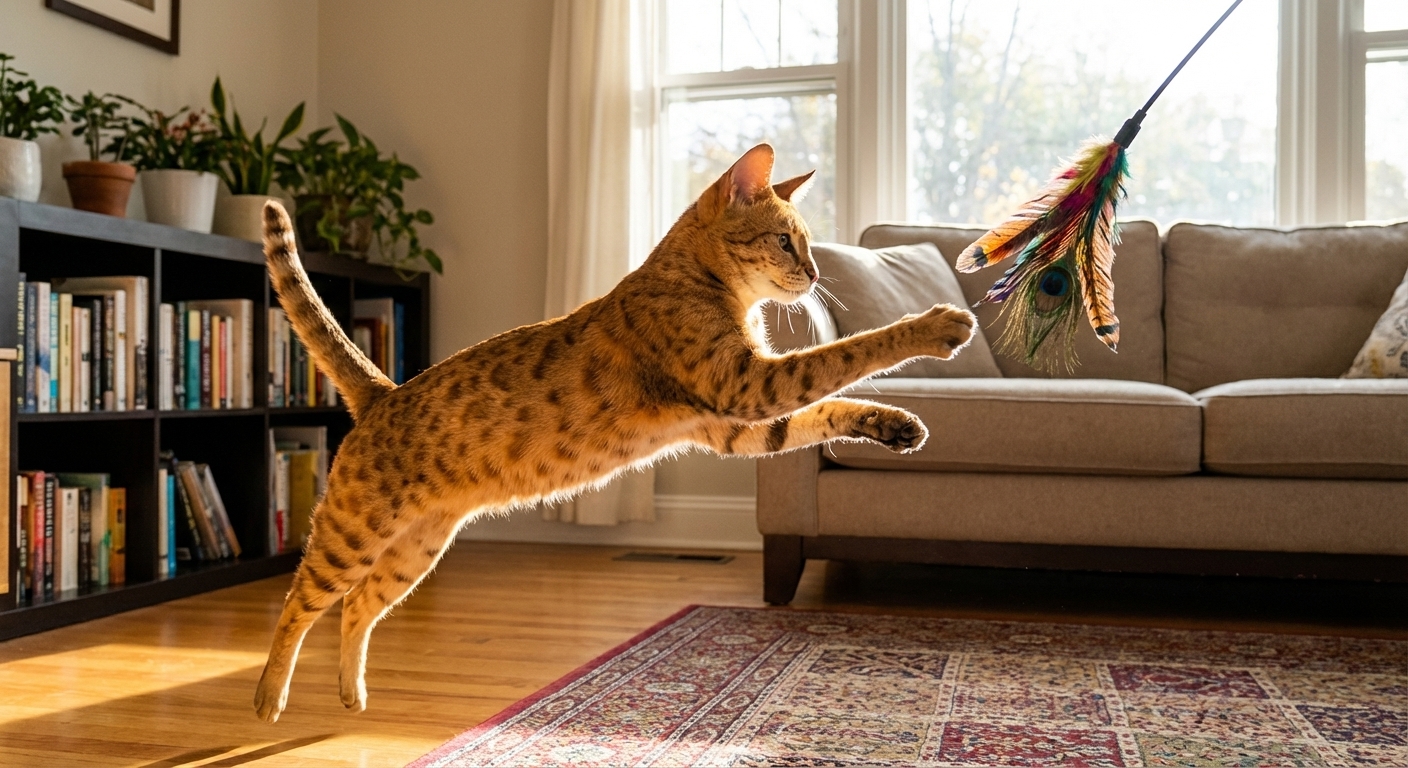
- Play-driven and athletic: They often thrive with interactive play, climbing, jumping, and puzzle-style feeding.
- Dog-like behaviors: Some learn to walk on a harness, fetch, or greet at the door.
- Vocal and expressive: Not always loud, but many are talkative, especially when bored.
Wild-type behaviors to plan for
- High prey drive: Small pets like birds, hamsters, and fish can be at risk, even with “friendly” cats.
- Territorial stress: Some do poorly with frequent household changes or chaotic environments.
- Destructive boredom: Without enough enrichment, they may climb curtains, open cabinets, or repeatedly stalk ankles during play.
As a veterinary assistant, I always encourage families to think of behavior as a welfare issue. If a cat needs an outlet and does not get it, stress behaviors often show up as house soiling, overgrooming, nighttime chaos, or aggression.
Size
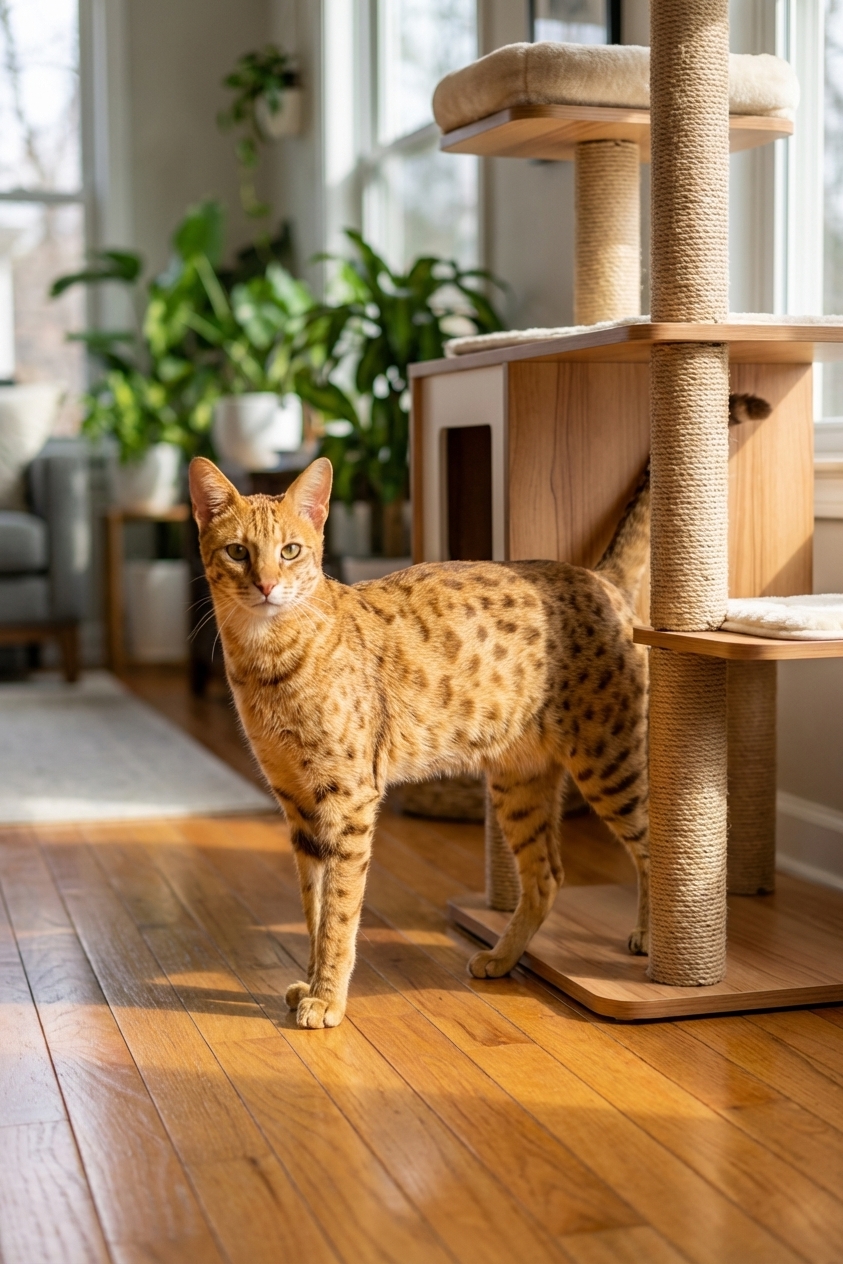
Size varies widely by generation, sex, and lines. Early-generation Savannah cats tend to be taller and longer than most domestic cats, with very long legs and a lean, muscular build.
- F1 to F2: Often the largest. Many fall in the 12 to 20 pound range, with some individuals and lines larger. Height and length can be more dramatic than weight.
- F3: Commonly 10 to 18 pounds.
- F4 to F5: Often 8 to 15 pounds, though still athletic and tall compared to typical cats.
Reality check: A well-bred Savannah should look sleek and powerful, not bulky. A “huge” Savannah that is heavy rather than athletic may simply be overweight, which increases joint strain and reduces quality of life.
Exercise and enrichment
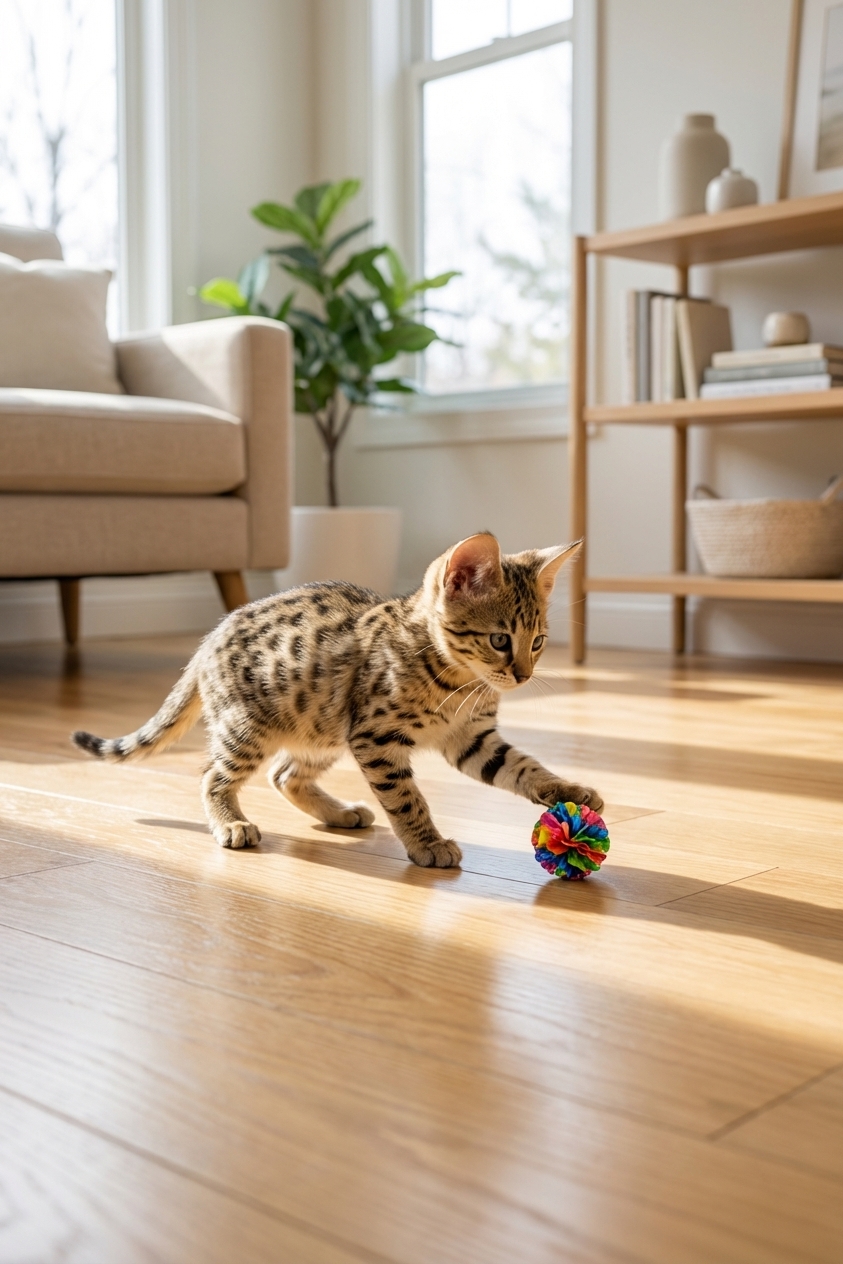
Savannah cats usually need structured daily activity, not just a toy on the floor. Think of it like having a smart, energetic dog in a cat’s body.
Daily enrichment that works
- Interactive play: 2 to 3 sessions a day of 10 to 15 minutes with a wand toy, flirt pole, or fast-moving lure.
- Vertical space: Tall cat trees, wall shelves, and sturdy perches. Many Savannah cats want to be up high.
- Puzzle feeding: Treat puzzles or kibble balls to turn meals into “hunting.”
- Training: Clicker training, target training, and basic cues can reduce boredom and improve handling for vet visits.
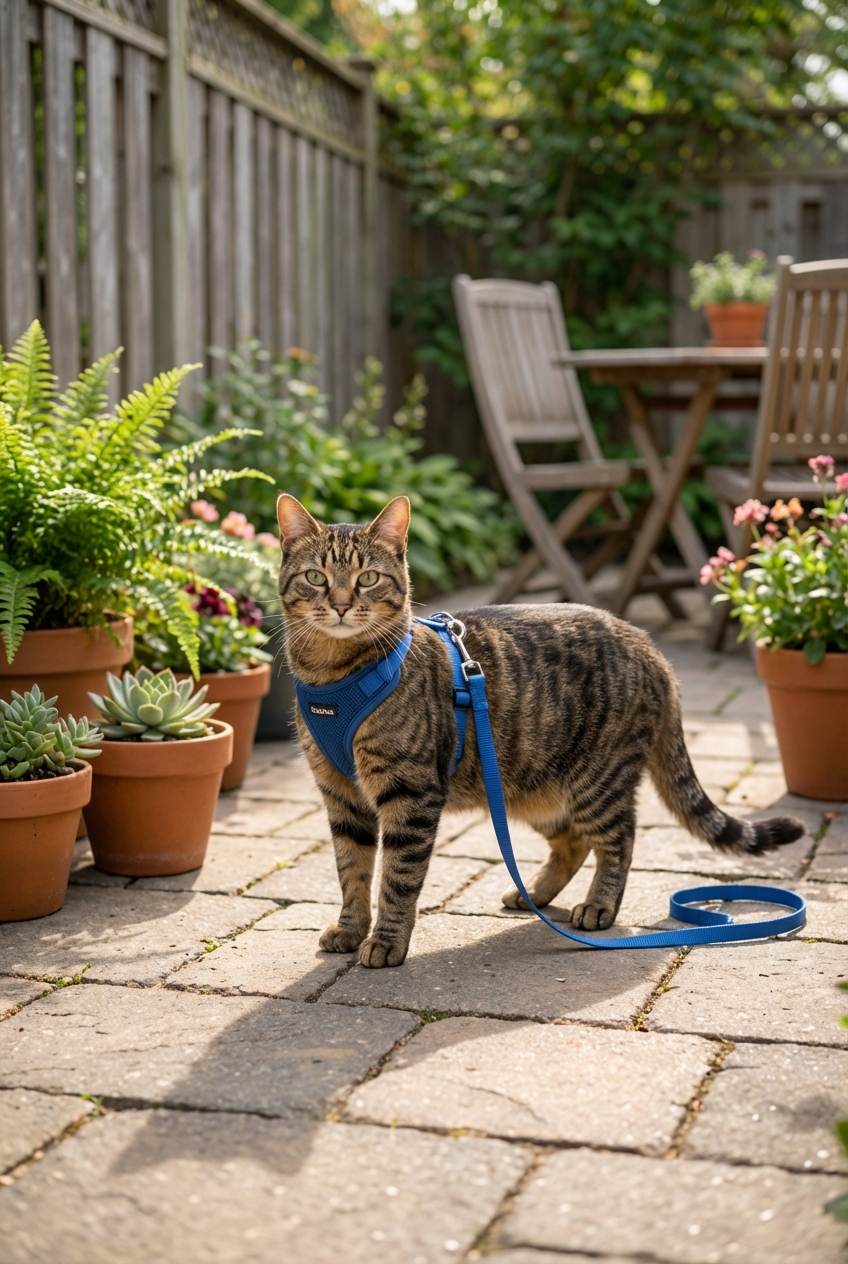
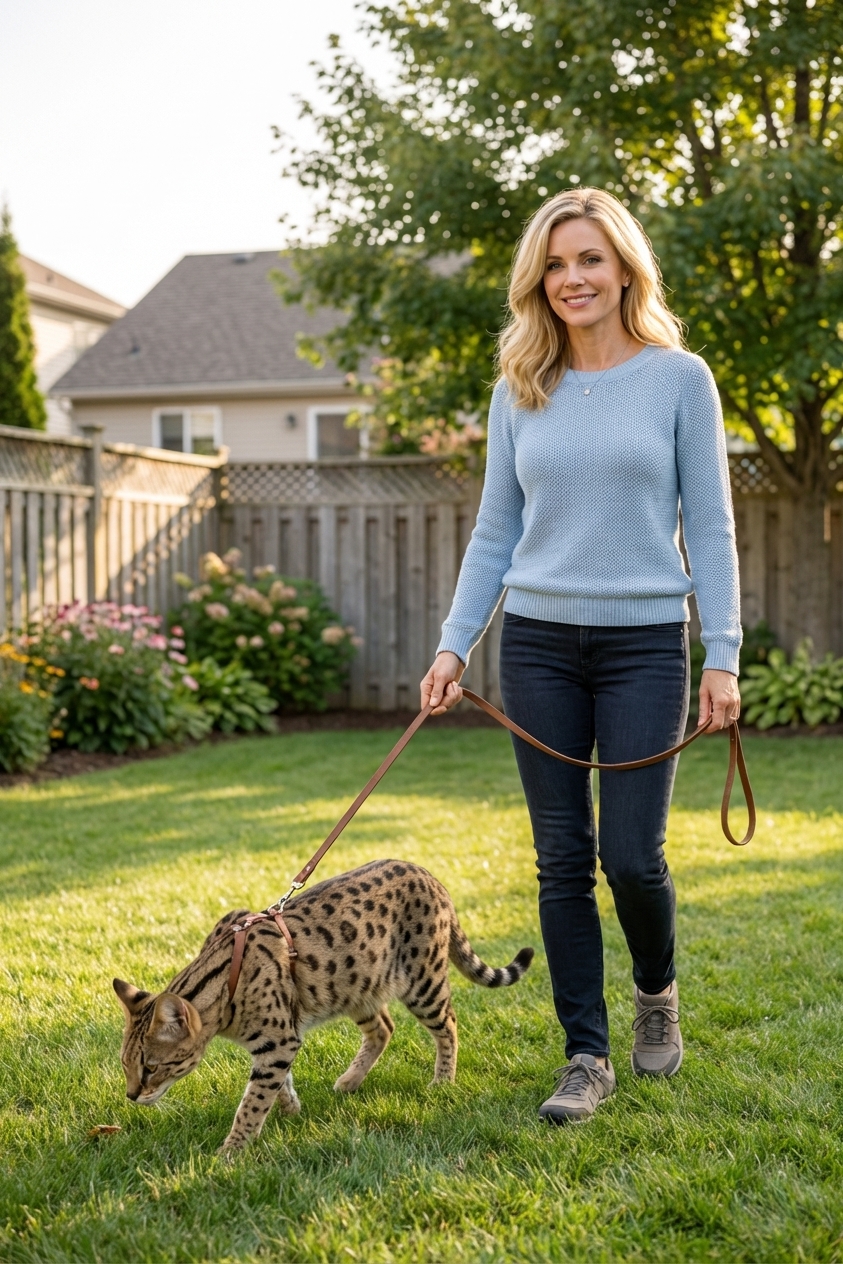
- Harness time: Some do well with supervised outdoor walks, but start slowly and use a secure escape-resistant harness.
Home setup tips
- Plan for jumping: They can reach places you assumed were impossible.
- Secure breakables: Curiosity plus athleticism can equal smashed décor.
- Provide scratching options: Multiple tall, stable scratchers in key rooms.
- Consider a catio: A secure outdoor enclosure can be a game changer for safe stimulation.
Litter box basics
- Go bigger than you think: Large, sturdy boxes help long-legged cats posture comfortably.
- Use the right number: A common guideline is one box per cat, plus one extra, in calm locations.
- Behavior note: If litter box issues pop up, treat it as a medical and stress check, not a “bad cat” issue.
Diet
Savannah cats are obligate carnivores, like all cats, which means they require animal-based protein and specific nutrients such as taurine, arachidonic acid, and preformed vitamin A. The best diet is one that is complete and balanced for your cat’s life stage, and that your cat thrives on.
Practical feeding guidance
- Prioritize moisture: Many cats do best with a diet that includes wet food for hydration support, especially for urinary health.
- Choose reputable, complete diets: Look for foods labeled as “complete and balanced” for growth (kittens) or maintenance (adults), ideally supported by feeding trials or strong formulation standards.
- Protein-forward is good: Cats generally do better with higher protein and moderate fat, but they still need balanced minerals and vitamins.
- Be cautious with raw: Raw feeding can carry bacterial and parasite risks for pets and people. Many veterinary and public health organizations do not recommend raw diets due to these risks. If you are considering it, discuss it with your veterinarian, especially if anyone in the home is immunocompromised.
Portioning tip: Because Savannah cats can be so active, owners sometimes overfeed “just in case.” Use a body condition score with your vet and adjust portions based on your cat’s waistline, muscle tone, and energy.
Note: Diet guidance here is educational, not a substitute for veterinary care. Your veterinarian can help you choose an appropriate diet based on age, activity level, and any medical conditions.
Grooming and shedding
Most Savannah cats have a short coat and are relatively low-maintenance compared to long-haired breeds, but “low-maintenance” does not mean “no maintenance.”
- Shedding: Expect some shedding year-round, often heavier with seasonal changes.
- Brushing: A quick brush once a week helps remove loose hair and can reduce hairballs.
- Nails and ears: Trim nails as needed and check ears for wax or debris, especially in active, outdoors-on-harness cats.
- Bathing: Usually optional unless your cat gets into something messy. Start handling routines early so grooming and vet care are easier.
Health considerations
Savannah cats can be healthy, but their high activity level means you should be proactive with veterinary care, safe handling, and prevention.
Common areas to watch
- Heart disease screening: Hypertrophic cardiomyopathy (HCM) is a concern in cats generally, not just Savannah cats. Ask your veterinarian about routine monitoring and whether an echocardiogram is appropriate, especially if there is a family history.
- Dental health: Dental disease is extremely common in cats. Start tooth-friendly routines early, including dental diets, approved dental treats, or brushing if your cat tolerates it.
- GI sensitivity: Some have sensitive stomachs. Slow diet changes over 7 to 10 days and monitor stool quality.
- Injury risk: Athletic jumpers can sprain or fracture limbs if they land awkwardly, especially on slippery floors or unstable furniture.
Preventive care must-haves
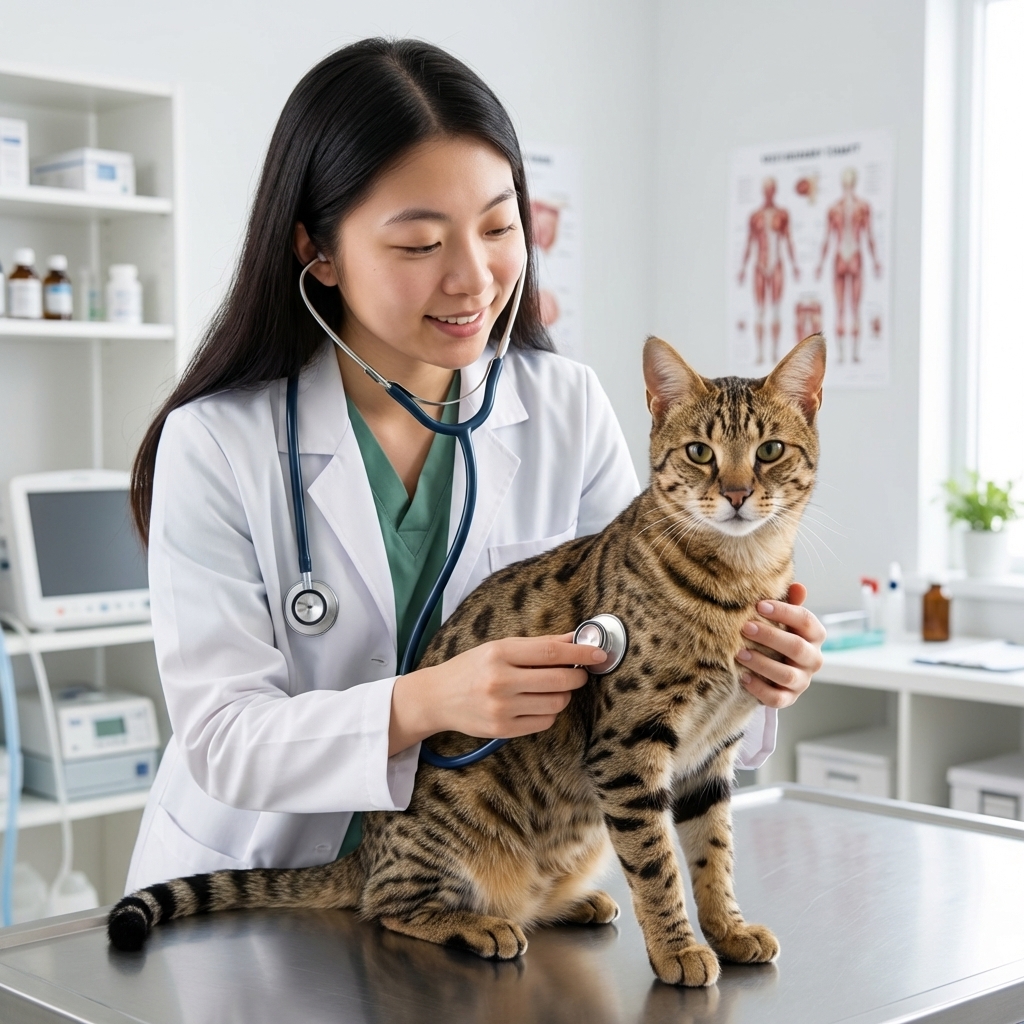
- Annual or twice-yearly exams depending on age and medical history.
- Parasite prevention: Flea, tick, and heartworm prevention as recommended for your area and lifestyle. (Yes, indoor cats can still get parasites.)
- Microchip and secure ID: These cats can be fast, bold, and door-curious.
If you adopt an early-generation Savannah cat, it is especially important to find a veterinarian comfortable with high-drive cats and to practice low-stress handling from kittenhood.
Note: This section is general education. Always ask your veterinarian for guidance tailored to your individual cat.
Legality in the US
Savannah cat laws vary widely and can change over time. Some states allow only later generations (often F4 or F5 and beyond). Others require permits. Some restrict or ban ownership completely.
Because this is a moving target, use this section as a starting point, not a final answer. Before you place a deposit, confirm rules with:
- Your state wildlife agency (often Fish and Wildlife, Department of Natural Resources, or similar)
- Your county and city ordinances (local rules can be stricter than state rules)
- Your HOA or landlord, if applicable
Common restriction patterns
- Generation limits: “F1 to F3 prohibited, F4+ allowed” is a common framework.
- Permit requirements: Some areas require an exotic pet permit, enclosure standards, or proof of sterilization.
- Import restrictions: A state may allow ownership but restrict importing or breeding.
A quick state snapshot
This is not a complete legal list, and it is not legal advice. It is here to set expectations so you know what to verify.
- More likely to allow (often with fewer restrictions): Many states treat later-generation Savannah cats more like domestic cats, but local ordinances can still apply.
- More likely to restrict early generations: It is common to see restrictions targeted at F1 to F3, or requirements for permits and documentation.
- More likely to be strict: Some states and cities have broad exotic or hybrid pet rules that can limit or prohibit Savannah ownership regardless of generation.
My best advice: Ask the breeder for the cat’s generation documentation and any permits or prior sales history in your state. Then verify independently in writing if possible. Do this before you emotionally commit, because rehoming due to legal conflict is heartbreaking for both families and cats.
Do Savannah cats make good pets?
They can be incredible companions for the right home. They can also be completely overwhelming in the wrong one.
Great match for
- Active households that enjoy daily play and training
- People who work from home or have time for structured enrichment
- Homes with vertical space and a willingness to cat-proof
- Experienced cat owners who understand body language and enrichment
Usually not the best match for
- Very small apartments without vertical setup or daily exercise plans
- Homes wanting a low-energy lap cat
- Households with small prey pets (birds, rodents) unless you can reliably separate spaces
- People away from home long hours with limited time to play and interact
Kids and other pets
- Children: They can do well with respectful kids, but their energy can be a lot. Teach “hands off when the cat walks away” and avoid rough play.
- Dogs: Many do well with calm, cat-friendly dogs when introduced properly.
- Other cats: Some integrate beautifully, others may be bossy or intense. Slow introductions are non-negotiable.
Choosing a breeder or rescue
Because Savannah cats can be expensive and high-demand, the breed attracts both excellent and questionable breeders. Take your time and ask more questions than you think you should.
- Ask for generation and pedigree details (F1 to F5 matters).
- Confirm health practices such as vaccination, parasite prevention, and any screening for inherited issues.
- Look for early socialization and kittens raised in a home environment, not isolated.
- Review the contract for return policies and spay or neuter requirements.
- Consider rescue: High-energy hybrid cats are sometimes surrendered when owners underestimate the commitment. A breed-savvy rescue can help match temperament to home.
Quick checklist
- Confirm state, county, and city legality for the specific generation you are adopting.
- Budget for quality food, enrichment, and veterinary care.
- Plan daily interactive play and a vertical environment.
- Set up a safe intro room for the first 1 to 2 weeks.
- Schedule a new-pet vet visit within the first week.
If you are on the fence, consider meeting adult Savannah cats in the generation you are considering. A responsible breeder or rescue should be happy to educate you. The right match feels less like buying a “cool cat” and more like choosing a high-drive family member you can truly support for the next 12 to 20 years.
Bottom line: When Savannah ownership goes well, it is because the home matches the cat: time for daily enrichment, space to climb and explore, a realistic budget, and a clear answer on legality before the cat ever comes through the door.