
Samoyed Temperament, Exercise, and Social Needs

Samoyeds are famous for three things: the fluffy white coat, the “Sammy smile,” and a personality that often feels like a friendly neighbor who never wants the party to end. That joy is real, but it comes with needs you cannot ignore. Samoyeds were bred to work closely with people in cold climates, and that history shows up today in how social, active, and vocal they can be.
This guide covers what daily life is like with a Samoyed, including temperament with strangers and kids, barking and “talking,” climate limits, exercise needs, alone-time tolerance, training priorities, and how grooming fits into a normal week.
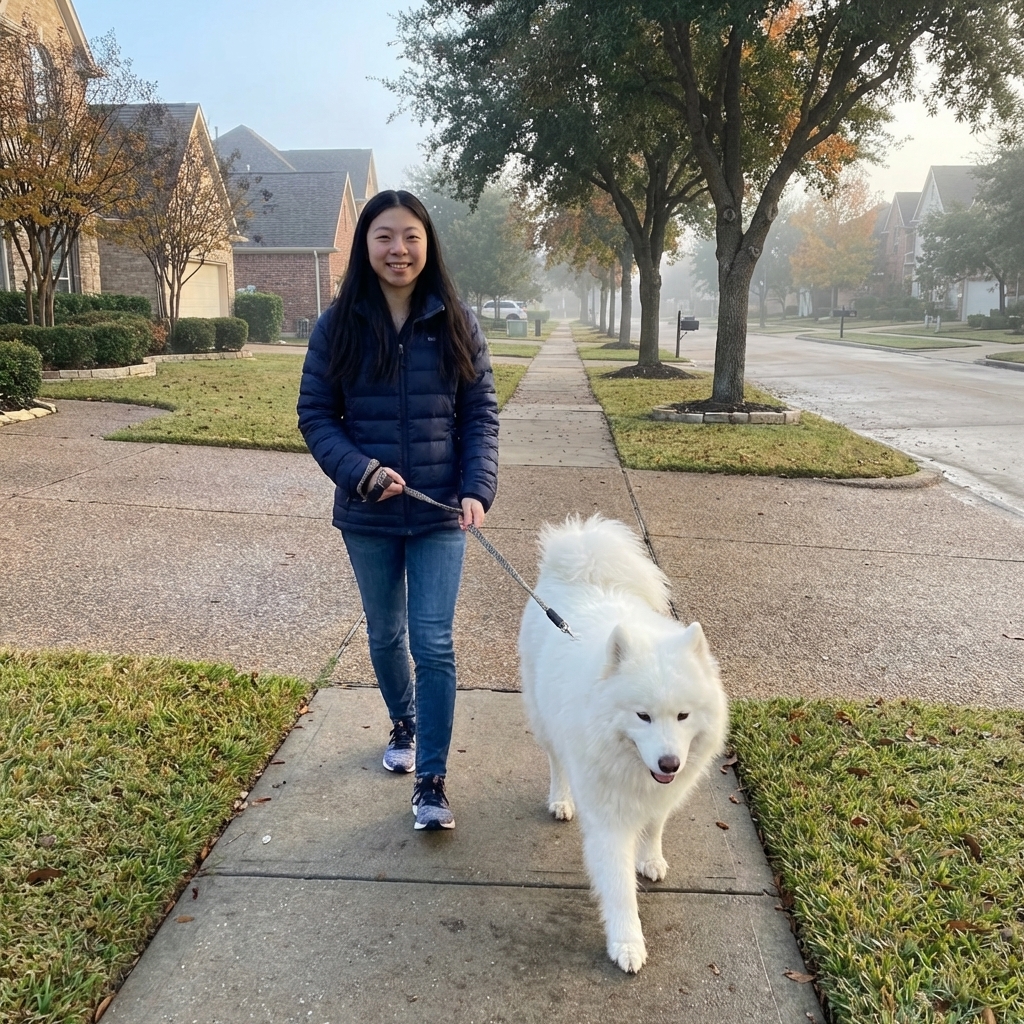
The Sammy smile
The “Samoyed smile” comes from a naturally upturned mouth shape. In breed history, it is often said this shape helped reduce drooling and, in cold conditions, limited ice buildup around the face. Either way, in the home that sweet expression matches a typical Samoyed temperament: bright, people-focused, and eager to engage.
Many Samoyeds are affectionate and playful, but they are rarely “low-maintenance easy.” When they are under-exercised or under-stimulated, that same friendly energy can turn into jumping, mouthing, pulling on leash, counter-surfing, and constant attention-seeking.
Temperament
With strangers
Most Samoyeds are social and welcoming with visitors, and many are not strong “guard dogs” in the traditional sense. They may bark at the door, then happily greet the person they just announced. That can be wonderful if you want a friendly family dog, but it is a poor match if you want a naturally suspicious watchdog.
- Best-case scenario: confident, friendly greetings with polite manners.
- Common challenge: over-friendly jumping and excitement, especially in adolescence.
- What helps: reward calm greetings, teach “place,” and practice controlled hellos on leash.
With kids
In my experience as a veterinary assistant, families often do well with Samoyeds when everyone understands two truths: Samoyeds are sturdy and tolerant, but they are also high-energy and easily excited. The biggest risk is accidental knockdowns, especially with toddlers.
- Supervise closely with young children, particularly during zoomies.
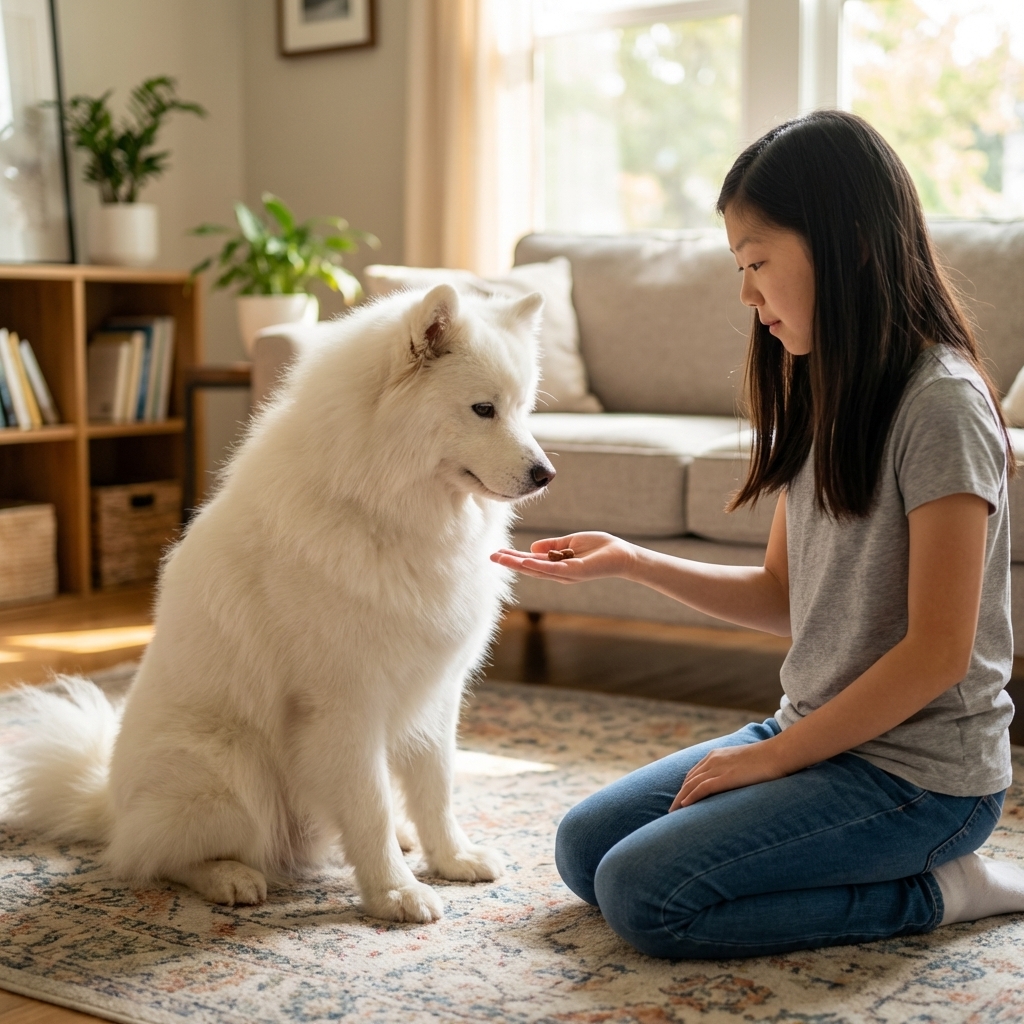
- Teach kids “no hugging” rules and how to offer treats with a flat hand.
- Give your dog a kid-free resting zone and respect it.
With other dogs and cats
Many Samoyeds enjoy other dogs, especially if they are well-socialized early. Prey drive varies. Some will ignore cats, and others will chase. Early introductions, structured boundaries, and consistent training matter a lot here.
Vocal habits
Samoyeds are known for being vocal. Some bark frequently. Some “talk” with grumbles and yodel-like sounds. This is not bad behavior by default. It is communication. The key is teaching them when it is appropriate and what to do instead.
Why Samoyeds vocalize
- Alert barking: movement outside, deliveries, visitors.
- Demand barking: “Play with me,” “Feed me,” “Throw the ball now.”
- Separation distress: vocalizing when left alone.
- Under-stimulation: boredom barking is very common in working breeds.
Practical training tips
- Reinforce quiet: reward a pause, even a one-second pause, and gradually build duration.
- Teach an incompatible behavior: “go to mat,” “touch,” or “sit” at the door.
- Do not reward demand barking: if barking makes the ball appear, barking will increase.
- Meet the need first: a tired Samoyed is a quieter Samoyed.
Exercise needs
Samoyeds were bred for endurance in harsh climates. Most need more than a casual potty walk. A young adult Sammy often thrives with a mix of daily aerobic exercise, strength-building movement, and mental work.
Daily target
As a broad starting point, many healthy adult Samoyeds do well with 60 to 120 minutes of total activity per day, split into sessions. Intensity matters more than the exact minute count, and the right plan depends on age, health, conditioning, and weather. Puppies and seniors need different pacing, and any dog with orthopedic issues needs a veterinarian-guided plan.
Exercise ideas
- Brisk walks plus training: add short “sit, wait, touch” mini-sessions to tire the brain.
- Hiking in cool weather: bring water and plan shade breaks.
- Sledding, skijoring, or canicross: excellent outlets when trained safely.
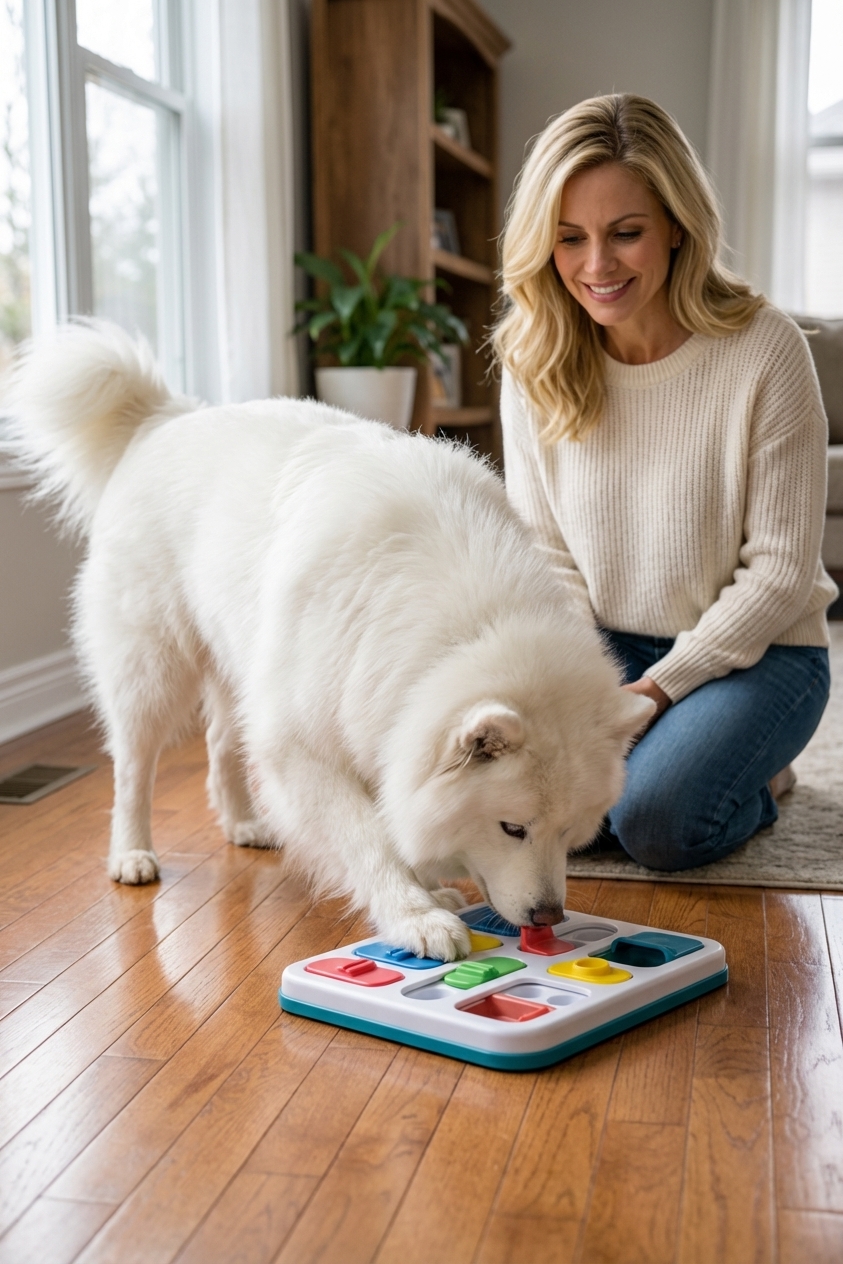
- Nose work: hide treats around the house, use snuffle mats, or try formal scent work.
- Fetch with rules: short sets, then a “settle” to prevent over-arousal.
Why mental work matters
Samoyeds are smart, social problem-solvers. If their brain is bored, they will create a job, and you might not like that job. Ten minutes of training can be as tiring as a longer walk for some dogs.
Training priorities
Most Samoyeds are trainable, but they are also independent and enthusiastic. A little proactive training prevents most of the “Samoyed problems” people complain about later.
- Loose-leash walking: pulling is common. Practice short, frequent sessions and reward position. Use a front-clip harness if needed while you train.
- Recall: many Samoyeds are not reliably off-leash in unfenced areas. Build value with high-reward recalls and do not call them for things they hate.
- Digging and escaping: spitz breeds can be creative. Check fencing, block dig zones, and give legal outlets like a designated digging pit or extra scent work.
- Adolescence: expect a pushy, distractible phase. Keep training simple, upbeat, and consistent.
Heat safety
That gorgeous double coat is designed for cold environments. It insulates and can help regulate temperature, but it does not make Samoyeds “heatproof.” In hot and humid weather, Samoyeds are at higher risk for overheating, especially during exertion. Some will also overheat in moderate temperatures if humidity is high, the sun is intense, or the activity is hard.
Simple decision rules
- Be extra cautious above about 75 to 80°F: especially with humidity, full sun, or running. Many Samoyeds need exercise moved indoors or to very early mornings.
- Plan around temperature: early morning and later evening are safer.
- Use the sidewalk test: if it is too hot for your hand, it is too hot for paws.
- Watch for heat stress: heavy panting, bright red gums, drooling, weakness, vomiting, collapse.
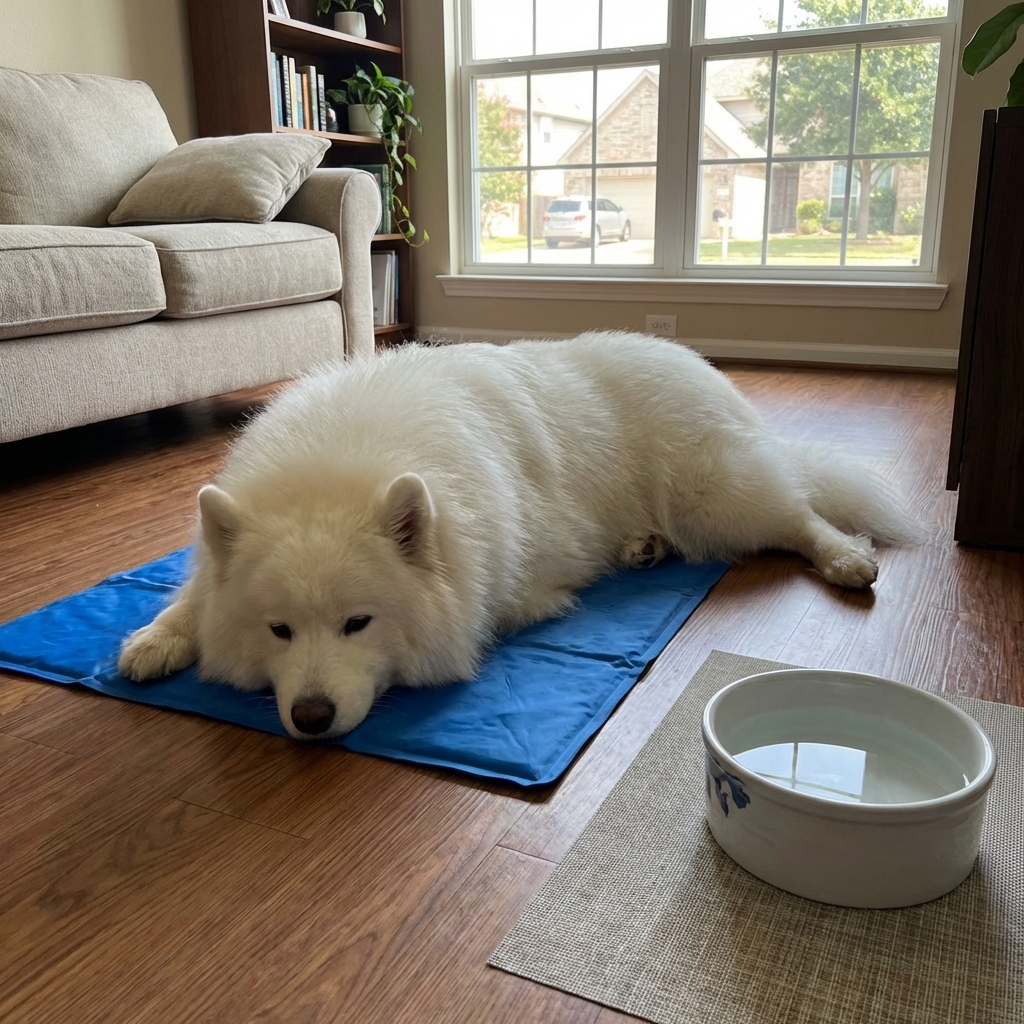
- Cooling support: shade, fans, cool water, cooling mats, and indoor play on hot days.
Coat care matters in the heat. A clean, well-brushed coat with managed undercoat allows better airflow than a packed, shedding coat. Shaving a double-coated dog is usually not recommended unless a veterinarian advises it for a medical reason. It does not reliably “cool” them and it can damage the coat’s regrowth and skin protection.
If you suspect heatstroke, this is an emergency. Move to a cooler area, offer small amounts of water, use cool (not ice-cold) water on the body, and contact an emergency veterinarian immediately.
Alone time
Many Samoyeds struggle with long stretches of isolation. They were bred to live and work closely with people, and they often do best in homes where someone is around regularly or where the dog has structured enrichment and support.
Signs alone-time is too hard
- Persistent barking or howling when you leave
- Destructive chewing focused on exits (doors, windows)
- Drooling, pacing, or frantic behavior when you pick up keys
- House soiling after being reliably trained
What helps most
- Build alone-time gradually: very short departures, then slowly increase.
- Predictable routine: exercise, potty, then a calm enrichment activity before you leave.
- Enrichment that is safe: frozen food toys, lick mats, puzzle feeders.
- Support options: dog walker, daycare (if your dog enjoys it), or a trusted neighbor.
If you suspect true separation anxiety, involve your veterinarian and a qualified trainer. This is treatable, but it is easier when you start early and stay consistent.
Grooming routine
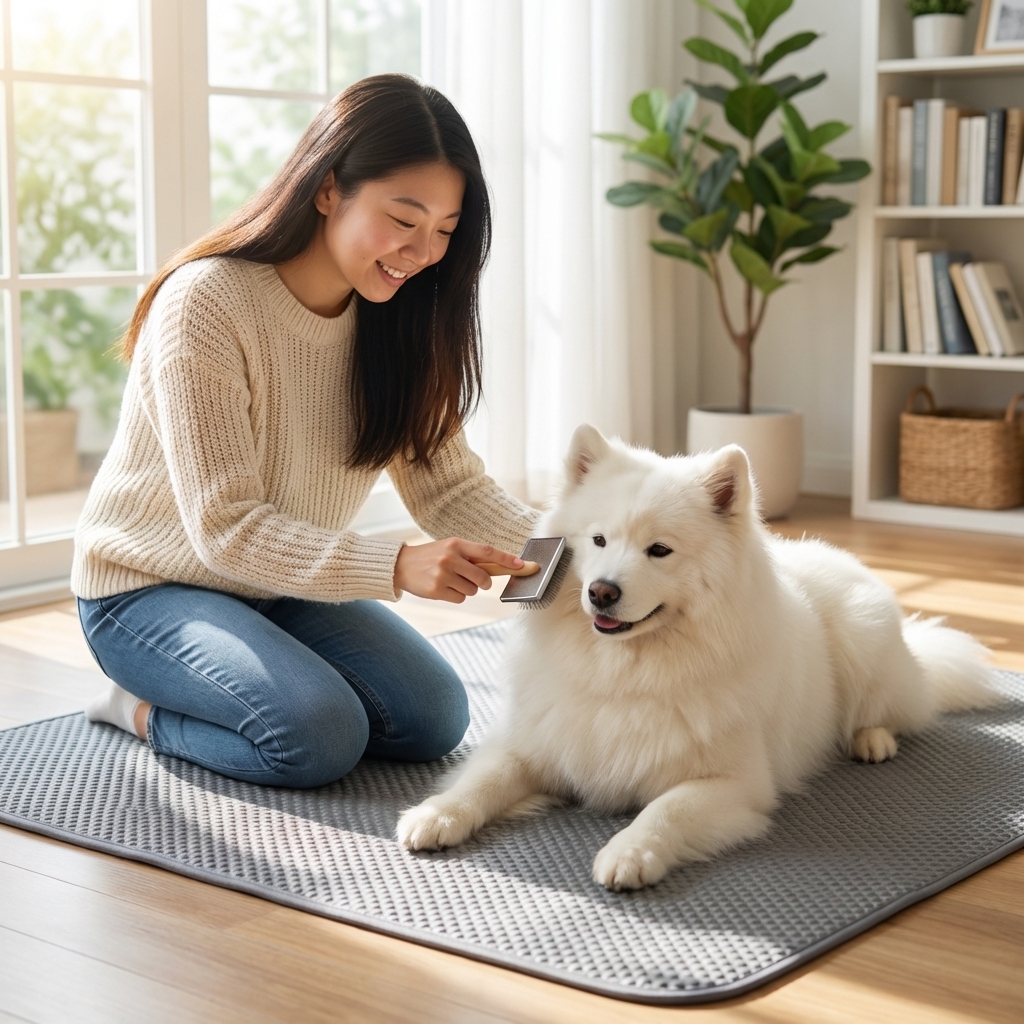
You already know Samoyeds are fluffy. What surprises many people is how much of Samoyed care is not just “beauty,” but comfort and health. Their double coat can trap moisture, dirt, and loose undercoat. That can lead to matting, skin irritation, and hot spots if upkeep falls behind.
A realistic weekly plan
- Line brushing 2 to 4 times per week: more during seasonal coat blow.
- Time estimate: many owners spend 20 to 45 minutes per session at home, depending on coat density and whether the dog is blowing coat.
- Check friction zones: behind ears, armpits, collar area, belly, and under the tail.
- Paw and nail care weekly: nails, paw pad debris, and between-toe fluff.
- Ear checks: especially after swimming or baths.
- Teeth: aim for brushing several times a week for long-term health.
Coat blow and tools
Many Samoyeds “blow coat” one to two times per year, and some do a lighter shed seasonally. During a blow, expect more frequent brushing and more tumbleweeds. Tools that often help include a slicker brush, a greyhound comb to check your work, and an undercoat rake used carefully to avoid scraping skin. A high-velocity dryer can be a game-changer for loosening undercoat after a bath, especially if you are comfortable using one safely.
Important note: shaving a double-coated breed is usually not recommended unless a veterinarian advises it for a medical reason. Besides not reliably improving heat tolerance, clipper damage can make the coat grow back unevenly and increase matting risk. If you are battling mats, the safer long-term fix is consistent brushing, proper tools, and professional grooming support when needed.
Health notes
This is not a diagnosis list, just a practical heads-up. Like all breeds, Samoyeds have a few conditions that come up more often than average. Your best protection is preventive care, maintaining a healthy weight, and choosing reputable breeders or rescues that prioritize health.
- Orthopedic issues: hip dysplasia can occur, so conditioning and weight management matter.
- Eye disease: progressive retinal atrophy (PRA) is reported in the breed, so eye screening and responsible breeding are important.
- Metabolic concerns: diabetes is reported in Samoyeds more than some breeds, so watch for changes in thirst, appetite, and weight and bring them up with your vet.
- Skin and allergies: itchiness, recurrent ear issues, and hot spots can happen, especially if the coat is packed or the skin stays damp.
If you are searching for a puppy, ask about health testing and documentation. If you are adopting, ask what the rescue has observed and what medical work has been done.
Common mismatches
I always encourage families to think about fit, not just looks. Samoyeds can be amazing companions, but they are not ideal for every household.
- Very sedentary homes: a bored Samoyed will find an outlet.
- Long workdays without support: many struggle with loneliness and noise complaints can happen.
- Hot climates without a heat plan: you will need intentional scheduling and indoor enrichment.
- “No barking allowed” living situations: some Samoyeds are simply chatty.
Quick checklist
- Daily exercise plus short training sessions
- Loose-leash practice, recall games, and safe outlets for digging instincts
- Planned social time with people and safe dog interactions
- Heat-smart routines and access to cool indoor rest
- Alone-time training from puppyhood and enrichment when you leave
- A weekly grooming rhythm that prevents mats and skin issues, plus a plan for coat blow season
If you can meet those needs, that famous smile is not just cute. It is a sign you have a confident, fulfilled dog who feels good in their own skin and coat.
If you are considering the breed, meet a few adult Samoyeds, talk to reputable breeders and rescues, and be honest about your time, noise tolerance, and grooming budget. Planning up front is what makes Samoyed ownership feel joyful instead of chaotic.
Veterinary assistant note
This article is educational and not a substitute for veterinary care. If your Samoyed is showing signs of heat stress, anxiety, skin infection, eye changes, or persistent limping, please contact your veterinarian. Early support is often simpler, safer, and more affordable.