Tired of constant dog hair? Learn evidence-based home steps to cut shedding: brushing routines, bath upgrades, omega-3s, better nutrition, parasite control, ...
Article
•
Designer Mixes
Samoyed Grooming: Managing the Double Coat

Shari Shidate
Designer Mixes contributor
If you share your home with a Samoyed, you already know the truth: that gorgeous white “smile” comes with a whole lot of coat. As a veterinary assistant, I love helping families make grooming feel doable, not overwhelming. The good news is that Samoyed coat care is very manageable once you understand what you’re working with and you follow a steady routine.
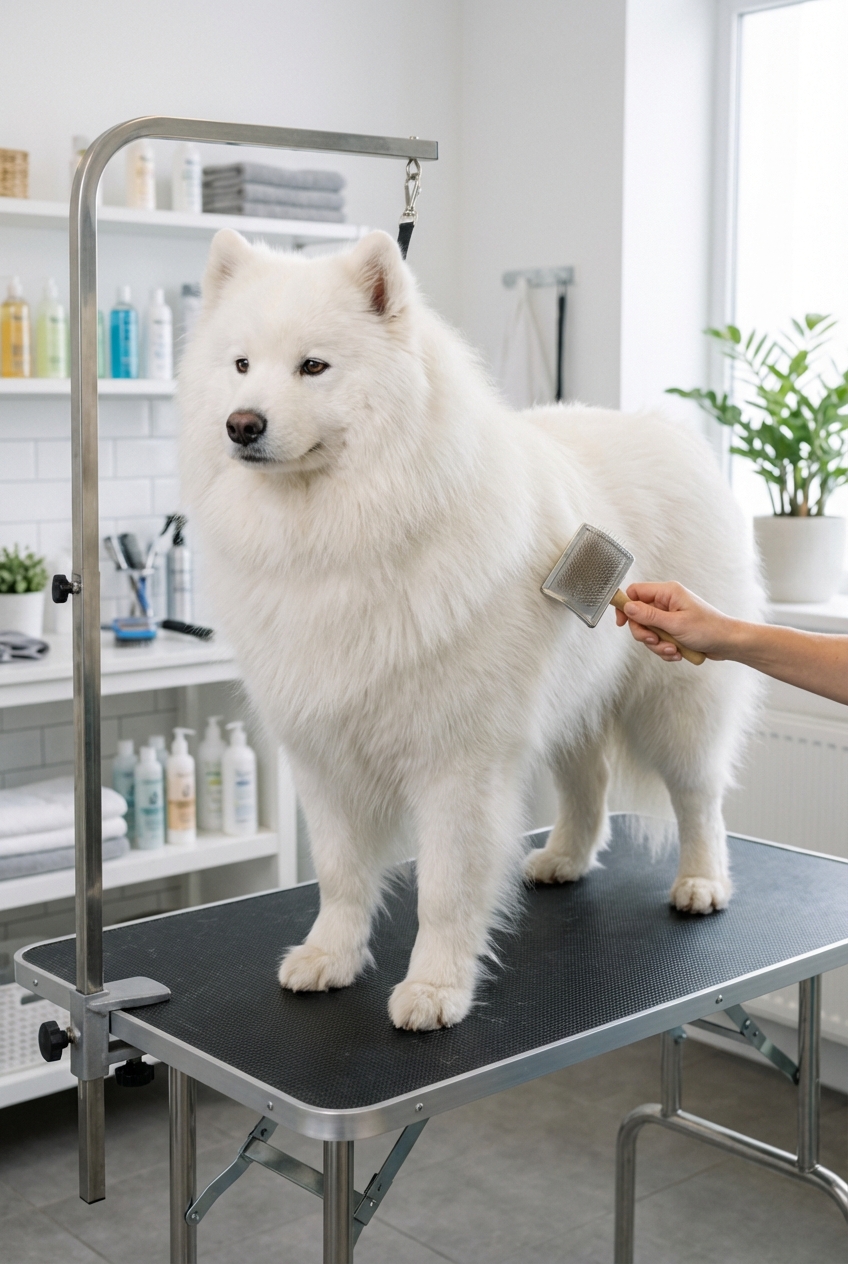
Samoyeds have a double coat : a soft, dense undercoat for insulation and a longer, weather-resistant topcoat. Your job is to prevent the undercoat from packing down near the skin, keep the skin dry and comfortable, and remove loose coat before it tangles, traps moisture, and causes irritation.
Samoyed coat basics
A Samoyed’s coat is designed to protect them in harsh climates. That means it is incredibly efficient at holding warmth, repelling water, and letting debris release easily once dry. It also means it can retain loose undercoat until you help it out.
Topcoat vs. undercoat
- Topcoat (guard hairs): Longer, slightly coarser hairs that help repel water and debris.
- Undercoat: Soft, dense, cottony layer that sheds in seasonal cycles and can mat close to the skin if not brushed out.
When people say a Samoyed is “blowing coat,” they are usually talking about the undercoat coming out in clumps. That is normal, but it needs help leaving the body safely. Many Samoyeds have a bigger shed once or twice per year, but the timing and intensity can vary by the individual (and things like sex, hormones, and whether they are spayed or neutered).
Common trouble spots
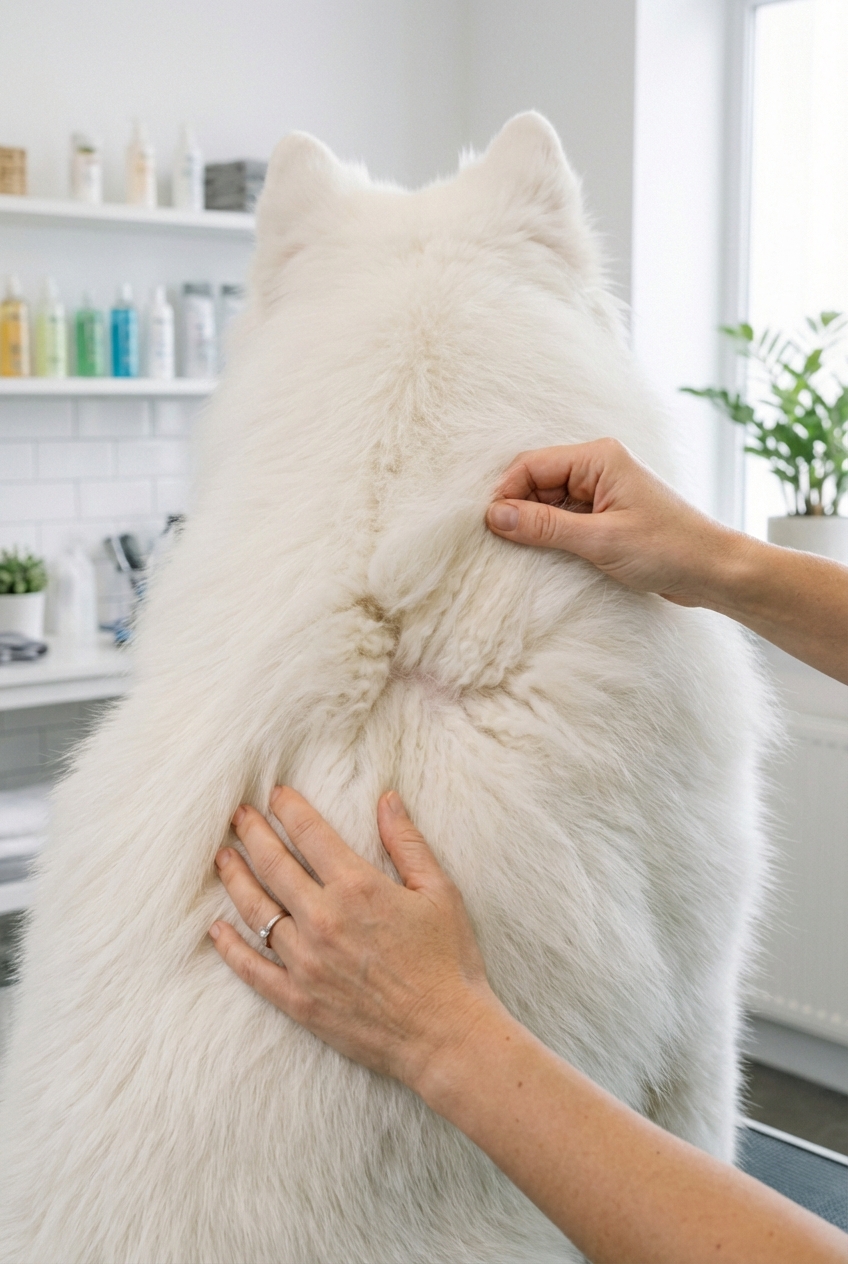
Most mats start in high-friction, high-moisture areas. Check these spots every grooming session:
- Behind the ears
- Under the collar and harness areas
- Armpits and elbows
- Groin and inner thighs
- Tail base and “pants” (rear feathering)
- Between toes and paw pads
Weekly routine
If your Samoyed is healthy and their coat is in good shape, consistency matters more than marathon grooming sessions. Think of it like dental care: short and steady wins.
How often to brush
- Outside heavy shedding: 2 to 3 times per week, 15 to 30 minutes.
- During a coat blow: Daily or every other day, 20 to 40 minutes.
Start with a goal: get to the skin without scraping it. If you only brush the surface, the topcoat looks fluffy while the undercoat mats underneath.
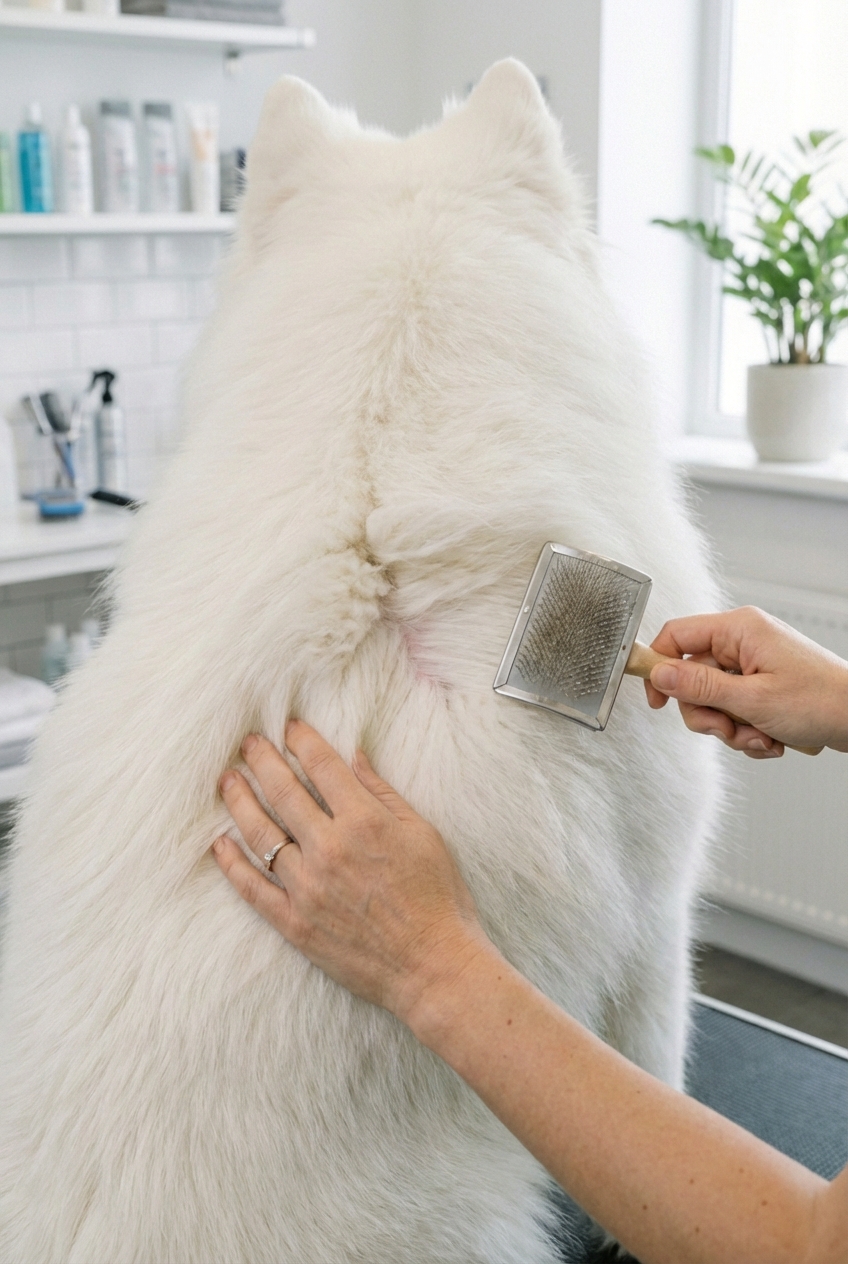
Line brushing
Line brushing means you part the coat into a “line,” brush a small section all the way to the skin, then move to the next line. It takes practice, but it prevents hidden mats.
- Lightly mist the coat with water or a dog-safe conditioning spray (dry brushing can increase breakage and static).
- Part the coat with your fingers or a comb until you see skin.
- Brush that section from skin outward, gently and in short strokes.
- Follow with a metal comb. If the comb glides to the skin, you’re done with that area.
Quick safety tip: With a slicker brush, use gentle pressure and keep the brush flat. Avoid digging in with the corners, which can cause “brush burn,” especially in armpits, groin, and behind the ears.
Best grooming tools
You do not need a drawer full of gadgets, but you do need the right basics. These are the tools I see work best for double-coated dogs.
- Slicker brush: Great for loosening undercoat and working through light tangles. Use gentle pressure.
- Long-pin metal comb: Your “truth teller.” If it cannot get through, there is still tangling or packed undercoat.
- Undercoat rake (long, rounded pins): Helpful during coat blow for removing loose undercoat without yanking.
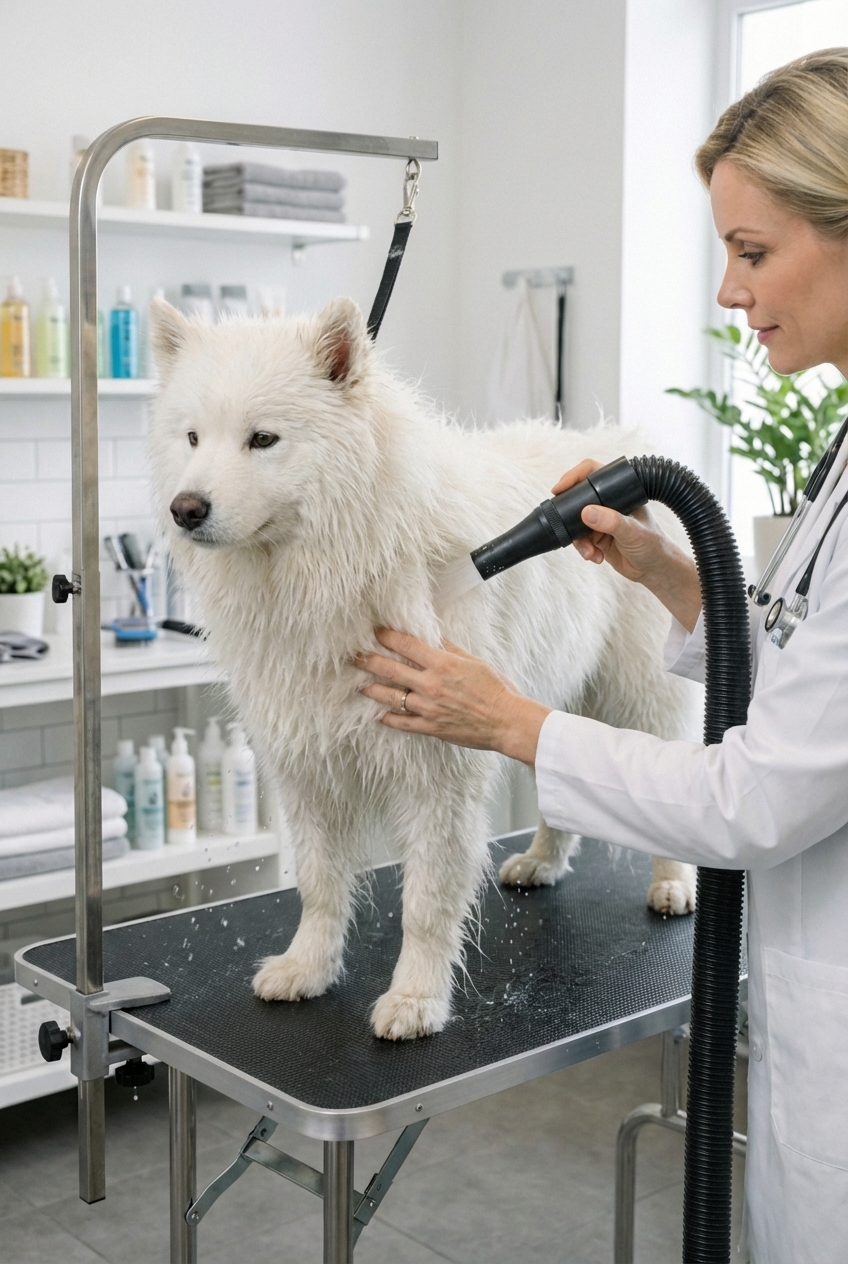
- Blow dryer (high velocity pet dryer): One of the best investments for Samoyeds. It separates coat, blows out dead undercoat, and can reduce the risk of moisture-related skin issues by drying down to the skin.
- Nail trimmers or grinder : Coat care includes feet. Shorter nails help posture and reduce slipping.
A note about de-shedding blades and sharp tools: Be cautious. Furminator-style tools and other blades can cut guard hairs if misused. That can leave the coat more prone to tangles and change texture over time. If you are unsure, ask a professional groomer who has Samoyed experience.
Bathing and drying
Bathing is important, but it is also where many coat issues start if the dog is not brushed and dried correctly. A wet undercoat that air-dries can mat tightly and trap moisture against the skin.
How often to bathe
Many healthy Samoyeds do well with a bath every 4 to 8 weeks, depending on lifestyle, allergies, and skin sensitivity. Some can go longer if they are brushed and blown out regularly, while others need more frequent, veterinarian-directed baths for skin disease. The coat should feel clean and airy, not sticky or heavy.
Bath day checklist
- Pre-brush and de-mat first. Water tightens mats.
- Use a dog-specific shampoo (and conditioner if the coat feels dry). Rinse thoroughly. Leftover product causes itchiness.
- Towel blot, do not rub. Rubbing can tangle coat.
- Dry down to the skin. A high velocity dryer is ideal. Keep airflow moving and avoid concentrating air on one spot.
- Brush and comb as you dry. This keeps the undercoat separated and fluffy.
Dryer safety: Keep airflow away from the eyes and avoid blasting directly into the ear canal. Many dogs do best with ear protection designed for drying, plus lots of breaks and calm reassurance.
Coat blow season
Most Samoyeds shed year-round, but many have major seasonal sheds once or twice per year. During that time, the undercoat releases in tufts and the dog can look uneven or “moth-eaten.” That is normal.
What helps most
- Increase brushing frequency and use line brushing.
- Use a dryer between baths to blow out loose undercoat safely.
- Short, frequent sessions reduce stress for you and your dog.
- Protect the skin by being gentle in sensitive zones (armpits, groin, behind ears).
If you feel overwhelmed during coat blow season, a professional groomer can do a “bath, blowout, and tidy” appointment that removes an impressive amount of undercoat and gives you a fresh start.
Mat removal basics
Mats happen, even to well-loved dogs. The key is handling them safely.
- Do not use scissors to cut mats near the skin. I see accidental skin cuts far too often because Samoyed skin can be hard to see under the coat.
- Do not bathe a matted coat. Water can tighten mats and make them harder to remove.
- Know when to call in help. If mats are tight, widespread, or your dog is painful or upset, a professional groomer (or your veterinary team) is the safest next step.
Trimming and tidy work
Most Samoyeds do not need haircuts, but a little tidy work can improve comfort and hygiene.
- Paw pads: Trimming hair level with the paw pads can improve traction and reduce debris buildup.
- Feet outline: Light scissoring around the foot can create a neat “cat foot” look without changing the coat’s function.
- Sanitary area: A small hygiene trim around the rear can help keep things clean, especially for seniors or dogs with soft stools.
If you are not confident with scissors, ask a groomer for a “tidy” instead of trying to do it quickly at home.
Should you shave a Samoyed?
For most Samoyeds, the answer is no. The double coat protects the skin and helps with overall temperature regulation. Shaving can lead to:
- Sunburn and higher UV exposure
- Coat texture changes and uneven regrowth
- More tangling as guard hairs are disrupted
- Less predictable cooling and insulation, especially in hot sun or variable weather
Exception: In certain medical situations (severe matting, surgery sites, skin infections), shaving may be necessary and humane. If shaving is being considered, ask your veterinarian and a groomer experienced with Nordic double coats.
Skin and coat red flags
Grooming is also your weekly head-to-toe health check. If you notice any of the following, it is worth a call to your veterinarian:
- Persistent itching, chewing, or rubbing the face
- Redness, scabs, odor, or greasy patches
- Hot spots (moist, painful areas that can spread quickly)
- Excessive dandruff or very dry coat
- Hair loss, thin patches, or recurrent ear infections
Coat issues can be linked to allergies, parasites, infections, or endocrine conditions. The earlier you address them, the easier they are to manage.
Ears and paws
You do not have to clean ears constantly, but you should look at them weekly.
- Ear checks: Healthy ears usually look pale pink and smell neutral.
- When to clean: If you see light waxy buildup, use a veterinarian-approved ear cleaner and cotton (no cotton swabs down the canal).
- When to call your vet: Redness, strong odor, head shaking, pain, or dark discharge.
Also check paw pads for snowballing (even in mild climates, it can happen with wet grass), cracking, or debris between toes.
Make grooming easier
Samoyeds are smart, social dogs. They usually do best when grooming feels calm and predictable.
Gentle habit-building tips
- Start small: 5 minutes a day is more valuable than one stressful hour.
- Use a non-slip mat so your dog feels secure.
- Pair grooming with rewards: tiny treats, lick mats, or a favorite toy.
- Handle paws and ears regularly so nail trims and ear checks are not a surprise.
- End on a win: stop after an easy area, not after a struggle.
Puppy note: If you have a Samoyed puppy, start gentle handling early. Short, positive sessions with the brush, comb, dryer sound (at a distance), paws, and ears make adult grooming much easier.
If your dog is anxious, painful, or reactive during grooming, do not force it. Talk with your veterinarian about underlying discomfort, and consider a groomer who offers low-stress handling.
Quick schedule
Here is a simple schedule you can save and follow:
- 2 to 3 times per week: brush and comb (line brush, check mat zones)
- Daily during coat blow: short brushing sessions, consider dryer blowouts
- Every 4 to 8 weeks (often): bath, condition if needed, thorough dry to the skin
- Every 2 to 4 weeks: nails and paw pad check
- Weekly: ear check, skin scan, collar area check
The bottom line is this: a Samoyed coat does not need to be intimidating. With the right tools and a steady routine, you can keep that double coat clean, comfortable, and photo-ready most days, even in a hot climate.