Make meals more tempting and nutritious with simple dog food toppers: bone broth, cooked eggs, sardines, pumpkin, and steamed veggies—plus portions, storag...
Article
•
Designer Mixes
Safe Vegetables for Dogs: Portions and Prep

Shari Shidate
Designer Mixes contributor
Vegetables can be a wonderful way to add fiber, hydration, and extra nutrients to your dog’s bowl, especially when you choose dog-safe options and prep them so dogs can digest them. As a veterinary assistant in Frisco, Texas, I love veggies as a simple, budget-friendly “upgrade” you can start slowly, even if you are not ready to go fully homemade.
Quick safety note: vegetables should be a side, not the main course. As a general rule, many veterinarians suggest keeping all extras (including veggies and other treats) to 10% or less of daily calories for most healthy adult dogs, unless your vet recommends otherwise.
How much vegetable is too much?
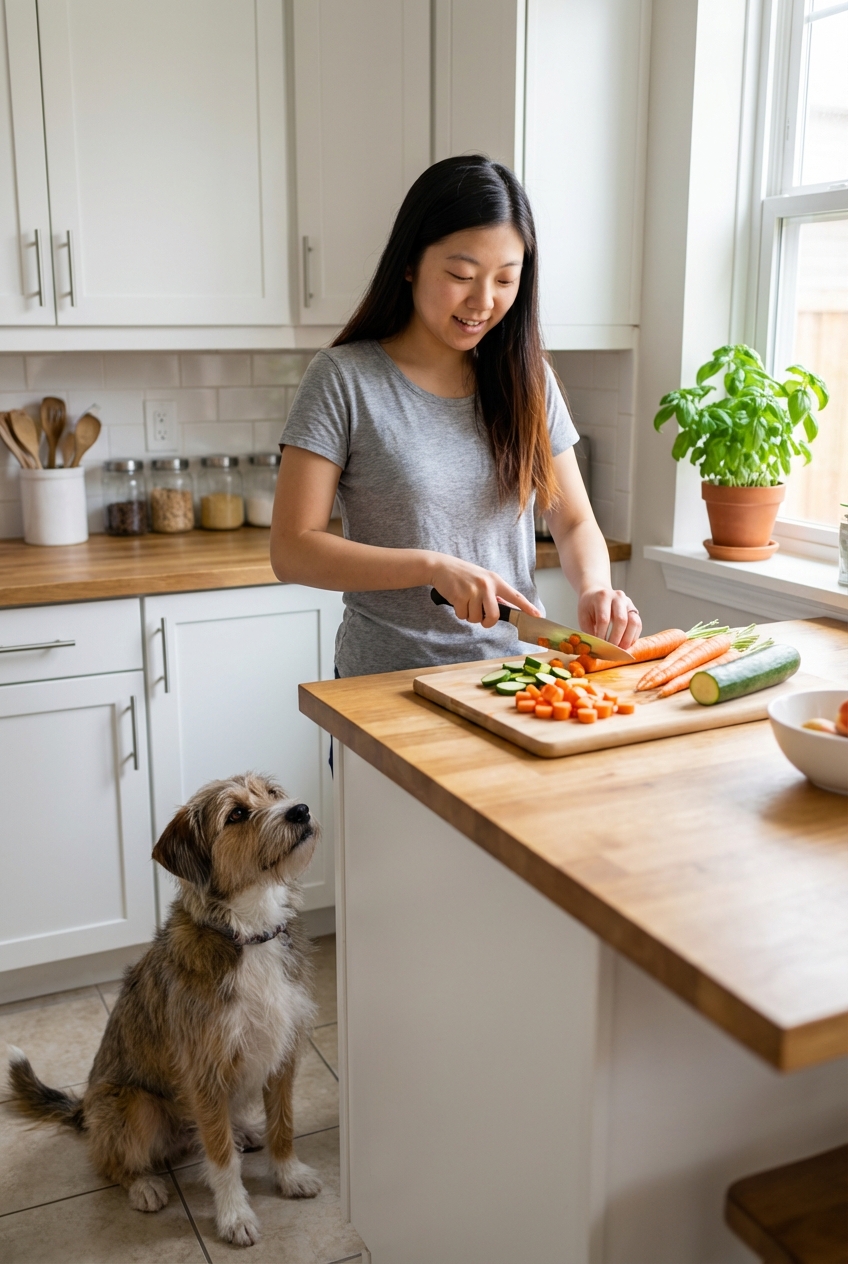
The right portion depends on your dog’s size, activity level, and digestive sensitivity. Some dogs handle vegetables beautifully. Others get gassy or have loose stool if you add too much too fast.
Easy starting point
- Start with 1 to 2 teaspoons of a single cooked veggie for small dogs, or 1 to 2 tablespoons for medium to large dogs.
- Stick with that amount for 3 to 5 days.
- If stool stays normal, slowly increase.
General daily veggie range (for most healthy dogs)
These are practical ranges for a typical adult dog when veggies are used as a topper or treat, not as a recipe that must meet full nutritional standards.
- Under 15 lb: 1 to 3 tablespoons total veggies per day
- 15 to 35 lb: 2 to 6 tablespoons total veggies per day
- 35 to 70 lb: 1/4 to 1/2 cup total veggies per day
- Over 70 lb: 1/2 to 1 cup total veggies per day
If your dog is on a weight-loss plan, vegetables can help them feel fuller with fewer calories. If your dog is underweight or very active, keep veggie portions modest so you do not crowd out needed protein and fat. And if your dog is on a prescription diet (GI, renal, urinary, allergy), check with your veterinarian before adding anything new, even “healthy” veggies.
Prep matters
Dogs can benefit from veggies most when we make them easier to break down. They chew less than we do, and they have a shorter digestive tract with less fermentation of fiber than humans, so light cooking and small pieces make a real difference.
Best prep methods
- Steam: One of the easiest ways to soften veggies while keeping nutrients.
- Boil: Works well, but do not use salted water. Drain and cool.
- Roast or bake: Great for sweetness and texture, especially squash and sweet potato. Skip oils, butter, and seasoning.
- Puree or finely chop: Helpful for leafy greens and dogs with sensitive digestion.
What to avoid in prep
- No onions, no garlic seasoning, no chives: allium family risk for red blood cell damage.
- No salt, spicy seasonings, or sauces: can irritate the gut and add unnecessary sodium or fats.
- No butter, heavy oils, or cheese sauces: high-fat add-ons may increase pancreatitis risk in susceptible dogs.
- Avoid raw, hard chunks: choking risk, and many dogs will simply pass them undigested.
- Avoid sweeteners: never use xylitol (also called birch sugar). It is highly toxic to dogs. Skip “veggie chips” and seasoned veggie mixes for the same reason.
- Watch sodium in canned veggies: choose no-salt-added when possible, and consider rinsing anyway. Plain frozen or fresh vegetables are often easiest.
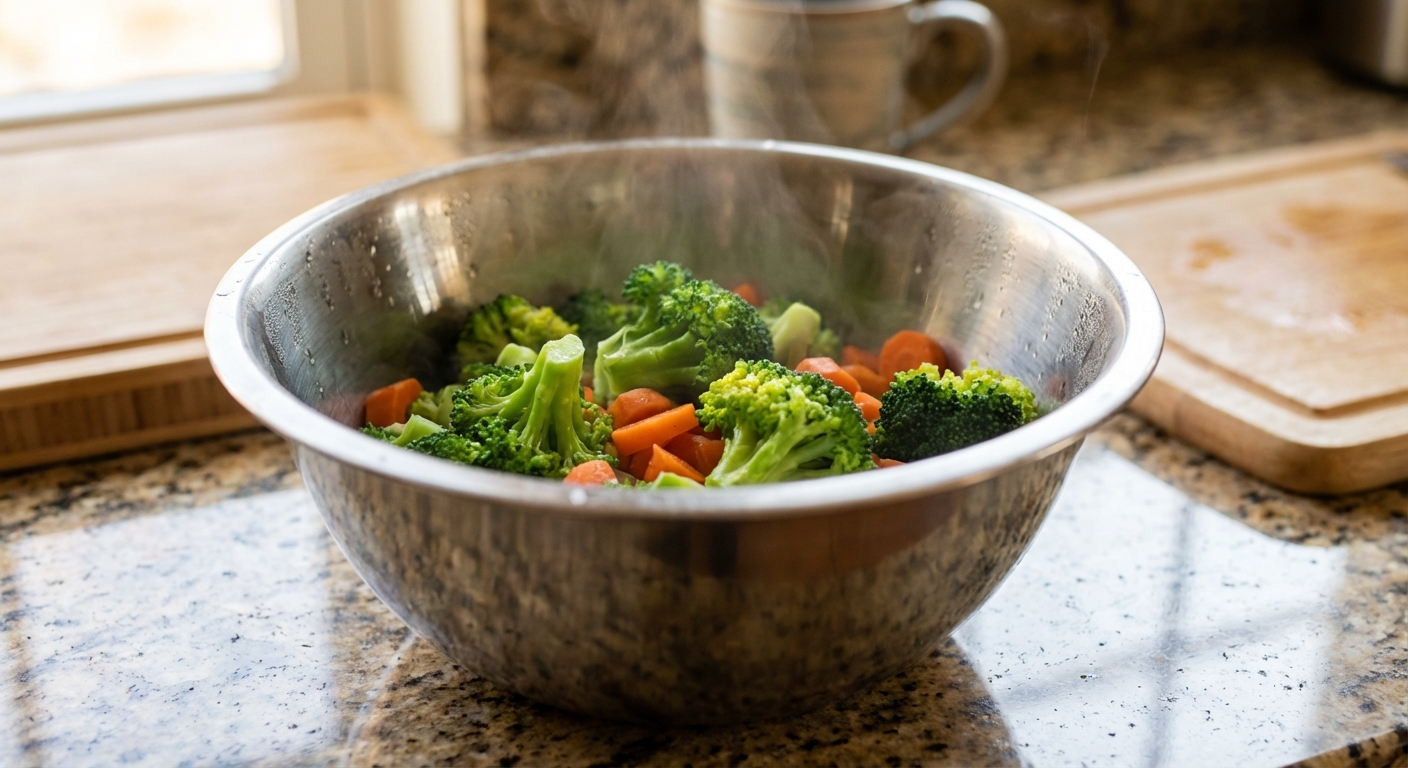
Safe vegetables for dogs
Below are commonly used, dog-safe vegetables. Start with one, go slowly, and watch stool quality, itching, and gas. If you are not sure where to begin, pick one mild option (like green beans or zucchini) and keep it boring for a few days.
Go-to options
- Carrots: Steam or finely grate. Great crunchy treat when cut into thin sticks for confident chewers.
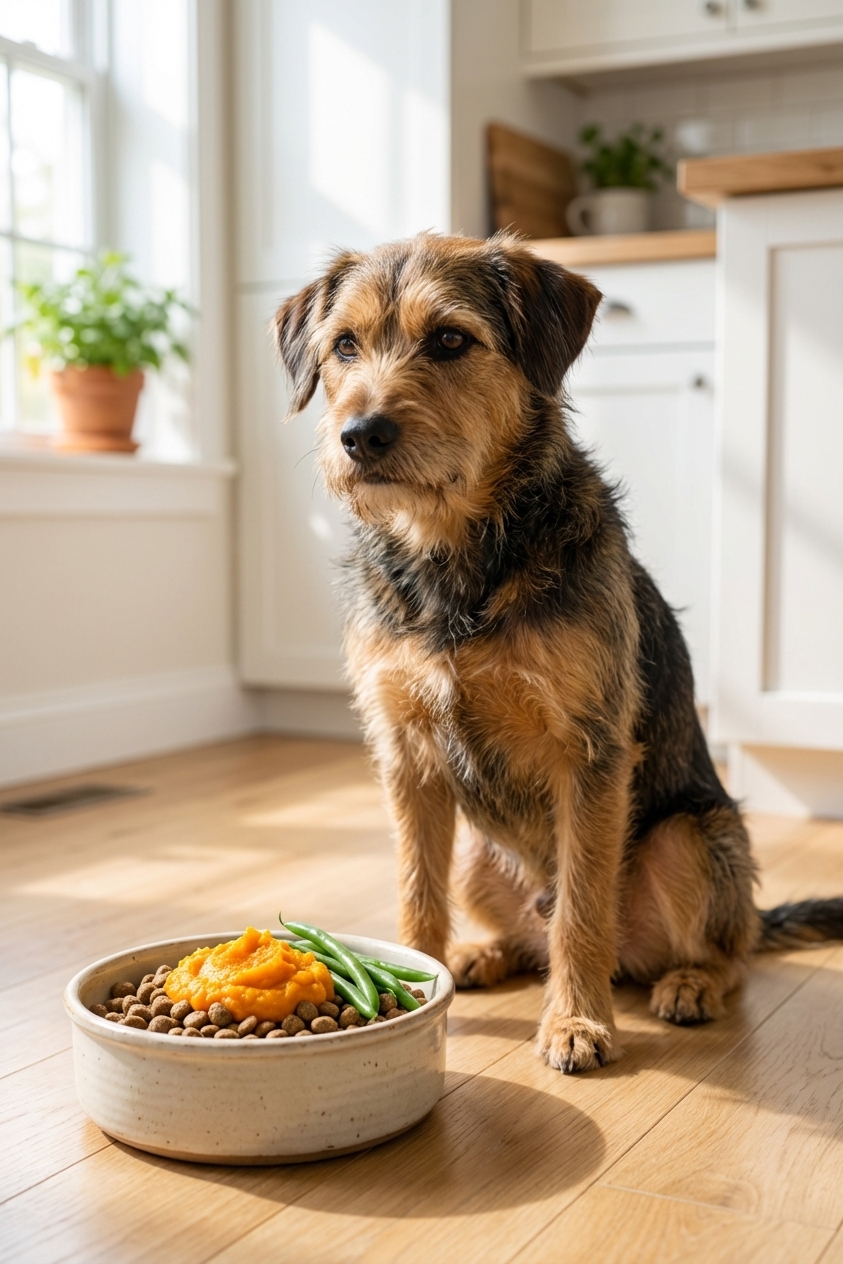
- Green beans: Steam or serve plain canned with no salt added (rinsed is even better). A favorite for weight management.
- Broccoli: Steam and keep portions small. Too much can cause gas and GI irritation.
- Cauliflower: Steam or roast, small servings to reduce gas and tummy upset.
- Zucchini: Lightly cooked or shredded, usually gentle on the stomach.
- Cucumber: Can be served raw in thin slices. Low calorie and hydrating.
- Spinach: Best lightly cooked and offered in small amounts. If your dog has a history of calcium oxalate bladder stones or is on a urinary prescription diet, ask your vet before offering spinach.
- Kale: Steam and chop. Start very small if your dog is prone to gas. Like spinach, kale is higher in oxalates, so use caution for dogs with a bladder stone history.
- Bell peppers (especially red): Remove stem and seeds, chop small, lightly cook for easier digestion.
Starchy vegetables (use as a small side)
- Sweet potato: Bake or steam until very soft. No skin for sensitive dogs. High fiber, so introduce gradually.
- Pumpkin: Plain canned pumpkin (not pie filling). Helpful for mild stool issues in some dogs.
- Butternut squash: Roast or steam until soft, mash before serving.
- White potato: Fully cooked only. Never raw. Serve plain and keep portions modest, especially for dogs with diabetes or weight concerns.
If you are using vegetables as treats, remember to count them toward daily calories. In most homes, keeping all treats and toppers around 10% or less is a simple, safe target.
Foods to avoid
Some produce is unsafe or risky for dogs. Others are not “toxic” but can cause significant digestive upset.
Do not feed
- Onion, garlic, chives, leeks: can damage red blood cells and cause anemia.
- Grapes and raisins: can cause kidney failure in some dogs. Even small amounts are not worth the risk.
- Raw potato: can contain solanine, which is toxic.
- Green parts of tomato plant: tomato vines and leaves can be toxic. Ripe tomato flesh is generally considered safe in small amounts, but it is not a produce item I reach for first.
Use caution
- Avocado: high fat and can be rough on sensitive dogs. The pit is also a choking and obstruction hazard, and the skin and pit contain persin. Best to skip.
- Corn on the cob: the cob is a serious obstruction risk.
- Mushrooms: store-bought edible mushrooms are generally not considered toxic, but wild mushrooms can be deadly. It is safest to avoid unless you are very confident in the source.
- Very gassy vegetables: cabbage, Brussels sprouts, and large servings of broccoli can cause uncomfortable gas and stomach upset.
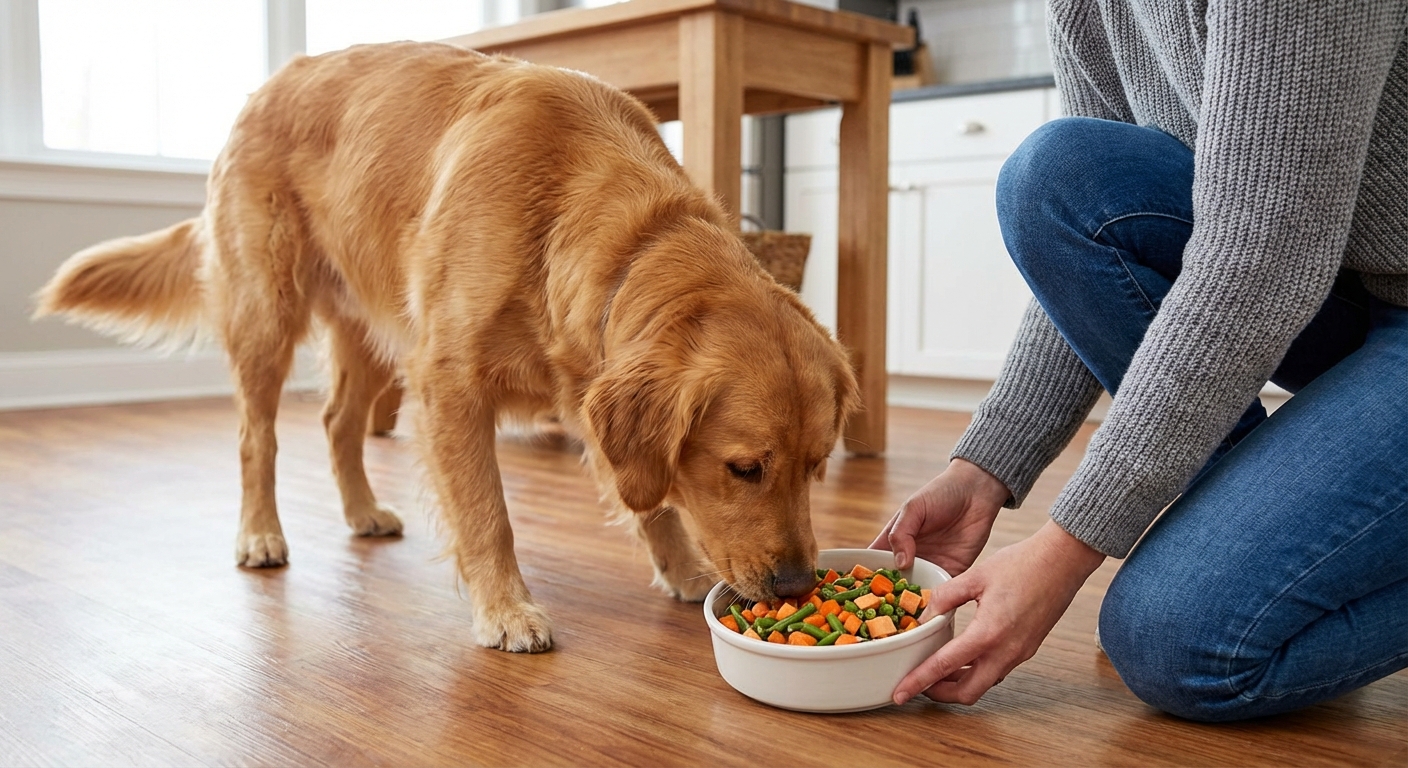
When veggies are not a good idea
Vegetables are not a must for every dog. Hold off and check with your veterinarian first if your dog:
- Is on a prescription diet (GI, renal, urinary, allergy)
- Has a history of pancreatitis, frequent GI flare-ups, or food allergies
- Has kidney disease, diabetes, or recurrent bladder stones
Signs a vegetable is not agreeing
Most veggie issues are mild and resolve quickly once you stop the new food. Call your veterinarian if symptoms are severe, if your dog seems painful, or if your dog has underlying conditions like pancreatitis, diabetes, kidney disease, urinary issues, or food allergies.
- Loose stool or diarrhea that lasts more than 24 hours
- Vomiting
- Excessive gas or belly discomfort
- Itching, ear debris, or new skin flare-ups
- Refusal to eat or lethargy
Simple ways to add veggies
Three gentle starter combos
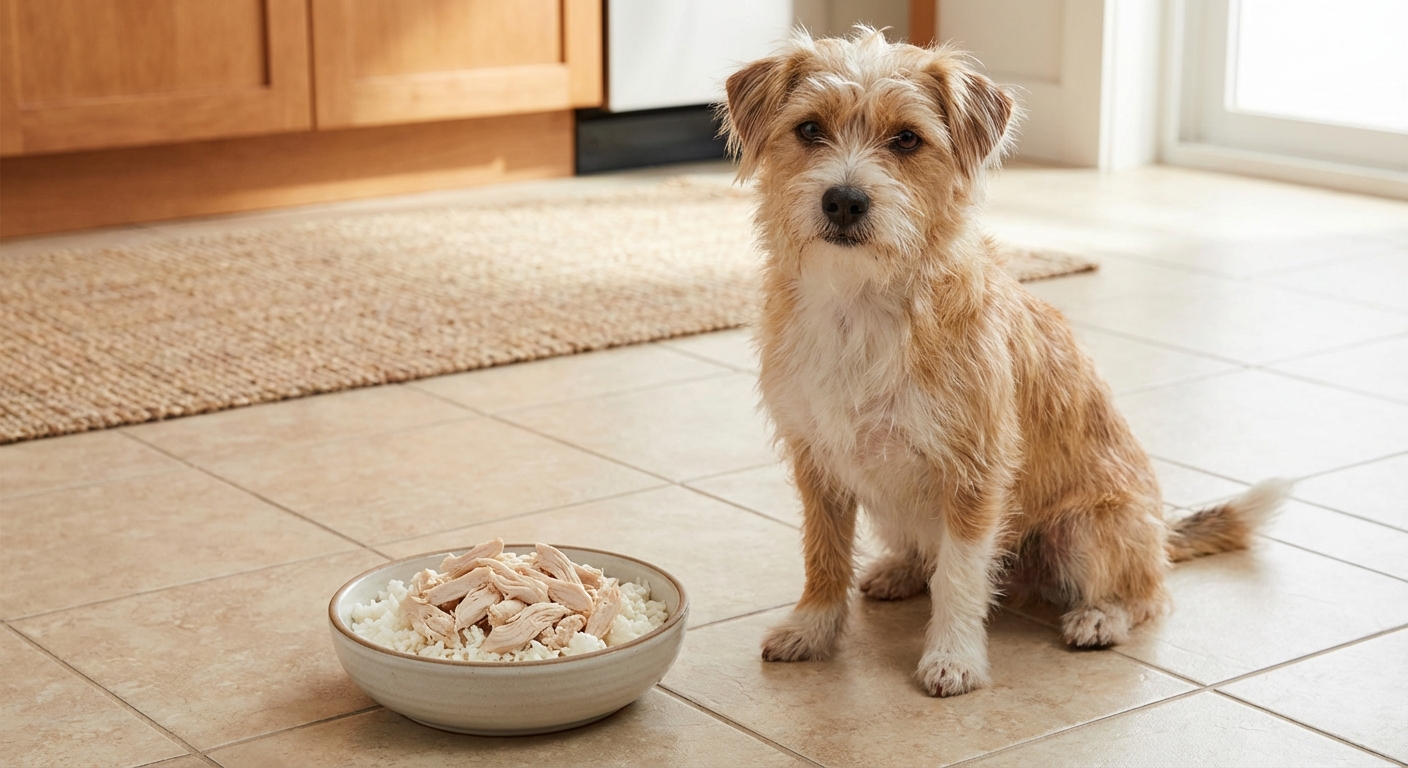
- Chicken + steamed green beans: easy on most stomachs
- Ground turkey + zucchini: mild flavor, soft texture
- Plain yogurt (if tolerated) + pumpkin: a small spoonful as a topper. Choose plain, unsweetened yogurt and double-check ingredients. Many dogs are lactose sensitive, and you should never use products sweetened with xylitol.
My favorite beginner rule
Add one vegetable at a time, prepared simply, and keep a tiny “food journal” for a week. It makes it much easier to spot what helps your dog thrive and what to skip.