Picky cat refusing meals? Try this vet-approved warm shredded chicken and broth topper. Learn the simple recipe, how to use it safely, and when appetite chan...
Article
•
Designer Mixes
Safe Human Foods for Cats Quick Reference List

Shari Shidate
Designer Mixes contributor
As a veterinary assistant here in Frisco, Texas, I get asked this all the time: “What can I safely share with my cat?” The answer: there are plenty of cat-friendly human foods, but the details matter. Cats are obligate carnivores, which means their bodies are built to thrive on animal-based protein. Most “people food” should be treated as a small treat or a helpful add-on, not the foundation of the diet.
This quick reference list will help you choose safer options, avoid common hazards, and serve foods in ways that support your cat’s digestion and overall health. This is general guidance and not a substitute for veterinary advice for your specific cat.
Before you share: 5 safety rules
- Keep portions tiny. As a guideline, many vets recommend treats stay under about 10% of daily calories to help prevent weight gain and nutrient imbalance.
- Plain is best. Avoid salt, garlic, onion, spice blends, butter, and sauces.
- Cook it safely. Skip raw meat, raw eggs, and raw fish due to bacterial and parasite risk.
- Introduce one food at a time. If vomiting, diarrhea, itchiness, or ear flare-ups happen, stop and call your vet.
- Special conditions change the rules. Cats with kidney disease, urinary crystals, diabetes, pancreatitis, food allergies, or GI disease need personalized guidance.
Quick list: safe human foods
These foods are widely considered safe for most healthy cats when served plain and in small amounts.
Lean proteins (best picks)
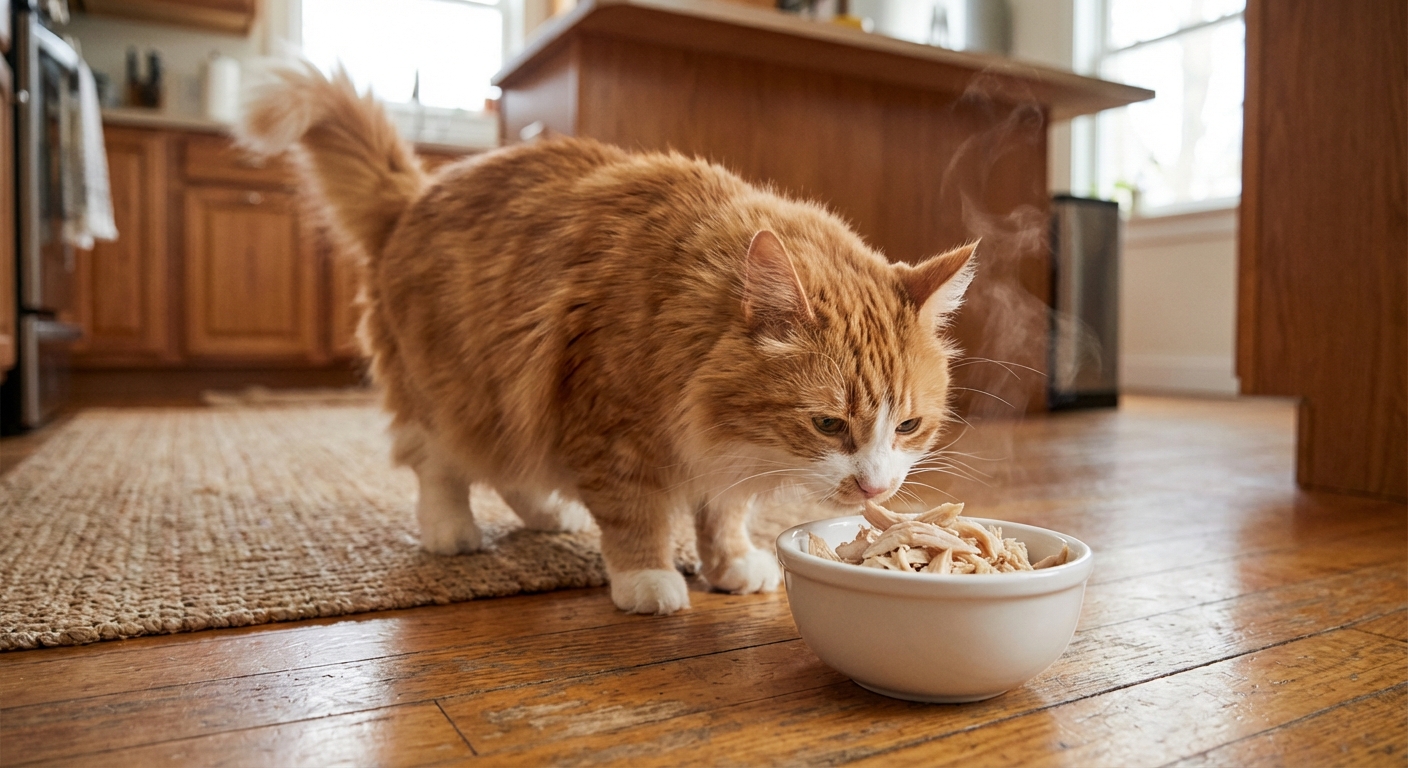
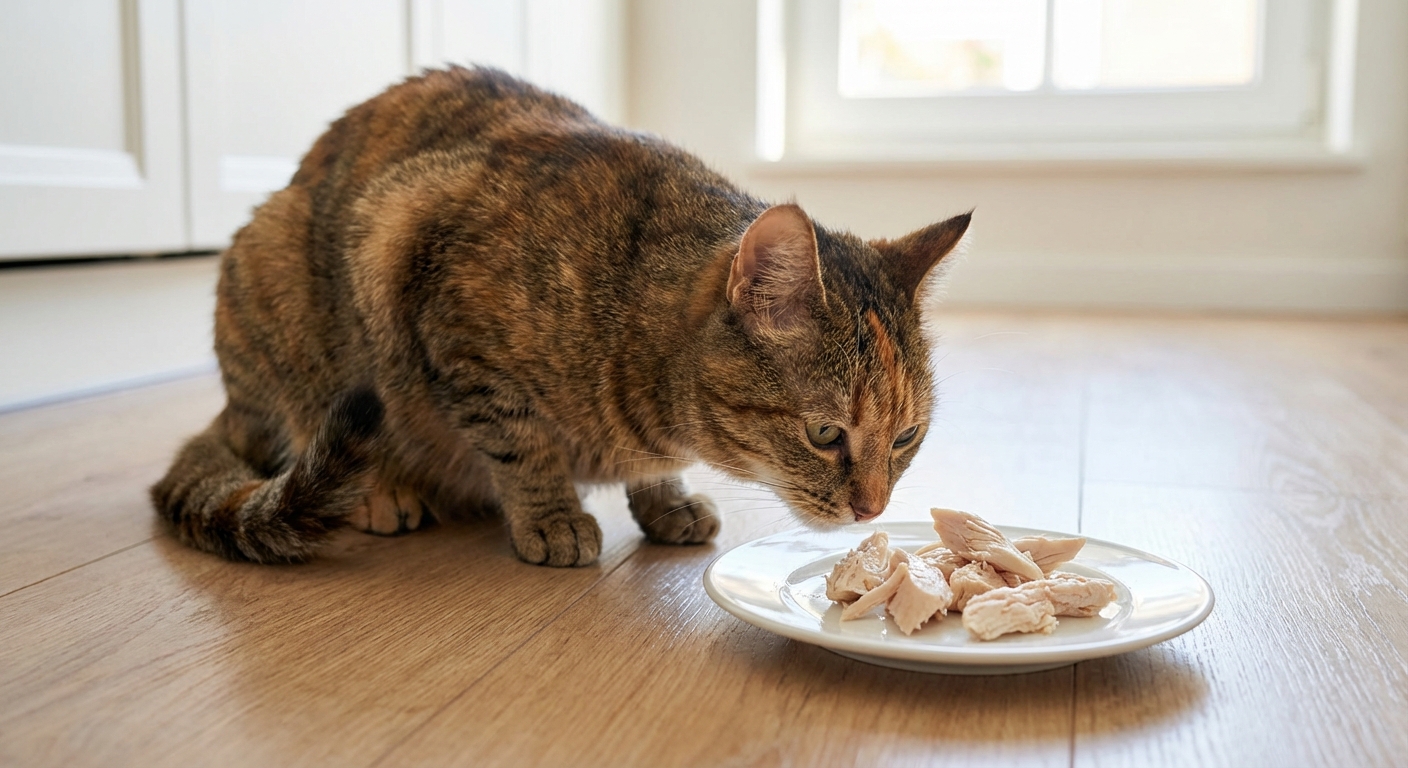
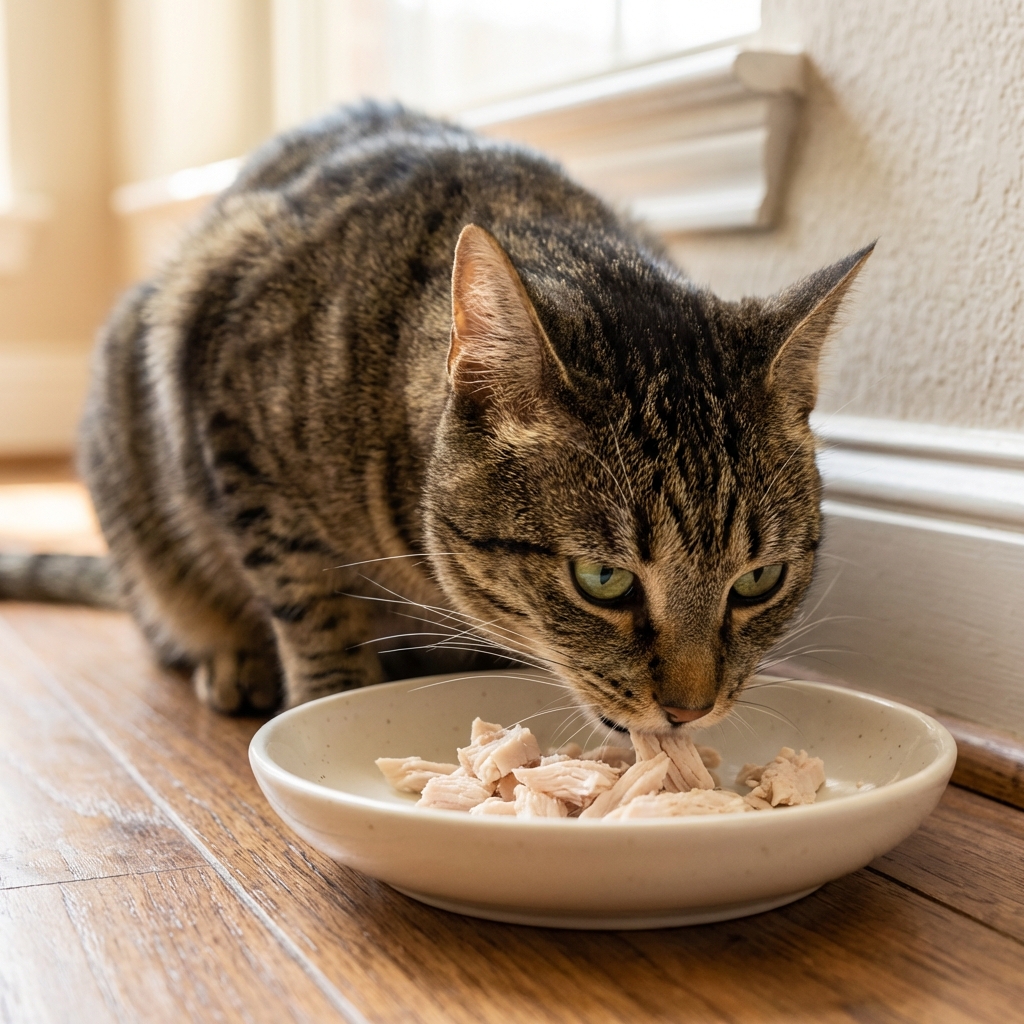
- Cooked chicken or turkey (skinless, boneless)
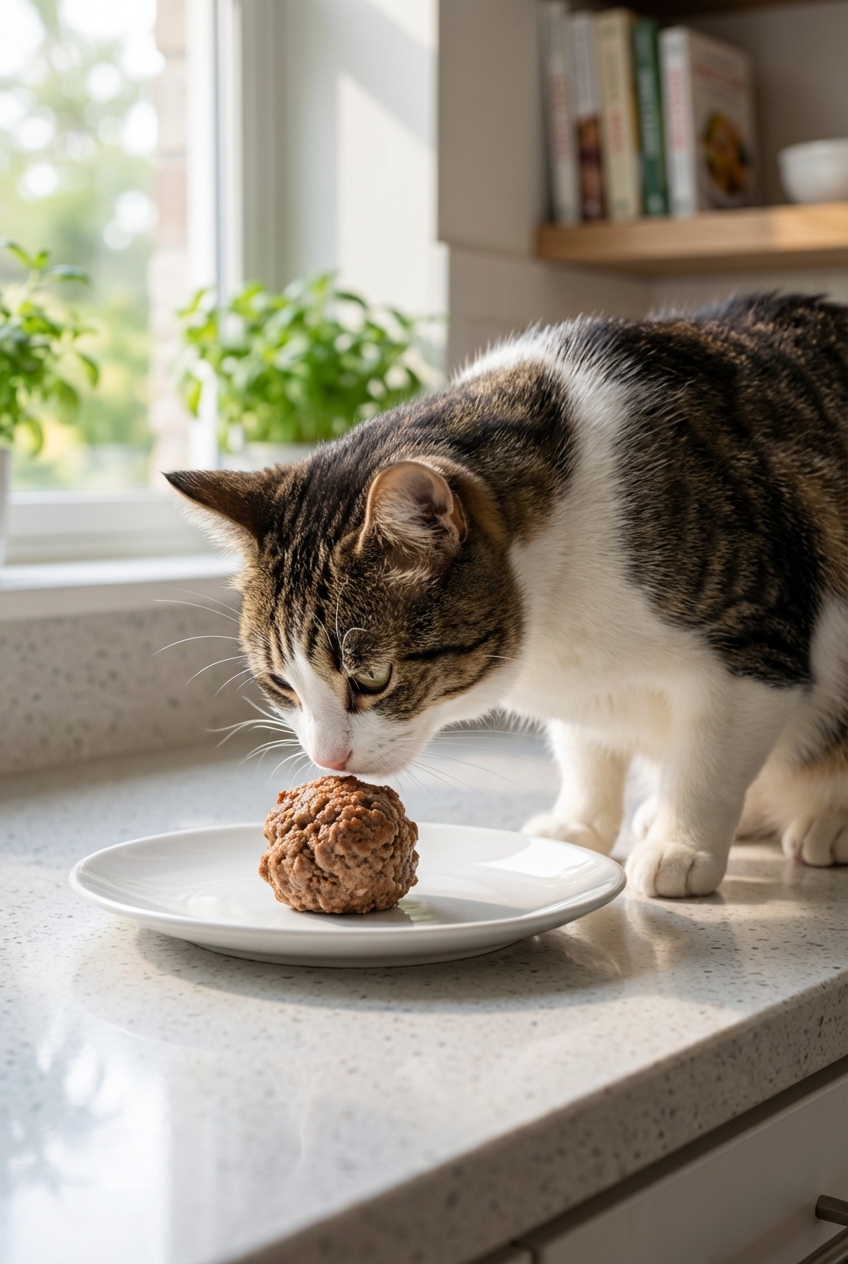
- Cooked lean beef (small pieces, no seasoning)
- Cooked pork (lean, thoroughly cooked)
- Cooked fish like salmon or sardine (occasional only, fully cooked, remove skin and all bones)
Serving tip: Shred or dice into pea-sized pieces. Cats often prefer moist textures, so a splash of warm water can make it more enticing.
Eggs (in moderation)
- Cooked egg (scrambled or hard-boiled, plain)
Eggs provide high-quality protein. Avoid raw egg due to bacterial risk.
Gentle vegetables (small amounts)
- Cooked pumpkin (plain canned pumpkin, not pie filling)
- Cooked carrots
- Cooked green beans
- Cooked peas
- Cooked zucchini
Why these help: A little fiber can support stool quality, especially with hairballs or mild constipation. Keep veggies soft and unseasoned.
Fruits (tiny tastes)
- Blueberries
- Seedless watermelon
- Small apple pieces (no seeds, no core)
- Banana (a small nibble)
Many cats are not interested in fruit, and that is perfectly normal. Fruit is treat-only and should be offered sparingly due to sugar.
Grains and starches (optional)
- Plain cooked rice
- Plain cooked oatmeal
- Plain cooked pasta
These are not necessary for cats, but a small bite can be okay. If your cat gains weight easily, skip these.
Cat-safe extras
- Plain, very low-sodium broth (no onion, no garlic) to encourage hydration
- Cat grass (store-bought) for enrichment
Use caution: depends on the cat
These are common “maybe” foods. Some cats do fine with them, others do not.
Dairy
- Plain yogurt or small amounts of cheese may be tolerated, but many adult cats are lactose intolerant.
If you notice gas, loose stool, or vomiting, dairy is not a good match for your cat.
Tuna
- Tuna packed in water can be used as a topper occasionally.
Too much tuna can contribute to unbalanced nutrition. Also, mercury is a bigger concern with tuna and other large predatory fish, which is one reason I keep it as “sometimes,” not a staple. Avoid tuna packed in oil or brine, and skip seasoned packets.
Organ meats
- Cooked liver is nutrient-dense but should be rare and tiny due to high vitamin A content.
Peanut butter
- Not needed, but if you offer it, keep it to a tiny lick and make sure it is xylitol-free and unsalted.
Avoid: toxic or risky foods
If you want one section to bookmark, make it this one. When in doubt, choose your cat’s regular diet and skip the people food.
Toxic or potentially toxic (avoid)
- Onion, garlic, chives, leeks (fresh, powdered, cooked, or in seasoning blends)
- Chocolate, coffee, espresso, caffeine, energy drinks
- Alcohol and raw bread dough
- Xylitol (found in some sugar-free gums, candies, peanut butters, and baked goods). Dog toxicity is well documented; in cats, data is limited, but it is still best to avoid.
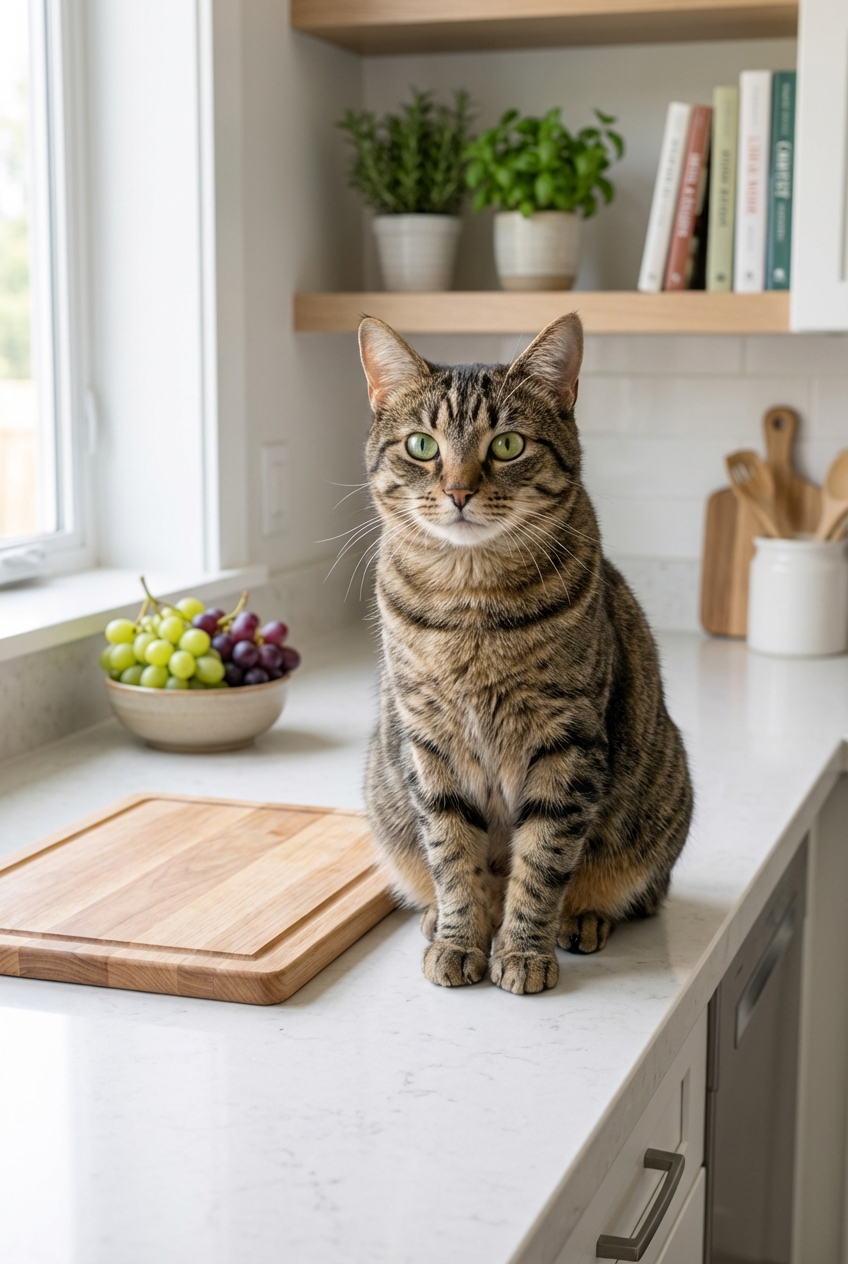
- Grapes and raisins. Toxicity is clear in dogs; in cats it is less documented, but veterinary poison resources still recommend avoiding them.
High-risk or poor choices (avoid or limit)
- Bones (cooked or raw). They can splinter, cause choking, fracture teeth, or injure the GI tract.
- High-fat foods like bacon grease, sausage, fried foods (pancreatitis risk)
- Very salty foods like chips, deli meats, salted nuts
- Processed meats (deli meats, hot dogs, jerky). These tend to be high in salt and may contain seasonings and preservatives that are not a good fit for cats.
- Milk and cream (often causes diarrhea and stomach upset)
- Raw eggs, raw meat, raw fish (bacterial and parasite risk)
- Dog food as a “meal replacement” (cats have different nutrient requirements, including taurine)
How much is a treat?
For most cats, start with 1 to 2 small bites the first time you offer a new food. If it goes well, you can offer a small treat a few times a week.
Easy portion guide:
- Cooked meat: 1 to 2 teaspoons
- Pumpkin: 1/2 to 1 teaspoon
- Egg: 1 teaspoon
- Fruit: a single blueberry or a tiny cube
If your cat is overweight, has diabetes, or has urinary or kidney concerns, ask your veterinarian for a treat plan that fits their medical needs.
When to call the vet
If your cat eats something questionable, it is always okay to call your vet or a pet poison hotline for help. Seek urgent care if you see:
- Repeated vomiting or diarrhea
- Drooling, pawing at the mouth, or trouble swallowing
- Weakness, wobbliness, tremors, or collapse
- Labored breathing
- Straining to urinate, crying in the litter box, or no urine output
Tip: If possible, save the packaging and estimate how much was eaten. That information helps your veterinary team move faster.
Food can be a simple way to bond, but your cat’s safety comes first. Keep it plain, keep it small, and when in doubt, ask your vet.