A practical guide to dog-safe fruits, smart portions, and safe prep. Learn which fruits to offer (like apples and blueberries) and which to avoid—especiall...
Article
•
Designer Mixes
Safe Fruits for Dogs

Shari Shidate
Designer Mixes contributor
As a veterinary assistant here in Frisco, Texas, one of the most common questions I hear is: “Can my dog have fruit?” The evidence-based answer is yes, many fruits are safe for dogs, and they can be a wonderful way to add hydration, fiber, and antioxidants.
The key is serving size and smart prep. Fruit should be a treat or topper, not the foundation of the diet. Think of it as the “colorful bonus” that supports a balanced, species-appropriate meal.
Quick note: This is general guidance for healthy dogs. If your dog has medical conditions or is on a prescription diet, your veterinarian is the best source for individualized advice.
Quick rules for fruit safety
- Keep treats (including fruit) under about 10% of daily calories as a general guideline for most healthy dogs. Too much sugar and fiber can lead to diarrhea or weight gain.
- Introduce one fruit at a time, starting with a very small amount, especially for dogs with sensitive stomachs.
- Always remove pits, seeds, cores, and tough rinds. These can be choking hazards or cause intestinal blockage.
- Cut fruit to a safe size for your dog. Even safe fruits can become a choking risk if pieces are too large.
- Skip added sugar. No syrups, fruit cups in juice, sweetened dried fruit, or flavored yogurts with added sugar or sweeteners.
- Call your vet first if your dog has diabetes, pancreatitis, chronic GI disease, kidney disease, or is on a prescription diet.
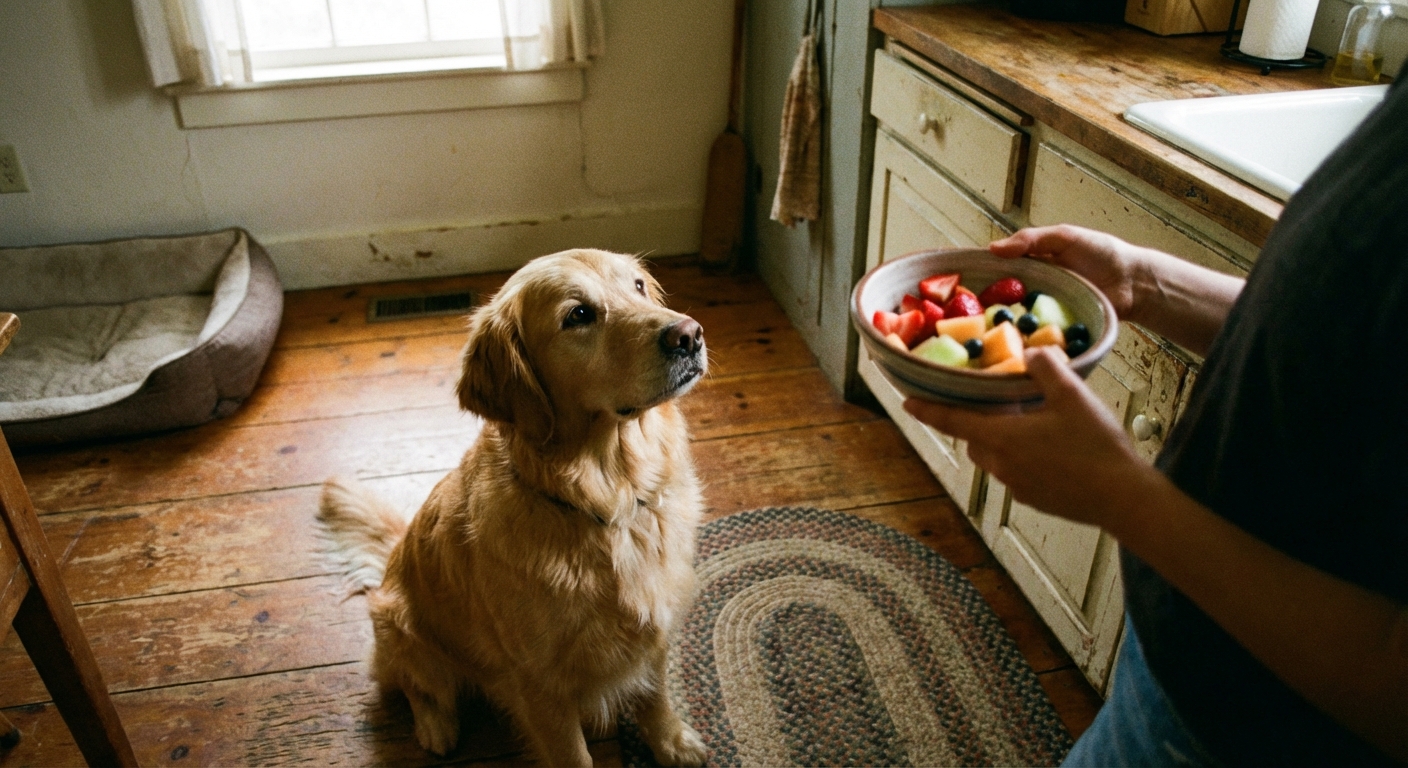
Best safe fruits for dogs
These are generally well-tolerated choices when served plain, in small portions, and prepared correctly.
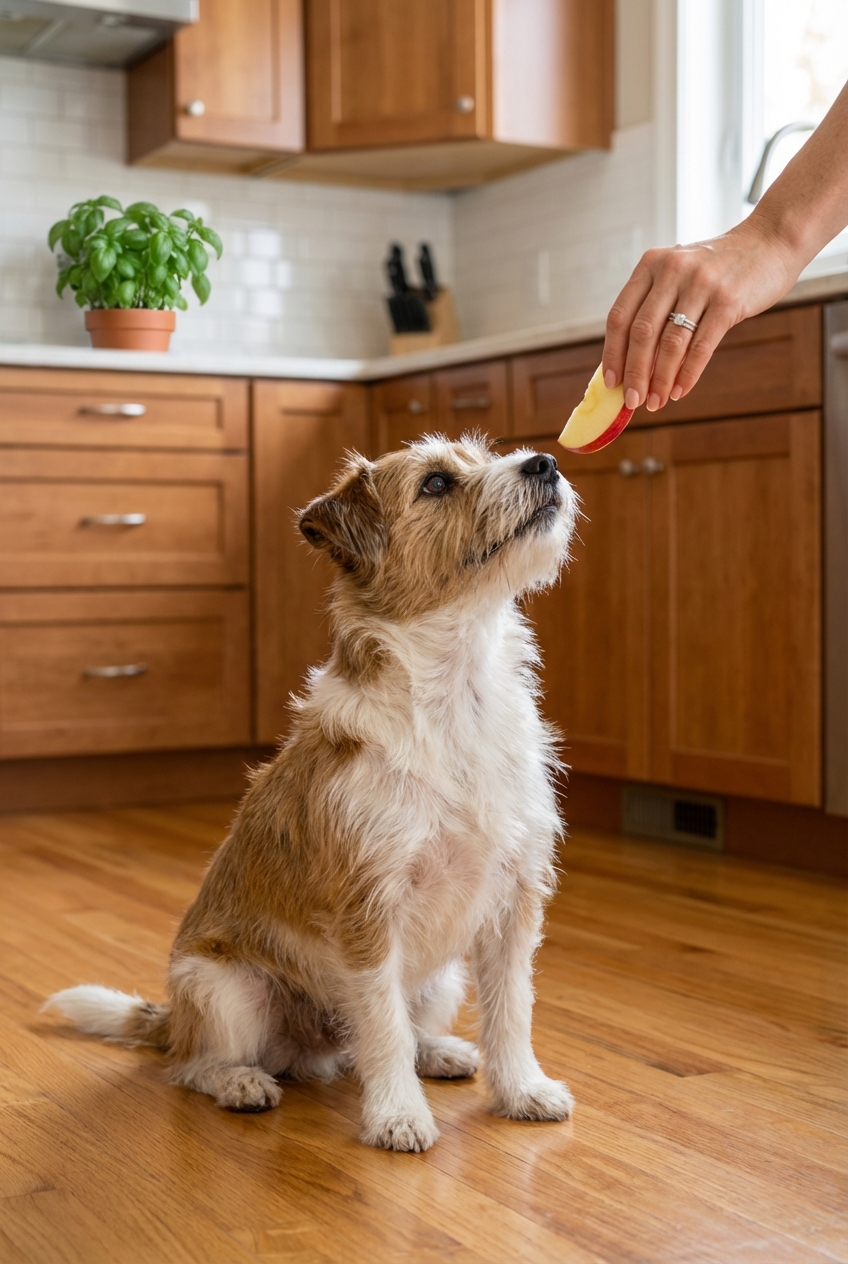
Apples
Why they’re great: Crunchy, hydrating, and a good source of fiber and vitamin C.
How to serve: Slice thin, remove the core and seeds, and offer fresh. Apple seeds contain cyanogenic compounds, and the core can cause GI upset or even obstruction if a dog swallows big pieces.
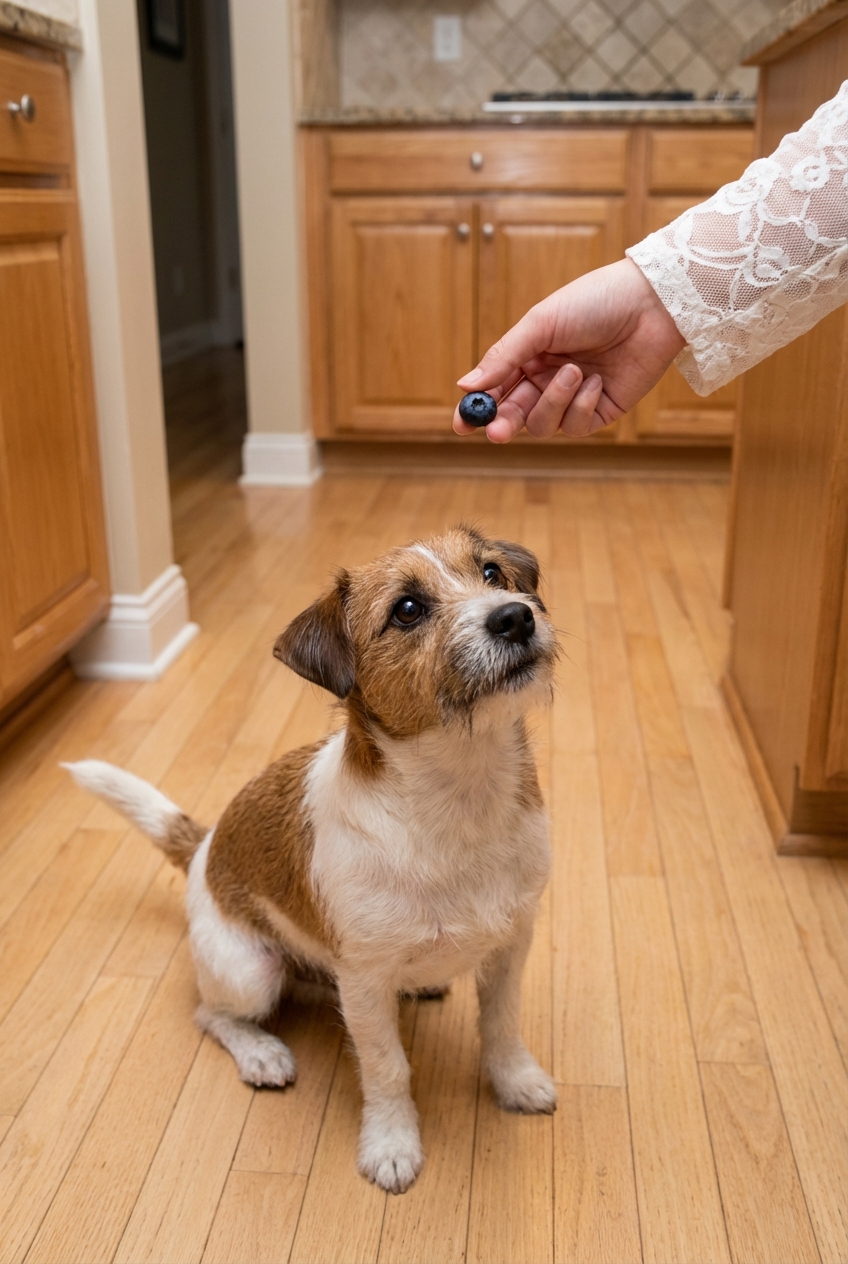
Blueberries
Why they’re great: Antioxidant-rich and easy to portion.
How to serve: Fresh or frozen. Frozen blueberries can be a fun training reward.
Strawberries
Why they’re great: Vitamin C and antioxidants.
How to serve: Wash well, remove stems, and chop for small dogs.
Bananas
Why they’re great: Potassium and easy on many stomachs.
How to serve: A few thin slices. Bananas are higher in sugar, so keep portions modest.
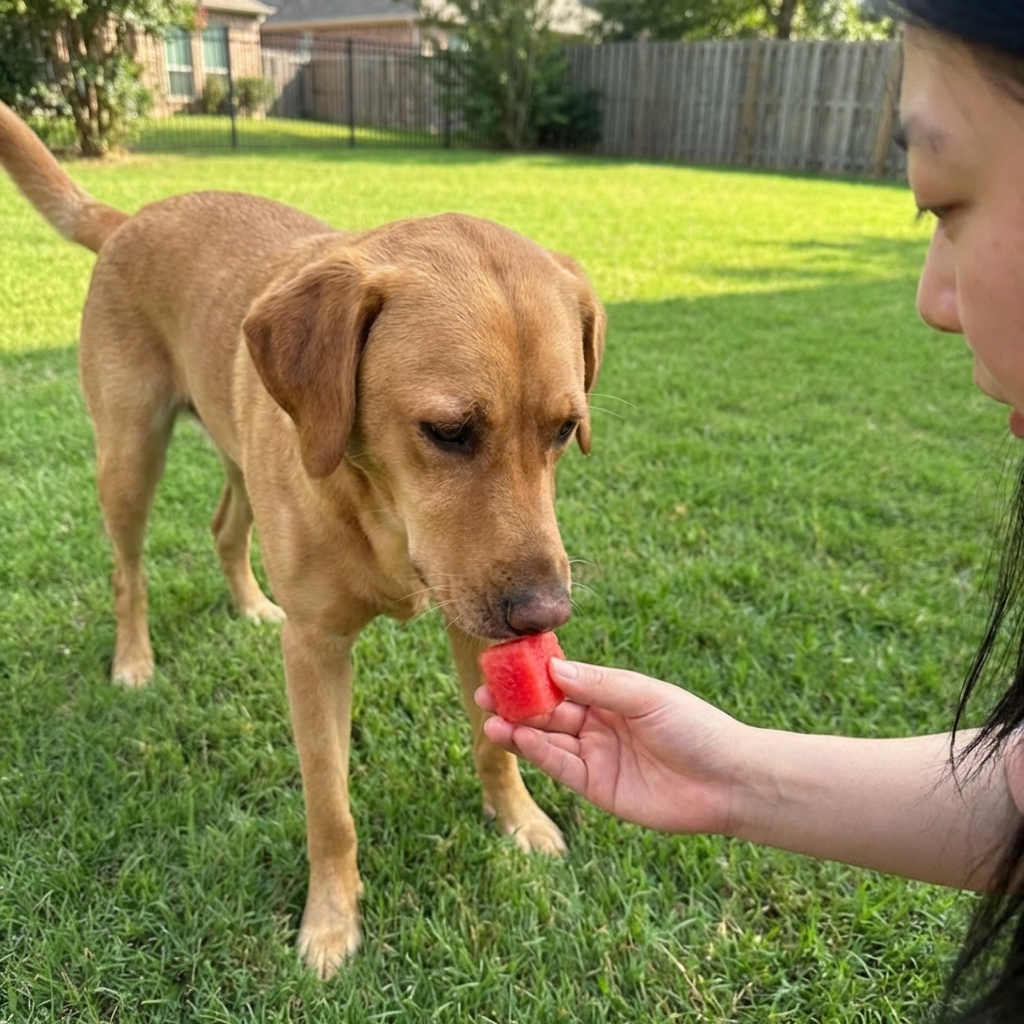
Watermelon
Why it’s great: Super hydrating, especially helpful during hot Texas summers.
How to serve: Remove rind and black seeds. Most “seedless” watermelon still has soft white seeds, which are generally not a toxicity concern, but too many seeds of any kind can upset the stomach. Offer small cubes.
Cantaloupe
Why it’s great: Hydration plus vitamins A and C.
How to serve: Remove rind and seeds, then cut into bite-sized pieces.
Pears
Why they’re great: Fiber and a softer texture for dogs who do not love crunch.
How to serve: Remove core and seeds and offer a few small pieces.
Mango
Why it’s great: Vitamins A, B6, C, and E.
How to serve: Remove the pit and skin. Offer small cubes. A little goes a long way.
Peaches (fresh only)
Why they’re great: Vitamins A and C.
How to serve: Fresh peach slices with the pit removed. Avoid canned peaches because they are often packed in sugary syrup.
Pineapple
Why it’s great: Contains vitamin C and enzymes like bromelain. Some people believe bromelain supports digestion, but evidence is limited in typical treat-sized amounts.
How to serve: Small chunks only. Too much pineapple can cause loose stool.
Fruits to avoid completely
These fruits are risky enough that I recommend keeping them out of reach, even in small amounts.
- Grapes and raisins: Can cause acute kidney failure in some dogs. The toxic dose is unpredictable. Even one can be dangerous.
- Cherries: Pits are a choking hazard and contain cyanogenic compounds. Many cherry products (like maraschino or canned cherries) are also loaded with sugar and additives. For most dogs, it is simply not worth the risk.
- Avocado: Can cause GI upset, and the pit is a serious obstruction risk. Persin toxicity is a bigger issue in some species, but dogs can still get sick from avocado and swallowing the pit is a true emergency.
- Fruits with pits or large seeds when not properly prepared: Peaches, plums, apricots, and mangos must have pits removed.
If your dog eats grapes or raisins, treat it as an emergency. Call your veterinarian or a pet poison helpline right away.
Often-asked fruits
- Oranges and other citrus: Usually safe in small amounts, but the acid and sugar can trigger vomiting or diarrhea in some dogs. Skip peels and seeds.
- Tomatoes (yes, technically a fruit): Ripe tomato in small amounts is generally fine. Avoid green tomatoes and the plant (stems and leaves), which can cause GI upset and other signs.
- Raspberries and blackberries: Generally safe in small portions. Raspberries contain trace xylitol naturally, but not enough to be a typical toxicity issue at normal serving sizes. Still, keep portions modest to avoid stomach upset.
- Cranberries: Often fine plain or frozen, but avoid sweetened dried cranberries or cranberry sauce because of added sugar (and never feed dried mixes that could include raisins).
How much fruit can a dog have?
Portion depends on your dog’s size, overall diet, and health goals. Use these as gentle starting points.
- Small dogs (under 20 lb): 1 to 2 blueberries, or 1 to 2 small apple slices, or 1 tablespoon of diced fruit.
- Medium dogs (20 to 50 lb): 3 to 6 blueberries, or 2 to 4 apple slices, or 2 tablespoons of diced fruit.
- Large dogs (over 50 lb): A small handful of berries, or several apple slices, or up to 1/4 cup of diced fruit.
If your dog is gaining weight, has soft stool, or begs more after fruit, that is a sign to cut back.
Best ways to serve fruit
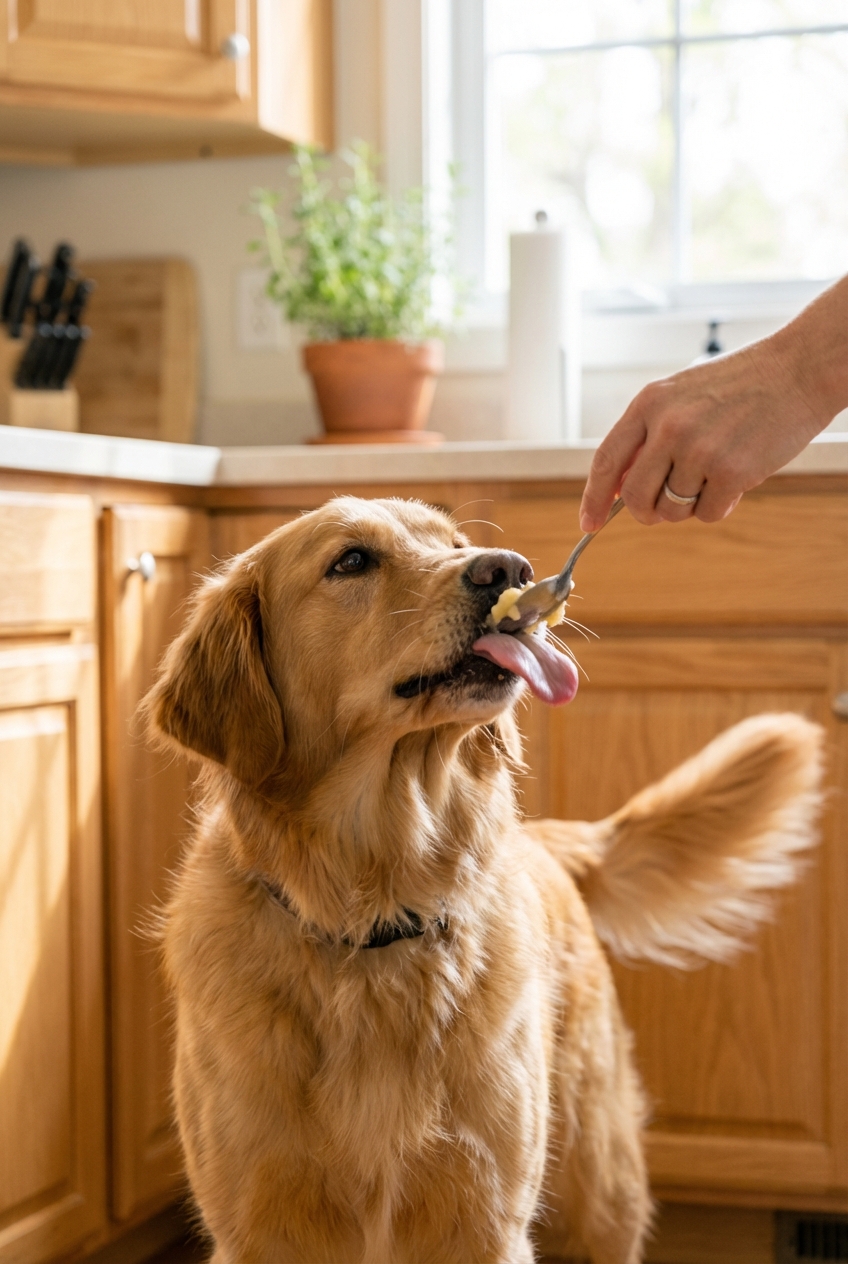
Use it as a topper
A spoonful of diced berries on top of a complete meal adds variety without turning the meal into a sugar bomb.
Freeze for a summer treat
Frozen blueberries, strawberries, or watermelon cubes can be an easy cooling snack.
Blend a simple dog smoothie
Blend unsweetened plain yogurt or goat milk with a small amount of berries and banana. Serve a few spoonfuls. Avoid xylitol and any “sugar-free” ingredients.
Make fruit training rewards
Tiny pieces of apple or blueberry can work well for dogs who love sweet flavors, especially if you are reducing store-bought treats.
When fruit is not a good idea
- Diabetes or weight loss plans: Fruit can spike calories quickly, especially bananas and mango.
- Pancreatitis history: Even though fruit is not high fat, treats in general can be a trigger for sensitive dogs. Ask your vet.
- Chronic diarrhea or IBD: Fiber and sugars can worsen symptoms in some dogs.
- Dental issues: Sticky fruits can cling to teeth. Consider softer options and keep up with dental care.
Signs your dog had too much fruit
Most issues are mild, but it helps to know what to watch for:
- Loose stool or diarrhea
- Gas or belly gurgling
- Vomiting
- Itchy ears or paws in dogs with food sensitivities
- Restlessness or repeated attempts to poop with little output (possible obstruction, especially after pits, cores, rinds, or large chunks)
If symptoms are severe, last more than 24 hours, or you suspect your dog swallowed a pit, core, rind, or a toxic fruit, call your veterinarian.
Bottom line
Fruit can be a safe, healthy add-on for many dogs when you choose the right options and keep portions small. Start with easy wins like blueberries, apple slices (no core or seeds), or watermelon cubes (no rind). Rotate choices for variety, and let your dog’s stool and energy level guide you.
Good food supports good energy. And good energy is the foundation for a long, happy life with your best friend.