No cat is truly hypoallergenic—but some are easier to live with. Learn what Fel d 1 is, why “hypoallergenic” breeds aren’t guaranteed, and practical ...
Article
•
Designer Mixes
Russian Blue Cat: Personality, Care, and Hypoallergenic Facts

Shari Shidate
Designer Mixes contributor
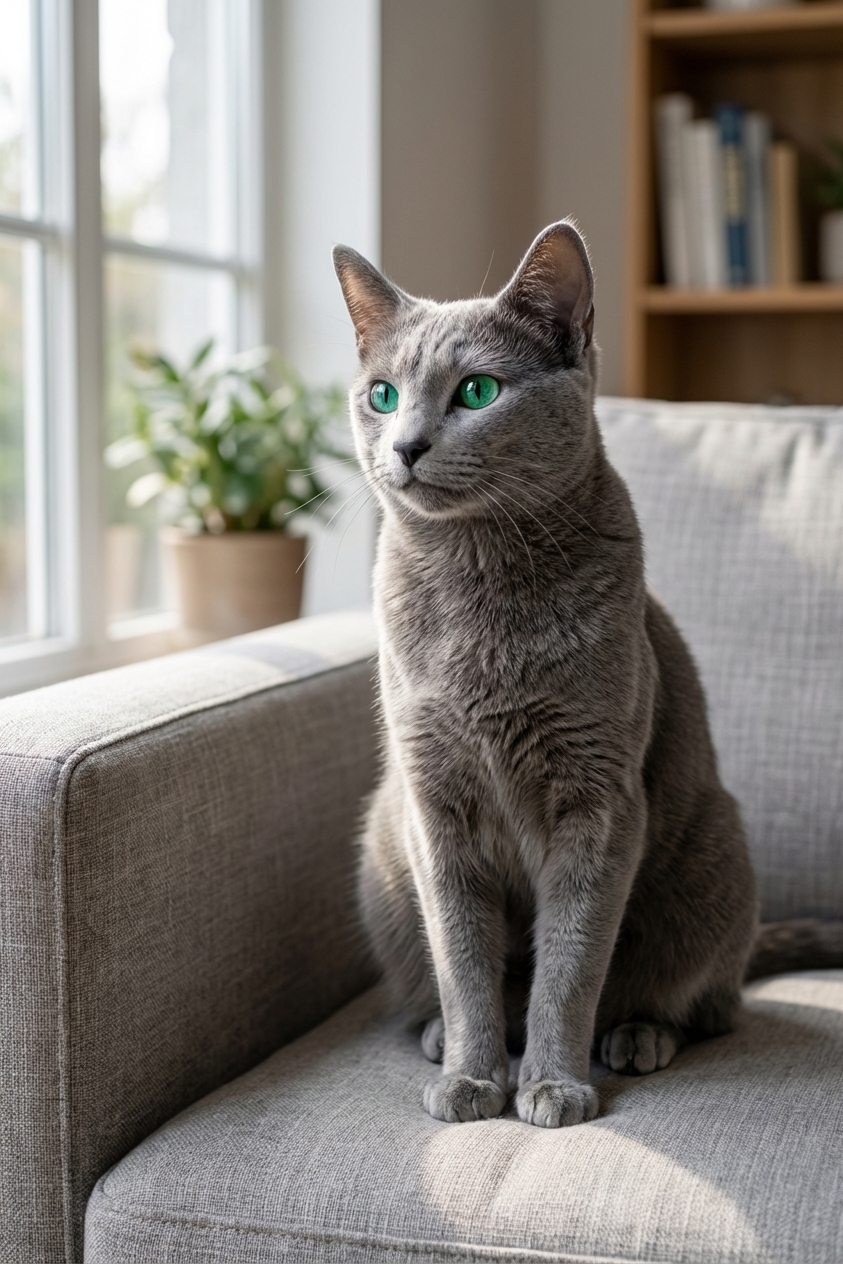
The Russian Blue is one of those cats people fall for quietly and then never forget. With their vivid green eyes, plush blue-gray coat, and gentle, observant nature, they often feel like a calm presence in the home. They are also a breed many people look into for a very specific reason: the “hypoallergenic cat” claim.
As a veterinary assistant, I love this breed because it tends to do well with a steady routine and thoughtful care. Let’s walk through what Russian Blues are really like, what they need day to day, what science actually says about allergies, and how to avoid common mix-ups with other “blue” cats.
Quick history
Most breed histories trace the Russian Blue back to northern Russia, often linked to the port city of Arkhangelsk (sometimes called the Archangel Isles). The modern breed was developed and refined through selective breeding in Europe and later elsewhere, with an emphasis on the signature plush coat, green eyes, and balanced, gentle temperament.
Russian Blue personality
Russian Blues are typically known for being affectionate but not clingy. Many are devoted to their people, but they often show love in subtle ways: following you from room to room, sitting nearby, or choosing quiet lap time on their terms.
Gentle, reserved, routine-loving
This is not usually a “party cat.” Russian Blues often prefer predictable households and can be cautious with strangers. Once they trust someone, they can be deeply loyal and surprisingly playful.
- With family: Sweet, attentive, and often bonds strongly to one or two people.
- With visitors: May observe from a distance at first, then slowly warm up.
- With changes: Many do best with stable schedules and gradual transitions.
Smart and play-focused
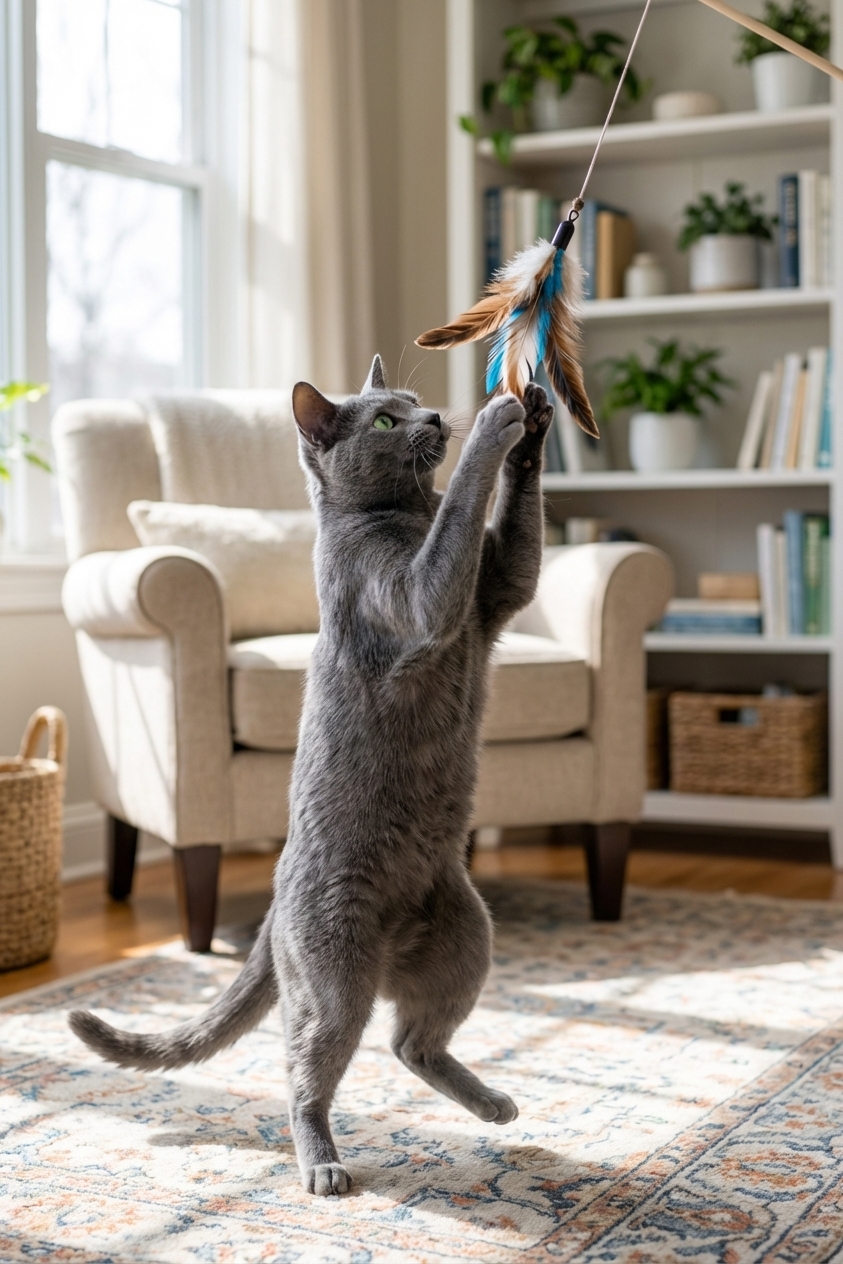
They are smart cats who frequently enjoy puzzle toys, treat balls, and interactive wand play. Their play style can look “polite” compared to more rambunctious breeds, but they can be fast and athletic.
Clinic-style tip: For most indoor cats, a good starting point is 10 to 15 minutes of interactive play once or twice daily. It helps with weight, stress, and confidence.
Signature look
The classic Russian Blue has a short, dense double coat that feels soft and springy, almost like velvet. The coat is typically a blue-gray color with silver tipping that can shimmer in good light. Their almond-shaped green eyes are a hallmark feature and often deepen in color with maturity.
Because the coat is dense, they can look extra plush, even though the fur is not long.
Russian Blue vs other blue cats
A lot of gray cats get labeled “Russian Blue,” especially in shelters and online listings. Many are wonderful cats, but not purebred Russian Blues. If breed identity matters to you, look for a pedigree from a reputable source.
- Korat: Typically has a heart-shaped face, very large eyes (often green), and a single coat that lies closer to the body.
- Chartreux: Usually has copper to gold eyes (not green), a more robust build, and a woolly blue coat.
- British Shorthair (blue): Rounder face, stockier body, and a very plush coat, with eyes often copper or gold.
Bottom line: Coat color alone is not enough to identify a Russian Blue. Temperament and appearance can overlap, and many “Russian Blue” listings are simply solid gray domestic shorthairs.
Are Russian Blues hypoallergenic?
Russian Blues are often described as “hypoallergenic,” but it is important to be precise: no cat breed is truly hypoallergenic. Some people with allergies do better with certain cats, and Russian Blues can be a good candidate for some allergy sufferers, but it is not guaranteed.
The most reliable approach is to spend time with the exact cat you plan to adopt, ideally more than once and in a home-like setting. Your immune system will give you a clearer answer than marketing claims.
What people are actually allergic to
Most cat allergies are triggered by proteins, especially Fel d 1, found in cat saliva, skin secretions, and dander. Cats groom themselves, saliva dries on the fur, and those proteins spread into the environment on shed hair and skin flakes.
Why some people do better with Russian Blues
You may see claims that Russian Blues shed less, “trap” dander in their coat, or produce less Fel d 1. The honest, evidence-aligned take is this: allergen levels vary by individual cat, and a person’s sensitivity varies too. Some owners report fewer symptoms with Russian Blues, but the reasons are not consistent or guaranteed across households.
- Individual variation matters most: Two cats of the same breed can trigger very different reactions.
- Grooming and cleaning matter regardless of breed: Regular brushing and home filtration can reduce overall allergen load.
- Breeds are not a promise: Even if you tolerate one Russian Blue, you might react to another.
Practical steps if you have allergies
- Do a real-life test: Spend time with the exact cat you plan to adopt, ideally in the home environment, not just a brief visit.
- Create a low allergen zone: Keep the bedroom cat-free and use a HEPA air purifier.
- Clean strategically: Vacuum with a HEPA filter, wash bedding regularly, and reduce extra fabrics like throw blankets and decorative pillows that collect dander.
- Groom consistently: Brush 1 to 2 times weekly to remove loose hair. In some homes, gentle wipe-downs can help reduce allergens on the coat.
- Talk to your doctor: Allergy meds or immunotherapy can be life-changing for some people.
Care and grooming
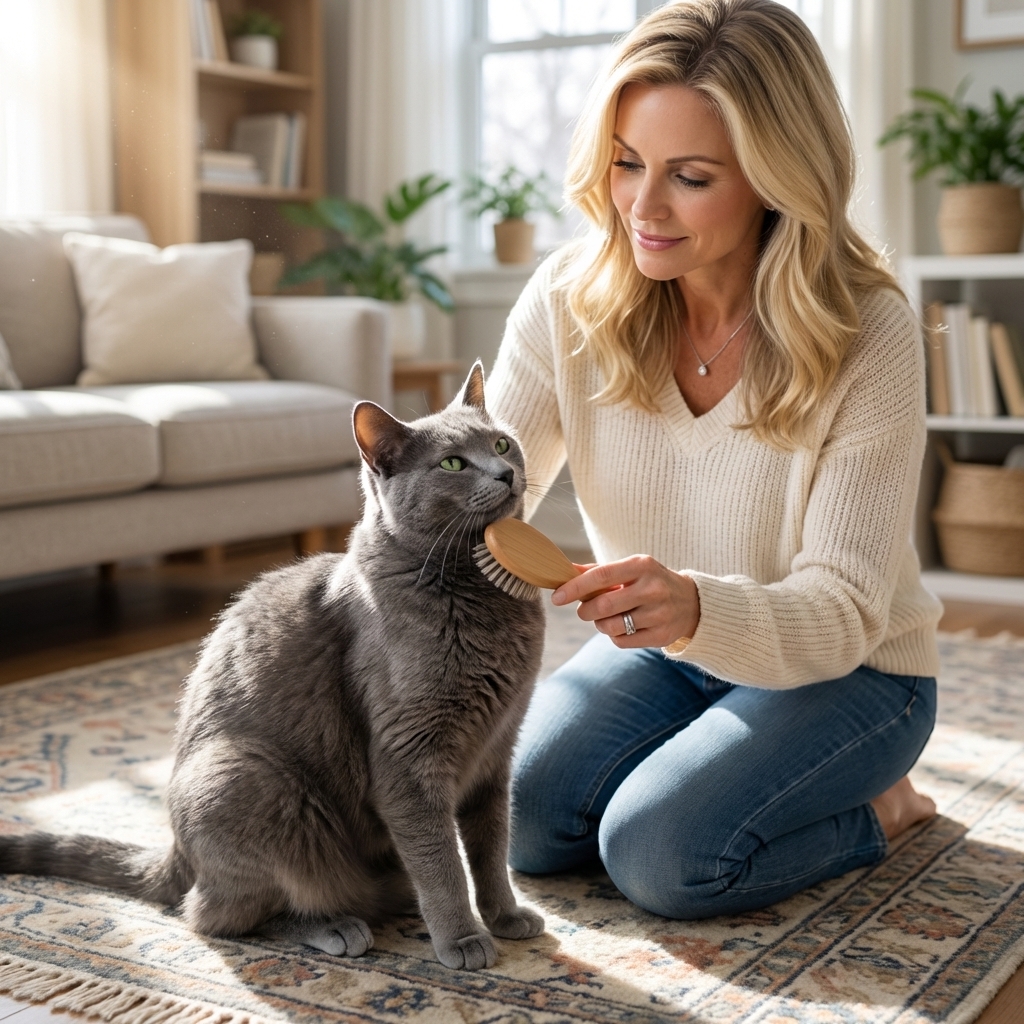
Russian Blues are relatively low maintenance, but they thrive with simple, consistent care. Their dense double coat is easy to keep beautiful with the right tools and a calm routine.
Brushing
Plan on brushing once a week, and possibly more during seasonal shedding. This helps reduce loose fur, supports skin health, and can reduce hairballs.
- Best tools: A stainless steel comb (fine to medium) for gentle pass-throughs, plus a soft slicker brush to lift loose coat without scraping the skin.
- Technique: Use light pressure and short sessions. With double coats, less force is usually more effective.
Nails, ears, and teeth
- Nails: Trim every 2 to 4 weeks. Provide scratching posts to support healthy nail shedding and protect furniture.
- Ears: Check weekly for wax buildup or redness. Clean only with a vet-approved ear cleaner if needed.
- Teeth: Dental disease is extremely common in cats. Daily brushing is ideal, but even a few times a week helps. Dental treats and vet-approved dental diets can reduce plaque for some cats, but they do not replace brushing and regular veterinary exams.
Litter box
Many Russian Blues are very tidy and can be sensitive to a dirty box. A good rule is one box per cat plus one extra, scooped daily.
Home setup and enrichment
Russian Blues often bond closely and can be a little stress-sensitive, so their environment matters. A good setup prevents boredom and supports calm behavior.
- Vertical space: Cat trees, shelves, or window perches help them feel secure and in control.
- Scratching options: Offer both vertical and horizontal scratchers in quiet areas and near favorite resting spots.
- Solo play: Rotate toys weekly, and consider food puzzles for mental exercise when you are away.
Health notes
Russian Blues are generally considered a healthy breed with a solid lifespan, often reaching the mid-teens, and sometimes beyond with good care. Still, every breed and every individual cat can have health concerns.
As always, routine wellness visits matter because small issues are easier (and cheaper) to address early.
Weight gain risk
Like many indoor cats, Russian Blues can be food-motivated and can gain weight if free-fed. Extra weight increases risk for arthritis, diabetes, urinary issues, and reduced quality of life.
Clinic-style tip: A quick body check at home: you should be able to feel ribs with light pressure, and from above you should see a gentle waist behind the ribs.
Dental disease and gum inflammation
Like many cats, they can develop tartar buildup and gingivitis. Early prevention is much easier than dealing with painful extractions later.
Stress sensitivity
Because many Russian Blues prefer predictability, high-stress environments can contribute to behavior issues like hiding, overgrooming, or litter box avoidance. Calm transitions, predictable routines, and plenty of safe vertical space can help a lot.
Veterinary note: If your cat is avoiding the litter box, straining, or crying while urinating, treat it as urgent. Urinary issues can become emergencies, especially in male cats.
Diet and feeding
There is no single perfect diet for every Russian Blue, but the goals are consistent: support lean muscle, maintain a healthy weight, and protect urinary health.
High-quality protein first
Cats are obligate carnivores, meaning they require animal-based nutrients to thrive. Choose a diet where animal protein is a primary ingredient and the formula is complete and balanced for your cat’s life stage.
Wet food helps hydration
Many cats benefit from wet food because it increases water intake, which can support urinary tract health. A mixed feeding approach can also work well.
Portion control
- Use measured meals instead of free-feeding if weight is creeping up.
- Track body condition. You should be able to feel ribs with light pressure and see a waistline from above.
- Keep treats under about 10 percent of daily calories.

Families and other pets
For the right home, Russian Blues can be wonderful family cats. They often do best with respectful children who understand gentle handling and giving a cat space when it wants it.
Kids
They are usually patient and sweet, but not always tolerant of rough play. Teach kids to let the cat approach, avoid grabbing, and keep play calm and supervised.
Dogs and other cats
Many Russian Blues can coexist well with other pets when introductions are slow and thoughtful. Provide separate feeding stations, multiple resting areas, and vertical spaces so your cat can feel secure.
Best home match
- Great for calm households and people who enjoy a close, quiet bond.
- Can work for families, especially with older or gentle children.
- Not ideal for people wanting a nonstop attention-seeking cat.
Choosing one responsibly
If you are set on the breed, consider reputable breeders who prioritize health, temperament, and proper socialization, or rescue organizations that can help match you with a cat who fits your home.
Questions to ask
- What health screening is done on breeding cats?
- How are kittens socialized, and in what environment are they raised?
- Can I meet the parents or see temperament notes?
- What is the return policy if the match is not right?
A note about scams and mislabeling
Be cautious of sellers advertising “rare hypoallergenic Russian Blues” at inflated prices without paperwork or health records. A purebred Russian Blue should come with reputable documentation, and no breeder can honestly guarantee you will not have allergies.
If allergies are your main reason
Try to arrange a longer visit or trial period if possible. Your immune system will tell the truth faster than any claim about the breed.
Quick recap
- Personality: Gentle, loyal, intelligent, and often reserved with strangers.
- Care: Weekly brushing with a comb and soft slicker, good dental habits, predictable routine.
- Health: Generally robust, but watch weight, dental health, and stress.
- Hypoallergenic claim: No cat is truly hypoallergenic. Some people may do better with certain individual cats, including some Russian Blues.
If you want a cat that feels like a calm companion rather than a constant spotlight-seeker, the Russian Blue can be a truly special match. Just go in with clear expectations, especially around allergies, and you will set both you and your cat up for success.