Wondering what worms do to cats? Learn how parasites affect digestion and energy, key signs to watch for, how cats get worms, why fecal tests matter, and saf...
Article
•
Designer Mixes
Roundworms in Cats: Symptoms, Causes, and Care

Shari Shidate
Designer Mixes contributor
Roundworms are one of the most common intestinal parasites we see in cats, especially kittens. The tricky part is that many cats can appear normal at first, while the worms quietly steal nutrients and irritate the gut. The good news is that roundworms are treatable, and you can dramatically lower the risk of them coming back with a simple prevention plan.
As a veterinary assistant, I like to remind cat parents of two important facts: roundworms are common, and they are also zoonotic, meaning people can be exposed too. So addressing them is not just about your cat’s comfort, it is about your household’s health.
What roundworms are (and why they matter)
The most common roundworm in cats is Toxocara cati. A less common species you may hear about is Toxascaris leonina. These worms live in the intestines and shed microscopic eggs in a cat’s stool. The eggs can survive in the environment for a long time, which is one reason repeat infections happen so easily.
Roundworms matter because they can:
- Reduce nutrient absorption, leading to poor growth and weight loss
- Cause digestive upset, including vomiting and diarrhea
- Trigger a pot-bellied appearance in kittens due to intestinal burden
- Contaminate the home environment when stool is not removed promptly from the litter box
- Pose a risk to humans, especially young children who may accidentally ingest eggs from contaminated soil or surfaces
How cats get roundworms
Cats can pick up roundworms in a few key ways, and knowing these routes helps you prevent infections from returning.
Kittens: from mom and the environment
Kittens are especially vulnerable. With Toxocara cati, a major route is through the mother’s milk (transmammary transmission). Kittens can also be infected by ingesting eggs from contaminated surfaces as they explore.
Adult cats: hunting and contaminated areas
Outdoor cats and cats who hunt are at higher risk because roundworm larvae can be present in prey animals like rodents. Cats can also ingest eggs from soil or debris tracked indoors on shoes or paws.
Multi-pet households
Roundworms are not spread through casual contact like sneezing, but shared spaces can become contaminated when an infected pet is shedding eggs in stool and litter box cleanup is delayed or incomplete.
Roundworms in cats: symptoms to watch for
Some cats have no obvious signs, especially early on. When symptoms do appear, they often look like common tummy troubles, so it helps to know the classic patterns.
Common symptoms
- Vomiting (sometimes you may see spaghetti-like worms in vomit)
- Diarrhea or soft stool
- Pot-bellied appearance, especially in kittens
- Poor growth or failure to thrive in young cats
- Weight loss or difficulty gaining weight
- Dull coat or generally “unthrifty” appearance
- Increased appetite or sometimes decreased appetite
Less common but serious signs
- Lethargy that is out of character
- Dehydration from vomiting or diarrhea
- Constipation or abdominal pain
- Intestinal blockage (more likely with heavy worm burdens in kittens)
Call your veterinarian urgently if your cat is vomiting repeatedly, cannot keep water down, has a swollen painful belly, seems weak, or you suspect a kitten is obstructed.
How roundworms are diagnosed
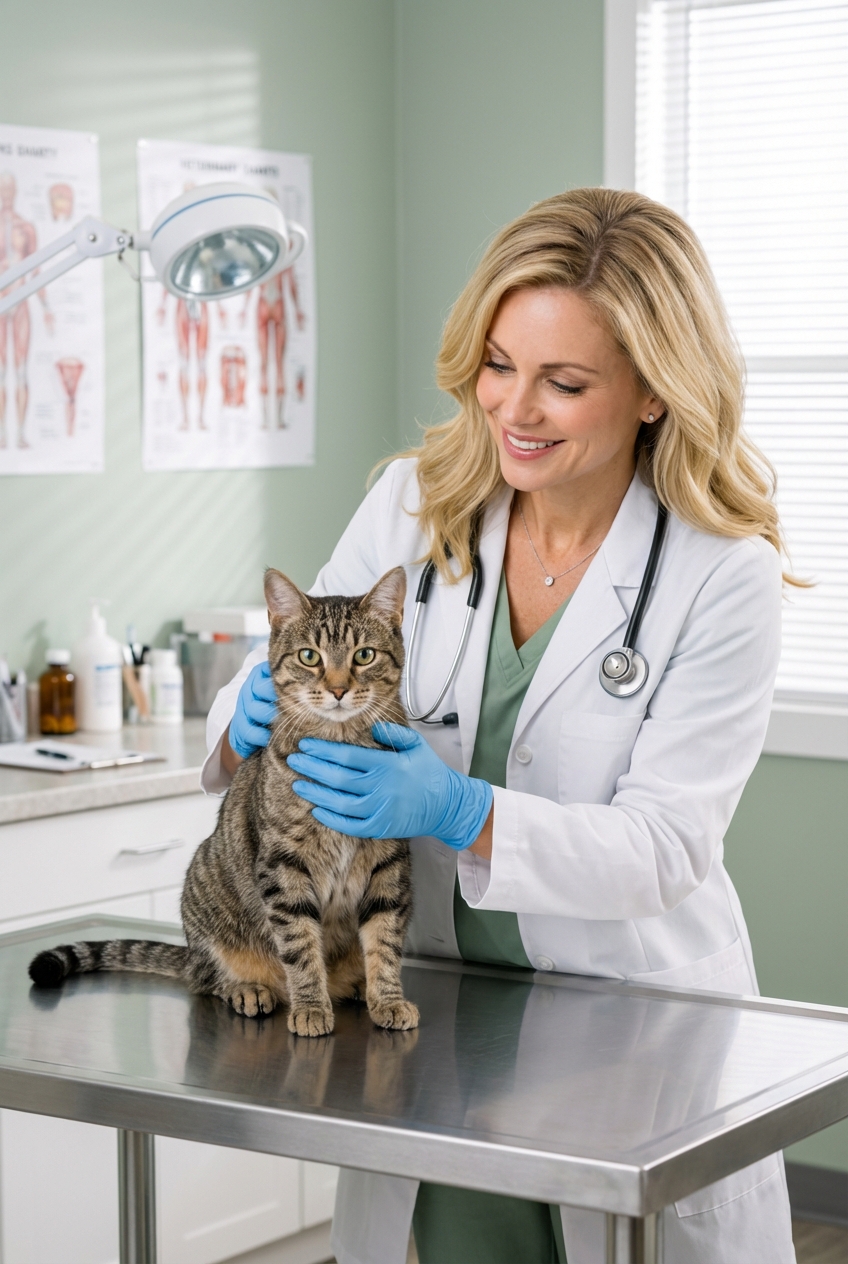
Most commonly, veterinarians diagnose roundworms with a fecal test (a stool sample checked for parasite eggs). Because egg shedding can vary, and because a cat can have parasites before eggs are being shed, your vet may recommend repeat testing or even treatment based on history and symptoms.
Sometimes roundworms are found because a cat vomits a worm or passes one in stool. That can be alarming, but it is also a very clear clue that treatment is needed.
Treatment options that work
Roundworms are usually treated with a prescription or veterinary-grade dewormer. Treatment often involves:
- A targeted deworming medication based on your cat’s age, weight, and health status
- Repeat dosing often in about 2 to 3 weeks (depending on the product and your veterinarian’s protocol) to catch worms that were larvae during the first dose
- Supportive care if your cat is dehydrated or has significant GI upset
Important note: many dewormers kill adult worms in the intestine, but they do not always kill every migrating larval stage right away. That is why follow-up dosing matters so much, especially in kittens.
Please avoid DIY deworming. Over-the-counter products can be ineffective or unsafe if the dose is wrong, and the symptoms of parasites can overlap with other conditions that need different treatment.
Prognosis: most cats do very well with the right dewormer, follow-up doses, and a prevention plan.
Cleaning and home hygiene
This is the part many families underestimate. Medication treats the cat. Cleaning helps address the environment.
Litter box best practices
- Scoop daily to reduce egg buildup
- Wash the litter box weekly with hot water and detergent
- Change litter regularly and keep boxes in easy-to-clean areas
- Wash hands after cleaning, every time
General household tips
- Vacuum and mop routinely, especially around litter areas
- Clean soiled bedding on hot cycles when possible
- Keep kids away from litter boxes and teach handwashing after pet play
- Cover sandboxes outdoors if neighborhood cats may visit
One practical note: roundworm eggs are sticky and tough. Many common disinfectants, including bleach, are not reliably effective against them. Your best strategy is prompt stool removal and physical cleaning to reduce contamination.
Prevention: the simplest long-term solution
If your cat has had roundworms once, prevention is your best friend. Many monthly parasite preventives cover roundworms, but not all flea or heartworm products do, so it is worth confirming the label and your veterinarian’s recommendation.
Your veterinarian can recommend the right product based on:
- Your cat’s age and weight
- Indoor-only vs outdoor lifestyle
- Hunting behavior
- Other parasite risks in your area (fleas, heartworm, etc.)
Kittens need a plan
Kittens are commonly dewormed on a schedule starting young, even if they look healthy. A typical example is starting around 2 weeks of age and repeating every 2 weeks until about 8 weeks, then continuing at your veterinarian’s recommended interval. Protocols vary by kitten, product, and risk, so always follow your vet’s plan.
Adult cats still need monitoring
Even indoor cats can get roundworms if eggs come in on shoes, if they occasionally catch a bug or mouse, or if a new pet brings parasites into the home. Regular wellness exams and periodic fecal testing help catch issues early.
Roundworms and people
Roundworm eggs shed in stool can pose a risk to humans if accidentally ingested, particularly in children. In most cases, exposure is related to ingesting embryonated eggs from contaminated soil or surfaces, rather than from direct contact with a cat’s fur.
- Wash hands after litter box duties and before eating
- Keep litter boxes away from kitchens and dining areas
- Promptly treat infected pets and follow up with your vet’s schedule
If you are pregnant, immunocompromised, or have young children at home, ask your veterinarian and your physician about extra precautions that make sense for your situation.
When to call the vet
If you suspect roundworms, it is worth calling. Early care is typically simple and inexpensive compared to treating complications later.
- You see worms in vomit or stool
- Your cat has vomiting or diarrhea lasting more than 24 hours
- Your kitten has a pot belly, poor growth, or looks unwell
- Your cat is losing weight despite eating
- You have multiple pets and one is diagnosed (the others may need evaluation too)
My biggest encouragement: you do not have to figure this out alone. A fecal test and the right dewormer can make a night-and-day difference, especially for kittens.
Key takeaway: treat the cat, clean the litter box promptly, and use the right preventive so roundworms do not become a repeat visitor in your home.