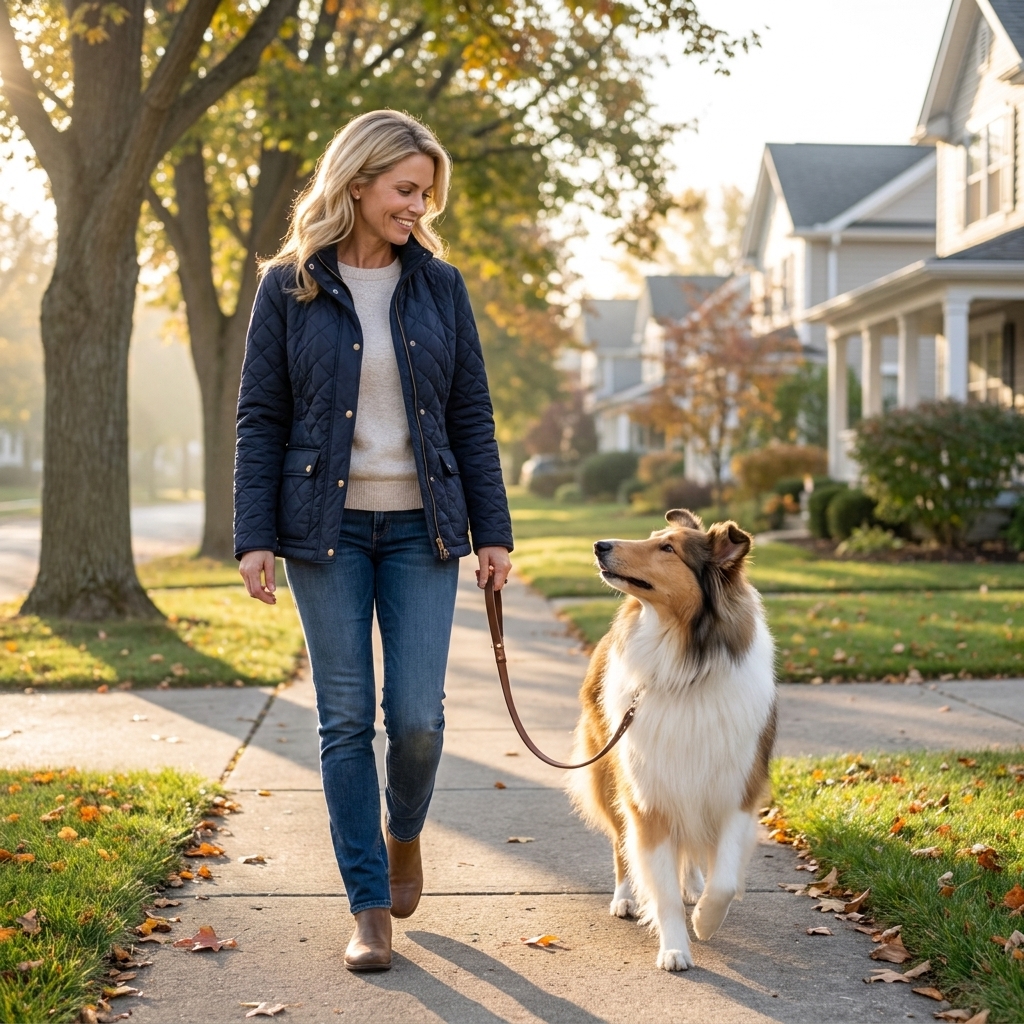
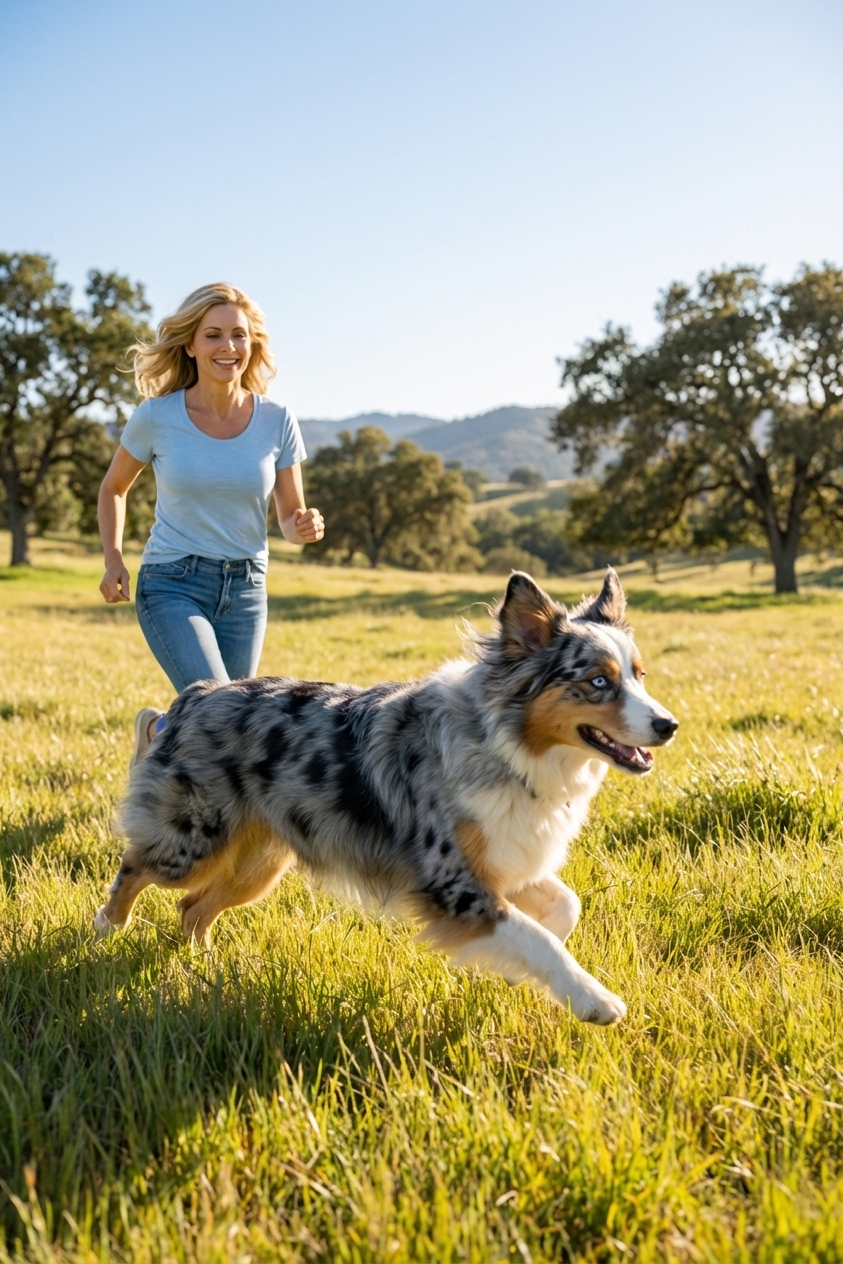
The Rough Collie is the classic “Lassie” dog: bright-eyed, sensitive, and famously devoted. But real-life Collies are not just pretty faces. They are herding dogs with strong people skills, a soft heart, and a coat that can either be a joy to care for or a surprise if you were expecting a low-shed pet.
This guide walks you through what families usually want to know: temperament, day-to-day life with kids and other pets, grooming and shedding reality, exercise needs, and the herding behaviors that can pop up in a modern home.
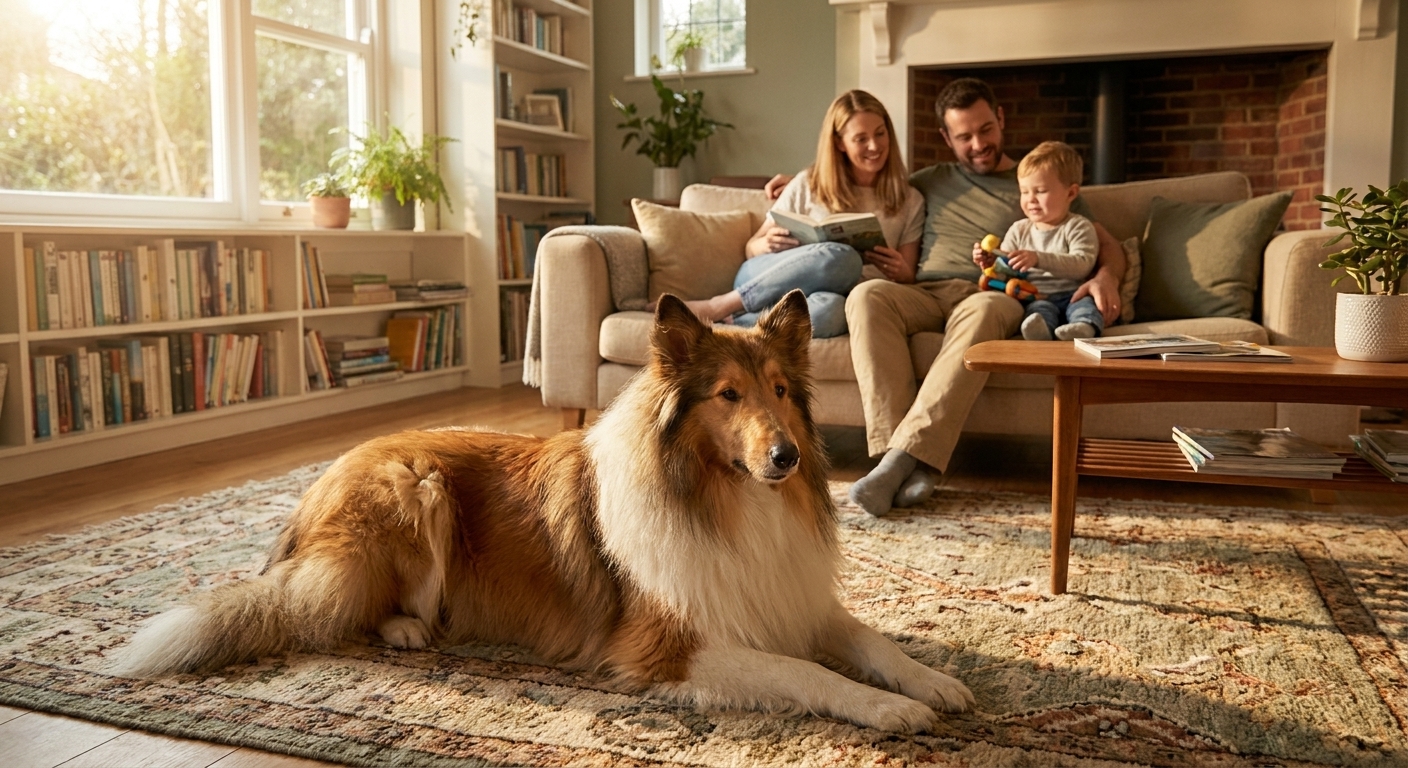
Quick Facts
- Size: Medium to large
- Height: About 22 to 26 inches at the shoulder
- Weight: Often 50 to 75 pounds (some smaller or larger)
- Lifespan: Commonly 12 to 14 years
- Shedding: Year-round, with heavier seasonal “coat blows”
- Grooming time: Typically a few brushing sessions per week, plus periodic baths and tidying
- Energy level: Moderate to moderately high, usually happiest with daily walks plus mental work
- Noise level: Can be vocal, especially as alert barkers
Temperament at a Glance
Most Rough Collies are affectionate, observant, and tuned in to their people. In clinical conversations with families, I often describe them as dogs that read the room. They notice tone of voice, body language, and changes in routine quickly. That sensitivity can be a beautiful trait, especially in calm, consistent households.
Typical personality traits
- Gentle and devoted: Often happiest when they can be near you, not necessarily on top of you.
- Smart and responsive: They tend to learn routines and cues quickly, especially with reward-based training.
- Alert but not usually aggressive: Many will bark when someone approaches the home, then soften once they see you are comfortable.
- Sensitive to harsh correction: Heavy-handed training can create anxiety or shutdown behaviors.
Breed background note: Herding breeds, including Collies, were developed to work closely with people and respond quickly to handler cues. That often translates into excellent trainability, but also a stronger need for predictable handling and positive reinforcement.
Rough Collies With Children and Other Pets
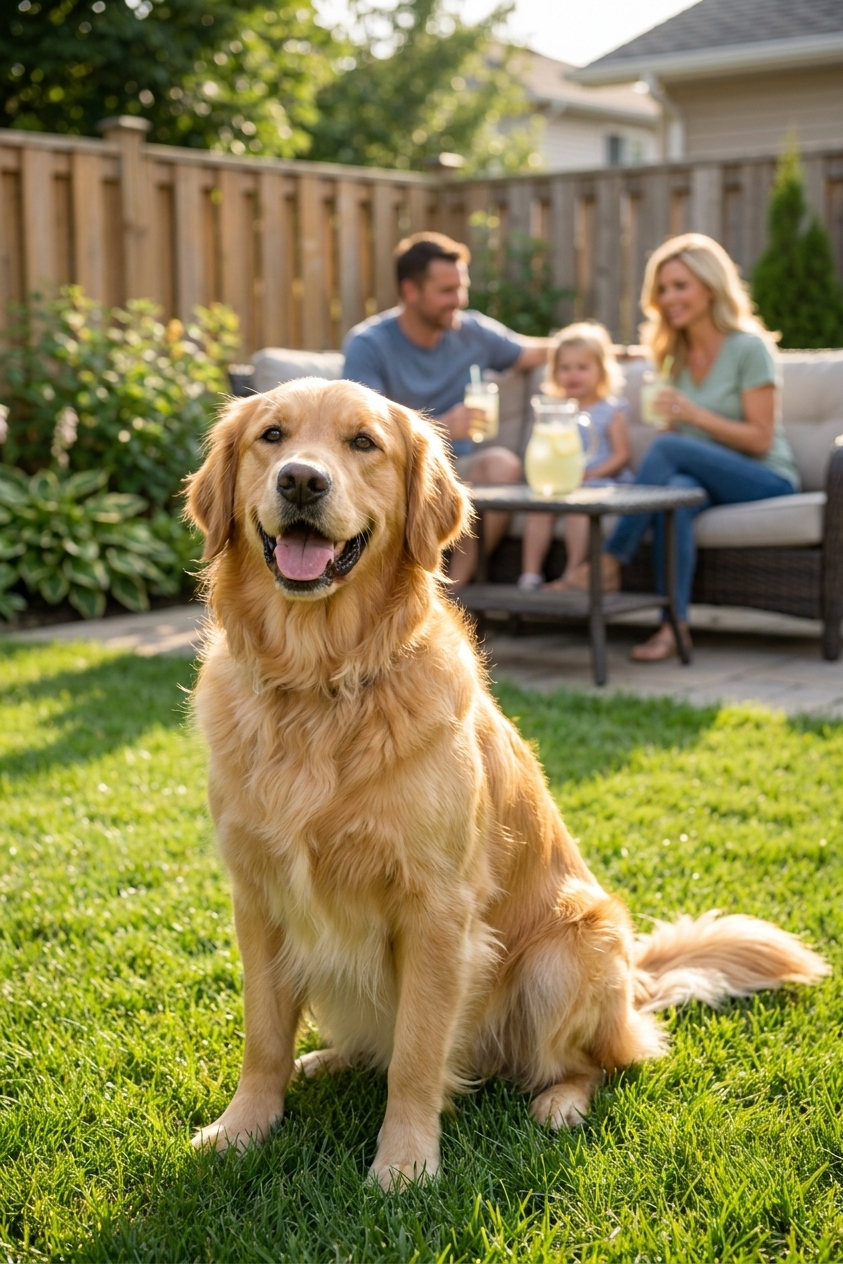
In the right home, Rough Collies can be wonderful family dogs. They often have a patient, “big sibling” vibe with kids. Still, like any breed, the outcome depends on supervision, training, and matching energy levels.
With children
- Best match: Families who can teach kids how to interact respectfully, especially around the dog’s face, food, and resting areas.
- Common challenge: Herding behaviors like circling, nudging, or trying to control running games.
- Helpful habit: Give your Collie a quiet retreat area where kids know not to disturb them.
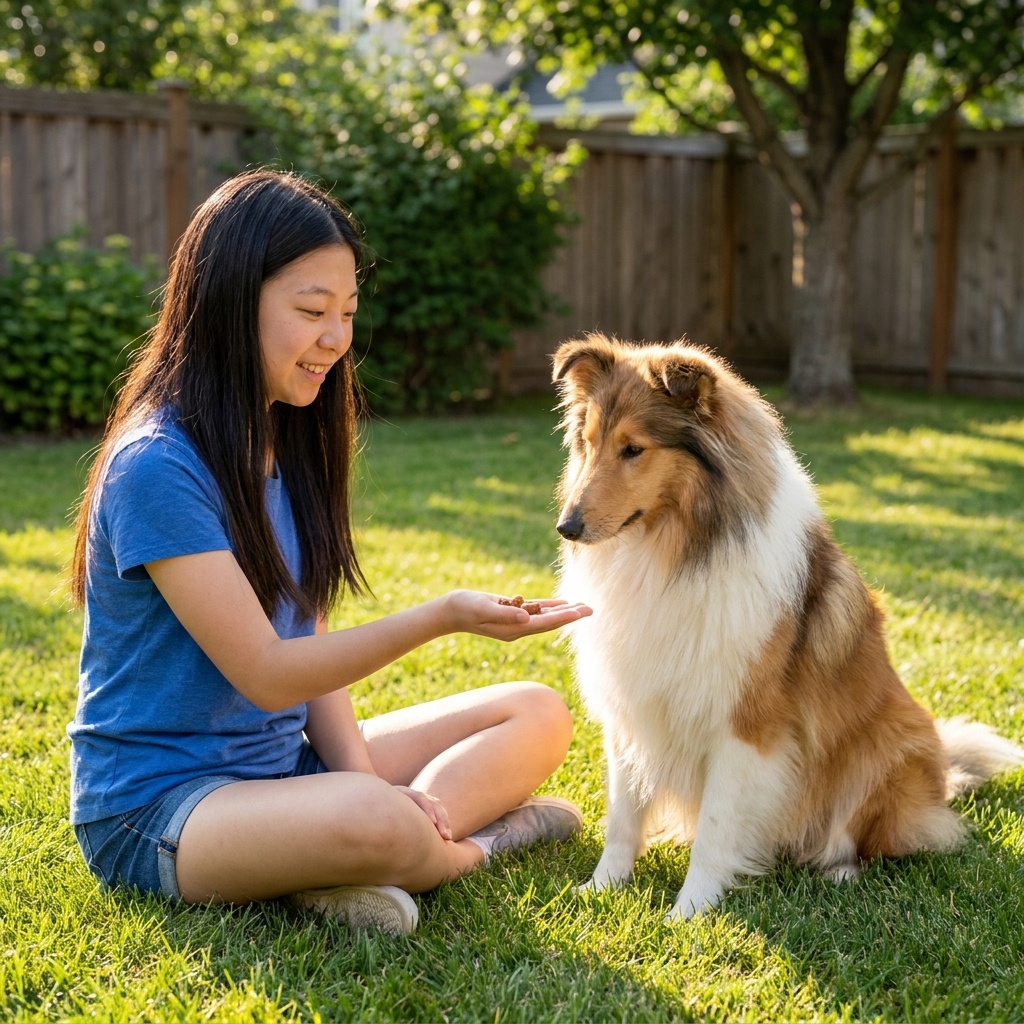
If you have very young children, practice calm “treat toss” games and supervised petting sessions. That builds positive associations without overwhelming the dog.
With other dogs
Most Rough Collies are social or at least politely neutral with other dogs when well socialized. They often do best with dogs that are not overly pushy. Early puppy socialization classes can help them build confidence and reduce reactivity.
With cats and small pets
Many Rough Collies can live peacefully with cats, especially if introduced early and managed thoughtfully. Their herding instinct can translate into “chasing to control movement,” so slow introductions and supervised interactions matter.
Safety tip: If you have rabbits, guinea pigs, or backyard chickens, plan for secure barriers. Even a gentle dog can accidentally injure a small animal while attempting to herd it.
Coat Care and Shedding Reality
The Rough Collie coat is gorgeous, and it is also a commitment. This breed has a long outer coat and a dense undercoat. The undercoat is what tends to “explode” during seasonal shedding.
How much do Rough Collies shed?
Expect year-round shedding plus heavier seasonal coat blows, often in spring and fall. Some spayed and neutered dogs may develop a softer, “cottony” coat texture that holds onto shed hair and mats more easily, but it varies by individual, genetics, and grooming routine.
Grooming routine that actually works
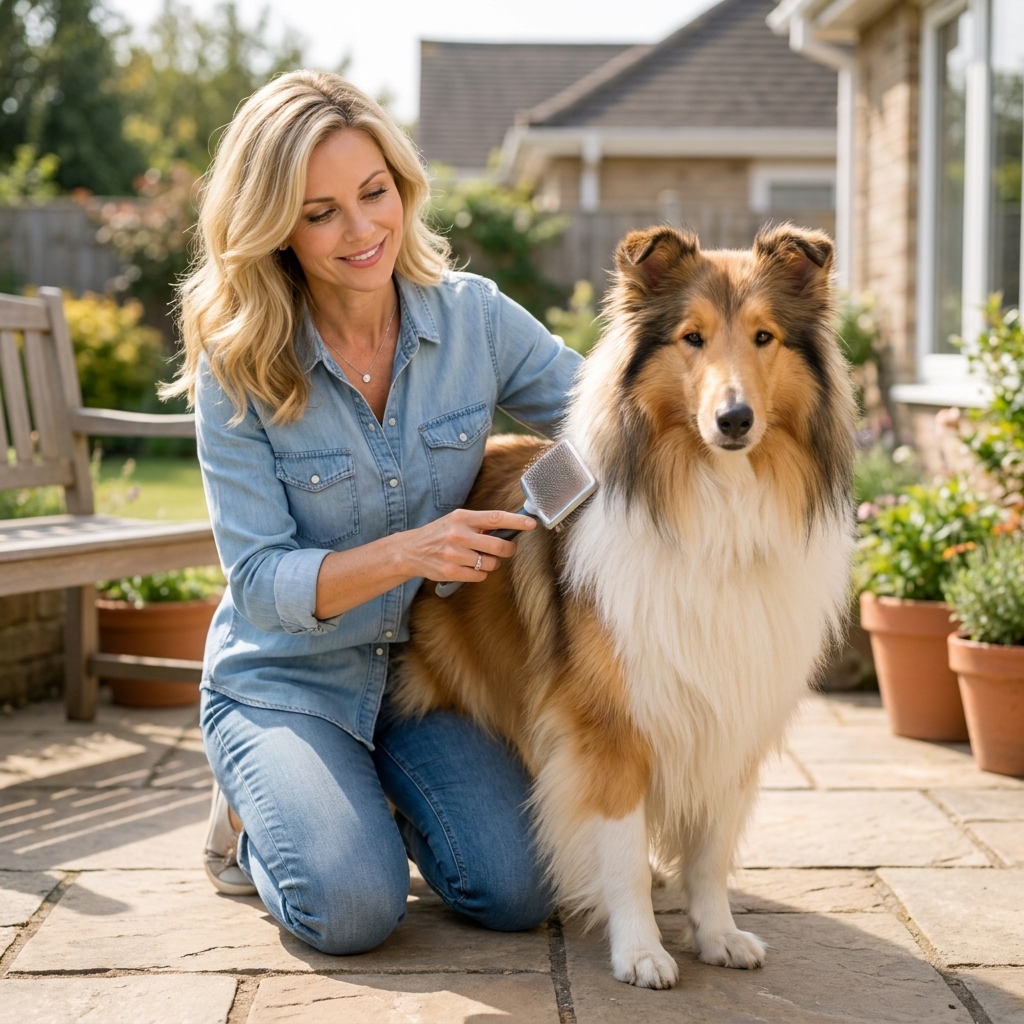
- Brush 2 to 4 times per week: Focus on the friction zones: behind the ears, chest, armpits, belly, and feathering on legs and tail.
- Use the right tools: A slicker brush and an undercoat rake can help. A metal comb is great for “proofing” areas prone to mats.
- Bath every 4 to 8 weeks: More often if your dog has allergies or rolls in heavy dust or pollen. Always dry thoroughly to protect the skin.
- Trim for tidiness: Light trimming of feet and hocks can reduce debris tracking inside without changing the breed’s look.
About shaving: Shaving a double coat is usually not recommended unless there is a medical reason or severe matting. It can increase sunburn risk and sometimes regrows unevenly. If you are struggling with heat, shedding, or mats, ask your veterinarian or a skilled groomer about line-brushing, deshedding baths, and a practical “tidy” trim instead.
What about professional grooming?
Many families use a pro groomer every 6 to 10 weeks, plus at-home brushing between visits. If you are new to long coats, this can be a smart option so you are not fighting mats alone. It also helps to budget for it, since coat care is a real ongoing cost with this breed.
Exercise and Enrichment
Rough Collies are active, but they are not usually as intense as some other herding breeds. Many thrive with steady daily activity and a job to do, even if that “job” is learning tricks or practicing cues.
Daily activity goals
- Adults: Many do well with about 60 to 90 minutes of total daily activity, split into sessions, but it varies by individual and season.
- Puppies: Short, age-appropriate play and training sessions. Avoid repetitive high-impact exercise while joints are developing.
- Seniors: Still benefit from gentle walks and low-impact enrichment.
Great activities for Rough Collies
- Loose-leash neighborhood walks with sniff time
- Obedience games and trick training
- Nose work or “find it” games indoors
- Herding lessons (if available) or controlled “treibball” style games
- Agility at an appropriate level for the dog’s structure and confidence
Watch the heat: In hot climates, plan walks early morning or later evening, carry water, and avoid asphalt that can burn paws.
Herding Behaviors at Home
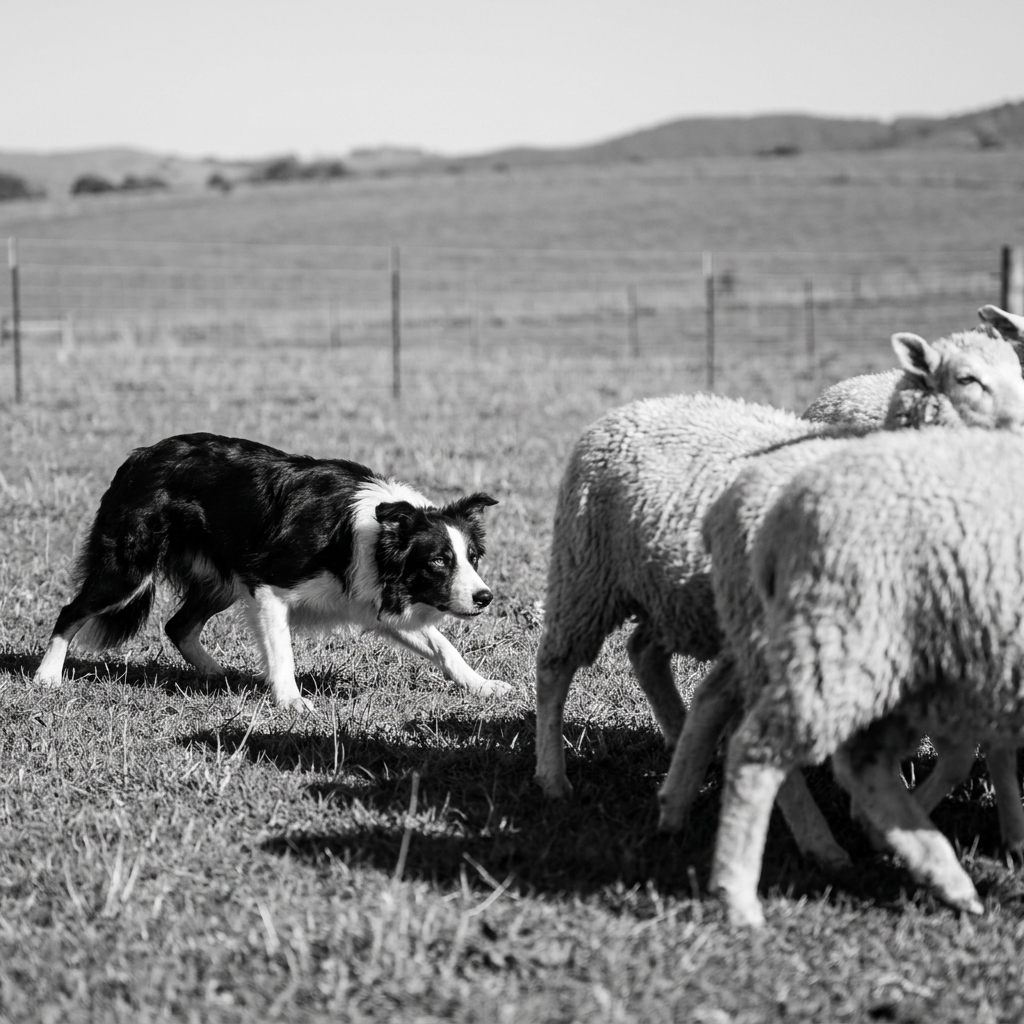
Rough Collies were bred to manage movement. In a family setting, that instinct can show up in subtle ways. Some Collies “shadow herd” by circling kids, blocking doorways, or nudging ankles to keep the group together.
Common herding behaviors
- Barking when people run or play loudly
- Chasing bicycles, scooters, or jogging kids
- Body blocking to control movement
- Mild nipping at heels in adolescence (more likely if under-exercised or overstimulated)
How to manage it
- Teach an alternate behavior: For example, “go to mat” during high-energy kid play.
- Reinforce calm: Reward quiet watching instead of chasing.
- Use management tools: Baby gates, leashes, and structured play prevent rehearsal of unwanted behaviors.
- Give them a job: Simple daily training, carrying a soft toy on walks, or a predictable routine can reduce anxious control behaviors.
If the herding behaviors escalate into persistent nipping or reactivity, a credentialed trainer who uses positive reinforcement can help you create a plan that protects both kids and dog.
Training That Fits
Most Rough Collies shine with gentle, consistent training. They often respond beautifully to praise, food rewards, and clear routines. Because they can be sensitive, it helps to keep sessions short and upbeat.
Early priorities
- Socialization: Calm, positive exposure to people, dogs, sounds, surfaces, and handling.
- Handling skills: Practice paw touches, ear checks, brushing, and calm standing. Future-you will thank you.
- Recall and leash manners: Herding dogs notice motion. A strong recall and “leave it” are real-life safety tools.
Barking habits
Collies can be vocal. The goal is not to eliminate barking entirely, but to teach a “thank you” cue that helps them stop after an alert. One simple approach is to say “thank you,” wait for a brief pause, then mark and reward the quiet moment. Over time, the cue predicts that calm is what earns the payoff.
Home Setup
Rough Collies can adapt to many living situations if their needs are met, but they do best when the home matches their sensitivity and their coat reality.
- Apartment living: Possible for some, but plan proactively for barking, elevator or hallway stimulation, and enough daily enrichment. A solid “go to mat” and “thank you” cue go a long way in close quarters.
- Yard: Nice to have, not required. A yard does not replace walks and training, and many Collies will simply stand outside and supervise rather than “exercise themselves.”
- Alone time: Many Collies are people-focused. If you work long hours, practice gradual alone-time training early (short departures, calm returns, food puzzles), and consider a midday dog walker or daycare that matches your dog’s temperament.
Health Notes
No breed guide replaces veterinary advice, but it is helpful to know common themes. Rough Collies are generally healthy dogs, yet like many purebred lines they can have inherited risks.
Common concerns
- Eye conditions: Collie Eye Anomaly (CEA) is a known inherited issue in Collie lines. Some lines may also have other inherited eye diseases. Responsible breeders screen breeding dogs.
- Drug sensitivity (MDR1): Some Collies carry the MDR1 gene mutation, which can affect how certain drugs are processed. Higher-risk examples include ivermectin at high doses, loperamide (Imodium), and some chemotherapy agents. Most modern monthly preventives are safe when used at labeled doses, but it is still worth discussing MDR1 testing with your veterinarian so medication choices are clear and safe.
- Bloat/GDV risk: As a deeper-chested breed, Rough Collies can be at risk for gastric dilatation-volvulus. Talk to your vet about risk reduction and when prophylactic gastropexy is considered.
- Endocrine and neurologic issues: Some Collies can be prone to conditions like hypothyroidism or epilepsy, depending on lines.
- Dental and skin care: Long coats can hide skin irritation. Regular brushing plus routine skin checks help catch issues early.
Action step: When choosing a puppy, ask for health testing documentation and talk through what the results mean. At minimum, many reputable programs test for CEA and MDR1, and maintain routine ophthalmologist eye exams. When adopting, request any prior medical records and schedule a baseline exam.
Is a Rough Collie Right for You?
A Rough Collie can be an amazing match if you want a loyal companion who thrives on connection and routine. They tend to do best with families who enjoy training, can commit to coat care, and appreciate a dog that is both athletic and emotionally tuned in.
Good match if you want
- A gentle, people-focused companion
- A dog who is trainable and enjoys learning
- A family dog that typically does well with respectful children
- A breed that can be active without needing constant high-intensity work
Consider another breed if
- You want a very low-shedding or minimal-grooming dog
- You are away from home long hours most days and cannot provide support for alone-time needs
- You prefer a more independent personality
My best advice: choose the dog in front of you, not just the breed in your head. Meet adult Collies if you can, talk to reputable rescues and breeders, and be honest about how much grooming and daily activity fits your real schedule.