Teach your dog to feel safe in the crate with simple games that build calm independence—treasure hunts, in-and-out choice, door = treats, Kong licking, and...
Article
•
Designer Mixes
Rottweiler Temperament: Good Family Dogs?

Shari Shidate
Designer Mixes contributor
Rottweilers have a big reputation, and it is not always fair. In my experience around dogs in clinic settings and with families at home, a well-bred, well-socialized Rottweiler is often steady, deeply loyal, and surprisingly gentle with the people they trust.
So are Rottweilers good family dogs? They can be, in the right home. The keys are early socialization, consistent training, and realistic expectations about their size, strength, and protective instincts.
Rottweiler temperament
Rottweilers were developed as working dogs. That history shows up today as confidence, watchfulness, and a strong desire to stay close to their people.
Common temperament traits many owners describe include:
- Loyal and bonded: They often choose “their people” and stick close by.
- Calm when well exercised: Many are not hyper dogs, but they do need daily physical activity.
- Protective and alert: They notice changes, visitors, and anything that feels “off.”
- Smart and trainable: They learn quickly, but they can test boundaries if training is inconsistent.
- Confident: A stable Rottweiler is usually not nervy or frantic.
Important nuance: “Protective” should not mean “aggressive.” A good family Rottweiler is steady and responsive to the owner, not reactive and out of control.
And like any breed, individuals vary a lot. Genetics, early handling, socialization, and daily routine make a huge difference in the dog you get.
Good with kids?
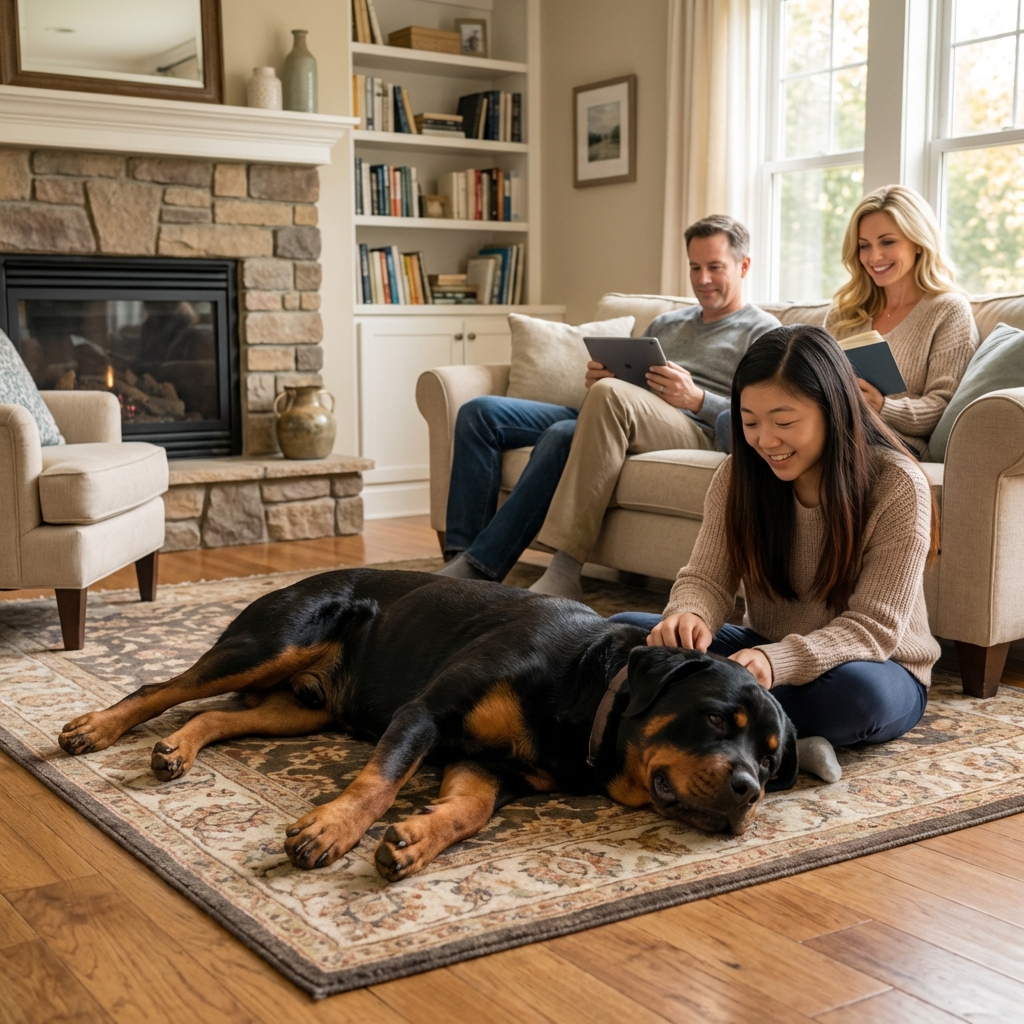
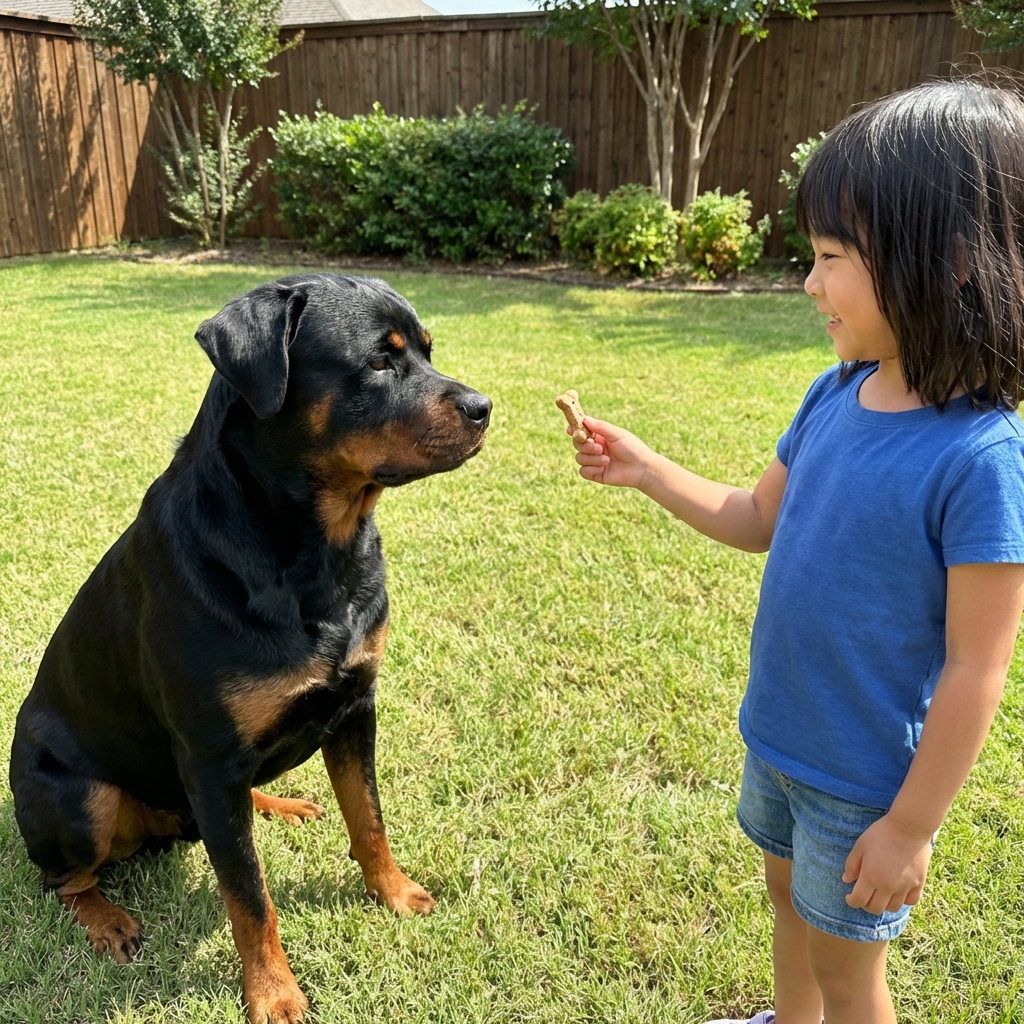
If you are considering a Rottweiler for family life, the next question is usually about kids. Many Rottweilers are wonderful with children in their own family, especially when raised with them. They can be affectionate, tolerant, and patient.
That said, their size and power matter. Even a friendly Rottweiler can accidentally knock over a toddler. Supervision is non-negotiable, and teaching both the dog and the kids good manners is part of responsible ownership.
Tips that help
- Supervise every interaction with young kids, even with the sweetest dog.
- Teach kids “dog respect”: no hugging tightly, no climbing, no grabbing ears, and no bothering a resting dog.
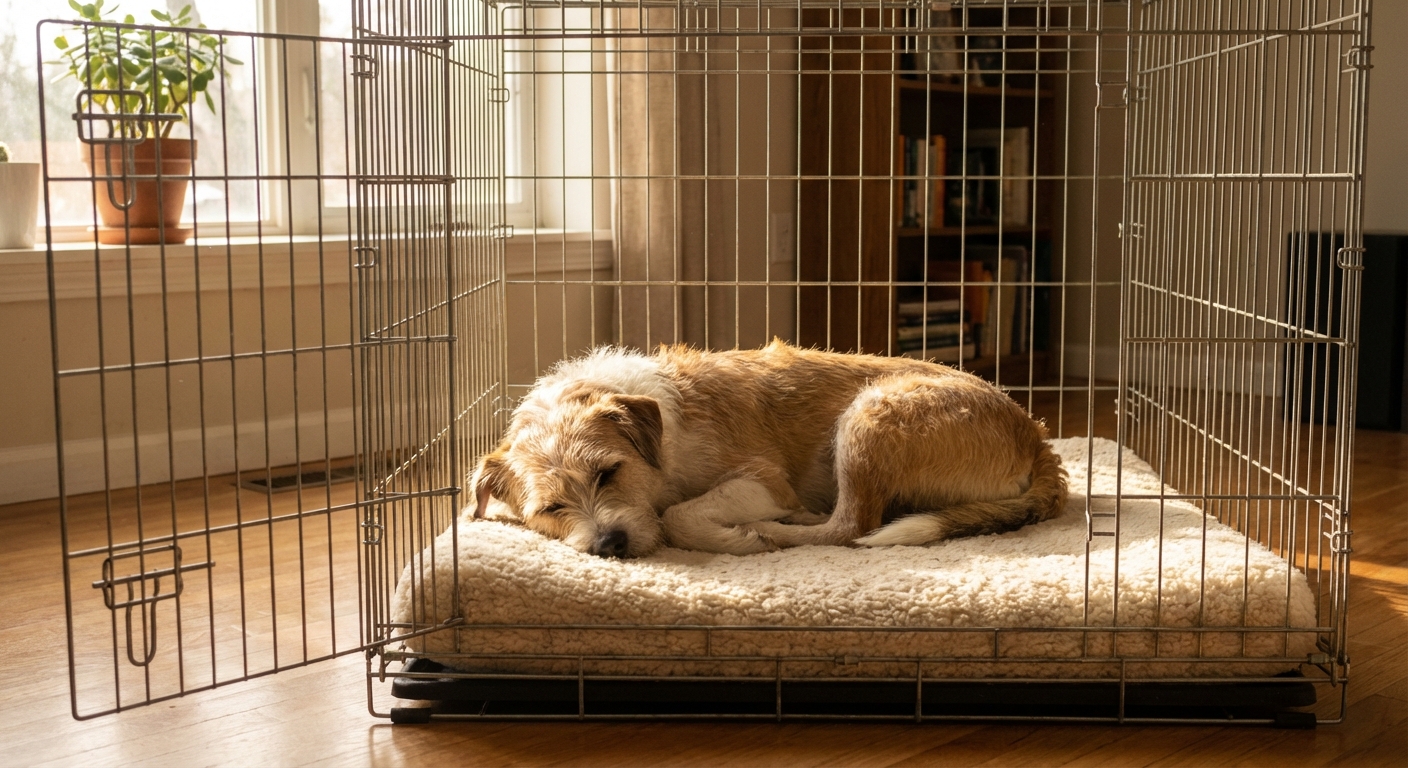
- Create a safe zone: a crate or gated room where the dog can decompress.
- Reward calm behavior around kids. Reinforce the emotional state you want.
Other pets
Rottweilers can absolutely live peacefully with other dogs and cats, but early exposure matters. Some can show more dog selectivity as they mature, and that can be more noticeable with some same-sex pairings. Individual variation is significant here.
If you have other pets:
- Start socialization early and keep it positive and controlled.
- Use slow introductions and manage the environment with gates and leashes.
- Do not force sharing of food, chews, or favorite sleeping spots.
- Watch body language: stiff posture, hard staring, and hovering are signs to step in. Separate calmly, create space, and redirect to something easy (like “come” or “place”).
If you are adopting an adult Rottweiler, ask the rescue or shelter about their dog-to-dog and cat history, and consider a professional behavior assessment.
Socialization
Socialization is not about letting your puppy meet “everybody.” It is about teaching your Rottweiler that the world is safe, predictable, and guided by you.
The most important socialization window is generally considered to be in puppyhood, often cited as roughly 3 to 14 weeks (some sources extend it to about 16 weeks). But healthy exposure continues through adolescence too.
What good socialization looks like
- Meeting calm adults and respectful children
- Seeing people with hats, wheelchairs, umbrellas, and backpacks
- Hearing city sounds, doorbells, and thunder recordings at low volume
- Short, positive visits to new places
- Learning to be handled gently: paws, ears, mouth, and grooming
As a veterinary assistant, I cannot emphasize enough how valuable cooperative handling is. When a big dog learns that nail trims, ear checks, and vaccines are normal, life gets easier for everyone, including your dog.
Training
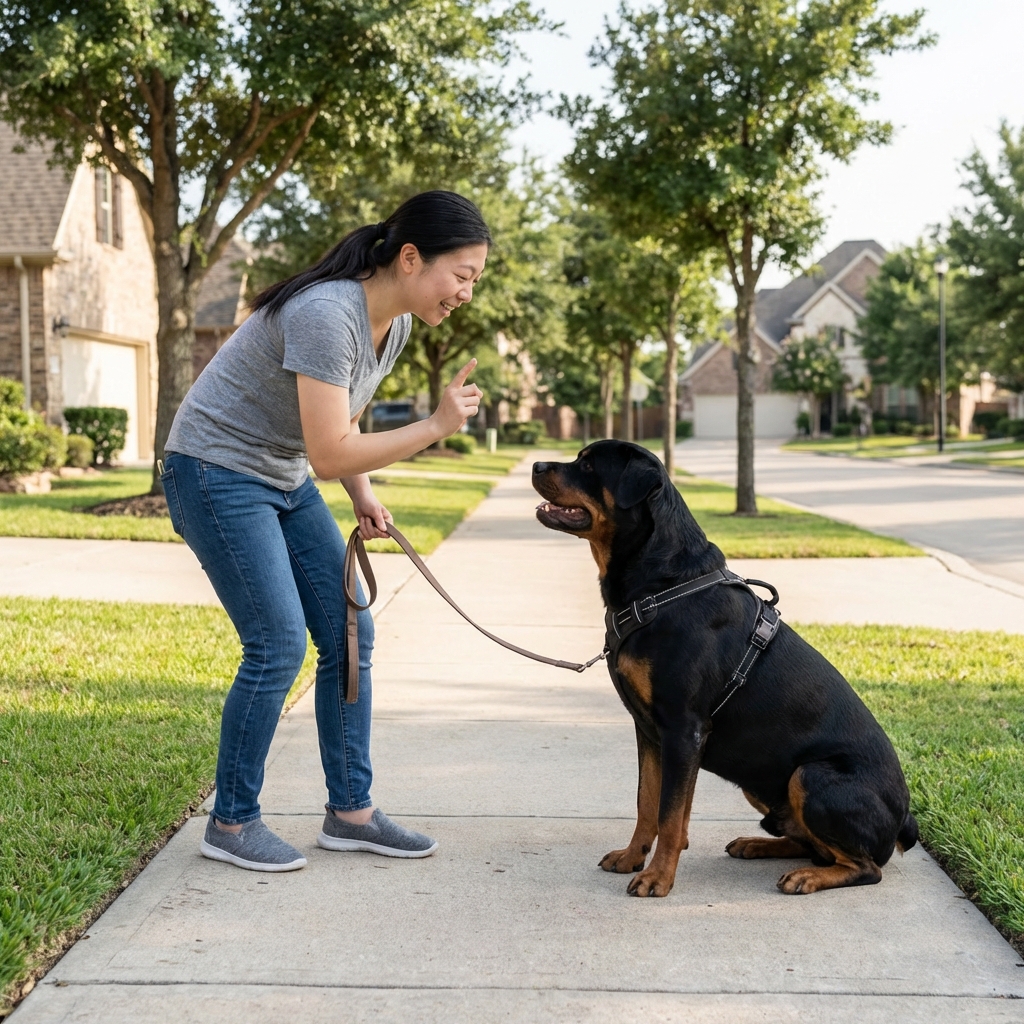
Rottweilers thrive with structure. You do not need harsh methods, but you do need consistency. Positive reinforcement training works beautifully with this breed, especially when you pair it with clear boundaries and routines.
Because they are large and powerful, training is only part of the plan. Management and prevention matter too: use leashes, gates, crates, and predictable routines to set your dog up to succeed while skills are still in progress.
Core skills
- Loose-leash walking: because being strong is not a personality flaw, it is physics.
- Reliable recall: coming when called, even with distractions.
- Place or mat training: a calm “go settle” behavior for guests and busy moments.
- Drop it and leave it: safety skills that prevent conflict and accidents.
- Polite greetings: four paws on the floor.
Adolescence can be a bumpy phase. Many owners feel like their sweet puppy suddenly becomes more stubborn at 8 to 18 months. That is normal, and it is where consistent practice pays off.
Exercise and enrichment
A bored Rottweiler can become pushy, mouthy, or destructive. But this is not a breed that needs endless running all day. Most do best with a mix of physical exercise and mental work.
- Daily walks with sniffing time
- Short training sessions (5 to 10 minutes) a few times per day
- Food puzzles and enrichment feeders
- Fetch or tug with clear start and stop rules
- Job-like activities like carrying a dog backpack appropriately fitted and not overloaded
If your Rottweiler is “too protective,” “too intense,” or “too much,” it is worth asking whether their daily routine includes enough predictable outlets for energy and stress.
Guests and strangers
Protective breeds do best when you give them a clear job and a clear routine. For many families, that means planning ahead for visitors instead of improvising at the front door.
- Use a door routine: leash on, ask for “place,” reward calm, then greet.
- Manage the environment: baby gates, a crate, or a separate room during high-traffic moments.
- Secure your space: strong fencing, locked gates, and no unsupervised yard time in unfenced areas.
- Consider muzzle training as a proactive safety tool if your dog is nervous with strangers or handling. A well-fitted basket muzzle, trained positively, can lower risk and reduce stress for everyone.
Red flags
Not every Rottweiler is a good fit for every family, and it is responsible to name the potential trouble spots. These red flags warrant help from a qualified trainer or behavior professional:
- Fear-based reactions: barking, lunging, or snapping when startled
- Guarding behaviors: growling over food, toys, or resting spots
- Uncontrolled arousal: cannot settle, escalates quickly during play
- Any bite history, including repeated bites that were inhibited or labeled “warning” bites
- Strong discomfort with handling that does not improve with training
If you see these, do not wait. In many cases, earlier intervention is safer and more successful, although severity and history matter.
Health and lifespan
Family fit is not only about temperament, it is also about health and lifestyle. Rottweilers are a large breed, and like many large breeds they can be prone to joint issues such as hip or elbow dysplasia and cruciate injuries. They can also have cardiac concerns (subaortic stenosis is one to know about) and are not immune to cancer risk as they age.
Keeping your dog lean, building strength with appropriate exercise, and staying consistent with preventive vet care goes a long way toward keeping them comfortable and active.
Choosing a breeder or rescue
If you want the best odds of a stable family companion, selection matters. I always encourage people to be picky here.
Quick checklist
- Health testing: ask about hips, elbows, and heart screening, plus what the results were.
- Temperament: meet the parents if possible, or at least see them handled calmly.
- Early handling: look for puppies raised in a home environment with gentle exposure to normal life.
- Transparency: reputable breeders and rescues answer questions directly and do not pressure you.
- Support: someone who will guide you on training and behavior after adoption is a green flag.
Best fit
Rottweilers tend to do best with families who want a devoted companion and are ready to lead with calm, consistent training.
Good match if you:
- Enjoy training and want an engaged, intelligent dog
- Can commit to daily exercise and mental enrichment
- Have the ability to manage a large, powerful breed safely
- Will socialize intentionally, not casually
- Are comfortable setting house rules and sticking with them
Reconsider if you:
- Want a low-training, low-management dog
- Have limited time for exercise, enrichment, and structure
- Cannot confidently handle a strong dog on leash
- Live where breed restrictions, HOA rules, local ordinances, or insurance limitations apply (check before you commit)
Bottom line
Rottweilers can be excellent family dogs: loyal, affectionate, steady, and protective in a grounded way. The families who thrive with this breed are the ones who invest early in socialization, keep training as an everyday lifestyle, and meet their dog’s needs consistently.
If you are considering a Rottweiler, I encourage you to meet well-raised adults, choose ethical breeders or reputable rescues, and line up a positive reinforcement trainer early. With the right foundation, you can end up with a truly wonderful family companion.