Wondering if a Labradoodle is right for your family? Get practical guidance on temperament, size and shedding, exercise, training, grooming routines, health ...
Article
•
Designer Mixes
Rottle (Rottweiler Poodle Mix): Temperament, Size, and Training

Shari Shidate
Designer Mixes contributor
The Rottle is a Rottweiler Poodle mix that tends to combine two very different but equally impressive qualities: the Rottweiler’s protective loyalty and the Poodle’s intelligence and trainability. If you are looking for a big, brainy companion who can be affectionate with family but still be a naturally alert presence at home, the Rottle is worth a closer look.
One quick note: “Rottle” is a nickname, not an official breed name, and you may also see this mix called a Rottweiler–Poodle mix. Because it is a mix, individual dogs can vary a lot in size, coat, and temperament.
That said, this is not a “set it and forget it” dog. Rottles often do best with experienced owners who enjoy training, have a plan for socialization, and can provide structured daily exercise.
If you are considering any kind of protection training, do it only with a qualified professional. For most families, the goal is a confident, well-mannered dog with good impulse control, not a dog trained to confront people.
Rottle temperament
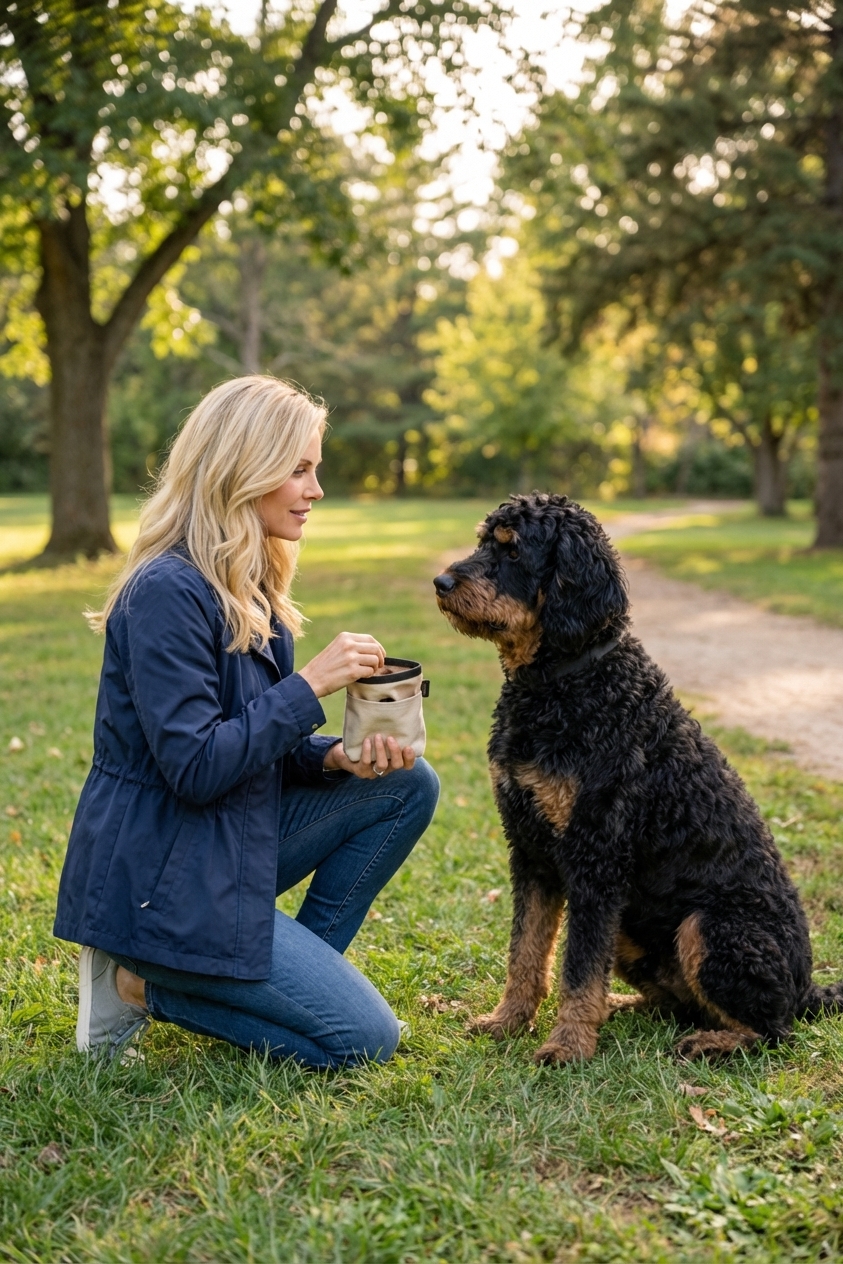
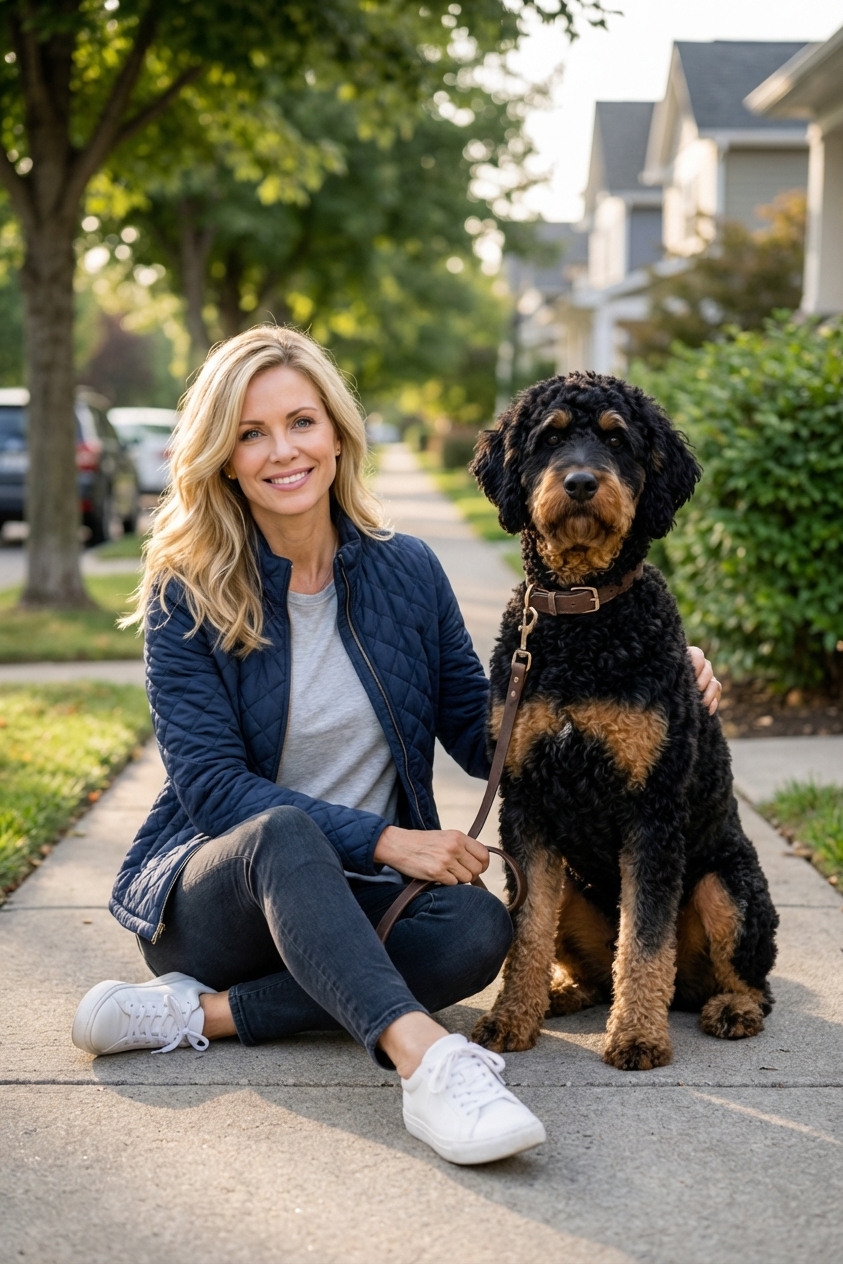
Temperament in any mixed breed is a range, not a guarantee. A Rottle can lean more Rottweiler, more Poodle, or land somewhere in the middle. Many owners report dogs who are devoted, observant, and deeply bonded to their people.
Protective and loyal
Many Rottles have a natural “guardian” vibe. This does not automatically mean aggression. In well-bred, well-socialized dogs, it more often shows up as watchfulness, confidence, and a tendency to stay close when something feels unfamiliar.
- With family: affectionate, people-focused, and often happiest near their humans.
- With strangers: typically reserved at first, then warms up with calm introductions.
- With kids: can do very well in the right home, but supervision is a must due to size and strength.
Common misconceptions
I hear this a lot as a veterinary assistant: “Rott mixes are automatically dangerous.” That is simply not accurate. Behavior is shaped by genetics, early handling, training, socialization, health, and the home environment. A Rottle that is thoughtfully raised is often steady and responsive. A Rottle that is under-socialized, allowed to practice rough behavior, or poorly managed can become a problem, just like any large, powerful breed.
Protective instincts are not a substitute for training. They are a reason to train early and consistently.
Size and build
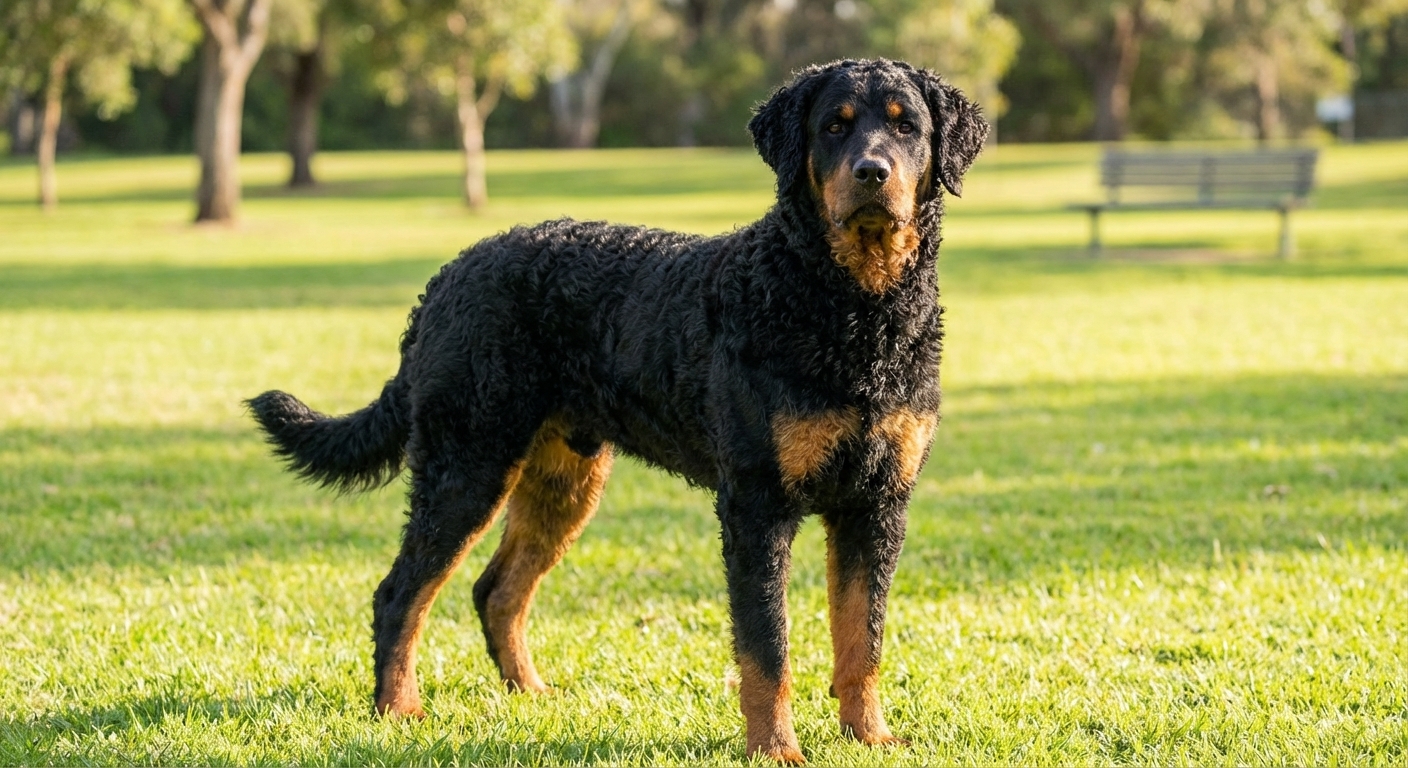
Rottles are usually medium-large to large dogs, especially when the Poodle parent is a Standard Poodle (most common). Final size depends on the size and genetics of both parents.
- Height: often about 20 to 27 inches at the shoulder (typical estimates)
- Weight: commonly 50 to 100 pounds, with some outside this range
- Build: sturdy and muscular, sometimes with a more athletic, leggy Poodle outline
Occasionally, a breeder may use a smaller Poodle (like a Miniature Poodle), which can produce a significantly smaller dog. If size is a key factor for you, ask about the parents and adult relatives.
Because they can be very strong, leash skills and polite greetings are not optional. A “friendly lunge” from a 90-pound dog can still knock someone over.
Lifespan
The expected lifespan of a Rottle is typically about 10 to 14 years. Like most dogs, longevity depends on size, genetics, body condition, preventive care, and plain luck. Choosing for health and temperament and keeping your dog lean can make a meaningful difference over time.
Coat types and grooming
Coat is one of the biggest question marks in a Rottle. You may see anything from a wavy or curly Poodle-like coat to a straighter, thicker coat that sheds more like a Rottweiler. Many fall somewhere in between.
What the coat can look like
- Curly: tighter curls, often lower shedding, higher grooming needs.
- Wavy: “doodle coat” feel, can be low-to-moderate shedding, and tangles can happen quickly.
- Straight or plush: usually more shedding, less matting risk, still needs routine brushing.
Coloring can vary. Some have classic black and tan points reminiscent of the Rottweiler, while others may be solid black, brown, or mixed.
Also worth saying clearly: no mix is guaranteed hypoallergenic. If allergies are a concern, time with the individual dog matters more than the label.
Grooming needs
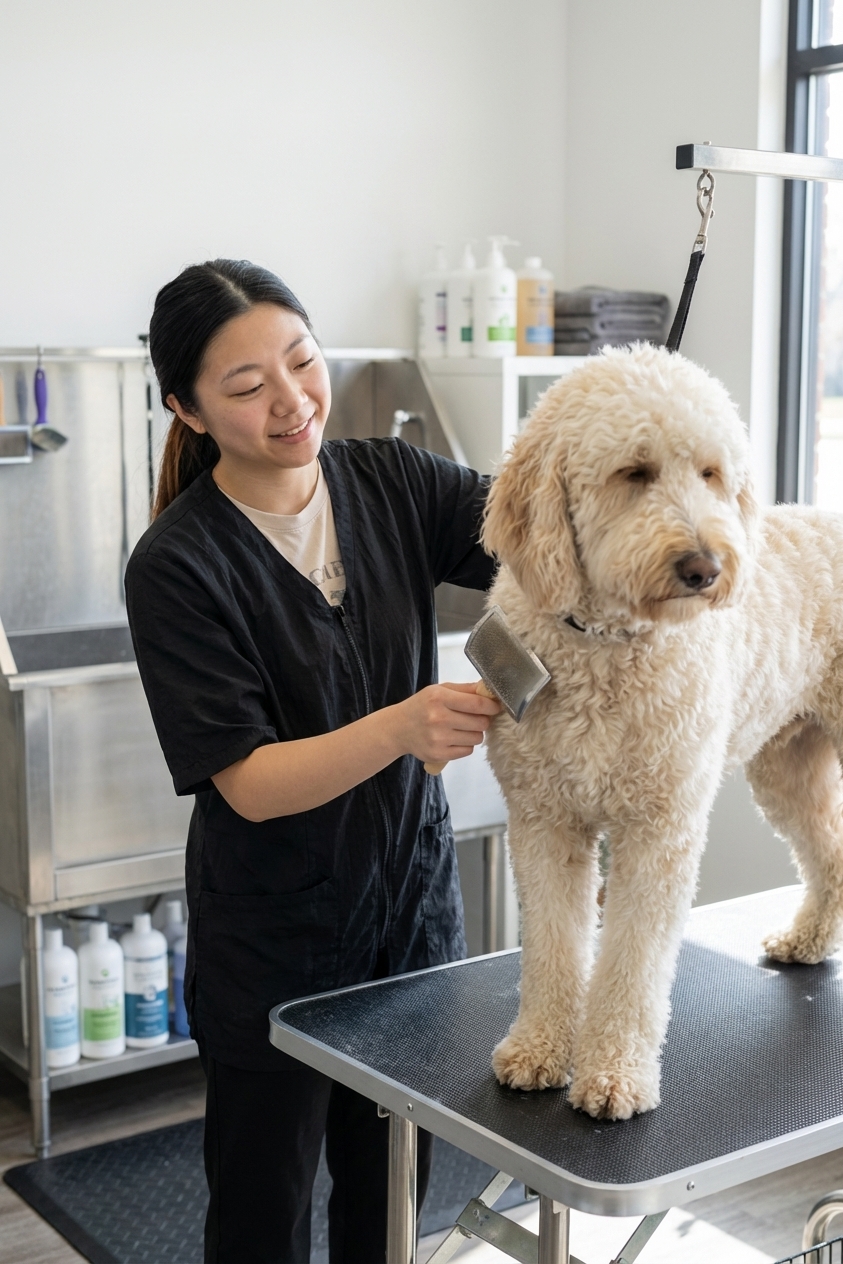
Plan for a real grooming routine, especially if your Rottle has a curlier coat. Matting is not just cosmetic. It can trap moisture and debris and contribute to skin irritation.
- Brushing: 3 to 5 times a week for wavy or curly coats; 1 to 3 times a week for straighter coats.
- Professional grooming: about every 6 to 10 weeks for curly or fast-growing coats.
- Ears: check weekly; Poodle-type ears can hold moisture, especially if hair grows in the ear canal, which can increase ear infection risk.
- Nails: trim every 3 to 6 weeks, depending on wear.
Training a Rottle
Rottles are smart, and that is wonderful, but it also means they learn quickly in both directions. They can learn polite behavior fast, and they can also learn bad habits fast if boundaries are unclear.
Why training matters
Rottweilers are known for confidence and determination. Poodles are known for high intelligence and sensitivity. Put those together and you often get a dog who notices everything, remembers everything, and will test what works.
- Start early: reward-based puppy classes are gold for social skills and structure.
- Keep it consistent: same cues, same rules, same expectations across the household.
- Train calm: teach “place,” “settle,” and loose-leash walking early.
- Use positive reinforcement: food, toys, praise, and real-life rewards like going outside.
Best approach
These dogs often respond beautifully to reward-based training that is clear and confident. Harsh methods can backfire, especially if your Rottle leans more Poodle-sensitive. If you need help, choosing a certified trainer who uses modern, humane methods is one of the best investments you can make.
Mental and physical exercise
Many behavior problems blamed on “stubbornness” are really boredom. A Rottle typically needs daily movement plus a job for their brain.
- Exercise: brisk walks, structured play, hiking, and supervised fetch are common favorites.
- Brain work: scent games, puzzle feeders, basic obedience refreshers, and trick training.
- Sport potential: some enjoy obedience, rally, nose work, and agility (based on build and joints).
Socialization
For a protective mix, socialization is not about forcing your dog to love every stranger. It is about teaching your dog that the world is safe and predictable, and that you will handle new situations.
What good socialization looks like
- Calm exposure to different people, hats, sunglasses, umbrellas, delivery drivers, and kids at a distance.
- Positive experiences with sounds and surfaces: stairs, elevators, slick floors, car rides.
- Learning to ignore other dogs on walks, not greet every dog face-to-face.
Puppies and vaccines
Talk with your veterinarian about safe socialization while your puppy is completing vaccines. In many areas, controlled environments like puppy classes with vaccination requirements and safe, clean homes are a smart way to build confidence without unnecessary disease risk.
Nutrition basics
Feeding matters with this mix, especially during growth. If your Rottle puppy is expected to be large, ask your veterinarian about using a large-breed puppy formula. These diets are designed to support steady growth and can help protect developing joints.
- Avoid rapid growth: overfeeding and too many calories can stress joints in big puppies.
- Keep them lean: a healthy body condition is one of the best joint-protection tools you have.
- Supplements: do not add calcium or “growth” supplements unless your vet recommends them.
Common health concerns
Mixed breeds can sometimes benefit from genetic diversity, but it is not guaranteed. They can still inherit conditions from either parent, and poor breeding can concentrate health issues. The healthiest advantage you can give a Rottle is choosing an ethical breeder or rescue that prioritizes health screening and temperament, then supporting your dog with preventive veterinary care.
Health issues seen in Rottweilers and Poodles
- Hip and elbow dysplasia: more common in larger dogs; keep puppies lean and avoid excessive jumping during growth.
- Cruciate (CCL) tears: similar to an ACL injury in people; risk increases with weight and high-impact activity.
- Bloat (GDV): deep-chested dogs can be at risk; discuss feeding routines and preventive gastropexy with your vet.
- Cardiac conditions: heart issues can occur in some lines; regular exams and appropriate screening help catch problems early.
- Ear infections: especially with floppy, hairier ears.
- Eye conditions: some lines carry inherited eye issues.
- Skin allergies: may show as itching, licking paws, or chronic ear problems.
Practical prevention tips
- Maintain a lean body condition to protect joints.
- Schedule routine wellness visits and discuss parasite prevention based on your region.
- Ask your vet about the best time for spay or neuter for a large breed, since growth plates and joint health matter.
- Prioritize dental care. Big dogs still get dental disease, and it impacts whole-body health.
Finding a responsible breeder or rescue
If you are buying a puppy, look for someone who is transparent, health-focused, and willing to say “no” if a home is not the right fit. If you are adopting, ask what the rescue knows about temperament, handling, and any medical history.
- Health testing: ask about OFA hips and elbows, cardiac evaluation, and an eye exam (the exact tests can vary by line).
- Temperament: meet at least one parent if possible, and look for stable, social behavior.
- Red flags: no health records, many litters always available, pressure to pay quickly, or “guaranteed hypoallergenic” claims.
Is a Rottle right for you?
A Rottle can be an amazing companion in the right home. They often thrive with people who like structure, enjoy training, and want a dog who is affectionate and capable.
Often a great fit if you:
- Have experience with large dogs or are committed to working with a trainer.
- Want a loyal, watchful companion and are willing to socialize intentionally.
- Can provide daily exercise plus mental enrichment.
- Are ready for grooming time and professional grooming costs if the coat is curly.
May not be a great fit if you:
- Want a low-maintenance dog who is always social with everyone.
- Work long hours with little time for training and enrichment.
- Prefer a small dog or a lower-energy lifestyle.
If you do your homework, choose your dog thoughtfully, and commit to training early, the Rottle can be the best kind of “all-in” family dog: intelligent, devoted, and steady.