
Retrain Your Cat to Use the Litter Box

When a cat stops using the litter box after a move, a stressful event, or an illness, it can feel personal. It almost never is. In my experience as a veterinary assistant, litter box problems most often point to pain or urgency, stress or feeling unsafe, or a box or litter setup that is not working for them.
The good news is that retraining is very doable when you take a calm, step-by-step approach. Below, I will walk you through medical rule-outs, the best home setup, and how to rebuild your cat’s litter box confidence without scolding or punishment.
Quick note: This article is educational and not a substitute for veterinary diagnosis. If anything feels sudden, severe, or “not like your cat,” call your veterinarian.
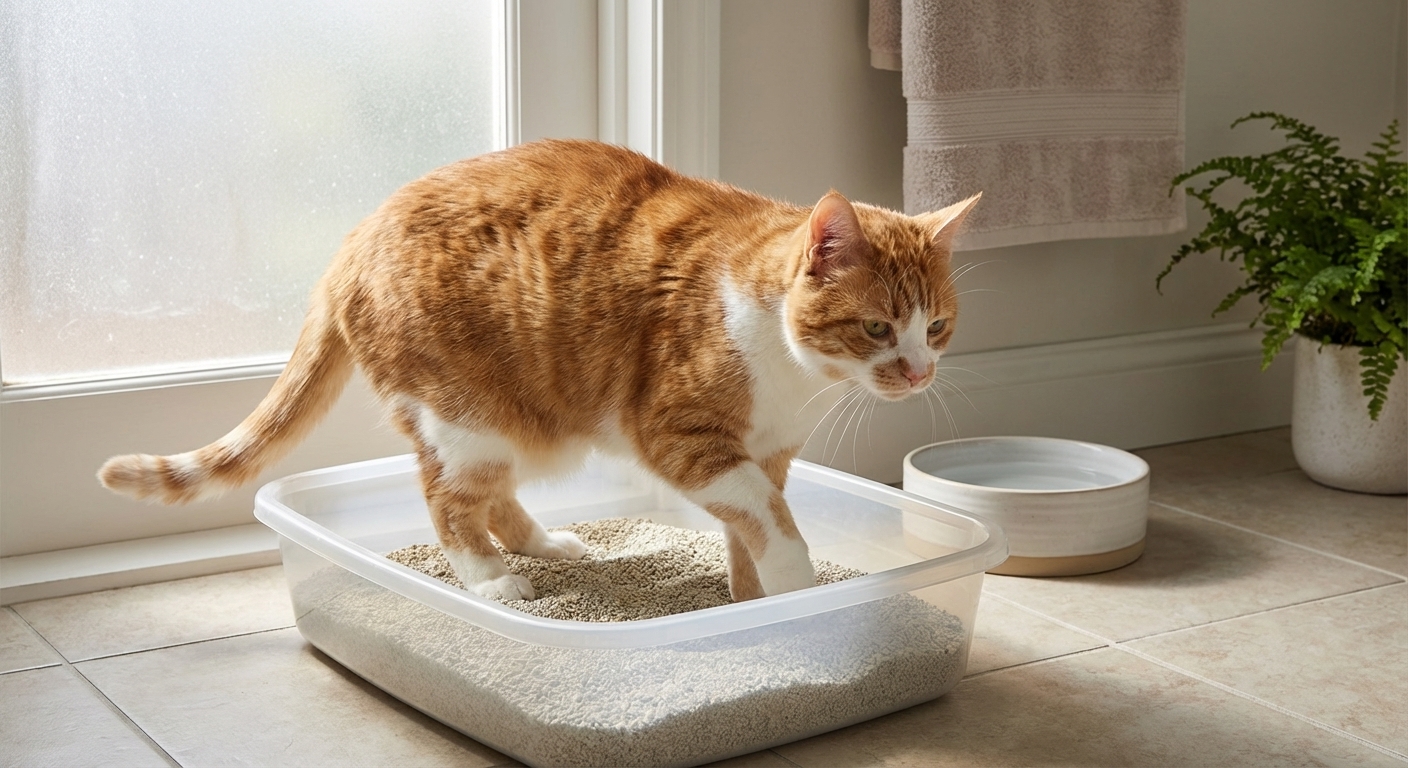
Kitten training vs adult retraining
It helps to think about this as two different situations.
Kittens
Kittens are still learning the household routine. They usually succeed with a simple setup: a nearby box, easy access, and a substrate they like. Their accidents are often about distance, distraction, or not recognizing the box in time.
Adult cats being retrained
Adult cats already know what the litter box is. When they stop using it, there is usually a reason, such as:
- Pain or urgency (bladder inflammation, urinary crystals, constipation, arthritis)
- Negative association (they used the box while sick or painful)
- Stress or territory conflict (new home, new pet, outdoor cats visible through windows)
- Preference changes (new litter, new box style, new location, new cleaner scent)
- Urine marking (a separate behavior from “having an accident,” often territorial or stress-related)
Retraining is less about teaching and more about making the box feel easy, safe, and rewarding again.
Peeing vs spraying
Most “accidents” are normal urination on a horizontal surface (squatting, leaving a puddle). Spraying is usually on vertical surfaces (tail up, small amounts, strong odor). Both deserve a medical check, but spraying tends to have stronger stress and territory drivers.
Step 1: Rule out medical causes first
If your cat was previously reliable and suddenly stopped using the box, please treat that as a medical red flag.
Call your vet promptly if you notice
- Straining to urinate or crying in the box
- Frequent small urinations
- Blood in urine
- Urinating outside the box plus increased thirst or weight loss
- Constipation, hard stools, or crying while defecating
- Changes after surgery, a new medication, or reduced mobility
Urgent: A male cat that is straining and producing little or no urine can be blocked. This is an emergency.
Common culprits we see in clinic include feline idiopathic cystitis (stress-related bladder inflammation), urinary crystals, constipation, diarrhea, and arthritis pain that makes climbing into a box difficult. Bacterial urinary tract infections can happen, but they are more common in older cats or cats with other health conditions.

Step 2: Reset the environment
When retraining, you want to reduce variables. That means a simple, predictable setup your cat can trust.
Choose a quiet retraining zone
For 1 to 2 weeks, consider limiting your cat to a quiet room with food, water, a resting area, and a litter box. This is not punishment. It is a confidence reset. For many cats, a guest bathroom or spare bedroom works well.
Important setup detail: Keep the litter box as far from the food and water as the room allows. Many cats naturally avoid eliminating near where they eat and drink.
Use the right number of boxes
A rule commonly recommended by feline behavior experts is: one box per cat, plus one extra. Example: two cats should have three boxes. In multi-cat homes, this reduces guarding and conflict, which is a very common reason cats avoid the box.
Make the box easy to access
- Keep at least one box on every level of the home
- Avoid noisy, high-traffic areas (next to washer, near busy doors)
- Make sure the path is not blocked by a dog gate or a pushy pet
Step 3: Get the box setup right
Many cats are picky for a reason. The box is where they are most vulnerable.
Box size and design
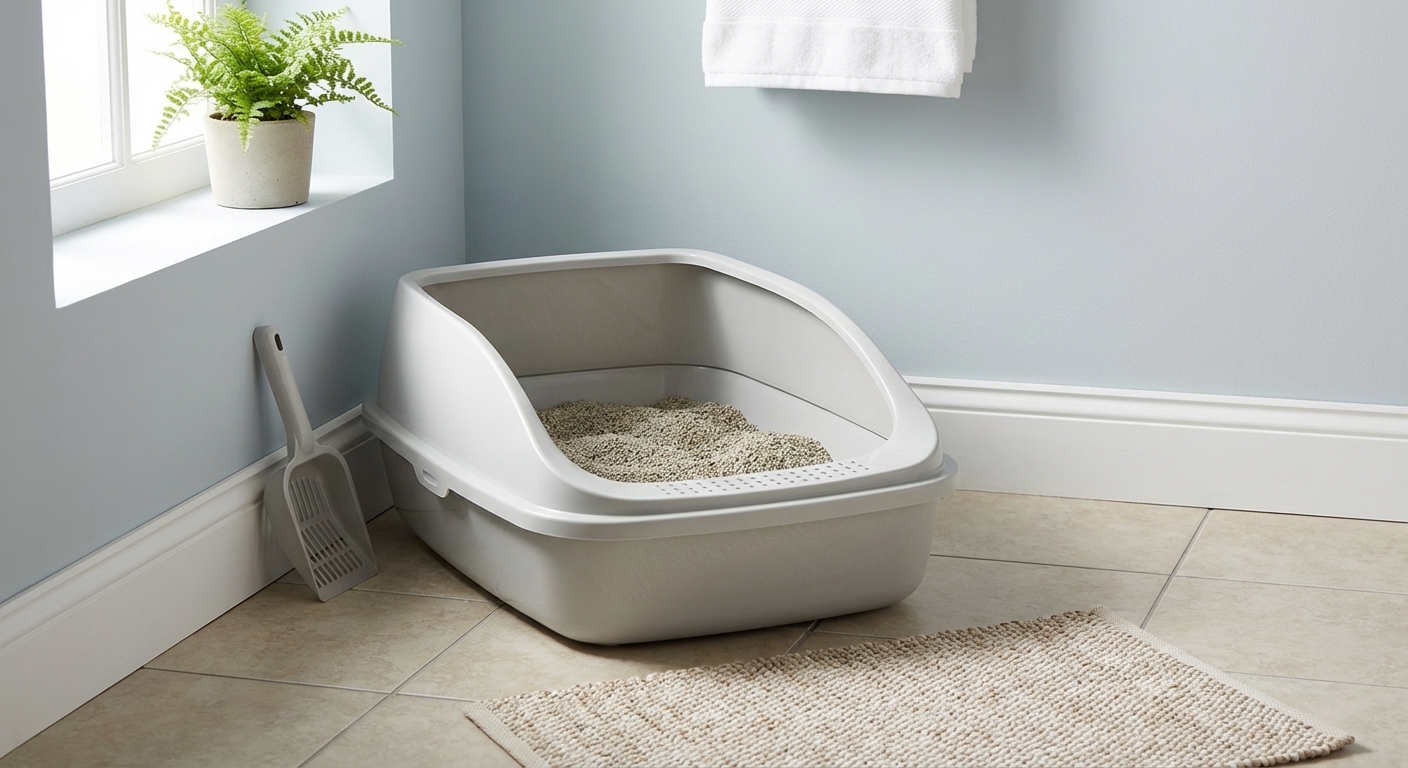
- Size matters: A good rule of thumb is about 1.5 times your cat’s length (nose to base of tail). For big cats, a large storage bin (with a cut-out entry) often works beautifully.
- Covered vs uncovered: Many cats do best with uncovered boxes because they can see and leave easily. Some cats prefer a covered box for privacy. If you are unsure, offer one of each during a trial.
- If your cat is older or arthritic, choose a low-entry box.
- Skip liners if your cat catches claws and startles.
Litter depth
Many cats prefer enough litter to dig and cover (often around 2 to 3 inches), but some prefer less. If you are stuck, try adjusting depth as a simple experiment before changing everything else.
Cleaning routine that helps, not hurts
- Scoop at least once daily, twice is even better.
- Wash the box weekly with mild unscented soap and warm water, then rinse well and dry.
- Avoid strong scents and harsh cleaners. Many cats dislike fragranced litter and strong-smelling disinfectants.
Step 4: Run a substrate trial
If your cat is avoiding the box, a litter preference test is often a game-changer.
How to do it
Set out 2 to 4 boxes in the same quiet area for 7 to 14 days. Keep everything else consistent and only change one factor: the litter.
Spacing tip: Place the boxes a few inches apart rather than touching. If they touch, some cats perceive it as one giant box, which can muddy your results.
Common options to test
- Unscented clumping clay (a frequent “default favorite”)
- Fine-grain litter that feels like sand (many cats love the texture)
- Pine pellets (some cats love them, others refuse)
- Paper-based litter (often helpful after surgery or for sensitive paws)
Track which box your cat chooses most. Once you see a clear favorite, keep that litter and remove the others gradually.
Important: If your cat is consistently urinating on soft items like laundry, bath mats, or carpet, that can be a clue they want a softer texture, or that they had pain in the box and now avoid it.
Step 5: Rebuild confidence
After a move
- Start with one quiet “home base” room plus a box.
- As your cat uses the box reliably for several days, open access to one additional area at a time.
- Add a box in the new area before expanding further.
After illness (especially urinary issues)
Some cats associate the box with pain from a bladder issue. Your goal is to rebuild positive, calm experiences.
- Keep the box extremely clean and easy to reach.
- Consider a second box with a different litter texture.
- Use steady routines: meals, play, then quiet time near the retraining area.
After a stressful event
Stress can trigger inappropriate elimination even in healthy cats. Routine and safety are therapy.
- Use pheromone diffusers in the retraining zone if your vet recommends it.
- Provide hiding spots, vertical space, and predictable feeding times.
- Do short daily play sessions to lower stress.
Common patterns and fixes
Pattern: “My cat pees next to the box”
This often means your cat is trying, but something about the box is unpleasant.
- Try a larger box.
- Try uncovered if you are currently using covered, or offer both.
- Switch to unscented litter.
- Increase scooping frequency.
- Check for mobility issues and consider a low-entry box.
- Adjust litter depth (more or less) as a quick experiment.
Pattern: Avoidance after a bladder flare-up
Your cat may fear the box because it hurt to urinate.
- Confirm the medical issue is resolved with your vet.
- Add an additional box in a different location.
- Run a substrate trial to find the most comfortable litter.
Pattern: Conflict with other pets
This is huge in multi-cat homes, and dogs can contribute too. Cats may avoid the box if another pet stares, blocks the hallway, or ambushes them.
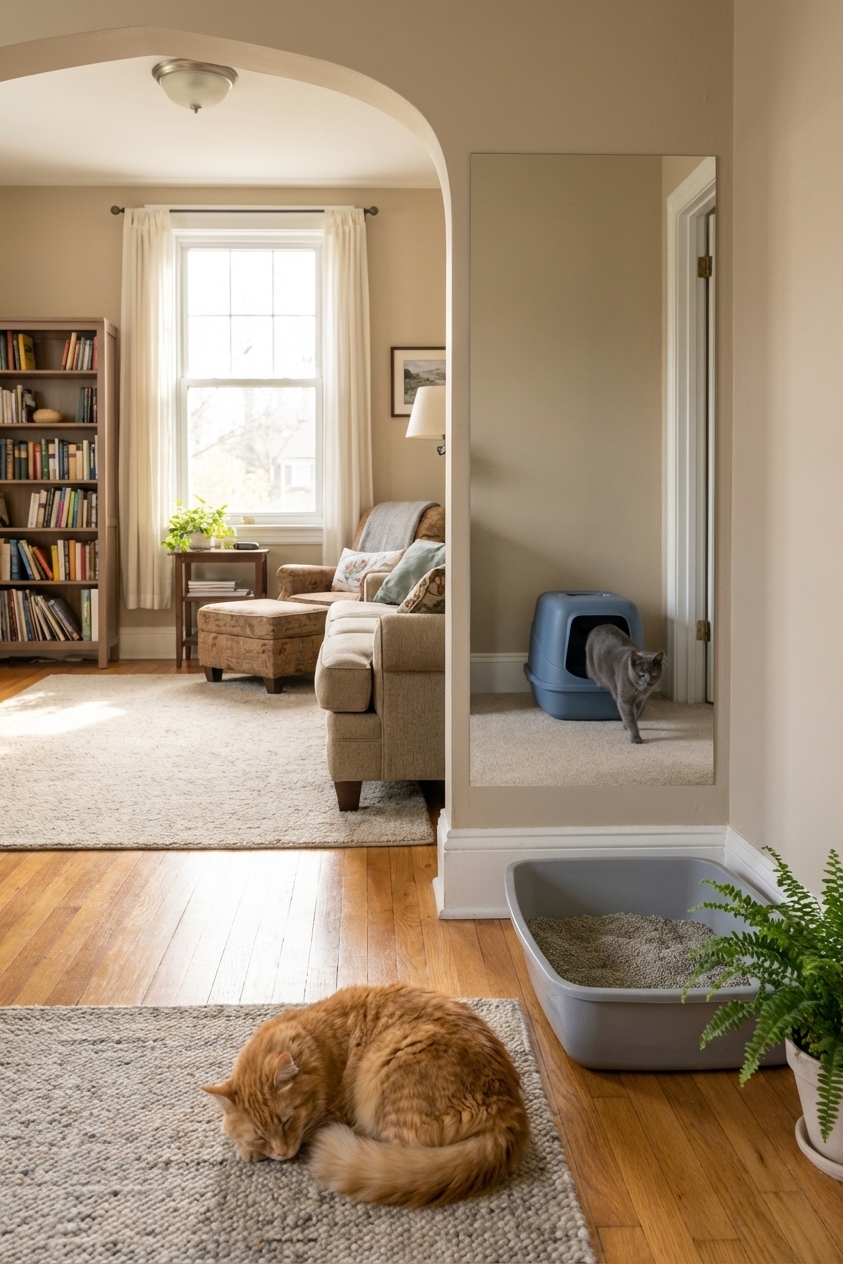
- Spread boxes out. Do not line them up in one “litter room.”
- Place at least one box where your cat can approach from multiple directions.
- Use baby gates or door props if a dog is bothering the cat.
- Provide vertical escape routes like cat trees and shelves.
Pattern: The same spot keeps getting hit
If your cat returns to one “favorite” accident area, odor and habit can keep pulling them back.
- Place a litter box right over that spot temporarily, then move it a few inches per day toward your preferred location.
- Block access short-term (closed door, plastic carpet runner nubs-up, foil, or a laundry basket) while retraining is in progress.
- Repurpose the spot with a bed, scratching post, or food puzzle once fully cleaned.
What not to do
- Do not punish or rub your cat’s nose in accidents. It increases fear and makes the problem worse.
- Do not chase your cat toward the box. Instead, make the box area feel safe and predictable.
- Do not use ammonia-based cleaners on accidents. The smell can be similar to urine and may attract repeat marking or repeat soiling.
Instead, clean accidents with an enzymatic pet cleaner and follow the product’s contact time directions so it can fully break down odor.
Pro tip: Use a UV or blacklight in a dark room to find older, hidden urine spots (baseboards, corners, under rugs). If those areas are not thoroughly treated, some cats will keep returning to them.
Quick plan (7 to 14 days)
- Call your vet if this is sudden or includes straining, blood, vomiting, lethargy, or frequent attempts.
- Set up a quiet retraining room with one to two boxes, keeping the box far from food and water.
- Start simple with a large box (low-entry if needed) and unscented litter.
- Scoop daily and keep the area low-stress.
- Run a litter preference test if there is no improvement in 3 to 5 days.
- Expand access gradually only after consistent success.
If you are feeling discouraged, please know this is common and fixable. Your cat is not being “bad.” They are communicating, and with the right setup, most cats return to reliable box use.
When to get extra help
Consider additional support if:
- Your cat is not improving after 2 weeks of consistent retraining
- There is aggression or ongoing tension between pets
- Your cat is urine marking vertical surfaces (walls, furniture) rather than only floor accidents
Your veterinarian can rule out medical issues and may recommend a behavior plan. In more complex cases, a board-certified veterinary behaviorist can be incredibly helpful. If spraying is part of the picture, discuss spay or neuter status with your vet, since hormones can contribute (even though stress can still be a factor in altered cats).