I have had more than a few families come into the clinic worried because they cannot find one of their puppy’s testicles, or because their dog was “neutered” but is still acting very hormonal. If you are staring at an empty or half-empty scrotum and feeling confused, you are not alone.
Retained testicles, called cryptorchidism, are common enough that most veterinarians can spot the pattern quickly. The important part is understanding what is going on inside the body, because a retained testicle can still produce testosterone and it carries real long-term health risks if it is left behind.
What it means
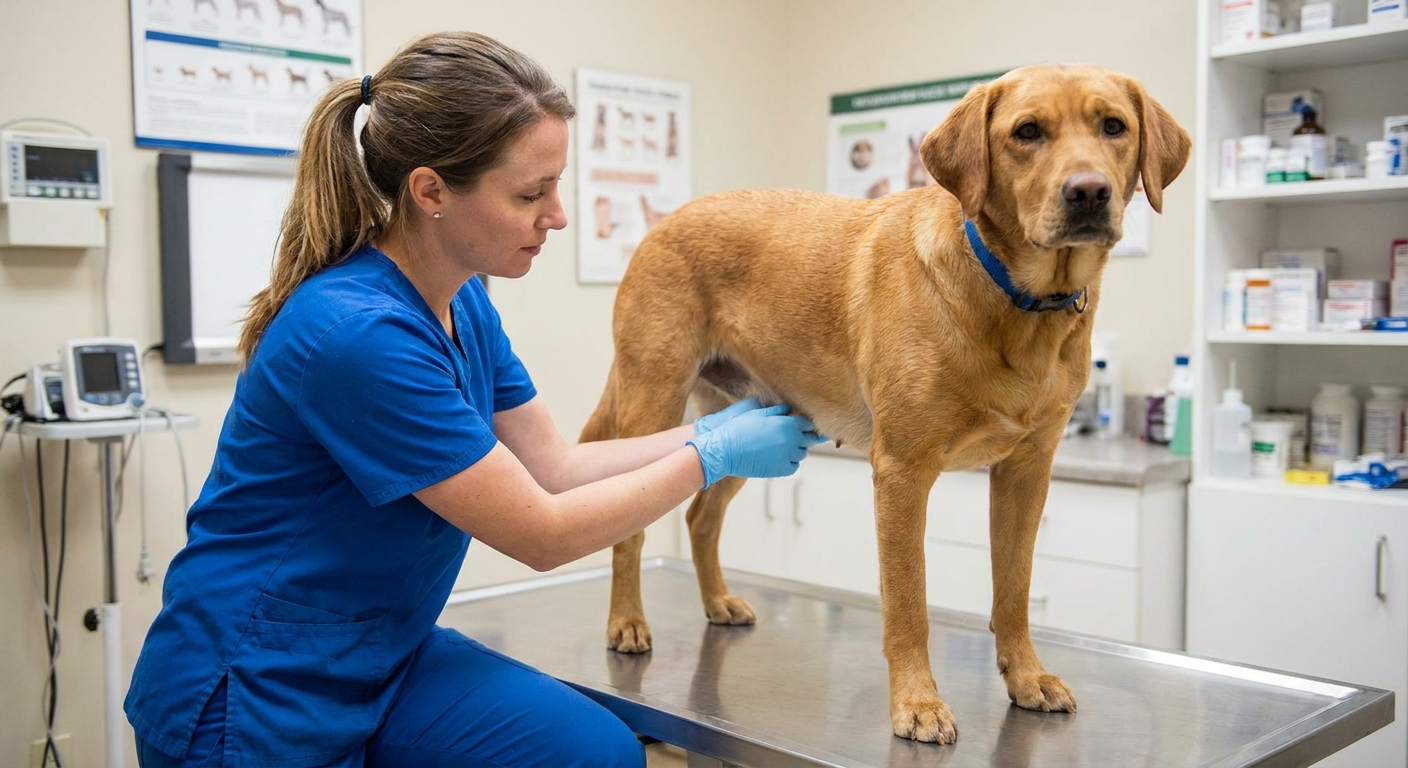
Cryptorchidism means one or both testicles did not descend into the scrotum as expected. Instead, the testicle may be:
- In the inguinal canal (the pathway from the abdomen toward the scrotum)
- Just under the skin in the groin area
- In the abdomen (fully retained and often not palpable from the outside)
Some dogs are unilaterally cryptorchid (one testicle descended, one retained). Others are bilaterally cryptorchid (both retained), and the scrotum can look small or “empty.”
Testicles are supposed to live in the scrotum because it is cooler than the abdomen. That cooler temperature supports normal sperm production. When a testicle stays warmer inside the body, fertility is often reduced. In abdominal cases, sperm production is commonly severely impaired or absent, while hormone production can continue.
When testicles should drop
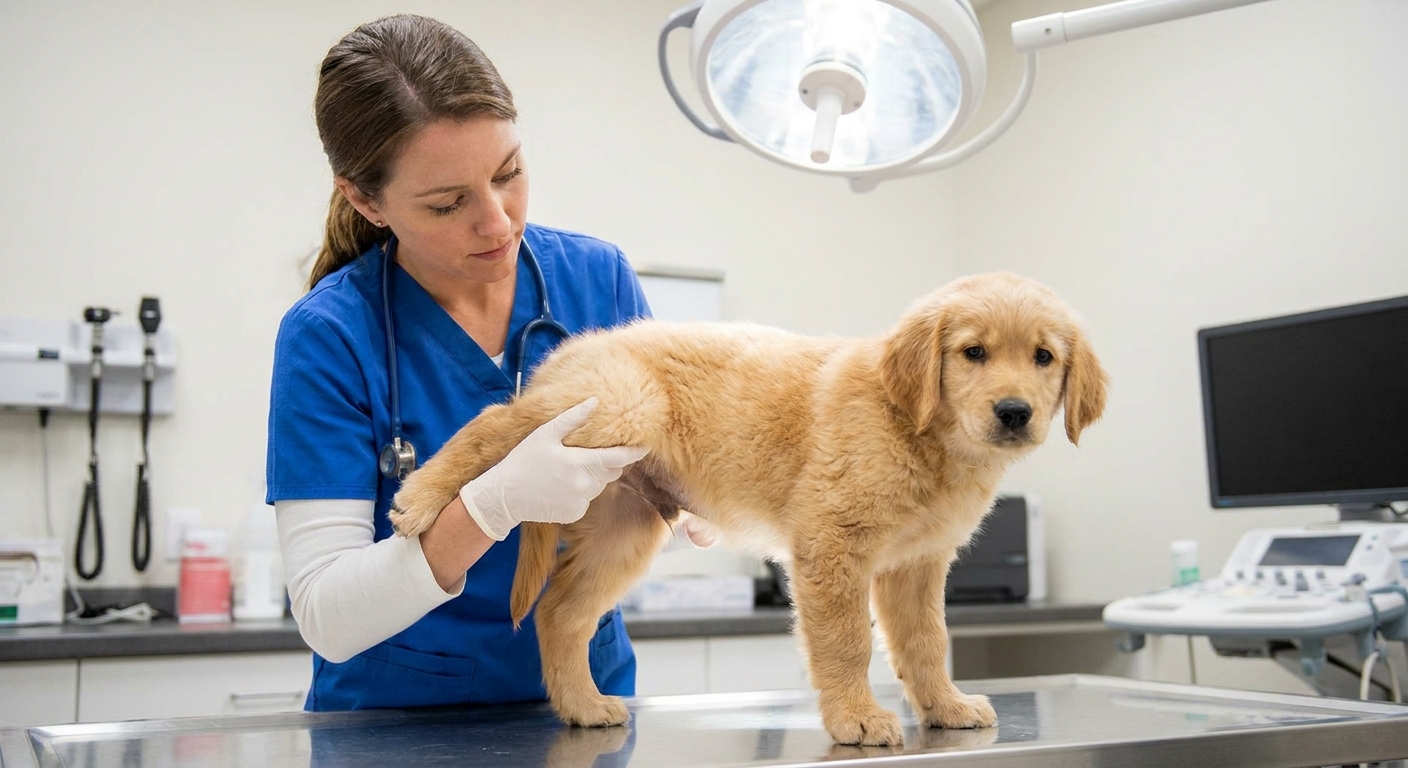
Most male puppies have both testicles descended by a few months of age, but there is variation by individual and breed. As a practical rule of thumb, if a testicle is not down by about 6 months, it is unlikely to descend on its own. Some veterinarians will raise concern earlier, often in the 4 to 6 month window, depending on your dog’s size, breed, and exam findings.
If your puppy is in that in-between stage, your veterinarian may recommend a recheck exam rather than immediate surgery. But once cryptorchidism is diagnosed, the long-term recommendation is typically surgical removal of all functional testicular tissue.
Why hormones can persist
Here is the surprising part: you do not need a scrotal testicle for testosterone to be present. If a testicle is retained in the groin or abdomen, it can still release testosterone into the bloodstream.
So a dog with cryptorchidism may still show behaviors we associate with intact males, including:
- Mounting
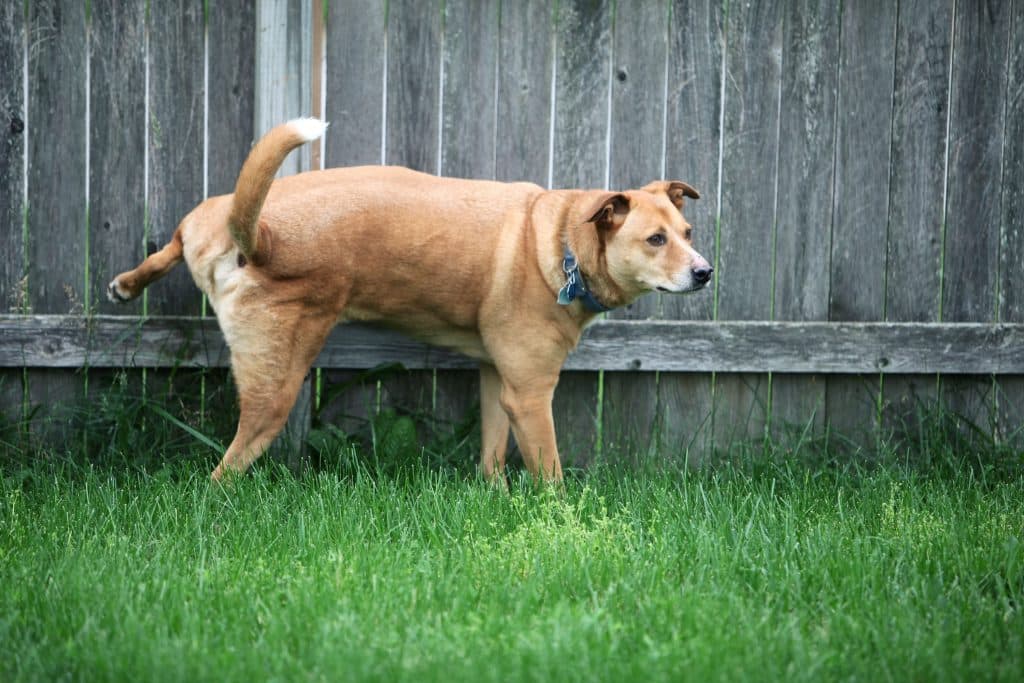
- Marking urine
- Roaming or strong interest in finding females in heat
- Increased reactivity around other males in some cases
Also, if a dog was believed to be neutered but still has functional testicular tissue present, testosterone can remain high enough that the behavior does not change much. It is not stubbornness. It is biology.
“My dog was neutered but still humps.” Could this be why?
It can be, especially if your dog has other signs of being hormonally intact. A veterinarian can help sort this out with:
- A thorough physical exam, including careful palpation of the groin
- Imaging in some cases (ultrasound is commonly used to look in the abdomen)
- Hormone testing when the picture is unclear
For hormone testing, your veterinarian may discuss options such as baseline testosterone, stimulation tests (such as hCG or GnRH stimulation), or Anti-Müllerian hormone (AMH) testing in some situations. The exact choice depends on what is available and what question we are trying to answer.
It is also worth knowing that mounting can be triggered by excitement, stress, or learned habits too. But when testosterone is still on board, it can add fuel to the fire.
Tumor and torsion risks
From a medical standpoint, this is the biggest reason veterinarians recommend removing retained testicles. A retained testicle has a higher risk of developing tumors than a normal descended testicle. You will often hear this described as a several-fold increase in risk, but the exact number varies by source and study. The bottom line is that the risk is meaningfully higher.
Two tumor types are discussed often with cryptorchidism:
- Sertoli cell tumors
- Seminomas
Not every retained testicle becomes cancerous, but the risk is elevated enough that leaving it is generally not considered a safe long-term plan.
Why location matters
A testicle retained in the abdomen is in a warmer environment. Over time, that abnormal environment is thought to contribute to cellular changes. The abdomen also makes early detection harder because you cannot see or feel changes the way you can with a scrotal testicle.
Another emergency risk: torsion
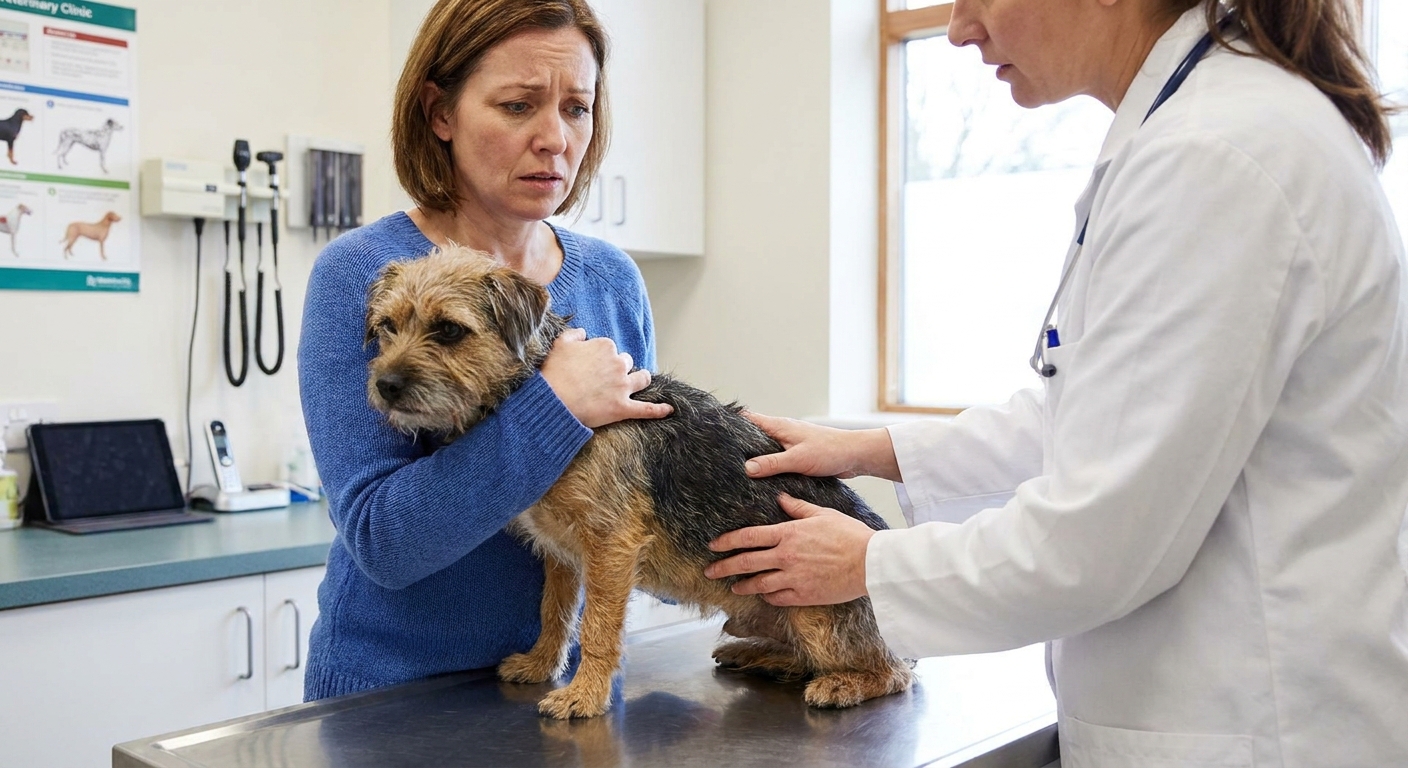
A retained testicle, especially an abdominal one, can twist on itself. This is called testicular torsion, and it can be extremely painful and urgent.
Signs can include sudden abdominal pain, restlessness, vomiting, or lethargy. Sometimes it is less obvious and looks like vague “not himself” malaise that can be mistaken for a stomach bug. If you suspect torsion, it is an emergency visit.
How surgery is different
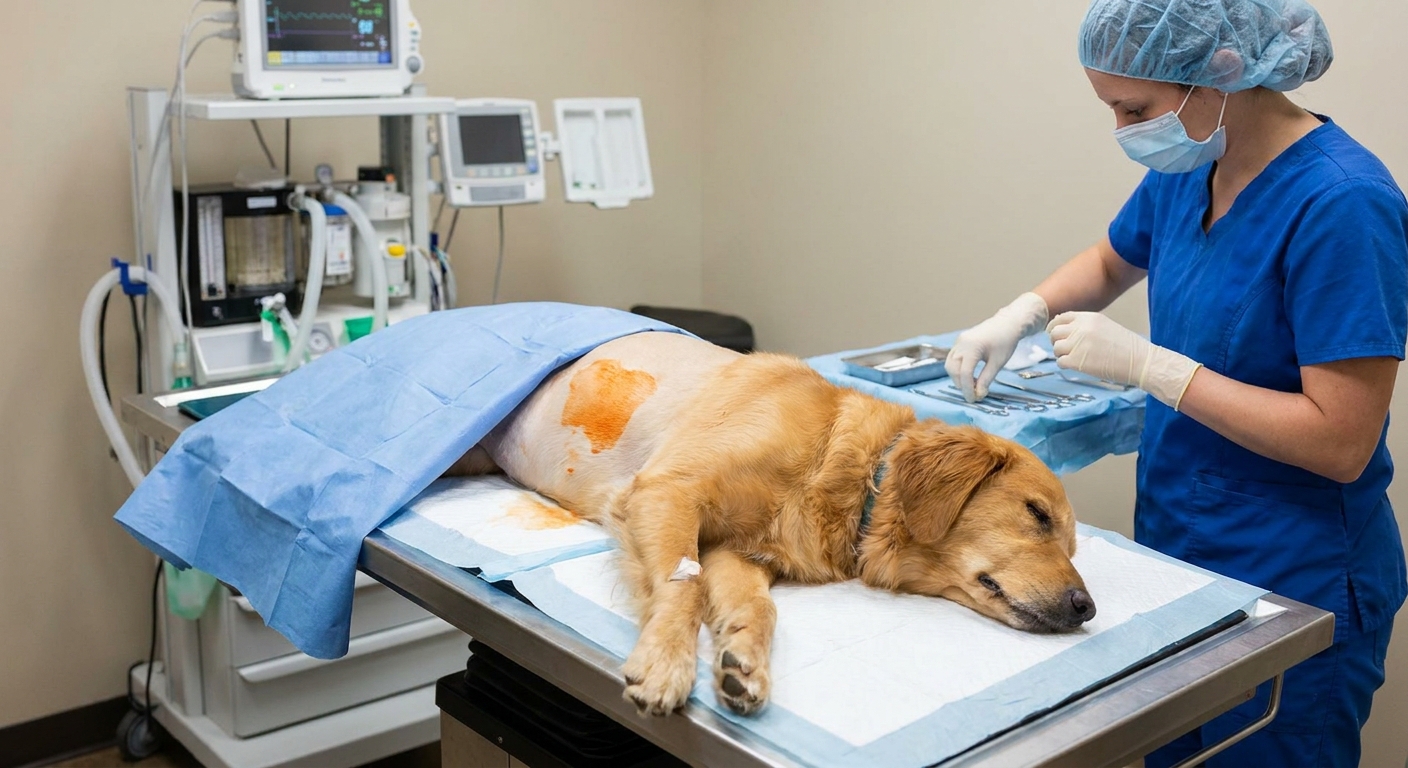
A routine neuter for a typical male dog is usually a relatively quick procedure because both testicles are in the scrotum and easy to access. With cryptorchidism, the surgery is still common and very doable, but it can be more involved because the retained testicle may be hidden in the groin or abdomen. In other words, the surgeon has to locate it first, then remove it safely.
What the surgeon is trying to do
The goal is straightforward: remove both testicles, including the retained one. Removing only the descended testicle is not enough, because the retained one can still produce testosterone and still carries tumor risk.
Incision location
- Inguinal or subcutaneous retained testicle: the incision may be made in the groin area to access and remove it.
- Abdominal retained testicle: the incision is typically on the belly, and the surgeon will locate the testicle within the abdomen.
This is why you may hear your veterinarian call it an “abdominal cryptorchid neuter” or “cryptorchid castration.”
Why it can cost more
Costs vary by region and clinic, but cryptorchid neuters are often priced higher because they can involve:
- More surgical time
- A more complex approach, especially for abdominal cases
- Potentially different equipment or imaging
- Increased monitoring needs
If your dog is scheduled for surgery, it is very reasonable to ask where the retained testicle is suspected to be and what approach your veterinarian anticipates.
Vet visit and diagnosis
A cryptorchidism visit usually includes a few key steps:
- History, including age, breed, prior records if available, and what you have noticed at home
- Physical exam, checking the scrotum and carefully palpating the inguinal area
- Imaging if needed, especially when an abdominal testicle is suspected
- Surgical planning, including timing and anesthesia discussion
If your dog is already altered but still showing strong male-hormone behaviors, your veterinarian may talk with you about hormone testing to confirm whether functional testicular tissue is still present.
What you can do at home
You do not need to do detective work, but a few observations can help your veterinarian:
- Is the scrotum symmetric, or does it look “half empty”?
- Do you notice a small lump in either groin area?
- Any new belly pain, vomiting, restlessness, or sudden lethargy?
Avoid trying to “push” a testicle down or repeatedly squeezing the groin area. If one is not descended by the timeframe your veterinarian gives you, it is better to make a plan than to wait and hope.
Recovery expectations
Most dogs recover very well from cryptorchid neuter surgery, but recovery can be a little different than a routine scrotal neuter, especially if an abdominal approach is needed. Your veterinarian may recommend:
- Stricter exercise restriction and leash-only walks for a bit longer
- More emphasis on incision monitoring because there may be a second incision site
- An e-collar or recovery collar to prevent licking
Pain control is standard, and most dogs are noticeably more comfortable within a few days. Your clinic will give you a specific timeline for activity restrictions and recheck exams based on the approach used.
Breeding guidance
In general, no, a cryptorchid dog should not be bred. Cryptorchidism is considered a heritable condition in many cases, which means passing those genetics forward can increase the odds that puppies will have the same issue.
Even with unilateral cryptorchidism, fertility can be reduced. More importantly, breeding a dog with cryptorchidism can spread a problem that puts future dogs at higher surgical and cancer risk.
If your dog came from a breeder or rescue, it is fair and responsible to inform them. Close relatives may be at higher risk, and this is the kind of information that can improve breeding decisions and early screening.
Quick FAQ
Can a dog be “neutered” and still have testosterone?
Yes, if functional testicular tissue remains. This can happen with cryptorchidism when the retained testicle is not removed, or rarely if there is residual tissue. If testosterone-driven behaviors persist, talk with your veterinarian about evaluation options.
Will a retained testicle ever drop later?
If a testicle has not descended by the time your veterinarian is comfortable diagnosing cryptorchidism, spontaneous descent becomes unlikely. Your vet can advise based on your dog’s age, breed, and development.
Is an empty scrotum always cryptorchidism?
Not always. An empty scrotum can also be seen in a normally neutered male, in very young puppies, or in rare developmental conditions. That is why a hands-on exam matters.
Is this an emergency?
Cryptorchidism itself is usually not an emergency. But testicular torsion or sudden abdominal pain can be. If your dog seems painful, bloated, repeatedly vomiting, or suddenly lethargic, seek urgent veterinary care.
The takeaway
If your dog has one or no visible testicles, it does not automatically mean the hormones are gone. With cryptorchidism, a retained testicle can keep producing testosterone and it carries an increased risk of tumors and torsion, especially when it is in the abdomen.
The good news is that cryptorchid neuter surgery is a very common procedure in veterinary medicine. With good pre-op planning and complete removal of both testicles, most dogs go on to live normal, healthy lives. If you are unsure what you are feeling or seeing at home, your veterinarian can confirm what is going on quickly and help you make a safe plan.