
Chicken and rice can soothe mild stomach upset and help dogs transition back to normal food. Learn safe recipes, portions, how long to feed it, and when to c...
Article
•
Designer Mixes
Remove Ticks From Dogs Fast

Shari Shidate
Designer Mixes contributor
If you just found a tick on your dog, take a breath. Most tick bites are manageable at home if you remove the tick promptly and correctly, then monitor your pup for the next couple of weeks. As a veterinary assistant in Frisco, Texas, I have helped with plenty of tick checks, and the best results come from a calm, careful approach that protects both you and your dog.
Note: This guide is educational and not a substitute for veterinary care. If you are unsure at any point, call your vet.
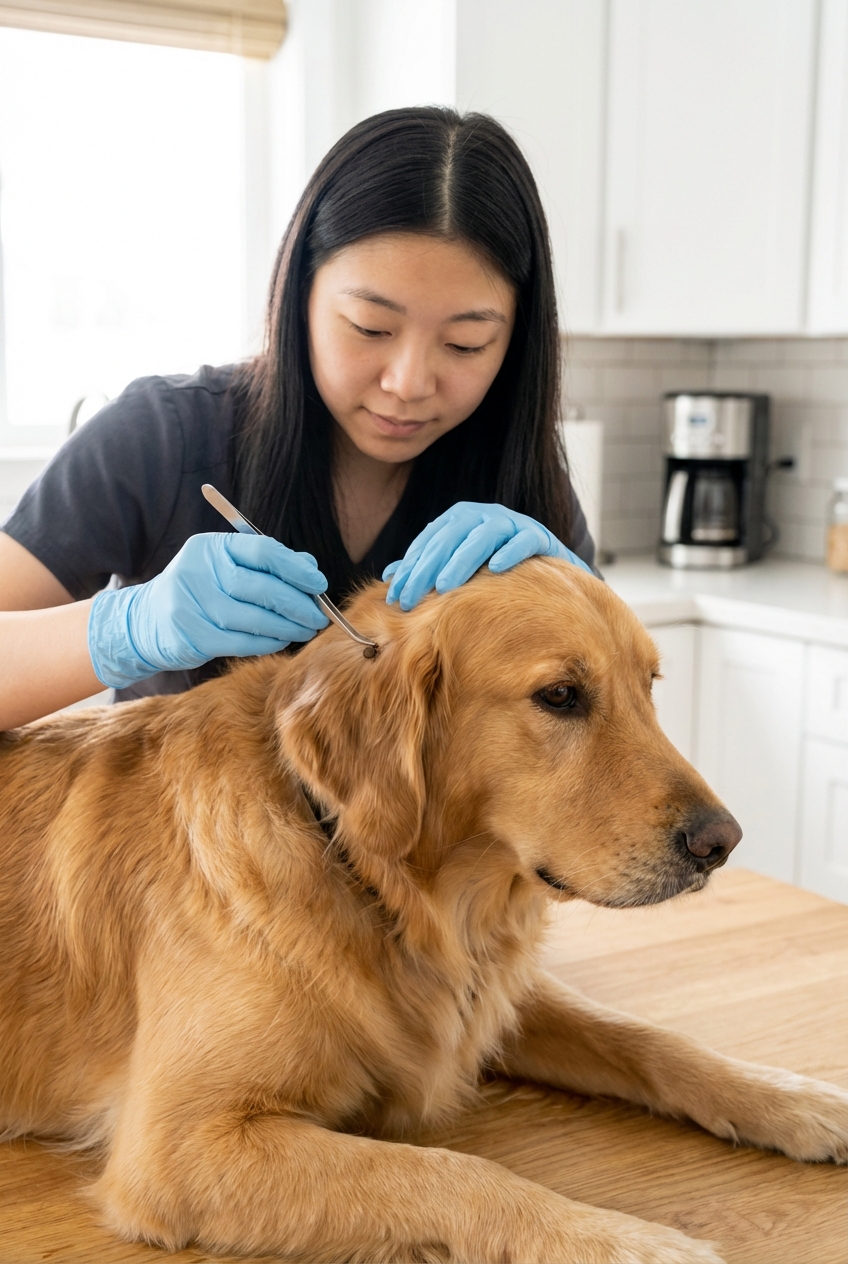
Why speed matters
Ticks can transmit illnesses (like Lyme disease in many regions and ehrlichiosis, anaplasmosis, and Rocky Mountain spotted fever in parts of the U.S.). Transmission risk generally increases the longer a tick is attached, but timelines vary by pathogen and tick species. For example, Lyme disease transmission often requires many hours of attachment, while some other organisms may transmit sooner. Removing a tick quickly is still the best move.
That said, you do not need to panic or use harsh chemicals on your dog’s skin. A precise removal is safer than a rushed one.
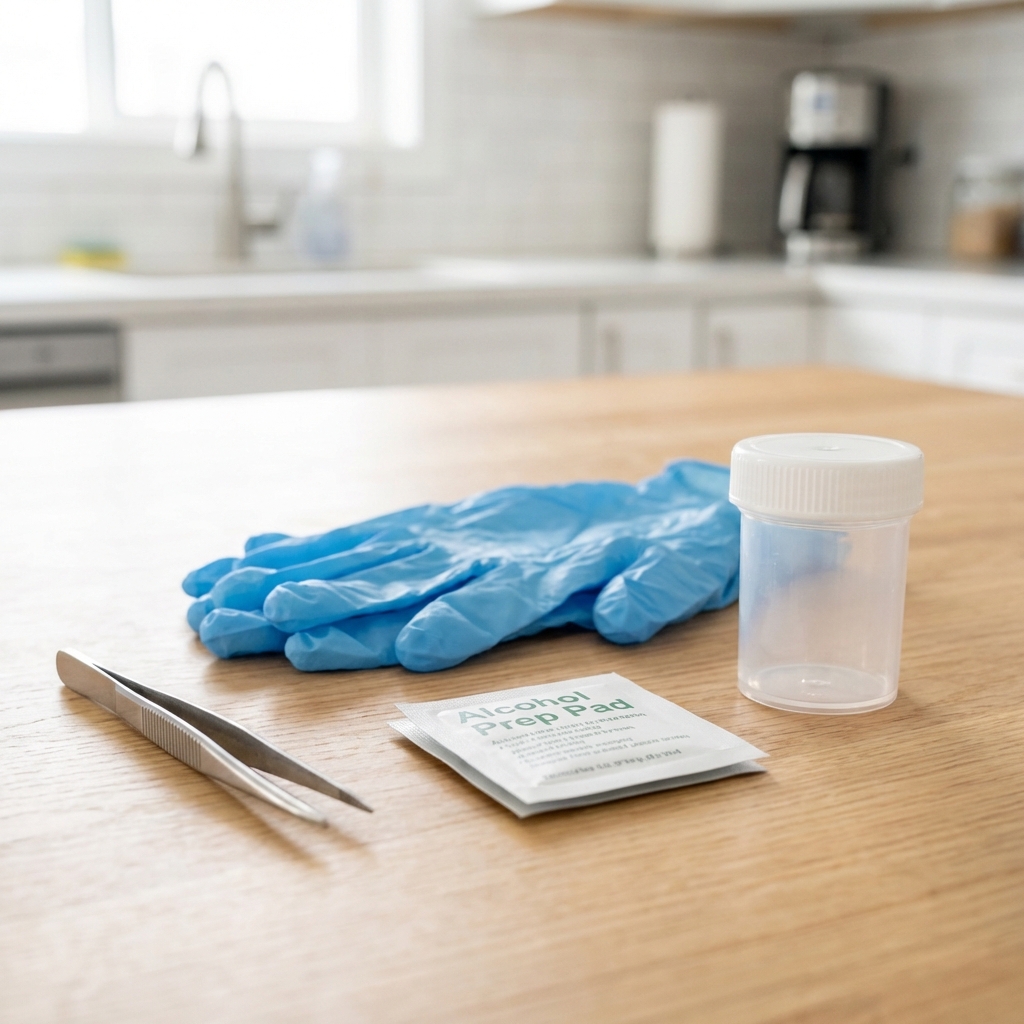
What you need
- Fine-tipped tweezers or a tick removal tool
- Disposable gloves (recommended)
- Isopropyl alcohol (for cleaning tools, and for disposal if needed)
- Antiseptic safe for pets (or mild soap and water)
- Small container with a lid (pill bottle) or a zip bag
- Treats and a helper if your dog is wiggly
Tip: If you have to choose one tool, choose fine-tipped tweezers. They give you the best control near the skin.
Step-by-step removal
1) Keep your dog still
Have your dog lie down. Offer a chew, peanut butter on a lick mat, or a handful of treats. If your dog is anxious, ask someone to gently hold them. Avoid restraining too tightly, because sudden jerks can tear the tick.
Safety note: If your dog may bite when scared or painful, do not force it. Use a basket muzzle if your dog is already trained to wear one, or contact your veterinarian or a professional groomer for help.
2) Part the fur
You want to see where the tick’s mouthparts meet the skin. Good lighting helps. A flashlight on your phone works great.
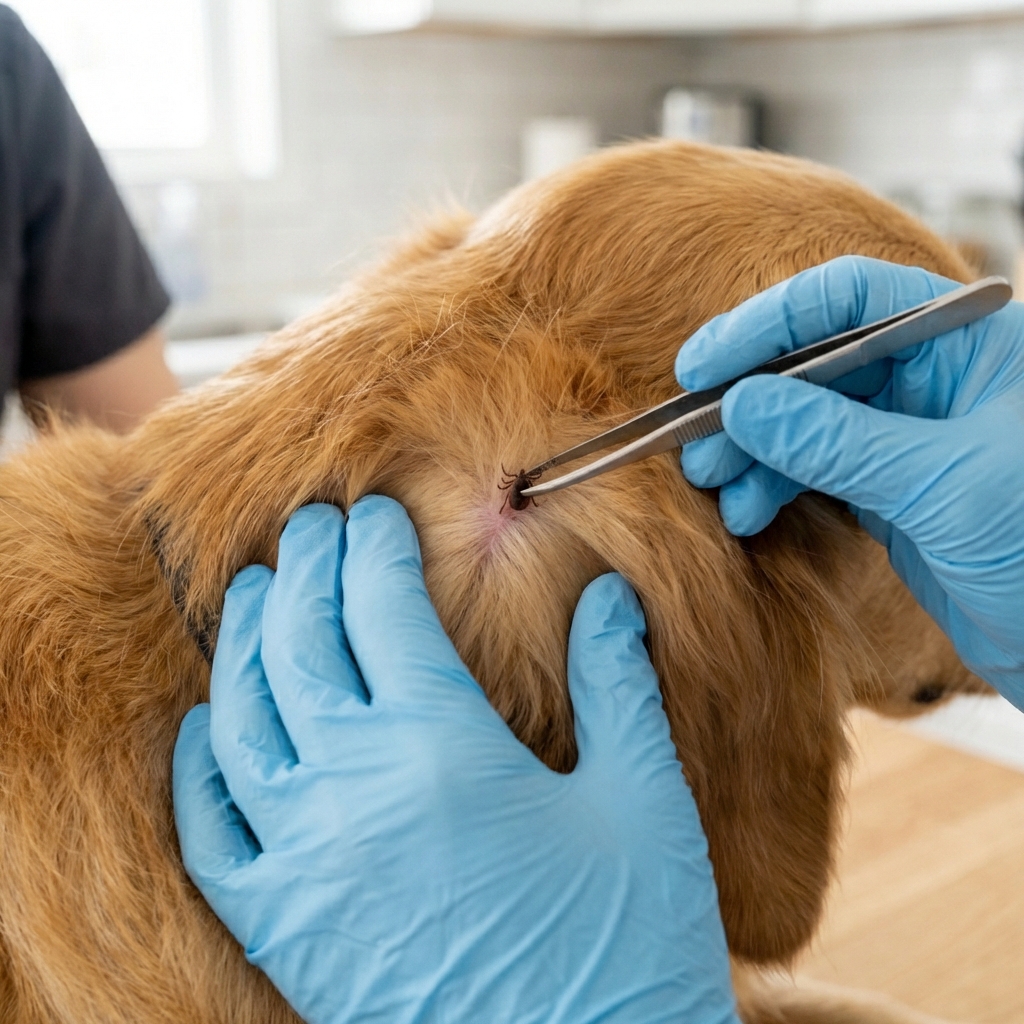
3) Grab close to the skin
Using tweezers, grasp the tick as close to your dog’s skin as possible, targeting the tick’s head and mouth area, not the swollen belly.
4) Pull straight out
Pull upward slowly and steadily.
- If you are using tweezers: Do not twist, jerk, or squeeze the tick’s body.
- If you are using a tick removal tool: Follow the manufacturer’s instructions. Some tools are designed to lift or rotate in a specific way.
A steady, controlled technique helps remove the mouthparts intact.
5) Save the tick (optional but helpful)
Place the tick into a small container or zip bag and label it with the date and where on your dog you found it. This can help your veterinarian with identification later.
Storage tip: Many people add a bit of rubbing alcohol, which is fine for basic storage and may help kill the tick. However, alcohol can reduce the usefulness of some lab tests depending on the lab. If you think your vet may want the tick tested, ask about the preferred storage method (often a dry container or bag, sometimes with a slightly moist paper towel, depending on the lab).
6) Clean up
Clean your dog’s skin with mild soap and water or a pet-safe antiseptic. Wash your hands even if you wore gloves.
7) Reward and re-check
Give praise and treats, then do a quick scan for other ticks. If you found one, there may be more.
What not to do
- Do not burn the tick with a match or lighter. This risks burns and can cause the tick to regurgitate contents into the bite.
- Do not use petroleum jelly, dish soap, nail polish, or essential oils to “smother” it. These methods can delay removal and irritate skin.
- Do not crush the tick with bare fingers or squeeze the tick’s body. Crushing can push fluids into the bite site and exposes you to germs.
- Do not twist aggressively with tweezers. Twisting can increase the chance the mouthparts break off. (If you are using a tick tool, use it as directed.)
If mouthparts stay in
This is common and usually not an emergency. The “head” people see left behind is often mouthparts. If a tiny piece remains in the skin, it may work itself out like a splinter.
- Clean the area and monitor daily.
- If you can easily lift the piece with clean tweezers, you can try gently removing it.
- Call your veterinarian if you notice increasing redness, swelling, pain, pus, a bad smell, or if your dog is intensely licking, scratching, or seems very sensitive when touched.
Retained mouthparts can trigger local inflammation and sometimes infection, so your dog’s comfort and the trend over a few days matter most.
When to call the vet
Most tick removals are straightforward, but reach out to your veterinarian if any of the following apply:
- Your dog is a puppy, senior, immunocompromised, or has a chronic illness.
- The tick is embedded in a sensitive area (eyelid, inside ear canal, genitals) or you cannot safely grasp it.
- Your dog develops symptoms within days to weeks: fever, lethargy, loss of appetite, lameness, stiff joints, vomiting, swollen lymph nodes, or unusual bruising.
- The bite site becomes increasingly inflamed, crusty, oozing, or painful.
Helpful detail: Tell your vet when you believe the tick attached, where you found it, whether you saved it, and how you stored it.
Aftercare
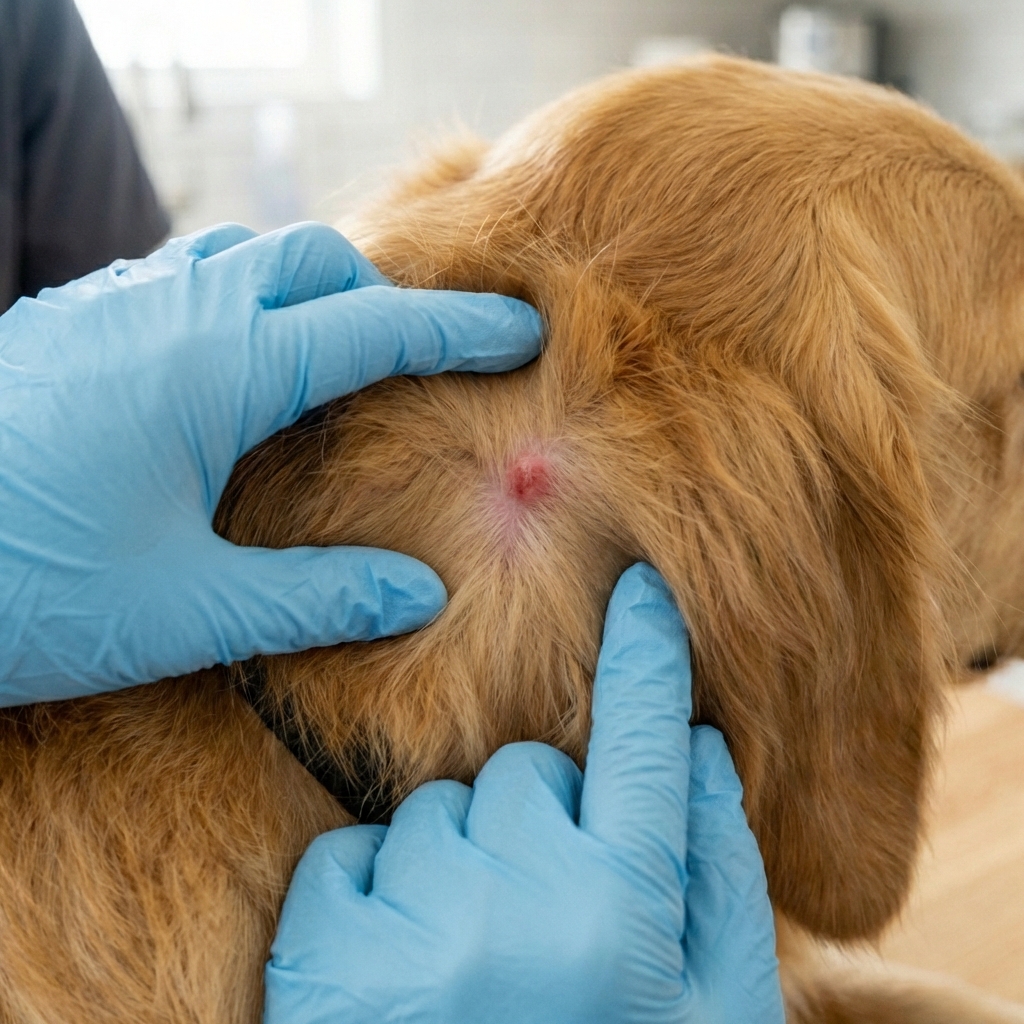
It is normal to see a small red dot or mild irritation for a day or two. Some dogs also get a small firm bump that can linger for a week or two. You can take a quick photo of the bite site on day one, then compare over the next several days.
If the area is getting larger, hotter, more painful, or your dog will not stop bothering it, that is your cue to call your veterinarian.
Check for more ticks
After walks in tall grass, wooded areas, or parks, do a 60-second scan:
- Run your hands over the body, feeling for small bumps.
- Check ears (inside and behind), around the collar, armpits, groin, between toes, and under the tail.
- Use a fine comb for fluffy coats.
Ticks can be tiny, especially in early stages, so feeling with your fingertips is often faster than relying on your eyes alone.
Also protect the humans: After handling a tick or doing a tick check, wash your hands and check yourself and your kids too, especially around hairlines, behind ears, waistbands, and sock lines.
Prevention that works
Removal is step one. Prevention is what keeps this from becoming a weekly problem.
Ask your vet about preventives
Evidence-based preventives include oral chewables (often in the isoxazoline family), topical products, and tick collars for some pets and situations. Your veterinarian can recommend the safest option based on your dog’s age, health history, lifestyle, and local tick species.
Cat safety note: If your household includes cats, be careful with dog-only topicals that contain permethrin. It can be dangerous to cats. Always read labels and follow your veterinarian’s guidance.
Make your yard less tick-friendly
- Mow grass regularly and trim brush along fences.
- Limit access to tall grasses and leaf litter.
- Wash bedding after heavy outdoor exposure.
- Consider veterinarian-approved yard treatments if ticks are a major problem where you live.
Skip risky home remedies
Some essential oils can be toxic to pets, especially cats, and “DIY repellents” often fail when tick pressure is high. When it comes to ticks, reliable products and consistent use win.
Tick disposal
If you are not saving the tick for your veterinarian, the goal is to kill it and keep it from coming back.
- Place it in rubbing alcohol, or
- Seal it tightly in a bag or wrap it in tape before throwing it away.
Avoid crushing a tick with your fingers.
Quick FAQ
How long until a tick can transmit disease?
There is no perfect at-home way to know. In general, longer attachment increases risk, but some infections transmit sooner than others. Save the tick if you can, note the date, and monitor your dog for symptoms for 2 to 4 weeks.
Should I get the tick tested?
In some areas, tick testing is available, but it does not always change what your veterinarian recommends. Ask your vet what makes sense for your region and your dog’s risk, and ask how the lab prefers the tick stored.
Is a tick bite always dangerous?
Not always. Many dogs never become ill. The goal is prompt removal, prevention, and watching for early signs so treatment can start quickly if needed.
If you remove a tick correctly, clean the area, and keep an eye on your dog for the next couple of weeks, you are doing exactly what we recommend in a veterinary setting.